
REVIEW · FOOD
Osaka Street Food Festival :Takoyaki&Okonomiyaki for Families
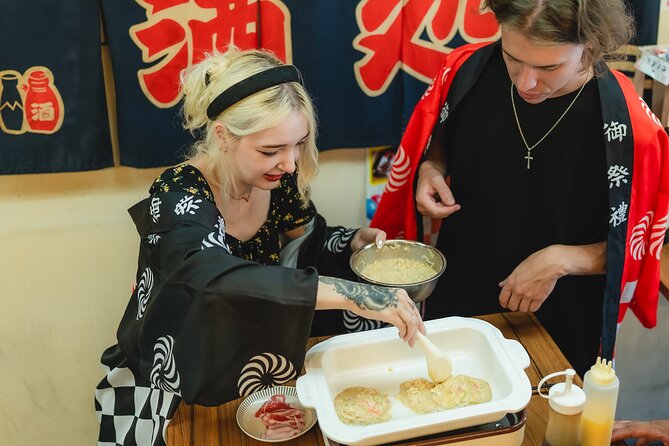
Osaka’s famous street food becomes a group activity here. You cook takoyaki and okonomiyaki on real teppan grills, then eat what you make while playing simple Japanese festival games. It is less a formal cooking lesson than a cheerful food party where children, parents, and grandparents can all take part.
I like the open invitation for different ages and cooking abilities, and I like the unlimited dagashi snacks, which add a real Japanese childhood touch. The main consideration is time: 90 minutes goes quickly when your group includes several cooks, photographers, and children who want to play every game.
In This Review
- Key points to know before booking
- Cooking Osaka’s street food instead of just eating it
- The takoyaki and okonomiyaki portion
- Dagashi snacks bring a childhood festival feel
- Festival games and happi coats
- What the 90-minute schedule means for you
- Is the $65.32 price fair?
- Who will enjoy this most?
- A practical way to plan your visit
- Should you book this Osaka food experience?
- FAQ
- Where does the experience begin?
- Where does the experience end?
- How long does the experience last?
- What food is included?
- Are drinks and snacks included?
- Can children participate?
- How many people can join?
Key points to know before booking
- Two Osaka classics in one sitting: Make takoyaki and okonomiyaki side by side on teppan grills.
- Built for mixed-age groups: Children, parents, grandparents, beginners, and confident home cooks can all join.
- Unlimited dagashi snacks: Sample the small Japanese sweets and treats associated with local festivals and childhood shops.
- Festival games and happi coats: Try super ball scooping and take group photos in traditional-style festival clothing.
- Small maximum group: The experience accepts no more than 15 participants, which matters when you want hands-on cooking time.
- Dotonbori meeting point: Start and finish at 2-chōme-4-5 Dōtonbori, in Osaka’s Chuo Ward.
Cooking Osaka’s street food instead of just eating it
Many food activities in Osaka ask you to sit down and sample prepared dishes. This one puts the cooking tools in your hands. That changes the mood at once, especially for families. A child can help shape takoyaki, an adult can manage the grill, and grandparents can join without needing to keep pace with a walking tour.
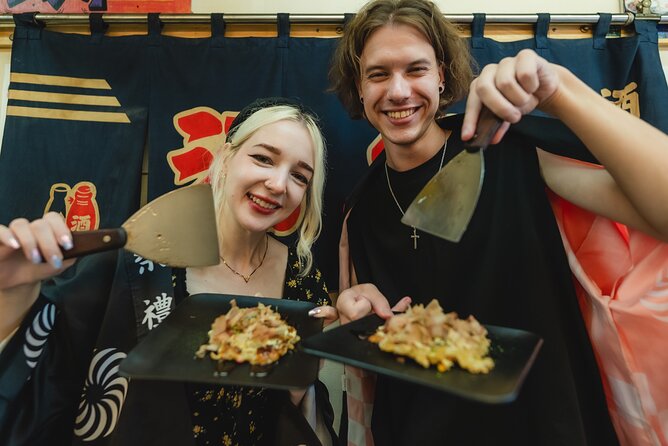
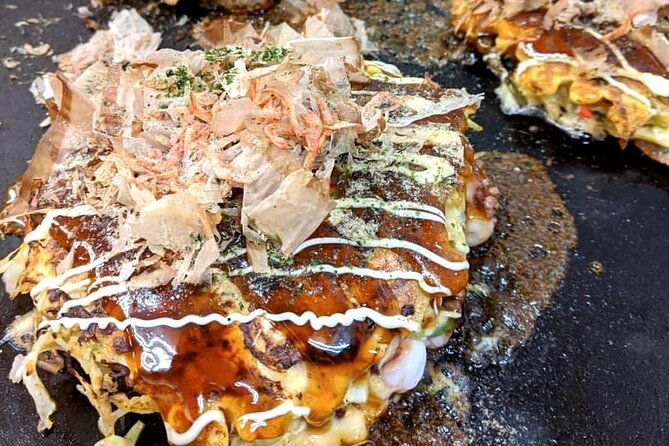
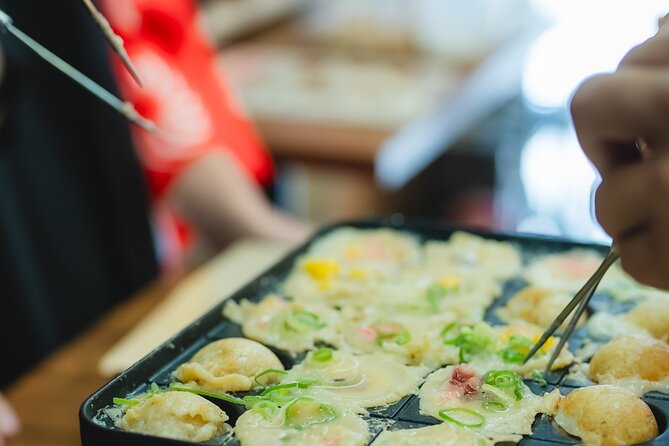
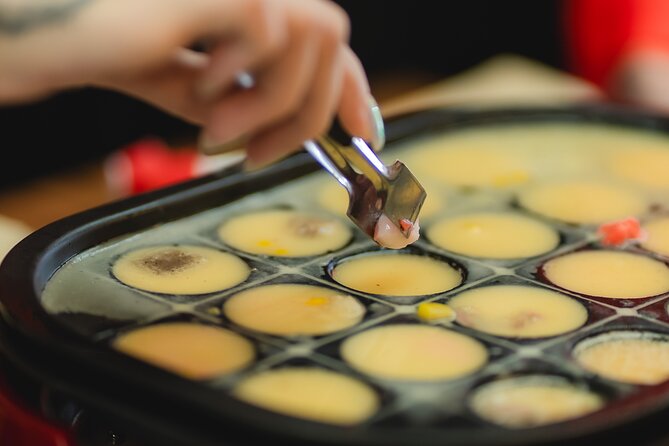
Takoyaki are the round, batter-based snacks Osaka is known for. The fun comes from cooking them on the special grill and turning them as they set. Okonomiyaki is the larger savory pancake, cooked on a teppan grill and finished as part of the meal. The supplied ingredients and utensils mean you do not need to bring anything beyond an appetite and a willingness to participate.
You should not expect a chef-training course with long explanations about knife skills or regional food theory. The appeal is practical and social. You make familiar Osaka foods with your group, learn by doing, and eat the result during the same short session.
That format works particularly well for beginners. One group of seven included novice cooks and asked for a very hands-on session. Jalar worked with each person and helped the group learn as they went. If your family has mixed confidence in the kitchen, that is useful reassurance. Nobody needs to arrive knowing how to handle a takoyaki grill.
A few more Osaka trips to weigh up
- Osaka: Shinsekai Food Tour with 13-15 Dishes at 5 Eateries
★ 4.8 · 2,204 reviews - Osaka Food Tour: 13 Dishes at 5 Local Eateries
★ 5.0 · 2,149 reviews - Hungry Osaka Street Food Tour:15 Tastings & 3 Drinks with a Local
★ 5.0 · 1,727 reviews
The takoyaki and okonomiyaki portion
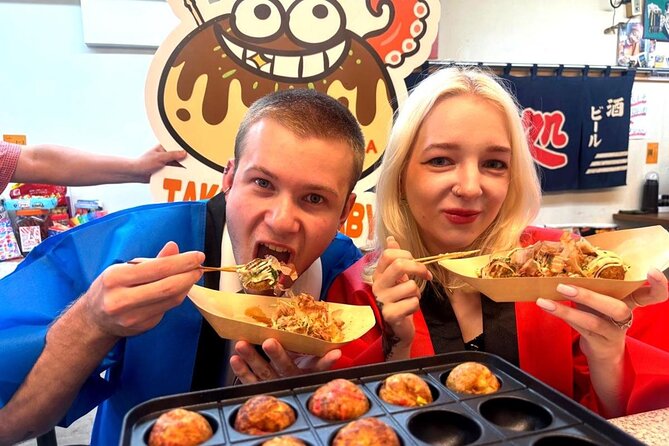
The food is the center of the experience, so it helps to know what you are paying for. The package includes takoyaki ingredients, cooking utensils, and the okonomiyaki meal. Soda, alcoholic beverages, and snacks are also included.
The two dishes offer different kinds of participation. Takoyaki is fiddly and playful, with small portions that invite everyone to have a turn. Okonomiyaki is more of a shared meal and gives the group something substantial to eat after the cooking begins.
I like this combination because it avoids the limits of a tasting tour. You are not simply receiving a bite and moving on. You can see how the food changes on the grill, work together, and enjoy the satisfaction of making something that becomes lunch or dinner.
The tradeoff is that the food may not arrive on your schedule. Cooking is part of the event, and a large group needs to take turns around the grill. With a maximum of 15 participants, the class remains limited in size, but it is still worth encouraging your party to join in rather than leaving all the work to one person.
The experience is also more suitable for people who like casual food than for anyone seeking a polished restaurant meal. Expect shared activity, conversation, and a bit of kitchen mess. That is the point. The meal is tied to the fun of the preparation.
Dagashi snacks bring a childhood festival feel
The unlimited dagashi snacks are one of the more unusual features. Dagashi are inexpensive Japanese treats associated with children, neighborhood snack shops, and festival-style eating. They are generally small, playful items rather than a formal dessert course.
For families, this gives the experience another layer beyond the two cooked dishes. Children can try several snacks, and adults get a taste of a familiar part of everyday Japanese food culture that may not appear on a standard restaurant menu.
I would treat the dagashi as a chance to sample, not as the main meal. The advertised food includes okonomiyaki and takoyaki ingredients, while the snacks add variety between the cooking and games. Since they are unlimited, you do not need to decide which single item to choose or worry about using up a limited serving.
This feature also helps younger children stay interested while the food cooks. The session is not only about waiting beside a hot grill. There are small treats and activities to keep the pace moving.
Festival games and happi coats
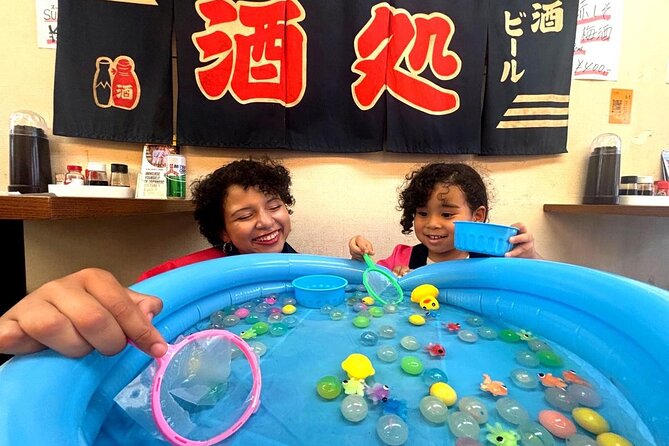
The experience includes classic festival activities, including super ball scooping. The game involves trying to scoop small rubber balls from water using a delicate paper scoop. It is simple, quick, and easy to understand even if you do not speak Japanese.
You also get the chance to wear happi coats for group photos. These short festival-style coats are strongly linked with Japanese celebrations and make the pictures more distinctive than ordinary food snapshots. If you are booking for a birthday, reunion, or multigenerational family trip, this is a useful photo opportunity.
The games are not a substitute for a full cultural workshop. You will not be spending the afternoon learning a range of traditional festival skills. Instead, they work as short breaks that keep a 90-minute food session lively and give children something active to do.
That balance is important. Some adults may prefer a quiet cooking class, while young children can lose interest if they must stand still for too long. Here, the cooking, snacks, game, and photos create several different ways to participate.
Same city, a completely different kind of day:
- Osaka Go Karting Tour with Funny Costume
★ 5.0 · 2,658 reviews - Osaka Castle: Museum and Tower Entry Ticket
★ 4.5 · 2,380 reviews - Osaka: Tea Ceremony Experience
★ 4.9 · 1,426 reviews - Osaka Kickstart: Hotspots & Hidden Gems Tour
★ 5.0 · 1,306 reviews
What the 90-minute schedule means for you
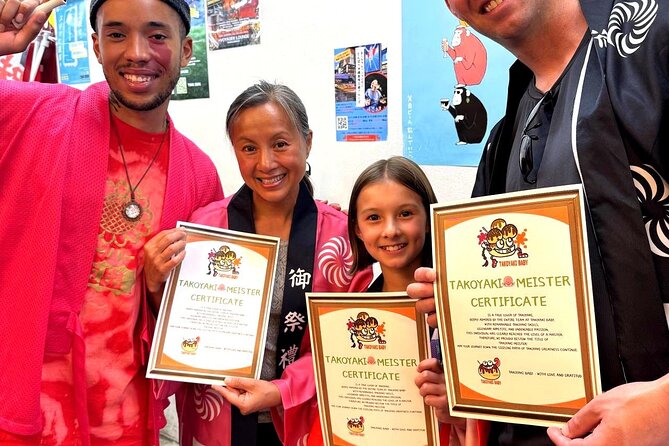
The total duration is approximately one hour and 30 minutes. That is long enough to cook and eat two well-known Osaka foods, but not long enough for a relaxed, drawn-out meal.
You will meet at 2-chōme-4-5 Dōtonbori, Chuo Ward, Osaka, postal code 542-0071. The activity ends back at the same meeting point, so you are not left at a different neighborhood or transport stop.
The Dotonbori location is practical if you are already spending time in central Osaka. It also makes the experience easy to pair with other plans in the same area. Private transportation is not included, so you must make your own way to the meeting point. The stated details do confirm that the location is near public transportation.
Because the class begins and ends at one place, I would avoid booking it too tightly against a train, reservation, or airport transfer. The activity is short, but group cooking can take a few extra minutes if everyone wants a turn, a snack, or a photo.
Confirmation is provided at booking, and the ticket is mobile, which keeps the arrival process simple. Free cancellation is available if you cancel at least 24 hours before the local start time. Changes or cancellations made later are not accepted for a refund.
Is the $65.32 price fair?
The adult price is listed as $65.32 per person. Children in elementary school and under are listed at ¥7,000, so families should check the child pricing carefully before completing a booking, especially if exchange rates affect the final amount.
At first glance, the price may look high for a 90-minute meal. You are paying for more than the ingredients, though. The fee covers the cooking setup, utensils, food, snacks, drinks, festival games, happi coat photos, and guided help during the activity.
The value improves for groups that plan to participate fully. If your party cooks, eats, plays, and takes photos, the experience fills its short schedule with several activities. If you mainly want prepared takoyaki and okonomiyaki, a regular restaurant in Dotonbori will likely cost less and give you more time at the table.
Alcoholic beverages are included, which may add value for adult groups. Families should also note that soda and snacks are included, making the package more flexible for different ages. The combination is convenient because you do not need to arrange separate drinks or a second stop for small treats.
I see the strongest value for a family or group that wants one shared activity. A solo visitor looking for the lowest-cost way to eat Osaka food would have better-priced options. A group of seven or more can also benefit from the social format, provided everyone wants to take part rather than sit back.
Who will enjoy this most?
This is a strong match for families with children, especially when adults want an activity that is more engaging than sightseeing alone. Children can cook, snack, play, and take photos, while adults still get to enjoy two major Osaka dishes.
It also suits grandparents and multigenerational groups. The activity takes place in one location and does not involve walking between food stalls. Everyone can work at the grill or participate at a comfortable level.
Friends and larger groups should also consider it. The maximum is 15 people, which is large enough for a reunion or small celebration but limited enough to keep the format personal. The hands-on level can be adjusted. Jalar helped one group of seven with varying cooking ability, including complete beginners.
You may want to choose another activity if you dislike group cooking, have very little spare time, or want a detailed lesson about Osaka cuisine. The focus here is shared fun and food preparation, not a long lecture or a serious culinary course.
Service animals are allowed. The experience is near public transportation, but private transportation is not part of the price. Those details make it easier to plan, though you should still check your route to Dotonbori before setting out.
A practical way to plan your visit
Arrive ready to participate. The experience is designed around cooking, so you will get more from it if each person in your group takes a turn instead of assigning the whole task to one confident cook.
For a family, I would let children handle the parts that can be done safely with adult help, then give them time for the games and photos. The food, snacks, and activities are all part of the same short session, so keeping everyone involved is better than trying to rush through the cooking.
If you are booking for a large group, decide in advance that everyone will have a chance at the grill. The maximum of 15 participants is manageable, but a group can still lose time if several people want to do every step at once.
The mobile ticket is convenient, and the meeting point is fixed at the start and finish. Keep the cancellation deadline in mind: a full refund requires cancellation at least 24 hours before the start time, based on Osaka local time.
Should you book this Osaka food experience?
Book it if you want to turn Osaka street food into a shared family memory. The best parts are the hands-on takoyaki and okonomiyaki cooking, the unlimited dagashi snacks, and the festival touches that give children and adults several ways to join in.
The price is easier to justify when you use the full package: food, drinks, games, photos, and guidance. It is less attractive if you only want a quick and inexpensive meal.
For families, novice cooks, and groups of up to 15, I would give this experience a strong recommendation. Just allow the full 90 minutes, arrive with enough time to reach Dotonbori, and make sure your group wants to participate. The cooking is the main event, not a minor extra.
FAQ
Where does the experience begin?
It begins at 2-chōme-4-5 Dōtonbori, Chuo Ward, Osaka, 542-0071, Japan.
Where does the experience end?
The activity ends back at the meeting point.
How long does the experience last?
The experience lasts approximately one hour and 30 minutes.
What food is included?
Takoyaki ingredients, cooking utensils, and an okonomiyaki meal are included.
Are drinks and snacks included?
Yes. Alcoholic beverages, soda or pop, and snacks are included. Dagashi snacks are available without a stated limit.
Can children participate?
Yes. The experience is designed for families and groups of all ages. The listed price for children in elementary school and under is ¥7,000.
How many people can join?
The maximum group size is 15 participants.
More Food in Osaka
- Osaka Local Foodie Walking Tour in Dotonbori and Shinsekai
★ 5.0 · 985 reviews - Hungry Osaka Street Food Tour: 15 Dishes & 3 Drinks
★ 4.9 · 694 reviews - Kuromon Market Food Walking Tour in Osaka (6 stops, 6 tastes)
★ 5.0 · 550 reviews - Osaka: Guided Food Tour with 12 Dishes at 4 Local Eateries
★ 5.0 · 533 reviews
Just added around Osaka
- Samurai dress-up and shows, plus Tea Ceremony & Calligraphy★ 5.0 · 27 reviews
- Kyoto & Nara Private customized tour with English speaking Guide★ 4.5 · 99 reviews
- Well-balanced BENTO (lunch box) Cooking Class★ 5.0 · 35 reviews
- Urban Canvas: Osaka Street Art Bike Tour★ 5.0 · 47 reviews
- OSAKA:Feel the Power! Learn Taiko Drum from Professionals★ 5.0 · 28 reviews
- Volleyball in Osaka & Kyoto with Locals!★ 5.0 · 21 reviews
- 1.5〜2 Hours Traditional Kintsugi Work Shop in Namba Osaka★ 5.0 · 75 reviews
- Umami Town Street Food Tour★ 5.0 · 120 reviews
Food, compared.
Shinjuku Food Tour (13 Dishes at 4 Local Eateries)
Read our review →
Tokyo Tsukiji Fish Market Food and Culture Walking Tour
Read our review →
Shinsekai Food Tour with 13-15 Dishes at 5 Eateries
Read our review →
Osaka Food Tour: 13 Dishes at 5 Local Eateries
Read our review →
Shinjuku Food Tour (15 Dishes and 4 Eateries)
Read our review →
Best of Shinjuku: Izakaya Food Tour (4 Stops, 14+ Tastings)
Read our review →
Kyoto Night Foodie Tour in Gion (9+ dishes + 6 Sake tastings)
Read our review →
Hungry Osaka Street Food Tour:15 Tastings & 3 Drinks with a Local
Read our review →Browse the lists this tour appears in