
REVIEW · NAGASAKI TOURS
Nagasaki: Private Tour with Local Guide
Nagasaki is a city best understood in layers: a port open to foreign trade, a center of Christianity in Japan, and the site of one of the most painful events of the 20th century. This private tour gives you a local guide to connect those pieces, rather than sending you from sight to sight with only a map.
I like the flexible route, which lets you focus on the atomic-bomb memorials, foreign settlement history, food, religion, or a mix of all four. I also like the personal scale. Guides such as Yoshi, Rikako, and Kuribayashi-san have tailored visits around guests’ interests and added local context that is hard to find in a standard group tour.
The main drawback is that $109 per person covers the guide, not your meals, admissions, or transport during the tour. English ability can also vary by guide, so travelers who need detailed English explanations should confirm language arrangements before booking.
In This Review
- Key points at a glance
- Why a private tour helps in Nagasaki
- Starting with Nagasaki’s peace memorials
- Chinatown and the food of a port city
- Oura Church and Nagasaki’s Christian past
- Glover Garden and the foreign settlement
- What the four-hour and six-hour options really mean
- The walking, transport, and extra costs
- The guide makes or breaks the day
- Who should book this Nagasaki experience?
- Booking details worth knowing
- Should you book it?
- FAQ
- How long does the Nagasaki private tour last?
- What sights can the tour include?
- Is the tour private?
- Are meals included?
- Are entrance fees included?
- Is transportation included during the tour?
- What languages are available?
- Can I cancel the booking?
Key points at a glance
- Peace Park and the Atomic Bomb Museum: Expect a serious, thoughtful look at Nagasaki’s wartime past and its call for peace.
- A private route: You can request specific sights, choose a start time, and shape the day around your pace.
- Local food in Chinatown: Chanpon and Sara Udon offer an easy way to connect Nagasaki’s port history with its dining culture.
- Oura Church and Glover Garden: These hillside sights show how foreign trade and Christianity changed the city.
- Walking with public transport: The tour is mainly on foot, with taxis or public transport available at extra cost.
- Best for first-time visitors: A private guide can help you get your bearings quickly, especially if Nagasaki is a cruise-port stop.
Why a private tour helps in Nagasaki
Nagasaki is not a city of one central attraction. Its important sights are spread across different districts, and each district tells a different story. Peace Park lies in the Urakami area, while Chinatown and the former foreign settlement are closer to the port. Oura Church and Glover Garden sit on a hillside above the harbor.
That spread makes a private guide useful. You can ask for a route that matches your interests instead of spending half a day deciding which tram, street, or museum to choose next. Your guide meets you at your hotel lobby, if it is within a reasonable walking distance, and the tour can then proceed on foot, by public transport, or by taxi.
The experience is offered as a four-hour or six-hour private tour. Four hours is enough for a focused visit, perhaps Peace Park and the Atomic Bomb Museum, or Oura Church and Glover Garden with Chinatown. Six hours gives you time to combine the city’s major themes without rushing every stop.
The private format also matters if you are visiting from a cruise ship. One guest described Nagasaki as the first Japanese port on a Norwegian Spirit cruise and found the guided visit useful for taking in more than the immediate waterfront. You will still need to manage your own timing carefully, since transport costs and the exact route depend on the plan you choose.
A few more Japan trips to weigh up
- Tokyo 6hr Private Tour with Government-Licensed Guide
★ 5.0 · 3,902 reviews - Private Tour to Mt. Fuji and Hakone (Fully Licenced Operator)
★ 5.0 · 1,910 reviews - Fushimi Inari Hidden Hiking Tour (Private Option Available)
★ 5.0 · 1,750 reviews
Starting with Nagasaki’s peace memorials
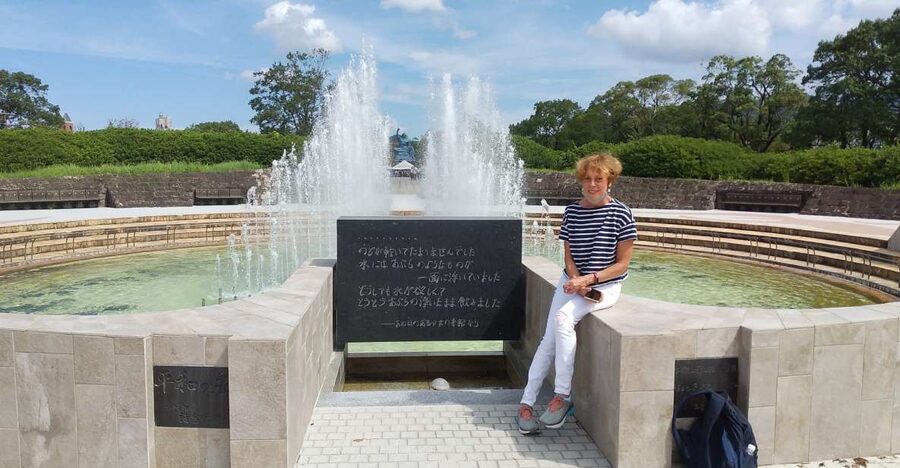
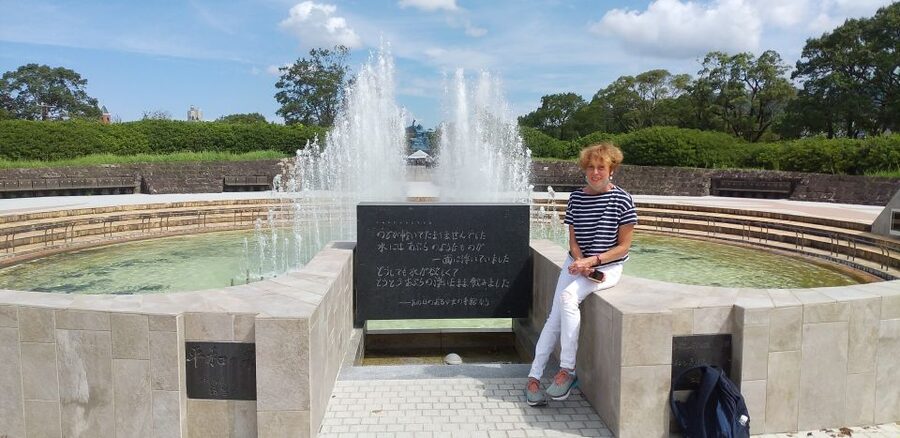
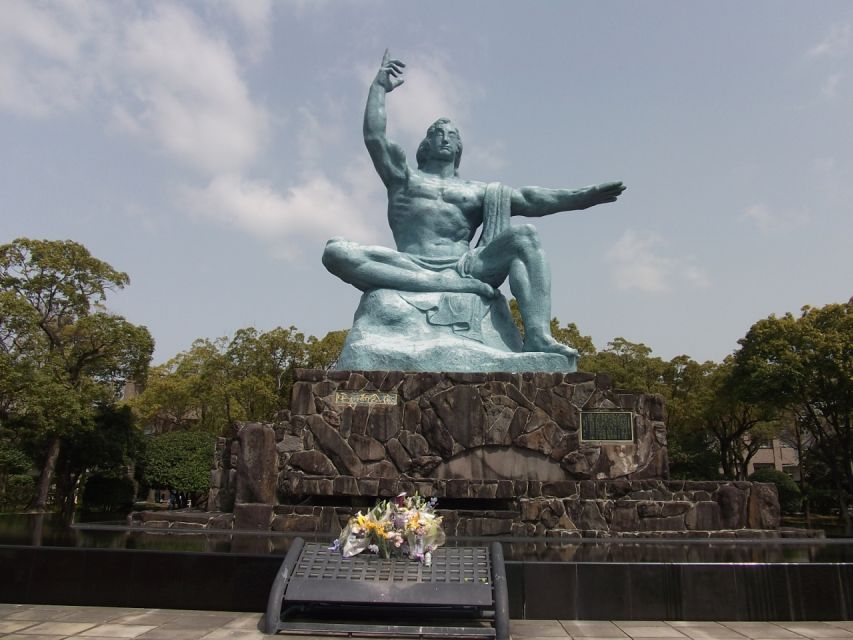
A typical six-hour route begins at Nagasaki Peace Park. The park’s Peace Statue is the visual focus, and your guide can explain the meaning attached to its pose and location. This is not a quick photo stop. It is a place to slow down and consider how Nagasaki presents its past and its message for the future.
From there, the route continues to Hypocenter Park. The park marks the point directly below the atomic bomb’s explosion, and the simple setting makes the history feel especially immediate. You can also see the surviving wall of Urakami Cathedral, a reminder that the blast destroyed much of the surrounding area while fragments of the former city remained.
The cenotaph here is another quiet, serious stop. I would give this part of the tour your full attention. The subject is difficult, and a guide can provide needed background while helping you understand what you are seeing. The private setting gives you space to ask questions without feeling that you are holding up a large group.
The Nagasaki Atomic Bomb Museum adds more detail. Exhibits and recovered objects show the human cost of the bombing, the physical damage, and the years that followed. The museum is not designed as light sightseeing, so you may prefer to visit it early in the day when you have enough time and energy to process it.
One of the strongest reasons to choose a guide here is context. A museum label can identify an object, but a local guide can help explain how the memorials fit into Nagasaki’s identity today. Yoshi, for example, was praised for combining the memorial visit with a broader lesson about the city and its role in educating people about peace.
If you have children or anyone in your group who may find the museum upsetting, say so before the tour begins. The route is customizable, and the guide can adjust how much time you spend inside or place the museum later in the day.
Chinatown and the food of a port city
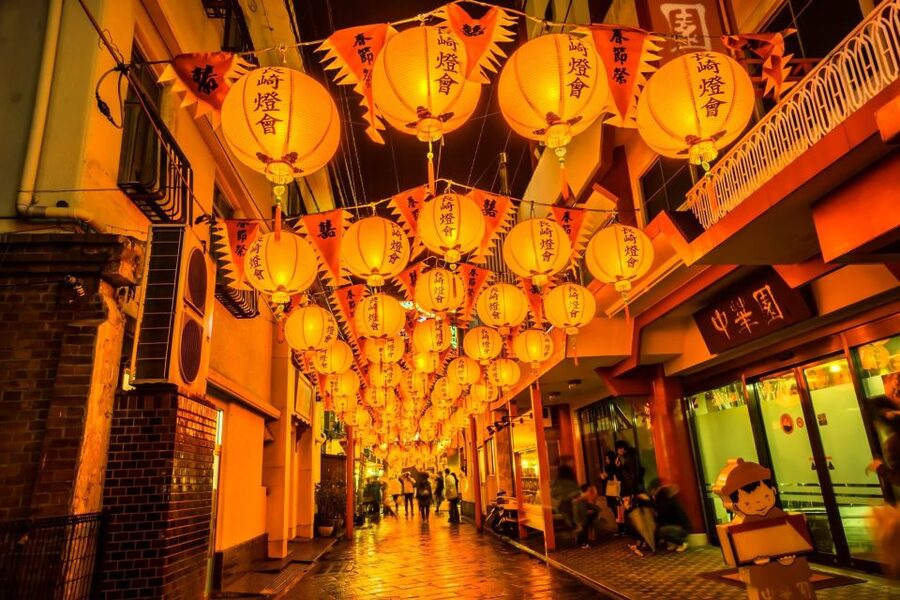
Nagasaki Chinatown offers a change of pace after the memorial district. The neighborhood reflects the city’s long role as a gateway for cultural exchange between Japan and other parts of Asia. Your guide can explain how Nagasaki’s port brought outside influences into Japan and how those connections shaped the local food scene.
Lunch is not included, but this is a good point to ask your guide for help choosing a local restaurant. Two dishes to look for are Chanpon noodles and Sara Udon. Chanpon is a hearty noodle dish, while Sara Udon is a plate of noodles with toppings and sauce. They are closely linked with Nagasaki’s port culture and make a more meaningful meal than simply stopping at a familiar international chain.
The tour does not promise a particular restaurant, and you pay for food yourself. That is a small limitation, but it also leaves room to match the meal to your budget and dietary needs. Tell the guide what you can and cannot eat before lunch so the stop can be planned sensibly.
Chinatown is also a useful pause in a long walking day. The six-hour route covers serious museums and hillside sights, so lunch gives you time to sit down and reset. If your group prefers history to food, you can ask for a shorter meal stop and more time elsewhere.
Oura Church and Nagasaki’s Christian past
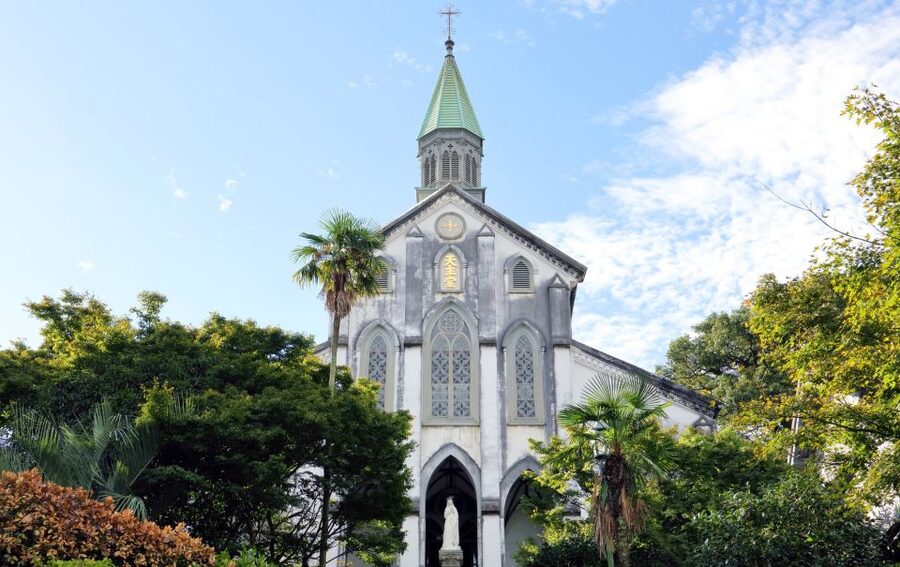
Oura Church brings another part of Nagasaki’s story into view. The church served Christian residents from the mid-19th century and is recognized as a National Treasure. It is also described as Japan’s oldest surviving church, making it one of the city’s most important historic buildings.
The visit is especially valuable after you have heard about Nagasaki’s foreign trade. The church is not simply an architectural stop. It points to the Christian community that took root in the city and to the connection between Nagasaki and the wider world.
Your guide can help explain the religious and cultural setting, including why Christianity has such a strong place in Nagasaki’s story. Rikako, one of the guides associated with this route, has been praised for adding details about Japanese language and culture as well as historical facts. That sort of explanation can help you read the city beyond its buildings.
Allow for a change in pace here. Oura Church and the area around it are part of the hillside sightseeing district, so the route may include slopes and steps. The tour is described as wheelchair accessible, but accessibility can depend on the exact route, transport choice, and attractions selected. If anyone in your party has mobility needs, discuss the route before the day begins.
Same city, a completely different kind of day:
- Mt Fuji and Hakone 1-Day Bus Tour Return by Bullet Train
★ 5.0 · 26,383 reviews - 1-Day Tokyo Bus Tour
★ 5.0 · 14,250 reviews - PERFECT KYOTO 1-Day Bus Tour
★ 5.0 · 13,518 reviews - Tokyo: TOKYO SKYTREE® Admission ticket
★ 4.5 · 11,192 reviews
Glover Garden and the foreign settlement
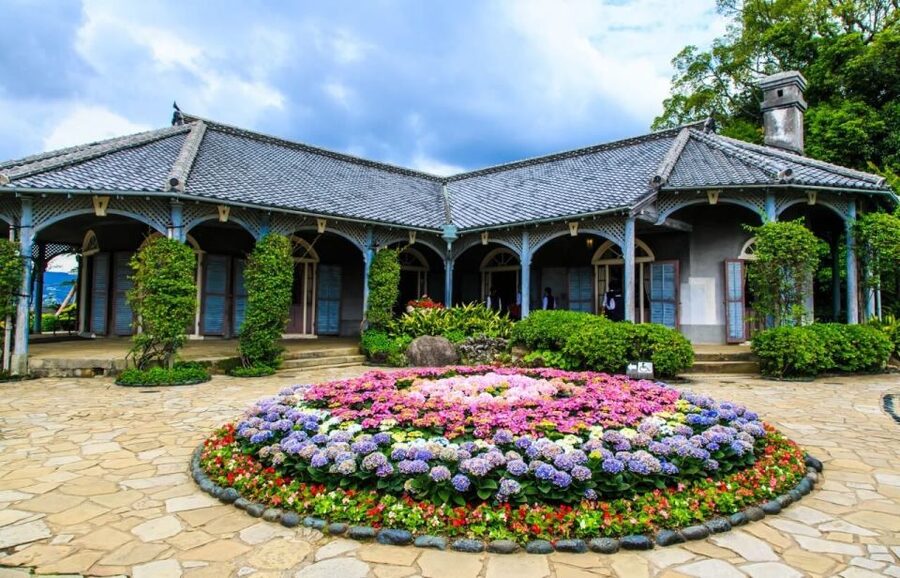
Glover Garden gathers Western-style homes and buildings on the hillside around the former home of Thomas Blake Glover, a Scottish entrepreneur. The buildings were reassembled here, creating a compact way to see the architectural side of Nagasaki’s international past.
The setting also gives you a different view of the city. From this hillside district, you can look out toward the port and understand why Nagasaki became a meeting point for commerce and foreign influence. The attraction combines buildings, city views, and local history, so it works well near the end of the route.
Glover Garden can be a highlight for travelers who enjoy architecture and social history. It may be less appealing if your priority is food or wartime history and you have only four hours. This is exactly where the private format earns its keep. You can ask your guide to include it, shorten the visit, or skip it in favor of another district.
Oura Church and Glover Garden are often paired because they are close to one another and share a connection with Nagasaki’s foreign settlement. Still, they are not identical stops. Oura focuses more on religion and community, while Glover Garden gives you a look at international business, homes, and the city’s port-facing outlook.
What the four-hour and six-hour options really mean
The four-hour option is best treated as a focused tour, not a miniature version of every major sight. You might choose the Peace Park and Atomic Bomb Museum for a serious historical morning, or Chinatown, Oura Church, and Glover Garden for a port and culture route.
The six-hour option allows a fuller combination. A sample day starts at your hotel, visits Peace Park, Hypocenter Park, and the Atomic Bomb Museum, stops for Chinatown and lunch, then continues to Oura Church and Glover Garden. That is a satisfying overview, but it is also a full day of walking, museums, and hills.
I would choose six hours if Nagasaki is your main destination for the day. Choose four hours if you are arriving by cruise ship, have limited stamina, or already know which two areas matter most to you. A longer tour does not automatically mean a better tour. It is better when you use the extra time for places you truly want to see.
The start time is flexible, subject to availability. That helps if you are working around a train, cruise schedule, or another booking. Your guide is scheduled to wait in the requested hotel lobby 10 minutes before pickup, but hotel pickup on foot applies only when the accommodation is within a reasonable distance.
The walking, transport, and extra costs
This is primarily a walking tour. That is a good fit for Nagasaki because walking lets you notice the shift between memorial parks, commercial streets, religious sites, and hillside neighborhoods. It also means you should wear comfortable shoes and be ready for a day that may include slopes.
Public transport can be used during the tour, and a taxi can be arranged if you prefer. These costs are not included. Transport to and from the meeting point is also your responsibility, so budget beyond the $109 per-person tour price.
Admission fees are not included either. The exact total depends on the route you choose and the attractions you enter. A route centered on outdoor sights will cost less in admissions than one that includes several ticketed attractions.
At $109 per person, the value depends heavily on group size. For one or two people, you are paying a fair amount for a private guide, custom planning, and direct help during the day. For a larger private group, the per-person cost may feel more attractive. It is not an all-inclusive sightseeing pass, but it can save you planning time and help you use a short visit well.
The guide makes or breaks the day
The strongest part of this experience is the chance to work with a local guide who adjusts the route to you. Kuribayashi-san contacted a guest several days before the tour to ask about interests, then built the day around those answers. That early conversation is exactly what you should expect from a well-run private visit, and you should use it to state your priorities clearly.
Yoshi has been praised for selecting activities that suited the group and for bringing personal passion to the city’s peace message. Rikako has been noted for combining history with Japanese language and cultural details, along with personal knowledge of life in Nagasaki. These examples show how different guides can shape the same basic route in different ways.
There is one important caution. A German-speaking guest reported that the guide’s English was difficult to understand and that explanations at some sites felt uncertain. The overall rating is 4.8 out of 5 from 18 ratings, but language quality is still something to confirm. If precise English interpretation is essential, send detailed questions before the tour and ask about the assigned guide.
The available languages are English and Japanese. A private tour gives you a better chance to ask for repetition or clarification than a large group, but communication still depends on the individual guide.
Who should book this Nagasaki experience?
I would recommend this tour to first-time visitors who want help connecting Nagasaki’s major sights. It is particularly useful if you have only one day, are stopping from a cruise ship, or want someone to handle the route while you focus on the city.
It also suits families and private groups with different interests. One person can request the peace memorials, another can ask for Chinatown and food, and the guide can build a sensible plan around both. The ability to personalize the day is more useful here than on a compact sightseeing route.
History-minded visitors should consider the six-hour option. The memorial district deserves time, and adding the museum, Chinatown, Oura Church, and Glover Garden creates a much fuller picture of Nagasaki.
I would be more cautious if you want a fixed, low-cost package with every admission and transport fee included. I would also think twice if your group dislikes walking or needs guaranteed specialist-level English interpretation. In those cases, confirm the route, language, and accessibility details before paying.
Booking details worth knowing
The experience is private, and the guide will contact you to confirm the booking and logistics. A reservation is not fully confirmed until a guide accepts it. If no guide is available, the local partner continues searching and sends updates until close to the tour date.
You can reserve now and pay later, which is useful when your Japan plans are still changing. Free cancellation is available up to 24 hours before the start time. The tour operates rain or shine, so bring suitable clothing and shoes for the forecast.
Food, drinks, entrance fees, and transport during the tour cost extra. Pickup is included on foot from a nearby accommodation, while transport to the meeting point is not included. These details are simple, but knowing them ahead of time prevents the $109 price from feeling misleading.
Should you book it?
Book this private Nagasaki tour if you want a human guide to connect the city’s peace memorials, port culture, Christian heritage, and foreign settlement in one flexible day. The strongest value comes from the personal planning, not from the number of sights alone.
Choose six hours for the fullest route, and tell the guide before arrival which subjects matter most. If you want only the Atomic Bomb Museum and Peace Park, four hours may be enough. If you want the museum, Chinatown lunch, Oura Church, and Glover Garden, allow the longer time and budget for admissions, food, and transport.
I would book it for a first visit, especially from a cruise port or with limited time. Just confirm the guide’s English ability and your preferred route in advance. That small step addresses the main weakness and gives you the best chance of a thoughtful, personal introduction to Nagasaki.
FAQ
How long does the Nagasaki private tour last?
You can book either a four-hour or six-hour private tour. Starting times depend on availability.
What sights can the tour include?
A sample six-hour route includes Nagasaki Peace Park, Hypocenter Park, the Nagasaki Atomic Bomb Museum, Chinatown, Oura Church, and Glover Garden. The route can be personalized.
Is the tour private?
Yes. All bookings are for a private group, so the itinerary can be adjusted to your interests and preferences.
Are meals included?
No. Food and drinks are not included. You can stop at a local restaurant, with dishes such as Chanpon noodles and Sara Udon available in Nagasaki.
Are entrance fees included?
No. Entrance fees for attractions are paid separately.
Is transportation included during the tour?
The tour is mainly on foot. Public transportation or a taxi can be used, but those costs are not included.
What languages are available?
The tour is offered in English and Japanese. The guide assigned to your booking will contact you about the tour arrangements.
Can I cancel the booking?
You can cancel up to 24 hours before the tour starts for a full refund. The experience also offers reserve now and pay later booking.
Just added around Japan
- Tokyo: Customizable Private Guided Walking Tour★ 4.5 · 129 reviews
- Private Harajuku Omotesando Architecture Tour★ 4.9 · 18 reviews
- Tokyo: Guided Helicopter Ride★ 4.9 · 24 reviews
- Tokyo: Guided Walking Tour of Tsukiji Market with Lunch★ 4.4 · 24 reviews
- Tokyo: Private Personalized Local Food Tour★ 4.5 · 101 reviews
- Tokyo GINZA: KONPARU Japanese Cabaret Show with Drink★ 4.8 · 38 reviews
- Tokyo: Guided Walking Tour of Tsukiji Market with Breakfast★ 4.4 · 134 reviews
- Tokyo: Gotokuji Cat Temple, Shinjuku Cat Cafe & 3D Cat Tour★ 4.9 · 38 reviews
Nagasaki Tours, compared.
Nagasaki Full-Day Private Tour with Government-Licensed Guide
Read our review →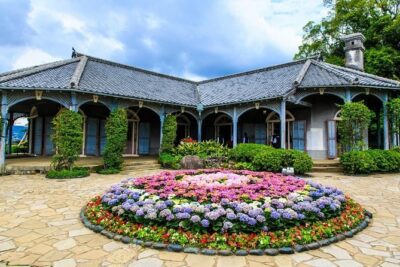
Nagasaki Half-Day Private Tour with Government-Licensed Guide
Read our review →
Visit Gunkanjima Island (Battleship Island) in Nagasaki
Read our review →Browse the lists this tour appears in