
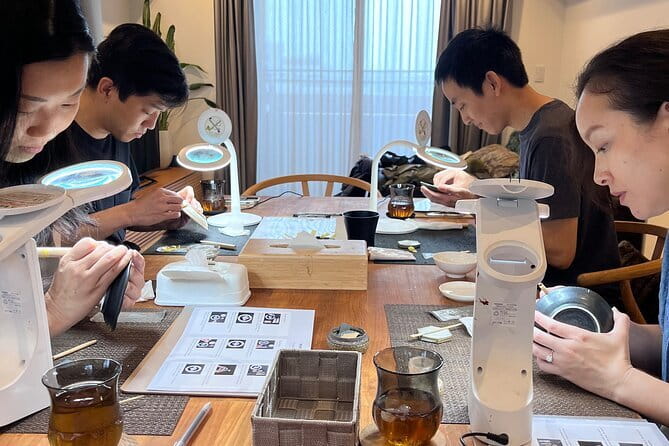
REVIEW · WORKSHOPS
Kintsugi Workshop Class in Shibuya, Tokyo with mon cadeau
Kintsugi turns a broken bowl into something worth keeping, tracing its cracks with gold instead of hiding them. In Shibuya, Mon Cadeau gives you about two hours to try this Japanese craft yourself, with matcha, local sweets, and close guidance from Michiko and Yuki.
I like the tiny group size, capped at six people, because this is a hands-on craft rather than a talk you watch from the back. I also like that you choose your own piece of crockery from the studio collection, so the finished object feels personal rather than mass-produced. The main drawback is the price, $145.35 per person, and the strict non-refundable policy, which makes this a booking to plan carefully.
In This Review
- Key details of the Shibuya kintsugi class
- Why kintsugi makes a good Tokyo break
- Arriving in Shibuya and settling in with matcha
- Choosing your pottery from Mon Cadeau’s collection
- Learning the repair process step by step
- Why a maximum of six people matters
- Taking home a personal Tokyo souvenir
- Is $145.35 a fair price?
- Who should book this workshop?
- What the feedback tells me about Mon Cadeau
- Practical advice before you book
- Should you book the Mon Cadeau kintsugi class?
- FAQ
- How long does the kintsugi workshop last?
- Where does the activity meet?
- How many people can join the workshop?
- Do I choose the pottery piece myself?
- Are tea and sweets included?
- Can I cancel or change my booking?
Key details of the Shibuya kintsugi class
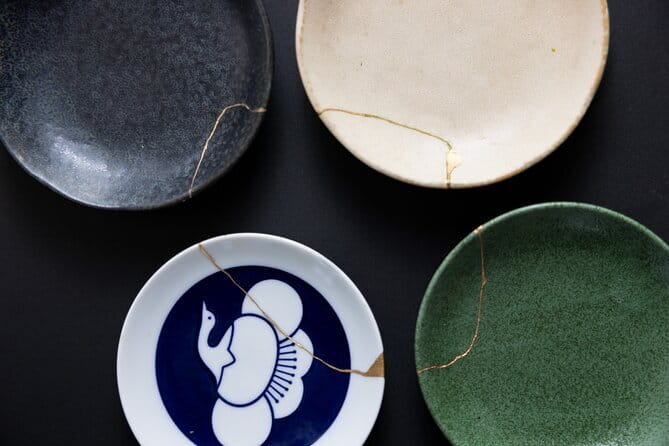
- A two-hour hands-on workshop: You repair one selected piece of crockery rather than simply hearing about kintsugi.
- Guidance from Michiko and Yuki: The instructors demonstrate each stage and offer individual help as you work.
- A maximum of six people: The small setting gives you room to ask questions and receive practical attention.
- Matcha and Japanese sweets included: The tea service helps set a quiet pace before the crafting begins.
- Your repaired piece goes home with you: The main souvenir is something you worked on yourself.
- A private activity for your group: Only your booked group participates, subject to the stated group limit.
Why kintsugi makes a good Tokyo break
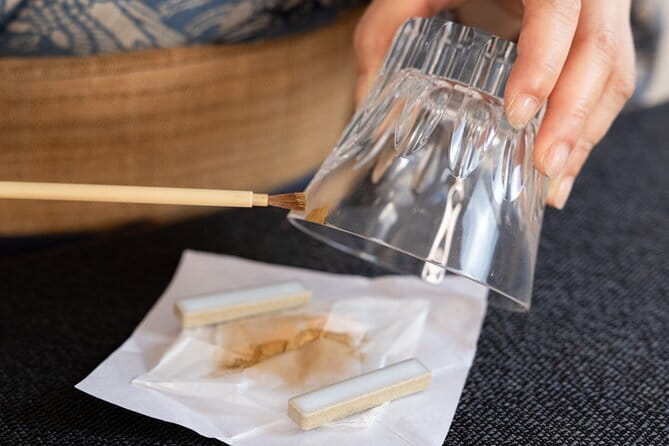
Tokyo can fill every hour with stations, shops, temples, neon, and long walks. A kintsugi class gives you a reason to sit still. For two hours, your focus shifts from navigating Shibuya to handling a small object and deciding how to bring its broken parts together.
Kintsugi is the Japanese practice of repairing damaged pottery with gold-colored adhesive. Its appeal is not only visual. The repair marks remain visible, treating damage as part of an object’s story rather than something to disguise. That idea gives the class more weight than a standard craft session, but you do not need prior knowledge or artistic skill to take part.
The format also suits a couple, parent and child, or a small group of friends. One participant booked the class with a daughter, while another couple found the session both enjoyable and educational. The workshop can be a thoughtful choice for someone who prefers making something to collecting another Tokyo souvenir.
A few more Tokyo trips to weigh up
- Sushi Making Tokyo Roll and Authentic Japanese Sushi Class
★ 5.0 · 3,971 reviews - Tokyo: Roll and Authentic Sushi Making Class in Asakusa
★ 4.9 · 1,957 reviews - Tokyo Shinjuku Chopsticks Making Class
★ 5.0 · 1,763 reviews
Arriving in Shibuya and settling in with matcha
The meeting point is Central Hospital at 25-1 Shinsenchō, Shibuya, Tokyo 150-0045. The activity returns to this same meeting point at the end. The supplied details do not give a station exit, walking time, or precise room instructions, so I would check the confirmation carefully and allow extra time to find the address.
The class begins with matcha tea and Japanese sweets. This is more than a snack break. It creates a gentle change of pace before the practical work starts, and it gives you a chance to settle in with the instructors. Several comments specifically praise the tea and local sweets, so this part is an important piece of the experience rather than a minor extra.
Michiko is repeatedly singled out for her warm welcome, patience, and hospitality. Yuki is also described as kind and helpful. That matters here because kintsugi involves small, careful movements, and a rushed instructor could make the class feel like a race to finish. The small group lets the opening conversation remain personal instead of turning into a formal lecture.
Choosing your pottery from Mon Cadeau’s collection
After the introduction, you choose a piece of crockery to repair from Mon Cadeau’s collection. This is one of the strongest parts of the format. You are not handed an identical item to decorate alongside everyone else. You make a choice, then spend the rest of the session working with that particular shape and break.
The available information does not specify the exact range of bowls, cups, plates, or other pieces, nor does it say how damaged each item is. You should therefore expect the choice to come from the studio’s prepared collection, rather than bringing your own favorite family heirloom. That is a sensible arrangement for a short class, since the instructors can provide pieces suited to the workshop process.
Your selection also affects the feel of the final souvenir. A small cup may be easy to hold and display, while a plate could give the repaired lines more room to show. The class description does not promise a particular item, color, pattern, or number of cracks, so choose with an open mind.
Learning the repair process step by step
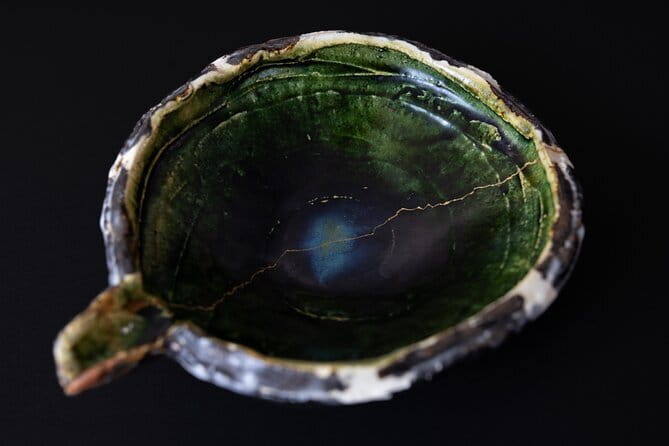
The instructors demonstrate the technique, then guide you through restoring your own piece. The session is designed for hands-on participation. You are not simply watching Michiko or Yuki repair pottery while you take photographs.
The available description does not list every material or technical stage, so you should not expect a specialist course in traditional Japanese lacquerwork. It is presented as a modern kintsugi class, using gold glue to make the repair visible. That makes it accessible to first-time participants, including people who have only encountered the idea online.
Several comments praise the clear explanations and patient help. One participant found the guidance well judged, with support available when needed to help each person succeed. That balance is useful: you get a proper demonstration, but you also have space to work at your own pace rather than copying every movement under pressure.
The subject has a reflective side, but the class remains practical. You learn by handling the crockery, following the demonstrations, and making your own repair. If you want a long lecture on Japanese aesthetics, this may feel too short. If you want a meaningful introduction paired with a real object to take home, the two-hour format makes sense.
Same city, a completely different kind of day:
- Mt Fuji and Hakone 1-Day Bus Tour Return by Bullet Train
★ 5.0 · 26,383 reviews - 1-Day Tokyo Bus Tour
★ 5.0 · 14,250 reviews - Tokyo: TOKYO SKYTREE® Admission ticket
★ 4.5 · 11,192 reviews - Tokyo: teamLab Planets TOKYO Digital Art Museum Entry Ticket
★ 4.6 · 9,779 reviews
Why a maximum of six people matters
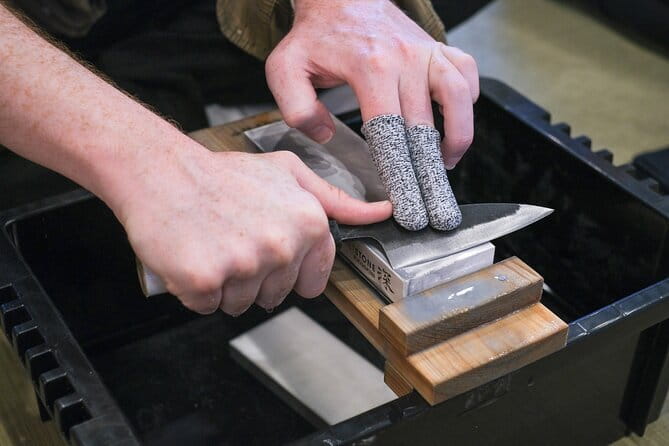
A six-person limit is a real advantage for this kind of class. Small repairs need close attention, and you may want help with the position of a piece or the amount of adhesive. In a large class, you could spend much of the session waiting for the instructor to reach your table.
This activity is also private, meaning only your group participates. The wording includes a maximum of six people, so I would confirm that your booking fits within that limit. For couples and families, the private format can make the session feel more relaxed. For solo participants, it avoids the uncertainty of joining a large public class.
The intimate setting is part of what gives the workshop its calm character. The instructors can speak with you directly, and the class does not need to move at the speed of the least experienced person in a crowded room.
Taking home a personal Tokyo souvenir
The repaired crockery is the practical reward. Instead of buying a finished object in a shop, you leave with something you selected and worked on during your stay. Its value comes from the time and attention attached to it, not simply from its price or appearance.
You should keep your expectations realistic. The class lasts about two hours, and the supplied information does not promise a museum-quality restoration or a large piece of pottery. Your result will reflect a first attempt, which is part of the appeal. The gold repair line records your participation.
This makes the workshop especially suitable if you want a souvenir with a story. It also works well as a thoughtful gift for someone interested in Japanese culture, pottery, craft, or the philosophy behind visible repair. The finished piece may be less practical as a daily-use item than a store-bought dish, since care instructions and food safety details are not provided. I would treat it primarily as a keepsake unless the instructor explains otherwise.
Is $145.35 a fair price?
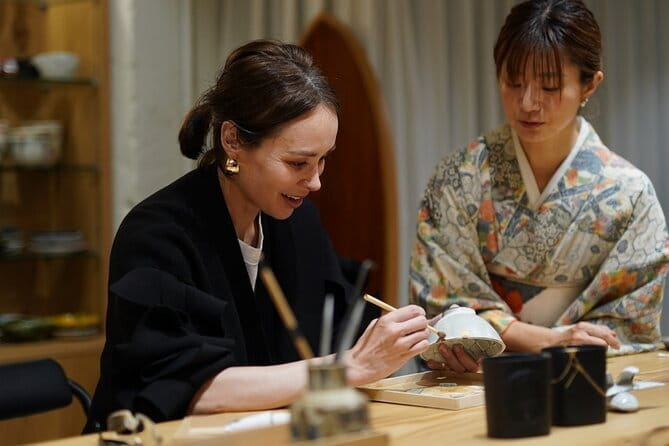
At $145.35 per person, this is not a cheap activity. You are paying more than the cost of a casual craft lesson because the price includes a private, very small-group setting, instruction, the pottery piece, matcha, sweets, and a guided cultural experience in central Tokyo.
The value depends on what you want from your time in the city. If your goal is the lowest-cost introduction to kintsugi, this will feel expensive. You might prefer to visit a shop, read about the art, or take a larger class.
I see the price more favorably if you value personal attention and a finished object. A maximum of six people means you are paying partly for access to the instructors. The tea service and welcoming atmosphere add to the experience, but the main value lies in making the piece yourself with help close at hand.
The class is booked an average of 23 days ahead, which suggests you should not leave it until the last moment if the timing matters to you. Since the booking is non-refundable and cannot be changed, check your Tokyo schedule, the meeting point, and your group size before paying.
Who should book this workshop?

I would recommend Mon Cadeau to you if you enjoy quieter cultural activities and want a break from Tokyo’s busy streets. It is a strong match for first-time kintsugi students because the class explains the process and provides step-by-step help.
It also suits:
- Couples looking for a shared activity
- Parents and children who can take part in a careful craft
- Solo visitors who prefer a small private setting
- Anyone interested in Japanese ideas about repair and imperfection
- Visitors who want a handmade souvenir rather than another purchased trinket
You may want to skip it if you dislike detailed handwork, want a longer technical course, or need a flexible booking. The two-hour session gives you an introduction, not a full professional apprenticeship. The strict cancellation terms are also a serious concern if your plans are uncertain.
Most participants can take part, and service animals are allowed. The activity is near public transportation, although exact route details are not provided. If mobility is important to you, ask Mon Cadeau for more information about the room and the precise access route before booking.
What the feedback tells me about Mon Cadeau
The strongest pattern is the quality of the welcome. Michiko receives repeated praise for being kind, patient, and warm, while Yuki is also described as friendly and engaged. That personal approach is especially important in a class where beginners may worry about making a mistake.
The tea and sweets also receive specific approval. They are not the reason to book the class, but they help turn the session into a hosted cultural visit rather than a bare repair lesson.
The instruction gets strong marks too. The explanations are clear, and help is offered without taking over the work. One comment gave four stars rather than five, noting that the class was enjoyable and educational while also signaling some limits around what the workshop could cover. That is a useful reminder to see this as a friendly introduction, not an advanced technical program.
Mon Cadeau is new on the booking platform described in the tour information, so there may be no reviews there yet. The business does have 74 Google reviews with a five-star rating and 100 percent recommendation shown in the supplied details. I would still read the current confirmation carefully, since the no-refund policy leaves little room for correcting a mistaken date.
Practical advice before you book
Give yourself extra time to reach Central Hospital in Shibuya. The address is specific, but the details do not include a station exit or turn-by-turn directions.
Wear something that lets you work comfortably with your hands. The class description does not list clothing requirements, but careful craft work is easier when you are not distracted by bulky sleeves or a crowded bag.
Think about your souvenir expectations before you arrive. You will choose from Mon Cadeau’s collection, but the exact pottery options are not listed. If you have a strong preference for a cup, plate, color, or size, ask ahead rather than assuming it will be available.
Keep the rest of your day flexible enough to enjoy the slower pace. This is not a quick photo stop between major sights. The matcha, explanation, selection, demonstration, and repair all form one connected two-hour experience.
Should you book the Mon Cadeau kintsugi class?
Book it if you want a personal, calm introduction to kintsugi and like the idea of taking home a repaired piece you made yourself. The small group, patient instruction from Michiko and Yuki, tea and sweets, and private setting give the class a warm human feel.
Skip it if $145.35 is beyond your craft budget, you need refundable plans, or you want a detailed professional course. For the right reader, though, this is a thoughtful way to spend two hours in Tokyo, especially after several days of rushing from one sight to the next.
FAQ
How long does the kintsugi workshop last?
The workshop lasts approximately two hours.
Where does the activity meet?
The meeting point is Central Hospital, 25-1 Shinsenchō, Shibuya, Tokyo 150-0045, Japan. The activity ends back at the same meeting point.
How many people can join the workshop?
The group has a maximum of six participants. The activity is private, so only your booked group participates.
Do I choose the pottery piece myself?
Yes. You choose a piece of crockery from Mon Cadeau’s collection and then work on restoring it during the class.
Are tea and sweets included?
Yes. The workshop begins with matcha tea and includes local Japanese sweets.
Can I cancel or change my booking?
No. This experience is non-refundable and cannot be changed for any reason. If the provider cancels because the minimum number of participants is not reached, you will be offered another date or experience, or a full refund.
Just added around Tokyo
- Private Memorable Tokyo Tour with English Speaking Driver★ 5.0 · 30 reviews
- Private Tokyo Custom Full-Day Tour by Chartered Vehicle★ 5.0 · 16 reviews
- Private Sightseeing to Mt Fuji and Hakone with English Driver★ 5.0 · 51 reviews
- Tokyo Photography Masterclass – Private Photography Lesson★ 5.0 · 25 reviews
- Private Mt. Fuji Day Trip from Tokyo with English-Speaking Driver★ 5.0 · 33 reviews
- 4 Day Tour – Mount. Fuji, Tokyo, Hakone, Kamakura and Yokohama★ 5.0 · 19 reviews
- Private Tokyo Custom Half-Day Tour by Chartered Vehicle★ 4.5 · 13 reviews
- Private Unforgettable Mt Fuji Tour with English Speaking Driver★ 5.0 · 142 reviews
Workshops, compared.

Sushi Making Tokyo Roll and Authentic Japanese Sushi Class
Read our review →

Roll and Authentic Sushi Making Class in Asakusa
Read our review →
Ramen Cooking Class at Ramen Factory in Kyoto
Read our review →
Sushi Making Class in a Happi Coat near a Famous Spot
Read our review →

Sushi Making Osaka Roll and Authentic Japanese Sushi Class
Read our review →
Tokyo Sushi Making Class in Tsukiji with Professional Chef
Read our review →Browse the lists this tour appears in