
REVIEW · TEMPLE & SHRINE TOURS
Ise Jingu(Ise Grand Shrine) Full-Day Private Tour with Government-Licensed Guide
Ise Jingu is not simply another Japanese shrine stop. It is the country’s most sacred Shinto site, with worship centered on Amaterasu Omikami, the sun goddess. This private tour gives you a guide to explain the rituals, layout, and meaning behind the quiet forest paths, then adds old-town food streets and the coastal sights at Futami.
I like the chance to shape the day around three or four sites instead of being marched through every stop. I also like the personal touch offered by guides such as Yuka and Yoshinari Nishio, who have helped families adjust the pace and understand the shrine’s customs. The main drawback is practical: this is a walking and public-transport tour, so long distances, train or bus fares, and entrance fees are yours to manage.
In This Review
- Key points to know before booking
- Why Ise Jingu deserves a full day
- Geku, the outer shrine and the first lesson in Ise
- Naiku and the path to Amaterasu Omikami
- The Isuzugawa River and the role of purification
- Okage Yokocho brings the pilgrimage down to earth
- Meoto Iwa, where the sea meets Shinto symbolism
- Futami Okitama Shrine and the sacred rocks
- Hinjitsukan offers a look inside Meiji-era Japan
- What the private guide adds to the day
- Is the $153.50 price good value?
- Who should book this Ise tour?
- Should you book it?
- FAQ
- How long does the Ise Jingu private tour last?
- Is the tour private?
- Is transportation included?
- Is hotel pickup included?
- Which sites can I visit?
- Is an English-speaking guide included?
- Are admission fees and lunch included?
- Can I cancel for a full refund?
Key points to know before booking
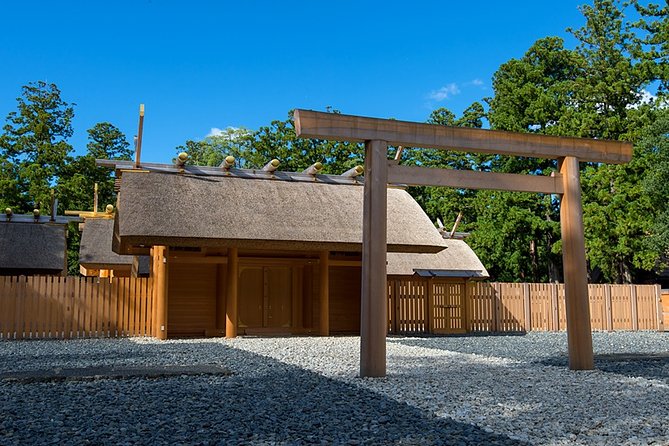
- Ise Jingu has two major sections: Geku and Naiku, each with its own religious purpose and atmosphere.
- The route is private and customizable: you choose three or four sites from the available stops with help from your guide.
- Okage Yokocho adds food and everyday culture: its Edo and Meiji-style streets are a welcome change after the formal shrine grounds.
- Meoto Iwa gives the day a coastal finish: the paired sacred rocks are linked to marriage and Shinto tradition.
- Walking is central to the experience: the shrine grounds are large, and the tour does not include private transportation.
- The six-hour format offers strong value for small groups: a private guide can focus on your questions, family, or special interests.
Why Ise Jingu deserves a full day
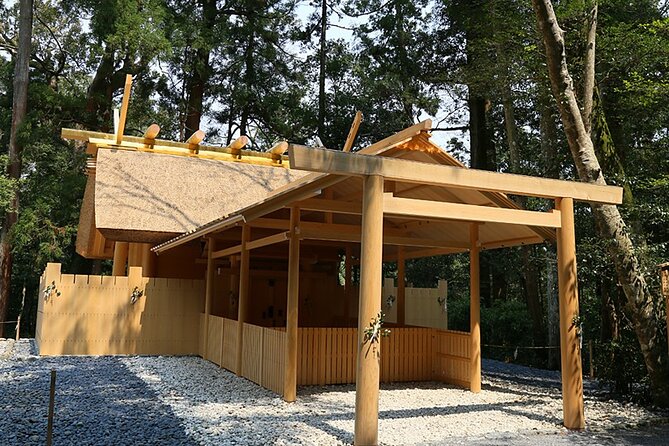
Ise Jingu, also called Ise Grand Shrine, is a major destination for understanding Japanese Shinto. The shrine complex is about 2,000 years old and is devoted to some of the most important religious traditions in Japan.
For you, the value of a guide is not just finding the entrance. A guide can explain why the shrine is arranged as it is, how worshippers prepare themselves, and why certain spaces are treated with such care. Without that context, you may see a beautiful forest, wooden buildings, and stone paths without grasping their place in Japanese spiritual life.
The tour lasts about six hours, which is enough time for a meaningful visit without turning the day into a rushed checklist. You can choose three or four sites from the proposed route. That flexibility matters because Ise can suit several kinds of visitors: first-time shrine visitors, families with older parents, photographers interested in architecture and nature, or anyone who wants to connect the sacred sites with local food and coastal scenery.
You meet your guide on foot within the designated area of Ise. Although pickup is offered in the broad tour details, the practical arrangement is a walking pickup rather than a private vehicle collecting you at your hotel. Confirm your meeting point clearly before the day begins.
More private guided tours with driver in Japan:
- Tokyo 6hr Private Tour with Government-Licensed Guide
★ 5.0 · 3,902 reviews - Tokyo 4hr Private Tour with Government-Licensed Guide
★ 5.0 · 1,394 reviews - Kyoto 6hr Private Tour with Government-Licensed Guide
★ 5.0 · 1,369 reviews
Geku, the outer shrine and the first lesson in Ise
Geku, officially known as Toyouke Daijingu, is one of the two principal parts of Ise Jingu. It is connected with Toyouke Omikami, a deity associated with food and the necessities that support Amaterasu Omikami.
The tour information gives this stop about an hour. That is enough for an introduction, but you should not expect a long museum-style visit. The appeal is the setting and the chance to move through the shrine grounds with an explanation of the rituals and layout.
Geku is often a good first stop because it helps you understand the structure of the Ise pilgrimage before you reach Naiku. Your guide can point out how the two sections relate to one another and help you approach the grounds respectfully.
Admission is not included, though the listed route does not describe a standard admission charge for the shrine itself. The important point is that you should budget separately for any fees identified by your guide, along with transport and food.
Naiku and the path to Amaterasu Omikami
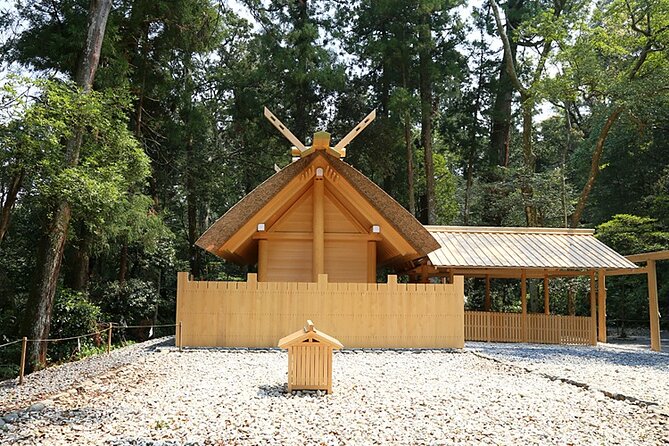
Naiku is the inner shrine and the main spiritual focus for many visitors. It is officially known as Kotai Jingu and is dedicated to Amaterasu Omikami, the sun goddess and supreme deity of Shinto.
This is the part of the day that gives the tour its real purpose. You walk through a large, wooded setting toward the sacred area, following customs that your guide can explain as you go. The experience is less about viewing an object up close and more about understanding the act of approaching a holy place.
The grounds require long periods of walking. Paths, steps, and the size of the site make comfortable shoes essential. You may also want to keep the pace moderate, especially if you are traveling with parents or children. One family used Yoshinari Nishio to plan a day for several generations, beginning with views of Yokoyama Bay and then visiting both Geku and Naiku. That kind of personal planning is one of the strongest reasons to choose a private tour.
The main worship area is not treated like an ordinary attraction, and access is limited. Your guide can explain what you can see, where to stand, and how to behave. That guidance helps you avoid the common mistake of treating the shrine as a photo stop alone.
The Isuzugawa River and the role of purification
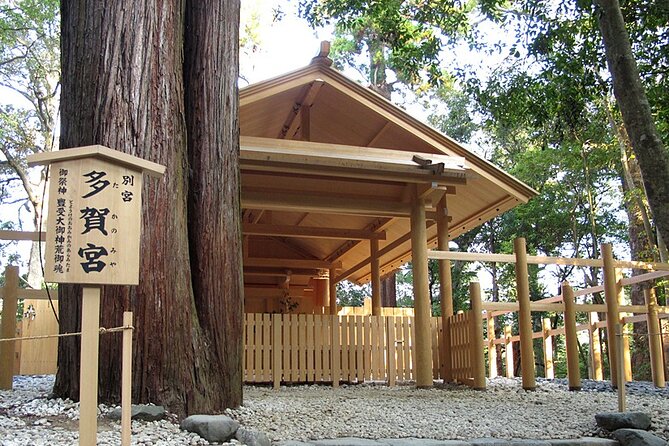
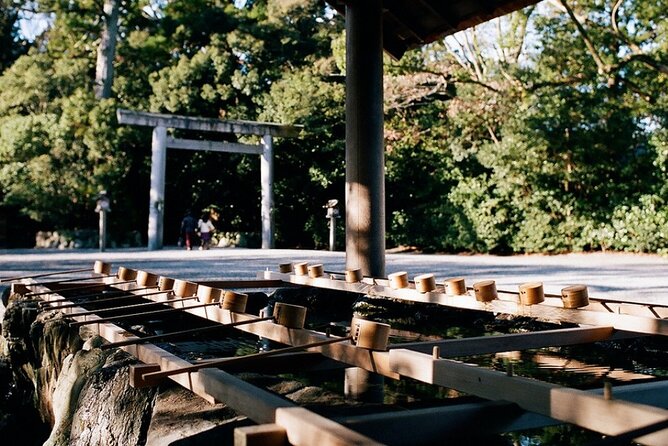
The Isuzugawa River runs beside the Naiku grounds and forms part of the experience rather than serving as a separate sightseeing stop. Pilgrims and tourists visit the river area for purification before approaching the shrine.
This is one of the details that can be easy to miss when touring independently. A guide can explain the meaning of the water and the proper sequence of purification. You get a clearer sense that the visit is a religious act, not only an architectural tour.
The river also gives you a quieter pause between the approach and the main shrine area. You may find this part especially appealing if you enjoy nature, traditional customs, and small moments of observation. The tour description does not promise a separate amount of time here, so the length of the stop will depend on your guide’s plan and the three or four sites you select.
More temple & shrine tours in Japan:
- Kyoto: Fushimi Inari, Kinkakuji, Bamboo Grove 1 Day Bus Tour
★ 4.8 · 4,316 reviews - Kyoto: Tea Ceremony in a Traditional Tea House in Kiyomizu
★ 4.9 · 3,519 reviews - Kyoto: Tea Ceremony Ju-An at Jotokuji Temple
★ 4.9 · 3,207 reviews - Tokyo: Meiji Shrine, Asakusa, Skytree Bus Tour and Cruise
★ 4.7 · 1,986 reviews
Okage Yokocho brings the pilgrimage down to earth
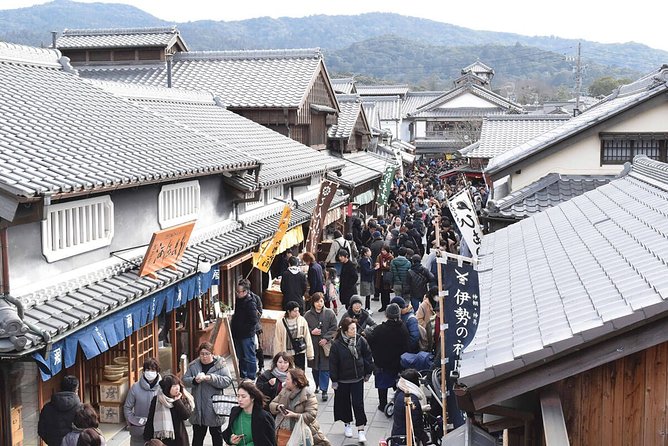
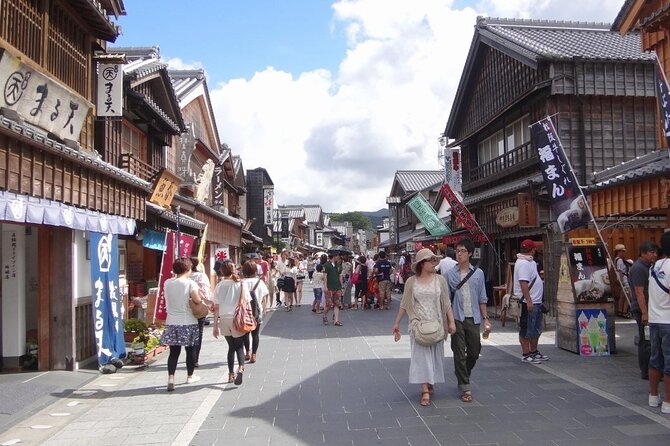
Okage Yokocho sits in front of the Naiku gate and was built in 1993 to recreate the townscape of Ise during the Edo and Meiji periods. It is a street of shops, restaurants, and traditional-style buildings.
After the formality of Geku and Naiku, this is where you can think about Ise as a living town. You can browse local foods, look at crafts, and take a meal break. The street offers a more relaxed look at Japanese culture, though it can feel more commercial than the shrine grounds.
I like this pairing because it keeps the tour from becoming solemn all day. You get sacred architecture and ritual first, then a chance to eat and browse. Lunch is not included, so Okage Yokocho is the natural place to plan for food, but your purchases come out of pocket.
Ask your guide to help you use the time well. With only about six hours total, a long meal and extended shopping can reduce the time available at Meoto Iwa or Hinjitsukan. If food is a priority, choose Okage Yokocho and keep the coastal section focused.
Meoto Iwa, where the sea meets Shinto symbolism
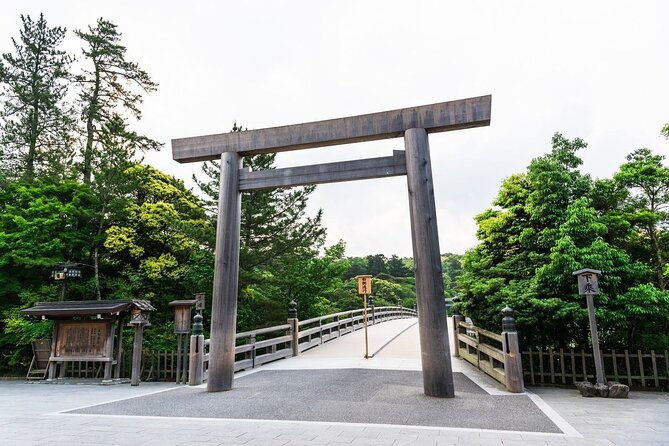
Meoto Iwa, or the Wedded Rocks, consists of two sacred rocks in the sea near Futami. The larger rock is paired with the smaller rock and connected by sacred ropes. They serve as a symbolic torii, or gateway, toward the sacred Okino-shiraishi rock offshore.
This stop changes the mood of the day. Instead of forest paths and shrine buildings, you face the sea and a striking pair of natural formations. The rocks are associated with marriage and partnership, making the site a natural choice for couples, families, and anyone interested in the way Shinto links nature with worship.
The view depends on conditions, and the tour does not promise a particular tide, weather, or photographic angle. Still, the stop offers a distinct setting that Naiku cannot provide. It also helps you see that Ise is more than one shrine complex. The wider area connects religious sites, coastal scenery, food traditions, and older buildings.
Futami Okitama Shrine and the sacred rocks
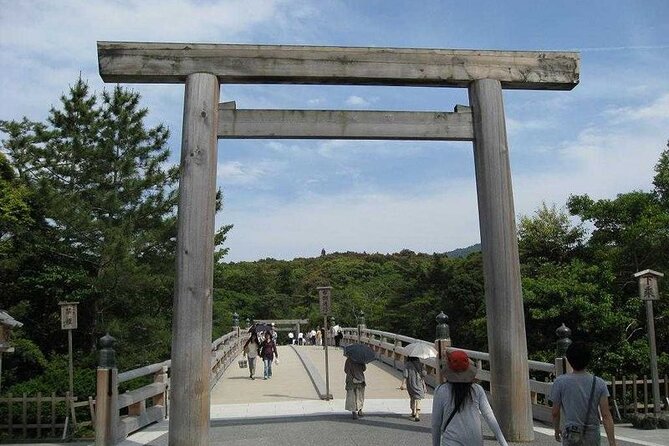
Futami Okitama Shrine is located near Meoto Iwa and is included as a separate stop in the suggested route. The shrine is known for blessings connected with marriage and for its link to the Wedded Rocks.
The listed admission is free, which makes it an easy addition if your schedule allows. You can combine this stop with Meoto Iwa rather than treating the two as unrelated attractions. Your guide can connect the shrine’s customs, the rocks, and the idea of purification before visiting Ise Jingu.
Because the overall tour lets you choose three or four sites, ask whether Meoto Iwa and Futami Okitama Shrine count as two separate selections in your planned route. The supplied schedule gives each stop roughly an hour, but six hours is not enough for six full one-hour visits once walking and public transport are added.
Hinjitsukan offers a look inside Meiji-era Japan
Hinjitsukan is a former guesthouse that welcomed members of the imperial family and other distinguished visitors. It preserves tatami rooms and the formal style of a Meiji-era lodging house.
This stop is a useful counterpoint to the outdoor shrine visits. Instead of focusing on worship or scenery, you see how an important Japanese guesthouse was arranged and presented. The preserved rooms give you a closer look at interiors, hospitality, and social life from another period.
Entrance fees are not included. If Hinjitsukan interests you, confirm the current entry cost and opening details with the guide before building it into the day. Since the tour covers only three or four sites, choosing Hinjitsukan means giving up time elsewhere, unless your guide can arrange a particularly efficient route.
What the private guide adds to the day
The guide is a government-licensed local English speaker, and that matters in a place where etiquette and religious meaning are central. You can ask questions as they arise instead of waiting for a scheduled speech or trying to interpret signs on your own.
The personal format also helps with family travel. Yuka was described as arriving before the agreed pickup time and reviewing the planned route with the group. Yoshinari Nishio helped one family organize a day for parents and children, explaining the rituals at both Geku and Naiku. These details suggest a useful strength: the guide can adjust the presentation and pace to the people in front of them.
Do not expect a bus, reserved car, or guide-led transfer between every point. Transportation is by foot and public transport, and those fares are not included. You should be comfortable walking long distances and managing the basic rhythm of stations, roads, shrine paths, and waiting time.
The private setup means only your group participates. You cannot combine separate tour groups, but you can request special arrangements in advance. That is useful if you have a particular interest in Shinto, family history, food, photography, or coastal sights.
Is the $153.50 price good value?
At $153.50 per person, this is not the cheapest way to see Ise. You still pay for transportation, food, entrance fees, and personal purchases. The price makes the most sense when you value a private English-speaking guide and want help organizing a large, spread-out day.
For a solo visitor, the cost may feel high unless you place a strong value on personal interpretation. For two or more people, the private format can become more reasonable, especially since group discounts are offered. A family may also find the price worthwhile because the guide can adjust the day for different ages and interests.
The tour offers value in three ways. First, it saves you from building a route between the major shrine areas and the coast. Second, it gives you cultural explanation at places where behavior and symbolism matter. Third, it allows you to choose three or four sites rather than paying for a fixed schedule that may not suit you.
I would compare the price with your transport costs and the value of your time. If you already know Ise well, speak Japanese, and prefer to move independently, you may not need it. If this is your main visit to Ise and you want the day to make sense, the private guide is easier to justify.
Who should book this Ise tour?
This experience suits you if you want the main sacred sites explained in English and prefer a private schedule. It is also a good match for families, couples, and small groups who want to ask questions without sharing a guide with strangers.
It works best for people who can walk for extended periods. Most travelers can participate, and service animals are allowed, but the tour is not built around private vehicles or minimal walking. If you have mobility concerns, discuss them in advance and ask which three sites can be managed comfortably.
You should also book early if your dates are fixed. The experience is booked an average of 102 days in advance, which signals that planning ahead is sensible during busy travel periods.
Free cancellation is available when you cancel at least 24 hours before the start time. Changes or cancellations inside that window are not accepted for a refund.
Should you book it?
Book this tour if Ise Jingu is important to your Japan trip and you want the sacred sites explained rather than simply photographed. The combination of Geku, Naiku, Okage Yokocho, and the Futami coast gives you a broad view of the area in about six hours.
Skip it if you want a fully chauffeured day, dislike long walks, or prefer to choose every train, meal, and stop yourself. For everyone else, the strongest plan is to request three or four sites in advance, wear good shoes, and decide whether shrine depth, local food, or coastal scenery matters most. That preparation will help you get real value from the guide and the limited time.
FAQ
How long does the Ise Jingu private tour last?
The tour lasts approximately six hours.
Is the tour private?
Yes. Only your group participates, and separate tour groups cannot be combined.
Is transportation included?
No. The tour is conducted on foot and by public transport. Transportation fees are not included, and private transportation is not provided.
Is hotel pickup included?
A walking pickup is offered within the designated area of Ise. You meet the guide on foot rather than receiving private vehicle pickup.
Which sites can I visit?
The available sites include Ise Jingu Naiku, Ise Shrine Geku, the Isuzugawa River area, Okage Yokocho, Meoto Iwa, Hinjitsukan, and Futami Okitama Shrine. You can customize the tour around three or four sites.
Is an English-speaking guide included?
Yes. A government-licensed local English-speaking guide is included.
Are admission fees and lunch included?
No. Entrance fees, transportation, lunch, and personal expenses are not included. Futami Okitama Shrine is listed with free admission.
Can I cancel for a full refund?
Yes, if you cancel at least 24 hours before the experience start time. Cancellations or changes made less than 24 hours before the start time are not accepted for a refund.
More Full-Day in Japan
- From Tokyo: Mount Fuji Full-Day Sightseeing Trip
★ 4.5 · 4,970 reviews - Mount Fuji Full-Day Private Tour from Tokyo (Customizable)
★ 4.9 · 1,470 reviews - Hiroshima / Miyajima Full-day Private Tour with Government Licensed Guide
★ 5.0 · 1,298 reviews - Tokyo Private Full-Day Tour by Car or Van
★ 5.0 · 684 reviews
Just added around Japan
- Private Memorable Tokyo Tour with English Speaking Driver★ 5.0 · 30 reviews
- Private Tokyo Custom Full-Day Tour by Chartered Vehicle★ 5.0 · 16 reviews
- Private Sightseeing to Mt Fuji and Hakone with English Driver★ 5.0 · 51 reviews
- Tokyo Photography Masterclass – Private Photography Lesson★ 5.0 · 25 reviews
- 4 Day Tour – Mount. Fuji, Tokyo, Hakone, Kamakura and Yokohama★ 5.0 · 19 reviews
- Private Mt. Fuji Day Trip from Tokyo with English-Speaking Driver★ 5.0 · 33 reviews
- Private Unforgettable Mt Fuji Tour with English Speaking Driver★ 5.0 · 142 reviews
- Private Tokyo Food Tour – A Journey Through Time Through Food★ 5.0 · 36 reviews
Temple & Shrine Tours, compared.
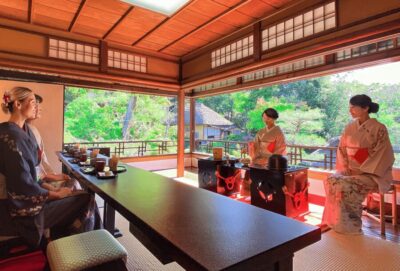
Tea Ceremony in a Traditional Tea House in Kiyomizu
Read our review →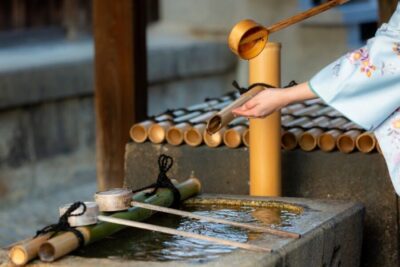
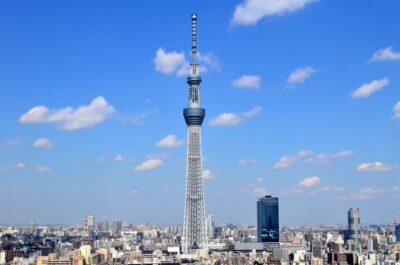
Meiji Shrine, Asakusa, Skytree Bus Tour and Cruise
Read our review →
Asakusa Walking Tour with Sensoji Temple Visit
Read our review →
Kamakura & Enoshima Day Trip including Temple Tickets
Read our review →
Kyoto/Osaka: Nara, Fushimi Inari Taisha, Arashiyama Bus Tour
Read our review →
Nikko Toshogu Shrine and Kegon Waterfall Tour
Read our review →
Tokyo Panoramic 1 Day: Meiji Shrine, Asakusa, Odaiba and SKYTREE®
Read our review →Browse the lists this tour appears in