
REVIEW · HISTORICAL TOURS
Hiroshima History Tour : A-Bomb Dome, Peace Memorial & City
Hiroshima is not a place to rush through with a map and a few dates. This private walking tour connects the Peace Memorial Museum, A-Bomb Dome, and Hypocenter with the living city around them, guided by locals whose families have been affected by the bombing. Some guides are second-generation survivors, while others grew up in Hiroshima with family memories passed down over time.
I like the personal local perspective, which gives the difficult history a human scale without turning the tour into a scripted lecture. I also like the flexible private format: guides such as Yuka, Masa, Yuta, and Ally have adjusted routes for families, added lunch suggestions, and included seasonal visits to Shukkeien Garden.
The main consideration is pace. The advertised tour lasts about three hours, but the full set of stops can take closer to four hours, and you will walk a lot. Hiroshima Castle is normally an outside photo stop, and its museum costs extra if you choose to enter.
In This Review
- Key points to know before booking
- Why a local guide changes Hiroshima
- Inside the Peace Memorial Museum
- Peace Memorial Park and the story of Sadako
- The A-Bomb Dome and the exact Hypocenter
- Hiroshima Castle brings older history into view
- Shukkeien Garden offers a quiet finish
- A private route that can fit your group
- Is $105.42 a fair price?
- Who will get the most from this tour?
- FAQ
- How long does the Hiroshima History Tour last?
- Is admission to the Peace Memorial Museum included?
- Is admission to Shukkeien Garden included?
- Does the tour include Hiroshima Castle admission?
- Is transportation included?
- Can I cancel for a full refund?
Key points to know before booking
- Personal Hiroshima connections: Some guides are second-generation atomic bomb survivors, and others have close family ties to the city’s wartime experience.
- Skip-the-line museum entry: Your Peace Memorial Museum admission is included, helping you make better use of a short visit.
- A true private tour: Only your group participates, so you can ask questions freely and adjust the route.
- More than the peace sites: The route can include Hiroshima Castle and Shukkeien Garden, giving you a broader view of the city.
- Walking with some public transport: Private transportation is not included, and public transportation costs ¥240 per person.
- Flexible length: You can book a three-hour or four-hour version, with customization arranged in advance.
Why a local guide changes Hiroshima
The basic facts of Hiroshima are easy to find. On August 6, 1945, the city became the first place in the world attacked with an atomic bomb. The Peace Memorial Museum explains what happened through objects, records, survivor paintings, and data.
The harder task is understanding how those facts shaped ordinary families and the city you see today. That is where this tour has its strongest reason for being. A guide raised in Hiroshima can point out how memory is carried through family stories, quiet habits, and local places. You are not simply moving from one famous site to the next.
The guides also bring different backgrounds. Masa has shared a family connection to the bombing and has been praised for helping visitors understand both the events and the city’s resilience. Yuka has led museum visits and added Shukkeien during the Momiji Festival. Yuta has handled private family tours, while Ally has met groups at their hotel and planned the route ahead of time.
You should still expect a serious experience. This is not a light sightseeing walk with a few tragic facts added for effect. The museum and memorial sites can be upsetting, especially for children, so consider your group’s age and temperament before booking.
A few more Hiroshima trips to weigh up
- Hiroshima Historical Walking Tour – Why A-Bomb was Dropped
★ 4.8 · 893 reviews - Hiroshima Peace (Heiwa) Walking Tour at World Heritage Sites
★ 5.0 · 872 reviews - Miyajima Half-day Trip Historical Walking Tour
★ 5.0 · 284 reviews
Inside the Peace Memorial Museum
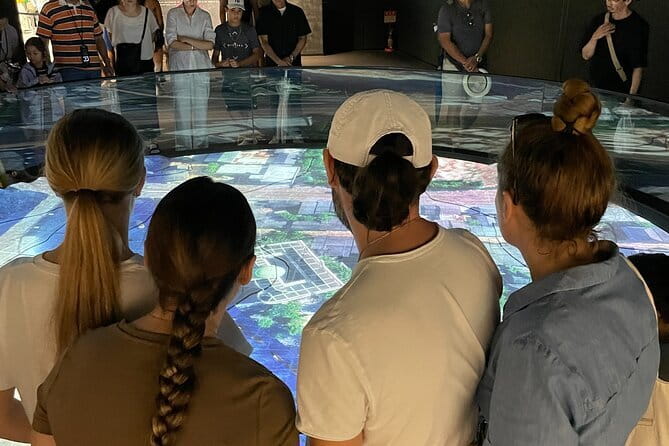
The museum is the emotional center of the experience. You have about an hour here, with admission included and skip-the-line access listed as part of the tour.
The exhibits present the bombing through evidence, survivor artwork, records, and statistics. The value of visiting with a guide is not that the guide replaces the museum. It is that you have someone beside you to explain context, answer questions, and help connect the displays to the places you will see afterward.
An hour is useful but not generous. If you want to read every panel at length, you may need to discuss the schedule before starting. A private guide can help you decide what to prioritize, but you should not expect unlimited museum time and a relaxed visit to every other stop within three hours.
The skip-the-line entry is especially useful when your time in Hiroshima is short. It does not make the museum easy emotionally, but it can reduce wasted time at the start of the visit.
Peace Memorial Park and the story of Sadako
After the museum, you spend about 20 minutes walking through Peace Memorial Park. The park includes several monuments and gives you space to think about what you have just seen.
This part of the route matters because Hiroshima is not only a museum. The park shows how the city has marked loss in public places while also creating a calm setting for reflection. Your guide adds local stories and personal thoughts that are not found on a simple self-guided route.
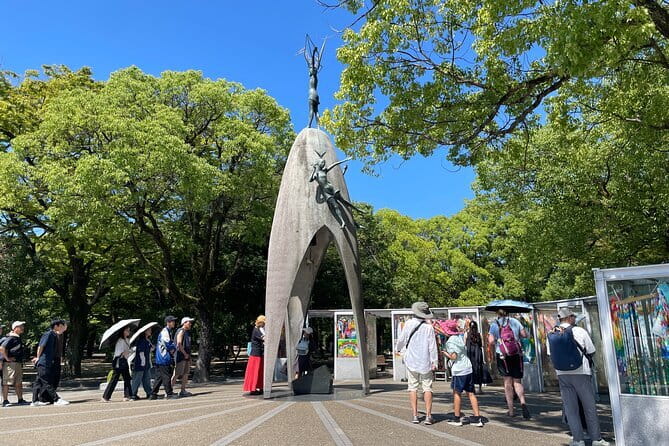
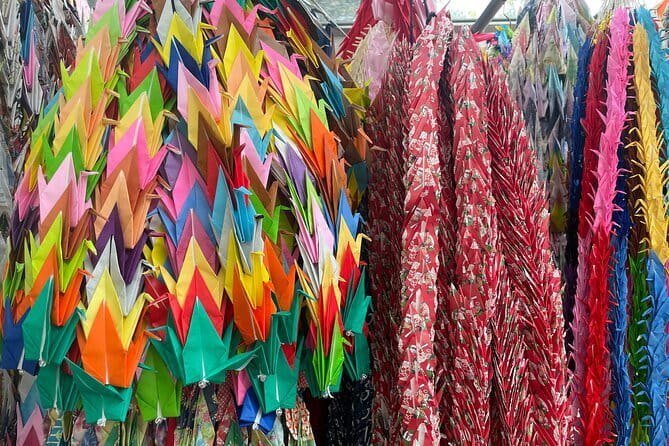
The Children’s Peace Monument is a short stop of about five minutes. It is linked to Sadako Sasaki, the girl whose story became associated with folded paper cranes and the wider children’s peace movement. You will see many origami cranes at the monument.
The stop is brief, but it carries a strong message. If you are visiting with children, this may be one of the most accessible ways to discuss the human cost of the bombing. Your guide can shape the explanation to suit your group rather than giving the same talk to everyone.
The A-Bomb Dome and the exact Hypocenter
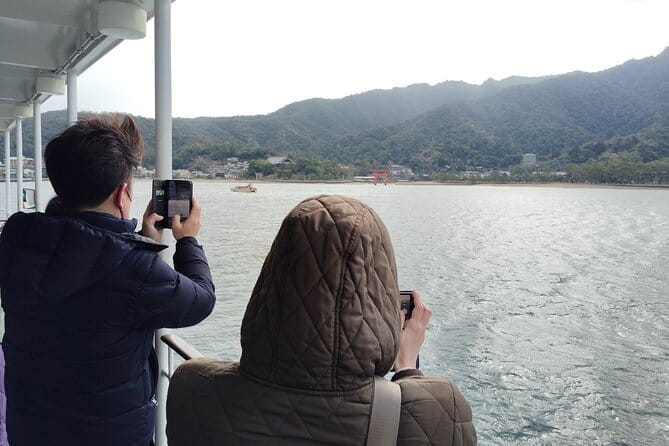
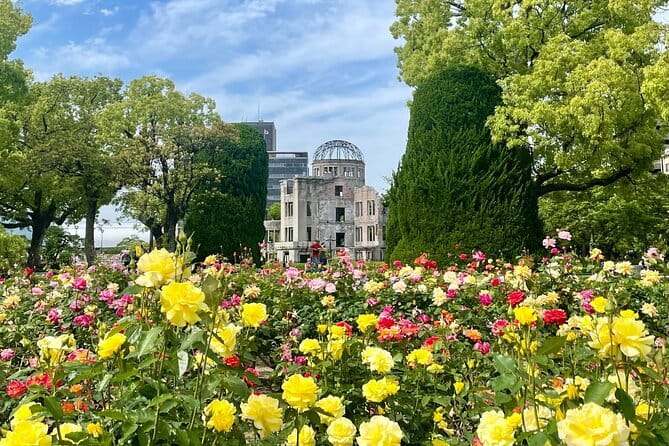
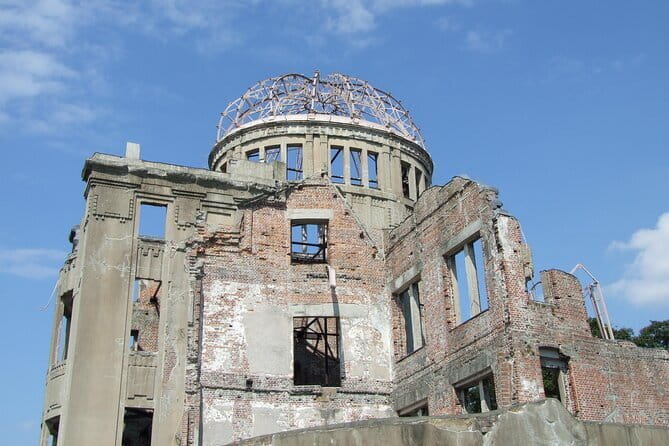
The Atomic Bomb Dome is one of Hiroshima’s most recognizable sights and a UNESCO World Heritage Site. You spend roughly 20 minutes here, looking at the building’s preserved remains from outside.
Its location near the hypocenter helps explain why parts of the structure remained after the blast. The building is not a restored monument with a polished finish. Its damaged form makes the violence of the event visible, and your guide can explain why it has become such a strong symbol of war and peace.
The Hypocenter monument adds another layer. This is the point above Shima Hospital where the bomb exploded, and you spend around 10 minutes there. The stop is simple, but the precision of the location can be startling. You are asked to imagine the event from one exact point rather than only viewing it from a broad park or museum gallery.
I find the sequence of museum, park, dome, and hypocenter well chosen. The museum gives you evidence, the park gives you memorial space, and the final two stops place the history directly into Hiroshima’s streets. The order may change with your guide and timing, since the tour is customizable.
Same city, a completely different kind of day:
- Peaceful Hiroshima & Miyajima UNESCO 1 Day Bus Tour
★ 5.0 · 5,309 reviews - Hiroshima: Hiroshima and Miyajima UNESCO Sites 1-Day Tour
★ 4.9 · 2,330 reviews - Hiroshima / Miyajima Full-day Private Tour with Government Licensed Guide
★ 5.0 · 1,298 reviews - Hiroshima in a Nutshell: Morning Bike Adventure
★ 5.0 · 524 reviews
Hiroshima Castle brings older history into view
Hiroshima Castle gives the tour a wider frame. The original castle dates to the 16th century, but the building you see today is a replica because the original was destroyed by the atomic bomb.
The usual plan is a 15-minute photo stop from outside. If you want to enter the museum inside, admission is not included, so ask about the extra time and cost before setting out.
This is a useful contrast with the peace sites. Hiroshima is not defined only by 1945. The castle points to the city’s samurai-era past and makes clear how much of its earlier built heritage was lost. Still, this stop is the easiest one to shorten if the museum conversation runs long or your group needs a break.
Shukkeien Garden offers a quiet finish
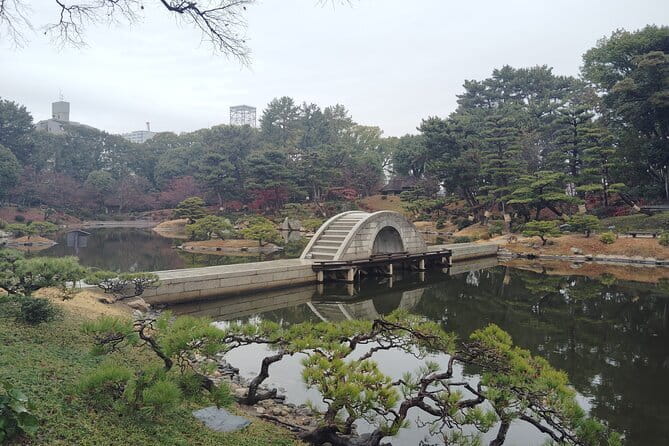
Shukkeien is one of the oldest Japanese gardens in Hiroshima. It was created in 1620 for a samurai who settled in the area, and its design uses a pond, trees, and changing ground levels to create a peaceful setting.
The tour allows about 45 minutes here, and admission is included. That makes the garden more than a quick photo stop. You can slow down after the difficult material of the museum and memorials, while your guide explains another part of Hiroshima’s past.
The garden can also add seasonal appeal. Yuka took one group during the Momiji Festival, when autumn color made the visit especially striking. That experience depends on timing, so you should not book expecting a festival or particular foliage display. The garden itself is part of the route, while special events are seasonal.
Shukkeien is also where the three-hour schedule may feel tight. If you want a full visit to the garden, an hour at the museum, and all the memorial stops, the four-hour version may suit you better. Your guide can cut or expand stops in advance.
A private route that can fit your group
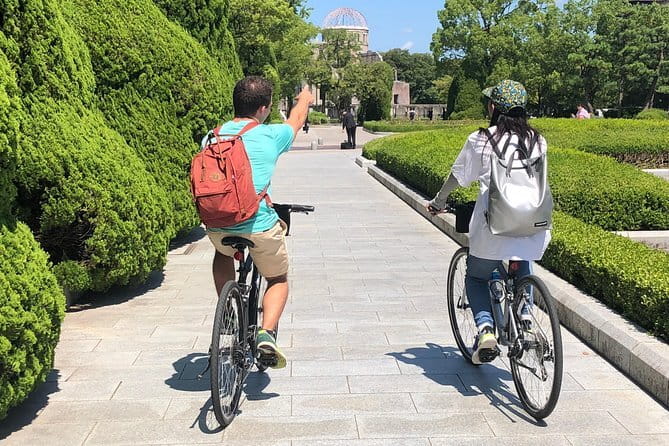
The tour is designed for solo visitors, couples, and families. Since only your group participates, you can ask for more detail at the museum, spend longer at a memorial, or reduce time at Hiroshima Castle.
That flexibility is most useful when you contact the provider before the tour. Tell the guide if your priority is the atomic bombing, traditional Japan, gardens, family-friendly explanations, or a broad introduction to Hiroshima. The route can then be shaped around those interests.
Pickup is offered, and one family tour began at a hotel. Still, private transportation is not included, so confirm the meeting point and pickup arrangement. Public transportation costs ¥240 per person, and food and drinks are also separate.
A walking tour means comfortable shoes are important. One past itinerary included a lot of walking and a restaurant recommendation for lunch, but lunch is not part of the package. Plan your own meal separately, and allow extra time if you want to stop for food.
The tour accepts service animals, is near public transportation, and is suitable for most people. You should not participate if you have cold symptoms. The activity also requires good weather, with a different date or full refund offered if poor weather causes cancellation.
Is $105.42 a fair price?
At $105.42 per person, this is not the cheapest way to see Hiroshima’s memorial district. You are paying for a private guide, advance customization, museum skip-the-line entry, Shukkeien admission, and photo data from the tour.
The value depends on how much help you want. If you prefer reading every museum panel alone and following a route on your phone, you can spend less. If Hiroshima is a major purpose of your Japan trip, the personal explanation and chance to ask questions may justify the cost.
The private format is particularly useful for families or mixed-interest groups. One person may want more time with the museum, another may prefer the castle or garden, and a guide can balance those needs. The price also makes more sense when split among a small group, though group discounts are offered and should be confirmed at booking.
Remember the extras. Private transportation, lunch, drinks, tips, public transportation, and entry to the Hiroshima Castle museum are not included. Those costs are manageable, but they should be part of your day’s budget.
Who will get the most from this tour?
I would choose this tour if you want Hiroshima explained by someone who lives there or has family ties to the city. The strongest part is not simply seeing the A-Bomb Dome. It is hearing how the bombing is remembered across generations while walking through the modern city.
It suits first-time visitors who want the main peace sites handled in one focused outing. It also suits families, since the guide can adjust explanations and the Children’s Peace Monument gives younger visitors a clear point of connection.
You should think twice if you want a purely self-guided museum visit, dislike walking, or need a fixed three-hour schedule with no flexibility. The itinerary is full, and adding the castle and garden can make the day feel brisk.
Book the four-hour version if Shukkeien matters to you, if you want a slower museum visit, or if your group has many questions. Choose three hours if the Peace Memorial Museum and central memorial sites are your main goal.
FAQ
How long does the Hiroshima History Tour last?
You can book a private three-hour or four-hour walking tour. The listed route includes enough stops that the four-hour option may be better if you want more time at the museum and Shukkeien Garden.
Is admission to the Peace Memorial Museum included?
Yes. Peace Memorial Museum admission is included, with skip-the-line access listed as part of the tour.
Is admission to Shukkeien Garden included?
Yes. Entry to Shukkeien Garden is included in the tour price.
Does the tour include Hiroshima Castle admission?
No. Hiroshima Castle is normally an outside photo stop. If you want to enter its museum, the admission fee is not included.
Is transportation included?
Private transportation is not included. Public transportation costs ¥240 per person, and food and drinks are also separate.
Can I cancel for a full refund?
Yes, if you cancel at least 24 hours before the experience start time. Cancellations or changes made less than 24 hours in advance are not refunded or accepted. If poor weather cancels the tour, you are offered another date or a full refund.
Just added around Hiroshima
- The Peace Memorial to Miyajima : Icons of Peace and Beauty★ 4.5 · 31 reviews
- Hiroshima & Miyajima All-Inclusive Tour w/Licensed guide Pancho★ 5.0 · 54 reviews
- Private Full Day Hiroshima Tour★ 4.5 · 29 reviews
- Okunoshima Rabbit Island Cycling Tour with Local Guide★ 4.5 · 17 reviews
- Shore Excursion from Hiroshima Port : Private Tour in Hiroshima★ 5.0 · 17 reviews
- Hiroshima Saijo Sake Tasting Tour with visit to 7 Breweries★ 5.0 · 104 reviews
- Miyajima Guided Tour and Fresh Oyster Farm Tour★ 5.0 · 20 reviews
- Hiroshima Country Cycling: Explore Rural Life 1 HR from City★ 5.0 · 22 reviews
Historical Tours, compared.
World Heritage Shirakawa-go and Experience Tours from Kanazawa
Read our review →
Imperial Palace and Shogun Historical Walking Tour
Read our review →
World Heritage Kyoto & Nara Uji Authentic Matcha Experience
Read our review →
Kyoto Gion: 2-Hour Geisha Culture & History Walking Tour
Read our review →
World Heritage Shirakawa-go Morning Guided Tour
Read our review →
Hiroshima Historical Walking Tour – Why A-Bomb was Dropped
Read our review →
Hiroshima Peace (Heiwa) Walking Tour at World Heritage Sites
Read our review →Browse the lists this tour appears in