
REVIEW · NARA DAY TRIPS
Hidden Gems of Osaka Kyoto Nara – Private Car Tour by Local Guide
Katsuo-ji’s mountain setting, covered with thousands of red Daruma dolls, is only the opening act. This private car tour moves from Osaka into quieter corners of Kyoto and Nara, ending among stone lanterns and shadowy temple paths on Mount Shigi. Guide Daiki adds Buddhist and Shinto context along the way.
I like the private car because it links four scattered sites without making you puzzle through trains and buses. I also like the late-day timing: Hozan-ji and Shingisan Chogosonshiji can feel especially atmospheric as daylight fades. The tradeoff is that entry fees are extra, and the route includes walks and stairs.
In This Review
- Key points at a glance
- Why this Osaka day trip feels different
- Katsuo-ji and its sea of Daruma dolls
- Mitsushima Shrine and the ancient camphor tree
- Hozan-ji on the slopes of Mount Ikoma
- Shingisan Chogosonshiji after dark
- What Daiki adds to the day
- The value of a $248.22 private tour
- Who should book this tour
- Final verdict: a strong choice for a quieter spiritual day
- FAQ
- How long does the private car tour last?
- What time does the tour begin?
- Which places are included?
- Are entrance fees included?
- Is transportation included?
- Can I cancel for a full refund?
Key points at a glance
- Thousands of Daruma dolls at Katsuo-ji: The temple’s bright red good-luck figures appear across the grounds and make this the tour’s most immediately unusual stop.
- A tiny shrine in an industrial setting: Mitsushima Shrine offers a sharp contrast to grand temple compounds, with nature worship centered on an enormous 1,000-year-old camphor tree.
- Four very different spiritual sites: You move from a scenic mountain temple to a local shrine, an incense-filled complex, and a lantern-lit mountaintop area.
- Guide Daiki’s cultural explanations: His role is not just to drive. He explains Buddhist and Shinto ideas, answers questions, and adds meaning to what you see.
- A calm alternative to major sights: The route is designed around quieter places, with several stops that can feel far removed from Osaka’s busy center.
- A useful private-tour format: Pickup is offered, parking is included, and only your group participates, though the displayed price is for a group of up to one person and should be checked carefully for your party.
Why this Osaka day trip feels different
Many Osaka sightseeing plans stay inside the city or follow the famous Kyoto circuit. This outing takes a different path. You spend six to seven hours reaching temples and shrines that are less familiar and often more subdued, with a local guide handling the driving and interpretation.
That matters because these sites are not simply quick photo stops. The appeal comes from their mood, religious purpose, and setting. You see how Japanese Buddhism and Shinto appear in mountain paths, old trees, incense, carved figures, lanterns, and small acts of devotion.
The private format gives the day a relaxed rhythm. You are not moving with a large group or waiting for everyone to finish taking pictures. Daiki can answer questions as they come up, and one of the strongest parts of the experience is the chance to ask about the religious details that are easy to miss on your own.
The tour begins at 1 p.m. That is late for a standard sightseeing day, but it suits the final stop, where lanterns and evening light help create the desired mood. You should expect a full afternoon and evening rather than an early morning start.
More Nara Day Trips in Osaka
- Ancient Capital Tour: Kyoto and Nara Highlights from Kyoto/Osaka
★ 4.5 · 332 reviews - Kyoto and Nara Day Trip from Osaka
★ 4.0 · 175 reviews - From Osaka or Kyoto: Kyoto and Nara 1-Day Bus Tour
★ 3.5 · 141 reviews
Katsuo-ji and its sea of Daruma dolls
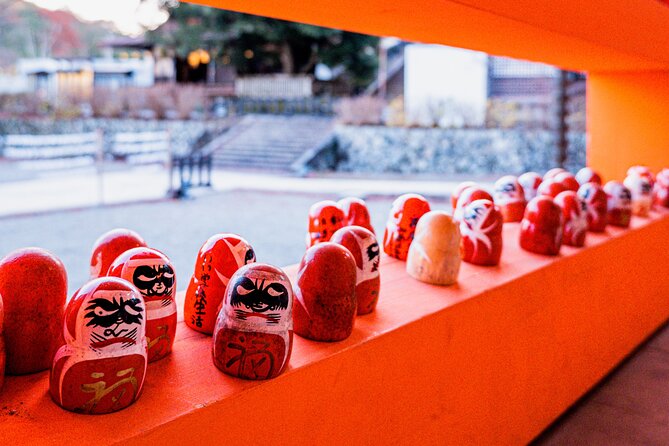
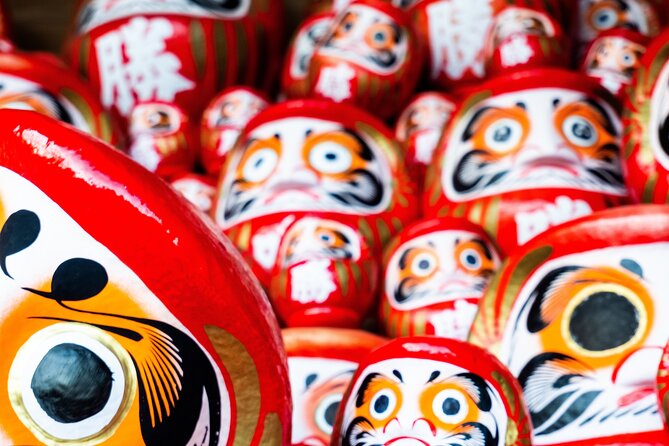
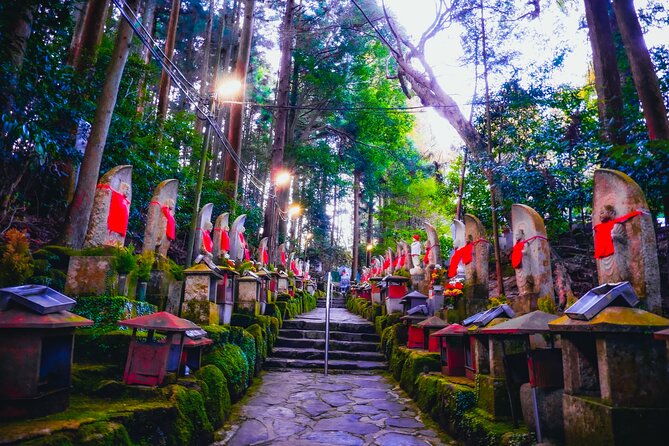
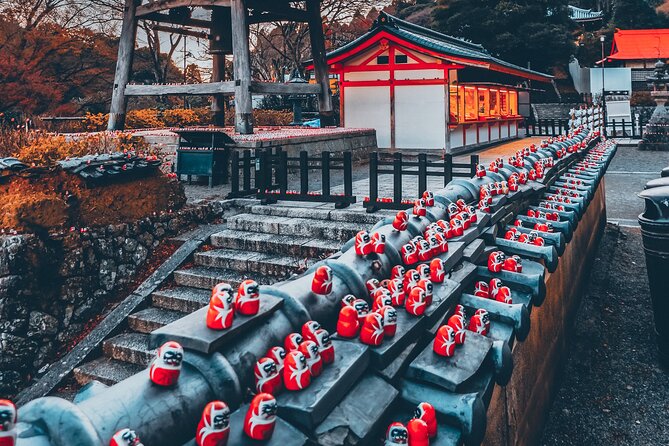
Katsuo-ji Temple is the visual centerpiece. Located in the mountain area between Osaka and Kyoto, it is known for thousands of traditional Japanese Daruma dolls placed around the temple grounds.
Daruma figures are associated with perseverance and good fortune. Here, their repetition changes the character of the place. Instead of seeing one large statue and moving on, you encounter small red figures in clusters across the site, creating a scene that feels playful, devotional, and distinctly Japanese.
You are given about two hours here, the longest stop of the day. That is useful. The grounds are more than a single viewpoint, and the mountain setting rewards a slower walk. Take time to notice the arrangement of the dolls, the temple buildings, and the surrounding scenery rather than treating Katsuo-ji as a quick Instagram stop.
Admission is not included, so budget separately for the entrance ticket. The exact fee is not provided in the tour information, which means you should confirm it before booking if you are working with a tight budget.
There is also a practical point to keep in mind. The tour includes walking, and some temples have stairs. Katsuo-ji’s mountain location may require more movement than a flat urban attraction, so comfortable shoes are a sensible choice.
Mitsushima Shrine and the ancient camphor tree
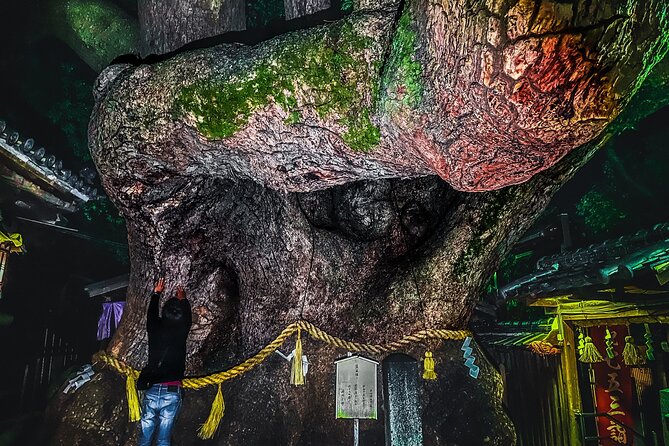
The next stop is much smaller and more local in feel. Mitsushima Shrine is described as a place where Shinto nature worship takes center stage, including an enormous camphor tree said to be about 1,000 years old.
This is an important change of pace. Katsuo-ji offers a large, visually rich temple setting, while Mitsushima is about the quiet presence of one sacred place. Shinto has long treated natural features such as trees, rocks, and mountains as worthy of reverence. A shrine centered on an old tree lets you see that idea in a direct, physical way.
The shrine stop lasts about 30 minutes, and admission is free. Do not expect a long complex or a packed program. The value is in the contrast: you leave the mountain temple and encounter a small place tied closely to local belief and nature.
The industrial surroundings also make the visit more interesting. This is not presented as an isolated forest shrine untouched by modern life. Instead, it shows how a sacred tree and a small place of worship can remain meaningful within an ordinary working area.
Daiki’s explanations are especially useful here. Without context, you might simply photograph the tree and move on. With an explanation of Shinto practice, you can better understand why natural objects receive such respect.
Hozan-ji on the slopes of Mount Ikoma
Hozan-ji Temple sits about halfway up Mount Ikoma in Nara Prefecture. The complex is associated with Kangiten, a Buddhist deity connected with joy and prosperity, and the site is known for incense smoke and a sense of mystery.
This is the point where the tour shifts from unusual visual detail to a more contemplative temple visit. You may notice the incense first, then the sloping setting and the feeling of a religious compound removed from the city.
You have about one hour here. That is enough for a purposeful visit, though not an exhaustive study of every building or path. The mountain location means you should be ready for slopes and stairs. If you have limited mobility, ask about the walking demands before you book.
Hozan-ji also helps show why a private vehicle is useful. The temples on this route are spread across the Osaka, Kyoto, and Nara area, and the tour is built around connecting them in one afternoon. You avoid spending much of the day arranging transfers, then use your time for the sites themselves.
The stop is free according to the supplied details, though the tour’s general policy says entry fees are not included. Since no exact fee information is provided for each location, confirm current charges with the operator.
More Walking Tours in Osaka
- Osaka Kickstart: Hotspots & Hidden Gems Tour
★ 5.0 · 1,306 reviews - Osaka: Hotspots & Hidden Gems Walking Tour Private or Group
★ 4.9 · 1,300 reviews - Osaka Local Foodie Walking Tour in Dotonbori and Shinsekai
★ 5.0 · 985 reviews - Osaka Bar Hopping Night Walking Tour in Namba (3 bars, 6 tastes)
★ 5.0 · 958 reviews
Shingisan Chogosonshiji after dark
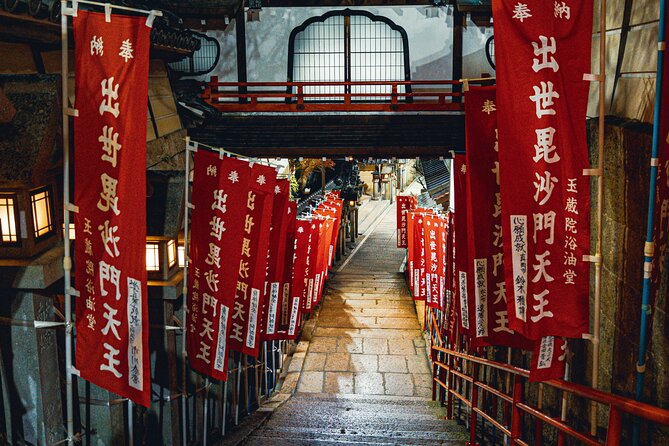
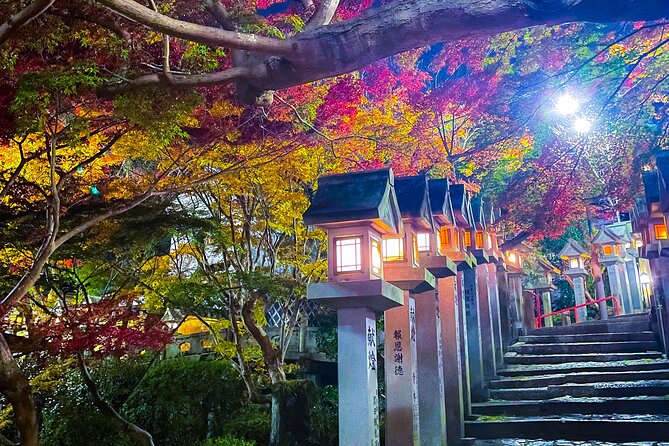
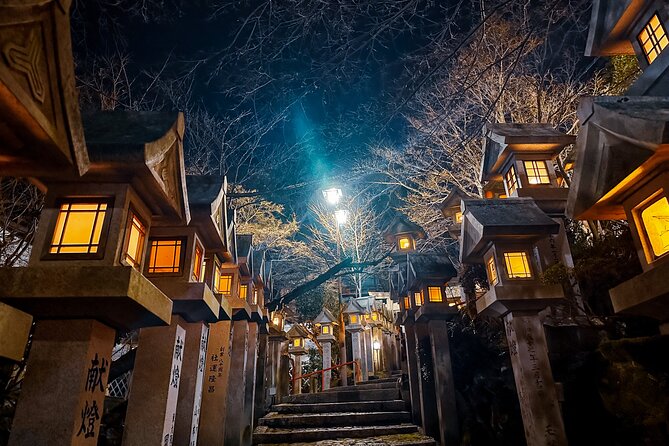
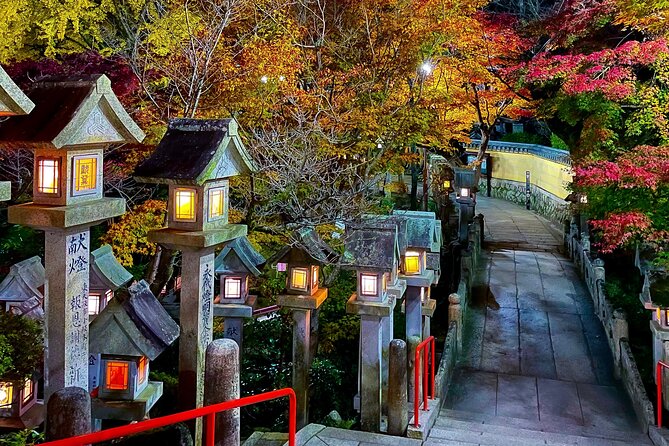
The finale takes place around the mountaintop area of Mt. Shigi at Shingisan Chogosonshiji Temple. The complex includes temples and shrines reached by paths lit with stone lanterns.
This is the stop that gives the tour its strongest atmosphere. The afternoon start is planned so that you reach this area toward evening, when the lanterns and fading light change the mood. You may find the paths quiet, nostalgic, and far removed from the crowded scenes associated with major Kyoto attractions.
The visit lasts about 90 minutes. That gives you time to walk through the complex and take in the lighting without rushing from one building to the next. Still, you should not expect a late-night outing. The timing depends on the season, daylight, traffic, and other conditions, and the operator notes that parts of the route can change.
The temple and shrine paths may include uneven ground and stairs. Wear shoes that you can walk in comfortably, and bring an extra layer if you are sensitive to cooler mountain air. The tour information does not provide a detailed accessibility assessment, so ask specific questions if stairs are a concern.
The night setting is also a reason to bring realistic expectations about photography. Lanterns create a lovely mood, but low light can make casual phone photos harder. The reward is the atmosphere itself, not just a checklist of pictures.
What Daiki adds to the day
A private guide can make or break a route built around religious sites. Daiki is named as the guide in the available feedback, and the strongest praise focuses on his humor, kindness, detailed explanations, and ability to answer questions about Japanese culture and religion.
That is useful because Buddhism and Shinto can be confusing when you first encounter them. A guide can explain why a Daruma appears at Katsuo-ji, how a sacred tree fits into Shinto practice, and what makes Hozan-ji different from a simple scenic temple visit.
The personal format also allows for conversation. One family described cheerful conversation throughout the day, while another valued being able to ask questions about the religious side of the sites. This suggests the tour works best when you speak up and tell Daiki what interests you.
You should not expect a formal lecture at every stop. The appeal is a guided day with conversation, cultural explanation, and transportation between places. If you prefer to explore every site silently and independently, a private guide may feel more involved than you want.
The value of a $248.22 private tour
The listed price is $248.22 per group, up to one person. That wording is unusual, so check the final price for your actual party size before paying. The tour is private, and private transportation plus parking fees are included.
For a solo visitor, the price is a significant spend. The value comes from the long driving connections, the time saved on public transport, the private setting, and Daiki’s cultural guidance. You are paying for access to a route that would be awkward to combine independently in six or seven hours.
For more than one person, the value may improve if the booking system applies the group pricing as described. Do not assume that automatically, since the published details specifically say up to one person. Confirm the passenger limit and total cost.
Admission tickets are not included. Add those costs to your planning, and remember that the tour begins at 1 p.m. and can run into the evening. Parking is covered, which removes one small but useful extra expense.
The high rating and full recommendation rate point to a consistently positive experience, but the sample size is small. I would treat the tour as a specialized cultural outing, not a general introduction to Osaka. Its success depends on your interest in temples, shrines, religious customs, quiet settings, and unusual scenery.
Who should book this tour
I would choose this tour if you have already seen some of Osaka’s central sights and want a slower day built around places that are less familiar. It is also a good fit if you want Kyoto and Nara connections without arranging several complicated transport legs.
You will likely get the most from it if you:
- Enjoy temples, shrines, and Japanese religious customs
- Prefer quieter places to famous crowded attractions
- Want a private guide who can answer cultural questions
- Like unusual visual details, especially the Daruma dolls and lantern-lit paths
- Can manage walking and some stairs
- Are comfortable with a six to seven hour afternoon and evening outing
It may not suit you if you want shopping, food tastings, major landmarks, or a packed list of famous Kyoto sights. The route is about mood and cultural context, not checking off the standard highlights.
Pickup is offered, and the tour provides a mobile ticket. Confirmation is received at booking. Service animals are allowed, and most people can participate, but the walking and stairs deserve attention before you reserve.
Free cancellation is available up to 24 hours before the local start time. Changes or cancellations made inside that window are not accepted for a refund.
Final verdict: a strong choice for a quieter spiritual day
Book this tour if you want to see a different side of the Osaka, Kyoto, and Nara area without dealing with the transport yourself. Katsuo-ji’s Daruma-covered grounds, Mitsushima’s ancient camphor tree, Hozan-ji’s incense, and Mt. Shigi’s lantern-lit paths give the day a clear sense of variety.
The main cautions are simple: the price needs checking for your group, entrance fees are extra, and the route involves walking and stairs. If those points work for you, Daiki’s personal guidance and the late-day timing make this a memorable choice for visitors who value quiet temples, local atmosphere, and cultural explanation over famous crowds.
FAQ
How long does the private car tour last?
The tour lasts approximately six to seven hours.
What time does the tour begin?
The scheduled start time is 1 p.m.
Which places are included?
The route includes Katsuo-ji Temple, Mitsushima Shrine, Hozan-ji Temple, and Shingisan Chogosonshiji Temple.
Are entrance fees included?
No. Entry fees are not included. Mitsushima Shrine is listed as free, while no specific admission prices are provided for the other stops.
Is transportation included?
Yes. Private transportation and parking fees are included, and pickup is offered.
Can I cancel for a full refund?
Yes, if you cancel at least 24 hours before the experience start time. Cancellations or changes made less than 24 hours before the start are not accepted for a refund.
More Private Car with Driver in Osaka
- Kyoto Highlights: Arashiyama & Fushimi Inari by Private Car
★ 5.0 · 35 reviews - Kyoto: Immersive Arashiyama & Fushimi Inari by Private Car
★ 5.0 · 35 reviews - Private Car Full Day Tour of Osaka Temples, Gardens and Kofun Tombs
★ 5.0 · 24 reviews - Private Car Day Trip to the Kobe Mountains, Gardens and Hot Springs from Osaka
★ 4.5 · 16 reviews
Just added around Osaka
- Samurai dress-up and shows, plus Tea Ceremony & Calligraphy★ 5.0 · 27 reviews
- Kyoto & Nara Private customized tour with English speaking Guide★ 4.5 · 99 reviews
- Well-balanced BENTO (lunch box) Cooking Class★ 5.0 · 35 reviews
- Urban Canvas: Osaka Street Art Bike Tour★ 5.0 · 47 reviews
- OSAKA:Feel the Power! Learn Taiko Drum from Professionals★ 5.0 · 28 reviews
- Volleyball in Osaka & Kyoto with Locals!★ 5.0 · 21 reviews
- 1.5〜2 Hours Traditional Kintsugi Work Shop in Namba Osaka★ 5.0 · 75 reviews
- Umami Town Street Food Tour★ 5.0 · 120 reviews
Nara Day Trips, compared.
World Heritage Kyoto & Nara Uji Authentic Matcha Experience
Read our review →
Kyoto/Osaka: Nara, Fushimi Inari Taisha, Arashiyama Bus Tour
Read our review →
Nara Half Day Trip Walking Tour (Private Option Available)
Read our review →
Osaka/Kyoto: Arashiyama, Nara & Fushimi Inari Shrine w/Lunch
Read our review →
Nara Early Morning Tour (Kyoto or Osaka Departure Available)
Read our review →
Full Day Guided Tour to Kyoto and Nara from Osaka by Van
Read our review →
Browse the lists this tour appears in