
REVIEW · PRIVATE CAR WITH DRIVER
Private Car Full Day Tour of Osaka Temples, Gardens and Kofun Tombs
Osaka’s best story is not found in one famous sight. It unfolds across castle grounds, Buddhist temples, Shinto shrines, old entertainment streets, and enormous kofun tombs. This private car tour links those very different places in one long day, with a guide to explain why they matter.
I like the easy transport and the freedom to adjust the pace. I also like the contrast between busy Osaka and quieter Sakai, especially the city view from Sakai City Hall and the garden at Daisen Park. The main consideration is price: at $708.78 for up to six people, it makes the most sense for a family or small group, not a solo visitor.
In This Review
- Key points to know
- Why this Osaka tour works as a history day
- Osaka Castle: impressive from the outside
- Shitennoji: a calm Buddhist counterpoint
- Shinsekai: thirty minutes of old Osaka character
- Sumiyoshi Taisha: seeing Shinto on its own terms
- Kaiten sushi lunch: practical, casual, and flexible
- Sakai City Hall: a useful view over the region
- Kofun tombs: the tour’s most unusual feature
- Daisen Park: a Japanese garden with a closing-day catch
- What the private car adds to the day
- The guides and the value of local explanation
- Who should book this eight-hour Osaka route?
- Should you book it?
- FAQ
- How long does the private Osaka and Sakai tour last?
- Is hotel pickup included?
- How many people can join the private tour?
- Does the tour enter Osaka Castle?
- Is lunch included in the tour price?
- When is Daisen Park’s Japanese garden closed?
- Can I cancel for a full refund?
Key points to know
- Osaka Castle is an exterior visit: You walk the grounds and photograph the famous structure, but the tour does not enter the castle building.
- The route compares Buddhism and Shinto: Shitennoji and Sumiyoshi Taisha make a useful pair for understanding two major Japanese traditions.
- Sakai adds something most Osaka tours skip: You see the city’s giant kofun tombs and visit Daisen Park’s Japanese garden.
- A private vehicle saves time: Hotel pickup, direct transport, and no large group make a packed eight-hour schedule manageable.
- Your guide can shape the day: Kevin, Jamie, Hugo, and Levy are among the guides praised for clear explanations, patience, and flexibility.
- Plan around closing days: Shitennoji gardens close on the 21st of each month, while Daisen Park’s Japanese garden closes on Mondays, or Tuesdays when Monday is a holiday.
Why this Osaka tour works as a history day
This is not a simple greatest-hits drive around Osaka. It is a day built around contrasts.
You begin with Osaka Castle, the city’s famous political symbol. Then you move to Shitennoji, a Buddhist temple with roots reaching back to the sixth century. At Sumiyoshi Taisha, you see a Shinto complex with a very different visual language. Finally, Sakai introduces kofun tombs, ancient burial mounds that give the southern side of Osaka a completely different feel.
That range is the tour’s real strength. Osaka is often sold through food, neon, shopping, and nightlife. Those are worthwhile, but this route gives you a clearer sense of how the city and its neighboring Sakai developed over many centuries.
A guide matters here. Temples and shrines can look beautiful while remaining difficult to interpret. The guides on this tour are praised for explaining customs, history, small details, and local context in a relaxed way. Kevin, the company owner, is especially noted for adjusting the pace and helping families make the most of a full day. Jamie, Hugo, and Levy are also named as engaging guides who bring stories and cultural information into the stops.
A few more Osaka trips to weigh up
- Kyoto Highlights: Arashiyama & Fushimi Inari by Private Car
★ 5.0 · 35 reviews - Kyoto: Immersive Arashiyama & Fushimi Inari by Private Car
★ 5.0 · 35 reviews - Private Car Day Trip to the Kobe Mountains, Gardens and Hot Springs from Osaka
★ 4.5 · 16 reviews
Osaka Castle: impressive from the outside
The day begins around 8:30 a.m. with pickup at your Osaka hotel. You ride in a private vehicle to Osaka Castle, once the major stronghold of the city.
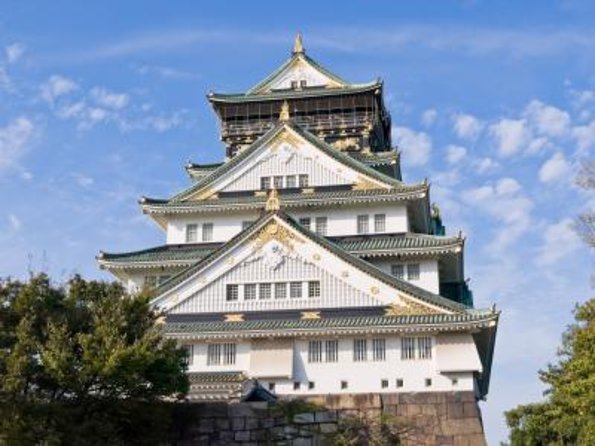
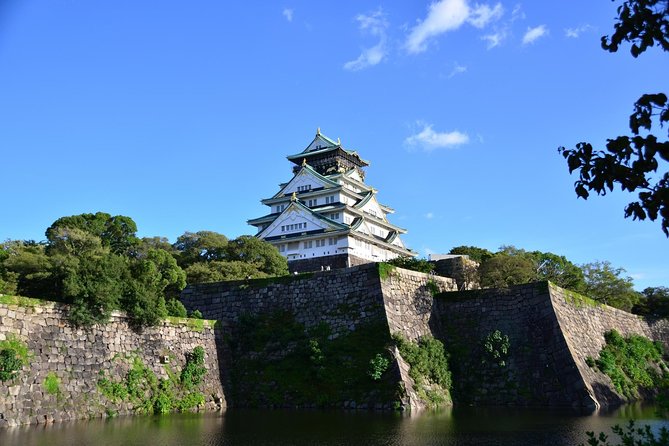
The tour spends about an hour and a half on the grounds. That gives you time for photographs and a walk toward the castle itself without turning the stop into a rushed photo break. The exterior is the main event here: the bright castle structure, broad grounds, and sense of scale make it one of Osaka’s most recognizable sights.
You do not enter the castle building on this tour. That is an important detail. The operator deliberately treats the outside as the stronger experience, so anyone hoping to see the interior exhibits should arrange that separately or ask about changing the plan.
I can see the logic. A private day has limited hours, and the interior experience may not appeal to everyone. Still, you should know what you are buying. This is an Osaka Castle grounds visit, not a castle museum tour.
The private vehicle is useful from the start. Osaka Castle is large, and a guide can choose a route that avoids some of the less useful wandering. One family traveling with older adults and children particularly valued the ability to move at a slower pace and avoid the heaviest pedestrian flow.
Shitennoji: a calm Buddhist counterpoint
Next comes Shitennoji, described as Japan’s oldest Buddhist temple. The buildings, pagoda, gates, and grounds create a calmer experience after the scale of Osaka Castle.
You spend about an hour here. This is where the guide’s explanation adds real value. Rather than simply walking through a temple compound, you can learn how the site fits into Japanese religious and political history, and how Buddhist worship differs from what you will see later at Sumiyoshi Taisha.
The Japanese garden is an optional extra. It costs 300 yen per adult when open, and it is worth considering if you enjoy ponds, carefully arranged plantings, and quiet walking paths. The garden closes on the 21st of each month, so check your date before booking if this part matters to you.
There is also a practical warning in the tour information: the garden opening schedule can be fickle. Do not build your entire decision around seeing it. The temple grounds remain the main stop, and the guide can still explain the site even if the garden is unavailable.
The listed fees require a little care. The tour information lists a 500 yen entrance fee for the Osaka temples, gardens, and kofun portion, while the detailed stop description says admission to Shitennoji is free and identifies the garden as a 300 yen extra. Confirm the current fee breakdown before the day so there are no surprises.
Shinsekai: thirty minutes of old Osaka character
The tour then shifts gears with a short walking tour of Shinsekai. You have about 30 minutes to see the old entertainment quarter and some of Osaka’s emblematic sights.
This is not a long neighborhood exploration. Think of it as a compact taste of a very different Osaka, with older storefronts, local character, and a streetscape that feels less formal than the castle and temple grounds. The brief stop works well because it breaks up the religious and historical visits.
If Shinsekai is high on your personal list, you may want to discuss extending the walk. The tour is private, so the schedule can respond to your interests, but traffic and the full route still limit what can fit into eight hours.
Same city, a completely different kind of day:
- Osaka Go Karting Tour with Funny Costume
★ 5.0 · 2,658 reviews - Osaka Castle: Museum and Tower Entry Ticket
★ 4.5 · 2,380 reviews - Osaka: Shinsekai Food Tour with 13-15 Dishes at 5 Eateries
★ 4.8 · 2,204 reviews - Osaka Food Tour: 13 Dishes at 5 Local Eateries
★ 5.0 · 2,149 reviews
Sumiyoshi Taisha: seeing Shinto on its own terms
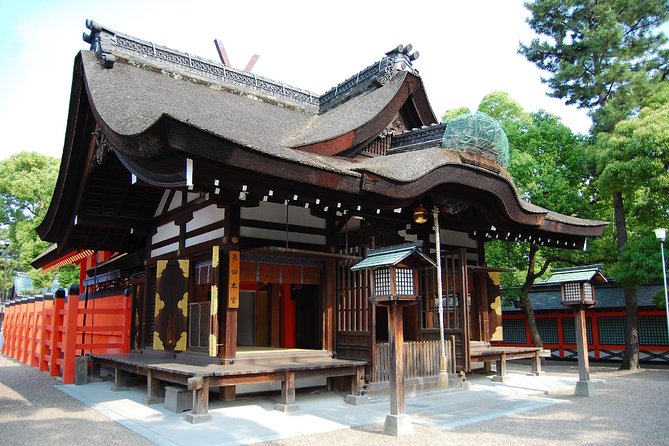
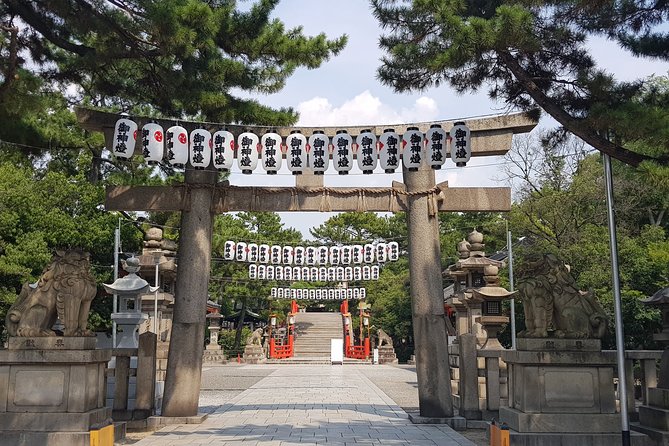
Sumiyoshi Taisha is one of the strongest stops for comparison. You spend roughly an hour at this large Shinto complex, which reaches back about 1,500 years.
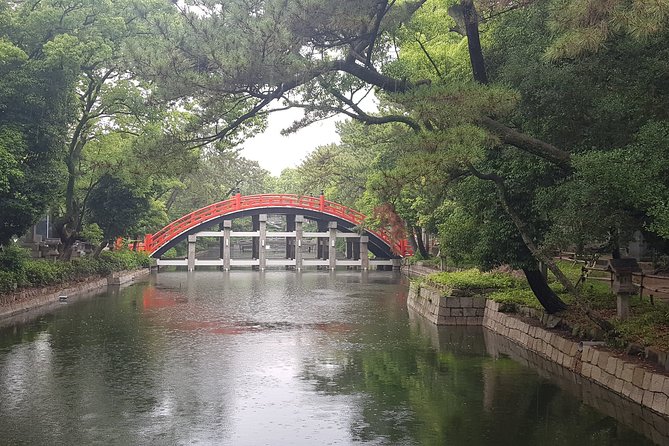
The famous arched bridge makes an immediate visual impression, but the real value is seeing the shrine as a living religious place rather than just a picture stop. Your guide can help you notice the differences between a Shinto shrine and the Buddhist temple visited earlier in the day.
That comparison gives the route a clear educational thread. At Shitennoji, you see Buddhist structures and traditions. At Sumiyoshi Taisha, you encounter Shinto spaces, shrine customs, and a different architectural style. You do not need a background in Japanese religion to appreciate the difference, but an explanation helps you avoid treating every sacred site as interchangeable.
Allow yourself time to look around without rushing. The private format is particularly helpful here because you can pause for photographs or ask questions without holding up a busload of people.
Kaiten sushi lunch: practical, casual, and flexible
Lunch is planned at a kaiten sushi restaurant, the revolving sushi style of dining. Food and drinks are not included, so you pay for your own meal.
This is a sensible choice for a full-day private outing. A revolving sushi restaurant usually allows each person to choose what appeals to them, rather than forcing a set menu on a mixed group. That matters if you are traveling with teenagers, older relatives, or people with different appetites.
The meal also keeps the day moving. This is not presented as a long culinary workshop or a formal restaurant experience. It is a convenient Japanese lunch within a packed sightseeing schedule.
The tour information does not name the restaurant or provide a fixed meal price, so budget separately. If lunch style is important to you, ask the operator before departure. The guides have shown flexibility with food and sightseeing preferences, but the exact restaurant arrangement is not specified.
Sakai City Hall: a useful view over the region
After lunch, you leave central Osaka for Sakai, the city directly south of Osaka. The private car makes this transition much easier than trying to connect several train lines and local walks in the middle of a full day.
At Sakai City Hall’s 21st-floor observatory, you spend around 30 minutes looking across the area. The view reaches north toward Osaka, east toward the mountains dividing the area from Nara, and west and south toward the coast.
This stop gives you geographic context. From ground level, Osaka and Sakai can feel like one enormous urban area. From above, you get a better sense of how the cities relate to one another and where the ancient tombs sit within the modern region.
The observatory visit is short, so do not expect a long building tour. Its purpose is orientation and a broad view. For a first visit to Osaka, that can be more useful than another indoor attraction.
Kofun tombs: the tour’s most unusual feature
The kofun tombs are the reason this excursion feels different from a standard Osaka sightseeing day. These enormous ancient burial mounds are associated with Japan’s early rulers and are often surrounded by greenery or modern city streets.
You visit one of the tombs and learn about the kofun tradition, then continue to Daisen Park. The specific tomb experience may depend on timing and site conditions, but the route gives you a chance to see these remarkable structures in person rather than only reading about them in a museum.
The scale is hard to understand from photographs. From the ground, a tomb can appear as a tree-covered rise or an oddly shaped green area. A guide helps you understand the layout and why these mounds were built in such a massive form.
This is also one of the quieter parts of the day. The tour description emphasizes that the area is lightly visited, which makes it a good change after Osaka Castle and Shinsekai. If you prefer less familiar sights and enjoy archaeology, this portion may be the highlight.
Daisen Park: a Japanese garden with a closing-day catch
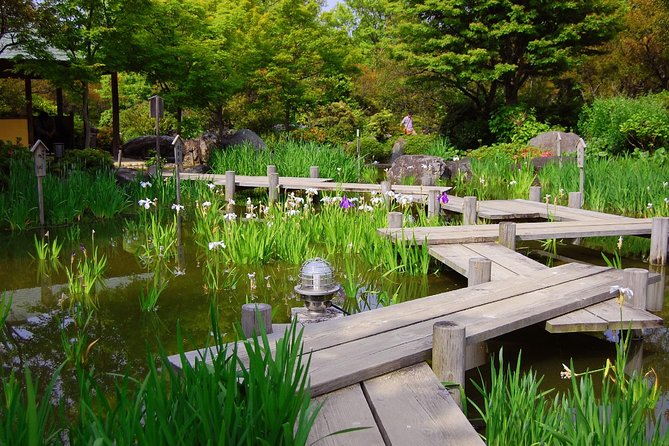
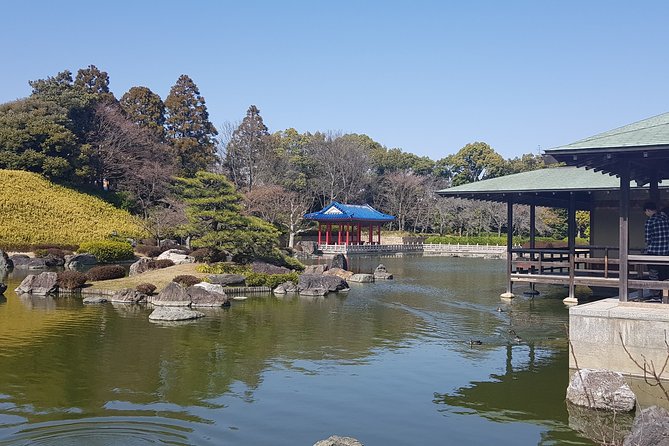
Daisen Park is the final major stop, with about an hour for a walk through its modern Japanese garden. The garden follows a pond and a landscaped stream, giving you a gentle finish after a day of temples, streets, viewpoints, and tombs.
Admission is not included. The detailed information lists a 200 yen entrance fee, while another fee note lists a 500 yen charge for the combined temples, gardens, and kofun portion. Since the amounts are presented differently, confirm the current total when you book.
The biggest scheduling issue is the garden’s weekly closure. It is closed on Mondays, unless Monday is a holiday, in which case it closes on Tuesday. If it cannot be visited, the operator offers alternatives such as shopping, another car-accessible location, or an activity chosen to suit your group.
That flexibility is helpful, but it also means the final portion is not guaranteed in its original form. If the garden is essential to you, avoid a Monday booking and check holiday dates carefully.
What the private car adds to the day
The advertised price is $708.78 per group of up to six people. For six people, that works out to about $118 per person before food and entrance fees. For two people, it is roughly $354 each, so the value changes sharply with group size.
You are paying for more than a driver. The package includes a local guide, private vehicle transport, and central Osaka hotel pickup and drop-off. You also gain time by avoiding repeated transfers between Osaka and Sakai, and you can make small changes based on your interests.
For a family, two couples, or a group of friends, the cost can be reasonable when compared with arranging several taxis, paying separate fares, and hiring a guide. For a couple on a tight budget, public transportation and self-guided visits will cost far less.
Pickup from the Osaka port area adds 2,500 yen each way. Pickup from Shin-Osaka adds 1,000 yen each way. A child seat costs 1,000 yen and must be requested in advance when required. Japanese law requires children under six or children shorter than 140 centimeters to use a car seat.
The day involves a moderate amount of walking. The vehicle reduces the distance between sites, but you will still walk around castle grounds, temple compounds, a shrine, an old neighborhood, and a garden. Comfortable shoes are a must.
The guides and the value of local explanation
The strongest part of the experience is the human side. Kevin is repeatedly praised for being flexible, patient, and good at adjusting the route. He has also helped groups with practical travel problems and made special stops, including a bonsai school and a Sakai knife shop when requested.
Jamie is described as engaging and able to bring each stop to life with stories. Hugo is praised for fun facts and trivia, while Levy is noted for adapting the itinerary and going the extra mile for personal service. One guide even arranged a birthday cake for a guest celebrating a 50th birthday.
These details matter because a private tour can be either wonderfully personal or simply an expensive taxi ride. Here, the guide is expected to provide the context that turns a temple, bridge, tomb, or garden into a connected story.
You should still communicate clearly before the tour. The model route is flexible, but timing, traffic, site closures, and outside conditions can require changes. Tell the operator if you want more time at gardens, more religious sites, a particular food stop, or a special interest in Sakai crafts.
Who should book this eight-hour Osaka route?
I would choose this tour if you want to see beyond central Osaka and prefer direct transport over navigating a complicated day by train. It is especially useful for families, multigenerational groups, first-time visitors, and anyone who wants a guide to explain Japanese culture as the day unfolds.
It also suits people who have already seen Dotonbori and the main shopping districts and now want a quieter, more historical side of the region. The kofun tombs and Daisen Park make the route feel distinct from a standard city highlights tour.
I would think twice if you want long, unhurried visits at every stop. The schedule covers a lot, and Shinsekai and Sakai City Hall are short visits. I would also hesitate if Osaka Castle’s interior is your priority, since the tour only visits the grounds.
The tour has a 4.8 out of 5 rating from 24 ratings, with 96 percent recommending it. More important than the number is the consistent praise for guide communication, flexible pacing, and the ability to personalize the route. Those are the features that justify the private format.
Should you book it?
Book this tour if you have a group of four to six, want one vehicle for the day, and value clear cultural explanation over the lowest possible price. The route gives you Osaka icons, two major religious sites, a quick neighborhood walk, an easy sushi lunch, and the unusual chance to see Sakai’s kofun tombs.
Choose another plan if you are traveling alone, watching every yen, or want to spend most of the day inside Osaka Castle or in Osaka’s food districts. Before booking, check the Shitennoji and Daisen Park closing dates, ask about the entrance fee total, and tell the operator about any special stops. With those details settled, this is a strong way to cover a wide, varied slice of Osaka without spending the day figuring out transport.
FAQ
How long does the private Osaka and Sakai tour last?
The tour lasts approximately eight hours and begins at 8:30 a.m.
Is hotel pickup included?
Central Osaka hotel pickup and drop-off are included. Pickup and drop-off from the Osaka port area cost an additional 2,500 yen each way, while Shin-Osaka pickup adds 1,000 yen each way.
How many people can join the private tour?
The price covers one private group of up to six people. Only your group participates in the activity.
Does the tour enter Osaka Castle?
No. The tour walks through the grounds and up to the castle but does not enter the building itself.
Is lunch included in the tour price?
No. Lunch is planned at a kaiten sushi restaurant, but food and drinks are not included.
When is Daisen Park’s Japanese garden closed?
The garden is closed on Mondays. If Monday is a holiday, it is closed on Tuesday instead. If the garden is closed, you can choose another activity, shopping, or another car-accessible location.
Can I cancel for a full refund?
You can receive a full refund if you cancel at least six full days before the experience start time. Cancellations made two to six full days in advance receive a 50 percent refund, while cancellations less than two full days before the start time are not refunded.
Just added around Osaka
- Samurai dress-up and shows, plus Tea Ceremony & Calligraphy★ 5.0 · 27 reviews
- Kyoto & Nara Private customized tour with English speaking Guide★ 4.5 · 99 reviews
- Well-balanced BENTO (lunch box) Cooking Class★ 5.0 · 35 reviews
- Urban Canvas: Osaka Street Art Bike Tour★ 5.0 · 47 reviews
- OSAKA:Feel the Power! Learn Taiko Drum from Professionals★ 5.0 · 28 reviews
- Volleyball in Osaka & Kyoto with Locals!★ 5.0 · 21 reviews
- 1.5〜2 Hours Traditional Kintsugi Work Shop in Namba Osaka★ 5.0 · 75 reviews
- Umami Town Street Food Tour★ 5.0 · 120 reviews
Private Car with Driver, compared.

Tokyo Private Sightseeing Tour by Car- English speaking chauffeur
Read our review →
Tokyo Private Tour by Vehicle with English-Speaking Chauffeur
Read our review →Mt FUJI Day Tour with Private Car and English Speaking Guide
Read our review →
Kyoto Private Car Tour – Full Day with Local Guide & Nara Option
Read our review →

Kyoto Day Trip using Private Car with English Driver (up to 5)
Read our review →Browse the lists this tour appears in