
REVIEW · JAPANESE COOKING CLASSES
Hands On Wagyu Sushi Making Experience
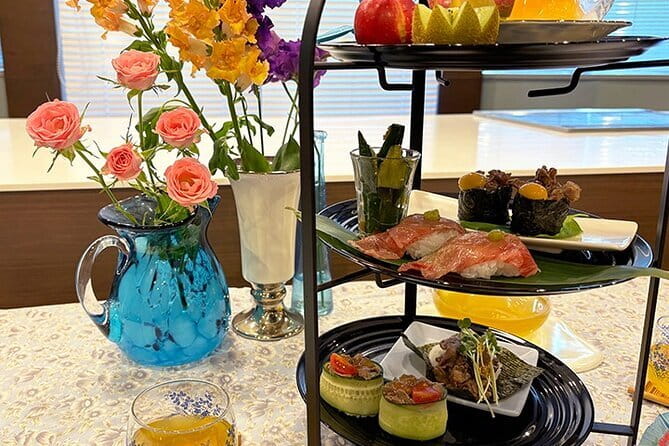
Premium Wagyu replaces the usual raw fish in this hands-on Tokyo sushi class, giving you a playful way to learn sushi without needing seafood. You’ll shape nigiri, gunkan maki, and temaki, then sit down to eat what you made.
I like the small six-person limit and the fact that the class supplies every ingredient and tool. I also like the friendly English-speaking instruction from teachers including Hiroko and Saori, plus the chance to learn shari, the seasoned sushi rice, instead of merely assembling a pretty plate.
The main catch is simple: this is a meat-focused class, not a traditional fish-sushi lesson. Vegan and vegetarian choices are not available, and the $104.51 price is easier to justify if you value the instruction, lunch, and social experience, not just the food.
In This Review
- Key details before you book
- Why Wagyu sushi makes this class different
- Arriving in Tokyo for the noon class
- Meeting the instructors and setting up
- Learning shari, the base of the sushi
- Shaping nigiri, gunkan maki, and temaki
- Plating your own lunch
- What the $104.51 price buys you
- Who will enjoy this most
- Small-group benefits and possible limits
- Booking, weather, and cancellation points
- My call on the Wagyu sushi class
- FAQ
- Where does the Wagyu sushi class take place?
- What time does the class start?
- How long does the experience last?
- How many people can join the class?
- What types of sushi will I make?
- Are ingredients and cooking equipment included?
- Are vegan or vegetarian options available?
Key details before you book
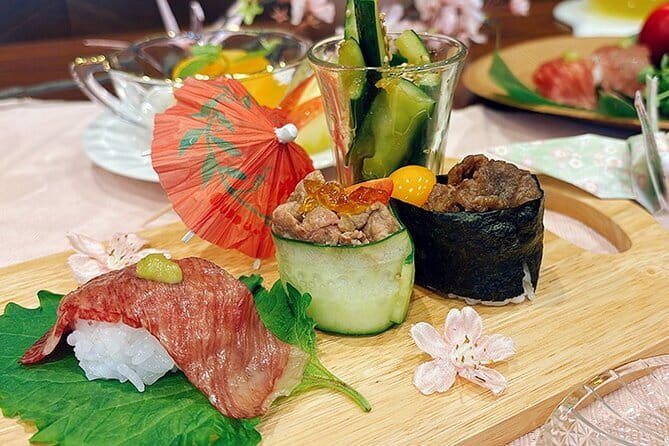
- You make three Wagyu sushi styles: Learn nigiri, gunkan maki, and temaki rather than repeating one basic roll.
- You also learn the rice and meat: The class covers shari and how to cook the Wagyu, two steps that shape the final taste.
- The group is capped at six people: That keeps the lesson personal and gives you room to ask for help.
- Lunch is the food you prepare: You do not simply watch a chef. You eat the finished sushi at the end.
- The class lasts about 90 minutes: It begins at noon and ends back at the meeting point.
- The package includes useful extras: Ingredients, cooking equipment, lunch, and later-downloadable photographs are included.
Why Wagyu sushi makes this class different
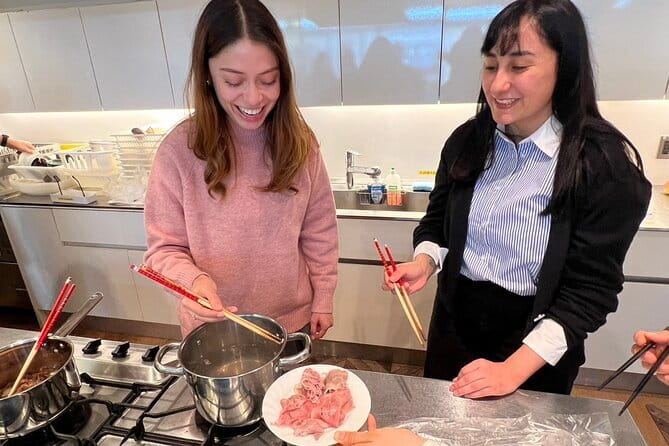
Tokyo offers plenty of standard sushi lessons, but this one takes a less expected route. Instead of focusing on fish and seafood, you work with premium Wagyu beef, pairing its rich flavor with sushi rice and seaweed.
That makes the experience a good fit for you if you enjoy beef more than raw fish, or if you have already tried a traditional sushi class. It also gives you a chance to see how sushi technique changes when the main ingredient is cooked meat.
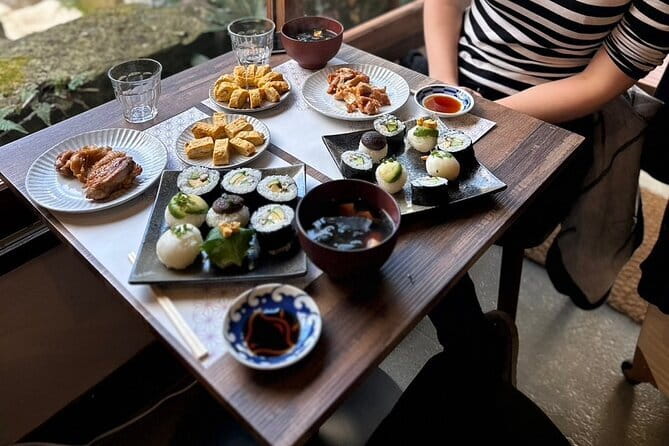
The lesson includes several formats. Nigiri is the familiar hand-formed rice topped with an ingredient. Gunkan maki uses rice wrapped in seaweed, creating a small cup-like shape. Temaki is a hand roll shaped into a cone.
These forms are useful choices for a class because each requires a different kind of handling. Nigiri asks for neat shaping and a light touch. Gunkan maki requires careful wrapping. Temaki is more forgiving, but the filling and rice still need to sit properly inside the cone.
You should not expect an advanced chef-training course in 90 minutes. You can expect a compact introduction to sushi construction, meat preparation, and presentation. The appeal is the balance between learning and eating, with no need to shop for ingredients or bring equipment.
More Japanese Cooking Classes in Tokyo
- Sushi Making Tokyo Roll and Authentic Japanese Sushi Class
★ 5.0 · 3,971 reviews - Tokyo: Roll and Authentic Sushi Making Class in Asakusa
★ 4.9 · 1,957 reviews - Tokyo: Sushi Making Class in a Happi Coat near a Famous Spot
★ 4.9 · 1,377 reviews
Arriving in Tokyo for the noon class
The class starts at 12:00 pm in Tokyo and finishes at the same meeting point. The location is near public transportation, which matters in a city where a short-looking journey can involve several train changes.
Your mobile ticket is accepted, and confirmation arrives when you book. I would still leave extra time to find the exact entrance, since the supplied details identify Tokyo and the meeting point but do not give a more specific neighborhood or street address.
The activity lasts about one hour and 30 minutes. That makes it easy to fit into a day of sightseeing, especially as a midday break. It is long enough to learn several techniques, but short enough that you can still visit another part of the city afterward.
The start time also gives you a practical lunch plan. Rather than squeezing in a restaurant before an afternoon visit, you prepare and eat the meal during the class.
Meeting the instructors and setting up
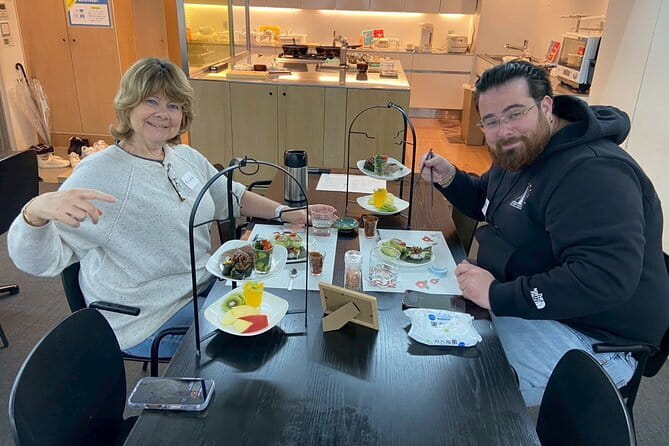
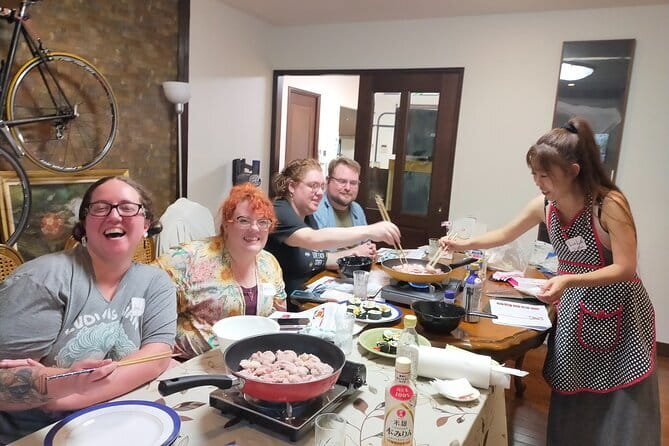
Patia’s Japanese Cooking Class provides the ingredients and cooking equipment, so you can arrive ready to work. That is one of the strongest practical points here. You avoid buying specialty items, measuring rice, or wondering which knife or mat you need.
The instruction is in English, and the teachers include Hiroko and Saori. The available comments repeatedly point to friendly guidance and help at each step. That matters in sushi-making, where a small adjustment to rice pressure or hand position can change the result.
With a maximum of six people, the teacher can watch what you are doing. A larger demonstration class might show you the technique, but leave you guessing once you start. Here, you have a better chance of receiving direct correction as you shape the sushi.
A minimum of two people per booking applies. Solo visitors should check availability carefully, since booking for one person is not permitted under the stated rules. Couples, friends, and small family groups are the natural match.
Learning shari, the base of the sushi
One of the more useful parts of this class is the attention to shari, the seasoned sushi rice. It is easy to think that sushi is mainly about the topping, but the rice affects the shape, mouthfeel, and balance of every piece.
The instruction includes how to prepare the shari. You will likely learn why the rice needs to hold together without becoming a dense lump, though the available details do not specify the exact recipe or preparation method.
This is valuable beyond the class. Wagyu is a strong ingredient, so the rice has to support it rather than compete with it. If the rice is badly formed, even good beef will not make the sushi feel right.
You also learn how to cook the meat. The precise cooking method is not provided, so you should not book expecting a detailed lesson in every possible Wagyu cut or Japanese beef grade. The clear focus is practical: prepare the beef correctly, pair it with sushi rice, and form several types of sushi.
Same city, a completely different kind of day:
- Mt Fuji and Hakone 1-Day Bus Tour Return by Bullet Train
★ 5.0 · 26,383 reviews - 1-Day Tokyo Bus Tour
★ 5.0 · 14,250 reviews - Tokyo: TOKYO SKYTREE® Admission ticket
★ 4.5 · 11,192 reviews - Tokyo: teamLab Planets TOKYO Digital Art Museum Entry Ticket
★ 4.6 · 9,779 reviews
Shaping nigiri, gunkan maki, and temaki
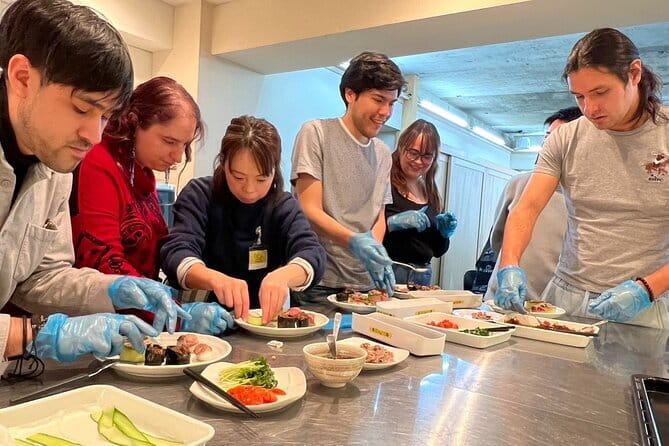
The class covers a variety of Wagyu sushi styles, which gives the 90 minutes a clear sense of progress. You are not just repeating the same roll until the session ends.
Nigiri offers the most direct test of your hand skills. You form a compact piece of rice and place Wagyu on top. The goal is a piece that holds together while remaining light enough to eat comfortably.
Gunkan maki adds a different challenge. Seaweed forms a wall around the rice, creating space for the topping. This style can look especially appealing on the finished plate, and it gives you practice with careful wrapping.
Temaki is the hand-rolled option. You shape seaweed into a cone and fill it with the prepared components. It is a more casual style, and it gives the class a pleasant change of pace after the more precise nigiri work.
The class descriptions do not list every filling, sauce, garnish, or side dish. I would treat the menu as Wagyu-centered rather than expect a long tasting menu. The attraction is learning the formats and handling the beef, not sampling a full range of seafood.
Plating your own lunch
The experience also teaches plating. This is more than a photo opportunity. Good plating helps you understand spacing, color, height, and portion size, all of which affect how sushi looks before you take the first bite.
Because you plate the pieces yourself, the final meal becomes part of the lesson. You can see the difference between a rushed arrangement and one with a little care. The available details describe the finished dishes as photogenic, and downloadable photographs are included later.
That photo option is a nice touch for a short cooking class. You can focus on handling the food instead of stopping constantly to take pictures. Since the photographs are downloadable afterward, check how and when the provider sends them.
At the end, you eat what you have made for lunch. This is an important part of the value. You are not paying only for a demonstration or leaving with a small sample. The food prepared during the session forms the meal, although the details do not state the exact number of pieces or additional dishes.
One comment also refers to Wagyu shabu shabu alongside the sushi. That suggests the food experience may include more than the three named sushi styles on some occasions, but it is not listed as a guaranteed part of every session. I would regard shabu shabu as a pleasant possibility, not a promise.
What the $104.51 price buys you
At $104.51 per person, this is not the cheapest way to eat Wagyu in Tokyo. You can find a restaurant meal for less, especially if your only goal is to taste beef sushi.
The comparison changes when you count what is included. The fee covers the cooking experience, ingredients, equipment, lunch, instruction, and later-downloadable photographs. You also get a small-group setting rather than a seat at a busy restaurant.
I think the price makes the most sense for you if you want an activity with a clear result. You spend the time learning a skill, making several styles, arranging the plate, and eating the finished food. That is stronger value than a meal alone if you enjoy participating in your food.
The cost is less convincing if you are mainly chasing the finest Wagyu tasting in Tokyo. This class is not presented as a specialist beef seminar, and the supplied information does not give the cut, grade, quantity, or producer of the Wagyu.
It is also worth noting the average booking lead time of 36 days. That does not guarantee you must book that far ahead, but it signals that planning early is sensible, particularly if you have only one free midday in Tokyo.
Who will enjoy this most
I would recommend this class to several types of visitors:
- Beef lovers: You can enjoy a sushi format without making seafood the center of the meal.
- First-time sushi makers: The ingredients and tools are supplied, and instructors guide you through each stage.
- Repeat visitors to Japan: The Wagyu angle gives you something different from a standard sushi lesson.
- Couples and small groups: The two-person minimum and six-person cap suit a small booking.
- Food-focused families with older children: The hands-on format may be more engaging than a quiet restaurant meal, though no specific age policy is provided.
- Photographers and food fans: You learn plating and receive downloadable photographs later.
I would look elsewhere if you need vegan or vegetarian food. No such options are available. I would also choose another class if your priority is learning traditional fish butchery, seafood selection, or a broad range of sushi toppings.
The class may also be less suitable if you dislike structured instruction. You are there to follow steps, prepare food, and plate it, not simply order what you want from a menu.
Small-group benefits and possible limits
Six people is a sensible maximum for this kind of lesson. It gives the room a social feel without turning the class into a stage show. You can watch another person try a technique, then receive help when it is your turn.
The small size also supports English instruction. When the class is limited, it is easier to pause and explain a hand position or rice texture. The available comments specifically describe the English-speaking staff as easy to understand.
Still, a group of six is not a private lesson. You may need to wait briefly while an instructor assists someone else. If you want one-to-one coaching throughout, confirm whether a private option exists, since no private upgrade is stated here.
The 90-minute schedule keeps things moving. That is good for a busy Tokyo itinerary, but it leaves little room for a long discussion of Japanese food culture. You receive a focused practical class, not an all-day cooking program.
Booking, weather, and cancellation points
You receive booking confirmation at the time of reservation, and the mobile ticket makes the admission process simple. The meeting point is near public transportation, but you should allow enough time to identify it before the noon start.
Free cancellation is available up to 24 hours before the experience begins. If you cancel less than 24 hours ahead, you do not receive a refund, and changes made inside that window are not accepted.
The provider also states that the activity requires good weather. If poor weather causes a cancellation, you are offered another date or a full refund. The same choice applies if the minimum number of participants is not reached.
The weather rule is unusual for an indoor cooking activity, so I would check the provider’s message before setting out, especially if rain or severe conditions are forecast. The stated cut-off times use Tokyo local time.
My call on the Wagyu sushi class
I would book this if you want a short, social Tokyo food activity with a clear hands-on element. The combination of premium Wagyu, three sushi styles, shari instruction, cooking guidance, plating, lunch, and photographs gives the session more substance than a simple tasting.
The strongest reasons to choose it are the six-person limit, English-speaking teachers such as Hiroko and Saori, and the fact that you eat your own work. Those details make the experience feel personal and useful, not just decorative.
I would skip it if you are vegetarian, want a classic seafood-sushi course, or care more about the exact Wagyu cut than the cooking lesson. At $104.51, you are paying for instruction and participation as much as for lunch.
For couples and small groups with one free midday in Tokyo, this is a well-focused choice. Book early if your schedule is tight, arrive before noon, and think of it as a Wagyu cooking lesson that ends with lunch, not simply a premium sushi meal.
FAQ
Where does the Wagyu sushi class take place?
The activity takes place in Tokyo, Japan, at a meeting point near public transportation. The experience ends back at the same meeting point.
What time does the class start?
The class starts at 12:00 pm.
How long does the experience last?
The cooking experience lasts approximately one hour and 30 minutes.
How many people can join the class?
The group has a maximum of six participants. A minimum of two people per booking is required.
What types of sushi will I make?
You will learn to make Wagyu nigiri, gunkan maki, and temaki. The class also covers shari, or sushi rice, and how to cook the Wagyu.
Are ingredients and cooking equipment included?
Yes. The cooking experience includes the ingredients and equipment needed for the class. Lunch and later-downloadable photographs are also included.
Are vegan or vegetarian options available?
No. Vegan and vegetarian options are not available for this experience.
Just added around Tokyo
- Private Memorable Tokyo Tour with English Speaking Driver★ 5.0 · 30 reviews
- Private Tokyo Custom Full-Day Tour by Chartered Vehicle★ 5.0 · 16 reviews
- Private Sightseeing to Mt Fuji and Hakone with English Driver★ 5.0 · 51 reviews
- Tokyo Photography Masterclass – Private Photography Lesson★ 5.0 · 25 reviews
- Private Mt. Fuji Day Trip from Tokyo with English-Speaking Driver★ 5.0 · 33 reviews
- 4 Day Tour – Mount. Fuji, Tokyo, Hakone, Kamakura and Yokohama★ 5.0 · 19 reviews
- Private Unforgettable Mt Fuji Tour with English Speaking Driver★ 5.0 · 142 reviews
- Private Tokyo Food Tour – A Journey Through Time Through Food★ 5.0 · 36 reviews
Japanese Cooking Classes, compared.
Sushi Making Tokyo Roll and Authentic Japanese Sushi Class
Read our review →
Roll and Authentic Sushi Making Class in Asakusa
Read our review →
Ramen Cooking Class at Ramen Factory in Kyoto
Read our review →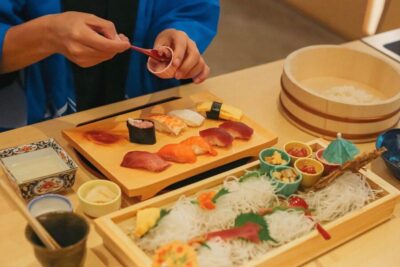
Sushi Making Class in a Happi Coat near a Famous Spot
Read our review →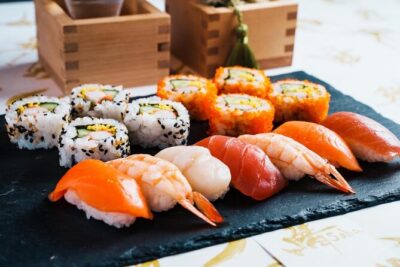
Sushi Making Osaka Roll and Authentic Japanese Sushi Class
Read our review →
Tokyo Sushi Making Class in Tsukiji with Professional Chef
Read our review →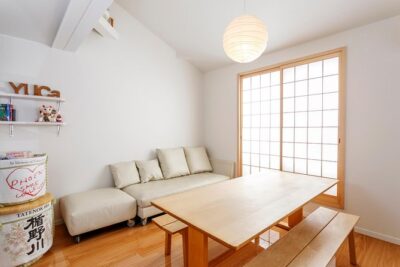
Ramen & Gyoza Cooking Class in Tokyo with Local Supermarket Visit
Read our review →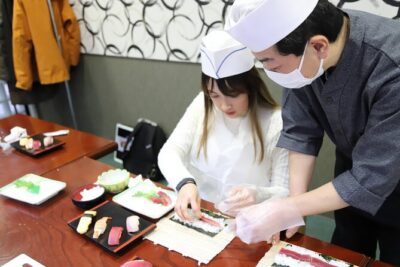
Tsukiji Fish Market Guided Tour and Sushi Making with Pro Chef
Read our review →Browse the lists this tour appears in