
REVIEW · TEMPLE & SHRINE TOURS
Full Tokyo: Meiji Shrine, Imperial Palace, Asakusa & Skytree
Tokyo can feel like five cities at once, and this seven-hour tour gives you a fast, useful first look at its main districts. You start at Hachiko Statue, see Shibuya Crossing, walk through Meiji Shrine, photograph the Imperial Palace, pass through Akihabara, explore Asakusa, and finish at Tokyo Skytree if you have chosen that option.
I like two things here. First, the tour uses Tokyo’s trains, so you get a practical feel for moving around the city rather than viewing everything from a bus window. Second, the mix is strong: a Shinto shrine, imperial grounds, Buddhist temple, anime and electronics culture, and a huge city view. The main consideration is time. Some stops are brief, and the pace can feel rushed, especially around Senso-ji and lunch.
In This Review
- Key points to know before booking
- A fast introduction to Tokyo’s many sides
- Hachiko, Shibuya Crossing, and the first taste of Tokyo
- Meiji Shrine: the tour’s calmest hour
- The Imperial Palace stop is mainly for photos
- Akihabara gives you a quick look at Tokyo’s pop culture
- Asakusa and Senso-ji are the day’s main cultural stop
- Tokyo Skytree gives the grand finish, but read the ticket terms
- What the train travel adds, and what it demands
- How good is the $69 value?
- Who should book this Tokyo day tour?
- Should you book Full Tokyo?
- FAQ
- Where does the tour start?
- Where does the tour end?
- How long does the tour last?
- What languages does the guide speak?
- Are train tickets included?
- Is lunch included?
- Is Tokyo Skytree admission included?
- Can I visit the Imperial Palace interior?
- Is the tour suitable for wheelchair users?
- What should I bring?
Key points to know before booking
- Start at Hachiko Statue: Meet your guide in Hachiko Square, a busy but easy-to-recognize spot in Shibuya.
- Meiji Shrine gets the longest visit: The scheduled guided stop lasts about 70 minutes, giving you time for the forest path and shrine grounds.
- The tour is train-based: Tickets for transfers are included, but you should expect walking, platforms, stairs, and station changes.
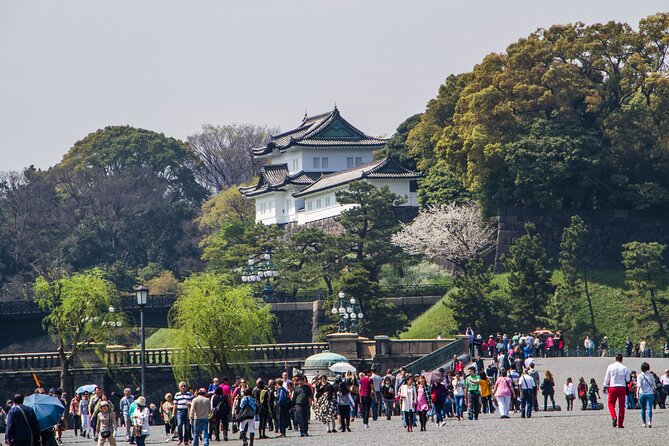
- Imperial Palace access is limited: The stop focuses on the exterior and photographs, not a full palace interior visit.
- Asakusa is your main free-time block: You have about two hours for Senso-ji, lunch if selected, and independent exploring.
- Skytree is optional: The tour ends at Tokyo Skytree, but you enter the observation deck only if you purchased that option.
A fast introduction to Tokyo’s many sides
At $69 per person, this tour is aimed at first-time visitors who want structure. You are not paying for a slow, specialist tour of one neighborhood. You are paying for a guide, a full day of routing between distant districts, train tickets, and an organized attempt to cover several major sights.
That can be good value in Tokyo, where the distance between Shibuya, the Imperial Palace, Asakusa, and Skytree adds up quickly. It is less convincing if you already know the city or prefer to spend half a day at one temple.
The guide makes a real difference. Guides named Oliver, Jorg, Melody, Erik, George, and Burt have led departures, so your experience can vary by date. The official languages are English and Spanish. Some guide-led departures may include other language ability, but you should book this tour expecting English or Spanish service.
The overall rating supplied for the activity is 4.7 from 16 ratings. That points to a generally strong experience, though the individual experiences show an important split: some people praise the organization and cultural explanations, while one detailed account found the stops too short and the commentary too thin. I would treat this as a well-planned overview, not a deep cultural tour.
More Garden & Palace Tours in Tokyo
- Tokyo: Imperial Palace and Shogun Historical Walking Tour
★ 5.0 · 2,251 reviews - Tokyo Castle & Imperial PalaceーShogun Walking Tour
★ 4.7 · 1,068 reviews - Tokyo: Imperial Palace Japanese History Walking Tour
★ 4.9 · 987 reviews
Hachiko, Shibuya Crossing, and the first taste of Tokyo
The meeting point is beside the Hachiko Statue at Hachiko Square. Hachiko is one of Tokyo’s best-known meeting points, but it is also crowded, so arrive with enough time to locate the statue and your guide.
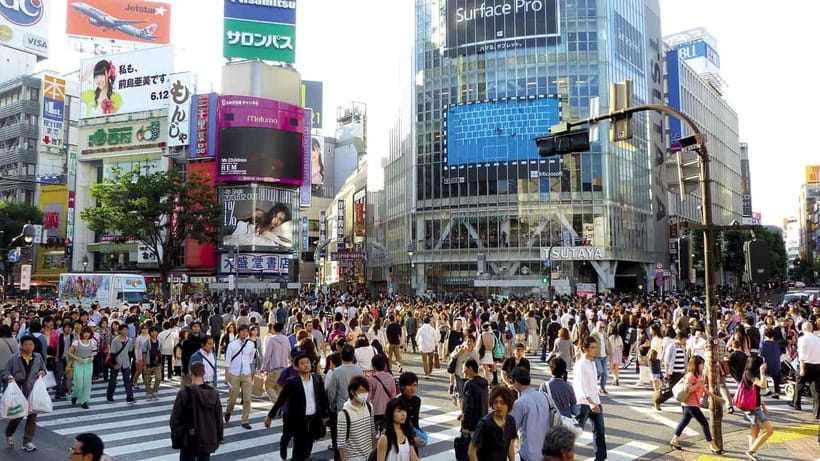
From there, the tour takes you through the Shibuya area and gives you a view of Shibuya Crossing. The crossing is famous for the sight of people moving in several directions at once, surrounded by giant screens and tall buildings. It is a quick way to understand Tokyo’s modern energy.
You should set your expectations carefully. The scheduled transport block is about 40 minutes, but the actual Shibuya stop may be short. One account described the crossing as a brief drive-by rather than a proper walk and viewing stop. If crossing the intersection is high on your personal list, ask the guide early where you will have time to stand and take photos.
That limitation does not make Shibuya unimportant. It simply means this tour treats it as an introduction. If you want time for the famous crossing, shopping, department stores, or the surrounding cafes, plan a separate visit.
Meiji Shrine: the tour’s calmest hour
Meiji Shrine is the first major walking stop and the part of the day I find most appealing. The shrine sits in a large wooded area in central Tokyo, creating a sharp change from the screens and traffic around Shibuya.
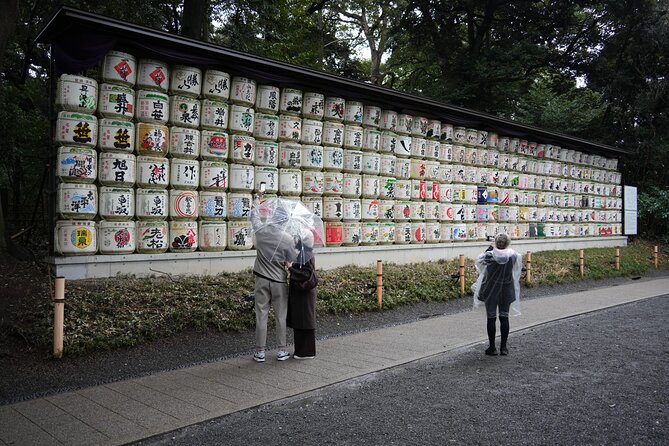
The scheduled visit lasts about 70 minutes. That is enough time for a guided walk through the grounds, a look at the shrine buildings, and a basic introduction to Shinto customs. You might see sake barrels, shrine gates, wooden prayer plaques, and visitors making offerings, depending on the day.
This is also a good place to slow your pace. The gravel paths and trees offer a quiet setting, but you still need comfortable shoes because the tour includes a lot of walking between train stations and sights.
An early start helps here. One departure began at 8 a.m. and found Meiji Shrine pleasantly quiet. That is useful advice for anyone who dislikes crowds. Ask about the starting time when booking, since the activity offers different start times based on availability.
Your guide should explain how to behave at the shrine, but it is still wise to watch what people around you do and keep your voice low near worship areas. The value of this stop is not only the building itself. It gives you a simple, accessible introduction to a living religious tradition.
The Imperial Palace stop is mainly for photos
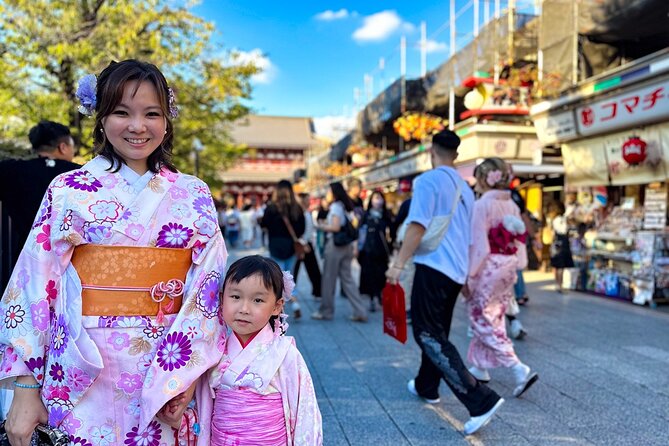
After Meiji Shrine, you travel by train for roughly 45 minutes before reaching the Imperial Palace area. The palace grounds are tied to Japan’s imperial household and occupy a central position in Tokyo.
The stop lasts about 30 minutes in the stated schedule. You should expect an exterior view and time for photographs, not a palace interior tour. The gardens and stone walls can make a pleasant contrast with Shibuya, but this is a short orientation stop.
This is one place where the printed timing deserves a close look. A detailed account described the palace visit as closer to 20 minutes than an hour. The published schedule itself gives 30 minutes, so I would plan on a brief stop and avoid booking this tour solely for an extended palace visit.
The upside is efficiency. You can see one of Tokyo’s most important official sites without spending hours working out access and transportation. The downside is that you will not have much time to wander or study the grounds.
More Temple & Shrine Tours in Tokyo
- Tokyo: Meiji Shrine, Asakusa, Skytree Bus Tour and Cruise
★ 4.7 · 1,986 reviews - Tokyo: Asakusa Walking Tour with Sensoji Temple Visit
★ 4.8 · 1,583 reviews - Nikko: Kegon Falls, Lake Chuzenji & Toshogu Temple
★ 4.6 · 1,577 reviews - Tokyo: Nikko Toshogu Shrine and Kegon Waterfall Tour
★ 4.5 · 1,266 reviews
Akihabara gives you a quick look at Tokyo’s pop culture
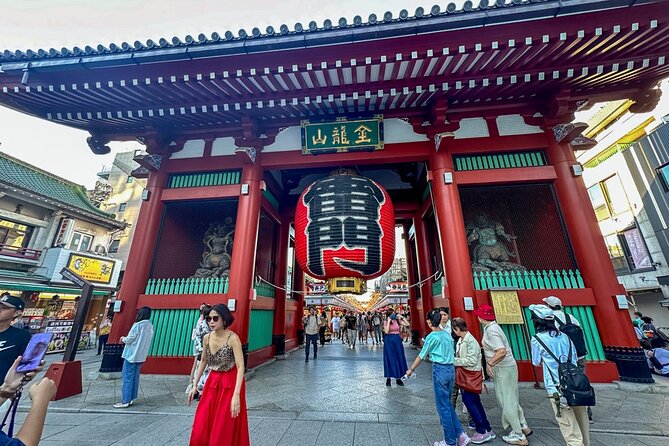
The route continues toward Akihabara, the district associated with electronics, games, anime, manga, and colorful signs. Here the program describes a scenic drive or pass-through rather than a long guided visit.
That distinction matters. You may see the district’s distinctive streets, but you should not expect time for shopping, arcades, specialist stores, or a close look at the tech scene. If Akihabara is a major reason for visiting Tokyo, return on your own.
Still, including it helps show how varied the city is. In one morning you move from a wooded shrine to imperial grounds and then into Tokyo’s technology and pop culture center. This quick contrast works well for first-time visitors who want a broad sense of the capital.
Asakusa and Senso-ji are the day’s main cultural stop
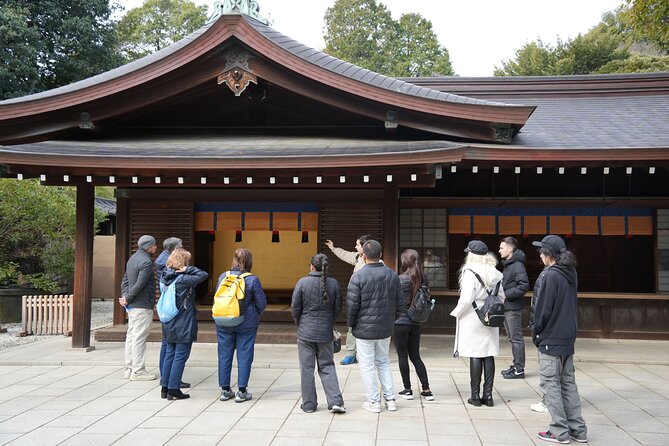
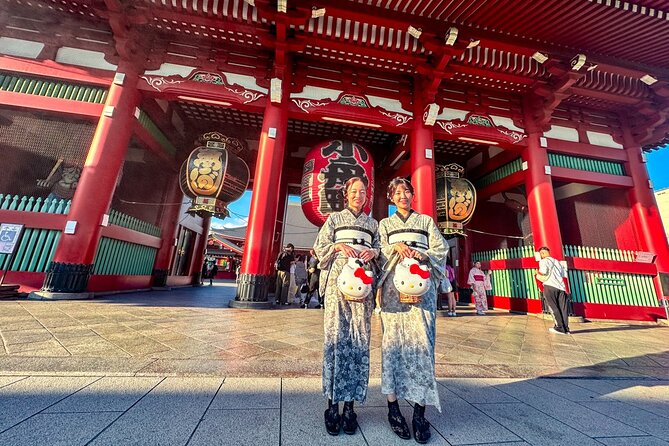
Asakusa is where the tour gives you the most freedom, with about two hours for lunch and independent time. The centerpiece is Senso-ji, Tokyo’s oldest and best-known Buddhist temple.
The approach to Senso-ji is lined with shops and food stalls, and the temple grounds offer plenty to see even during a short visit. You can photograph the large gate, walk toward the main hall, browse traditional goods, and sample local snacks if time allows.
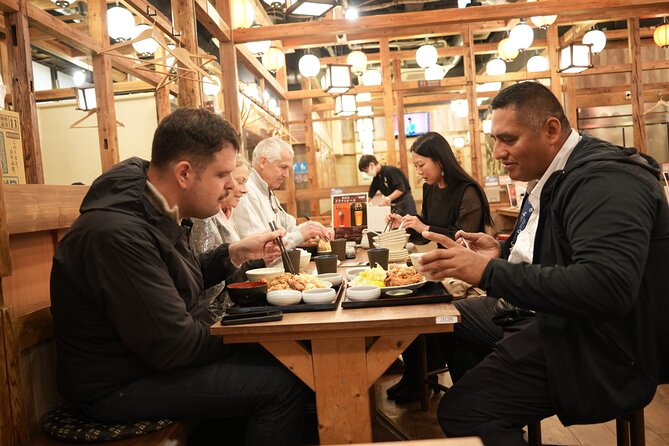
This is also the point where the pace can become uneven. If you choose the lunch option, the meal is held at a local Japanese restaurant. One account described the food as delicious and well served, while another found lunch rushed because the group had to reunite with people using their free time differently.
I would choose lunch if you value convenience and want a traditional meal arranged for you. Choose the non-lunch option if you would rather control your time around Senso-ji. Two hours sounds generous, but it includes the temple, food, meeting arrangements, and any wandering you hope to do.
The guide’s role here is especially important. One account wanted more explanation of the temple and less hurried time. Senso-ji has enough details to reward a clear introduction, from the gate and incense burner to the worship hall and surrounding streets. If your guide gives a short explanation, ask direct questions before splitting up.
Asakusa is also a sensible place to notice the difference between a guided tour and independent travel. The tour gets you there, gives you context, and removes the need to handle another train connection. You then decide how much time to spend inside the temple grounds or around the shopping street.
Tokyo Skytree gives the grand finish, but read the ticket terms
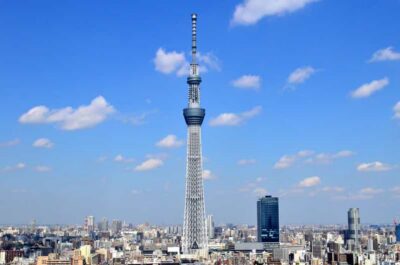
The final transfer takes about 30 minutes, and the tour ends at Tokyo Skytree or Asakusa. Skytree is one of Tokyo’s most recognizable modern landmarks, and its observation deck offers broad views over the city.
The important catch is simple: you can enter Skytree only if you purchased the ticket option. The basic tour does not automatically include admission. If you want the elevator ride and observation deck, confirm that the Skytree option is selected before paying.
The view is the reward for a long day of moving through Tokyo. From above, the city’s scale becomes easier to understand. You can look back at the central districts you visited and see how tightly the urban area stretches in every direction.
Because the tour ends at Skytree, you should also think about your evening plans. You are not returned to Hachiko Square. If you do not buy the Skytree ticket, the day still ends there, and you will need to make your own way onward from either Tokyo Skytree or Asakusa.
This final stop works best for people who like a clear finish. It is less convenient if you have dinner reservations elsewhere or need to return to Shibuya with a group.
What the train travel adds, and what it demands
The included train tickets are a genuine part of the tour’s value. Tokyo’s rail system can be confusing on a first visit, particularly when you are changing lines, following signs, and trying to arrive on time with a group.
Your guide handles the transfers and ticketing between the listed stops. That lets you focus on the city rather than navigating every connection. A guide also has a chance to explain practical points about getting around Japan, and one guide was especially appreciated for giving useful train travel advice.
The tradeoff is that train-based sightseeing is active. You will walk through stations, stand on platforms, board trains, and keep up with the group. The tour is not suitable for wheelchair users, and anyone with mobility concerns should think carefully about the walking and transfers.
Bring water, sunscreen, a hat, and a camera. Comfortable shoes are essential. Tokyo’s streets may look easy on a map, but a full day of stations, shrine paths, temple grounds, and city sidewalks adds up.
How good is the $69 value?
At $69, the tour can be a fair buy if your goal is to cover central Tokyo’s headline sights in one day. The guide and train transfers save you planning time, while the route connects places that are spread across the city.
The value depends on the options you choose. Lunch is included only when selected, and the Tokyo Skytree entrance is also an add-on option. Drinks are not included. Check the final price and inclusions carefully, because the difference between a basic transport-and-guide package and a version with lunch and Skytree admission may be significant.
I would not call this a bargain for slow sightseeing. You get limited time at Shibuya, the Imperial Palace, and Akihabara, and you may spend several hours moving between stops. You are paying for breadth and organization.
The tour is strongest when you have only one free day in Tokyo, want help with trains, or need an English or Spanish introduction to the city. It is weaker for repeat visitors, photographers, museum fans, or anyone who wants long, quiet visits at individual sites.
Who should book this Tokyo day tour?
I would recommend it to a first-time Tokyo visitor who wants a reliable overview and does not mind a brisk pace. Families with older children may like the variety, especially the contrast between Shibuya, Meiji Shrine, Akihabara, Senso-ji, and Skytree.
It also suits anyone who feels uneasy about Tokyo’s train system. Having a guide lead the transfers can remove a lot of stress during your first day.
You should think twice if you want detailed history at every stop. The quality of explanation can depend on the guide and the language flow within the group. Ask questions, especially at Senso-ji and the Imperial Palace, and do not assume every scheduled time means a full, leisurely visit.
The tour is also a poor match for anyone who needs a wheelchair-accessible route. The activity specifically excludes wheelchair users, and the train travel and walking require a reasonable level of mobility.
Should you book Full Tokyo?
Book it if you want breadth, guided train travel, and a packed first look at Tokyo. The route is smart, the sights are well chosen, and Meiji Shrine, Asakusa, and the Skytree view give the day real variety.
Skip it if your priority is depth or free time. You may find Shibuya, the Imperial Palace, and Akihabara too brief, while lunch can tighten the schedule around Senso-ji.
My practical choice would be the tour with the Skytree ticket if you want the complete route, and with lunch only if you prefer convenience over choosing your own Asakusa meal. Arrive ready to walk, keep your expectations focused on an overview, and you will get the most from the $69 price.
FAQ
Where does the tour start?
The meeting point is next to the Hachiko Statue in Hachiko Square, Shibuya.
Where does the tour end?
The tour ends at Tokyo Skytree or Asakusa. It does not return to the Hachiko Statue.
How long does the tour last?
The stated duration is seven hours.
What languages does the guide speak?
Live guiding is offered in English and Spanish.
Are train tickets included?
Yes. Train tickets for transfers between the itinerary points are included.
Is lunch included?
Lunch is included only if you select the lunch option when booking. Drinks are not included.
Is Tokyo Skytree admission included?
Admission is included only if you select the Tokyo Skytree option. You cannot enter the observation deck without having purchased that option in advance.
Can I visit the Imperial Palace interior?
The tour provides a guided visit focused on the Imperial Palace exterior and photographs. Interior access is not stated as part of the experience.
Is the tour suitable for wheelchair users?
No. The activity is not suitable for wheelchair users.
What should I bring?
Bring comfortable shoes, a hat, sunscreen, water, and a camera.
Just added around Tokyo
- Tokyo: Customizable Private Guided Walking Tour★ 4.5 · 129 reviews
- Private Harajuku Omotesando Architecture Tour★ 4.9 · 18 reviews
- Tokyo: Guided Helicopter Ride★ 4.9 · 24 reviews
- Tokyo: Guided Walking Tour of Tsukiji Market with Lunch★ 4.4 · 24 reviews
- Tokyo: Private Personalized Local Food Tour★ 4.5 · 101 reviews
- Tokyo GINZA: KONPARU Japanese Cabaret Show with Drink★ 4.8 · 38 reviews
- Tokyo: Guided Walking Tour of Tsukiji Market with Breakfast★ 4.4 · 134 reviews
- Tokyo: Gotokuji Cat Temple, Shinjuku Cat Cafe & 3D Cat Tour★ 4.9 · 38 reviews
Temple & Shrine Tours, compared.
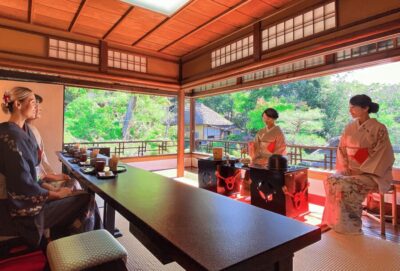
Tea Ceremony in a Traditional Tea House in Kiyomizu
Read our review →
Meiji Shrine, Asakusa, Skytree Bus Tour and Cruise
Read our review →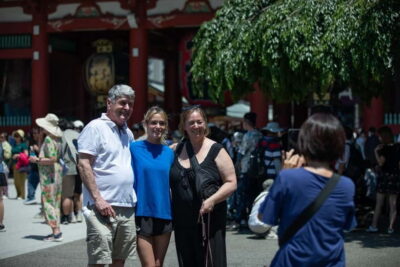
Asakusa Walking Tour with Sensoji Temple Visit
Read our review →
Kamakura & Enoshima Day Trip including Temple Tickets
Read our review →
Kyoto/Osaka: Nara, Fushimi Inari Taisha, Arashiyama Bus Tour
Read our review →
Nikko Toshogu Shrine and Kegon Waterfall Tour
Read our review →
Tokyo Panoramic 1 Day: Meiji Shrine, Asakusa, Odaiba and SKYTREE®
Read our review →Browse the lists this tour appears in