
REVIEW · TEMPLE & SHRINE TOURS
Food & Cultural Walking Tour around Zenkoji temple in Nagano
Zenkoji is the star here, but food gives you the best way into its story. This three-hour walk links a 1,400-year-old national treasure temple with oyaki baked over a sunken hearth, local sake, miso, soba tea, and matcha in a traditional tea setting.
I like the small-group format, which can turn into a near-private walk, and the chance to meet local shop owners instead of simply photographing temple gates. I also like that guides such as Masa and Takuma explain how food, religion, and daily life fit together in Nagano.
The main consideration is the walking and standing. The tour is not suitable for wheelchair users, people with gluten intolerance, pregnant women, or people over the listed age limits. The route also includes tasting alcohol, so it may not suit every visitor.
In This Review
- Key points at a glance
- Why this walk works so well in Nagano
- Starting with oyaki and soba tea
- Walking through Zenkoji temple town
- Sake, soy sauce beans, and miso
- Small stops with local character
- Matcha and sweets to finish
- What the guides add
- Is $88 a fair price?
- Walking demands and practical limits
- Who should book this experience?
- Should you book the Zenkoji food walk?
- FAQ
- Where does the tour start?
- Where does the tour finish?
- How long does the experience last?
- What language is the tour conducted in?
- How much does the tour cost?
- Is lunch included?
- Is matcha included?
- Is sake tasting included?
- Is entry to Zenkoji included?
- Can solo visitors book the tour?
Key points at a glance
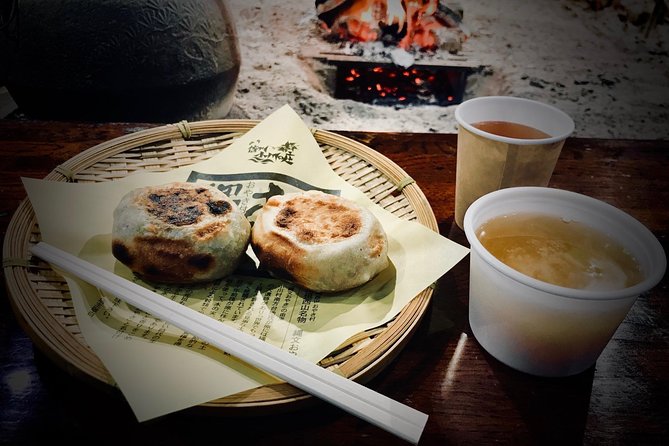
- Oyaki cooked over a sunken hearth: Taste two stuffed dumplings with soba tea in a traditional setting.
- Zenkoji beyond the main approach: Walk through side streets and temple-town corners that are easy to miss on your own.
- Sake with local nibbles: Try several varieties with soy sauce beans and miso soup.
- Matcha and sweets: Finish with Japanese tea in a traditional tea place.
- English-speaking personal guidance: Masa, Takuma, and other guides explain Nagano food, religion, and customs in clear English.
- Three hours from Nagano Station: The walk begins and ends at Starbucks in MIDORI Nagano, making it easy to fit into a short stay.
Why this walk works so well in Nagano
Nagano is often treated as a transport stop on the way to the mountains, but Zenkoji gives the city a strong center. This tour helps you see that center through food and local contacts rather than only through temple architecture.
You meet your guide in front of Starbucks Coffee at Nagano Station. From there, the route is on foot and returns to the same place after three hours. That simple start and finish are useful if you arrive by train, have luggage stored nearby, or want a compact introduction before exploring more of the city alone.
The tour generally needs two or more people to operate. Solo visitors should contact the provider before booking to check if the walk can run. If the group is small, you can expect more room for questions and a better chance to adjust the pace or food stops to your interests.
The strongest part of the experience is its local focus. You are not simply shown a temple, handed a snack, and sent on your way. The guide connects the food to Nagano customs, explains authentic Japanese eating style, and introduces you to people working in the temple town.
More Temple & Shrine Tours in Nagano
- 1-Day Snow Monkeys, Zenko-ji Temple & Sake in Nagano
★ 5.0 · 1,020 reviews - Nagano: Snow Monkeys, Zenkoji Temple & Sake Day Trip
★ 4.9 · 833 reviews - Food & Cultural Walking Tour around Zenkoji temple in Nagano
★ 5.0 · 58 reviews
Starting with oyaki and soba tea
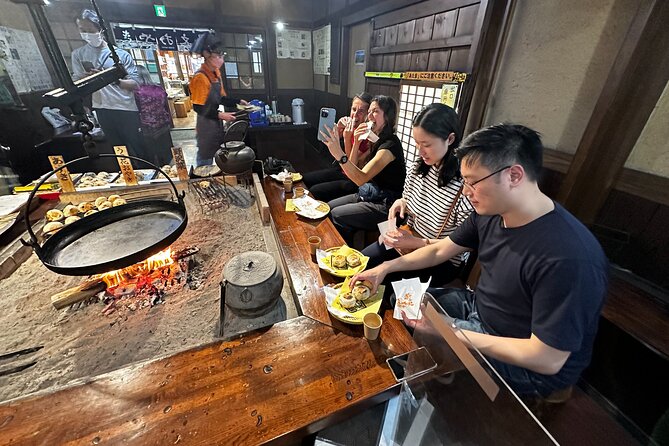
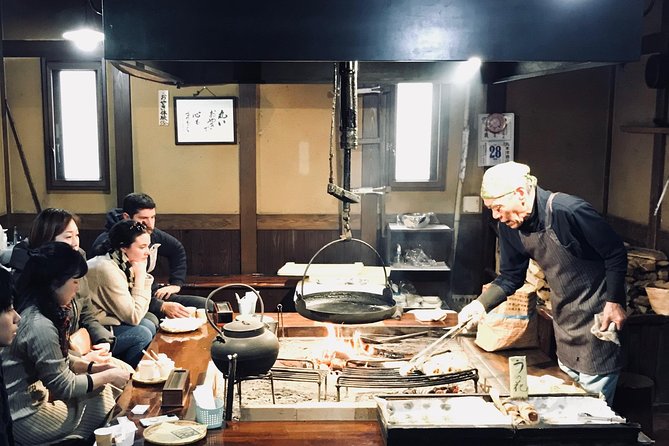
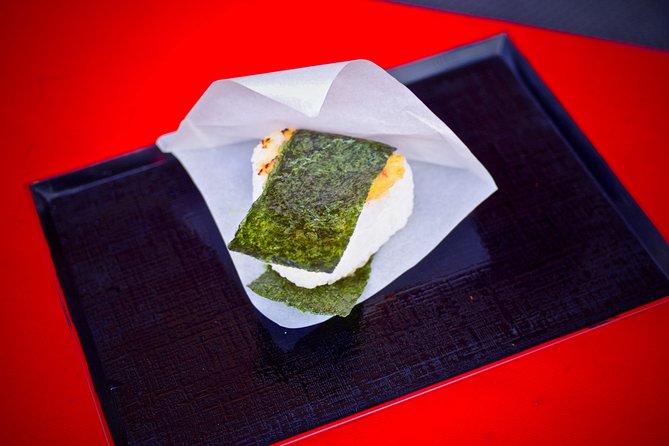
After about 15 minutes of walking from the station, you stop at a local restaurant for roughly 30 minutes. This is where you taste two oyaki, Japanese stuffed dumplings, and drink soba tea beside a traditional sunken hearth.
Oyaki is one of Nagano’s signature foods. The dumplings are filled, then cooked in a way that gives the meal a clear connection to local home cooking and mountain-region food traditions. You receive two varieties, which makes this more useful than a single sample. You can compare the fillings and textures rather than merely checking oyaki off a list.
The hearth is an important detail. Food prepared over a fire gives the stop a sense of place, and the guide can explain how to eat it in the Japanese style. This is also one of the better moments to ask practical questions about local dishes, ingredients, and etiquette.
Soba tea adds a gentle, roasted flavor and keeps the first food stop from feeling too heavy. The meal is described as lunch, but it is best understood as a tasting-sized local meal rather than a full restaurant lunch. If you have a large appetite, plan another meal later.
Food restrictions matter here. You must tell the provider in advance about dietary needs, and the tour is specifically listed as unsuitable for people with gluten intolerance. Do not assume that an oyaki filling is safe simply because it contains vegetables or another ingredient you can eat.
Walking through Zenkoji temple town
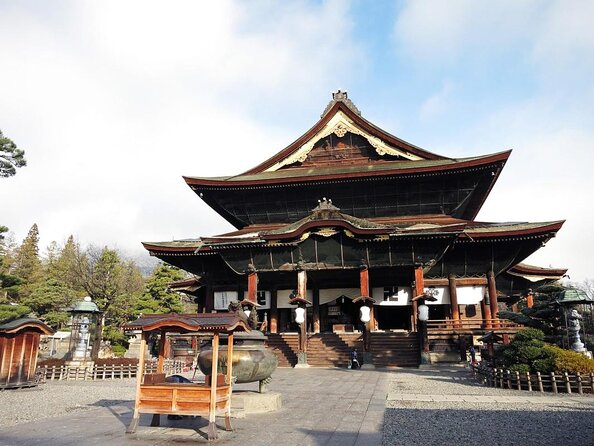
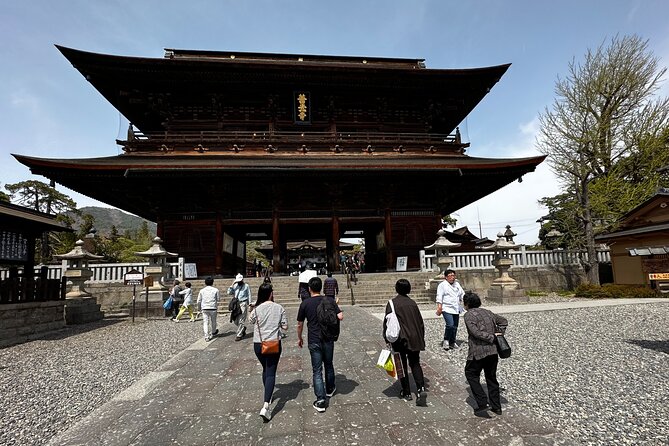
From the restaurant, you walk for about 10 minutes to Zenkoji Temple, where the visit lasts around 30 minutes. The temple is presented as a national treasure with roughly 1,400 years of history, so this is not a quick photo stop with no context.
Your guide explains the religious and cultural role of the temple and points out parts of the surrounding town that are easy to pass without noticing. The value here is interpretation. A large Japanese temple can be difficult to read on your own, especially if you are unfamiliar with Buddhist customs, temple layouts, or the difference between a place of worship and a sightseeing landmark.
Half an hour is enough for an introduction, but it is not enough for every part of the temple complex. An optional entrance fee for Zenkoji is not included, so check with your guide about what is covered and what requires payment. The tour still gives you a useful orientation, but you may want to return independently if you prefer a longer temple visit.
The walking route also moves away from the main visitor path. You see back streets and older corners of the temple town that may not appear in a standard guidebook. This makes the experience more than a list of famous sights. You get a sense of how the area functions around the temple, including its shops, food businesses, and small meeting places.
Sake, soy sauce beans, and miso
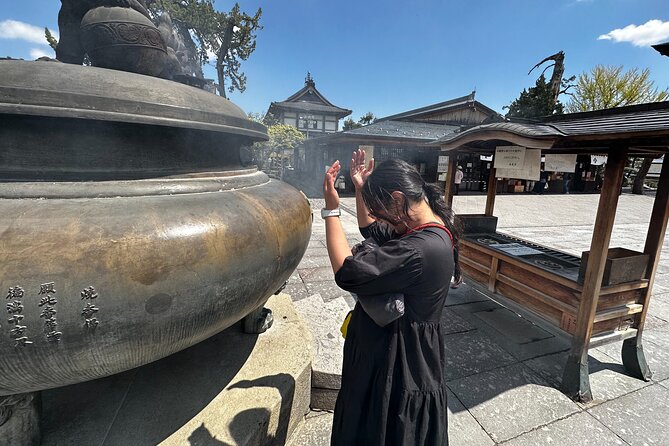
After another 10-minute walk, you stop at a local bar for about 15 minutes. This is a short tasting of several kinds of sake, served with small nibbles such as soy sauce beans and miso soup.
The stop is brief, but it gives you a chance to compare sake rather than treating it as one uniform drink. Your guide can help explain what you are tasting and how the drink fits into local food culture. The soy sauce beans and miso make the tasting feel tied to Nagano, not like a generic bar visit.
You should not expect a long brewery tour or a full drinking session. The itinerary allows only about 15 minutes, so this is a compact introduction. One visitor specifically enjoyed the sake brewery stop, but the supplied schedule describes the tasting at a local bar. The exact business may vary, so think of it as a local sake experience rather than a guaranteed brewery tour.
Alcohol is part of the included program. If you do not drink, ask ahead about alternatives. The information provided confirms sake tasting but does not specify nonalcoholic substitutions.
More Walking Tours in Nagano
- Matsumoto Castle Town Walking Tour
★ 4.8 · 58 reviews - Matsumoto Discovery – Half Day Walking Tour
★ 5.0 · 43 reviews - From Matsumoto/Nagano: Nakasendo Trail Walking Tour
★ 4.9 · 33 reviews - Nagano Sake Tasting Walking Tour
★ 5.0 · 17 reviews
Small stops with local character
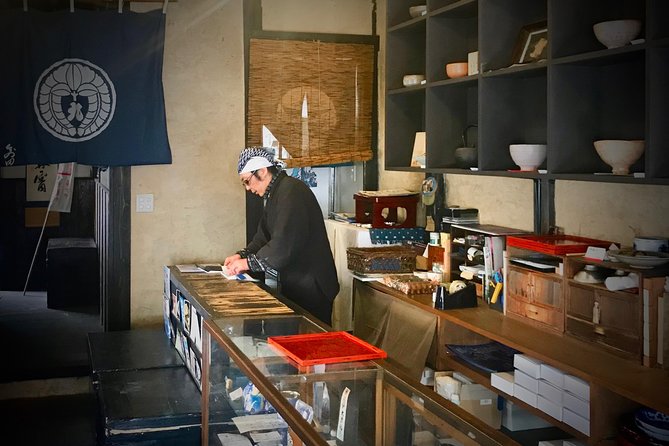
The route includes two short visits of about 10 minutes each, reached by walks of five and 10 minutes. These are described as lesser-known local stops, giving the guide space to show details that do not fit neatly into the usual temple visit.
Because each stop is short, the pleasure comes from the overall sequence. You move through the temple town, pause for a food or cultural detail, then continue on foot. This keeps the three hours active without turning the tour into a long museum lecture.
The guide also connects you with local business owners. That personal contact can help you understand how the area has changed and how the temple still shapes daily business. If you enjoy asking questions, this is where a small group makes the greatest difference.
Photography is part of the service. The guide will take some happy snaps during the walk and share them with you afterward. That is a useful extra if you want a few pictures of the experience without constantly holding your own camera, though the details of when and how the images are delivered should be confirmed directly.
Matcha and sweets to finish
The final food stop is a local café after a 15-minute walk. You spend about 20 minutes having matcha and sweets in a traditional Japanese-style tea place.
This closing stop gives the tour a calmer finish after the walking and sake tasting. Matcha is not simply green tea served in a cup. The setting and preparation help you notice the customs around Japanese tea, and the guide can show you how to approach the experience respectfully.
The tasting includes matcha tea and sweets. One guide-led walk also included matcha ice cream on a hot day, but you should not assume that ice cream is offered every time. The exact sweet can vary with the café and date.
I like this final stop because it rounds out the food story. You begin with a hearty regional dumpling, sample sake and savory bites, then end with tea and something sweet. It gives the tour a clear rhythm rather than piling all the tastings together.
What the guides add
The guides are central to this experience. Masa is described as a friendly guide with a strong grasp of Nagano and its culture, while Takuma has led walks with support from guides in training, Katsuki and Soyoka. The guides speak excellent English, according to the information supplied, and explain both local customs and the wider meaning of the places you visit.
You can expect more than memorized facts. The tour is designed to answer the questions that come up naturally while walking and eating: how to approach a temple, how to eat oyaki, what local ingredients mean, and why a back street matters.
The walk can also be tailored to your interests. A very small group may allow the guide to adjust the conversation and offer suggestions for the rest of your time in Nagano. This is especially useful if you have only a short visit, since the guide can point you toward local specialties and attractions beyond the three-hour route.
Still, guide quality and personality can vary by date. The named guides are examples from recent departures, not a promise that one specific person will lead your walk. You should book this for the local conversation and food access, not because you require a particular guide.
Is $88 a fair price?
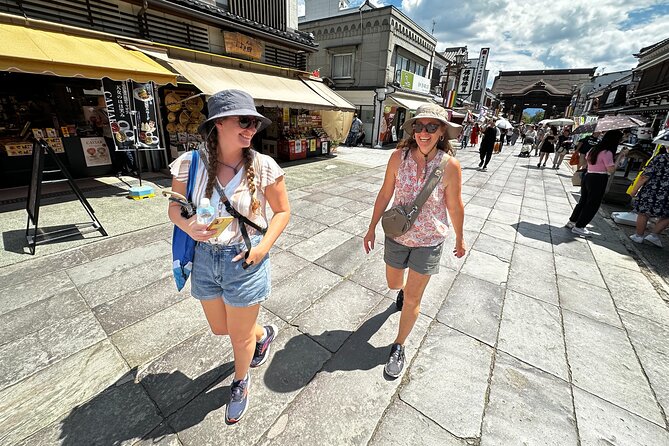
At $88 per person, this is not the cheapest way to see Zenkoji. You can walk to the temple yourself and buy individual snacks for less. The price becomes more reasonable when you count the English-speaking personal guide, lunch-sized oyaki tasting, soba tea, sake, local nibbles, matcha, sweets, and the time saved finding each stop.
You are paying for connections and context. The guide brings together several small experiences that could be hard to arrange on your own, especially if you do not read Japanese or know which businesses welcome short tastings.
The value is strongest for first-time visitors and anyone with just one day in Nagano. If you already know the temple town well, speak Japanese, and prefer independent eating, the price may feel high. If you want a friendly introduction with food built into the route, it is easier to justify.
Lunch, matcha and sweets, sake tasting, and a personal guide are included. Private transportation and any bullet train ticket are not included, though the advertised route itself is on foot. An optional Zenkoji entrance fee is also separate.
Walking demands and practical limits
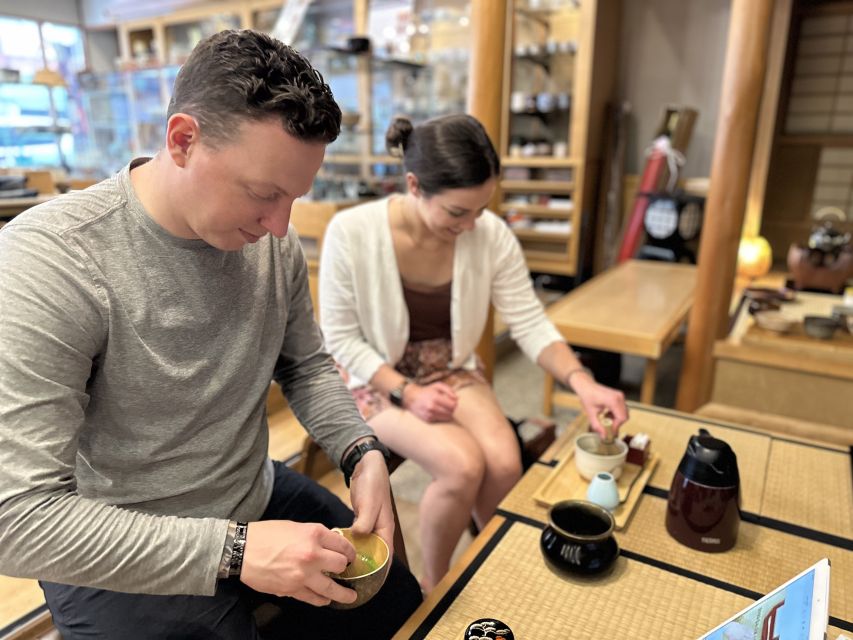
The route includes several walks of five to 15 minutes, plus standing at restaurants, the temple, and tasting stops. It is not a strenuous hiking tour, but comfortable shoes are sensible and you should be ready to spend much of the three hours moving between places.
The tour is not suitable for wheelchair users or baby strollers. It is also listed as unsuitable for pregnant women, people with gluten intolerance, and people over 70, 80, or 95 years old. Since those age limits are presented in overlapping terms, check the current requirement with the provider before booking.
Free cancellation is available up to 24 hours before the start time, and you can reserve while paying later. The activity lasts three hours, but starting times depend on availability, so check the date you want.
Who should book this experience?
I would choose this walk if you want Zenkoji explained in plain English and prefer eating your way through a place rather than visiting sights in isolation. It is a good fit for couples, friends, and small groups who enjoy asking questions and trying foods they might not order alone.
It is also useful for a first visit. You get a quick look at the temple, a taste of local food, an introduction to sake and matcha, and advice for the rest of your stay. The tour has enough variety to feel substantial without taking a full day.
I would hesitate if you want a long, detailed temple tour, a fully accessible route, a private vehicle, or a guaranteed specific guide. I would also skip it if gluten is a serious concern or if you do not want alcohol included in a tasting.
Should you book the Zenkoji food walk?
Book it if you want a warm, local introduction to Nagano with food, religion, and back streets in one compact route. The best parts are the fire-warmed oyaki, the small-group conversation, and the chance to understand Zenkoji as part of a living town.
Skip it if you prefer to explore independently or need a tour built around accessibility or strict dietary control. For everyone else, $88 buys a useful first look at Nagano, with enough food and local guidance to make the city easier to enjoy afterward.
FAQ
Where does the tour start?
Your guide meets you in front of Starbucks Coffee at MIDORI Nagano Station.
Where does the tour finish?
The walking route returns to Starbucks Coffee at MIDORI Nagano Station.
How long does the experience last?
The tour lasts three hours.
What language is the tour conducted in?
The tour has a live English-speaking guide.
How much does the tour cost?
The listed price is $88 per person.
Is lunch included?
Yes. The included food portion features two oyaki and soba tea, along with other tasting stops.
Is matcha included?
Yes. Matcha tea and sweets are included at a local café or traditional Japanese-style tea place.
Is sake tasting included?
Yes. Sake tasting with small nibbles is included.
Is entry to Zenkoji included?
An optional attraction entrance fee for Zenkoji Temple is not included.
Can solo visitors book the tour?
The tour generally requires two or more guests to operate. Solo visitors should contact the provider before booking to confirm availability.
More Food in Nagano
- Osaka: Shinsekai Food Tour with 13-15 Dishes at 5 Eateries
★ 4.8 · 2,204 reviews - Osaka Food Tour: 13 Dishes at 5 Local Eateries
★ 5.0 · 2,149 reviews - Tokyo: Shinjuku Food Tour (15 Dishes and 4 Eateries)
★ 4.9 · 2,033 reviews - Best of Shinjuku: Izakaya Food Tour (4 Stops, 14+ Tastings)
★ 5.0 · 1,863 reviews
More Food & Drink in Nagano
- Private Nagano 1-Day Tour:Snow Monkeys,Zenko-ji,Obuse,Sake,Onsen
★ 5.0 · 71 reviews - Izakaya Food Tour in Nagano
★ 5.0 · 60 reviews - Tokyo: Shinjuku Food Tour (13 Dishes at 4 Local Eateries)
★ 5.0 · 6,603 reviews - Tokyo Tsukiji Fish Market Food and Culture Walking Tour
★ 5.0 · 3,184 reviews
Just added around Nagano
- Nagano: Snow Monkeys & Togakushi Shrine Two-Spot in-One Day★ 4.9 · 35 reviews
- Nagano: 1-Day Ski Tour Package from Nagano Station★ 4.9 · 35 reviews
- Nagano Sake Tasting Walking Tour★ 5.0 · 17 reviews
- Nagano: Tateyama-Kurobe Guided Walking Tour★ 5.0 · 16 reviews
- Snow Monkeys & Best of Nagano: Togakushi, Zenko-ji and more★ 4.9 · 36 reviews
- From Nagano: Tateyama-Kurobe Alpine Route★ 4.8 · 45 reviews
- 1 Day Tour: Snow Monkeys & Snow Fun in Shiga Kogen★ 5.0 · 52 reviews
- Nagano/Matsumoto: Matsumoto Castle and Narai-juku Day Trip★ 5.0 · 23 reviews
Temple & Shrine Tours, compared.
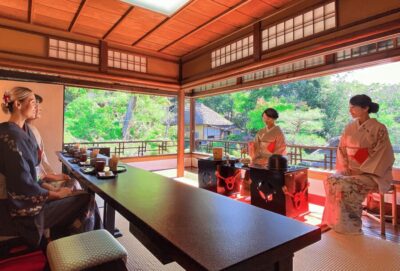
Tea Ceremony in a Traditional Tea House in Kiyomizu
Read our review →
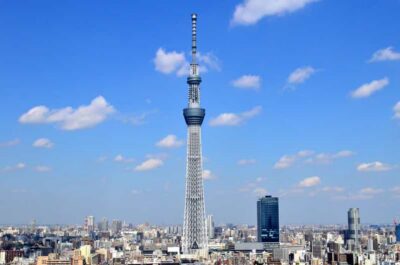
Meiji Shrine, Asakusa, Skytree Bus Tour and Cruise
Read our review →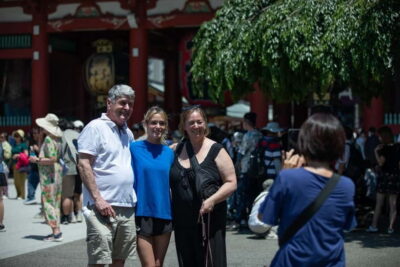
Asakusa Walking Tour with Sensoji Temple Visit
Read our review →
Kamakura & Enoshima Day Trip including Temple Tickets
Read our review →
Kyoto/Osaka: Nara, Fushimi Inari Taisha, Arashiyama Bus Tour
Read our review →
Nikko Toshogu Shrine and Kegon Waterfall Tour
Read our review →
Tokyo Panoramic 1 Day: Meiji Shrine, Asakusa, Odaiba and SKYTREE®
Read our review →Browse the lists this tour appears in