
REVIEW · HISTORICAL TOURS
Asakusa’s Historic Treasures
Asakusa is where Tokyo’s old religious traditions meet its playful modern side. In about four hours, you’ll move from temples and shrines to a festival-themed photo space, then sing karaoke and cook monja with guide Miley, who has worked in both Asakusa and Akihabara.
I like the mix of real local history and easygoing fun, and I like that the group is capped at nine people. The included drink at karaoke and one drink with monja also help the $164.72 price feel more reasonable.
The main consideration is pace. This is not a slow, museum-style history walk. You’ll cover historic sights, karaoke, and dinner in one afternoon, and the posted plan is not fully specific about every temple or shrine visited. The tour also depends on good weather.
In This Review
- Key points to know before booking
- Why Asakusa works so well for this kind of tour
- Reading Asakusa through temples, shrines, and war survivors
- Asakusa Yokocho and the festival-style photo stop
- One hour of Japanese karaoke with a free drink bar
- Making monja, Asakusa’s distinctive comfort food
- What Miley adds to the afternoon
- Timing, meeting point, and group size
- Is $164.72 a fair price?
- Who should book this Asakusa experience?
- Should you book Asakusa’s Historic Treasures?
- FAQ
- How long is Asakusa’s Historic Treasures?
- What time does the tour start?
- Where does the tour meet?
- Where does the tour end?
- What is the maximum group size?
- Is a mobile ticket available?
- Is karaoke included?
- Is food included?
- Can I cancel for a full refund?
- What happens if bad weather cancels the tour?
Key points to know before booking
- Asakusa in historical order: The walk presents the district across dates from 628 to 2012, helping you connect old religious sites with modern Tokyo.
- A guide with local work experience: Miley has worked in Asakusa and Akihabara, and the experience is built around her personal knowledge of both areas.
- Three very different activities: Expect historic sights, Asakusa Yokocho photos, Japanese karaoke, and hands-on monja cooking.
- Small-group format: The maximum group size is nine, which should make conversation and cooking instructions easier.
- A four-hour afternoon plan: The tour begins at 2 pm and ends near Ninja House, with an optional drink afterward.
- Free cancellation with weather protection: You can cancel up to 24 hours before the start for a full refund. Poor weather may lead to another date or a refund.
Why Asakusa works so well for this kind of tour
Tokyo can feel like several cities stitched together by train lines. Asakusa gives you one of the clearest shifts in mood: broad streets and major temples give way to small food spots, entertainment rooms, and old-fashioned neighborhood customs.
This tour uses that contrast as its main idea. The historical portion follows Asakusa through time, with dates listed from 628 to 2012. You are not simply checking off a temple and moving on. The point is to see how the district changed while keeping visible links to its earlier religious and entertainment life.
That approach suits you if you want context without spending half a day in a formal lecture. Miley is described as a lively host who keeps the energy high, including on rainy days. She also works in practical local details, customs, and stories that are less likely to appear in a standard guidebook.
The schedule does not name every temple, shrine, or surviving building. That is worth noting if you want a tightly defined monument-by-monument tour. You’ll get a broader look at Asakusa’s historic character, with the exact route likely shaped by the guide and conditions on the day.
A few more Tokyo trips to weigh up
- Tokyo: Imperial Palace and Shogun Historical Walking Tour
★ 5.0 · 2,251 reviews - Tokyo: Imperial Palace Japanese History Walking Tour
★ 4.9 · 987 reviews - Tokyo: Shinjuku Historical Walking Tour & Secret Backstreets
★ 5.0 · 530 reviews
Reading Asakusa through temples, shrines, and war survivors
The first major part of the experience focuses on the difference between temples and shrines, along with buildings that survived the 1649 to 1945 period. That historical range gives the walk a useful frame. You can look at religious spaces not just as attractive backdrops, but as places shaped by changing eras, fires, war, and rebuilding.
For a first visit to Asakusa, this is valuable. The district is easy to photograph, but its symbols can blur together if nobody explains them. A guide can help you understand what makes a temple different from a shrine and why certain structures matter.
The mention of buildings that survived the war adds another useful layer. Tokyo was heavily changed during the twentieth century, so older buildings carry more weight than their size might suggest. The tour aims to show those surviving traces rather than treating Asakusa as a perfect old-town display.
Expect walking during this section, with the guide explaining the area as you go. The exact walking distance is not provided, so comfortable shoes are a sensible choice. Since the tour requires good weather, the outdoor history portion is an important part of the day, not a minor add-on.
Asakusa Yokocho and the festival-style photo stop
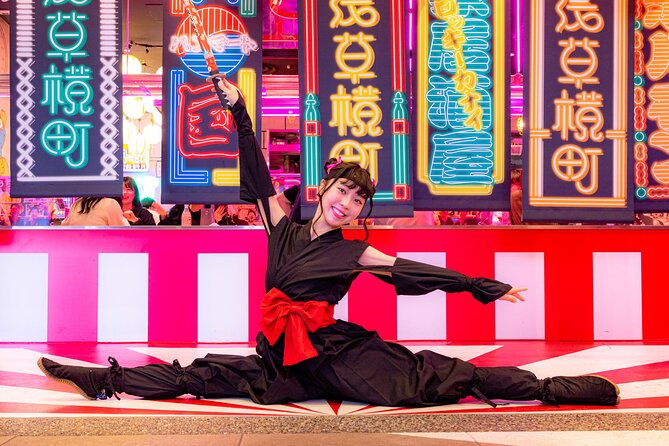
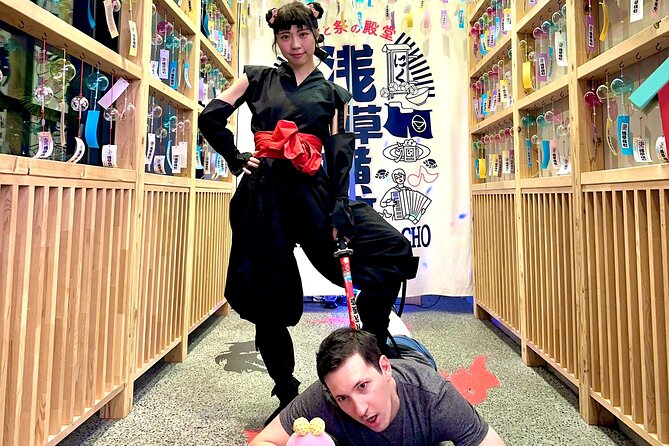
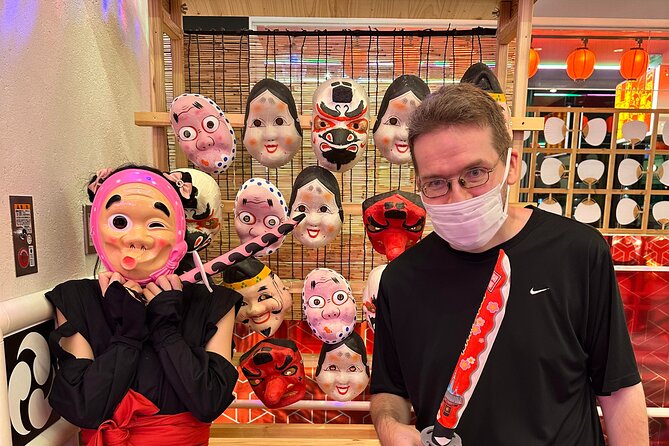
Asakusa Yokocho is the tour’s quick change of mood. This space is built around the concept of Japanese festivals and is described as a photogenic theme-park setting. You get about 20 minutes there, with admission included.
I would treat this as a playful photo break rather than a major historical stop. It gives you a chance to enjoy bright festival imagery and take pictures after the more serious temple and shrine section. The short time also keeps it from taking over the afternoon.
This stop may appeal most if you enjoy visual souvenirs and Japanese pop culture. If you prefer quiet streets and old buildings only, the theme-park feel could seem less authentic. That is not necessarily a flaw, but it helps to know what kind of experience you are booking.
The value comes from the contrast. Asakusa is not only temples and incense. It also has entertainment, food, costumes, games, and staged festival atmosphere. Putting Asakusa Yokocho between the history walk and karaoke makes the whole afternoon feel varied rather than repetitive.
One hour of Japanese karaoke with a free drink bar
Karaoke takes up about an hour and is presented as a chance to experience a Japanese pastime in its country of origin. A free drink bar is included, so you are not paying extra for a basic beverage during this part of the tour.
This is likely the most social section of the afternoon. You do not need to be a strong singer to get something from it. The point is participation, laughter, and a look at a familiar Japanese entertainment custom from the inside.
Still, karaoke is not for everyone. If you are shy about singing with strangers, this can feel like the most demanding part of the tour. The small maximum group of nine helps, but it does not remove the need to join in. I would book this only if you are open to a lively group activity.
The hour is long enough to feel like a real stop rather than a rushed novelty. It also gives the group a comfortable break from walking. The free drink bar adds modest value, especially at the listed price, although the type of drinks is not specified.
Same city, a completely different kind of day:
- Mt Fuji and Hakone 1-Day Bus Tour Return by Bullet Train
★ 5.0 · 26,383 reviews - 1-Day Tokyo Bus Tour
★ 5.0 · 14,250 reviews - Tokyo: TOKYO SKYTREE® Admission ticket
★ 4.5 · 11,192 reviews - Tokyo: teamLab Planets TOKYO Digital Art Museum Entry Ticket
★ 4.6 · 9,779 reviews
Making monja, Asakusa’s distinctive comfort food
The monja meal is the most hands-on part of the experience. Monja is described as a food born in Asakusa, and Miley teaches you how to make it. One drink is included with the meal.
Monja has a soft, loose texture that can surprise first-time eaters. Its appearance may not win a beauty contest, but that is part of the fun. You cook it, learn the technique, and then judge it by flavor rather than looks.
This meal matters because it connects food with place. Instead of stopping at a generic restaurant, you get an introduction to a dish strongly linked with Asakusa. The cooking lesson also gives you something to do, which makes dinner more memorable than simply receiving a plate.
The meal is listed as one hour. That should allow time for instruction and eating, though the supplied details do not name the restaurant, ingredients, or menu options. If you have allergies or strict dietary needs, ask the provider before booking rather than assuming substitutions are available.
Monja is also a good reason to choose this tour over a standard sightseeing walk. It gives you a small skill and a local food story, not just another photograph. The included drink helps, but remember that the tour price is still $164.72 per person, so the overall value depends on how much you enjoy guided activities and group entertainment.
What Miley adds to the afternoon
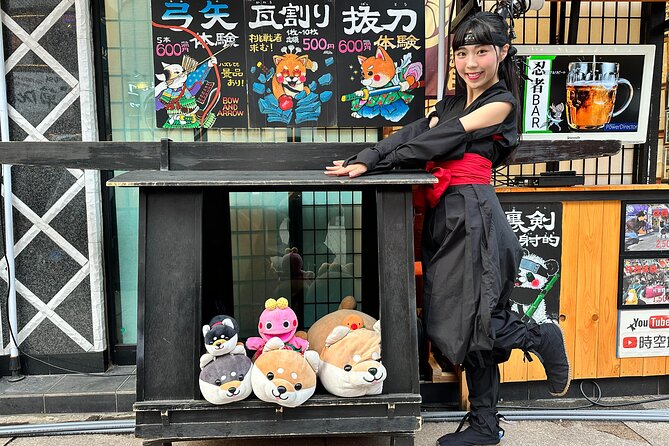
The strongest thread running through the experience is the guide. Miley is described as informative, funny, and energetic, with experience working in Asakusa and Akihabara. That background matters because the tour’s appeal comes from connecting facts with personality.
A dry historical walk followed by karaoke can feel like two unrelated bookings. A lively guide can make the shift feel intentional. Miley’s role is to explain the customs and history, keep the group moving, teach the monja technique, and maintain a friendly atmosphere during the social parts.
Her energy has also been useful in poor conditions, including rain, according to the supplied comments. You should still note that the operator requires good weather and may cancel if conditions are unsuitable. The guide’s enthusiasm cannot replace safe outdoor conditions.
There is also mention of JE in connection with another Smiley Walk experience, but Miley is the guide specifically tied most closely to this Asakusa outing. Guide assignments can change, so confirm the current arrangement if meeting a particular guide is important to you.
Timing, meeting point, and group size
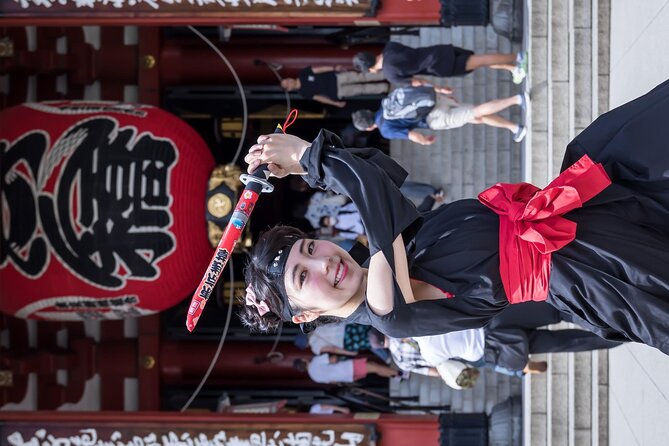
The tour starts at 2 pm at Burger King Asakusa Azumabashi, located at 2-chome-20-6 Kaminarimon, Taito City. It ends at 2-chome-4-3 Asakusa, in front of Ninja House. The afternoon timing works well if you want a relaxed morning for another Tokyo sight.
Because the tour combines outdoor sightseeing with indoor activities, the schedule can suit a day when you do not want to spend every hour walking. The plan lasts about four hours, though the optional drink at Ninja House can extend your time with the guide.
The optional ending is a nice touch. It is not part of the core tour, so you can finish when the scheduled experience ends, or continue the conversation over a drink if you want more time with Miley.
The group maximum is nine people. That is small enough for a more personal feel and practical enough for monja instruction. It also means the social mood may depend on who joins you. You should expect interaction, not a private tour.
A mobile ticket makes the booking simple, and confirmation is provided at the time of booking. The meeting point is near public transportation, but the supplied details do not name the nearest station or give transfer instructions. Allow extra time to find the exact Burger King entrance.
Is $164.72 a fair price?
At $164.72 per person, this is not a cheap way to see Asakusa. You are paying more than the cost of visiting public religious sites on your own. The price makes more sense when you count the guide’s time, the karaoke session, the free drink bar, the monja meal, the included drink, and the small group.
The tour is best value for you if you want several types of activity in one booking. A self-guided visitor could see temples and shrines for far less, but would not receive the same explanations, group introduction, karaoke session, or cooking lesson.
The weakest value comes if you only want quiet sightseeing. In that case, one hour of karaoke and a theme-park photo stop may feel like time and money spent away from the historic core.
I would also avoid comparing this solely with a food tour or solely with a history tour. It is a hybrid. You are buying a social afternoon that moves from history to playful entertainment to dinner, not a specialist study of Asakusa.
Who should book this Asakusa experience?
I would recommend it for first-time Tokyo visitors who want help understanding Asakusa and enjoy meeting people through activities. It also fits repeat visitors who have already seen the main temple area and want a more unusual afternoon.
It suits you especially well if you:
- Like a guide who talks about customs as well as dates and buildings.
- Enjoy karaoke or are willing to try it with a small group.
- Want to learn a local dish by making it yourself.
- Prefer a planned afternoon over arranging several stops alone.
- Value a lively host and personal interaction.
I would think twice if you want a private, quiet, highly structured historical tour. I would also ask about food requirements before paying, since the available information does not list ingredients or alternatives.
Free cancellation is available until 24 hours before the 2 pm start time for a full refund. Changes or cancellations inside that window are not accepted for a refund. Poor weather or too few bookings can cancel the experience, in which case you are offered another date, another experience, or a full refund.
Should you book Asakusa’s Historic Treasures?
Book it if you want Asakusa with more personality than a temple checklist. The best parts are the clear historical theme, Miley’s energy, the small group, the included food and drinks, and the unusual shift from shrine customs to karaoke and monja.
Skip it if you want maximum control over your time or a low-cost walking tour. At $164.72, it asks you to value the guide and the social activities. For the right audience, that mix turns a familiar Tokyo district into a lively half-day outing.
FAQ
How long is Asakusa’s Historic Treasures?
The experience lasts approximately four hours.
What time does the tour start?
The tour starts at 2 pm.
Where does the tour meet?
The meeting point is Burger King Asakusa Azumabashi, at 2-chome-20-6 Kaminarimon, Taito City, Tokyo 111-0034, Japan.
Where does the tour end?
The scheduled ending is at 2-chome-4-3 Asakusa, in front of Ninja House.
What is the maximum group size?
The tour allows a maximum of nine travelers.
Is a mobile ticket available?
Yes. The experience includes a mobile ticket.
Is karaoke included?
Yes. The itinerary includes about one hour of karaoke and a free drink bar.
Is food included?
Yes. The monja experience includes the meal and one drink.
Can I cancel for a full refund?
Yes. You can cancel at least 24 hours before the experience start time for a full refund.
What happens if bad weather cancels the tour?
You are offered a different date or a full refund if poor weather causes the cancellation.
Just added around Tokyo
- Flavours of Tokyo: A Journey Through Time – Small Group Food Tour★ 5.0 · 149 reviews
- Small Group Tour Mount Fuji and Lake Kawaguchi from Tokyo★ 5.0 · 23 reviews
- Small-Group Wagyu Beef and 7 Japanese Dishes Tokyo Cooking Class★ 5.0 · 190 reviews
- Tokyo Your Way A Tailored Full Day Friendly Food Tour With Guide★ 5.0 · 16 reviews
- Small Group Cycling Tour in Tokyo★ 5.0 · 184 reviews
- Bar Hopping Tour with a local Guide in Shinjuku★ 5.0 · 21 reviews
- Tokyo life after 5 – Foods & Drinks★ 5.0 · 32 reviews
- Private Shinjuku Nightlife Walking Tour & Golden-Gai Bar Crawl★ 5.0 · 50 reviews
Historical Tours, compared.
World Heritage Shirakawa-go and Experience Tours from Kanazawa
Read our review →
Imperial Palace and Shogun Historical Walking Tour
Read our review →
World Heritage Kyoto & Nara Uji Authentic Matcha Experience
Read our review →
Kyoto Gion: 2-Hour Geisha Culture & History Walking Tour
Read our review →
World Heritage Shirakawa-go Morning Guided Tour
Read our review →
Hiroshima Historical Walking Tour – Why A-Bomb was Dropped
Read our review →
Hiroshima Peace (Heiwa) Walking Tour at World Heritage Sites
Read our review →Browse the lists this tour appears in