
REVIEW · HISTORICAL TOURS
Asakusa: 3.5-hour Big-picture History Walk
Asakusa is more than a giant red gate and a famous temple. This 3.5-hour walk uses the neighborhood to explain how Japan moved from feudal isolation to modern global power, while also showing how sacred places and everyday pleasures still share the same streets.
I like the clear historical thread, especially the explanation of Japan’s choice of the Netherlands as its lone European trading partner. I also like the human scale: a small group of no more than eight, freshly made Japanese sweets, and stops in old lanes that many visitors would pass without noticing. The drawback is simple: you’ll walk for three and a half hours in all weather, and the history-first approach may feel heavy if you only want temple photos.
In This Review
- Key points to know before you book
- Why Asakusa works as a classroom for Japanese history
- The Sumida River and the view from Asakusa Culture Tourist Information Center
- Kaminarimon and the story of Japan opening to the world
- Nakamise and Hōzōmon: shopping beside a sacred path
- Sensō-ji and Asakusa Shrine: two faiths, one daily life
- Yōgō-dō Pavilion and the quiet side of the temple district
- Nishi-sandō, Mokubakan, and the old entertainment quarter
- Hoppy Street and postwar working-class Asakusa
- What the 210-minute format feels like
- Is $88 a fair price for this Asakusa walk?
- Who should book this experience?
- Should you book the Asakusa history walk?
- FAQ
- How long does the Asakusa history walk last?
- Where does the tour meet?
- What language is the tour conducted in?
- How many people can join the group?
- Is food included?
- Is the route suitable for people with mobility impairments?
Key points to know before you book
- Japan’s reopening comes alive in Asakusa: Learn why Japan closed itself, why Dutch trade continued, and how the country later opened to the West.
- Shinto and Buddhism share the same neighborhood: The tour explains how Japan’s two major faiths have lived side by side and served different daily needs.
- The route moves beyond Sensō-ji: You’ll visit Asakusa Shrine, Yōgō-dō Pavilion, old shopping streets, Hoppy Street, and a former entertainment district.
- Small groups make questions easier: The maximum is eight people, with headsets supplied for groups of three or more.
- Guides bring different strengths: Ai, Yasu, Taka, Yoko, Jun, Akiko, Satchi, and others have led this walk, with repeated praise for patience, English, historical detail, and personal attention.
- The price reflects interpretation, not just sightseeing: At $88 per person, you’re paying for a guided history lesson, local context, snacks, and a carefully connected route.
Why Asakusa works as a classroom for Japanese history
Asakusa gives you a compact view of Japan’s many sides. Within a few minutes, you can move from the Sumida River and modern Tokyo views to an old temple approach, a Shinto shrine, a shopping lane, and streets shaped by postwar nightlife.
That mix is the point. You are not simply ticking off landmarks. Your guide uses each stop to answer a larger question: how did Japan preserve its customs while adapting to outside pressure?
The walk begins near Asakusa subway station, in front of the Burger King beside Exit 4 on the Ginza Line. That meeting point is practical, though you should step outside at Exit 4 rather than wait underground. From there, the route builds its story in layers.
The group limit of eight matters here. Asakusa can be crowded, and a guide handling a small party can point out details without turning the walk into a flag-following exercise. Headsets are provided for groups of three or more, which should help near busy streets and temple grounds.
A few more Tokyo trips to weigh up
- Tokyo: Imperial Palace and Shogun Historical Walking Tour
★ 5.0 · 2,251 reviews - Tokyo: Imperial Palace Japanese History Walking Tour
★ 4.9 · 987 reviews - Tokyo: Shinjuku Historical Walking Tour & Secret Backstreets
★ 5.0 · 530 reviews
The Sumida River and the view from Asakusa Culture Tourist Information Center
The first major stop is Tokyo Cruise Asakusa Pier, where the guide spends about 15 minutes. The riverfront gives you a useful sense of Asakusa’s position within Tokyo, and it provides an early contrast between old neighborhoods and the modern city beyond them.
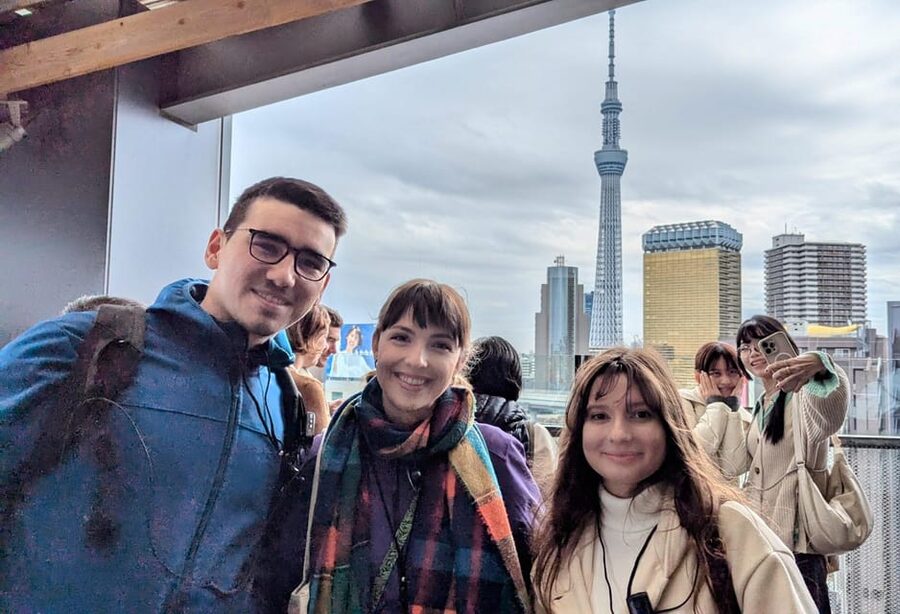
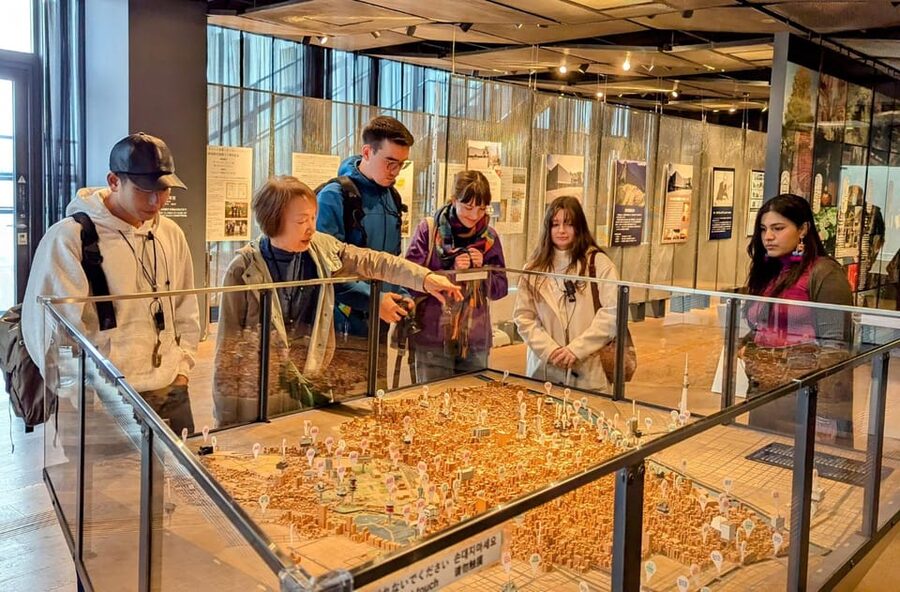
You then spend about 30 minutes at the Asakusa Culture Tourist Information Center. The building itself is part of the lesson, with contemporary design set beside the historic temple district. A rooftop view is included in the experience, and it has become one of the route’s most useful photo stops.
This is a smart early pause. You get your bearings before entering the busiest part of Asakusa, and the high viewpoint helps you understand how tightly the old district fits into present-day Tokyo. One participant returned to the rooftop later during the trip, which tells you it is not merely a quick glance from a hallway.
The guide may also point out Tokyo Skytree. Its height, 634 meters, can be read in Japanese as mu-sa-shi, a reference to the old Musashi Province. That kind of wordplay is typical of the tour: a simple fact becomes a way to connect language, place, and memory.
Kaminarimon and the story of Japan opening to the world
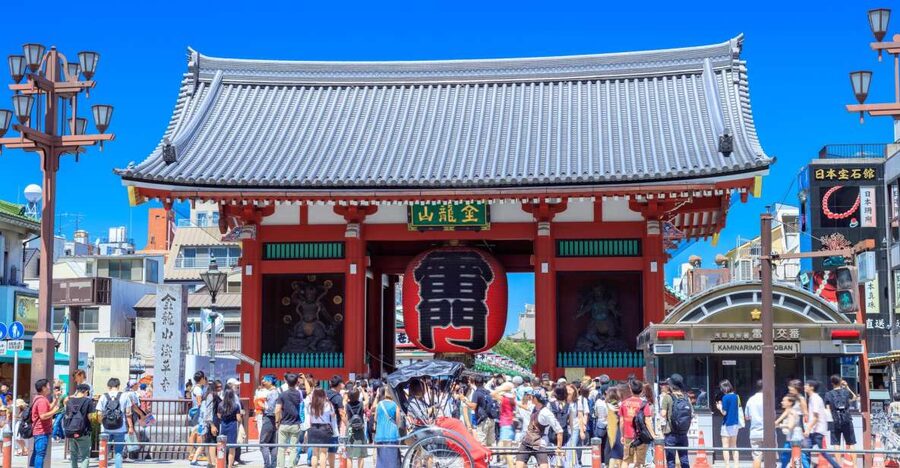
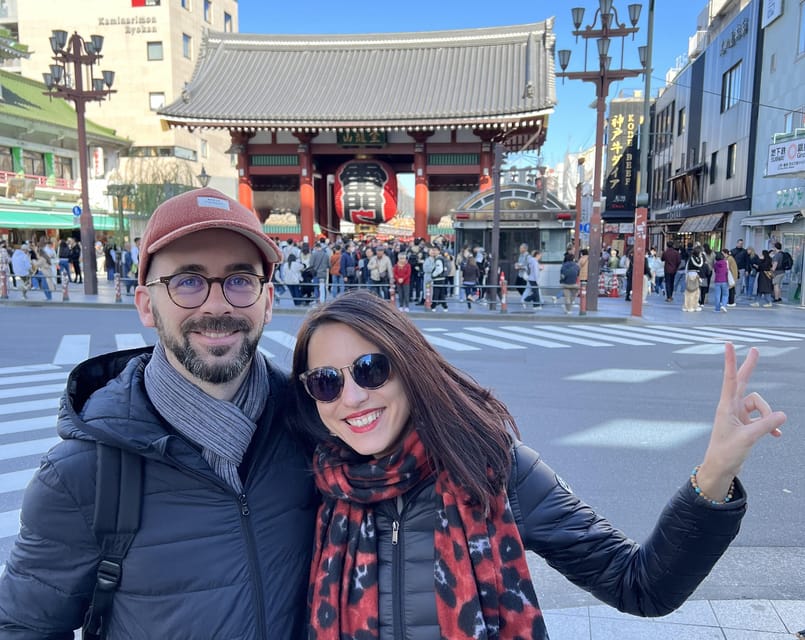
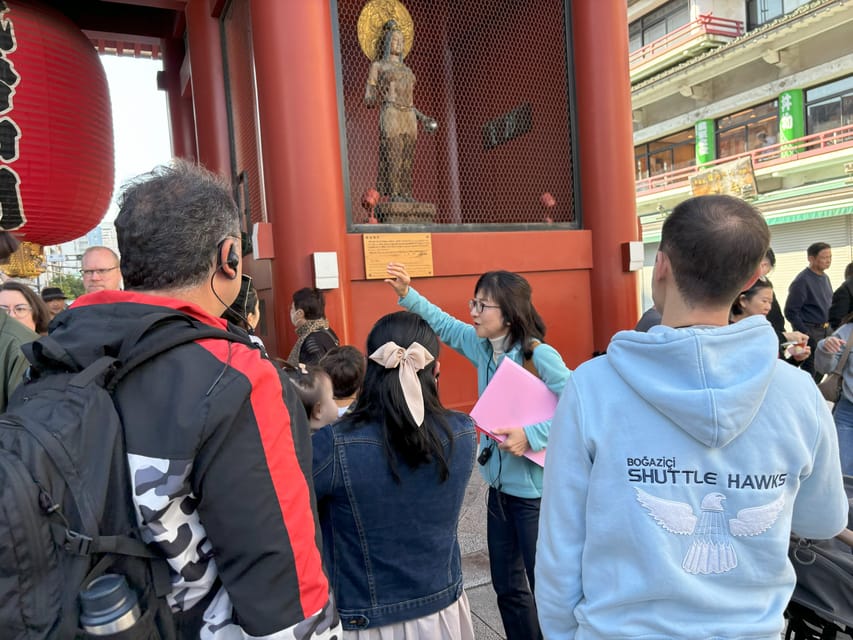
Kaminarimon, the Thunder Gate, is the natural place to begin the historical portion of the walk. You have about 15 minutes here, but the explanation reaches far beyond the lantern and gate itself.
The central subject is Japan’s long period of isolation. Your guide explains why the Tokugawa government restricted foreign contact, how that policy worked, and why the Netherlands remained Japan’s main European trading partner during the period of limited access.
That Dutch connection is one of the tour’s better details. It helps correct the simplistic idea that Japan was sealed off from every outside influence. Information, goods, and scientific ideas still entered through controlled channels, especially through Dutch traders.
The tour also points to a sign associated with Japan’s shift from isolation toward international contact. That physical marker gives an abstract political change a location you can actually see.
You’ll also hear how Japanese art affected Europe in the 19th century, including French Impressionist painters. This part adds welcome range to the walk. Japan was not only receiving outside influence. Its prints and design ideas were also changing how artists abroad viewed composition, color, and everyday scenes.
Nakamise and Hōzōmon: shopping beside a sacred path
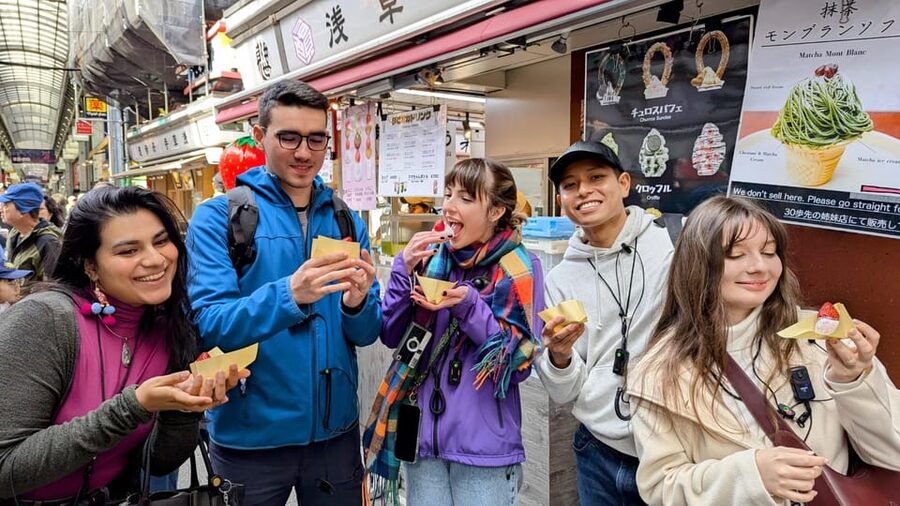
Nakamise Shopping Street takes roughly 30 minutes. The approach is lined with shops selling snacks, souvenirs, and traditional goods, so it can feel commercial. That is not a flaw in itself. The guide explains how commerce and pilgrimage have long shared this approach to Sensō-ji.
You receive a selection of freshly made Japanese traditional snacks and sweets during the walk. This is a small inclusion, but it helps connect the historical discussion to ordinary life. Food gives you a pause, too, which is welcome on a route with a fair amount of standing and walking.
The main caution is crowding. Nakamise can be packed, and browsing may be limited by the schedule. If shopping is your main goal, you may want to return later on your own. During the tour, listen first and treat the shops as part of the setting.
Hōzōmon Gate follows, with about 15 minutes of guided explanation. The gate marks the transition into the temple precinct and offers another chance to discuss how Japanese religious spaces are arranged. The route does not rush straight to the famous main hall, which gives you time to see how the approach itself prepares worshipers for the temple.
Same city, a completely different kind of day:
- Mt Fuji and Hakone 1-Day Bus Tour Return by Bullet Train
★ 5.0 · 26,383 reviews - 1-Day Tokyo Bus Tour
★ 5.0 · 14,250 reviews - Tokyo: TOKYO SKYTREE® Admission ticket
★ 4.5 · 11,192 reviews - Tokyo: teamLab Planets TOKYO Digital Art Museum Entry Ticket
★ 4.6 · 9,779 reviews
Sensō-ji and Asakusa Shrine: two faiths, one daily life
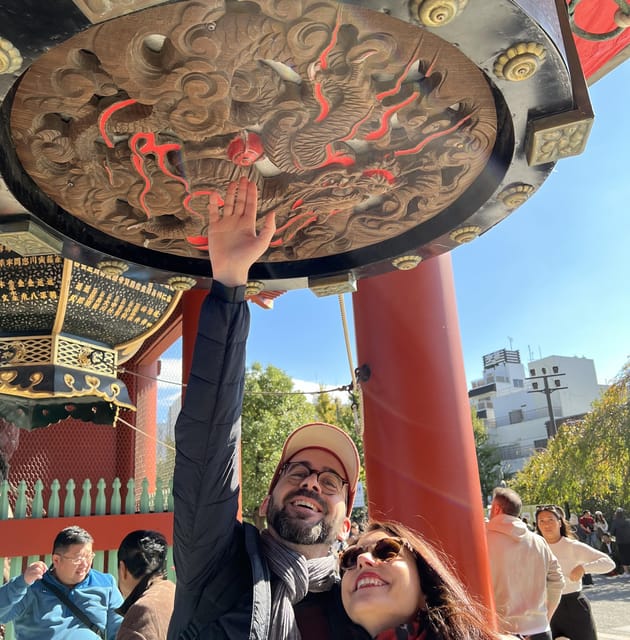
Sensō-ji receives the longest stop, about 45 minutes. That time is important because the temple is not a single photo opportunity. Your guide explains the beliefs, rituals, symbols, and historical setting that give the site meaning.
The larger theme is the relationship between Shinto and Buddhism. Japan’s religious life has often allowed the two traditions to overlap rather than forcing people to choose one. The same person may turn to one tradition for a particular ceremony or need and another for a different part of life.
The tour explains how the two faiths complement each other in practice and why they have coexisted with the same worshipers for centuries. For someone seeing Japanese temples and shrines for the first time, this may be the most useful part of the walk. Without context, the architecture can blur together. With context, the difference between a Buddhist temple and a Shinto shrine begins to make sense.
Asakusa Shrine, visited for about 15 minutes, gives you the comparison in a second setting. The shrine is close to Sensō-ji, but its identity and customs are distinct. That proximity makes the relationship easier to understand than a classroom explanation alone.
The guide also uses dragons to discuss cultural differences. In Japan and the West, dragons can appear in sacred art, but their roles and symbolism are not always the same. It is a lively way to show that familiar images can carry very different meanings across cultures.
Yōgō-dō Pavilion and the quiet side of the temple district
Yōgō-dō Pavilion receives about 15 minutes. This stop helps slow the pace after the major temple grounds and crowded shopping approach.
The value here is not only the building itself. It gives your guide another place to explain how sacred spaces fit into the wider district and how people move between worship, errands, food, and entertainment. The tour’s main idea keeps returning: Japanese life does not always separate the holy from the ordinary as sharply as Western visitors may expect.
You should be ready for some standing while the guide explains details. Comfortable shoes and water are sensible. Vending machines are available, but carrying your own bottle is easier.
Nishi-sandō, Mokubakan, and the old entertainment quarter
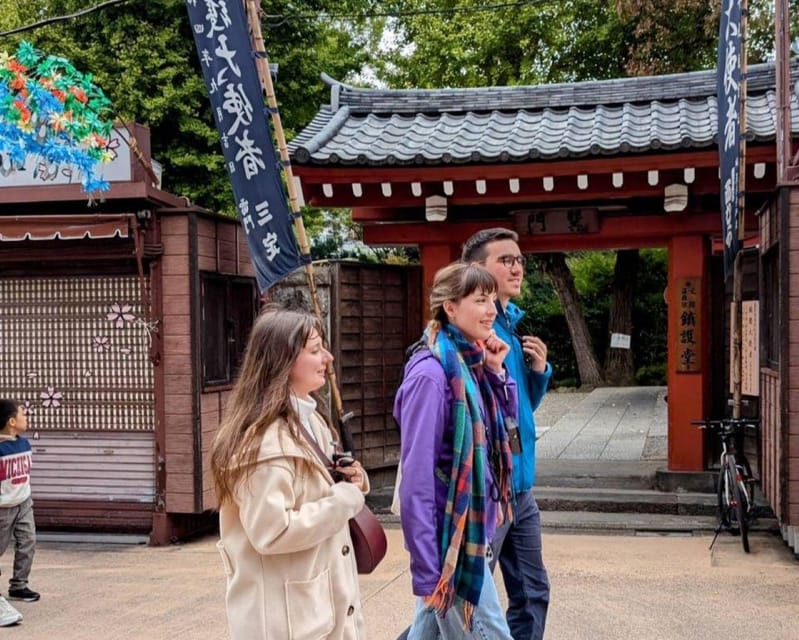
Asakusa Nishi-sandō Shopping Street takes around 15 minutes. Compared with Nakamise, it offers a quieter, more nostalgic mood. The small street is useful for seeing another face of Asakusa, away from the largest temple crowds.
The route then continues to Asakusa Mokubakan, a traditional theater venue, for another 15 minutes. Here the story shifts toward the district’s entertainment past. Before Shinjuku and Shibuya became Tokyo’s best-known nightlife and leisure centers, Asakusa was a major destination for cinemas, vaudeville theaters, and performance halls.
That history gives the neighborhood more depth. Asakusa was not only a place of worship and pilgrimage. It was also a place where people came to eat, watch shows, meet friends, and spend an evening.
The balance between sacred and secular is one of the strongest ideas in the experience. You see how close the temple district is to streets shaped by working-class energy and commercial entertainment. The contrast is not treated as a contradiction. It is presented as part of human nature, with people moving between solemn ritual and simple pleasure.
Hoppy Street and postwar working-class Asakusa
Hoppy Street is the final named stop, with about 15 minutes of guided time. The narrow lane is known for old-style Japanese pubs and the atmosphere of postwar working-class life.
You should not expect a full food tour here. The stop is mainly about place and social history, though the guide may help you understand what makes the street different from the polished parts of central Tokyo. It is a good ending because the tour finishes with ordinary people and everyday resilience rather than another grand monument.
Some of the route’s appeal comes from this shift in scale. The enormous temple gates explain national history. Hoppy Street shows how that history filtered into neighborhood life.
The route also includes discussion of people’s shared ways of thinking a thousand years ago and the surprising similarities between Japan and the West. These comparisons keep the tour from becoming a list of dates. You are encouraged to consider common human habits as well as cultural differences.
What the 210-minute format feels like
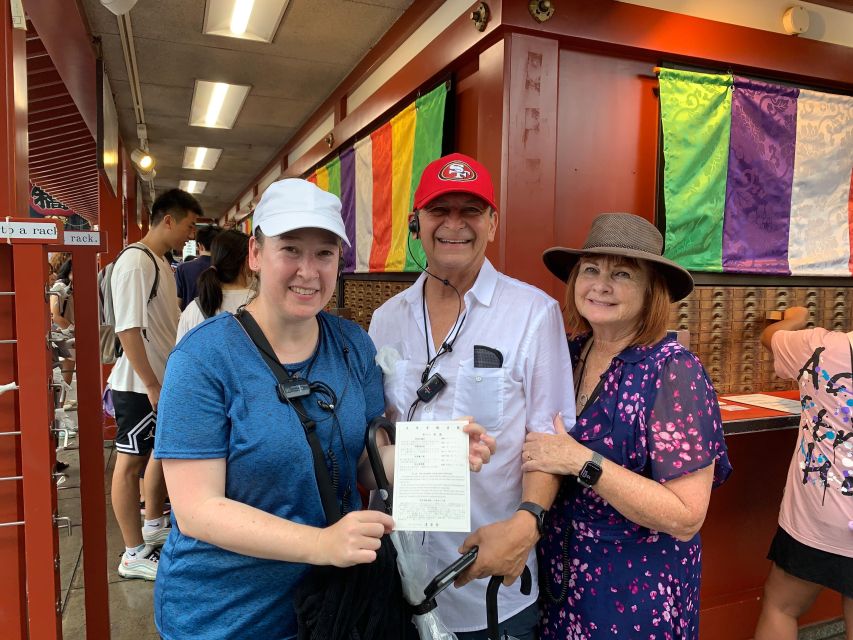
Three and a half hours is long enough to create a meaningful historical thread, but short enough to fit into a Tokyo sightseeing day. You will visit many places, yet the schedule allows 15 to 45 minutes at each major stop rather than rushing through everything in a single hour.
Breaks and snack tasting help, but this is still a walking tour. The operator describes the walking as moderate, and the route is not suitable for people with mobility impairments. If you have mobility concerns, contact the supplier before booking, since they will try to accommodate you.
The tour runs in all weather. Rain, cold, or summer heat can affect your enjoyment, so wear suitable clothing and solid walking shoes. One guide, Ai, took particular care of the group when cold rain began, but you should still plan for the conditions rather than count on a weather break.
The English-speaking guides are certified, and English audio support is included. Guides named in past departures include Ai, Yasu, Taka, Yoko, Jun, Akiko, and Satchi. The strongest pattern is not a scripted performance. It is the attention to questions, pacing, toilets, photo locations, and crowd management.
Taka, for example, adapted the route for people more interested in architecture, history, and gardens than shopping. That is worth noting if you are not keen on buying souvenirs. A small group also makes it easier to ask general questions about Japan, not only Asakusa.
Is $88 a fair price for this Asakusa walk?
At $88 per person, this costs more than simply visiting Sensō-ji on your own. The temple grounds are accessible without paying for a walking guide, and you can explore Nakamise at your own pace.
The value comes from the connections. You are paying for an English-speaking certified guide, three and a half hours of interpretation, a small group, headsets for groups of three or more, and traditional snacks. You also cover a wider section of Asakusa than many quick temple visits, including its riverfront, theater history, old pub lane, and quieter shopping street.
I would consider the price reasonable if you want Japan explained rather than merely photographed. It is less convincing value if you already know the history, prefer independent wandering, or want a food-focused outing.
The free cancellation up to 24 hours ahead and reserve-now, pay-later option reduce the risk of fitting it into a busy Tokyo schedule. Children younger than six may join without charge, though the adult-focused historical content may suit older children better.
Who should book this experience?
I would choose this walk for a first or second visit to Tokyo, especially if Asakusa is unfamiliar. It gives you a framework for understanding temples, shrines, Edo-period customs, the reopening of Japan, and the neighborhood’s modern character.
It also suits couples, solo visitors, and families who prefer a guide-led morning or afternoon. The small group limit is useful for anyone who wants to ask questions without holding up a large party.
I would be cautious if you have difficulty walking, dislike fixed schedules, or want plenty of time for shopping. You should also skip it if your main goal is nightlife, restaurant hopping, or a short photo stop at Sensō-ji.
Should you book the Asakusa history walk?
Book it if you want one well-organized outing to explain why Asakusa looks the way it does. The best parts are the links between Japan’s isolation and reopening, the shared place of Shinto and Buddhism, and the contrast between sacred temple grounds and old entertainment streets.
Choose a clear-weather day if possible, wear comfortable shoes, and arrive at Burger King beside Exit 4 of Asakusa subway station. If you value context, patient guiding, and a route that moves beyond the obvious sights, $88 buys a useful introduction to both Asakusa and Japan.
FAQ
How long does the Asakusa history walk last?
The tour lasts 210 minutes, or three and a half hours.
Where does the tour meet?
The meeting point is in front of the Burger King beside Exit 4 of Asakusa subway station on the Ginza Line, station G19.
What language is the tour conducted in?
The live tour is conducted in English by an English-speaking certified guide. English audio support is also included.
How many people can join the group?
The maximum group size is eight participants. Headsets are provided for groups of three or more.
Is food included?
Yes. The experience includes a selection of freshly made Japanese traditional snacks and sweets.
Is the route suitable for people with mobility impairments?
The tour involves a moderate amount of walking and is not suitable for people with mobility impairments. If you have mobility issues, contact the supplier before booking to discuss possible assistance.
Just added around Tokyo
- Tokyo: Customizable Private Guided Walking Tour★ 4.5 · 129 reviews
- Private Harajuku Omotesando Architecture Tour★ 4.9 · 18 reviews
- Tokyo: Guided Helicopter Ride★ 4.9 · 24 reviews
- Tokyo: Guided Walking Tour of Tsukiji Market with Lunch★ 4.4 · 24 reviews
- Tokyo: Private Personalized Local Food Tour★ 4.5 · 101 reviews
- Tokyo GINZA: KONPARU Japanese Cabaret Show with Drink★ 4.8 · 38 reviews
- Tokyo: Guided Walking Tour of Tsukiji Market with Breakfast★ 4.4 · 134 reviews
- Tokyo: Gotokuji Cat Temple, Shinjuku Cat Cafe & 3D Cat Tour★ 4.9 · 38 reviews
Historical Tours, compared.
World Heritage Shirakawa-go and Experience Tours from Kanazawa
Read our review →
Imperial Palace and Shogun Historical Walking Tour
Read our review →
World Heritage Kyoto & Nara Uji Authentic Matcha Experience
Read our review →
Kyoto Gion: 2-Hour Geisha Culture & History Walking Tour
Read our review →
World Heritage Shirakawa-go Morning Guided Tour
Read our review →
Hiroshima Historical Walking Tour – Why A-Bomb was Dropped
Read our review →
Hiroshima Peace (Heiwa) Walking Tour at World Heritage Sites
Read our review →Browse the lists this tour appears in