
REVIEW · HISTORICAL TOURS
Asakusa: 1400-year history exploration
Asakusa’s big draw is not just Sensoji Temple. It is the way this corner of Tokyo links the Sumida River, ancient worship, old shopping lanes, street food, theaters, and modern city life. This small-group walking tour gives you the background that a quick temple visit cannot.
I like the maximum group size of eight, which makes it easier to ask questions, and I like the mix of famous sights with less formal stops in Rokku. The included snacks, such as melon pan, rice dumplings, rice crackers, and sweet puffed rice, add a pleasant local touch.
The main caution is time. At 3.5 hours, this is a slow, detailed history walk rather than a quick photo stop. Asakusa can also be loud and packed, especially near Sensoji, and a few people have found some guides too quiet or too detailed.
In This Review
- Key points at a glance
- Why Asakusa works best with a guide
- From the Sumida River to Azumabashi Bridge
- A city view from the Culture Tourist Information Center
- Kaminarimon Gate and the first taste of Asakusa
- Nakamise-dori, snacks, and useful shopping advice
- Hozomon and Sensoji Temple
- Asakusa Shrine and Japan’s religious mix
- Denboin Street and old Rokku
- The pace, sound, and group size
- Is $91.17 a fair price?
- Who should book this Asakusa walk?
- FAQ
- How long does the Asakusa tour last?
- Where does the tour start?
- What time does the tour begin?
- Where does the tour end?
- How large is the group?
- Is an English-speaking guide included?
- What food is included?
- How much walking is involved?
- Can children join the tour?
- Should you book the 1400-year history exploration?
Key points at a glance
- Start beside the Sumida River: See Tokyo Skytree and the Asahi Breweries building from Azumabashi Bridge.
- Small groups capped at eight: The format allows plenty of questions and personal guidance.
- Sensoji is placed in context: Learn the story of the fisherman brothers linked to the temple’s founding and its role in Asakusa’s development.
- Snacks are part of the walk: Traditional sweets and street food samples are included.
- You see both religion and entertainment: The route covers Sensoji Temple, Asakusa Shrine, Nakamise-dori, and the Rokku district.
- The tour ends where it starts: Meet at Burger King Asakusa Azumabashi at 1:30 p.m. and return there after the walk.
Why Asakusa works best with a guide
You can visit Sensoji on your own in minutes. You walk through Kaminarimon Gate, follow Nakamise-dori, take a few photos, and enter the temple grounds. That is easy enough. What is harder is understanding why the district matters and how its pieces fit together.
This tour treats Asakusa as more than a single temple. You start at the river, where the district’s story began, then follow the approach toward Sensoji. Along the way, the guide explains religious customs, local food, shopping, architecture, and the changes that carried Asakusa from the Edo period into modern Tokyo.
That extra context is the reason to book. You are paying for interpretation and conversation, not admission to a paid attraction. The temples, gates, streets, and river views are free, but a good guide can turn familiar sights into a connected story.
The tour has earned a 4.8 rating from 155 ratings, with 95 percent recommending it. Names associated with especially strong guide feedback include Amy, Emiko, Sachi, Aki, Yasu, Taka, and Yoko. Their praised qualities are consistent: patience, clear explanations, warmth, and a willingness to answer questions.
Guide quality can vary, as it does on any walking tour. One poor account described weak English and little explanation, while other feedback raised concerns about a guide speaking too quickly or too softly. The operator says its guides are certified English-speaking guides, but you should still use the supplied earphone system and tell your guide promptly if you cannot hear.
A few more Tokyo trips to weigh up
- Tokyo: Imperial Palace and Shogun Historical Walking Tour
★ 5.0 · 2,251 reviews - Tokyo: Imperial Palace Japanese History Walking Tour
★ 4.9 · 987 reviews - Tokyo: Shinjuku Historical Walking Tour & Secret Backstreets
★ 5.0 · 530 reviews
From the Sumida River to Azumabashi Bridge
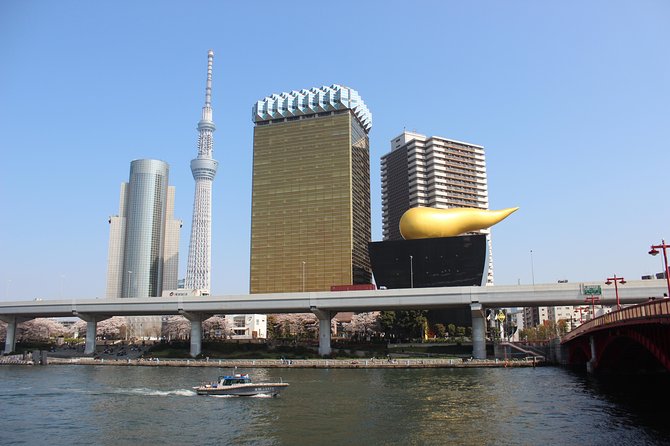
The meeting point is Burger King Asakusa Azumabashi, near Kaminarimon in Taito City. The first stop is the Sumida River, across Azumabashi Bridge. This is a smart starting point because the river gives you a clear sense of Asakusa’s geography before the temple crowds close in around you.
From the bridge, you can see Tokyo Skytree and the headquarters of Asahi Breweries, including its famous golden flame sculpture. The view neatly captures Tokyo’s old and new sides: a waterway that shaped the district’s past, a major temple ahead, and modern towers rising behind it.
The river stop lasts about 15 minutes. It is short, but useful for orientation and photographs. Bring a bottle of water, particularly in warm weather. Vending machines are available, but carrying your own is simpler.
A city view from the Culture Tourist Information Center
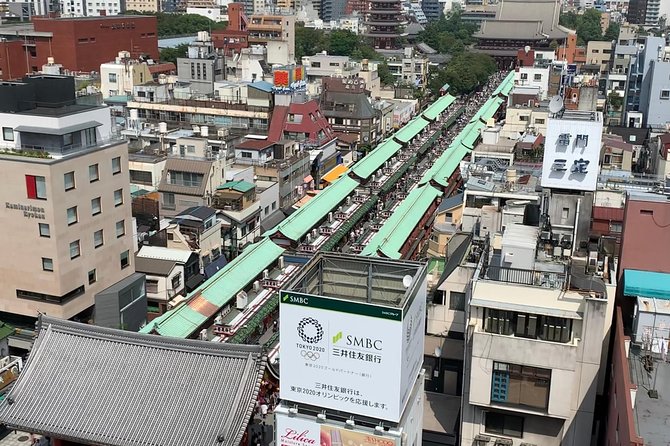
The walk continues to the Asakusa Culture Tourist Information Center, one of the newer attractions in the area. The visit lasts about 30 minutes and gives the guide a chance to explain the district before you enter its busiest lanes.
The building is also useful for its views. The tour information describes it as an eight-story attraction, so you get more than a place to collect maps. It offers a modern counterpoint to the temple gates and traditional storefronts nearby.
This stop matters because Asakusa can feel confusing at first. The river, temple approach, side streets, shrines, entertainment quarter, and shopping lanes all sit close together, but they do not feel like one simple grid. A guide helps you understand where you are before the route becomes crowded.
Kaminarimon Gate and the first taste of Asakusa
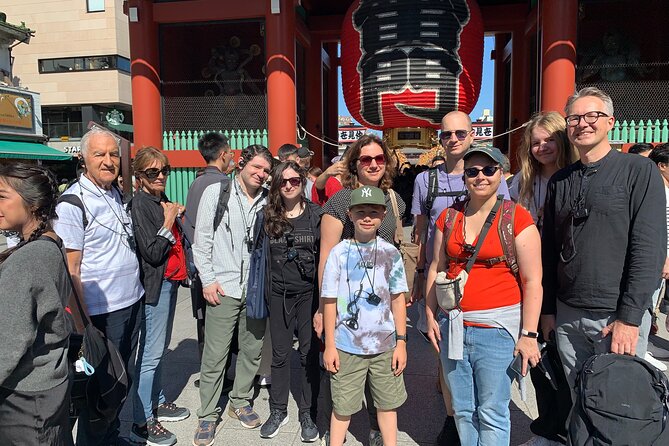
Kaminarimon, or Thunder Gate, is the outer gate leading toward Sensoji. Its huge red lantern and guardian statues make it one of Tokyo’s most recognizable sights. The scheduled stop is about 15 minutes, though the pace may depend on how crowded the entrance is.
The gate is photogenic, but it can also be difficult to hear beneath the surrounding noise. Keep close to your guide and use the earphone system. The group limit helps here, since eight people are easier to keep together than a large coach party.
This is also where the tour begins to explain how public movement, religion, and commerce meet in Asakusa. You are not simply walking toward a temple. You are following a ceremonial approach that has also become one of Tokyo’s busiest shopping routes.
Same city, a completely different kind of day:
- Mt Fuji and Hakone 1-Day Bus Tour Return by Bullet Train
★ 5.0 · 26,383 reviews - 1-Day Tokyo Bus Tour
★ 5.0 · 14,250 reviews - Tokyo: TOKYO SKYTREE® Admission ticket
★ 4.5 · 11,192 reviews - Tokyo: teamLab Planets TOKYO Digital Art Museum Entry Ticket
★ 4.6 · 9,779 reviews
Nakamise-dori, snacks, and useful shopping advice
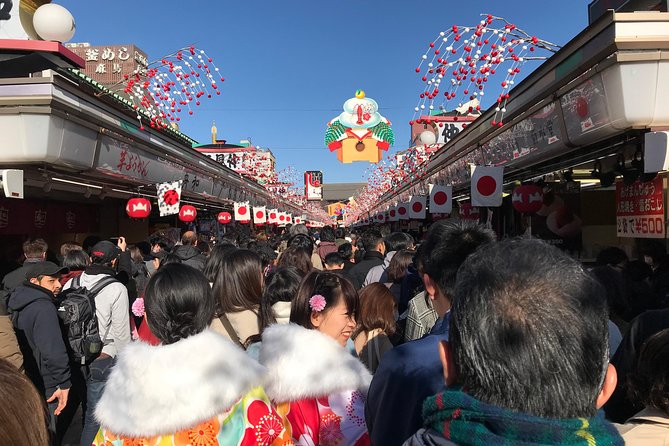
Nakamise-dori runs about 250 meters between Kaminarimon and Sensoji’s inner gate. Its souvenir shops and food stalls make it lively, colorful, and crowded. The guide points out places to buy souvenirs and helps you understand what the shops sell.
The included snack tasting is one of the tour’s most appealing features. Depending on the selection, you may try melon pan, a rice dumpling, a rice cracker, or sweet puffed rice. These are small samples rather than a full meal, so do not arrive expecting lunch.
I like this part because food gives you a simple way into local culture. A guide can explain what you are eating and how it fits into the neighborhood instead of leaving you to guess from a display case. The sweets also break up the history talk.
Shopping advice is useful if you want gifts, but it may not appeal to everyone. One unhappy account felt too much time was spent discussing shops, while many other people appreciated help finding souvenirs and local food. If shopping is not your priority, tell the guide early so you can focus on the historical side.
Hozomon and Sensoji Temple
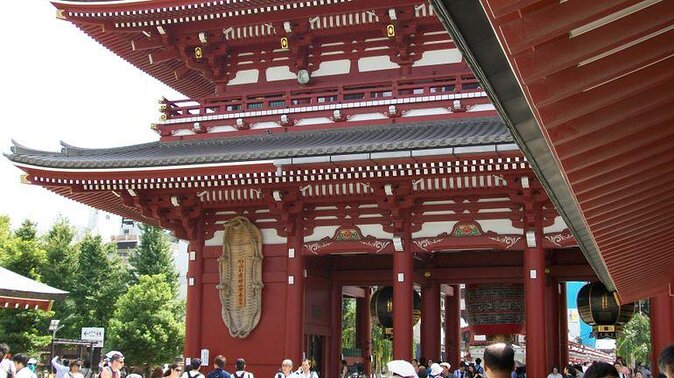
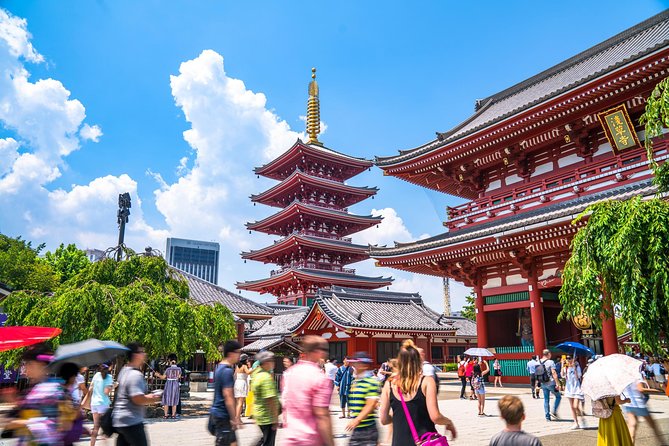
Hozomon is the inner gate before Sensoji’s main hall. It is a large, two-story structure with a second story that holds temple treasures. The scheduled visit is about 15 minutes, but the gate is really an introduction to the larger temple grounds.
Beyond Hozomon, the tour spends about 45 minutes around Sensoji. You see the five-story pagoda, described on the tour as 53 meters high and dating back to 942, along with the main hall and other features of the temple precinct.
The key story is the temple’s origin. According to local tradition, two fisherman brothers found a statue of Kannon in the Sumida River around 1,400 years ago. That discovery became the foundation of Sensoji and helped shape Asakusa’s identity.
The guide also connects the temple to Japan’s later modernization. That is an unusual angle for a basic sightseeing walk. You learn how a religious site continued to influence the surrounding town as the area changed, rebuilt, and adapted to new times.
Sensoji’s buildings look impressive, but the current structures are not all ancient. The temple has been destroyed and rebuilt through earthquakes, war, air raids, and other disasters. Donations from ordinary people helped bring it back each time. That rebuilding story explains why the temple remains central to Asakusa even though much of what you see is newer than the district’s founding story.
Expect a pause for questions and customs here. You may learn about Buddhist practice, how to behave at the temple, and the difference between religious sites in Japan. The guide can also explain why the temple precinct and Asakusa Shrine share the same wider setting.
Asakusa Shrine and Japan’s religious mix
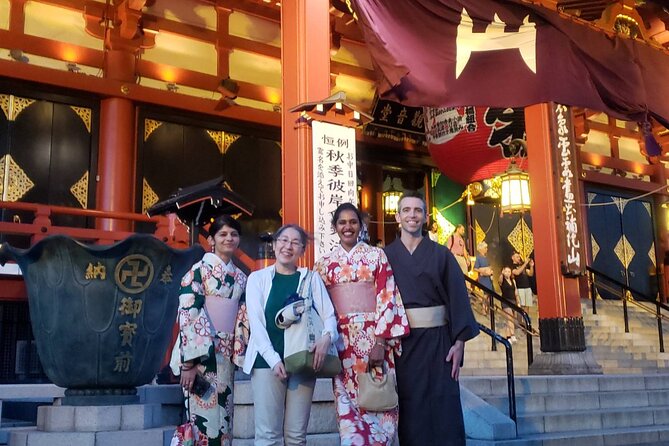
Asakusa Shrine is a Shinto shrine beside the Buddhist Sensoji complex. For people used to strict separation between religions, this arrangement can be surprising. In Japan, Buddhist temples and Shinto shrines have often shared local traditions, places, and worshipers.
The tour spends about 15 minutes at the shrine. This is a valuable stop because it prevents the temple visit from becoming a simple lesson in one religion. You get a clearer sense of how Buddhism and Shinto overlap in everyday Japanese life, while still learning the basic differences between them.
The guide may also explain why Asakusa Shrine is more than an extra photo stop. It is tied to the same origin story that gives Sensoji its importance. Seeing both sites together makes the neighborhood’s religious past easier to understand.
Denboin Street and old Rokku
After the major temple sights, the walk moves into Denboin Street and the Rokku district. This final section lasts about 45 minutes and changes the mood of the tour.
Rokku is Asakusa’s traditional entertainment quarter. The route shows older streets, historic buildings, and the area’s connection to theater and popular amusements. It is less formal than the temple grounds and gives you a look at the neighborhood as a town, not only as a sacred site.
The guide offers suggestions for eating, drinking, and shopping in Rokku. This can be one of the most practical parts of the afternoon, especially if you plan to stay in Asakusa after the tour. You can ask about restaurants and izakaya food, and past conversations have also covered Japanese language, food customs, and places to eat elsewhere in Tokyo.
This is where the tour tries to connect the Meiji period with the present day. You move from grand gates and religious history into ordinary streets where people eat, shop, and spend an evening. I like that ending because it leaves you with usable ideas for the rest of your stay.
The pace, sound, and group size
The tour lasts about 3 hours and 30 minutes, with a moderate amount of walking. Comfortable shoes are essential. You are outside for much of the afternoon, and the experience runs in rain or shine, so dress for the weather.
The 1:30 p.m. start gives you a full afternoon route and returns you to the meeting point. It also means the busiest areas may be crowded during the walk. Sensoji and Nakamise-dori are popular at almost any time, and noise can make a spoken explanation hard to follow.
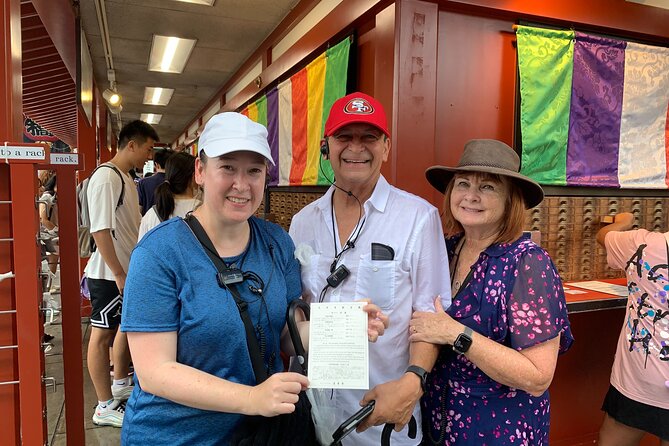
The earphone guide system is intended to solve that problem. Each participant receives the guide’s voice through an earpiece, allowing the guide to speak from a short distance without shouting. Still, equipment is only useful if you can hear it. Check the volume at the start and say something if the sound is faint.
The group limit of eight is a real advantage. A small group gives you more chances to ask about Buddhism, Shinto, food, shopping, or modern Tokyo. It also makes it easier for the guide to adjust the pace, take photos, and help with practical questions.
Families can join, and children younger than six may participate free, though they do not receive the included snacks or other inclusions. The tour is aimed more at adults because of its historical focus, but feedback shows that teenagers can enjoy it when they are curious about culture and the past.
Is $91.17 a fair price?
At $91.17 per person, this is not a cheap way to see Asakusa. There are no major admission fees to offset the price, since the temple, shrine, gates, streets, and river views are free.
The value comes from the guide’s time. You receive 3.5 hours of explanation, a small group capped at eight, snack samples, help with customs and local food, and recommendations for the rest of your time in the district. If you would otherwise walk through Sensoji without understanding what you are seeing, the added context can justify the cost.
I would compare it with the price of a shorter private guide or a large group tour. This option sits between those formats: more personal than a standard group walk, but not fully private unless your booking happens to be the only one. The included food is a nice extra, though it is not enough to replace a meal.
The tour is often booked well ahead, with an average booking time of 47 days. Last-minute reservations are accepted until two hours before the start when space remains, but I would reserve earlier if your Tokyo dates are fixed.
Free cancellation is available up to 24 hours before the 1:30 p.m. start. Cancellations or changes inside that window are not refunded or accepted. The activity also requires a minimum number of participants, and if that minimum is not reached, you are offered another date or a full refund.
Who should book this Asakusa walk?
I would choose this tour if you want Asakusa to make sense, not simply look attractive. It suits first-time visitors, history fans, families with older children, and anyone who wants a guide to explain Buddhist and Shinto customs in plain English.
It is also useful if you want food and shopping suggestions. The guide can point you toward snacks, souvenirs, restaurants, drinks, and the older Rokku quarter, giving you options after the formal walk ends.
I would skip it if you want a fast temple visit, dislike slow historical explanations, or have an afternoon packed with fixed appointments. One person found the route too long and left early, so do not book this expecting to see Sensoji in half an hour.
FAQ
How long does the Asakusa tour last?
The tour lasts approximately 3 hours and 30 minutes, including stops at the Sumida River, the Culture Tourist Information Center, Kaminarimon Gate, Nakamise-dori, Hozomon, Sensoji Temple, Asakusa Shrine, and Denboin Street.
Where does the tour start?
The meeting point is Burger King Asakusa Azumabashi in Taito City, Tokyo, near Kaminarimon. The listed address is in the Kaminarimon 2-chome area.
What time does the tour begin?
The scheduled start time is 1:30 p.m.
Where does the tour end?
The tour returns to the original meeting point.
How large is the group?
The maximum group size is eight people.
Is an English-speaking guide included?
Yes. An English-speaking guide is included, along with an earphone system that delivers the guide’s voice to each participant.
What food is included?
A selection of Japanese sweet snacks is included. Examples include melon pan, rice dumplings, rice crackers, and sweet puffed rice. Other food and drinks are not included.
How much walking is involved?
A moderate amount of walking is involved. Comfortable footwear is recommended, and bottled water is advised. Vending machines are available along the way.
Can children join the tour?
Families are welcome. Children younger than six may join without charge, but they are not entitled to the included items. The historical focus makes the tour better suited to adults and older children.
Should you book the 1400-year history exploration?
Book it if you want a careful, guided introduction to Asakusa rather than a quick checklist of famous sights. The strongest reasons are the eight-person limit, the range of stops, the snack tasting, and the chance to ask detailed questions.
Give yourself the full afternoon, wear good shoes, and prepare for crowds and street noise. If you prefer a short, quiet visit or want to explore only the temple, save the $91.17 and walk the area independently. For a first visit focused on culture, history, and practical local advice, this tour is a sound choice.
Just added around Tokyo
- Private Memorable Tokyo Tour with English Speaking Driver★ 5.0 · 30 reviews
- Private Tokyo Custom Full-Day Tour by Chartered Vehicle★ 5.0 · 16 reviews
- Private Sightseeing to Mt Fuji and Hakone with English Driver★ 5.0 · 51 reviews
- Tokyo Photography Masterclass – Private Photography Lesson★ 5.0 · 25 reviews
- Private Mt. Fuji Day Trip from Tokyo with English-Speaking Driver★ 5.0 · 33 reviews
- 4 Day Tour – Mount. Fuji, Tokyo, Hakone, Kamakura and Yokohama★ 5.0 · 19 reviews
- Private Unforgettable Mt Fuji Tour with English Speaking Driver★ 5.0 · 142 reviews
- Private Tokyo Food Tour – A Journey Through Time Through Food★ 5.0 · 36 reviews
Historical Tours, compared.
World Heritage Shirakawa-go and Experience Tours from Kanazawa
Read our review →
Imperial Palace and Shogun Historical Walking Tour
Read our review →
World Heritage Kyoto & Nara Uji Authentic Matcha Experience
Read our review →
Kyoto Gion: 2-Hour Geisha Culture & History Walking Tour
Read our review →
World Heritage Shirakawa-go Morning Guided Tour
Read our review →
Hiroshima Historical Walking Tour – Why A-Bomb was Dropped
Read our review →
Hiroshima Peace (Heiwa) Walking Tour at World Heritage Sites
Read our review →Browse the lists this tour appears in