
REVIEW · CITY TOURS
Amazing Hiroshima: Private City Tour with a Local Guide
Hiroshima and Miyajima give you two very different sides of Japan in one day: the sober lessons of the atomic bombing, followed by the sea, forest, and shrines of Miyajima Island. The most powerful moment is the walk from Peace Memorial Park to the A-Bomb Dome, where the city’s past is impossible to treat as a mere sightseeing stop.
I like the private format for two clear reasons. First, your guide can adjust the pace and explain difficult subjects in a human way. Second, the tour handles public transport, the ferry, and the city-to-island transition, which saves you from sorting out a full day of connections. Guides named Kazuko, Zun, John, Nick, and Md. Jiaur Rahman have been especially praised for warmth, planning, and personal attention.
The main caution is time. Hiroshima’s memorial sites, castle, garden, and Miyajima can fill a very long day, while the advertised duration ranges from three to eight hours. You may need to choose between a slower museum visit and more time on Miyajima, especially if you want Mount Misen or a proper meal.
In This Review
- Key points to know before booking
- Why this Hiroshima and Miyajima pairing works
- Starting with Hiroshima’s Peace Memorial Park
- Taking time at the Peace Memorial Museum
- Facing the A-Bomb Dome and Children’s Monument
- Hiroshima Castle and Shukkeien Garden
- A walk through Hondōri
- Crossing to Miyajima Island
- Seeing the floating torii at the right tide
- Itsukushima Shrine and Daisho-in Temple
- Mount Misen: worthwhile, but only with enough time
- The guide can make or break the day
- Who should book the $129 experience?
- Should you book Amazing Hiroshima?
- FAQ
- How long does the tour last?
- Is the tour private?
- What language does the guide speak?
- Are transport fares included?
- Is lunch included?
- Are entrance fees included?
- Can the pickup location be changed?
- What is the cancellation policy?
Key points to know before booking
- The day joins two major sights: Hiroshima’s Peace Memorial Park and Miyajima’s sacred shrine island.
- The A-Bomb Dome and Children’s Peace Monument give the memorial visit a personal and emotional focus.
- Public transport and ferry fares are included, making the private tour easier to manage.
- The schedule can be adjusted, and pickup may be changed to another point within Hiroshima city at no added cost.
- Miyajima adds food and scenery, including oysters, momiji manju, the floating torii, and possible Mount Misen views.
- Guide quality matters: request a Japanese-English guide or a specialist in Hiroshima history if that is important to you.
Why this Hiroshima and Miyajima pairing works
Hiroshima is not a place I would rush through with a camera and a checklist. The city asks for attention. A private guide helps you move from one memorial site to another while keeping the facts, names, and human stories connected.
Then the mood changes on Miyajima. You trade city streets for water, wooded slopes, temples, and the broad Seto Inland Sea. That contrast is the tour’s central strength. Hiroshima makes you think about war and peace. Miyajima gives you room to breathe and consider what you have seen.
The tour costs $129 per person. That is not the cheapest way to see these places, since both Hiroshima and Miyajima can be visited independently. You are paying for a private guide, transport fares, ferry travel, and a day shaped around your interests. For a first visit, families, and anyone short on planning time, the price can be fair. Solo visitors and budget-minded couples may find the cost harder to justify.
Because this is a private or small-group experience, you are not tied to a fixed crowd. You can ask for more time at the museum, move faster through the castle, or give Miyajima priority. Tell the coordinator your goals after booking, since the difference between a short three-hour outing and an eight-hour day is substantial.
A few more Hiroshima trips to weigh up
- Hiroshima / Miyajima Full-day Private Tour with Government Licensed Guide
★ 5.0 · 1,298 reviews - Hiroshima City 4hr Private Walking Tour with Licensed Guide
★ 5.0 · 437 reviews - Hiroshima & Miyajima: Full-Day Private Tour & Licensed Guide
★ 4.8 · 252 reviews
Starting with Hiroshima’s Peace Memorial Park
The tour begins in Hiroshima and moves to Peace Memorial Park after a short transfer. The park is not simply a green space with monuments. It is the emotional center of the city, built in an area that once formed part of central Hiroshima before the atomic bomb destroyed it.
Your guide can help you read the site as a connected story rather than a collection of plaques. You may spend time at the park’s memorials, walk along the river, and pause for photographs or quiet reflection. The schedule allows about an hour here, though the exact pace depends on your chosen tour length.
The Children’s Peace Monument is one of the most affecting stops. It recalls the many children who died after the bombing, including those who later became ill from radiation exposure. Paper cranes are closely linked with this memorial, and the site gives the wider subject a clear human focus.
This part of the tour suits visitors who want context and conversation. It may be difficult for young children to follow unless the guide adapts the explanation. One family specifically valued the experience with children aged nine and twelve, but another found the historical discussion less engaging for kids. That is a good reason to tell the coordinator your children’s ages and interests.
Taking time at the Peace Memorial Museum
The Peace Memorial Museum needs more than a quick pass. Its exhibits address the bombing, the damage to the city, the suffering of civilians, and the years that followed. The displays can be upsetting, so plan on an emotionally serious hour rather than a light cultural visit.
A good guide will not talk over every display. The best use of a private tour is to ask questions, clarify what you are seeing, and connect the museum’s material to the monuments outside. Several guides have been praised for adding personal perspective and for discussing Hiroshima’s earlier history as well as the bombing itself.
The entrance information specifically lists fees for Peace Memorial Park and Itsukushima Shrine, but it does not clearly state that the Peace Memorial Museum admission is included. Confirm this with the coordinator before you go. This small check prevents confusion at the museum entrance.
If you have only three hours, the museum and park should come first. Hiroshima’s memorial sites are the reason to come, and they deserve priority over a quick sweep of secondary sights.
Facing the A-Bomb Dome and Children’s Monument
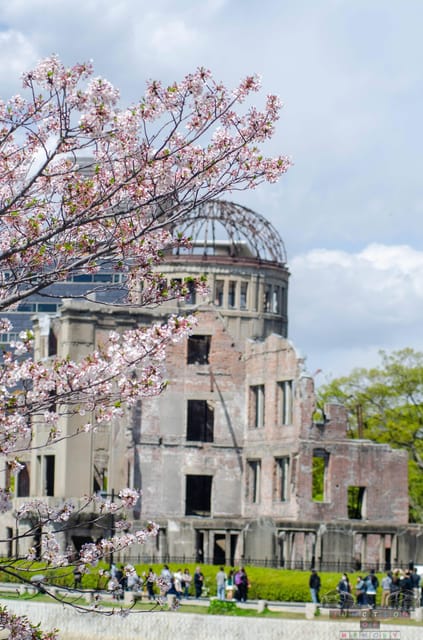
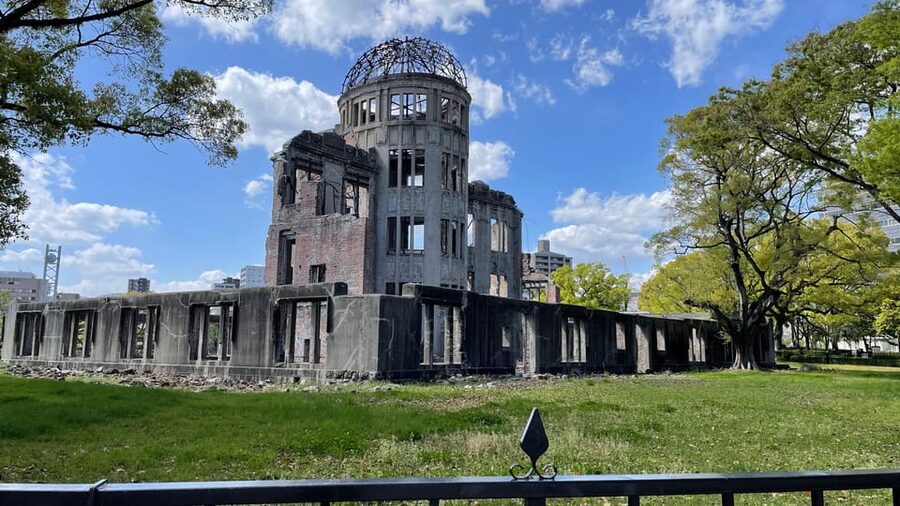
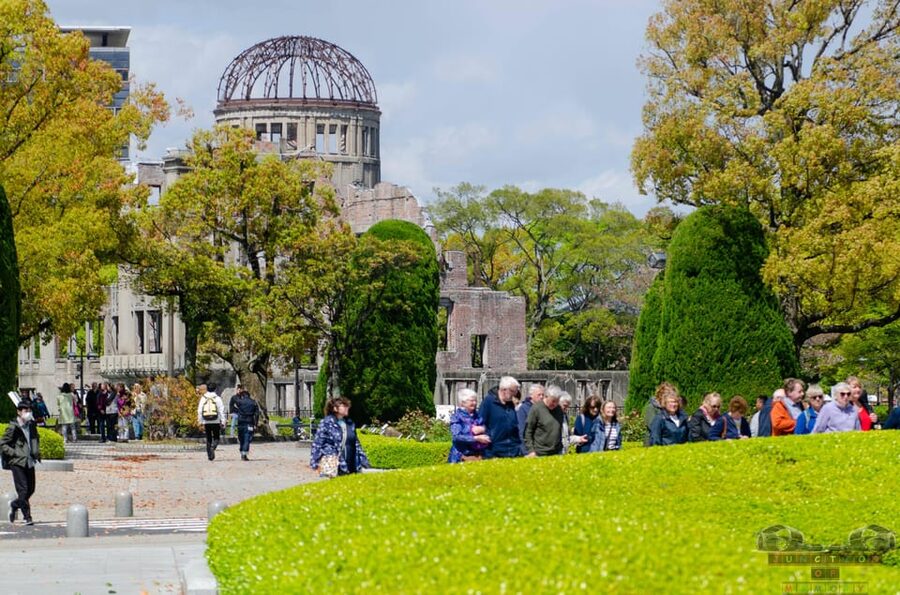
The A-Bomb Dome is one of Hiroshima’s most recognizable structures. The damaged building remains near the river, close to the site where the bomb exploded. Its exposed frame and ruined walls are a stark counterpoint to the modern city around it.
You will have time for a photo stop, a guided visit, and a walk. Do not treat the Dome as just a backdrop. Look at the structure from several angles and listen to the explanation of why it was preserved. Its power comes from its physical presence, but also from the decision to keep this ruin within a rebuilt city.
The nearby Children’s Peace Monument shifts the focus from architecture to individual lives. Together, these two stops work well after the museum. One shows the scale of destruction. The other reminds you that the story is made up of families, schools, and children.
Same city, a completely different kind of day:
- Peaceful Hiroshima & Miyajima UNESCO 1 Day Bus Tour
★ 5.0 · 5,309 reviews - Hiroshima: Hiroshima and Miyajima UNESCO Sites 1-Day Tour
★ 4.9 · 2,330 reviews - Hiroshima Historical Walking Tour – Why A-Bomb was Dropped
★ 4.8 · 893 reviews - Hiroshima Peace (Heiwa) Walking Tour at World Heritage Sites
★ 5.0 · 872 reviews
Hiroshima Castle and Shukkeien Garden
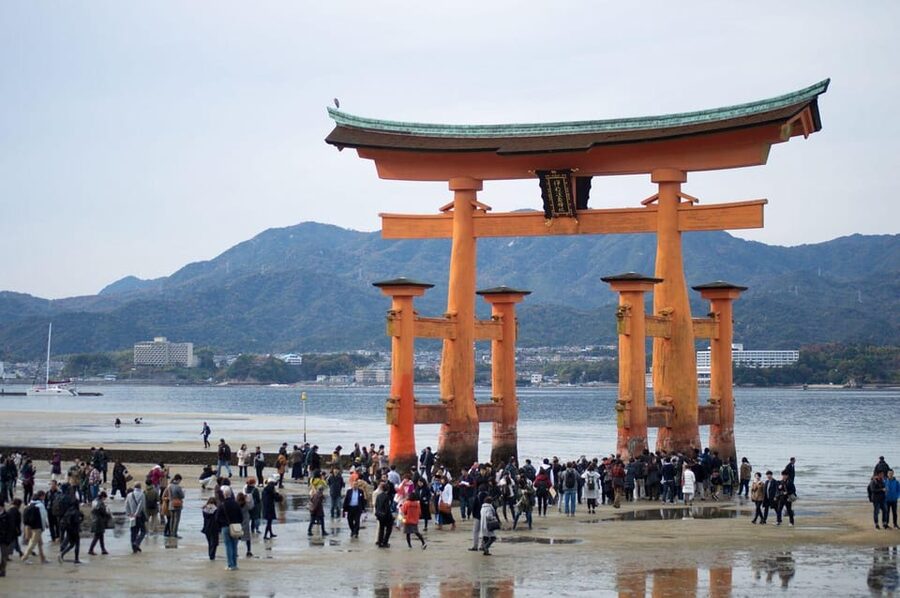
After the memorial district, the tour turns toward Hiroshima’s older cultural story. Hiroshima Castle is a reconstruction, not an untouched medieval building, but it still helps explain the city’s samurai-era role and the local political order before modern Japan.
Expect about an hour for a visit, photos, and a walk. The castle adds useful balance after the memorial sites. You are no longer looking only at Hiroshima through the lens of 1945. You are seeing a city with centuries of history before the bombing and a determined rebuilding period afterward.
Shukkeien Garden offers a quieter change of pace. This traditional Japanese garden has ponds, bridges, paths, and carefully arranged views. It was restored after the war and gives you a place to slow down after the museum and castle.
I would keep the garden if you enjoy Japanese design or want a calm hour outdoors. If your main goal is Miyajima, this is one of the places you may shorten. The tour’s private setup makes that tradeoff possible, but you should discuss it early rather than trying to fit every stop into the final hour.
A walk through Hondōri
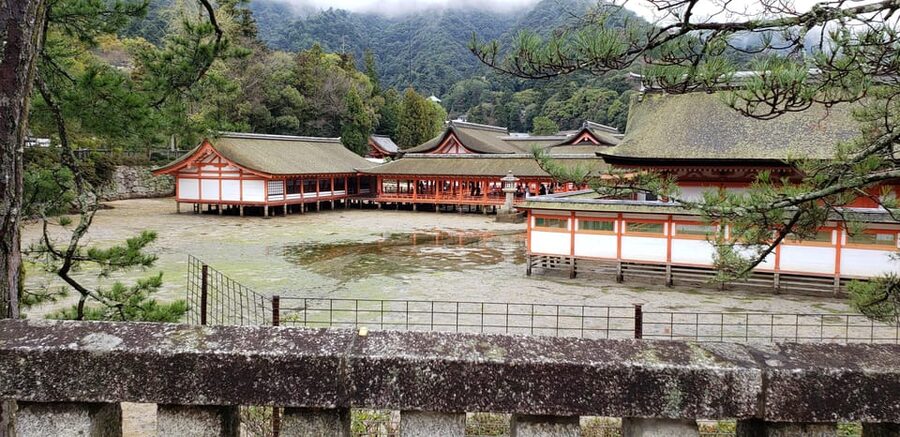
Hondōri provides a look at present-day Hiroshima. The covered shopping arcade brings you back into ordinary city life, with shops, restaurants, and places to pause for food or drinks.
This stop is useful because it keeps Hiroshima from feeling like a memorial-only destination. The city is not frozen in its past. It is a working place where people shop, eat, and meet.
The schedule allows roughly an hour here, but I would not give Hondōri that much time if your visit includes both Miyajima and Mount Misen. Use it for lunch, a quick look at local shops, or a chance to try Hiroshima-style okonomiyaki. One guide, Nick, finished the day at a carefully chosen okonomiyaki restaurant, but meals are not included, so budget separately.
Crossing to Miyajima Island
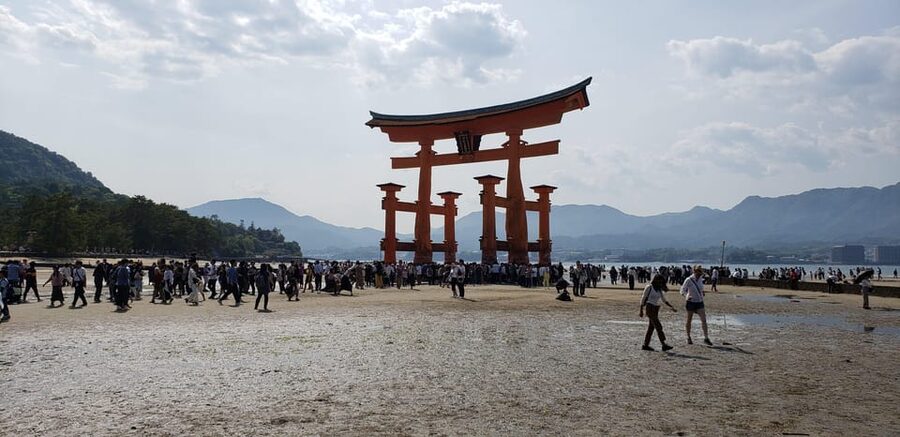
The transfer to Miyajima can take a significant portion of the day. The tour includes public transportation fares for the tram and ferry, which is helpful because a private guide can lead you through the change from city transport to island travel.
There is also a direct boat between Hiroshima Peace Park and Miyajima. It takes about 45 minutes and costs 2,200 yen one way or 4,000 yen round trip, excluding the visitor tax. Two to four boats run per hour, but this boat is not included in the tour price. Ask the coordinator which route your booking uses and what extra cost applies if you prefer the direct boat.
Miyajima is more than a single torii gate. You will have time to walk through the island, browse shops, take photographs, and sample local foods such as grilled oysters and momiji manju, a maple-leaf-shaped sweet. The two-hour island segment listed in the schedule can feel short if you want food, the shrine, temple visits, and mountain views.
Seeing the floating torii at the right tide
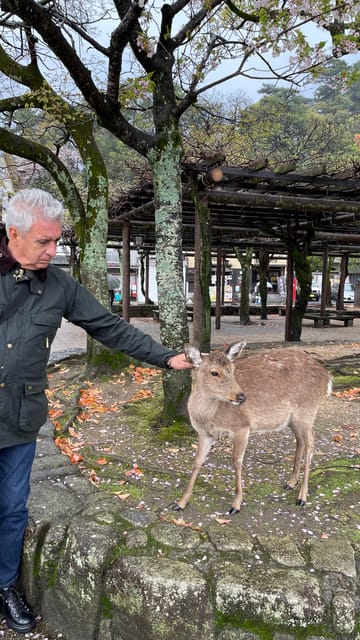
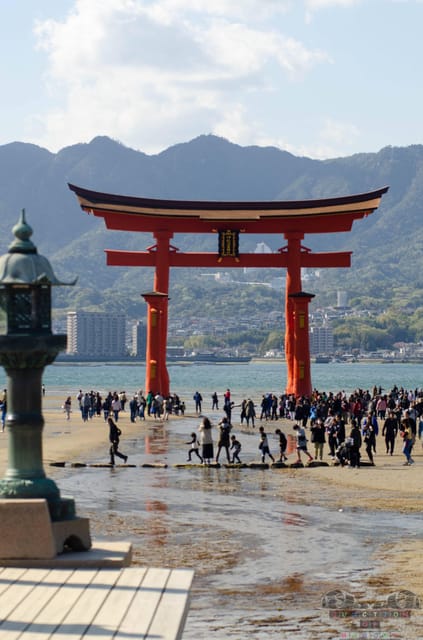
The Itsukushima torii gate is the image most associated with Miyajima. At high tide, water surrounds its base and creates the famous floating effect. At low tide, you can often see the ground around it and walk closer, so the view changes with the water.
The tour description does not promise a specific tide or a particular viewing condition. If the floating appearance is your top priority, check the tide time for your date and tell the guide. The gate may also be undergoing work or look different depending on current conditions, so keep your expectations practical.
Your guide can point out how the gate relates to the shrine complex and the island’s sacred setting. The real appeal is the combination of architecture, water, and wooded hills behind it, not just one photograph.
Itsukushima Shrine and Daisho-in Temple
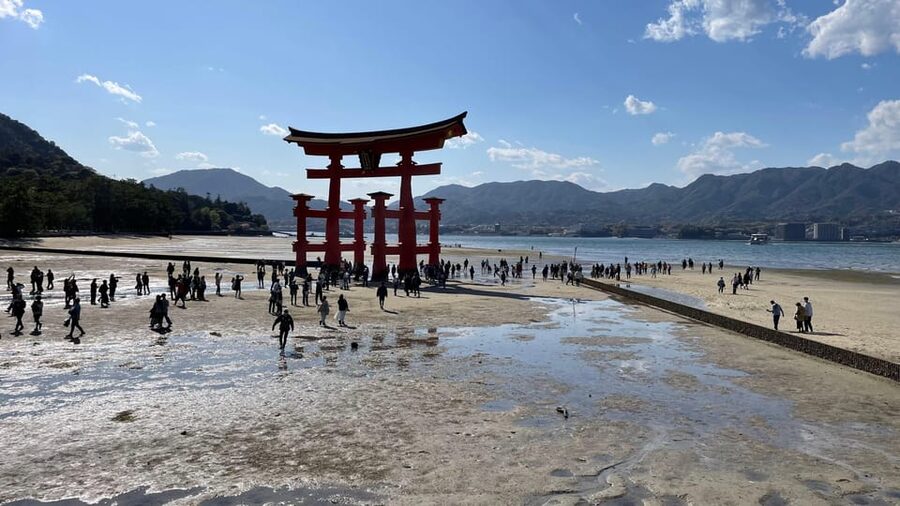
Itsukushima Shrine is a UNESCO World Heritage Site and the island’s main cultural stop. Its wooden corridors and halls sit along the water, creating changing views as you walk through the complex.
The shrine is included in the tour’s entrance fees. Give yourself time to notice the layout rather than racing through for the torii photograph. Your guide can explain the shrine’s spiritual role and the customs connected with visiting a sacred site.
Daisho-in Temple adds a different religious layer. It is an important Shingon Buddhist temple and a quieter place to experience Miyajima’s spiritual side. The tour description includes it as part of the possible island visit, but the detailed time schedule specifically lists Miyajima, the torii, and Itsukushima Shrine. Confirm whether Daisho-in fits your selected duration.
This is one of the places where a longer booking pays off. On a short tour, you may have to choose the shrine or temple. On a full day, you have a better chance of seeing both without cutting the island walk too sharply.
Mount Misen: worthwhile, but only with enough time
Mount Misen offers broad views over the Seto Inland Sea. You may hike or take the ropeway, depending on time and the option your guide recommends.
I would treat Mount Misen as an extra, not a guaranteed part of a short visit. The ropeway and any walking require time, and the island already has several important stops. If you want the mountain, tell the coordinator before the tour and choose the longest available duration.
The reward is a change from shrine courtyards and shopping streets to open sea views and wooded paths. The drawback is simple: every extra hour on the mountain is an hour you cannot spend at the museum, shrine, or local food stops.
The guide can make or break the day
Guide quality is especially important here because Hiroshima requires tact, accuracy, and a sense of proportion. You are not only asking for directions. You are asking someone to help you approach painful history without reducing it to a lecture.
Several named guides received strong praise for different strengths. Kazuko was appreciated for empathetic conversation and personal perspective. Zun was praised for handling transport and keeping energy high. John worked well with a family, while Nick combined detailed local information with wider discussions and ended the day with okonomiyaki.
The company notes that most guides are non-Japanese city guides and may not hold a licensed city guide certification. If you want a Japanese-English speaker or a specialist in Hiroshima history, state that clearly when the coordinator contacts you. Do not assume that every guide will offer the same depth of historical explanation.
The overall rating is 4.3 from 32 reviews, which suggests a generally positive experience but not a uniform one. One detailed assessment found the guide kind and helpful but wanted stronger storytelling for children and a better division of time between Hiroshima and Miyajima. That is practical advice, not a reason to avoid the tour.
Who should book the $129 experience?
I would consider this tour a good fit for:
- First-time visitors who want Hiroshima’s major sights organized in one day
- Families who prefer a private pace and help with transport
- Visitors who want both the memorial district and Miyajima
- People who value conversation and personal guidance over a fixed group script
- Anyone with limited time in Hiroshima who does not want to plan several connections
I would hesitate if you prefer to spend half a day at the museum, browse Miyajima slowly, or travel on the lowest possible budget. Independent visits are possible, and a rushed private tour is still rushed.
The price has its best value when you use the guide actively. Ask questions, state your priorities, and request changes. If you simply follow the schedule from one photo stop to the next, you may pay for flexibility without using it.
Free cancellation up to 24 hours before the tour and reserve-now, pay-later booking make the plan easier to adjust. Pickup can also be changed to another location within Hiroshima city at no added cost. The tour is wheelchair accessible, but the exact route and mountain option should be discussed in advance.
Should you book Amazing Hiroshima?
Book it if you want a private, guided day that connects Hiroshima’s wartime memory with Miyajima’s shrine, sea, and mountain setting. The strongest parts are the memorial district, transport support, and the chance to shape the pace around your group.
Choose the longest duration if you want the museum, castle, garden, Hondōri, Miyajima, Daisho-in, and Mount Misen. For a shorter booking, put Peace Memorial Park, the museum, the A-Bomb Dome, and Itsukushima Shrine first.
Ask for the kind of guide you need, especially if you want Japanese-English service, specialist historical knowledge, or engaging explanations for children. With those expectations set early, the tour offers a thoughtful way to see two of western Japan’s most important places without spending your whole day on logistics.
FAQ
How long does the tour last?
The available duration is between 3 and 8 hours. Starting times and exact availability depend on the date selected.
Is the tour private?
Private and small-group options are available. After booking, the coordinator contacts you to confirm preferences and specific requirements.
What language does the guide speak?
The listed tour language is English. You can request a Japanese-English-speaking guide or a specialist historical guide when communicating with the coordinator.
Are transport fares included?
Public transportation fares for the tram and ferry are included. A direct boat from Hiroshima Peace Park to Miyajima is not included and costs 2,200 yen one way or 4,000 yen round trip, excluding visitor tax.
Is lunch included?
No. Lunch is not included. You should plan and pay separately for meals, including local options such as grilled oysters or okonomiyaki.
Are entrance fees included?
Entrance fees to Peace Memorial Park and Itsukushima Shrine are included. The provided information does not clearly state that admission to the Peace Memorial Museum is included, so confirm this before the tour.
Can the pickup location be changed?
Yes. After booking, you can change the pickup point to anywhere within Hiroshima city at no additional cost.
What is the cancellation policy?
You can cancel up to 24 hours in advance for a full refund. The booking also offers a reserve-now, pay-later option.
Just added around Hiroshima
- The Journey of Hiroshima from Tragedy to Peace★ 4.8 · 44 reviews
- Miyajima: Private Rickshaw Tour to Itsukushima Shrine★ 4.9 · 45 reviews
- Hiroshima: Miyajima Half-day Historical Walking Tour★ 4.7 · 100 reviews
- Hiroshima:Guided Virtual Tour/PEACE PARK TOUR VR★ 5.0 · 29 reviews
- Hiroshima/Miyajima Private Custom Tour with Local Guide★ 5.0 · 134 reviews
- Hiroshima: Tour of Atomic Bomb Dome & Peace Memorial Museum★ 5.0 · 20 reviews
- Hiroshima: Saijo Sake Tasting at 7 Breweries Guided Tour★ 4.8 · 29 reviews
- Hiroshima: Private Walking Tour with a Local★ 4.6 · 70 reviews
City Tours, compared.

Asakusa, Skytree & Akhihabara Go-Kart City Experience
Read our review →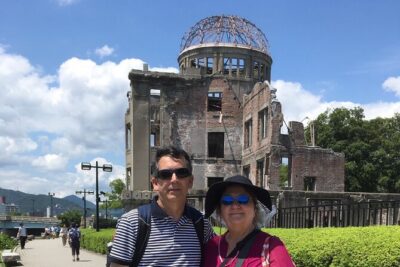
Hiroshima City 4hr Private Walking Tour with Licensed Guide
Read our review →
Private Haneda Airport (HND) to Central Tokyo City Transfer
Read our review →
3-hour Guided E-Bike Tour of the City’s Hidden Gems
Read our review →
Browse the lists this tour appears in