
REVIEW · FOOD MARKET TOURS
Tokyo: Tsukiji walk & sushi private tour with Uni Students
Tsukiji is best understood with someone who knows more than the route between food stalls. This private walk pairs you with a Tokyo university student, giving you a local guide and an easy chance to talk about Japanese life, study, food, and the city. Some guides have close family ties to the market. Nonoka, also called Nono, grew up around her family’s three-generation shop there.
I like the small private format, which lets you stop for questions instead of trailing behind a large group. I also like the food plan: tamagoyaki and a sushi lunch are included, so you can save room and let the guide steer you toward the right bites. The main consideration is communication. Your guide speaks English, but some are still studying it, so the exchange may be more relaxed and informal than polished.
In This Review
- Key points
- Why a student guide changes Tsukiji
- Starting at Tsukiji Hongwanji Temple
- Reading Tsukiji Outer Market with a local
- Namiyoke Inari Jinja and the market’s working spirit
- What you actually eat: tamagoyaki and sushi
- The value of $87 for three private hours
- English level and the real tone of the tour
- Weather, clothing, and practical limits
- Who should book this Tsukiji walk
- Should you book it?
- FAQ
- Where does the Tsukiji tour begin?
- How long does the tour last?
- Is this a private tour?
- Who guides the tour?
- What food is included?
- Does the tour include raw seafood?
- What should I bring?
- What happens if it rains?
Key points
- Meet at Tsukiji Hongwanji Temple: Start beside Tsukiji Station at the temple’s main gate.
- A student guide, not a scripted lecturer: Talk with a young local about Japanese culture and daily life.
- A family connection to the market: Some guides, including Nonoka, have relatives who have operated stalls there for generations.
- Food is part of the price: Tamagoyaki and sushi are included, while drinks and extra snacks cost more.
- Three hours on foot: Expect temple time, market wandering, a stop at Namiyoke Inari Jinja, and lunch.
- Come hungry: The food is central to the experience, and the tour includes raw seafood.
Why a student guide changes Tsukiji
The main reason to book this tour is not simply to find sushi. Tsukiji Outer Market is easy to enter and easy to wander, but it can be hard to understand what you are seeing. A university student gives you a personal bridge into the market, with room for questions about food customs, local habits, and how young people in Tokyo view their city.
The tone is likely to be more conversational than formal. You are not joining a large group listening to a fixed speech. You are spending time with one guide, or sometimes more than one student, and the conversation can shift to match your interests.
That personal format has real value in Tokyo. You can ask why a certain food is popular, how a shrine fits into daily life, or what university life is like. The guides are still practicing English, so you should expect occasional pauses or simple wording. In exchange, you get a genuine cultural exchange rather than a perfectly rehearsed presentation.
The guide lineup varies. Past tours have included Teddy, U, Nonoka, Kiko, Yuri, Yuta, Risa, and Kaho. Nonoka and Nono are the same guide name used by different customers, and she has a particularly useful connection to the area through her family’s market shop.
More Food Market Tours in Tokyo
- Tokyo: Shinjuku Food Tour (13 Dishes at 4 Local Eateries)
★ 5.0 · 6,603 reviews - Tokyo Tsukiji Fish Market Food and Culture Walking Tour
★ 5.0 · 3,184 reviews - Tokyo: Shinjuku Food Tour (15 Dishes and 4 Eateries)
★ 4.9 · 2,033 reviews
Starting at Tsukiji Hongwanji Temple
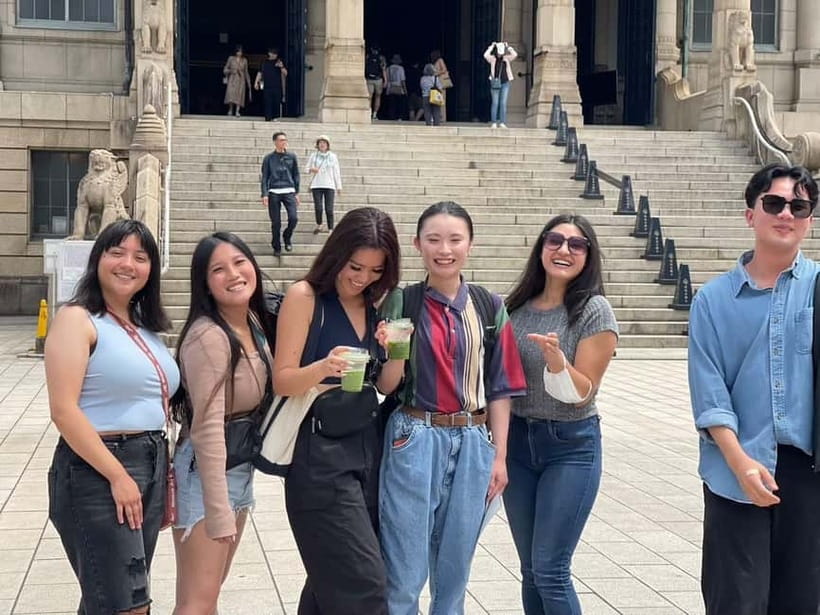
You meet at the main gate of Tsukiji Hongwanji Temple, where the guide holds a sign with your name. The location is simple to reach: it is just outside Exit 1 of Tsukiji Station on the Tokyo Metro Hibiya Line.
Allow a few minutes to find the correct gate and arrive ready to walk. Comfortable shoes matter more than stylish ones here. The tour lasts three hours, and the market includes narrow lanes, standing stops, and plenty of time on your feet.
Your first 30 minutes focus on Tsukiji Hongwanji Temple. The temple is a useful opening because it gives the market a cultural setting before the food tasting begins. You can look around, worship, and learn why this place matters to the neighborhood.
The temple visit also gives the tour some balance. This is not only a food crawl. You begin with a place of worship, then move into the working market, so you see two important sides of Tsukiji in one morning or afternoon.
As with any active place of worship, behave quietly and follow the guide’s lead. The tour includes worship, but you should treat it as a cultural visit rather than a performance or photo stop.
Reading Tsukiji Outer Market with a local
The main portion of the tour takes place in Tsukiji Outer Market. Plan on roughly 90 minutes of guided walking before lunch, although the exact order can shift with weather and market conditions.
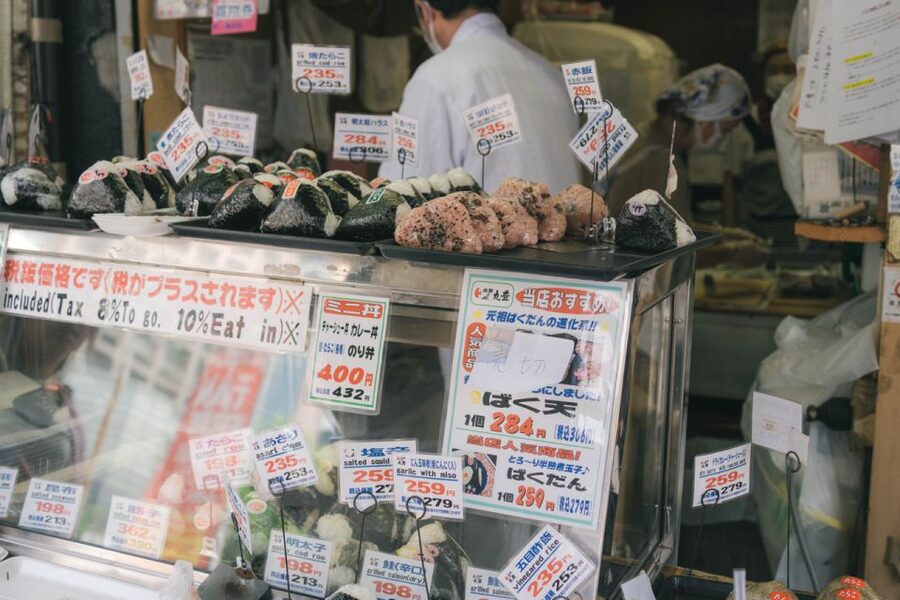
Tsukiji’s Outer Market is not the same thing as the former wholesale fish market. The outer area is where you find food shops, specialist vendors, prepared foods, kitchen goods, and places serving customers. It remains a working district, so narrow walkways and active shopfronts are part of the experience.
A local guide helps you move with more purpose. Instead of trying random samples, you can ask what the food is, how it is eaten, and which items fit your tastes. Guides have taken customers to familiar stalls and, in some cases, introduced them to shop owners they know.
Nonoka’s family connection can make this especially personal. Her family has operated a market store for three generations, and one tour included a visit to that family business. That kind of link is unusual and gives you a clearer sense of the market as a community of people, not just a collection of stalls.
You may also benefit from practical local help with queues. One group was able to avoid a long sushi line through the guides’ local connections. This is not something you should treat as guaranteed, but it shows why a private local guide can save time in a busy food district.
The guides may also wait in line while you look around. That can make a difference when you want to sample several foods without spending the whole tour standing in queues. Extra stalls are welcome when time allows, but food beyond the included items is at your own cost.
Namiyoke Inari Jinja and the market’s working spirit
The tour also includes Namiyoke Inari Jinja, a small shrine associated with Tsukiji’s local community. It gives you another chance to see how religious sites fit beside food businesses and daily work.
The stop is brief, but it adds context to the neighborhood. Tsukiji is not only a place built for visitors to eat. It is also a district where worship, commerce, family businesses, and food traditions sit close together.
Your guide can help explain the customs connected with the shrine. Since the English level varies, explanations may be straightforward rather than extensive. Still, the private setting means you can ask for clarification without holding up a group.
Same city, a completely different kind of day:
- Mt Fuji and Hakone 1-Day Bus Tour Return by Bullet Train
★ 5.0 · 26,383 reviews - 1-Day Tokyo Bus Tour
★ 5.0 · 14,250 reviews - Tokyo: TOKYO SKYTREE® Admission ticket
★ 4.5 · 11,192 reviews - Tokyo: teamLab Planets TOKYO Digital Art Museum Entry Ticket
★ 4.6 · 9,779 reviews
What you actually eat: tamagoyaki and sushi
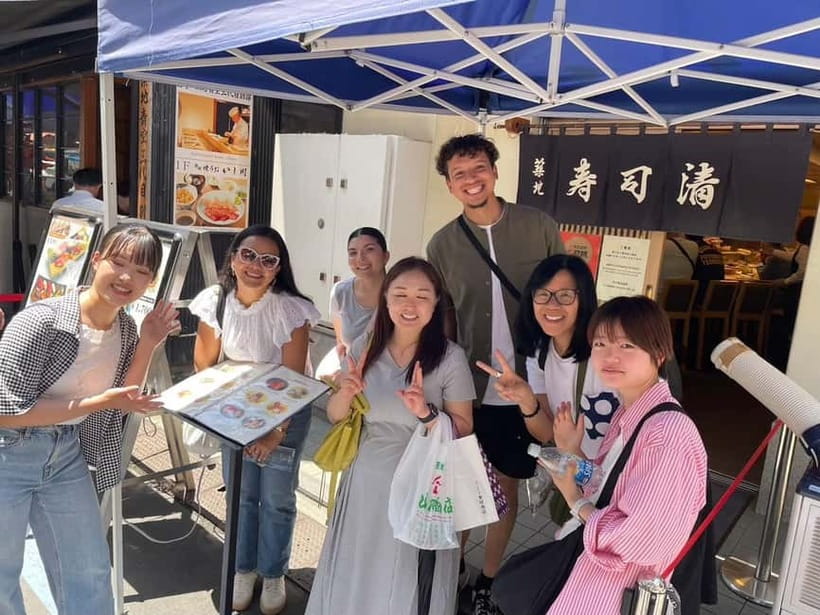
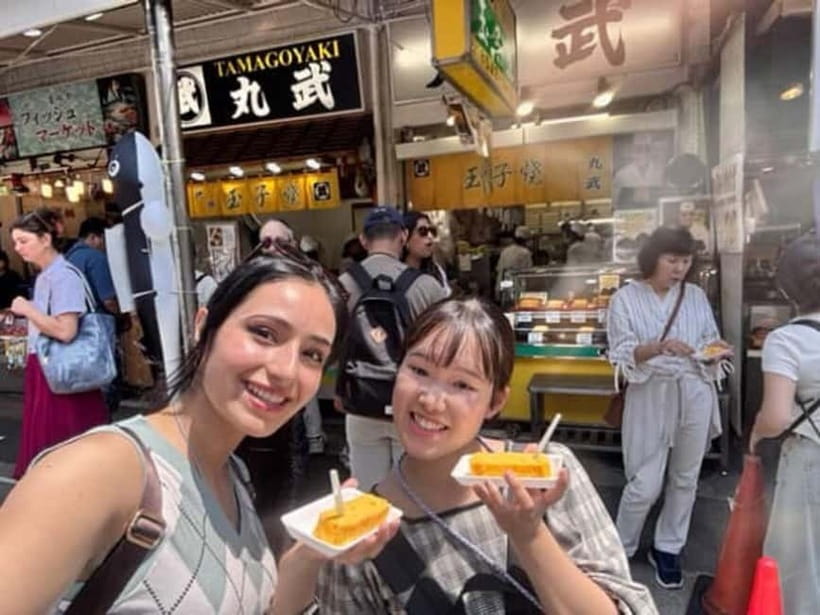
The included food is a strong part of the $87 price. You receive tamagoyaki, the sweet rolled omelet often associated with Japanese cooking, and sushi as lunch. Drinks are not included, and extra market purchases are also separate.
Tamagoyaki is a good early taste because it is familiar in shape but different in texture and flavor from a standard Western omelet. It is made in layers, producing a soft, rolled slice with a gently sweet profile.
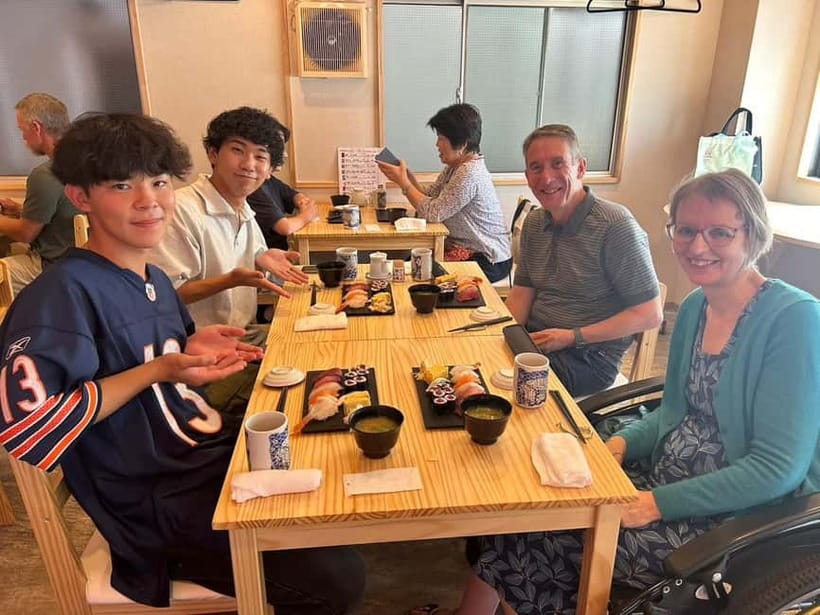
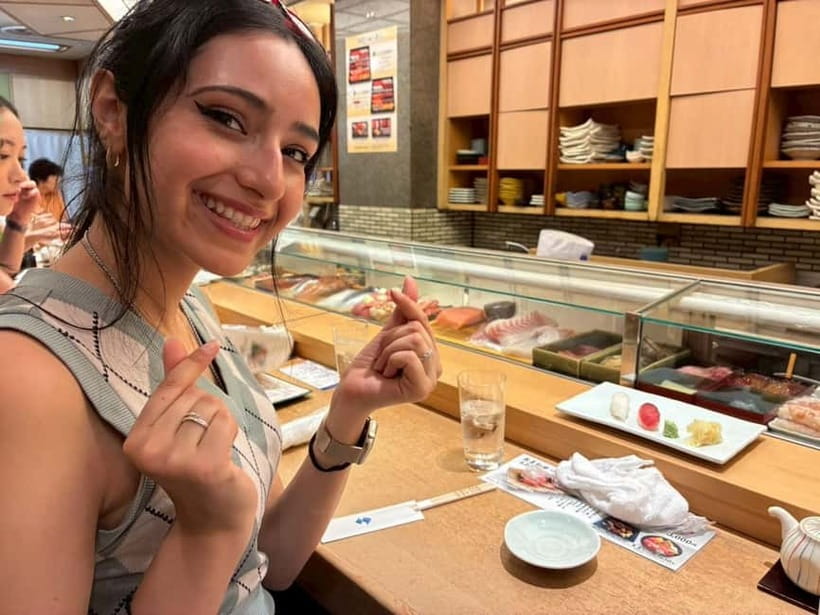
The sushi meal is served at a local sushi restaurant in the traditional style of a Japanese sushi restaurant. The exact selection can vary, but past groups received sushi rolls, sashimi, and even high-quality chutoro, which is prized fatty tuna. One outing also included sashimi chosen by the customer.
Other food experiences have included red bean fish cake, dried scallops, and ice cream, but you should not assume these are included every time. The guaranteed food stated for the tour is tamagoyaki and sushi lunch. If you want additional items, bring a little extra money.
Come with an empty or nearly empty stomach. Several hours of market food can add up quickly, and you will enjoy the sushi more if you have not just eaten a large breakfast. If you have a raw seafood allergy or do not eat raw food, this may not be the right tour.
The food is served in a market setting, and one group ate at an outdoor picnic area. Do not expect a long restaurant meal with a leisurely table service format. The appeal is tasting food close to where it is sold and learning how the local market works.
The value of $87 for three private hours
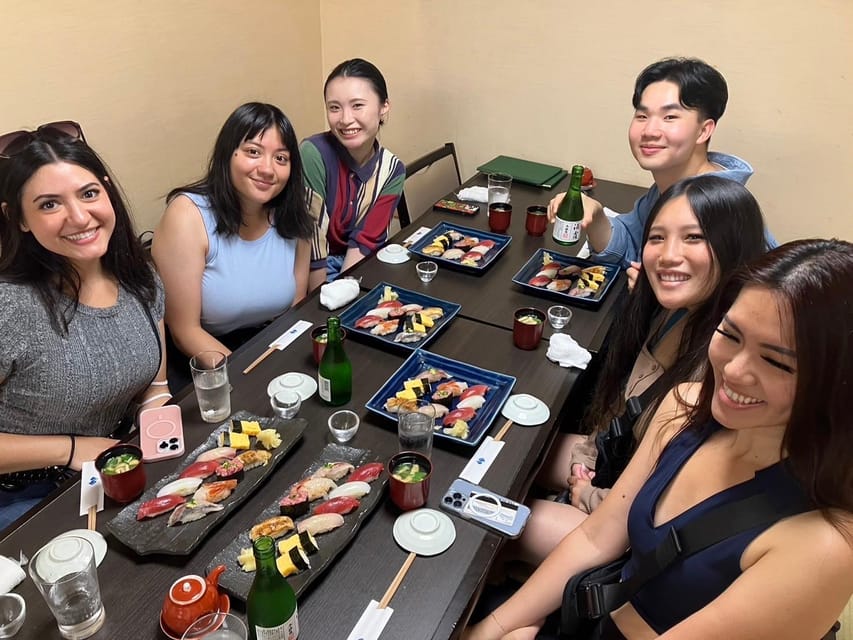
At $87 per person, this is not the cheapest way to walk through Tsukiji. You can enter the Outer Market on your own, buy food directly, and spend less.
The comparison changes when you count what is included. The price covers an English-speaking student guide, a private group, the temple and market walk, tamagoyaki, sushi lunch, and photos taken during the tour. It also pays for local interpretation, route planning, and help choosing food.
For a first visit, that can be good value. Tsukiji is compact enough to visit alone, but the best choices are not always obvious, and you may spend time in lines without knowing which stall fits your interests. A guide with local family ties can give you access to a more personal side of the market.
The value is less clear if you already know Tsukiji well or prefer to browse at your own speed. You will have less freedom than on an entirely independent food walk, and the tour’s three-hour schedule sets the pace.
Reserve and pay later is available, and cancellation is free up to 24 hours before the start for a full refund. That is useful when your Tokyo plans are still changing.
English level and the real tone of the tour
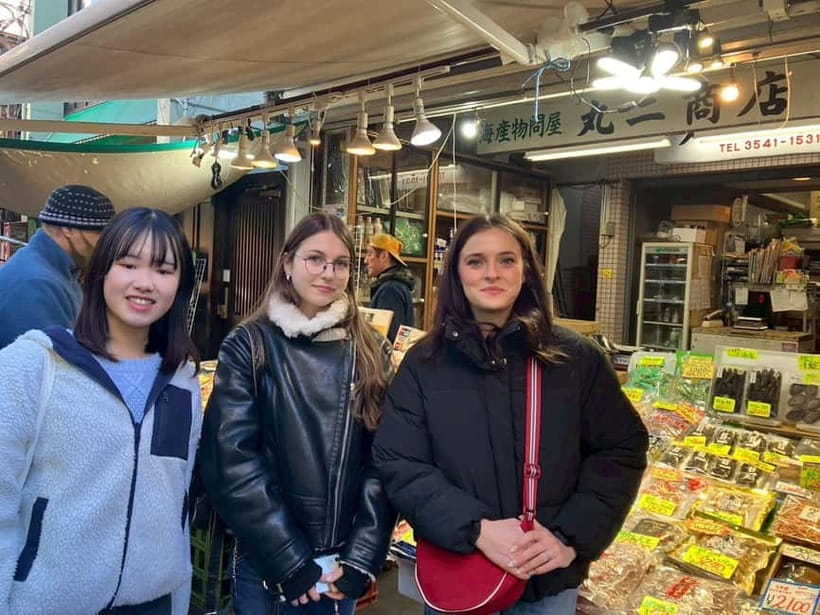
The guides speak English and Japanese, but the young guides are currently studying English. This detail matters, and you should take it seriously before booking.
You can expect friendly conversation, enthusiasm, and useful local insight. You may not get long, precise explanations of every historical detail. Names, food terms, and cultural ideas may need a second explanation.
I see this as a good fit for people who enjoy conversation and do not mind a little patience. The guides have been praised for warmth, humor, preparation, and enthusiasm. Their strongest advantage is their connection to the neighborhood and their willingness to answer questions.
If you need a highly formal guide with advanced English and a fixed lecture, choose a different experience. If you want to meet young people in Tokyo and exchange ideas, the student format is the point.
Weather, clothing, and practical limits
The tour runs in light drizzle, but severe weather can change the plan. Rain may also alter the order of the stops. You will receive an email if serious weather affects the tour.
Wear weather-appropriate clothing and comfortable walking shoes. Much of the experience is outdoors and takes place in market lanes, so a compact umbrella or rain layer can be useful in wet weather, though the stated requirement is simply suitable clothing.
Raw food is included. Anyone with seafood restrictions, concerns about uncooked fish, or a strong dislike of sushi should ask about alternatives before booking, since the food plan centers on sushi and market tasting.
The meeting point is fixed at Tsukiji Hongwanji Temple’s main gate. The guide holds a sign with your name, which makes the first meeting easier. The tour is private, but the number of guides can vary. Some past groups had two or three university students, especially when a newer guide was gaining experience.
Who should book this Tsukiji walk
I would choose this tour for a first-time Tokyo visitor who wants food and conversation in equal measure. It is also a good choice for solo visitors, couples, families, and anyone who prefers asking questions instead of following a large crowd.
Food lovers will get the most from it, especially if you enjoy seafood, sushi, and small tastings. Parents traveling with older children may also like the student-guide format because it gives young visitors someone approachable to talk with.
It suits you less if you want a private car, a seated tasting menu, or a long historical lecture. It also may not work well if you need a fully predictable food selection, since the market conditions, restaurant queues, weather, and guide may shape the order.
Should you book it?
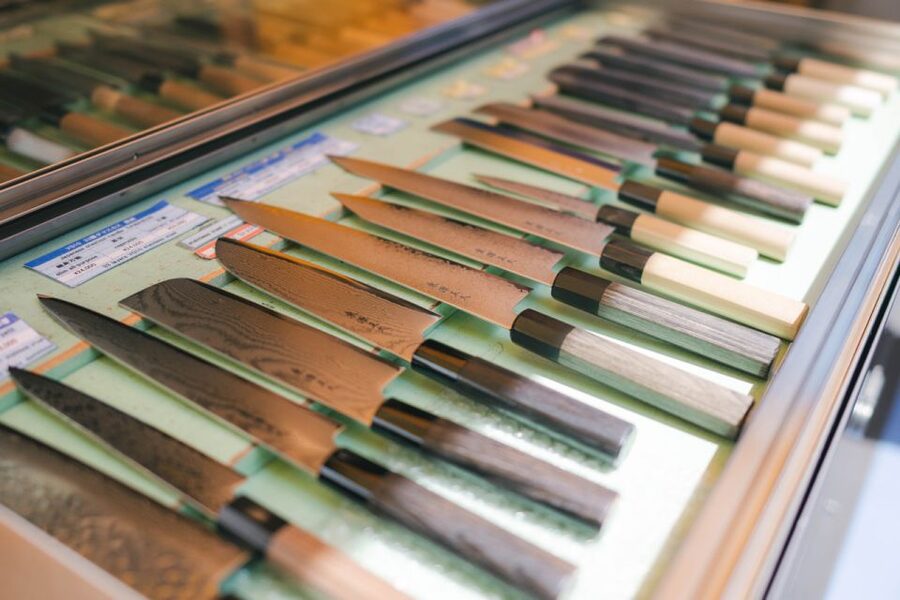
Book this Tsukiji tour if you want a personal introduction to the market and like the idea of meeting a Tokyo university student. The included tamagoyaki and sushi make the price easier to justify, while family links such as Nonoka’s connection to the market can add something you would be unlikely to find on your own.
Go in with realistic expectations about English and timing. This is a friendly, food-focused cultural walk, not a formal academic tour. Arrive hungry, wear good shoes, and keep room in your schedule for the tour’s flexible market pace.
FAQ
Where does the Tsukiji tour begin?
You meet your guide at the main gate of Tsukiji Hongwanji Temple in Chuo City. The temple is just outside Exit 1 of Tsukiji Station on the Tokyo Metro Hibiya Line.
How long does the tour last?
The tour lasts three hours. Starting times vary, so you need to check availability when choosing a date.
Is this a private tour?
Yes. The activity is arranged for a private group, allowing you to have more relaxed conversations with the student guide.
Who guides the tour?
An English-speaking university student in Tokyo leads the tour. Guides have included Teddy, U, Nonoka, Kiko, Yuri, Yuta, Risa, and Kaho. The exact guide depends on the booking.
What food is included?
Tamagoyaki and sushi lunch are included. The tour also includes traditional food tasting, but drinks and food bought outside the included items are not covered.
Does the tour include raw seafood?
Yes. The tour includes raw food items, including sushi and potentially sashimi. Consider this before booking if you do not eat raw seafood.
What should I bring?
Bring comfortable shoes and wear clothing suited to the weather. The tour involves walking through the temple and market.
What happens if it rains?
The tour continues in light drizzle, but the route may change because of rain. In severe weather, you will be notified by email about the tour status.
Just added around Tokyo
- Private Memorable Tokyo Tour with English Speaking Driver★ 5.0 · 30 reviews
- Private Tokyo Custom Full-Day Tour by Chartered Vehicle★ 5.0 · 16 reviews
- Private Sightseeing to Mt Fuji and Hakone with English Driver★ 5.0 · 51 reviews
- Tokyo Photography Masterclass – Private Photography Lesson★ 5.0 · 25 reviews
- 4 Day Tour – Mount. Fuji, Tokyo, Hakone, Kamakura and Yokohama★ 5.0 · 19 reviews
- Private Mt. Fuji Day Trip from Tokyo with English-Speaking Driver★ 5.0 · 33 reviews
- Private Unforgettable Mt Fuji Tour with English Speaking Driver★ 5.0 · 142 reviews
- Private Tokyo Food Tour – A Journey Through Time Through Food★ 5.0 · 36 reviews
Food Market Tours, compared.
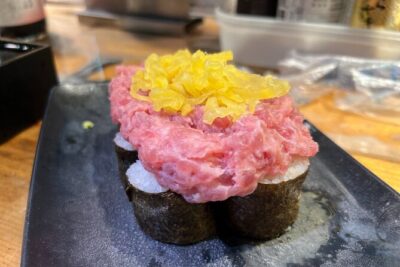
Shinjuku Food Tour (13 Dishes at 4 Local Eateries)
Read our review →
Tokyo Tsukiji Fish Market Food and Culture Walking Tour
Read our review →
Shinsekai Food Tour with 13-15 Dishes at 5 Eateries
Read our review →
Osaka Food Tour: 13 Dishes at 5 Local Eateries
Read our review →
Shinjuku Food Tour (15 Dishes and 4 Eateries)
Read our review →
Best of Shinjuku: Izakaya Food Tour (4 Stops, 14+ Tastings)
Read our review →
Hungry Osaka Street Food Tour:15 Tastings & 3 Drinks with a Local
Read our review →
Browse the lists this tour appears in