REVIEW · GUIDED
Tokyo: 60min Panoramic Open Top Bus Tour with Audio Guide
Tokyo reveals itself differently from the upper deck of a moving bus. From the Hato Bus stop near Tokyo Station, you get broad views of the National Diet Building, Tokyo Tower, and Rainbow Bridge, then sweep through the bay districts before returning through Ginza. It is a fast, useful first look at a huge city.
I like the one-hour length, which fits neatly into a busy Tokyo day, and I like the open-air setting when the weather is kind. The main drawback is simple: this is a sightseeing loop, not a hop-on hop-off bus. You cannot get off to explore, and rain may mean a closed roof or cancellation.
In This Review
- Key points to know before boarding
- Why this short Tokyo bus ride works
- Starting at Tokyo Station near Marunouchi South Exit
- Hibiya Park, the Diet Building, and Toranomon
- Tokyo Tower from the upper deck
- Crossing Rainbow Bridge toward Odaiba
- Toyosu and the changing waterfront
- Tsukiji Outer Market, Kabuki-za, and Ginza
- How the audio guide works
- Open-air comfort, weather, and practical limits
- Is $14 good value for one hour?
- Who should book this Tokyo bus tour?
- Should you book it?
- FAQ
- Where does the bus tour begin and end?
- How long does the tour last?
- Is this a hop-on hop-off bus?
- Which places does the route pass?
- What languages are available for the audio guide?
- Do I need to bring my own phone and earphones?
- Can I eat or drink on the bus?
- What happens if it rains?
Key points to know before boarding
- Tokyo Tower from several angles: The route gives you changing views of one of Tokyo’s clearest landmarks, a feature that has earned especially strong praise.
- Rainbow Bridge and Tokyo Bay: The bus crosses the Rainbow Bridge, giving you a breezy look toward Odaiba and the waterfront.
- Eight-language GPS audio: English, Chinese, Korean, Spanish, French, Thai, Indonesian, and Vietnamese are available through your own smartphone and earphones.
- A one-hour city sampler: You pass central Tokyo, government buildings, the bay, old market districts, theaters, and Ginza without spending a full afternoon.
- Japanese live guide: The tour is conducted in Japanese, while the GPS system supplies multilingual commentary.
- Weather matters: The bus may close its roof in rain, and heavy rain or bad weather can cancel the ride.
Why this short Tokyo bus ride works
Tokyo can take days to understand, even when you have a good map. Districts shift quickly from government offices to high-rise commercial streets, then to reclaimed waterfront land and older shopping areas. This tour gives you that change of scenery in a tidy hour.
You are not buying admission to monuments or a guided walk through a neighborhood. You are buying a moving viewpoint. That makes the ride useful on your first day, when you want to get your bearings, or near the end of a trip, when you want one last sweep past the city’s big sights.
The route also helps you connect places that can feel far apart on foot. Tokyo Station, Toranomon, Tokyo Tower, Rainbow Bridge, Odaiba, Toyosu, Tsukiji, Kabuki-za, and Ginza all appear in one circuit. You will not have time to study each area, but you will understand how they fit together.
One hour is also a sensible choice for families, first-time visitors, and anyone who does not want a long bus commitment. A recent booking described the ride as comfortable, and that matches the appeal of the format: sit back, keep your camera ready, and let the city come to you.
A few more Tokyo trips to weigh up
- Tokyo: Open Top Panoramic Sightseeing Bus with Audio Guide
★ 3.8 · 254 reviews
Starting at Tokyo Station near Marunouchi South Exit
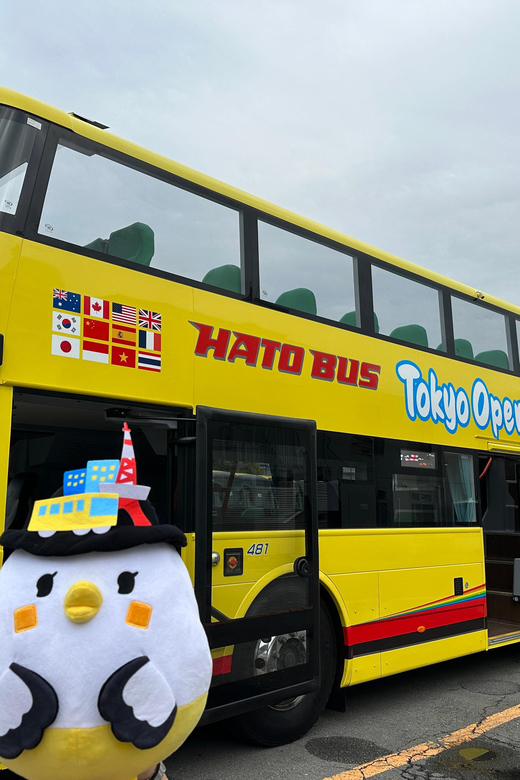
The meeting point is the Hato Bus Tokyo Office, close to the JR Tokyo Station Marunouchi South Exit. After leaving the station, turn left and walk straight for about two minutes. Look for the yellow Hato Bus stop.
This is one of the easier meeting points in central Tokyo, but Tokyo Station is large enough to make a short walk feel longer if you leave by the wrong exit. Give yourself extra time to find the Marunouchi South Exit, especially if you are arriving by train with luggage or changing from another line.
The tour begins and ends here. There is no hotel pickup or drop-off, so you need to make your own way to the station. The return to the same place is convenient for continuing your day in Marunouchi, around the Imperial Palace area, or elsewhere on the rail network.
The listed meeting coordinates are 35.678964, 139.765781. If you use a map app, search for the Hato Bus Tokyo office rather than relying only on the station name.
Hibiya Park, the Diet Building, and Toranomon
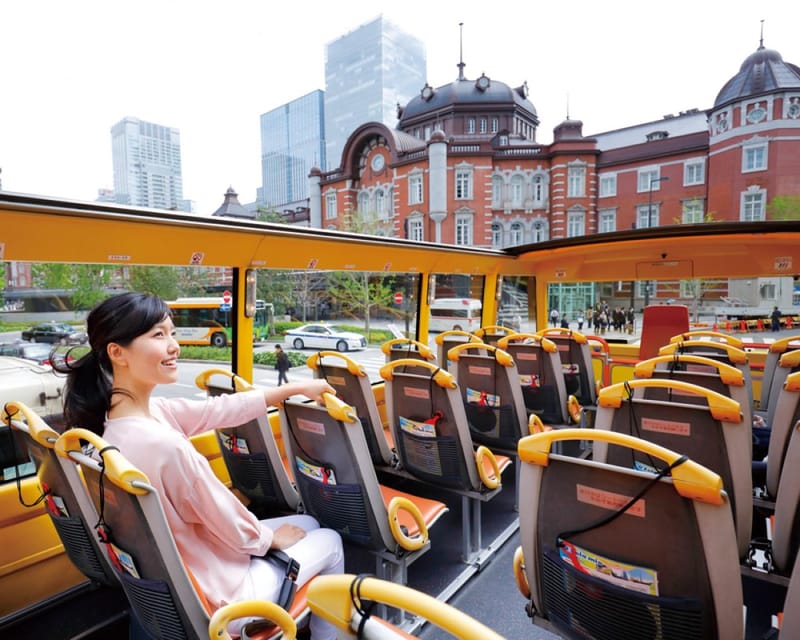
The first part of the ride moves through central Tokyo, beginning with Hibiya Park. You pass the park rather than stop, so think of this section as a quick visual introduction to the city’s formal center.
Next comes the National Diet Building, Japan’s parliamentary landmark. From an open-top bus, the value is the broad view. You can see the building in relation to its surrounding streets and government district rather than viewing it only from a sidewalk.
The bus then passes through Toranomon, an office and business area. This section may feel less dramatic than Tokyo Tower or the bay, but it helps show the working side of central Tokyo. You see the city as a place of government, commerce, and daily traffic, not just a collection of famous photo stops.
There is no scheduled time to leave the bus at any of these locations. If you want to tour the Diet Building, walk through Hibiya Park, or explore Toranomon properly, plan a separate visit.
Tokyo Tower from the upper deck
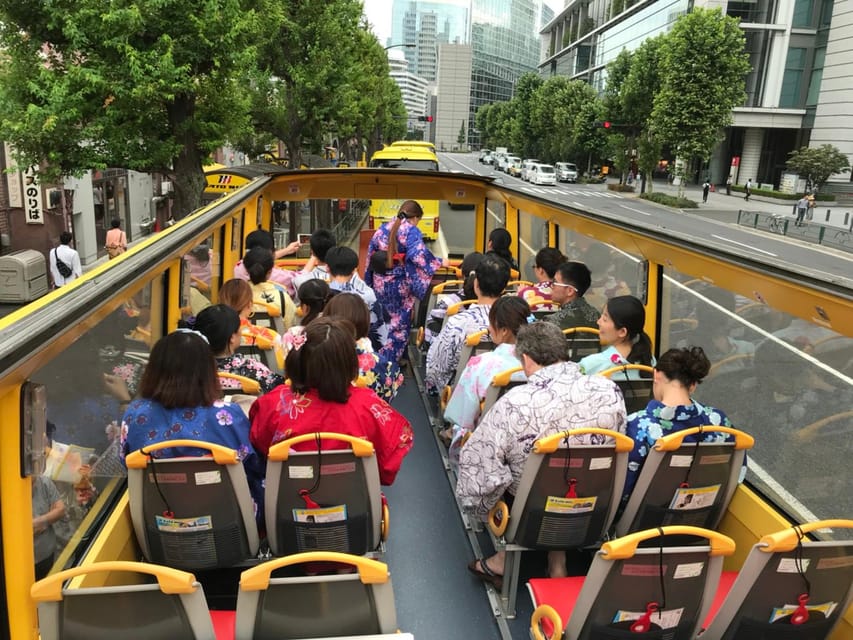
Tokyo Tower is one of the strongest reasons to choose the open-top bus. One of the high points of the ride is seeing the tower from changing angles as the bus moves through the city. A normal street-level view gives you one composition. The bus offers several.
The upper deck also removes some of the visual clutter that can get in the way at sidewalk level. You may have a clearer line toward the tower, nearby buildings, and the sky above it. Keep your camera ready, since the bus does not stop for a long photo session.
The tour does not include entry to Tokyo Tower, and there is no stop for climbing or visiting its observation decks. That is not a flaw if you want a city overview, but it matters if your main goal is to go inside the tower.
The route’s Tokyo Tower views received especially warm praise, including the appeal of seeing the tower from angles that are difficult to find during an ordinary walk. I would treat this as a photography and orientation opportunity, not a replacement for a dedicated Tokyo Tower visit.
Same city, a completely different kind of day:
- Mt Fuji and Hakone 1-Day Bus Tour Return by Bullet Train
★ 5.0 · 26,383 reviews - 1-Day Tokyo Bus Tour
★ 5.0 · 14,250 reviews - Tokyo: TOKYO SKYTREE® Admission ticket
★ 4.5 · 11,192 reviews - Tokyo: teamLab Planets TOKYO Digital Art Museum Entry Ticket
★ 4.6 · 9,779 reviews
Crossing Rainbow Bridge toward Odaiba

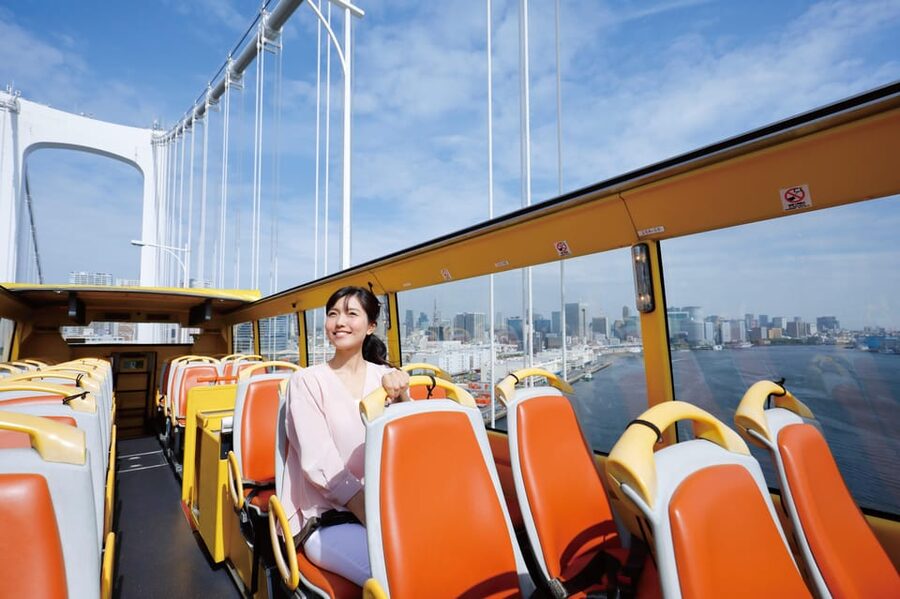
The most open-air part of the experience comes as the bus heads toward Rainbow Bridge. Here, the city gives way to wide views over Tokyo Bay, and you can feel the breeze that makes an open-top bus more than just a taller vehicle.
Rainbow Bridge connects central Tokyo with the Odaiba area. From the bus, you pass over the bridge rather than stopping on it. The crossing gives you a useful sense of Tokyo’s waterfront scale, with the bay opening out on either side.
This is where weather makes the biggest difference. On a clear day, the ride offers the kind of uninterrupted view that is hard to get from a standard enclosed bus. In rain, the roof may be closed, which changes the feel of the trip. Heavy rain or poor weather can also lead to cancellation.
Odaiba follows the bridge crossing. The area is known for its reclaimed waterfront setting and broad modern spaces, but the tour only passes through. You will not have time to visit individual attractions or wander along the shore. If you want a longer Odaiba visit, schedule it separately after the bus ride.
Toyosu and the changing waterfront
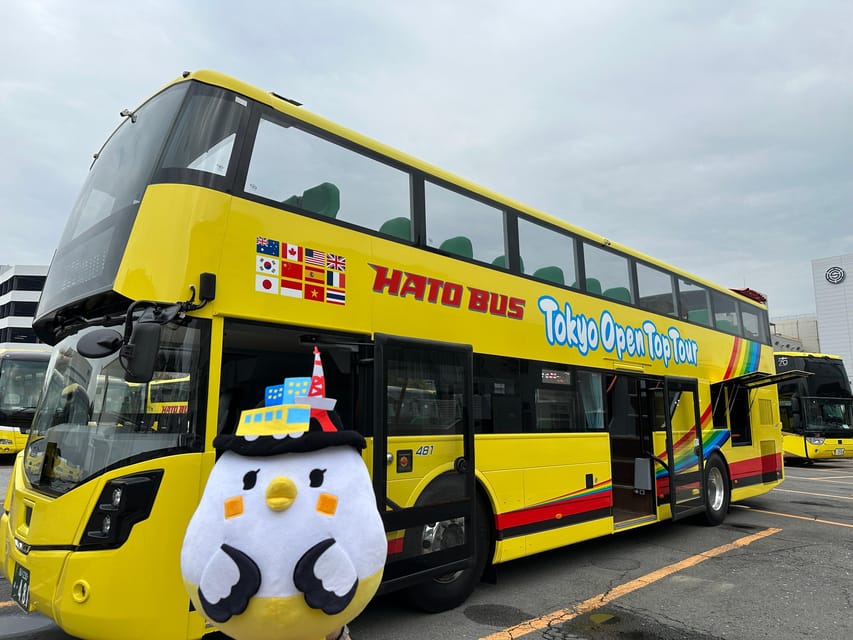
The bus continues to Toyosu, another important part of Tokyo’s bay area. Like Odaiba, Toyosu shows a newer side of the city, shaped by reclaimed land, large urban projects, and waterfront development.
You pass through rather than stop, so the main benefit is comparison. Earlier, you saw government buildings and dense central streets. Now you get a sense of the newer districts built farther out toward the bay.
This contrast is one of the tour’s quiet strengths. Tokyo is not one uniform city center. It has old market streets, government quarters, entertainment districts, office corridors, and modern waterfront zones. The bus links them quickly, helping you see the pattern.
If your interest is specifically Toyosu, this tour provides only a brief look. It does not include time at markets or other sites, and you should not expect a detailed local tour.
Tsukiji Outer Market, Kabuki-za, and Ginza
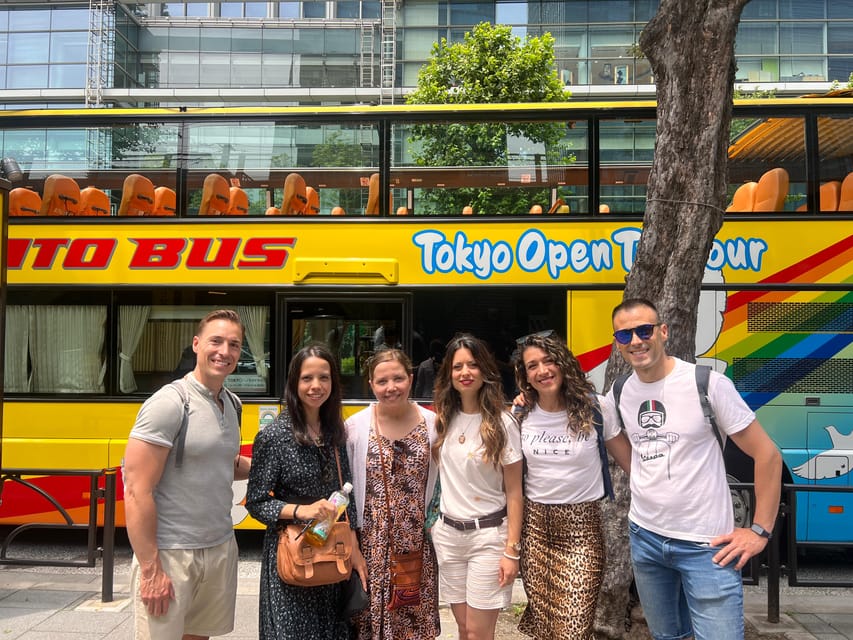
After the bay districts, the route turns back toward older and more central parts of Tokyo. Tsukiji Outer Market is passed on the way. The former inner wholesale market area is no longer the focus here, and this ride does not include a food stop or time to shop.
That limitation is worth noting because food is one of Tsukiji’s main draws. Eating is not allowed on the bus, and food and drinks cannot be taken aboard. Drinks in plastic bottles are allowed, but you should plan to eat before or after the tour rather than during it.
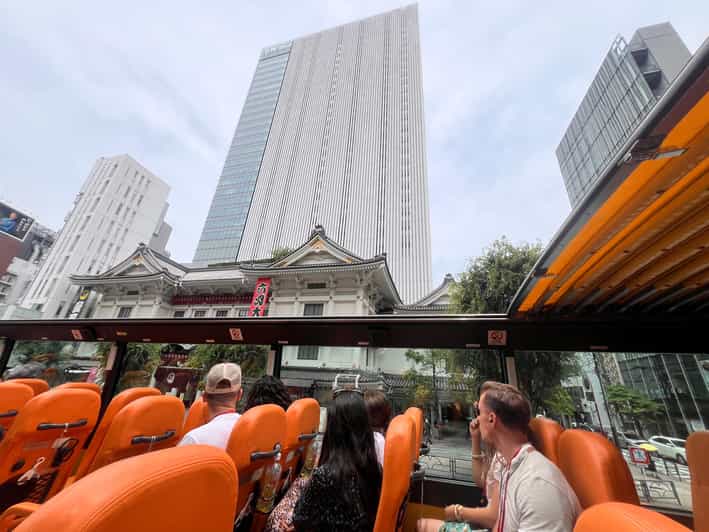
The bus then passes Kabuki-za, Tokyo’s famous kabuki theater in Ginza. You get a quick look at its distinctive facade, but there is no theater visit or performance included. Consider it a useful landmark sighting on a broader city route.
Finally, the bus moves through Ginza, one of Tokyo’s best-known shopping and commercial districts. This closing section brings you back into the dense central city after the open views of the bay. It is a fitting finish because Ginza shows the polished, high-energy side of Tokyo, while the earlier stops reveal government, tradition, and newer waterfront development.
How the audio guide works
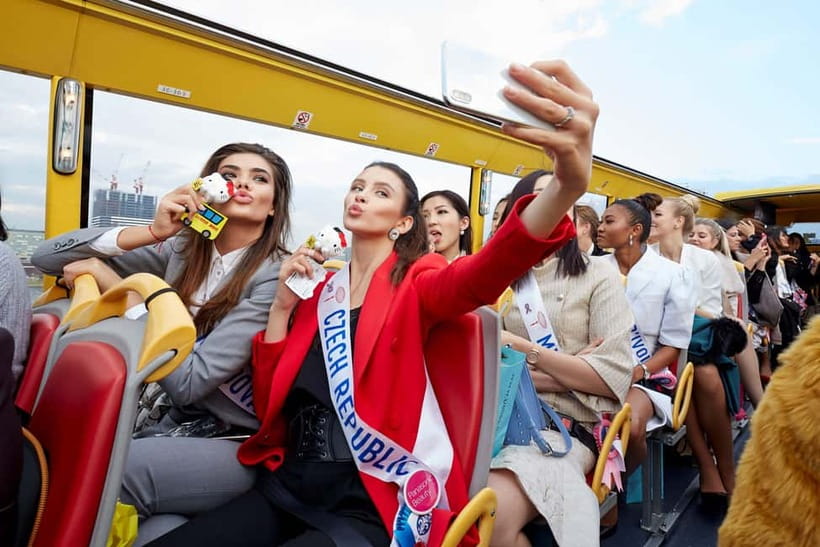
A Japanese-speaking live guide conducts the tour, while GPS-based automated guidance is available in eight languages:
- English
- Chinese
- Korean
- Spanish
- French
- Thai
- Indonesian
- Vietnamese
You must bring a smartphone that works in Japan and your own earphones. The GPS system and earphones are not provided for rental.
This setup can be helpful if you do not understand Japanese, but it is not the same as having a live guide speak your language. The system depends on your phone, your earphones, and the GPS function working properly. Since the audio service is free, technical problems or faulty earphones do not qualify for a refund.
I would test your phone before boarding. Make sure it has enough battery, mobile service or another working connection in Japan, and that your earphones are comfortable. If you are sharing a phone, remember that only the person wearing the earphones will hear the commentary clearly.
The Japanese guide remains part of the tour, but non-Japanese speakers should rely on the automated system for the detailed commentary. The multilingual option is a real benefit, provided you arrive prepared.
Open-air comfort, weather, and practical limits
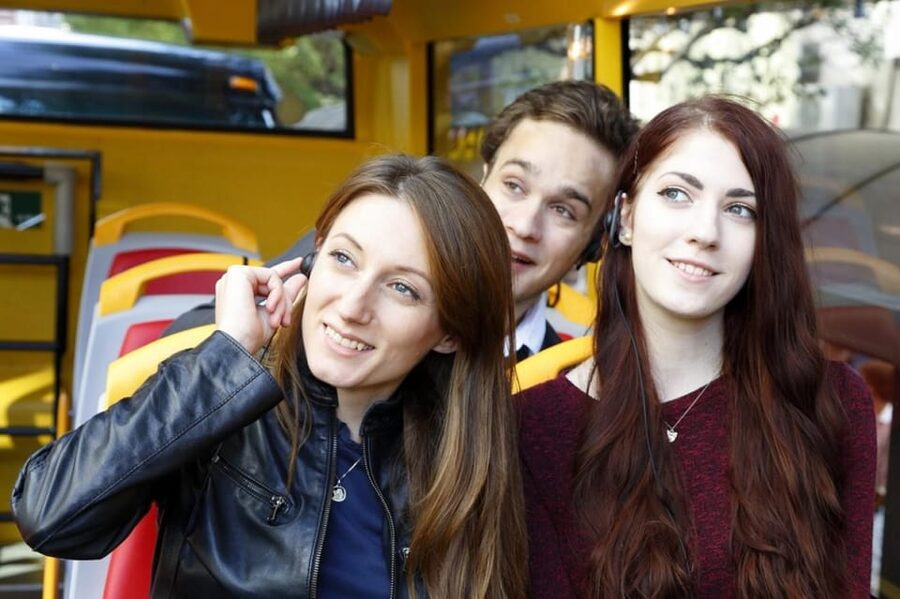
The double-decker bus provides uninterrupted panoramic views when the roof is open. That means better sightlines than a normal enclosed vehicle, especially for taller structures such as Tokyo Tower and for the wide bay views from Rainbow Bridge.
The same design leaves you exposed to the weather. Bring suitable clothing for the forecast, and do not assume that a sunny morning guarantees comfortable conditions for the whole hour. In rain, the roof may be closed. In heavy rain or bad weather, the tour may be canceled.
This is also not a hop-on hop-off service. You stay aboard for the full circuit and return to the Hato Bus office. That makes the tour easy and efficient, but it removes the flexibility to stop at Tsukiji, Ginza, Odaiba, or Tokyo Tower.
Eating is not allowed. Plastic-bottle drinks are permitted, so a small bottle of water is sensible. Children under six can ride free without their own seat, with one child per adult. If a young child needs a seat, the normal booking conditions may apply, so check the available option when reserving.
Is $14 good value for one hour?
At $14 per person, this is a reasonably priced introduction to Tokyo. You are paying for a full one-hour route, an open-top double-decker bus, and the GPS audio system. There are no food costs or attraction admissions included, but the tour is not priced like a full guided sightseeing day.
The value is strongest when you want coverage rather than depth. In one hour, you see central government buildings, Tokyo Tower, Rainbow Bridge, Odaiba, Toyosu, Tsukiji, Kabuki-za, and Ginza. Reaching all those areas independently would require several train rides and careful route planning.
The price is less compelling if you prefer to spend your time inside museums, markets, towers, or neighborhoods. Since you cannot get off, the ride gives you impressions rather than extended visits. You will still need separate tickets and time for the places that catch your interest.
Free cancellation up to 24 hours before departure and the option to reserve now and pay later make the booking easier to fit into a changing Tokyo schedule. Still, weather remains the main uncertainty, so check conditions close to departure.
Who should book this Tokyo bus tour?
I would recommend it for first-time visitors who want a quick map of the city. It also suits anyone with a short stay, families who need a manageable activity, and photographers who like changing views of Tokyo Tower and the bay.
The ride can also work well between larger plans. You might take it on your first afternoon to learn the shape of Tokyo, then return to Ginza, Tsukiji, Odaiba, or Tokyo Tower on another day.
I would be more cautious if you want a walking tour, a food experience, detailed history, or time inside attractions. You will see many places, but only in passing. The Japanese live guide and GPS audio provide context, yet the format remains a fast sightseeing circuit.
Should you book it?
Book this tour if you want a low-cost, one-hour overview with an open-air feel. The Tokyo Tower angles and Rainbow Bridge crossing are the main draws, while the route through Ginza, Tsukiji, and the bay gives you a useful sense of Tokyo’s range.
Skip it if rain is likely, if you dislike fixed routes, or if you want to explore each stop on foot. Bring your own Japan-ready smartphone and earphones, arrive at the Marunouchi South Exit with time to spare, and treat the ride as a city preview rather than a complete Tokyo tour.
FAQ
Where does the bus tour begin and end?
The tour begins and ends at the Hato Bus Tokyo Office near the JR Tokyo Station Marunouchi South Exit. From the exit, turn left and walk straight for about two minutes to the yellow Hato Bus stop.
How long does the tour last?
The tour lasts one hour.
Is this a hop-on hop-off bus?
No. This is a fixed one-hour sightseeing circuit. You remain on the bus and return to the Hato Bus Tokyo Office.
Which places does the route pass?
The route passes Hibiya Park, the National Diet Building, Toranomon, Tokyo Tower, Rainbow Bridge, Odaiba, Toyosu, Tsukiji Outer Market, Kabuki-za, and Ginza.
What languages are available for the audio guide?
GPS automated guidance is available in English, Chinese, Korean, Spanish, French, Thai, Indonesian, and Vietnamese. The live tour guide speaks Japanese.
Do I need to bring my own phone and earphones?
Yes. Bring a smartphone that can be used in Japan and your own earphones. GPS equipment and earphones are not provided for rental.
Can I eat or drink on the bus?
Eating is not allowed. Drinks in plastic bottles are permitted, but other food and drinks cannot be taken on the bus.
What happens if it rains?
The bus roof may be closed in rain. The tour may be canceled because of bad weather or heavy rain. If the free GPS audio system has a technical problem, refunds are not provided for that issue.
Just added around Tokyo
- Tokyo: Customizable Private Guided Walking Tour★ 4.5 · 129 reviews
- Private Harajuku Omotesando Architecture Tour★ 4.9 · 18 reviews
- Tokyo: Guided Helicopter Ride★ 4.9 · 24 reviews
- Tokyo: Guided Walking Tour of Tsukiji Market with Lunch★ 4.4 · 24 reviews
- Tokyo: Private Personalized Local Food Tour★ 4.5 · 101 reviews
- Tokyo GINZA: KONPARU Japanese Cabaret Show with Drink★ 4.8 · 38 reviews
- Tokyo: Guided Walking Tour of Tsukiji Market with Breakfast★ 4.4 · 134 reviews
- Tokyo: Gotokuji Cat Temple, Shinjuku Cat Cafe & 3D Cat Tour★ 4.9 · 38 reviews
Guided, compared.
Kyoto Early Morning Tour with English-Speaking Guide
Read our review →
Tokyo 4hr Private Tour with Government-Licensed Guide
Read our review →
Kyoto 6hr Private Tour with Government-Licensed Guide
Read our review →
Hiroshima / Miyajima Full-day Private Tour with Government Licensed Guide
Read our review →
Early Morning Tour with English-Speaking Guide
Read our review →