
REVIEW · CITY TOURS
Small Town in the Big City: Tasting Tokyo’s Kichijoji
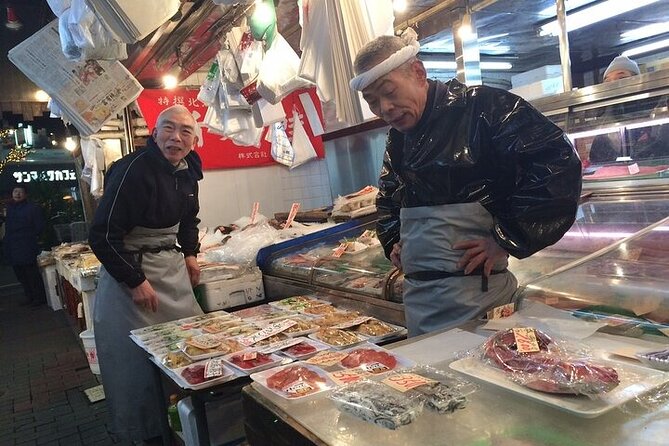
Kichijoji gives you a useful answer to a big Tokyo problem: how do you make sense of the city’s food culture without racing across half the metropolis? This six-hour walk stays in one neighborhood, moving from a polished department-store food hall to old-school yakitori, street snacks, sushi, and a family senbei maker. The small-town feel inside enormous Tokyo is the point.
I like the maximum of six people, which leaves room for questions and makes a food stop feel less like a production line. I also like the range: sushi and yakitori sit beside octopus balls, Japanese snack foods, prized fruit, pickles, and handmade rice crackers. The main drawback is the price, $195 per person, and the long duration, especially if you prefer to explore at your own pace.
In This Review
- Key points at a glance
- Why Kichijoji makes a smart food-tour base
- Starting with the department-store food hall
- Kichijoji’s shotengai and everyday snacks
- The family story behind handmade senbei
- Inokashira Onshi Park and the neighborhood setting
- What the six-hour format means for you
- Is $195 a fair price?
- Who should book this Kichijoji food walk?
- Practical details before you reserve
- Should you book Small Town in the Big City?
- FAQ
- Where does the Kichijoji food tour begin?
- Where does the experience end?
- How long does the tour last?
- How many people can join the tour?
- What food and drinks are included?
- Is private transportation included?
- Is the tour suitable for most people?
- What is the cancellation policy?
Key points at a glance
- A full six hours in Kichijoji: You get time to see more than a single market or restaurant.
- Department-store food hall first: The tour introduces both traditional Japanese foods and newer food trends.
- Several tastings are included: Lunch, snacks, bottled water, and coffee or tea are part of the price.
- A three-generation senbei maker: The family-run rice-cracker stop adds a personal, craft-based side to the food tour.
- Small group of six or fewer: This suits curious eaters who want to ask questions as they go.
- Inokashira Onshi Park is part of the route: The experience is not only about eating, but also about getting a feel for the neighborhood.
Why Kichijoji makes a smart food-tour base
Tokyo can overwhelm you with choices. One neighborhood may contain a station department store, a covered shopping street, tiny bars, fast food counters, and specialist shops packed into a few blocks. Kichijoji lets you sample that range without spending the day on trains.
The tour begins at Kichijoji Station in Musashino, west of central Tokyo. From there, the focus stays on the local food scene and the daily rhythm of the district. You are not simply being taken to a famous restaurant for one carefully plated meal. You are shown how food fits into ordinary shopping, family businesses, and quick bites eaten along the way.
That approach has real value in Tokyo. A plate of sushi can be delicious, but it tells you only one part of the story. Seeing fruit priced as a luxury item, pickles arranged with care, Japanese snack foods, handmade senbei, and skewers served from a street-side counter gives you a wider view of how food is bought and enjoyed.
The setting also helps. Kichijoji is known for a neighborhood atmosphere within the world’s largest urban area. The tour uses that contrast well. You get the energy of Tokyo, but the route is organized around one place rather than a checklist of distant sights.
A few more Japan trips to weigh up
- Tokyo: Shinjuku Food Tour (13 Dishes at 4 Local Eateries)
★ 5.0 · 6,603 reviews - Tokyo Tsukiji Fish Market Food and Culture Walking Tour
★ 5.0 · 3,184 reviews - Osaka: Shinsekai Food Tour with 13-15 Dishes at 5 Eateries
★ 4.8 · 2,204 reviews
Starting with the department-store food hall
The first substantial food section takes place in a depachika, the food hall found in a Japanese department store. This is a good opening because it puts Japanese food culture on display in a clean, highly polished setting.
You can expect to pass displays of highly prized pickles, expensive fruit, traditional foods, and Japanese junk food. That mix matters. It shows that Japanese food is not one fixed idea built only around sushi, ramen, or tempura. Some foods are everyday staples, while others are bought as gifts or treated as luxury items.
The depachika also offers a quick lesson in presentation. Food is arranged with the same care you might see in a fine shop, even when the item itself is simple. Your guide can help explain what you are seeing and how these foods fit into Japanese meals and shopping habits.
The route then reaches a sushi bar favored by locals. The available information does not name the restaurant or specify the exact sushi selection, so you should not book this expecting a particular fish or a formal tasting menu. The useful promise is the setting: a local sushi stop chosen as part of the neighborhood’s everyday food culture.
This part of the tour is especially helpful if you are unsure how to approach Japanese food halls. You can ask questions as you go rather than trying to identify every item on your own. With a group limited to six, the experience should feel more like guided shopping than a hurried walk past display cases.
Kichijoji’s shotengai and everyday snacks
After the food hall, the route moves along Kichijoji’s shotengai shopping street. A shotengai is a local shopping street where people buy daily goods, eat quick meals, and run errands. It is a better place to see ordinary neighborhood life than a district built only for sightseeing.
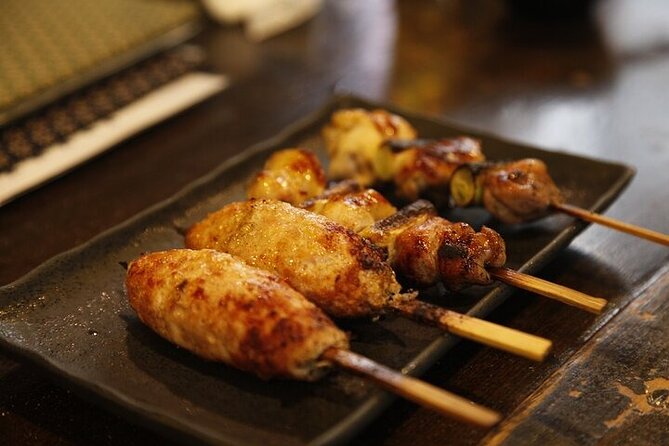
Here you will rub elbows with people shopping for daily needs. The food tastings include yakitori skewers and octopus balls prepared and served street-side. These are the kinds of foods that make sense while walking: quick, savory, affordable in everyday life, and easy to share.
Yakitori gives you a look at one of Japan’s most familiar casual foods. Skewers can vary by cut and preparation, and the appeal is partly the directness of the experience. You are close to the grill, close to the street, and eating something designed for a relaxed stop rather than a long ceremony.
Octopus balls add a different texture and style. They are a reminder that Japanese street food is regional and varied, with dishes built around batter, fillings, sauces, and toppings. The tour presents these foods as part of the neighborhood rather than as isolated samples.
Do not expect every stop to be a long sit-down meal. The strength of this portion is the sequence. You taste, walk, observe, and learn how different foods appear in the same local district. The tradeoff is that the pace may feel slow if you only want a list of famous dishes. This is a food-and-neighborhood walk, not a quick tasting crawl.
The family story behind handmade senbei
One of the most distinctive stops is a senbei maker run by three generations of the same family. Senbei are Japanese rice crackers, but that plain description misses the appeal of seeing them made and sold through a family business.
A stop like this gives the tour a human center. Department-store foods show scale and polish. Street snacks show speed and convenience. The senbei maker adds continuity, craft, and a direct connection between the people producing the food and the people eating it.
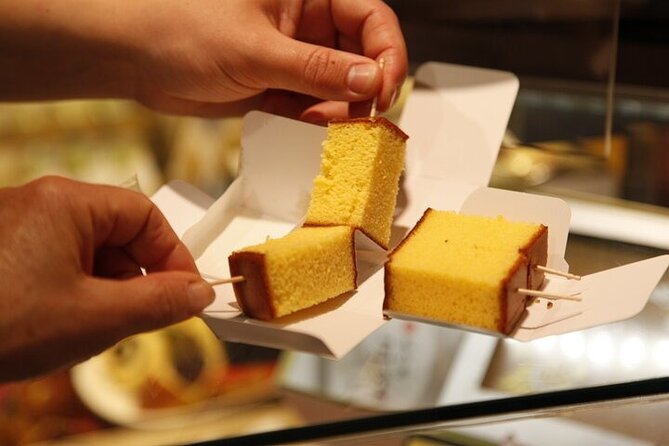
The family has an artisanal approach, and the tour includes a chance to taste an original rice cracker. The exact flavor is not specified, so you should treat this as a seasonal or house specialty rather than expect a named variety. What you can count on is a more personal food encounter than a packaged souvenir bought without context.
This is also the kind of stop that can change how you look at a simple snack. Rice crackers may seem modest beside sushi, but a family business can reveal the work, habits, and local loyalty behind an everyday item. If you enjoy food stories as much as food itself, this may be one of the strongest parts of the afternoon.
Same city, a completely different kind of day:
- Mt Fuji and Hakone 1-Day Bus Tour Return by Bullet Train
★ 5.0 · 26,383 reviews - 1-Day Tokyo Bus Tour
★ 5.0 · 14,250 reviews - PERFECT KYOTO 1-Day Bus Tour
★ 5.0 · 13,518 reviews - Tokyo: TOKYO SKYTREE® Admission ticket
★ 4.5 · 11,192 reviews
Inokashira Onshi Park and the neighborhood setting
Inokashira Onshi Park is included in the Kichijoji route, helping break up the food stops with open space. The supplied details do not specify how long you spend in the park or which parts you visit, so think of it as one element of the neighborhood walk rather than a dedicated park tour.
Its presence matters because six hours of tasting can become tiring. A park setting gives you a change of pace and helps connect the food stops to the broader character of Kichijoji. The tour is designed to show a district, not just a series of counters.
You should still plan for a fair amount of walking and standing. The route includes a station, a department-store food hall, a shopping street, food stalls, and neighborhood stops. Most people can participate, but anyone with mobility concerns or a strong need for frequent sitting should ask the provider for current route details before booking.
What the six-hour format means for you
Six hours is a serious block of time, but it also explains why the tour can cover so many parts of Kichijoji. You are not only eating lunch. You are learning the basics of Japanese cuisine, sampling several types of food, moving through shopping areas, and spending time with a local guide.
I prefer this format for a first visit when you want context. A short food tour might deliver three or four bites and a few quick facts. This one has room to compare settings: formal food displays, a sushi bar, a shotengai, street-side skewers, octopus balls, and a small family producer.
The long schedule may not suit everyone. If you have limited time in Tokyo, you will need to decide if a full day in Kichijoji is worth more to you than visiting several central districts. If you like slow exploration, the length is a strength. If you want to pack in major sights, it may feel like too much time devoted to one neighborhood.
The food provided includes lunch, snacks, bottled water, and coffee or tea. That reduces the need to keep buying small items as you go, and it makes the $195 cost easier to assess. You are paying for a guided experience with a broad tasting plan, not simply for the retail value of the food.
Is $195 a fair price?
At $195 per person, this is not a budget food walk. The value depends on what you want from a guide.
If you only want inexpensive street food, you can spend far less by exploring Kichijoji independently. The tour price makes more sense if you value explanation, planning, access to several types of food, and the ease of having someone organize the route. Lunch, snacks, drinks, and coffee or tea are included, so the listed price is not just a guide fee.
The group cap of six is important here. A small group can make it easier to hear the guide, ask about unfamiliar foods, and linger at a family business without feeling lost in a crowd. Guide Phoebe has been praised for patience and enthusiasm, especially while explaining the range from sushi to original rice crackers. Her presence may vary by departure, so confirm the guide when booking if that matters to you.
I would call the price reasonable for a special food-focused day, but high for casual snacking. Couples, serious food fans, and visitors who want a local introduction will likely get more from it than people who simply want the cheapest way to eat.
Who should book this Kichijoji food walk?
This experience is a good match for you if you:
- Want to understand Japanese food beyond the standard sushi-and-ramen list
- Prefer a small group rather than a large bus or crowded tasting line
- Enjoy family businesses and local shopping streets
- Have about six hours available for one neighborhood
- Like asking questions while trying unfamiliar foods
- Want lunch and several tastings handled in advance
It may be less suitable if you want a private tour, a short activity, or a tightly defined restaurant itinerary. Private transportation is not included, and the tour begins and ends at Kichijoji Station. You will need to make your own way there and back using Tokyo’s public transportation system.
The experience is also not ideal if you need every dish confirmed in advance. The route includes several food categories, but the supplied details do not give a fixed menu or name every shop. That flexibility is part of the local feel, but it means the tour is better for curious eaters than for people seeking a precise culinary schedule.
Practical details before you reserve
The meeting point is Kichijoji Station, at 2 Chome-1 Kichijoji Minamicho, Musashino, Tokyo 180-0003. The tour ends back at the meeting point, which makes it easy to continue exploring Kichijoji afterward or return to your hotel by train.
A mobile ticket is provided, and booking confirmation arrives at the time of booking. The experience is near public transportation, and most people can participate. The group has a maximum of six people, an unusually useful limit for a food walk.
This experience requires good weather. It also requires a minimum number of participants. If poor weather or an insufficient group causes cancellation, you will be offered another date or experience, or a full refund.
You can cancel for a full refund up to 24 hours before the start time. Changes or cancellations made less than 24 hours before the start time are not accepted for a refund, and the cut-off uses local time.
Should you book Small Town in the Big City?
Book it if you want a guided look at how Kichijoji eats, shops, and keeps family food traditions alive. The department-store food hall, local sushi, yakitori, octopus balls, Inokashira Onshi Park, and the three-generation senbei maker create a well-rounded day. The small group and the food included help justify the cost for the right audience.
Skip it if your Tokyo schedule is tight, your budget is limited, or you prefer choosing every restaurant yourself. At $195, this is a considered purchase. For a first-time visitor who wants patient guidance and a wider understanding of Japanese food, especially with a guide such as Phoebe, it can be one of the more useful ways to spend a day outside Tokyo’s best-known central districts.
FAQ
Where does the Kichijoji food tour begin?
It begins at Kichijoji Station, at 2 Chome-1 Kichijoji Minamicho, Musashino, Tokyo 180-0003, Japan.
Where does the experience end?
The tour ends back at the meeting point.
How long does the tour last?
The experience lasts approximately six hours.
How many people can join the tour?
The activity has a maximum of six participants.
What food and drinks are included?
Lunch, snacks, bottled water, and coffee or tea are included.
Is private transportation included?
No. Private transportation is not included. The tour is near public transportation.
Is the tour suitable for most people?
Yes. Most people can participate, and the activity is near public transportation.
What is the cancellation policy?
You can cancel up to 24 hours before the start time for a full refund. Cancellations or changes made less than 24 hours before the start time are not accepted for a refund. If poor weather or the minimum group size causes cancellation, you will be offered another date or experience, or a full refund.
Just added around Japan
- Private Memorable Tokyo Tour with English Speaking Driver★ 5.0 · 30 reviews
- Private Tokyo Custom Full-Day Tour by Chartered Vehicle★ 5.0 · 16 reviews
- Private Sightseeing to Mt Fuji and Hakone with English Driver★ 5.0 · 51 reviews
- Tokyo Photography Masterclass – Private Photography Lesson★ 5.0 · 25 reviews
- Private Mt. Fuji Day Trip from Tokyo with English-Speaking Driver★ 5.0 · 33 reviews
- 4 Day Tour – Mount. Fuji, Tokyo, Hakone, Kamakura and Yokohama★ 5.0 · 19 reviews
- Private Unforgettable Mt Fuji Tour with English Speaking Driver★ 5.0 · 142 reviews
- Private Tokyo Food Tour – A Journey Through Time Through Food★ 5.0 · 36 reviews
City Tours, compared.

Asakusa, Skytree & Akhihabara Go-Kart City Experience
Read our review →
Hiroshima City 4hr Private Walking Tour with Licensed Guide
Read our review →


Private Haneda Airport (HND) to Central Tokyo City Transfer
Read our review →
3-hour Guided E-Bike Tour of the City’s Hidden Gems
Read our review →

3-Hour Bike/E-Bike Tour of the City’s Highlights
Read our review →Browse the lists this tour appears in