
REVIEW · WORKSHOPS
Otsu-e Folk Art Workshop & Local Culture Walk Near Kyoto
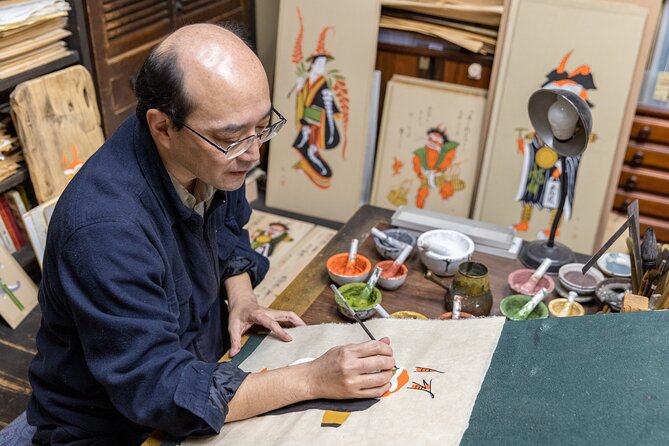
Otsu-e painting is the heart of this experience, but the best part is how the art connects to everyday Otsu. You’ll walk old streets, see a historic merchant house, sample mochi, dried foods, sake-related culture, and pickles, then paint your own Lucky Oni Bell or Three Wise Monkeys with Otsu native Misato Takahashi.
I like two things here: the small private format, which allows the pace and conversation to fit your interests, and the local snacks, especially the mochi and seasonal pickle saved for the workshop. The main consideration is the price, $104.51 per person before train fare and lunch, which makes the tour a better choice for visitors who want a focused cultural experience than for anyone simply seeking a cheap walking tour.
In This Review
- Key points to know before booking
- Why Otsu-e makes this more than a craft class
- Starting near Otsu Station and the old lake route
- Mochi, dried foods, and the taste of Otsu
- A float, a merchant house, and Otsu’s old shopping arcades
- Following Otsu-e to its present-day workshop
- The 90-minute Lucky Oni Bell painting session
- What the $104.51 price buys you
- Who will enjoy this Otsu outing most
- Should you book the Otsu-e workshop?
- FAQ
- How long does the Otsu-e workshop and culture walk last?
- How do I get to Otsu from Kyoto?
- Where does the tour start and end?
- What can I paint during the workshop?
- Are food and drinks included?
- Is the tour private?
- What is the cancellation policy?
Key points to know before booking
- Paint a traditional Otsu-e souvenir: Choose between a Lucky Oni Bell and Three Wise Monkeys during a 90-minute workshop.
- Meet Otsu through food: Pick up Japanese sweets, dried foods, retro snacks, and a seasonal pickle to enjoy later with tea.
- Walk a historic local district: The route follows old streets, shopping arcades, a former Tokaido Road area, and a preserved Otsu machiya house.
- Learn from an Otsu family tradition: Misato Takahashi is the daughter of Otsu-e artist Wado Takahashi and comes from the Takahashi Shozan master family.
- Travel easily from Kyoto: Otsu is about 10 minutes from Kyoto Station by JR train, with the adult fare listed as JPY 200 each way.
- Expect a private, moderate-paced outing: Only your group participates, but you should be comfortable walking between several stops.
Why Otsu-e makes this more than a craft class
Many Kyoto visitors never make it across Lake Biwa’s western edge to Otsu. That is part of the appeal. Otsu is close enough for an easy outing, yet the experience takes you into a quieter town where local shops, shrines, merchant buildings, and folk art still connect.
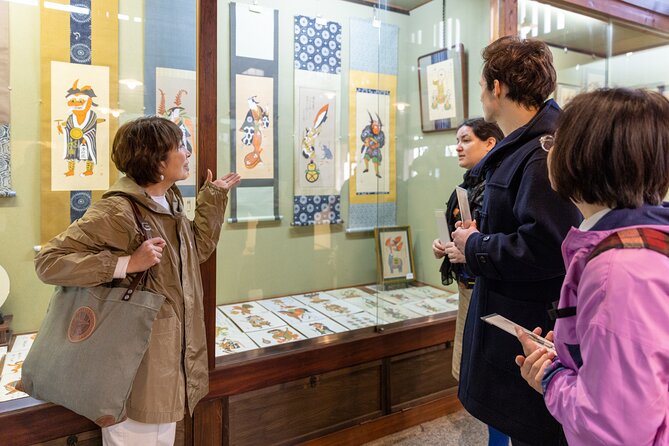
Otsu-e began here about 400 years ago. It is folk art rather than court painting, and that distinction matters. The pictures were made for ordinary people, with recognizable figures and simple forms that could be sold to visitors passing through Otsu. The paintings carry humor, religious ideas, and everyday symbolism without requiring a museum-going background.
Misato Takahashi gives the art a personal link. She is an Otsu native and the daughter of Wado Takahashi, an Otsu-e artist from the Takahashi Shozan family. Her work with the tradition gives the workshop a sense of continuity that a generic painting class would not have.
You are not simply copying a Japanese design from a printed template. You are hearing why Otsu-e matters locally, seeing examples connected to the Takahashi family, and making a small object that relates to the town you have just walked through.
A few more Japan trips to weigh up
- Sushi Making Tokyo Roll and Authentic Japanese Sushi Class
★ 5.0 · 3,971 reviews - Kyoto: 45-Minute Tea Ceremony Lesson Experience
★ 4.3 · 2,378 reviews - Tokyo: Roll and Authentic Sushi Making Class in Asakusa
★ 4.9 · 1,957 reviews
Starting near Otsu Station and the old lake route
The published walking plan begins at the North ticket gate of Otsu Station. The booking information also lists Ichie Wado Seminar House as the meeting point, so I would confirm the exact starting instructions before the day of your tour. The route finishes at Ichie Wado, in front of Nagara Jinja Shrine, where the painting workshop takes place.
From the station, the route leads toward Kekaiji Temple and its ginkgo trees in the Kyomachi area. These trees once served as a landmark for boats on Lake Biwa. That small detail is useful because it shows how the town’s religious sites and natural markers were once part of working lake life, not just scenic backdrops.
The first stretch helps you get your bearings. You are not being rushed from one famous sight to another. Instead, you are seeing how Otsu was shaped by its position beside Lake Biwa and along historic travel routes.
The tour requires moderate physical fitness. The total duration is about three and a half hours, and the itinerary includes several short walks between shops and arcades. Wear comfortable shoes, especially if you prefer to pause and listen rather than hurry to the next stop.
Mochi, dried foods, and the taste of Otsu
One of the smartest features is the food shopping built into the route. At Mochihyo, a Japanese sweets shop facing the old Tokaido Road, you choose sweets to enjoy during the later painting session. This makes the workshop feel tied to the town rather than sealed off from it.
The mochi received especially strong praise in the available feedback, and the food stops add a welcome sense of discovery. You are not merely hearing about local culture. You are tasting small pieces of it, then carrying those choices with you to the art class.
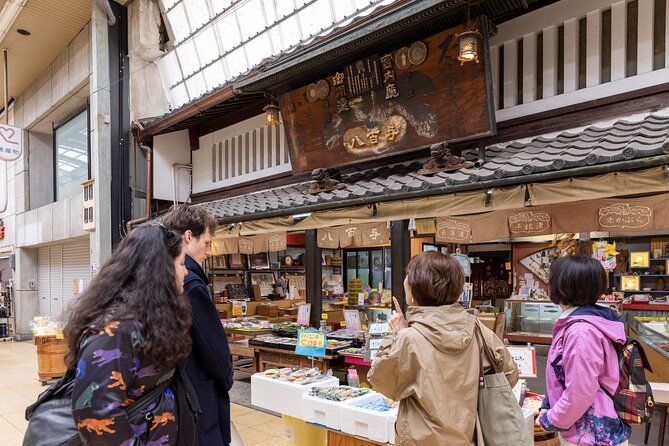
At Senmaruya on Nakamachi Street, you stop at a long-running dried-food shop. Dried foods are basic to Japanese cooking, so this is a useful way to see the practical side of the local diet. The shop also offers retro snacks, giving you a chance to pick something less formal and more nostalgic.
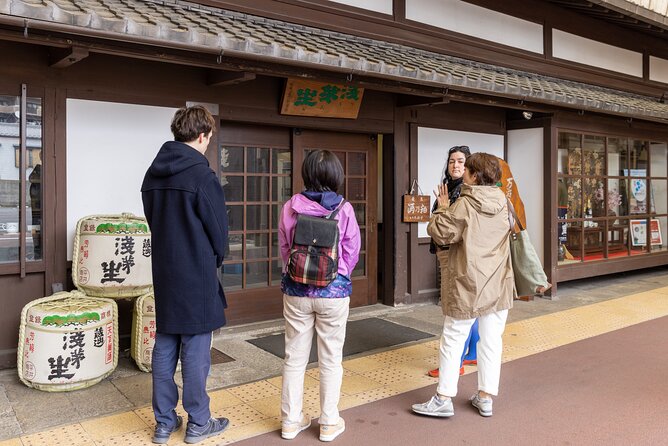
At Hirai Shoten in the Maruya-cho shopping arcade, you see a sake brewery with 365 years of history and its own local brand. The stop is brief, and the experience does not include lunch or a stated sake tasting, so you should not book this expecting a brewery tour. Still, the shop helps explain how old commercial traditions remain part of the neighborhood.
The food purchases are included in the shape of the activity, but the tour price does not cover lunch. I would eat before or after the tour, since the sweets and snacks are small treats rather than a meal.
A float, a merchant house, and Otsu’s old shopping arcades
The Otsu Festival Hikiyama Exhibition Pavilion displays one of the actual floats used in the Otsu Festival. The stop lasts about 10 minutes, which is enough to see the scale and detail of the object without turning the morning into a long museum visit.
Festival floats are useful cultural clues. They show how neighborhoods organized public celebrations, craft, ritual, and community identity. Since you see an actual float rather than only a photograph, this short visit gives the walking route a strong visual anchor.
Next comes Otsu Hyakuchokan, a well-preserved Otsu machiya merchant house. A machiya is a traditional urban townhouse associated with commerce and family life. Here, your guide leads a house tour lasting about 20 minutes.
This is one of the more valuable admissions included in the price. A street view can show you the narrow frontage, but a house visit helps you understand how a merchant building worked from the inside. The stop also gives you a break from walking before the next set of shops.
At Yaoyo, a long-established pickle shop, you choose a seasonal pickle for later. Pickles are a small but revealing part of Japanese meals, and this stop gives your guide a chance to explain one aspect of the local diet through something you can actually taste.
The available feedback singled out the pickled cucumber as a favorite. That detail tells you what kind of pleasure to expect here: not a grand tasting menu, but a memorable bite from a specialist shop that you might easily pass on your own.
Same city, a completely different kind of day:
- Mt Fuji and Hakone 1-Day Bus Tour Return by Bullet Train
★ 5.0 · 26,383 reviews - 1-Day Tokyo Bus Tour
★ 5.0 · 14,250 reviews - PERFECT KYOTO 1-Day Bus Tour
★ 5.0 · 13,518 reviews - Tokyo: TOKYO SKYTREE® Admission ticket
★ 4.5 · 11,192 reviews
Following Otsu-e to its present-day workshop
At Otsu-e no Mise, or Otsu-e no Mise, in the Miidera approach area, you visit an Otsu-e folk-art shop and workshop. The business is succeeded by the fifth Takahashi Shozan, connecting the shop to the family tradition behind the experience.
This stop lasts about 20 minutes. It is a good point to look carefully at the paintings before you make your own. Pay attention to the strong outlines, clear shapes, and expressive subjects. Otsu-e works because its images communicate quickly, even when the subject carries religious or moral meaning.
The shop visit also helps answer a practical question: what makes Otsu-e different from any other Japanese souvenir painting? The answer is its local origin, its folk-art character, and its long connection with people passing through Otsu. You can buy an original Otsu-e souvenir as part of the experience, giving you a choice between taking home an existing work and creating one yourself.
The 90-minute Lucky Oni Bell painting session
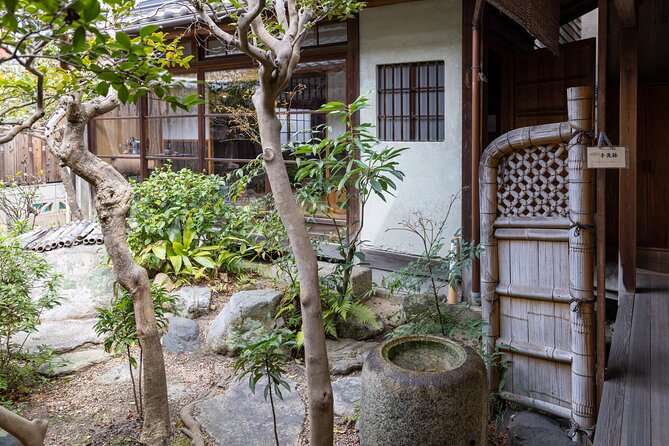
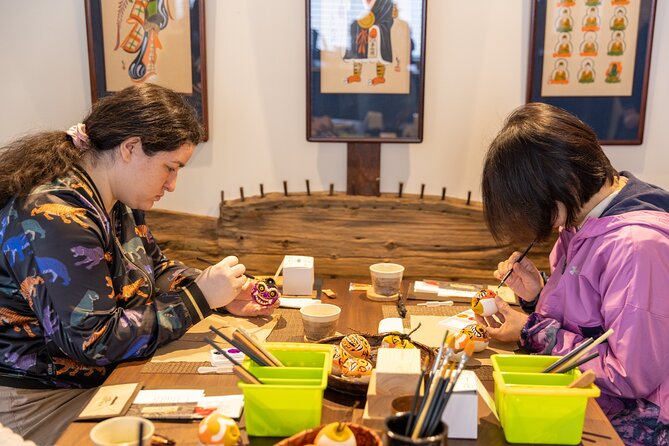
The main workshop takes place at Ichie Wado Seminar House, at 4-17 Kozekicho, in front of Nagara Jinja Shrine. This is where the tour settles into its longest stop, about one hour and 30 minutes.
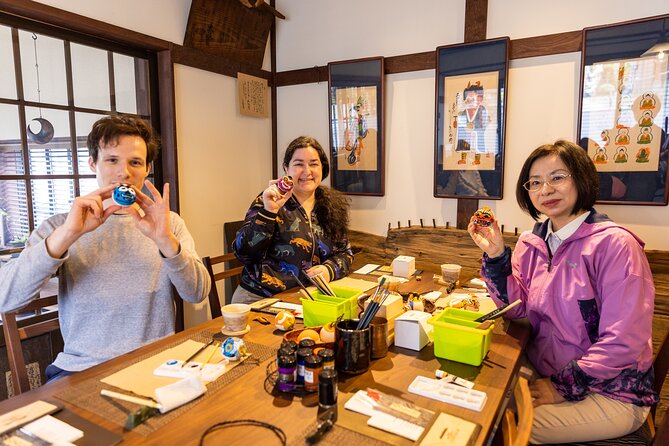
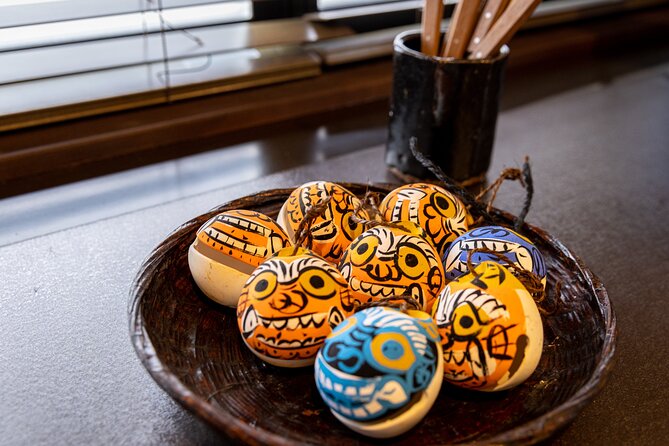
You choose either the Otsu-e Lucky Oni Bell or Three Wise Monkeys painting workshop. The Oni bell is especially appealing if you want something strongly tied to Japanese protective imagery. The Three Wise Monkeys are a familiar choice for anyone drawn to a classic image with a clear visual structure.
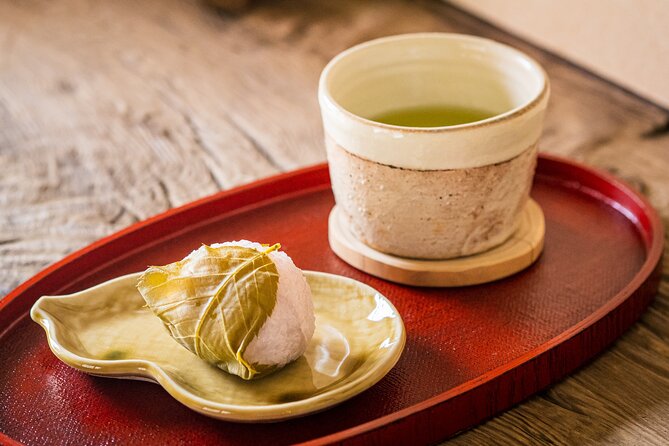
The session includes a presentation on Otsu-e history and its features. You also receive welcome tea and sweets, along with the local treats collected during the walk. That combination matters. The workshop is not just a lesson followed by a rushed souvenir activity. It gives you time to sit, listen, paint, and enjoy the food you selected earlier.
I like the order of the day. First, you see the town and visit places connected to its past. Then you learn about the art. Finally, you make something with your own hands. By the time you start painting, the images have a place in the story of Otsu.
The available feedback places strong emphasis on the chance to paint a personal Oni bell and take it home. Expect a keepsake with more meaning than a standard shop purchase, though you should also expect a handmade result rather than a flawless professional artwork. That is the point of the class.
What the $104.51 price buys you
At $104.51 per person, this is not an inexpensive way to spend three and a half hours in Otsu. The price becomes easier to justify when you add up what is included: an English-speaking guide, a private tour, the painting workshop, an original Otsu-e souvenir, tea and sweets, local snacks, taxes, and admission to Otsu Hyakuchokan, the float exhibition hall, or another listed site if plans change.
You still pay for the train from Kyoto to Otsu, listed as JPY 200 per adult each way. A valid JR Pass covers that fare. Lunch is also separate, though the food stops provide enough small tastes to keep the outing interesting.
The private format is important. Only your group participates, so you can ask questions about art, food, family traditions, or Otsu’s streets without trying to keep up with a large crowd. Misato has also shown flexibility in shaping the walk around personal interests, which adds value for couples, families, or small groups with a specific curiosity.
Group discounts are available, so the price may work better for a small party than for a solo visitor. The experience currently has a 5.0 rating from 13 reviews and a 100 percent recommendation rate, but I would still judge it by your interests. If you want major temples and famous views, this is not the best use of your morning. If you want local food, folk art, and personal contact, the cost is more reasonable.
Who will enjoy this Otsu outing most
I would recommend it to anyone who has already seen some of Kyoto’s major sights and wants a nearby change of pace. Otsu gives you a different feel without requiring a long day trip, and the JR journey from Kyoto Station takes about 10 minutes.
It is especially well suited to people who like making things. The painting session is the center of the experience, not a minor add-on. You should enjoy sitting with a creative task and leaving with a souvenir you made yourself.
Families may like the clear visual subjects, snack stops, and short visits at each attraction. The private setup can also help if your group needs a slower pace or wants to ask many questions.
This may not suit you if you want a full museum tour, a large meal, a sake tasting, or a completely effortless sightseeing schedule. The day involves several stops, some walking, and a moderate fitness requirement. You should also confirm the meeting point, since the supplied details identify both Otsu Station’s North ticket gate and Ichie Wado Seminar House.
Free cancellation is available if you cancel at least 24 hours before the local start time. Changes or cancellations made inside that window are not accepted for a refund.
Should you book the Otsu-e workshop?
Book this experience if you want to connect a handmade souvenir with the place where the tradition began. The strongest reasons are the private setting, Misato Takahashi’s family connection to Otsu-e, the food shopping along old streets, and the generous 90-minute art session.
Skip it if your main goal is a low-cost walk or a checklist of major landmarks. At $104.51, plus train fare and lunch, the value depends on taking part in the workshop and caring about the local story behind the art.
For the right visitor, this is a thoughtful half-day near Kyoto: small shops, old buildings, local flavors, and an Oni bell or Three Wise Monkeys painting to carry home.
FAQ
How long does the Otsu-e workshop and culture walk last?
The experience lasts approximately 3 hours and 30 minutes. The painting workshop itself takes about 1 hour and 30 minutes.
How do I get to Otsu from Kyoto?
The tour information lists JR service from Kyoto to Otsu as taking about 10 minutes. The adult fare is JPY 200, and a valid JR Pass covers it.
Where does the tour start and end?
The walking plan starts at the North ticket gate of Otsu Station and finishes at Ichie Wado Seminar House. The booking information also lists Ichie Wado Seminar House as the meeting point, so confirm the exact starting instructions before departure.
What can I paint during the workshop?
You can choose between an Otsu-e Lucky Oni Bell and Three Wise Monkeys painting workshop.
Are food and drinks included?
Welcome tea and sweets, local snacks, and selected Japanese sweets and pickles are included as part of the experience. Lunch is not included.
Is the tour private?
Yes. Only your group participates in this private activity. Group discounts are available.
What is the cancellation policy?
You can cancel up to 24 hours before the experience start time for a full refund. Cancellations or changes made less than 24 hours before the start are not accepted for a refund.
Just added around Japan
- Private Memorable Tokyo Tour with English Speaking Driver★ 5.0 · 30 reviews
- Private Tokyo Custom Full-Day Tour by Chartered Vehicle★ 5.0 · 16 reviews
- Private Sightseeing to Mt Fuji and Hakone with English Driver★ 5.0 · 51 reviews
- Tokyo Photography Masterclass – Private Photography Lesson★ 5.0 · 25 reviews
- Private Mt. Fuji Day Trip from Tokyo with English-Speaking Driver★ 5.0 · 33 reviews
- 4 Day Tour – Mount. Fuji, Tokyo, Hakone, Kamakura and Yokohama★ 5.0 · 19 reviews
- Private Unforgettable Mt Fuji Tour with English Speaking Driver★ 5.0 · 142 reviews
- Private Tokyo Food Tour – A Journey Through Time Through Food★ 5.0 · 36 reviews
Workshops, compared.
Sushi Making Tokyo Roll and Authentic Japanese Sushi Class
Read our review →
Roll and Authentic Sushi Making Class in Asakusa
Read our review →
Ramen Cooking Class at Ramen Factory in Kyoto
Read our review →
Sushi Making Class in a Happi Coat near a Famous Spot
Read our review →
Sushi Making Osaka Roll and Authentic Japanese Sushi Class
Read our review →
Tokyo Sushi Making Class in Tsukiji with Professional Chef
Read our review →Browse the lists this tour appears in