
REVIEW · OSAKA TOURS
Osaka: Traditional Japanese Ceramics Private Experience
A lump of Shigaraki clay becomes a sake set, sushi plate, or tea bowl in this quiet Osaka workshop. You meet Anna at Teradachō Station, leave the tourist trail behind, and walk to a century-old two-story house beside a street of local food shops. There, you get patient, private instruction and a real look at Japanese craft at close range.
I like two things right away: you make the piece yourself, rather than watching an instructor do all the work, and the class connects pottery with Japanese food and customs. Anna, who has studied ceramics in Osaka and Barcelona, also makes room for questions and relaxed conversation. The main consideration is practical: your pottery takes about a month and a half to ship, and postage is extra.
In This Review
- Key points to know before booking
- Leaving central Osaka for Teradachō
- Entering a century-old home studio
- Choosing between a sake set, sushi set, and chawan
- Sake set
- Sushi set
- Chawan
- Working with Shigaraki clay
- Picking traditional Japanese glazes
- A private class with room for conversation
- What you take home
- Is $96 a fair price?
- Practical details that affect your day
- Who should book this Osaka workshop?
- Final verdict: a strong choice for a personal souvenir
- FAQ
- Where do I meet the instructor?
- How long does the pottery class last?
- What can I make during the workshop?
- Which languages are available?
- Is the class private?
- Can I take my pottery home after the class?
- What is included besides the pottery lesson?
Key points to know before booking
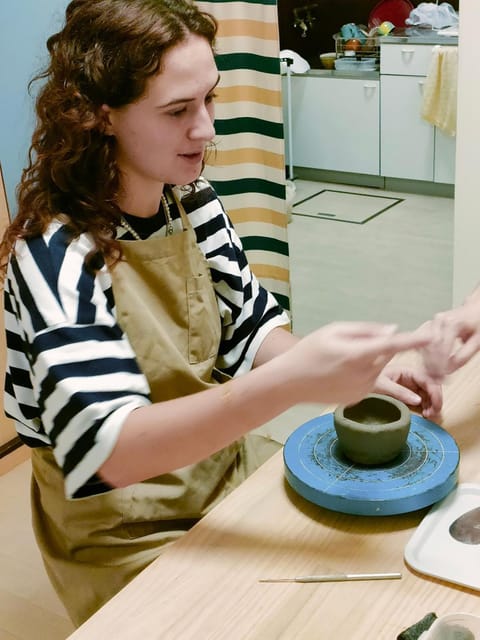
- Three useful choices: Make a small sake bottle and glass, a sushi plate with chopstick holder, or a chawan tea bowl.
- A true private class: Your group receives step-by-step help without the pace of a large workshop.
- A local Osaka setting: Meet at JR Teradachō Station, then walk to Anna’s family home and studio.
- Japanese materials: You work with clay from the Shigaraki pottery region and decorate with traditional Japanese glazes.
- A bonus keepsake: Anna gives you a small patterned sushi dish and a Sakura-shaped chopstick holder.
- Plan for delayed delivery: Your finished pottery is shipped after firing in roughly six weeks, with the cost paid separately.
Leaving central Osaka for Teradachō
The meeting point is the north exit of JR Teradachō Station. Look for a guide holding a sign marked Ceramics Tocoton. Anna has been praised for being punctual, so arriving a little early is wise, especially since being more than 15 minutes late counts as a no-show unless you contact the provider.
The walk from the station is part of the experience. Instead of beginning in Osaka’s most visited shopping and sightseeing districts, you head toward a less polished residential and commercial area. The route passes a street lined with shops selling local food, giving you a quick look at everyday Osaka before the clay work begins.
I like this start because it gives the class a sense of place. You are not entering a purpose-built attraction designed only for short visits. You are walking to a working studio that also serves as a family home, in a neighborhood that feels connected to ordinary life.
The setting may not suit you if you want a sleek design studio or a central attraction with no walking. The point here is the opposite. The house offers a glimpse of Showa-era Osaka, and the slightly off-center location is part of what makes the workshop feel personal.
A few more Osaka trips to weigh up
- Osaka: Hotspots & Hidden Gems Walking Tour Private or Group
★ 4.9 · 1,300 reviews - Private Osaka Walking Tour: Highlights & Hidden Gems
★ 5.0 · 569 reviews - Osaka 4hr Private Tour with Government-Licensed Guide
★ 5.0 · 359 reviews
Entering a century-old home studio
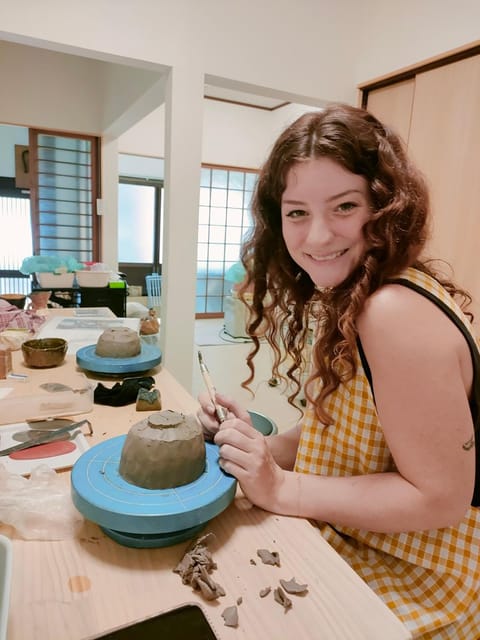
The studio is in a two-story house that has been in the family, according to the experience details, for about a century. The workshop gives you a direct look at the practical side of Japanese craft, with tools, clay, glazes, and finished examples helping explain what you are about to do.
Anna and, on some visits, Ryo welcome you into the space. You can expect time for refreshments and use of the facilities before or during the class. The atmosphere is informal, which matters when you are working with clay for the first time and do not yet know how much pressure to use.
The introduction covers Japanese ceramics, the pieces you can make, and the cultural meaning behind some forms and designs. Anna also discusses Japanese food, customs, and local recommendations. Several people have found the conversation almost as valuable as the pottery itself, particularly if you enjoy connecting an object with the way it is used at home.
This is not a rushed craft demonstration. The private format allows Anna to adjust her teaching to your level. If you are new to pottery, she can guide you through each stage. If you already work with clay, you can ask for more detail and take on a little more of the shaping yourself.
Choosing between a sake set, sushi set, and chawan

You choose one of three projects. Each connects to Japanese dining, so your souvenir has a clear use and cultural setting rather than being a random clay object.
Sake set
The sake option includes a small bottle and a glass. It is a good pick if you want to make several related forms and like the idea of serving a traditional drink from a set you shaped yourself.
The bottle requires care with proportion and construction, while the glass gives you a second, smaller object to form. One participant described making a sake set by hand as the highlight of a stay in Osaka. Keep in mind that the finished shape may have the charming unevenness of handmade pottery. That is part of the point, but perfectionists may prefer the simpler chawan.
Same city, a completely different kind of day:
- Osaka Go Karting Tour with Funny Costume
★ 5.0 · 2,658 reviews - Osaka Castle: Museum and Tower Entry Ticket
★ 4.5 · 2,380 reviews - Osaka: Shinsekai Food Tour with 13-15 Dishes at 5 Eateries
★ 4.8 · 2,204 reviews - Osaka Food Tour: 13 Dishes at 5 Local Eateries
★ 5.0 · 2,149 reviews
Sushi set
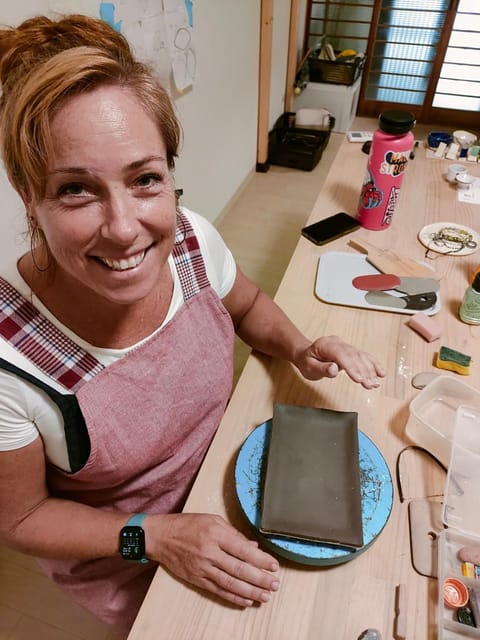
The sushi choice includes a plate and a chopstick holder. This is likely the most straightforward option for anyone who enjoys Japanese food and wants a piece they can picture using at home.
The chopstick holder also gives you a small form to shape alongside the plate. The finished set should make a practical souvenir, though shipping a larger plate means you will need to budget for postage and wait for the firing process before it comes home.
Chawan
A chawan is a Japanese tea bowl. This is the most focused choice of the three, with one bowl allowing you to concentrate on the curve, rim, weight, and feel in your hands.
The bowl has a long connection with Japanese tea culture, and the introduction explains some of that background before you begin. If you have made pottery before, the chawan offers room to think about shape and surface. If you are a beginner, Anna’s demonstrations make the process approachable.
You cannot make all three during the standard two-hour session. Choose based on how much shaping you want, what you might use at home, and how easy you want the finished item to be to pack and ship.
Working with Shigaraki clay
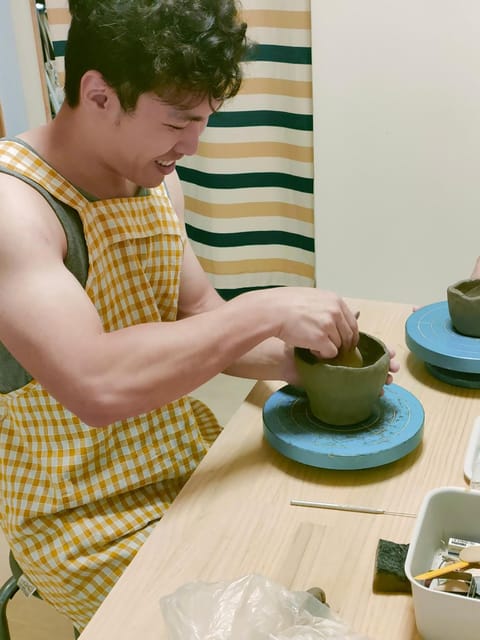
The clay comes from the Shigaraki area, one of Japan’s traditional pottery-producing regions. That detail gives the activity a stronger link to Japan than a generic craft class using imported or unnamed materials.
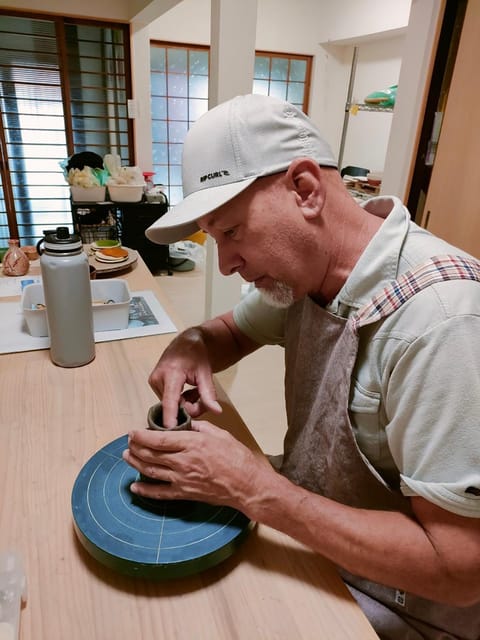
Anna explains how to mold and shape the clay, then guides you through the construction of your selected piece. Her teaching style is hands-on without taking over. She demonstrates the technique, watches your work, and corrects your approach so the final object remains yours.
That balance is important. A pottery class can be disappointing if the instructor quietly repairs every mistake and hands you a polished object you barely made. Here, the goal is to learn how to turn clay into a useful form with your own hands. You may finish with an imperfect rim or a small variation in thickness, but you also leave with a skill you can explain and repeat.
The clay itself is described as pleasant to work with, and the class includes enough instruction for people who have never taken a ceramics lesson. You should expect to get your hands dirty, though the workshop includes time to clean up afterward.
Picking traditional Japanese glazes
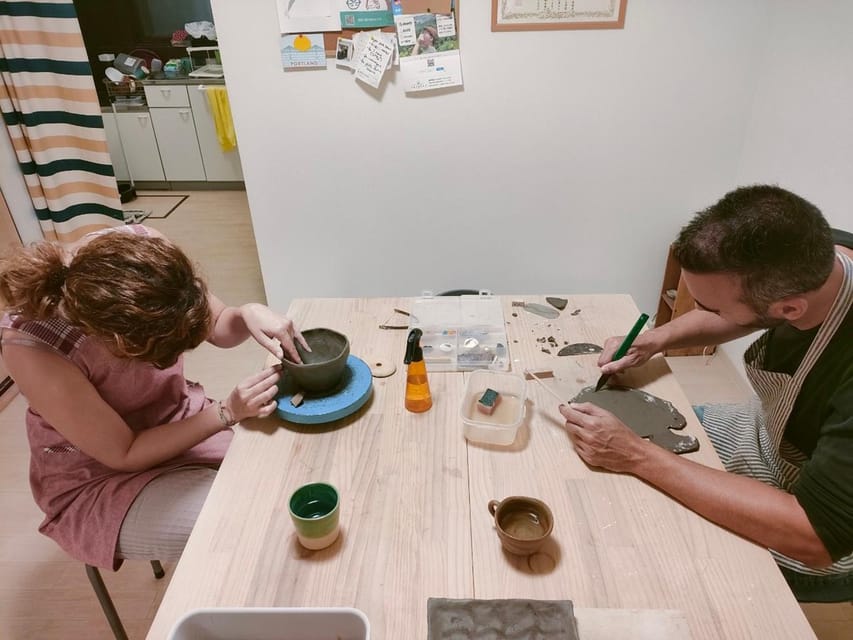
Once the basic form is complete, you choose a glazed finish. The available colors and decorative treatment are typical of Japan, giving the piece its final visual link to local pottery.
The glazing stage is worth taking seriously. A plain shape can look very different once color and surface treatment are added, and the final result is not fully visible until the piece has been fired. Anna helps explain the options so you can make an informed choice rather than selecting a finish at random.
You should not expect to carry the completed object away that afternoon. The piece must be fired first, then shipped to your home. The stated delivery time is about one and a half months, and shipping is not included in the activity price.
That delay is a drawback for anyone leaving Japan soon and wanting an immediate souvenir. It is also a pleasant part of the anticipation. The item arrives later as a reminder of Osaka, rather than taking up space in your luggage during the rest of your trip.
Before you leave, clarify the shipping arrangements and provide the required details. Postage varies by destination, and it is an additional cost beyond the $96 activity price.
A private class with room for conversation
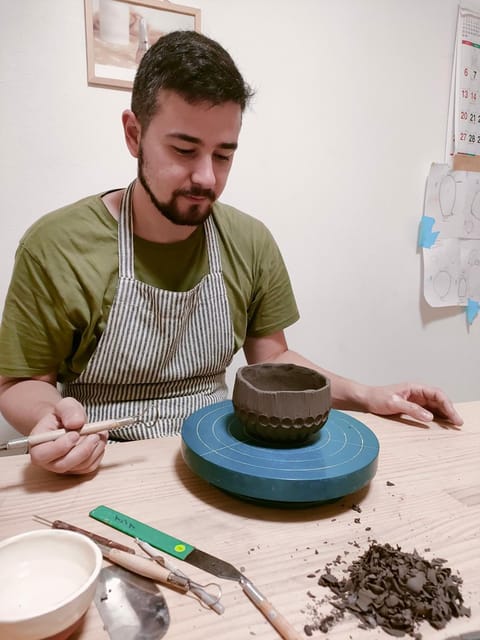
The class lasts two hours and is offered as a private group experience. That format is one of its strongest features. You do not have to keep up with strangers, wait for a large group to rotate through tools, or compete for the instructor’s attention.
Anna teaches in English, Spanish, Catalan, or Japanese. The language choice is unusually helpful for international visitors because the class is designed to include conversation about Japanese culture, cuisine, pottery, and local life. If you speak Spanish or Catalan, this may be especially appealing, since those languages are part of the workshop’s regular offering.
The conversation is relaxed rather than a formal lecture. You can ask about Japanese ceramic styles, the uses of different objects, design motifs, food customs, and places to visit in Osaka. The class can feel therapeutic and calm, particularly after several busy days of sightseeing.
Families can also consider this activity. Children under five are not suitable for the class, but a family of five with older children found the session a welcome period of quiet togetherness. The private setup lets an instructor respond to different skill levels, although younger participants will still need to follow instructions and handle clay carefully.
What you take home
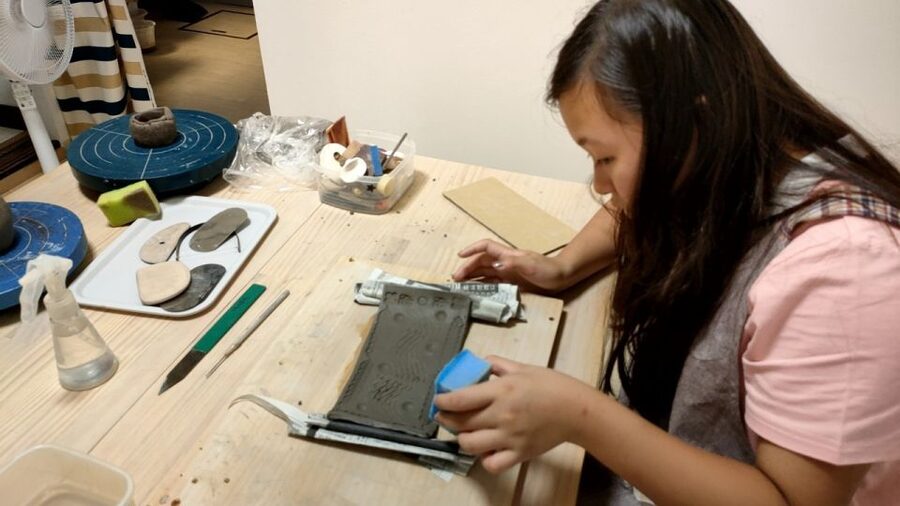
Your main souvenir is the piece you create. It might be a sake set, sushi set, or chawan, finished with Japanese glaze and fired after the class. Because you shape it yourself, the value is personal even if the result has small handmade irregularities.
Anna also gives you a small plate decorated with a traditional Japanese pattern and a Sakura-shaped chopstick holder. These are made by the instructor, so they provide a ready-to-use reminder of the workshop while you wait for your own pottery to arrive.
The bonus gift strengthens the value of the class, but it should not be the reason you book. The main benefit is the lesson and the chance to make a piece tied to Japanese dining. If your priority is simply buying finished ceramics, Osaka has shops where you can purchase an object immediately and avoid shipping costs.
The fired pottery is sent to your home rather than handed over at the end. Package timing is about six weeks, and the shipping fee is not included. Treat this as part of the total cost when comparing the workshop with other Osaka activities.
Is $96 a fair price?
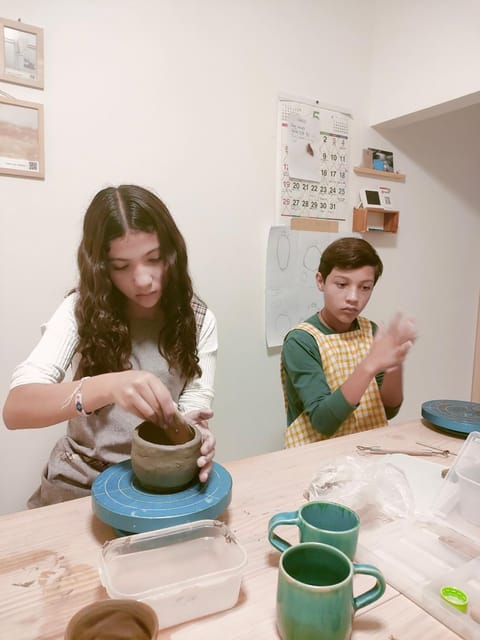
At $96 per person, this is not the cheapest hands-on activity in Osaka. You are paying for a private two-hour lesson, materials, instruction, a finished fired piece, station pickup, and the additional handmade gifts.
I think the price makes sense if you value individual attention and want more than a short tourist craft session. The instructor has studied ceramics in Osaka and Barcelona, and the class combines technique with cultural discussion. You also avoid the common problem of leaving with a craft item made mostly by someone else.
The value is weaker if you are mainly seeking a low-cost souvenir or have no interest in waiting six weeks for delivery. Add postage to your budget, and remember that transportation to Teradachō Station is not included.
For couples, families, and small private groups, the cost buys time and flexibility. Solo participants should think about the price more carefully, since the private format remains appealing but the per-person amount may feel higher than a shared class.
Practical details that affect your day
Allow enough time to reach JR Teradachō Station and find the north exit. The guide carries a Ceramics Tocoton sign, and the meeting point is specific, so do not assume the studio is directly beside the station.
The class starts at a time selected from the available schedule. Its two-hour length makes it easy to fit into a half-day plan, but the walk, meeting process, cleanup, and any conversation afterward may add time. I would avoid placing a tightly timed attraction immediately after it.
Wear clothes that can tolerate a little clay. The workshop includes cleanup, but pottery is a hands-on activity, not a sit-back-and-watch performance.
Cancellation is free up to 24 hours before the activity for a full refund, and you can reserve now and pay later. Those terms help if your Osaka plans are still shifting, but punctuality on the day remains important.
Who should book this Osaka workshop?
I would choose this class if you want a slower, more personal break from Osaka’s major sights. It suits you if you like food culture, design, crafts, or souvenirs with a story attached.
Beginners are welcome, and experienced potters can receive more tailored guidance. Couples can make matching or complementary pieces, families can work side by side, and solo visitors may enjoy the one-to-one attention and easy conversation.
I would skip it if you need an object immediately, dislike messy hands-on work, or have only a short window with no flexibility. The finished pottery is delayed, shipping costs extra, and the workshop requires a trip to Teradachō rather than a quick stop in a central shopping district.
Final verdict: a strong choice for a personal souvenir
I recommend the Ceramics Tocoton workshop for anyone who wants to connect Japanese food, local culture, and craft in one small activity. The best parts are the private teaching, Anna’s patient instruction, the walk through a less touristy part of Osaka, and the satisfaction of making a usable object yourself.
Book it with realistic expectations. Your pottery will not be ready that day, the shipping bill comes later, and handmade work may look less exact than factory ceramics. If those points are acceptable, this is a thoughtful way to slow down, learn a new skill, and bring a piece of your Osaka experience home.
FAQ
Where do I meet the instructor?
Meet the guide at the north exit of JR Teradachō Station. Look for someone carrying a sign with the studio name, Ceramics Tocoton.
How long does the pottery class last?
The experience lasts two hours.
What can I make during the workshop?
You can choose one of three projects: a sake set with a small bottle and glass, a sushi set with a plate and chopstick holder, or a chawan tea bowl.
Which languages are available?
The workshop is offered in English, Catalan, Spanish, and Japanese.
Is the class private?
Yes. The activity is arranged as a private group experience.
Can I take my pottery home after the class?
No. Your pottery needs to be fired and then shipped to your home. Delivery takes about one and a half months, and shipping costs are not included.
What is included besides the pottery lesson?
The price includes the instructor, clay from the Shigaraki area, traditional Japanese glazes, the finished ceramic product, pickup from Teradachō Station, and a handmade gift consisting of a small patterned dish and a Sakura-shaped chopstick holder.
Just added around Osaka
- (Ticket Included) Explore Osaka Castle & Museum of History★ 4.8 · 21 reviews
- Hidden Osaka – Yukaku Red Light Tour & Culinary Adventure★ 4.8 · 96 reviews
- Osaka: Walking Tour and Top Highlights★ 4.8 · 104 reviews
- Osaka: Private Ceramic Painting Workshop★ 5.0 · 13 reviews
- Pickleball in Osaka, Kobe & Kyoto with Locals!★ 4.7 · 80 reviews
- Eat Like a Local in Osaka – Private Custom Street Food Tour★ 4.3 · 33 reviews
- Osaka:SUMO BEATS SHOWCASE: Taiko Drum and Wagyu burger!★ 4.2 · 37 reviews
- Kimono photoshoot-Includes 100 photo data★ 5.0 · 21 reviews
Osaka Tours, compared.


Shinsekai Food Tour with 13-15 Dishes at 5 Eateries
Read our review →
Osaka Food Tour: 13 Dishes at 5 Local Eateries
Read our review →
Hungry Osaka Street Food Tour:15 Tastings & 3 Drinks with a Local
Read our review →

Hotspots & Hidden Gems Walking Tour Private or Group
Read our review →
Deep Backstreet Osaka Tours (Option to add Dinner)
Read our review →Browse the lists this tour appears in