
REVIEW · TEMPLE & SHRINE TOURS
Osaka: Mind & Spirit Balance Temple Reiki Healing
A quiet temple in central Osaka is an unusual place for a wellness treatment, and that is the main appeal here. You change into a yukata, offer incense, hear about Japanese worship customs, and then settle into foot care, oil massage, and non-contact Reiki. The session is limited to three people, though the tea ceremony may be shared.
I like the way this combines hands-on relaxation with a cultural lesson, rather than treating the temple as mere decoration. I also like the small keepsake photo in your yukata, plus the gentle pace of tea and wagashi at the end. The main consideration is that $161 is a serious price for two hours, and Reiki is a spiritual relaxation practice, not a medical treatment.
In This Review
- Key points at a glance
- A temple visit with a wellness purpose
- Arriving at the correct Osaka meeting point
- Changing into a yukata and setting the tone
- Incense, bells, and Japanese worship customs
- Foot bath and scrub massage first
- Reiki and the meaning of non-contact treatment
- Matcha, wagashi, and a shared tea ceremony
- What the $161 price gives you
- Who will enjoy this most
- Practical booking advice for a smooth visit
- Should you book the temple Reiki experience?
- FAQ
- How long does the Osaka temple Reiki experience last?
- How much does the experience cost?
- What treatments are included?
- Is Reiki hands-on?
- Does the activity include a tea ceremony?
- Is the tea ceremony private?
- What should I enter into Google Maps?
- Is a yukata included?
- Can I cancel the booking?
Key points at a glance
- A temple setting in central Osaka: You receive the treatment inside a historic religious space, not a standard hotel spa.
- Arisa and Naomi may lead your visit: Their names are connected with the warm, professional care described for this experience.
- A full ritual, not just a massage: Expect incense, meditation, a bell, kneaded incense, foot care, Reiki, oil massage, and tea.
- Small group format: The treatment is limited to three participants, but the tea portion may include other people.
- A useful meeting-point warning: Put Japanese Massage -the one&only- into Google Maps, or search for Tossa de coracao. Using only the temple name may send you to the back entrance.
- Flexible booking: You can cancel up to 24 hours before the start for a full refund and reserve without paying at once.
A temple visit with a wellness purpose
This two-hour activity works because it joins two sides of Japan that are often booked separately. You get a brief introduction to temple customs and a traditional tea ceremony, but you also get time to lie down, switch off, and receive body treatments.
The setting changes the mood. A massage room asks you to relax. A temple asks you to slow down and pay attention. Here, incense, bells, quiet worship customs, and the yukata help mark the change from ordinary sightseeing to a calmer state of mind.
The experience is in Osaka on Honshu, so it suits a city stay when your feet and head need a break. One person made the trip from Tokyo to Osaka especially for the activity, but you do not need to make such a journey to justify it. It fits best into a longer Osaka visit, perhaps after several busy sightseeing days or near the end of a Japan trip.
You should keep your expectations clear. Reiki is described here as a non-contact Japanese energy-healing method intended to support relaxation and emotional balance. It may feel meaningful and calming, but it should not replace medical care or a clinical massage treatment.
More Temple & Shrine Tours in Osaka
- Osaka: Minoh, Katsuoji Temple, & Minoh Falls Full-day Tour
★ 4.9 · 172 reviews - Sagano Romantic Train & Arashiyama, Kiyomizudera, Fushimi Inari Taisha Day Tour
★ 4.5 · 171 reviews - Full Day Kyoto Tour : Bamboo Forest, Golden Temple, Fushimi Inari
★ 5.0 · 84 reviews
Arriving at the correct Osaka meeting point
The meeting instructions deserve more attention than usual. If you enter the temple name into Google Maps, you may be sent toward the back entrance and become turned around. Instead, search for Japanese Massage -the one&only-.
A second useful landmark is the restaurant Tossa de coracao. The meeting place is right next to it. I would save both names before leaving your hotel, especially if you are arriving after dark or using a taxi driver who needs a clear destination.
The location is described as a small temple in the middle of the city. That gives you a useful contrast: you are not heading to a remote retreat. You remain in Osaka, but the temple setting creates a clear pause from the city outside.
Allow enough time to find the entrance. The two-hour schedule is filled with several stages, so arriving late could make the opening ritual feel rushed.
Changing into a yukata and setting the tone
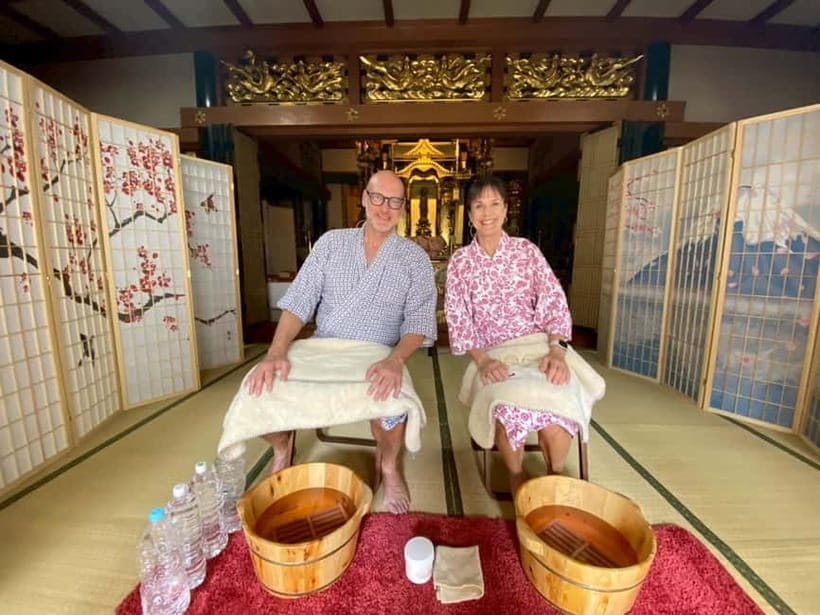
Your visit begins with a welcome drink and a change into a yukata. A yukata is a light Japanese robe often associated with summer wear, festivals, and traditional relaxation. Here it is practical clothing for the visit and part of the cultural setting.
The clothing change does more than create a nice photograph. It gives you a simple transition point. You arrive as a sightseeing visitor, then dress for the temple activities. If you enjoy learning through small details, this part helps the rest of the program feel connected rather than like a massage with unrelated extras.
The complimentary smartphone photo is a modest but thoughtful touch. You take home a visual reminder of the visit without needing to arrange a separate photo session. Since the activity includes a temple, yukata, and traditional tea, the picture should capture the cultural side as well as the wellness side.
The information does not specify how many photos you receive or the exact format, so treat this as a keepsake rather than a formal portrait package.
Incense, bells, and Japanese worship customs
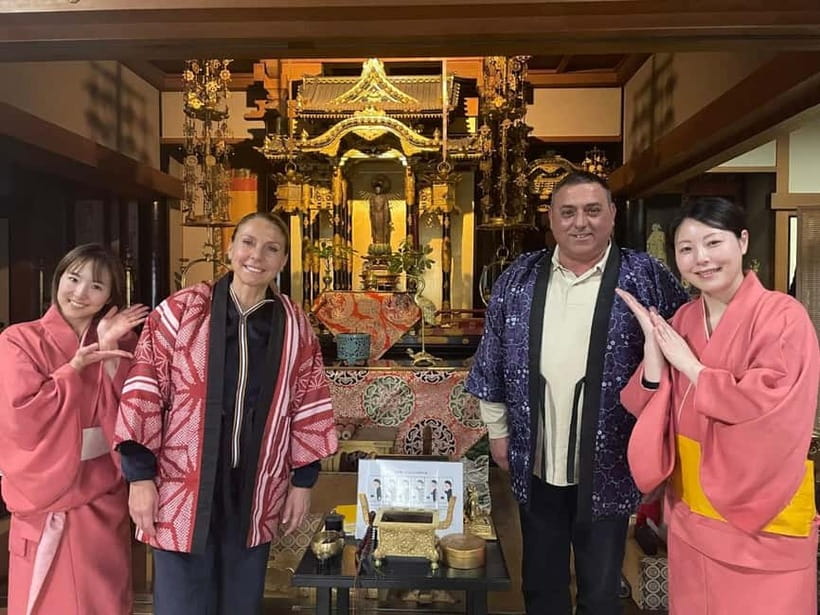
Before the treatment, you visit the temple and make an incense offering. A guide introduces the temple’s history and explains aspects of Japanese worship culture. That explanation matters because temple rituals can otherwise feel like a series of gestures with no context.
You then take part in meditation with a bell and kneaded incense. The bell gives the session a clear beginning, while the incense adds scent and a physical action to the meditation. Kneaded incense is handled rather than simply burned as a stick, giving you another small point of contact with Japanese practice.
This is a short cultural introduction, not a full temple tour or a religious ceremony lasting the entire morning. That is a good fit if you want some context without giving up most of your day.
You do not need to arrive with special religious knowledge. The point is to learn how the space is used and to approach it respectfully. Listen to the instructions, follow the guide, and let the ritual slow your pace.
Same city, a completely different kind of day:
- Osaka Go Karting Tour with Funny Costume
★ 5.0 · 2,658 reviews - Osaka Castle: Museum and Tower Entry Ticket
★ 4.5 · 2,380 reviews - Osaka: Shinsekai Food Tour with 13-15 Dishes at 5 Eateries
★ 4.8 · 2,204 reviews - Osaka Food Tour: 13 Dishes at 5 Local Eateries
★ 5.0 · 2,149 reviews
Foot bath and scrub massage first
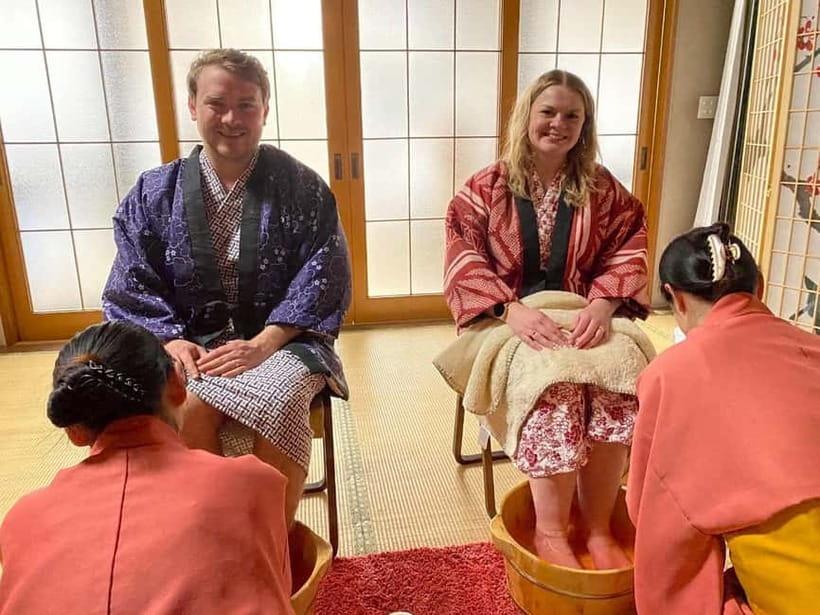
The foot bath comes before the main body work. That order makes practical sense after walking around Osaka. A soak gives your feet a break, while the scrub massage adds a more active treatment before you settle into longer relaxation.
One of the strongest features here is the blend of simple comfort and Japanese-style ritual. A foot bath alone would be easy to find at a spa, but placing it after incense and meditation gives it more of a transition role. You move from temple attention to physical care.
The description also includes a full-body oil massage with essential oils. The available information does not give the massage length, pressure options, or a menu of oil scents, so ask the staff if you have preferences or sensitivities.
This is also the point to speak up about comfort. Tell the therapist about pressure, areas to avoid, or any concern with oils before treatment begins. The small group format may make the visit feel personal, but individual treatment still depends on clear communication.
Reiki and the meaning of non-contact treatment
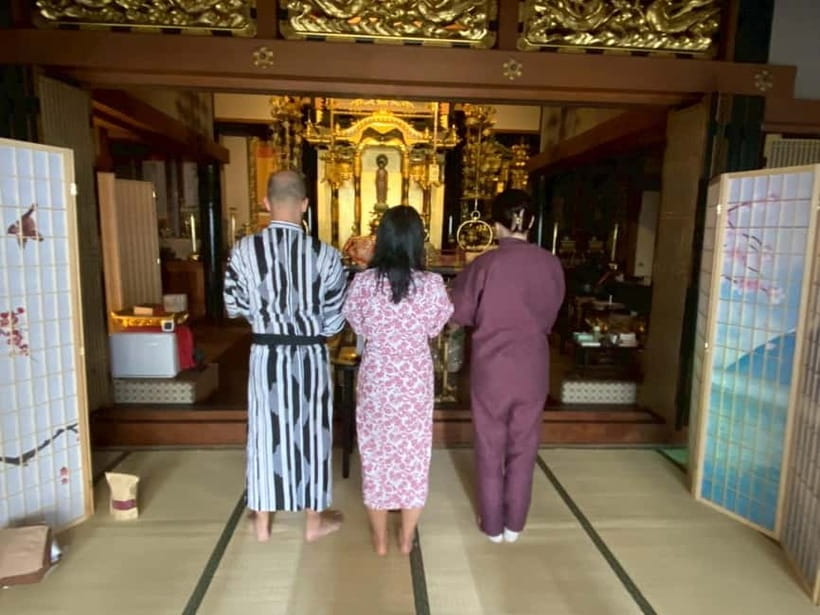
Reiki follows as the central relaxation practice. Unlike the oil massage, Reiki is non-contact. The aim is to promote deep relaxation and emotional balance through an energy-healing approach associated with Japan.
That difference is important when you compare this activity with a regular massage. If you want firm muscle work from start to finish, Reiki may feel too subtle. If you are curious about a quiet, reflective practice, the non-contact portion can provide a change of pace after the foot and oil treatments.
You might notice that the experience is described in spiritual language, including harmony of mind and spirit. That language will appeal to some people and feel less familiar to others. I would book it for rest, curiosity, and a cultural encounter, not as a guaranteed cure for stress or physical pain.
The care of the staff is a repeated strength of the program. Arisa is named in connection with treatment described as kind and professional, while Naomi is also named among the staff who cared for visitors. The activity details do not promise that you can select a particular practitioner, so contact the provider if that matters to you.
Matcha, wagashi, and a shared tea ceremony
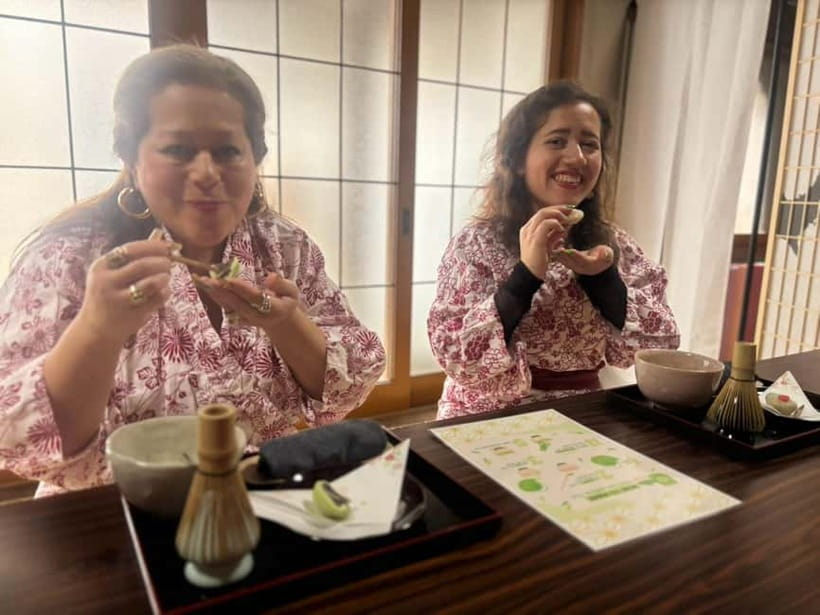
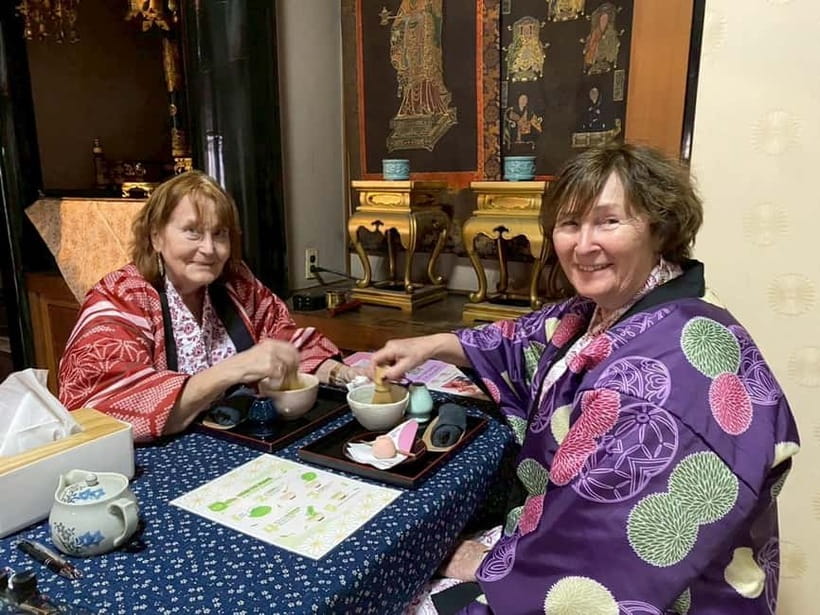
The final stage is a traditional Japanese tea ceremony with a cultural and historical explanation. You receive tea and wagashi, the small sweets traditionally served with it.
This ending is well judged. After a massage, you may not want to rush straight back into city traffic. Tea gives you time to return to a normal pace while learning why the ceremony is structured as it is.
The tea portion may be shared with other people, even though your treatment is individual. That is the clearest privacy limitation in the program. If you are booking a couple’s occasion, a parent-child outing, or a quiet personal retreat, decide in advance if a shared tea setting suits you.
A completely private experience may be possible if you contact the provider. Do not assume privacy is automatic. Ask before booking, particularly if the cultural portion is as important to you as the massage.
The tea ceremony is also a better cultural introduction than a quick cup served at a restaurant. You receive an explanation of its background and customs, so the sweets and tea become part of a lesson rather than just refreshments.
What the $161 price gives you
At $161 per person, this is not the budget way to get a massage in Osaka. You are paying for a combined experience: a temple visit, cultural guidance, a yukata, a foot bath, scrub massage, Reiki, a full-body oil massage, tea, wagashi, and photos.
The value depends on how many of those parts you would otherwise book separately. If you only want a strong, conventional massage, a dedicated massage shop may offer a better price or more treatment time. If you want a calm cultural activity that also cares for your body, the package makes more sense.
I see the price as reasonable for a special-occasion activity, especially for someone marking the end of a long Japan trip. A Belgian visitor used it as a closing activity after three weeks in Japan, which is a sensible use of the format. It gives you a quiet final memory instead of one more crowded attraction.
The limited group size also helps justify the cost. Treatment is limited to three participants, so you are not signing up for a large wellness class. Still, the tea ceremony can be shared, and the listing does not state the exact time devoted to each treatment. Keep that in mind when comparing the price with a two-hour massage elsewhere.
Who will enjoy this most
I would recommend this activity to you if you want several experiences in one booking and prefer a gentle pace. It suits first-time visitors who want an introduction to temple customs, couples looking for a calm shared outing, and families with older children who can take part respectfully.
It is also a good choice after a demanding sightseeing schedule. The foot bath, oil massage, and Reiki offer physical rest, while incense and tea give you something cultural to focus on.
You may want another option if you dislike spiritual practices, need a fully private booking, or want a treatment designed around a specific physical problem. The activity is not presented as medical care, and Reiki may not match your expectations if you want hands-on work throughout.
The small group limit is helpful, but it does not mean every part is private. Contact the provider if you need the tea ceremony reserved just for your party.
Practical booking advice for a smooth visit
Book a starting time that leaves room for the meeting point. The activity lasts 120 minutes, and availability depends on the selected date and time.
Use the exact map search terms provided: Japanese Massage -the one&only-, or Tossa de coracao. This is the most important practical tip in the whole description.
Wear clothing that makes changing easy, or simply plan for the yukata change. Tell the staff about oil sensitivities and massage preferences at the start. Also remember that the treatment and tea may have different privacy arrangements.
The activity offers free cancellation up to 24 hours in advance for a full refund. You can also reserve now and pay later, which helps if your Osaka schedule is still shifting.
The overall rating is listed as 5 from 41 reviews, with praise focused on the massage, staff care, temple atmosphere, and the feeling of leaving refreshed. I would place the greatest weight on the repeated pattern rather than on any single description: this is most successful when you value kindness, calm, and the unusual setting as much as technical massage detail.
Should you book the temple Reiki experience?
Book it if you want a peaceful cultural break with real body treatments, rather than a standard spa appointment. The mix of temple customs, yukata, foot care, oil massage, non-contact Reiki, tea, wagashi, and photos gives you a memorable two-hour change of pace in Osaka.
Skip it if your top priority is the lowest massage price, a fully private itinerary, or clinical treatment for pain. At $161, you should want the full blend of culture and relaxation.
For most suitable bookers, I would schedule it late in a Japan trip or after several intense Osaka days. Use the correct map landmark, ask about private tea service if needed, and arrive ready to slow down. That is where the experience earns its price.
FAQ
How long does the Osaka temple Reiki experience last?
The experience lasts two hours, or 120 minutes.
How much does the experience cost?
The listed price is $161 per person.
What treatments are included?
The experience includes Reiki healing, a full-body oil massage with essential oils, a foot bath, and a scrub massage.
Is Reiki hands-on?
Reiki is described as a non-contact Japanese energy-healing method. The activity also includes hands-on foot and oil massage treatments.
Does the activity include a tea ceremony?
Yes. You take part in a traditional Japanese tea ceremony with wagashi sweets and receive cultural and historical explanations.
Is the tea ceremony private?
The individual treatments are private, but the tea ceremony may be shared with other people. You can contact the provider to ask about a completely private experience.
What should I enter into Google Maps?
Search for Japanese Massage -the one&only-. You can also search for the nearby restaurant Tossa de coracao. Using only the temple name may direct you to the back entrance.
Is a yukata included?
Yes. You receive a welcome drink, change into a yukata, and receive a complimentary smartphone photo as a keepsake.
Can I cancel the booking?
Yes. You can cancel up to 24 hours in advance for a full refund. The activity also allows you to reserve now and pay later.
Just added around Osaka
- (Ticket Included) Explore Osaka Castle & Museum of History★ 4.8 · 21 reviews
- Hidden Osaka – Yukaku Red Light Tour & Culinary Adventure★ 4.8 · 96 reviews
- Osaka: Walking Tour and Top Highlights★ 4.8 · 104 reviews
- Osaka: Private Ceramic Painting Workshop★ 5.0 · 13 reviews
- Pickleball in Osaka, Kobe & Kyoto with Locals!★ 4.7 · 80 reviews
- Eat Like a Local in Osaka – Private Custom Street Food Tour★ 4.3 · 33 reviews
- Osaka:SUMO BEATS SHOWCASE: Taiko Drum and Wagyu burger!★ 4.2 · 37 reviews
- Kimono photoshoot-Includes 100 photo data★ 5.0 · 21 reviews
Temple & Shrine Tours, compared.
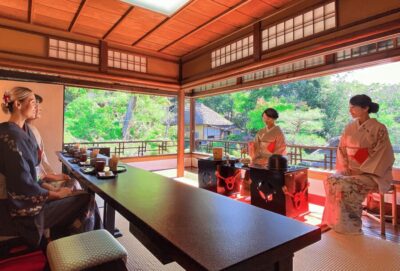
Tea Ceremony in a Traditional Tea House in Kiyomizu
Read our review →
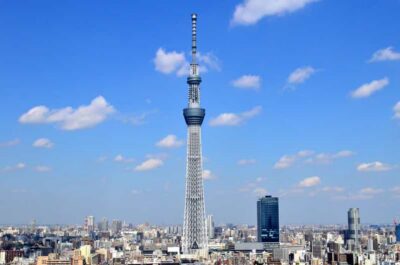
Meiji Shrine, Asakusa, Skytree Bus Tour and Cruise
Read our review →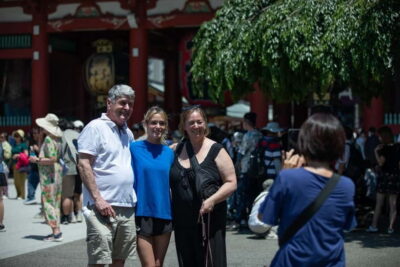
Asakusa Walking Tour with Sensoji Temple Visit
Read our review →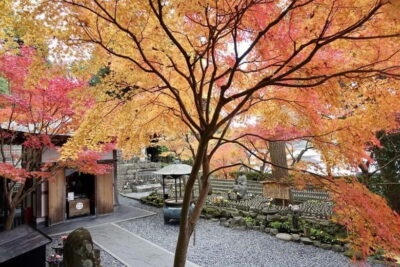
Kamakura & Enoshima Day Trip including Temple Tickets
Read our review →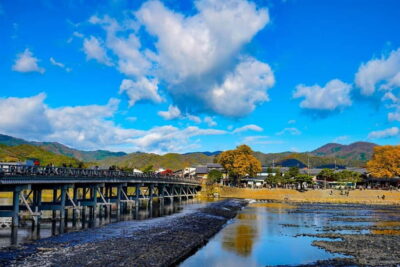
Kyoto/Osaka: Nara, Fushimi Inari Taisha, Arashiyama Bus Tour
Read our review →
Nikko Toshogu Shrine and Kegon Waterfall Tour
Read our review →
Tokyo Panoramic 1 Day: Meiji Shrine, Asakusa, Odaiba and SKYTREE®
Read our review →Browse the lists this tour appears in