
REVIEW · NARA DAY TRIPS
Osaka: Kyoto & Nara & Uji Historical and Scenic One-Day Tour
Nara’s deer and Kyoto’s endless red torii make this a memorable day, but the real trick is fitting Nara, Uji, and Fushimi Inari into one outing. I like the easy transport, especially when you are not comfortable navigating Japan’s trains, and I like the mix of animals, Buddhist art, tea culture, and shrine customs. The $56 price also covers the vehicle, guide, tolls, parking, and fuel.
The tradeoff is simple: this is a broad sampler, not a slow cultural walk. You may spend a fair part of the day on the road, and 30 minutes at Todaiji or 70 minutes at Fushimi Inari will feel short if you want to explore every corner.
In This Review
- Key points at a glance
- Why this Osaka day trip works
- Nara Park and the deer
- Todaiji and the great Buddha
- Uji River and Japan’s matcha country
- Byodoin Temple and the Phoenix Hall
- Fushimi Inari’s red torii
- The practical value of the $56 price
- Timing, transport, and the walking load
- What kind of visitor will enjoy it most?
- Should you book this tour?
- FAQ
- How long does the tour last?
- Which languages are available?
- Is hotel pickup included?
- Are temple admission fees included?
- How much time is spent at each main stop?
- Is the tour suitable for wheelchair users?
- What should I bring?
Key points at a glance
- Feed Nara’s deer: Spend about 45 minutes in Nara Park with free-roaming deer, using care and following the guide’s instructions.
- See Todaiji’s great Buddha: The temple visit is brief, with admission charged separately.
- Taste Uji’s tea culture: Two hours in Uji gives you time for the river, Byodoin, local sweets, and matcha shopping.
- Walk the red torii at Fushimi Inari: The 70-minute stop works well for photos and a short uphill walk.
- Let someone else handle the roads: Round-trip transport from Osaka includes tolls, parking, fuel, and air conditioning.
- Plan for a walking day: Comfortable shoes and water matter, and the tour is not suitable for wheelchair users.
Why this Osaka day trip works
This outing is built for people staying in Osaka who want to see several major sights without piecing together separate train routes. In eight to ten hours, you travel south and east through Nara, Uji, and Kyoto, then return to Osaka by air-conditioned vehicle.
I find that setup especially useful for a first visit. Nara gives you an ancient temple and its famous deer. Uji adds a smaller-town feel, river scenery, and matcha. Fushimi Inari brings the boldest visual moment, with rows of orange-red torii gates rising into the wooded hills.
The guide is part of the value. English and Chinese guiding is available, and guide Mia has been praised for clear explanations, humor, and practical shopping advice. Guide details and pickup time are sent by 8:00 pm the night before, so you should check your messages carefully and arrive early.
This is not a private sightseeing car with unlimited flexibility. The vehicle has to keep moving, and the schedule can change with traffic, weather, or other delays. Still, you avoid parking problems and the mental work of coordinating several destinations.
More Nara Day Trips in Osaka
- Ancient Capital Tour: Kyoto and Nara Highlights from Kyoto/Osaka
★ 4.5 · 332 reviews - Kyoto and Nara Day Trip from Osaka
★ 4.0 · 175 reviews - From Osaka or Kyoto: Kyoto and Nara 1-Day Bus Tour
★ 3.5 · 141 reviews
Nara Park and the deer
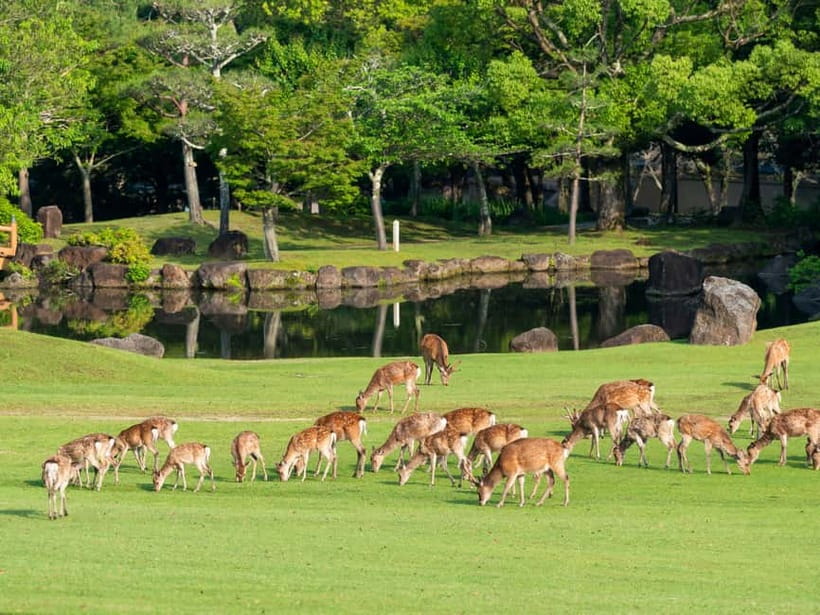
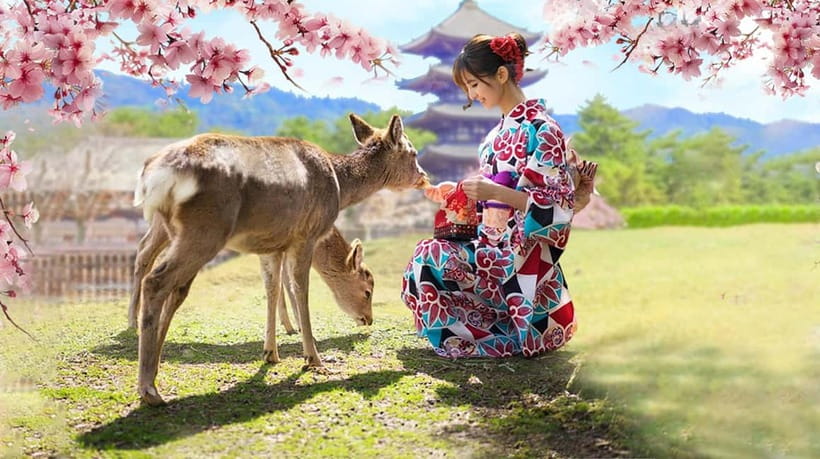
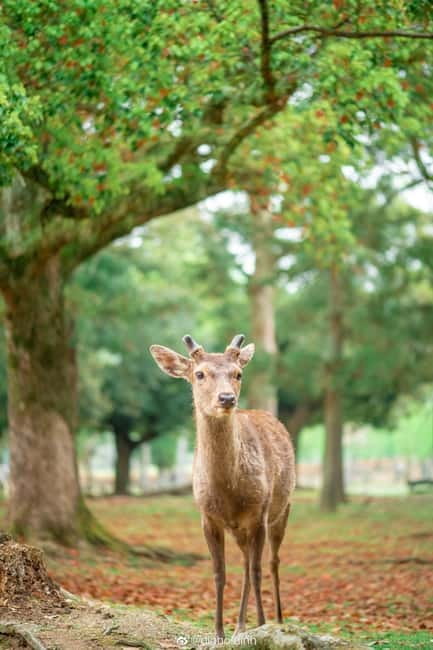
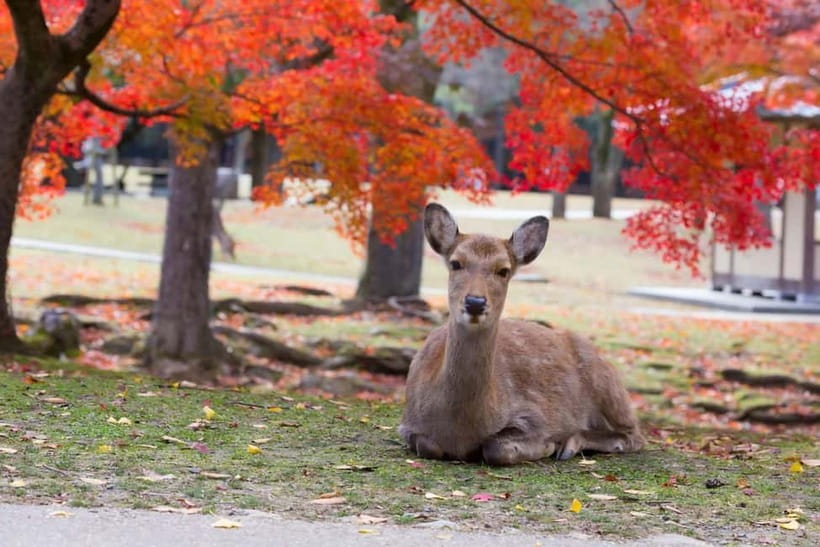
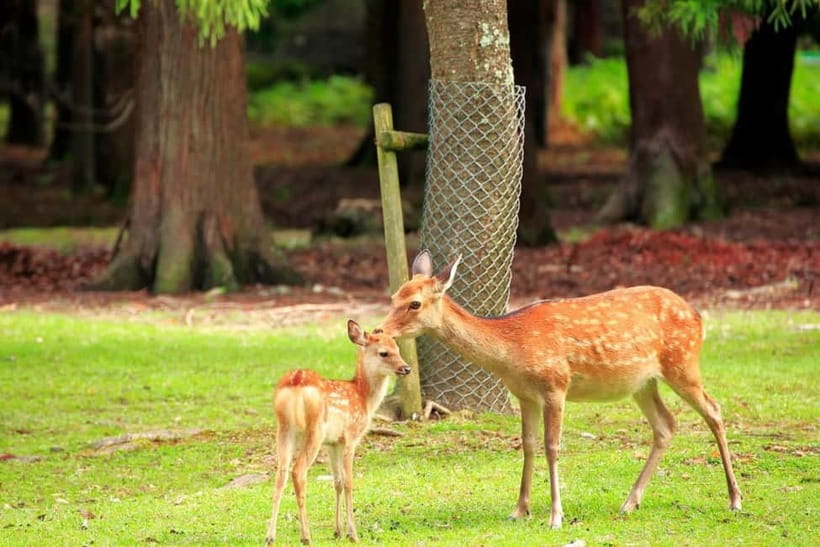
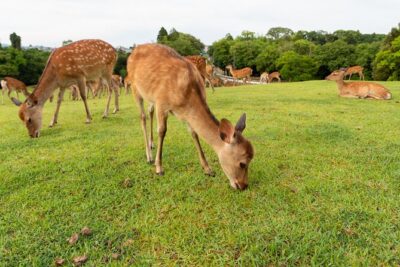
The day begins with roughly 45 minutes in Nara Park. This is enough time to see the deer, take photographs, and get a taste of the park, but it is not enough for a long, wandering visit through every temple and garden.
Nara’s deer are wild animals, even though they are accustomed to people. You can offer them a snack, but follow the guide’s directions and keep your hands clear once the food is gone. The deer can be eager, and a polite bow does not always mean a polite exit.
The charm here is direct and uncomplicated. You are not just looking at a display of animals. You are sharing a public park with creatures that have become part of Nara’s identity. That makes the stop lively, funny, and very different from the temple visits later in the day.
If you have animal allergies, this tour is not a good choice. You should also expect some walking on open paths, along with possible crowds around the feeding areas. Keep your snack wrappers and personal belongings secure, and listen when the guide gathers the group for the next stop.
Todaiji and the great Buddha
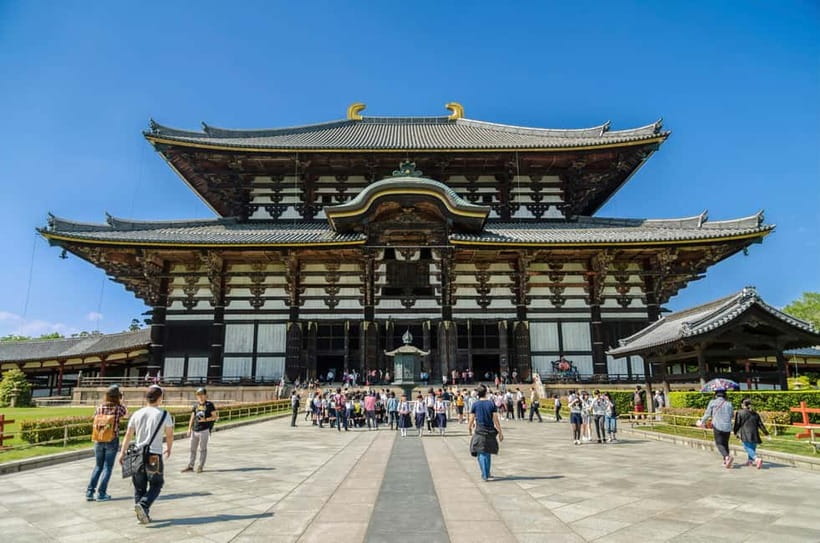
Todaiji receives about 30 minutes of sightseeing time. Its main draw is the enormous bronze Vairocana Buddha inside one of Japan’s most famous Buddhist temples.
The scale is what you notice first. The temple interior, the sculpture, and the sense of age give this stop a solemn quality that balances the playful deer park. Even with a short visit, you can understand why Todaiji is treated as a major pilgrimage site and a world cultural heritage place.
Admission is not included, so bring money for the separate temple ticket. The short time limit means you should stay close to the guide’s meeting instructions. If you want quiet contemplation, detailed architectural study, or a long look at every Buddhist object, this schedule may frustrate you.
I would treat Todaiji as a focused introduction. Listen to the explanation, take in the great Buddha, and accept that the tour is giving you a strong first impression rather than a full temple study.
Uji River and Japan’s matcha country
Uji is the longest stop, with about two hours for sightseeing. That extra time matters. After the compressed Nara visits, Uji gives you room to slow down, walk near the Uji River, browse food shops, and get a better sense of local tea culture.
Uji is closely tied to matcha, and the main shopping street near Byodoin offers matcha desserts and other local foods. This is the place to try the flavor in several forms, perhaps sweet, creamy, or more bitter, depending on what you order. Meals and drinks are not included, so budget separately for snacks and lunch.
The Uji River gives the stop a calmer rhythm. You can enjoy the water, bridges, and traditional surroundings before returning to the commercial street. The combination works well because you are not confined to one temple courtyard or one shopping lane.
The schedule also includes the statue of Murasaki Shikibu, the literary figure associated with The Tale of Genji. It is a small but useful reminder that Uji’s appeal is not limited to tea. Literature, religion, river scenery, and food all meet here.
Same city, a completely different kind of day:
- Osaka Go Karting Tour with Funny Costume
★ 5.0 · 2,658 reviews - Osaka Castle: Museum and Tower Entry Ticket
★ 4.5 · 2,380 reviews - Osaka: Shinsekai Food Tour with 13-15 Dishes at 5 Eateries
★ 4.8 · 2,204 reviews - Osaka Food Tour: 13 Dishes at 5 Local Eateries
★ 5.0 · 2,149 reviews
Byodoin Temple and the Phoenix Hall
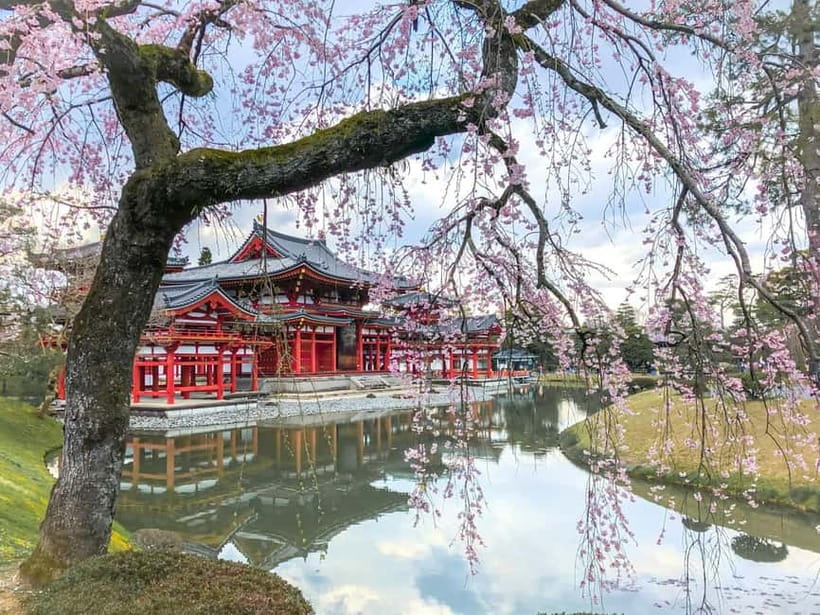
Byodoin is one of Uji’s essential sights, though admission is separate from the tour price. The temple is known for its graceful architecture and tranquil setting, and the visit gives you a quieter counterpoint to Nara’s deer and Fushimi Inari’s crowds.
The itinerary includes Byodo-in Omotesando, the approach street lined with local food and tea shops. This makes it easy to combine the temple visit with matcha tasting or souvenir shopping. Keep an eye on the meeting time, though. Two hours can pass quickly if you stop for photos, food, and browsing.
I like this part of the tour because it offers a sense of place instead of only a famous landmark. You see how Uji presents its tea traditions to visitors, but you also have the river and temple grounds to provide a calmer setting.
If Byodoin is your main reason for visiting Uji, check how much time the guide allows inside the temple area. The overall stop is two hours, but that time is shared among the river, statue, temple, street, and food options.
Fushimi Inari’s red torii
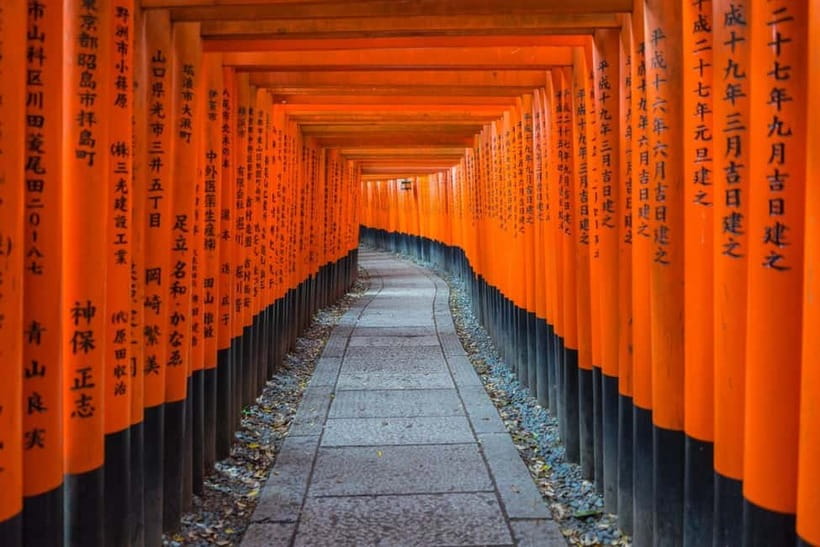
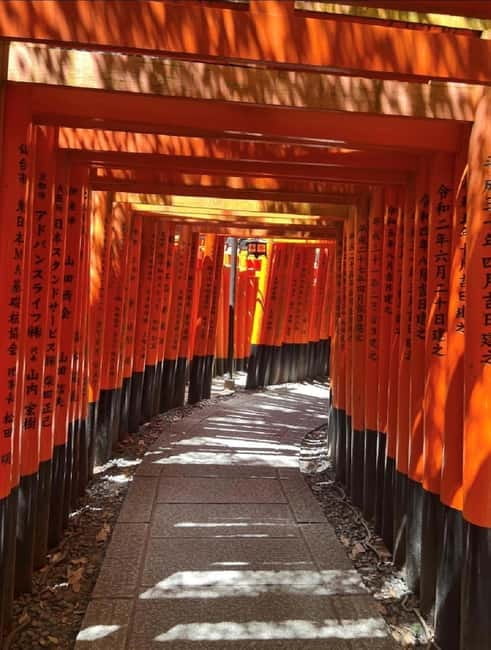
The final major stop is Fushimi Inari Taisha, with about 70 minutes for a break, photos, free time, and walking. The shrine’s long corridor of red torii gates is one of Kyoto’s most recognizable sights.
The first section gives you the classic view: close-set gates, stone fox figures, and shafts of light between the posts. The path continues uphill, so you can walk as far as time and energy allow. You will not reach every part of the mountain route during a 70-minute stop, but you can still experience the visual effect that makes Fushimi Inari so memorable.
Fushimi Inari is a working Shinto shrine, not simply a photo backdrop. The torii are donated in thanks for business success or personal blessings, and the fox is linked with Inari worship. A guide can help you notice these details rather than rushing straight through for pictures.
This stop may be crowded, and the narrow path can make it hard for a large group to stay together. Wear shoes with a good grip, keep your return time clear, and do not wander so far uphill that you miss the vehicle.
The practical value of the $56 price
At $56 per person, this tour offers solid value if you want several major destinations in one day. The price includes an English or Chinese speaking guide, round-trip transportation, toll fees, parking fees, fuel, and an air-conditioned vehicle.
That package matters in Japan. You avoid paying separate train fares between multiple stops, working out local transfers, and finding parking near popular temples and shrines. You also get explanations along the way, which helps turn a fast sightseeing day into more than a series of photographs.
The price does not include admission to Todaiji or Byodoin. Food, drinks, matcha treats, souvenirs, and other personal costs are also extra. Add those items before deciding how much the day will cost you.
The strongest value comes when you are traveling alone, with children, or with companions who prefer a guide and vehicle. If you already know the rail system well and want long visits at one or two sights, independent travel may give you more control.
Timing, transport, and the walking load
The tour runs eight to ten hours, depending on traffic and the chosen departure option. Pickup or meeting locations vary, with options in Osaka wards and at Kyoto Station’s Hachijo Entrance Square Sunken Garden.
If you use hotel pickup, wait in the lobby ten minutes before the expected arrival. For a fixed meeting point, arrive 15 minutes early. Pickup details and the guide’s contact information are sent by 8:00 pm the evening before.
The route covers a lot of ground. One review described the road time as heavy compared with the time at attractions, and that is a fair warning. The vehicle solves the transport problem, but it cannot change the geography between Osaka, Nara, Uji, and Kyoto.
Traffic can also affect your return time. Do not schedule a tight evening reservation immediately after the tour. Weather and other unexpected conditions may change the order or length of stops.
You should bring water and wear comfortable shoes. The day includes temple grounds, park paths, shopping streets, and the uphill route at Fushimi Inari. The tour is not suitable for wheelchair users, and you should mention infants, strollers, or large luggage when booking so suitable transport can be arranged.
What kind of visitor will enjoy it most?
I would choose this tour for a first visit to Osaka when you want a quick look at the major cultural sights nearby. It suits people who value convenience, live commentary, and a full day of variety more than a slow pace.
Families may enjoy the deer and matcha treats, though adults should supervise children around the wild animals. The tour also works for solo visitors who would rather have a set route and a guide than manage several train connections.
It is less suitable for temple specialists, serious photographers, or anyone who dislikes fixed schedules. You may want more time at Byodoin, a longer climb at Fushimi Inari, or a quieter visit to Todaiji than this day allows.
The guide can make a real difference. Mia, in particular, is noted for keeping people connected through WhatsApp and sharing local shopping advice. That sort of contact is useful on a busy day, especially when the group is spread across a park, a shopping street, or a shrine path.
Should you book this tour?
Book it if your priority is maximum variety with minimum transport planning. For $56, you get a guide and a vehicle connecting Nara, Uji, and Fushimi Inari, with the major operating costs already covered.
Skip it if you want to linger. The schedule gives you snapshots: deer and the great Buddha in Nara, tea and Byodoin in Uji, then the torii gates at Fushimi Inari. That is a lot for one day, but it is also the central compromise.
The flexible cancellation policy allows a full refund when you cancel at least 24 hours ahead, and reserve-now-pay-later booking can help while your plans are still changing. Just remember to budget for the two temple admissions and your food.
FAQ
How long does the tour last?
The tour lasts about eight to ten hours. The exact return time can be affected by traffic, weather, and other unexpected conditions.
Which languages are available?
Live guiding is available in English and Chinese.
Is hotel pickup included?
Pickup is optional and depends on the option you book. The meeting or pickup location may vary, and the guide’s details and pickup time are sent by 8:00 pm the evening before.
Are temple admission fees included?
No. Admission to Todaiji and Byodoin Temple is not included. Meals, drinks, and personal expenses are also separate.
How much time is spent at each main stop?
You get about 45 minutes at Nara Park, 30 minutes at Todaiji, two hours in Uji, and 70 minutes at Fushimi Inari. The Uji portion includes the Uji River, Byodoin, the Murasaki Shikibu statue, Uji Park, and local food streets.
Is the tour suitable for wheelchair users?
No. The tour is not suitable for wheelchair users and includes a moderate amount of walking.
What should I bring?
Bring comfortable walking shoes and water. If you are traveling with an infant, stroller, or large luggage, state that when booking so suitable transportation can be arranged.
More Historical Tours in Osaka
- Osaka: Castle History Walking Tour / Castle Tower Admission
★ 4.9 · 230 reviews - Osaka: Osaka Castle & Historical Museum Guided Tour
★ 4.8 · 28 reviews - (Ticket Included) Explore Osaka Castle & Museum of History
★ 4.8 · 21 reviews - Osaka: Osaka Castle 3 hours Historical Walking Tour
★ 4.6 · 14 reviews
Just added around Osaka
- (Ticket Included) Explore Osaka Castle & Museum of History★ 4.8 · 21 reviews
- Hidden Osaka – Yukaku Red Light Tour & Culinary Adventure★ 4.8 · 96 reviews
- Osaka: Walking Tour and Top Highlights★ 4.8 · 104 reviews
- Osaka: Private Ceramic Painting Workshop★ 5.0 · 13 reviews
- Pickleball in Osaka, Kobe & Kyoto with Locals!★ 4.7 · 80 reviews
- Eat Like a Local in Osaka – Private Custom Street Food Tour★ 4.3 · 33 reviews
- Osaka:SUMO BEATS SHOWCASE: Taiko Drum and Wagyu burger!★ 4.2 · 37 reviews
- Kimono photoshoot-Includes 100 photo data★ 5.0 · 21 reviews
Nara Day Trips, compared.
World Heritage Kyoto & Nara Uji Authentic Matcha Experience
Read our review →
Kyoto/Osaka: Nara, Fushimi Inari Taisha, Arashiyama Bus Tour
Read our review →
Nara Half Day Trip Walking Tour (Private Option Available)
Read our review →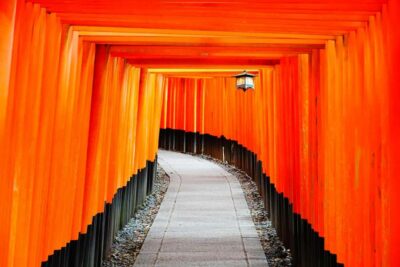
Osaka/Kyoto: Arashiyama, Nara & Fushimi Inari Shrine w/Lunch
Read our review →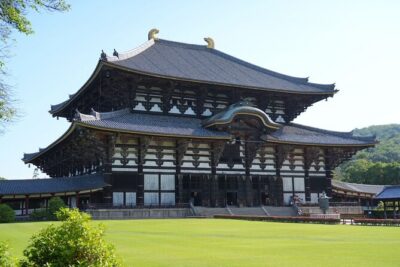
Nara Early Morning Tour (Kyoto or Osaka Departure Available)
Read our review →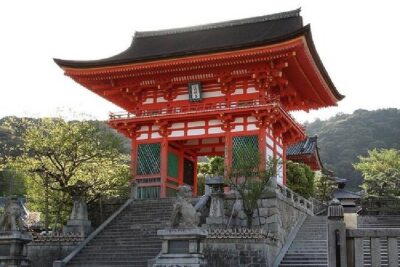
Full Day Guided Tour to Kyoto and Nara from Osaka by Van
Read our review →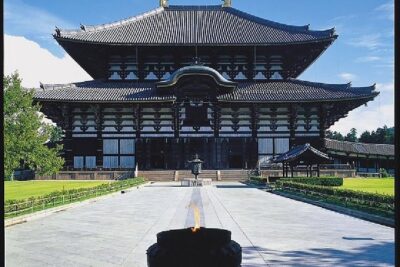
Browse the lists this tour appears in