REVIEW · GUIDED
Kintsugi Experience with Arita Ware in Tokyo (English Guide)
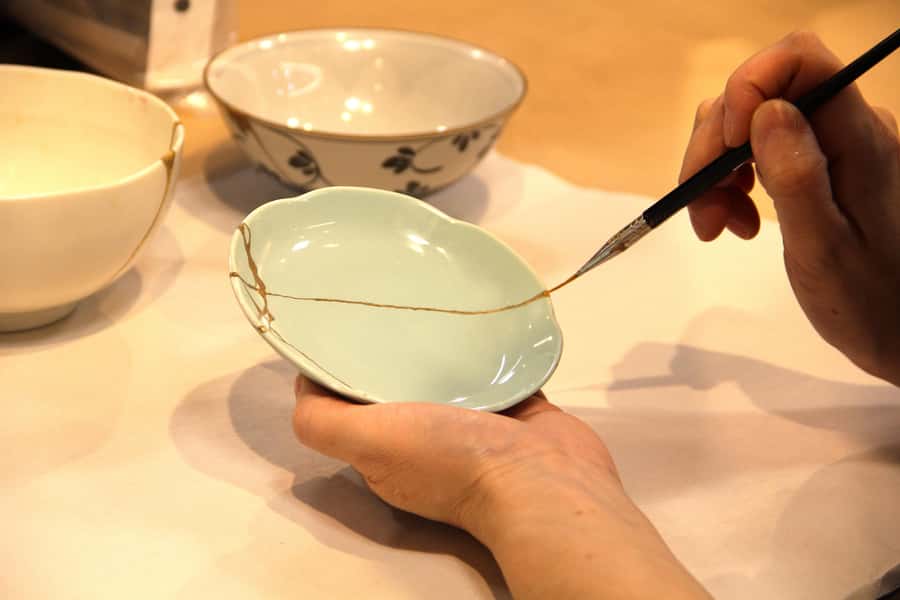
Kintsugi turns a broken plate into a one-of-a-kind keepsake, using gold to highlight the cracks instead of hiding them. In this 90-minute workshop, you work with 400-year-old Arita Ware at Nihonbashi Mutoh, a Tokyo shop founded in 1923.
I like two things right away: the English instruction makes this traditional craft easy to follow, and the finished plate gives you a useful souvenir with a real story behind it. The small group, capped at 10 people, also keeps the class personal. The main drawback is the limited choice of objects, since the standard experience uses one plate and the class may run alongside regular customers.
In This Review
- Kintsugi in Tokyo: Key Points
- Why Kintsugi Makes a Better Souvenir
- Inside Nihonbashi Mutoh Main Store
- The 90-Minute Kintsugi Experience
- Working With 400-Year-Old Arita Ware
- What You Take Home
- The English Instruction and Group Atmosphere
- Is $139 a Fair Price?
- Who Should Book This Workshop?
- Should You Book the Arita Ware Kintsugi Experience?
- FAQ
- How long does the kintsugi workshop last?
- What times can I choose?
- Where does the workshop take place?
- Is the workshop taught in English?
- What item do I repair?
- Can I take my finished plate home?
- Can I eat or drink from the repaired plate?
- Is the activity suitable for children?
Kintsugi in Tokyo: Key Points
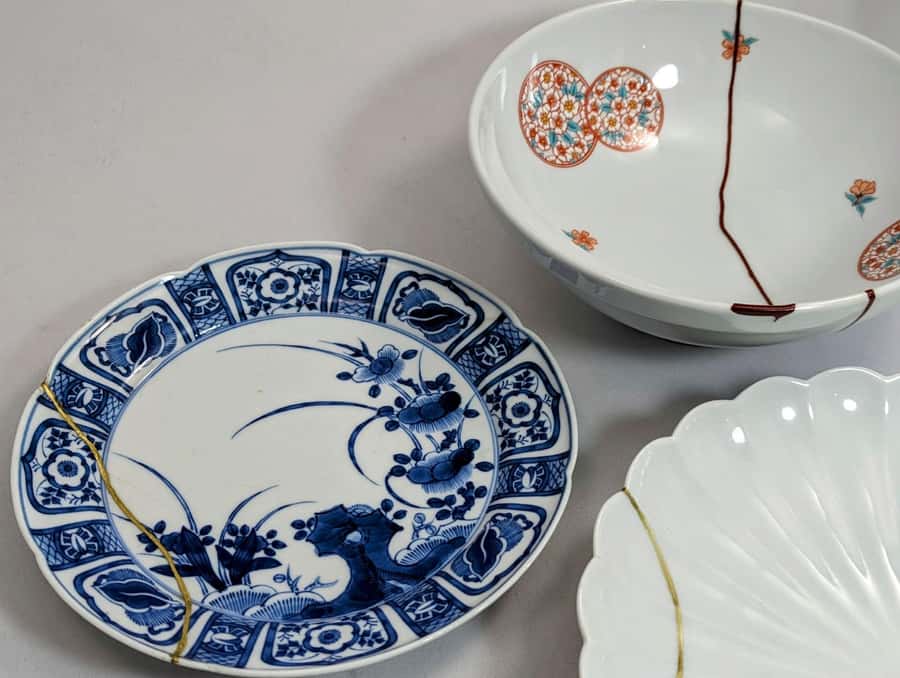
- Repair Arita Ware with gold: Work on a porcelain plate made in Japan’s oldest porcelain tradition.
- Learn in English: An English-speaking instructor explains each stage during the 90-minute session.
- Take home your own piece: Your completed plate becomes a decorative souvenir after about one week of indoor drying.
- Visit a century-old craft shop: Nihonbashi Mutoh Main Store has traded in lacquerware and glassware since 1923.
- Bring a broken item if it fits: Your own ceramic or porcelain piece may be accepted if it is no larger than about 15 centimeters wide and 15 centimeters high, with one or two broken parts.
- Keep the group manageable: No more than 10 participants can join a session, though regular shop customers may be present.
Why Kintsugi Makes a Better Souvenir
Many Tokyo souvenirs are easy to buy and easy to forget. Kintsugi gives you something different: a small object you helped repair, with visible gold lines marking its past.
The craft is linked to wabi-sabi, a Japanese way of seeing beauty in imperfection and change. Kintsugi is often described as dating back to the 15th century, and its message is simple enough to understand even if you know little about Japanese art: damage does not always reduce an object’s value.
That idea gives the class more weight than a basic craft session. You are not just decorating a plate. You are learning why a repaired object can be prized precisely because it has been broken.
The finished item is for decoration, not food or drink. It also cannot go in a microwave or dishwasher. You must hand wash it with dishwashing detergent, so think of it as a display piece rather than everyday tableware.
A few more Tokyo trips to weigh up
- Tokyo 6hr Private Tour with Government-Licensed Guide
★ 5.0 · 3,902 reviews - Tokyo: Shinjuku Local Bar and Izakaya Guided Walking Tour
★ 4.9 · 1,794 reviews - Tokyo: Private City Highlights Tour with Local Guide
★ 4.8 · 1,433 reviews
Inside Nihonbashi Mutoh Main Store
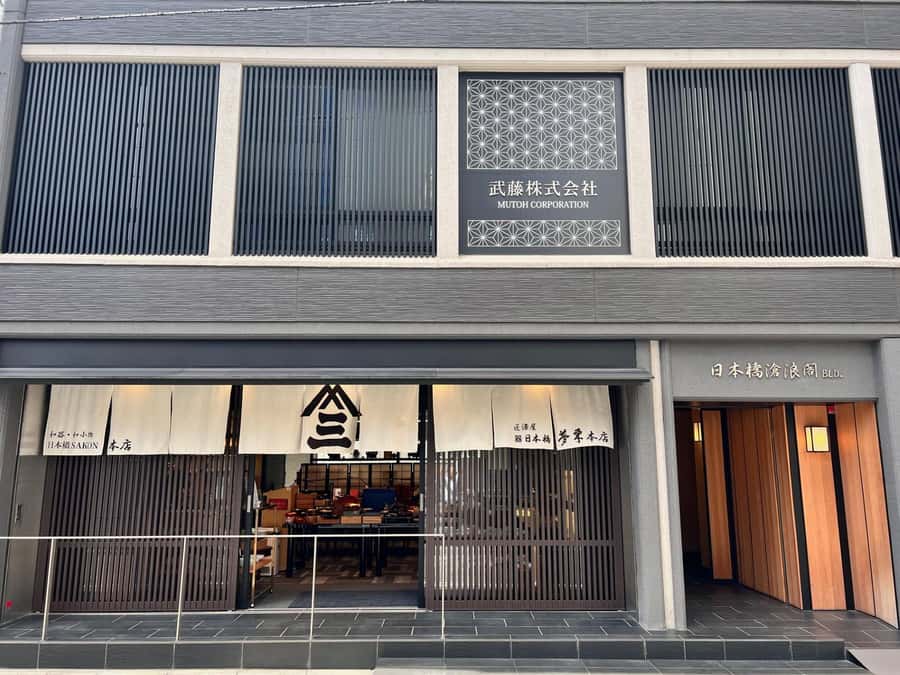
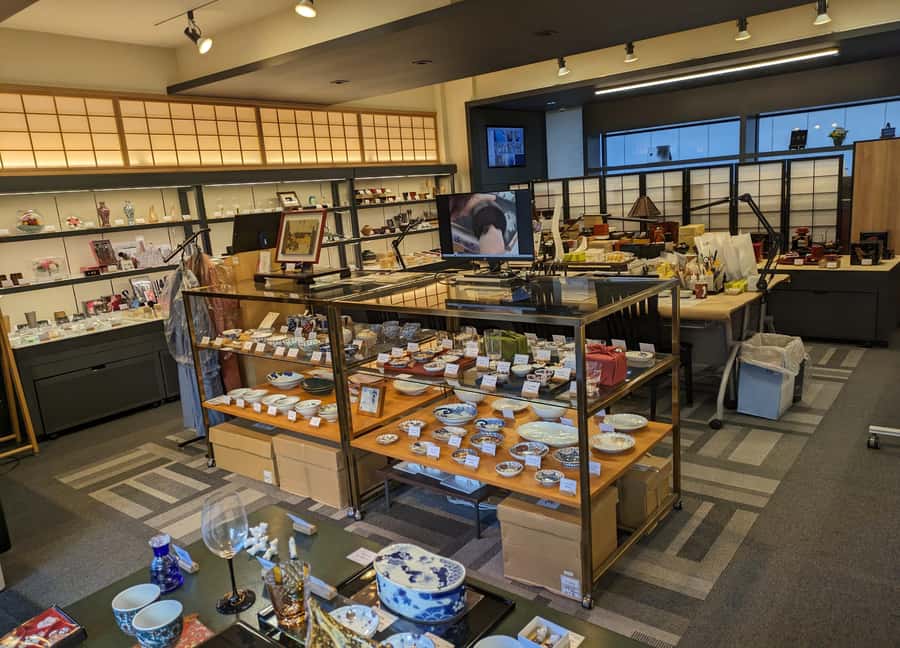
The workshop takes place at Nihonbashi Mutoh Main Store, at 1-8-3 Honcho Nihonbashi, Chuo City, Tokyo 103-0023. The store was established in 1923 and deals in high-quality lacquerware and glassware.
That setting matters. You are learning kintsugi in a working traditional craft shop, surrounded by lacquerware and porcelain, rather than in a generic classroom. You might find the shop itself as interesting as the practical session, especially if Japanese household crafts are part of your reason for visiting Tokyo.
The atmosphere is not presented as a private museum visit. The class may run with regular customers in the shop, so expect a real retail setting rather than a silent studio reserved only for your group. For some people, that adds a useful sense of place. If you want complete privacy, it is worth keeping this limitation in mind.
The central Tokyo location also makes the workshop a practical addition to a sightseeing day. The meeting point is clearly given, but you should still allow enough time to find Nihonbashi Mutoh before the starting time. A late arrival does not extend the session, so every minute matters in a 90-minute class.
The 90-Minute Kintsugi Experience
You choose one of three starting times:
- 10:30 to 12:00
- 13:30 to 15:00
- 15:30 to 17:00
The activity lasts 90 minutes, which is a sensible length for a first introduction. It gives you enough time to complete one object without taking up half a day in Tokyo.
The instructor speaks English and leads you through the process. Clear demonstrations and explanations are provided, with instruction first in Japanese and then translated into English when needed. That format may feel less polished than a fully English-only class, but the practical steps remain accessible, and the craft itself is hands-on.
You should expect to focus on one piece rather than produce several items. One participant specifically found the class long enough to finish a single object, which is the right way to view this experience. You are paying for a careful introduction and a finished keepsake, not a production line.
The standard plate is supplied as part of the admission. All required materials are included, so you do not need to bring tools or buy extra supplies. Wear clothes you do not mind getting dirty. This is a workshop, and careful work with craft materials is more important than dressing up for the rest of your Tokyo plans.
The session may include as many as 10 people. That is small enough to avoid the crowding of a large group class, though the experience will still depend on the pace and questions of the people sharing your time slot.
Working With 400-Year-Old Arita Ware
Arita Ware is the main material used in the class. It has a 400-year history and is known as the first porcelain produced in Japan.
The pieces used here come from Shobido Honten, a maker whose Arita Ware is popular in Japan and abroad. This gives the activity a stronger connection to Japanese ceramic tradition than repairing an ordinary mass-produced plate.
Porcelain has a clean, refined look, so the gold repair lines should become the visual focus of your finished piece. You are not simply practicing on a disposable craft blank. The plate has its own design and material quality before you begin.
The standard activity provides a plate for you to repair. One limitation is that there may not be much variety in the object selection. If choosing from several shapes, colors, or patterns is important to you, this class may feel more restricted than a larger pottery workshop.
You can also ask to bring your own damaged item. It must meet several conditions:
- It must be ceramic or porcelain.
- It can have one or two broken parts.
- It should measure no more than approximately 15 centimeters in diameter and 15 centimeters in height.
This option can make the experience much more personal. A broken cup, small plate, or family ceramic may carry memories that a supplied object cannot. But bring your own item only if it fits the size and damage rules. A heavily shattered object or one made from another material may not be suitable.
Same city, a completely different kind of day:
- Mt Fuji and Hakone 1-Day Bus Tour Return by Bullet Train
★ 5.0 · 26,383 reviews - 1-Day Tokyo Bus Tour
★ 5.0 · 14,250 reviews - Tokyo: TOKYO SKYTREE® Admission ticket
★ 4.5 · 11,192 reviews - Tokyo: teamLab Planets TOKYO Digital Art Museum Entry Ticket
★ 4.6 · 9,779 reviews
What You Take Home
Your plate does not leave the shop ready for immediate use. After the kintsugi work, you need to let it dry indoors for about one week.
That waiting period is important when planning your luggage. You receive the piece at the end of the workshop, but the craft is not fully finished until it has dried. Keep it protected during the rest of your stay and during the journey home.
Once dry, the plate is best used as decoration. Do not use it for eating or drinking. It must also be hand washed with dishwashing detergent, and it should never go in a microwave or dishwasher.
These restrictions may sound fussy, but they are part of the practical reality of handmade repaired pottery. If you want a souvenir you can use every day, this is not the right purchase. If you want a personal object for a shelf, desk, or display cabinet, the limitations are easier to accept.
The value is also emotional. You return home with a piece that records your time in Tokyo in a visible way. The gold lines are not just a design choice. They show the work you did and the damage that became part of the object’s character.
The English Instruction and Group Atmosphere
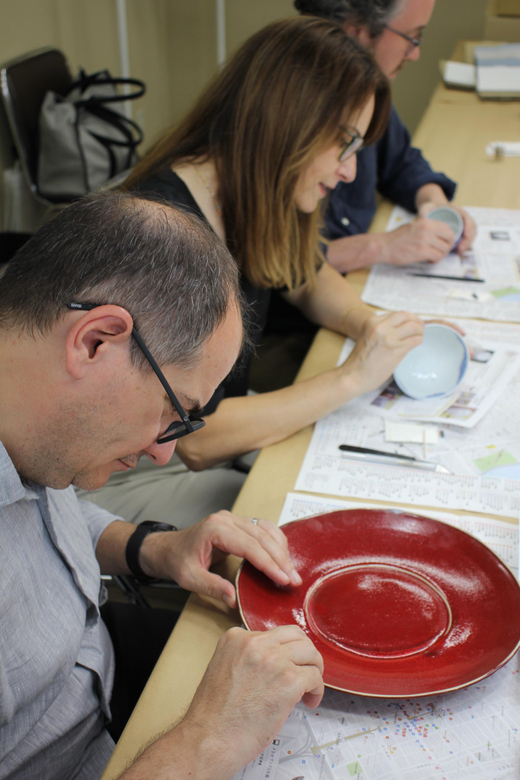
The class is designed for English speakers, with an English-speaking instructor included in the price. That removes one of the biggest worries for visitors trying a traditional Japanese craft: not knowing what to do next.
The teaching style is practical and direct. Instructions are given in Japanese first and then translated into English. You may not receive a long lecture on every detail of Japanese lacquer craft, but you do get the information needed to complete the project.
The small group size is another strong point. With a maximum of 10 participants, you have a better chance to see the demonstration and ask for help than you would in a large workshop.
At the same time, this is not necessarily a private lesson. Regular customers may be shopping in the same space, and the shop continues to function as a shop. I see that as a fair trade-off for learning in a genuine craft business, but it may not suit someone seeking a quiet retreat with no outside activity.
The class has also been described as peaceful and suitable for people at all artistic levels. That is useful to know if you are not confident with crafts. You do not need to arrive as an artist. The appeal lies in learning a traditional technique and making a personal object, not in producing a flawless professional repair.
Is $139 a Fair Price?
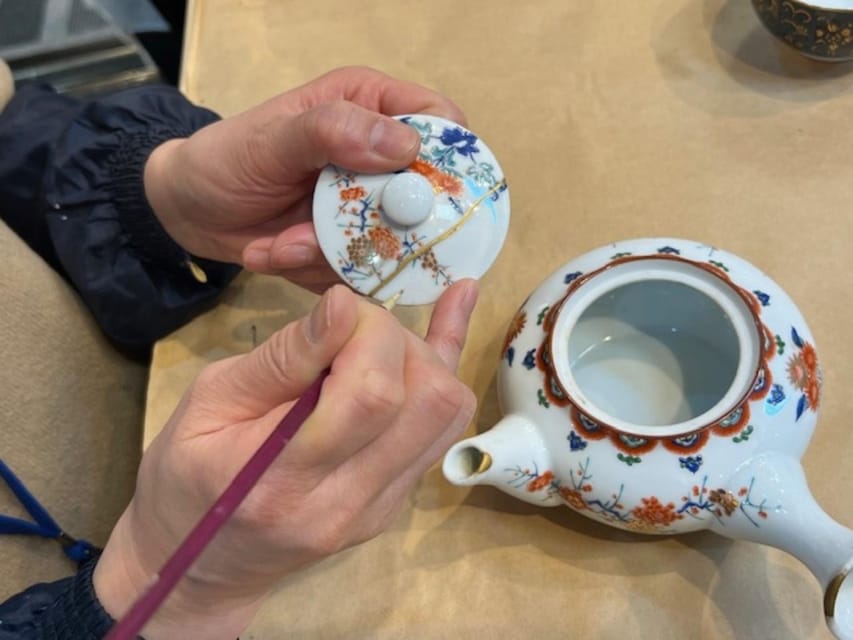
At $139 per person, this is not the cheapest hands-on activity in Tokyo. The price makes more sense when you consider what is included: 90 minutes of instruction, all materials, an Arita Ware plate, and an English-speaking teacher.
You are also paying for access to a traditional craft shop with a history of about 100 years, plus the chance to work with porcelain connected to a 400-year Japanese tradition. The plate you take home gives the class lasting value, provided you are happy using it as decoration.
The value is strongest for someone who wants a small group, English guidance, and a meaningful handmade souvenir. It is weaker for someone who only wants a quick craft activity or who expects to repair several items during the session.
The included plate keeps the experience simple, but it also limits choice. Bringing your own item can improve the value if you have a suitable piece with personal meaning. Check the size and damage requirements before you go so you do not arrive with something the instructor cannot use.
Who Should Book This Workshop?
I would recommend this experience to adults and older teenagers who enjoy traditional crafts, Japanese design, or hands-on cultural activities. It also works well for couples, since you each leave with a different object and a shared memory of making them.
It is a good choice if you want a slower activity between Tokyo’s more crowded sights. The 90-minute length fits neatly into a morning or afternoon, and the finished plate is easier to carry than a larger pottery project.
The experience is not suitable for children under 13. It may also disappoint you if you want to use your finished plate at home for meals, since it is for decoration only.
The workshop is wheelchair accessible. Personal expenses, food, and drinks are not included, but none of those are central to the activity. Plan to arrive on time, wear practical clothing, and leave room in your schedule for the full 90 minutes.
Free cancellation is available up to three days in advance for a full refund. If you do not attend on the scheduled day, no refund is issued, and arriving late does not move the ending time.
Should You Book the Arita Ware Kintsugi Experience?
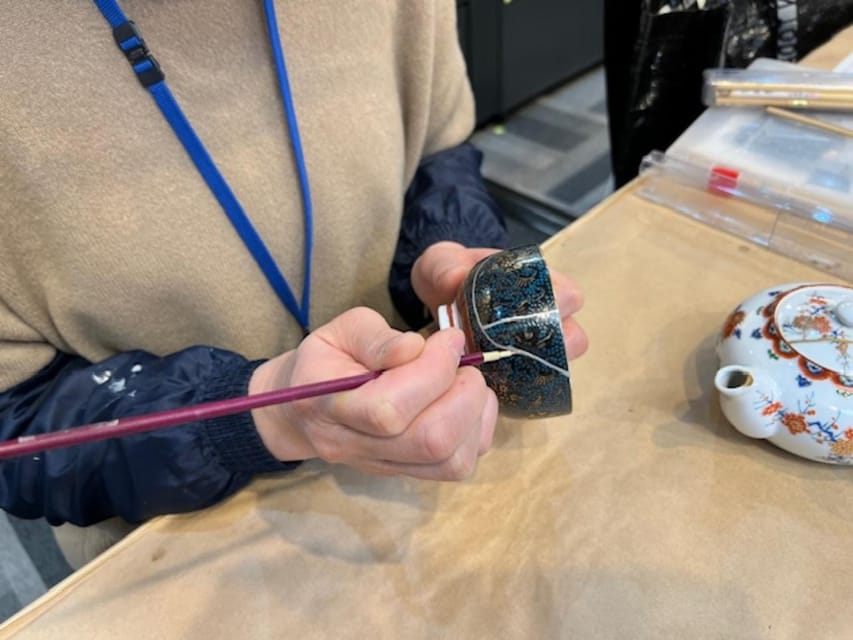
Book it if you want more than a souvenir from a Tokyo shop. You will learn a traditional repair craft, work with genuine Arita Ware, and take home an object marked by your own hand.
The strongest reasons to choose this class are the English instruction, small group size, attractive historic shop setting, and personal finished plate. The main compromises are the $139 price, the limited object choice, the one-week drying period, and the fact that your plate is decorative rather than functional.
For a first kintsugi experience in Tokyo, those trade-offs are reasonable. I would book this workshop if you value craft and meaning over speed, especially if you can bring a small broken ceramic item that matters to you. If you want a broad selection of objects or a fully private studio, choose a different class.
FAQ
How long does the kintsugi workshop last?
The experience lasts 90 minutes, or 1.5 hours.
What times can I choose?
The available sessions start at 10:30, 13:30, and 15:30. Each session lasts 90 minutes.
Where does the workshop take place?
It takes place at Nihonbashi Mutoh Main Store, 1-8-3 Honcho Nihonbashi, Chuo City, Tokyo 103-0023.
Is the workshop taught in English?
Yes. An English-speaking instructor leads the experience.
What item do I repair?
A plate is provided for the standard experience. You may also bring your own ceramic or porcelain item if it is no more than approximately 15 centimeters in diameter and 15 centimeters high, with one or two broken parts.
Can I take my finished plate home?
Yes. The plate used in the experience is available to take home, but it should dry indoors for about one week after the workshop.
Can I eat or drink from the repaired plate?
No. The finished piece should be used for decoration only. It is not suitable for a microwave or dishwasher and should be hand washed with dishwashing detergent.
Is the activity suitable for children?
No. The activity is not suitable for children under 13. It is wheelchair accessible, and groups are limited to 10 participants.
Just added around Tokyo
- Tokyo: Customizable Private Guided Walking Tour★ 4.5 · 129 reviews
- Private Harajuku Omotesando Architecture Tour★ 4.9 · 18 reviews
- Tokyo: Guided Helicopter Ride★ 4.9 · 24 reviews
- Tokyo: Guided Walking Tour of Tsukiji Market with Lunch★ 4.4 · 24 reviews
- Tokyo: Private Personalized Local Food Tour★ 4.5 · 101 reviews
- Tokyo GINZA: KONPARU Japanese Cabaret Show with Drink★ 4.8 · 38 reviews
- Tokyo: Guided Walking Tour of Tsukiji Market with Breakfast★ 4.4 · 134 reviews
- Tokyo: Gotokuji Cat Temple, Shinjuku Cat Cafe & 3D Cat Tour★ 4.9 · 38 reviews
Guided, compared.
Kyoto Early Morning Tour with English-Speaking Guide
Read our review →

Tokyo 4hr Private Tour with Government-Licensed Guide
Read our review →
Kyoto 6hr Private Tour with Government-Licensed Guide
Read our review →
Hiroshima / Miyajima Full-day Private Tour with Government Licensed Guide
Read our review →
Early Morning Tour with English-Speaking Guide
Read our review →