
REVIEW · CYCLING TOURS
Hiroshima: Peace Cycling Tour with Local Guide
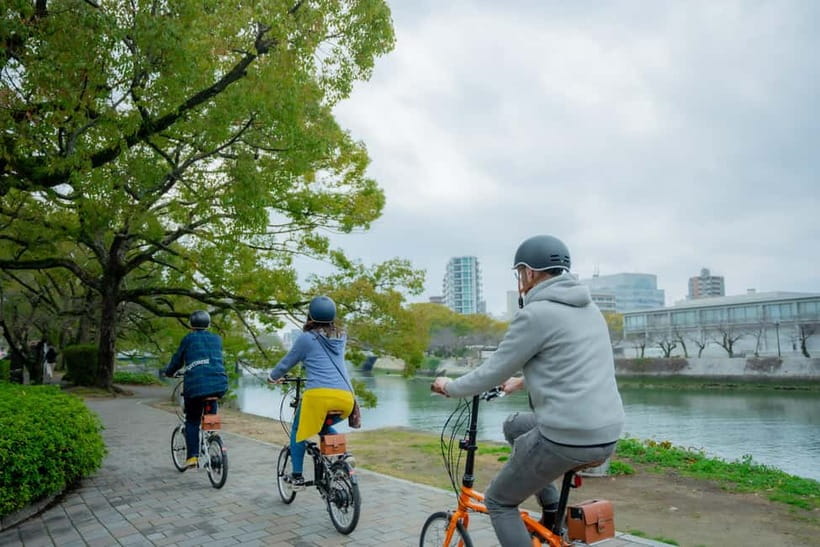
Hiroshima’s story reaches far beyond the Atomic Bomb Dome. This small-group cycling tour takes you from Peace Memorial Park into ordinary streets where surviving trees, bridges, hospitals, rail lines, and streetcars help explain how far the blast reached and how the city rebuilt itself.
I like two things here. First, the electric bicycles let you cover more ground without turning the tour into a workout. Second, guides such as Shin and Kana bring family stories and local memories to a subject that can feel distant in a museum. The main consideration is that this is a shared ride, so the pace may slow for children or riders who are not used to cycling.
In This Review
- Key points to know before booking
- Why cycling gives Hiroshima a clearer story
- Meeting at the Peace Park Rest House
- The two-hour route: Peace Park, streetcars, and the rebuilt city
- The three-hour route: a fuller circuit of Hiroshima’s memorial sites
- The guides make the history personal
- Electric bikes, pace, and practical comfort
- What the ride adds beyond a museum visit
- Is $52 good value?
- Who should book this Hiroshima cycling tour?
- Should you book it?
- FAQ
- Where does the Hiroshima cycling tour begin?
- How long is the tour?
- What language is the tour conducted in?
- How many people can join?
- Are electric bicycles included?
- What height is required for an adult electric bicycle?
- Can children join the tour?
- Are food and drinks included?
- What should I bring?
- What happens if I arrive late?
Key points to know before booking
- Ride beyond the Atomic Bomb Dome: The route reaches suburbs and less touristic streets with several A-bomb heritage sites.
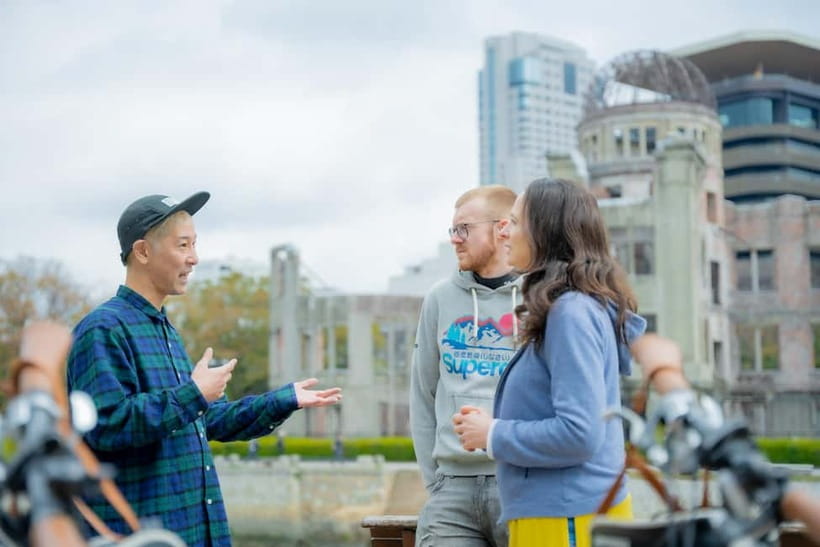
- Hear local family stories: Guides including Shin, Kana, Moe, and Mai often connect the history to parents, grandparents, or friends affected by August 6, 1945.
- Choose two or three hours: The shorter route focuses on Peace Park and the wider city; the longer route adds Hiroshima Castle, bridges, parks, a hospital, and more memorial sites.
- Use an electric bicycle: Adult e-bikes are available for riders at least 145 centimeters tall, with limited child options.
- Expect a serious but hopeful tour: The subject is painful, yet the guiding style also looks at healing, rebuilding, and peace.
- Keep the group small: Up to 10 people ride together, with bicycle accident insurance and photos supplied afterward.
Why cycling gives Hiroshima a clearer story
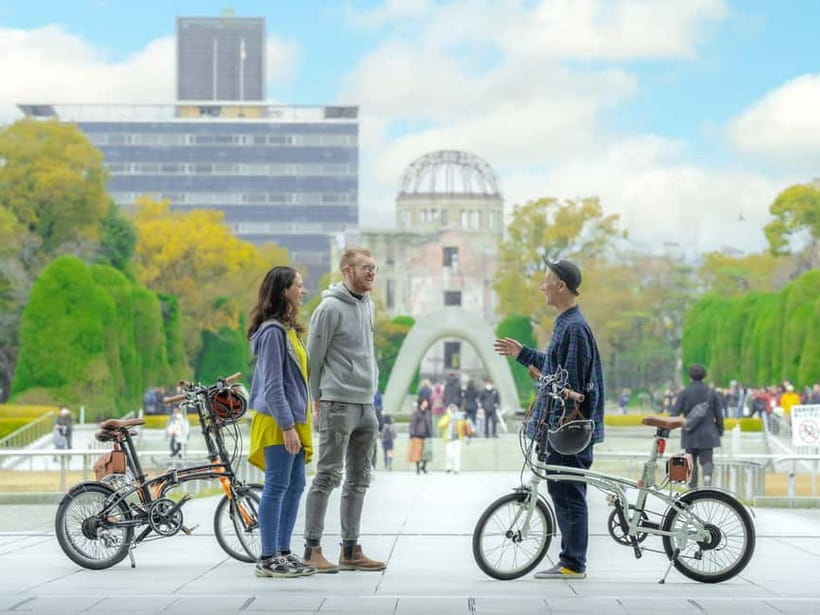
Peace Memorial Park is essential, but it can also create a narrow picture of Hiroshima. You see monuments, the Atomic Bomb Dome, and the river, then perhaps move on to the museum. This tour adds scale.
Within roughly 2.5 kilometers of the hypocenter, the destruction was severe. On a bicycle, you can move through that area and see how the city now looks: green public spaces, working streets, rail lines, bridges, hospitals, and neighborhoods. The contrast is not a distraction from the history. It is part of the history.
I like that the ride does not treat Hiroshima as a single memorial site. The guide points out places you could easily pass without knowing their connection to the bombing. That makes the city itself part of the lesson.
The bicycles are electric, which matters in warm weather and for anyone who wants to focus on the guide rather than hills or distance. The route covers modest distances, and the motor assistance makes the ride approachable for people who can ride a bicycle but do not cycle often.
A few more Hiroshima trips to weigh up
- Hiroshima in a Nutshell: Morning Bike Adventure
★ 5.0 · 524 reviews - Hiroshima 2hr Peace Cycling Tour with Local Guide
★ 5.0 · 321 reviews - Hiroshima: Best of Hiroshima Guided Bike Tour
★ 4.9 · 89 reviews
Meeting at the Peace Park Rest House
The tour begins at the Rest House in Hiroshima Peace Park. From Hiroshima Station, take the Hiroshima Electric Railway to Atomic Bomb Dome Station, a ride of about 20 minutes, then walk about five minutes to the meeting point.
Give yourself enough time to find the Rest House. Arriving late without notice can cancel the tour, with the full same-day fee charged, so this is not a good activity to squeeze between tight train connections.
The group can include up to 10 people. That is small enough for questions and conversation, but it is still a shared ride. If a child or inexperienced cyclist is in the group, the guide may adjust the pace for everyone.
Wear comfortable clothes and shoes. High heels are not allowed, and I would also bring water and a towel, especially in summer. Food is not included, so eat beforehand or plan a meal afterward.
The two-hour route: Peace Park, streetcars, and the rebuilt city
The two-hour option starts at 11:00 or 15:00. After a short introduction, the group spends time in Peace Memorial Park, where the guide explains the purpose of the park, the memories held in its monuments, and what happened in Hiroshima around 70 years ago.
The Atomic Bomb Dome provides the most familiar image of Hiroshima, but a guide helps put it in context. You learn about the destruction around the hypocenter and the meaning attached to the park’s memorials. This is a place for careful listening rather than a quick photo stop.
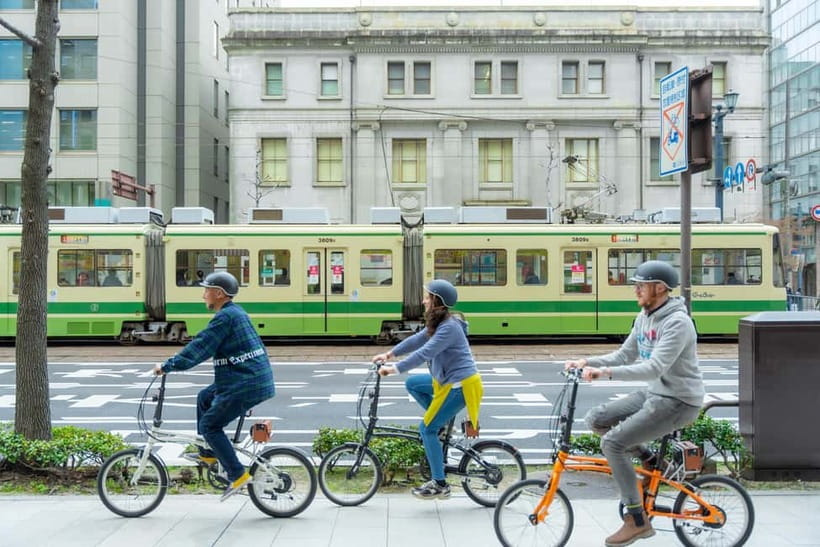
At about noon or 4:00 p.m., the route moves away from the central tourist area. One particularly useful detail is the A-bombed streetcar. A tram that survived the bombing still runs today, linking a normal part of city life with the events of August 6, 1945.
The suburban section is the reason I would choose this tour instead of spending the entire visit only around the Dome. You see Hiroshima as a living city, not simply a historic site. The guide introduces additional A-bomb heritage locations and explains how the city recovered from almost total devastation in the central area.
The two-hour route finishes at the original meeting point at 1:00 or 5:00 p.m. It is a good fit if you have only one day in Hiroshima, want time for the Peace Memorial Museum, or prefer a shorter activity in hot weather.
The three-hour route: a fuller circuit of Hiroshima’s memorial sites
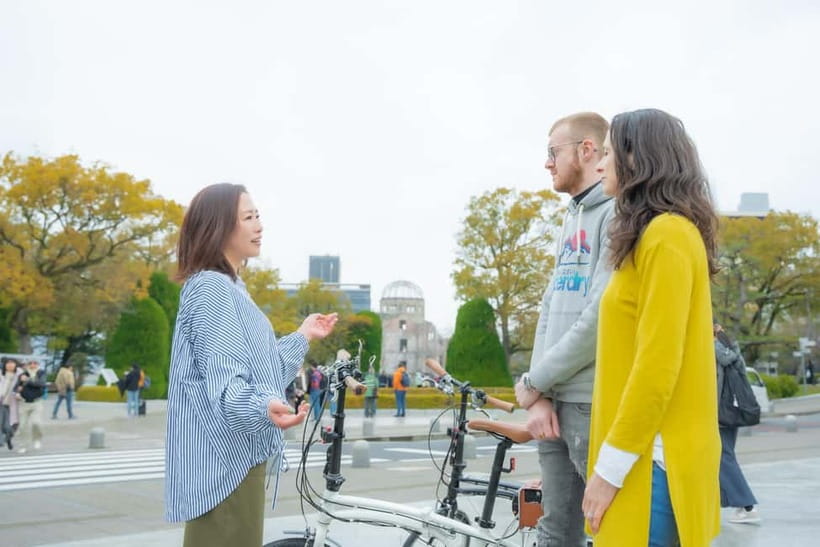
The longer route starts at 10:00 or 14:00 and adds a broader circuit. It is the better choice if you want the city’s physical layout to support the historical story.
The first stop is Hiroshima Castle, followed by Hiroshima Gokoku Shrine and its shrine gate. These sites help establish the city before the route reaches the main Peace Park area. The stop at Hiroshima Central Park continues that sense of place, showing how public spaces now occupy parts of a city once devastated by the blast.
At Aioi Bridge, the guide begins connecting the river crossings and street pattern to the bombing. The Atomic Bomb Dome follows at about 11:25 or 15:25, with time to understand its place in Peace Memorial Park rather than treating it as an isolated ruin.
The ride then follows the Motoyasu River and Peace Bridge before continuing to Higashisenda Park. Rivers and bridges are important here because they reveal how Hiroshima is arranged and how people moved through the city before and after the bombing.
The Hiroshima Red Cross Hospital is another meaningful stop. A hospital may seem less visually dramatic than the Dome, but places like this show the immediate human response and the practical burden left behind. The route then reaches Hiroshima Railway, where the guide discusses the city’s rail history and the surviving A-bomb streetcar.
Miyuki Bridge and the Kobayashi River add more distance from the central memorial zone. At the Surviving Weeping Willow Tree, the guide points to a living reminder of what endured. The final stretch follows Peace Boulevard before returning to the meeting point at 1:00 or 5:00 p.m.
The three-hour itinerary has many stops in a short period. That is useful for orientation, but it also means you should not expect long, quiet visits at every location. The guide must balance riding, traffic, explanations, and the group’s pace.
Same city, a completely different kind of day:
- Peaceful Hiroshima & Miyajima UNESCO 1 Day Bus Tour
★ 5.0 · 5,309 reviews - Hiroshima: Hiroshima and Miyajima UNESCO Sites 1-Day Tour
★ 4.9 · 2,330 reviews - Hiroshima / Miyajima Full-day Private Tour with Government Licensed Guide
★ 5.0 · 1,298 reviews - Hiroshima Historical Walking Tour – Why A-Bomb was Dropped
★ 4.8 · 893 reviews
The guides make the history personal
The guide you receive depends on the date, but the named guides include Shin, Kana, Moe, Mai, Tomas, Hugo, and Bella Kana. The strongest part of the experience is the human delivery of the subject.
Shin is repeatedly praised for his energy, clear English, humor, and family connection to the bombing. His stories have included memories passed from grandparents to parents and then to himself. That kind of connection does not replace historical facts, but it gives them a personal frame.
Kana is described as warm, passionate, and careful with details. She also brings personal family experiences and stories from people connected to Hiroshima. Moe and Mai are noted for thoughtful explanations, while Bella Kana has been especially attentive to comfort in hot conditions.
Do not expect every guide to tell the same stories. That is normal for a local-led experience. The common thread is an effort to explain not only what was destroyed, but how Hiroshima’s people have carried the memory and worked toward peace.
I appreciate the balance described by the tour’s strongest feedback: the guides do not make the ride cheerful in a careless way, but they do not leave you only with horror. Stops often return to hope, courage, healing, and the city’s recovery.
Electric bikes, pace, and practical comfort
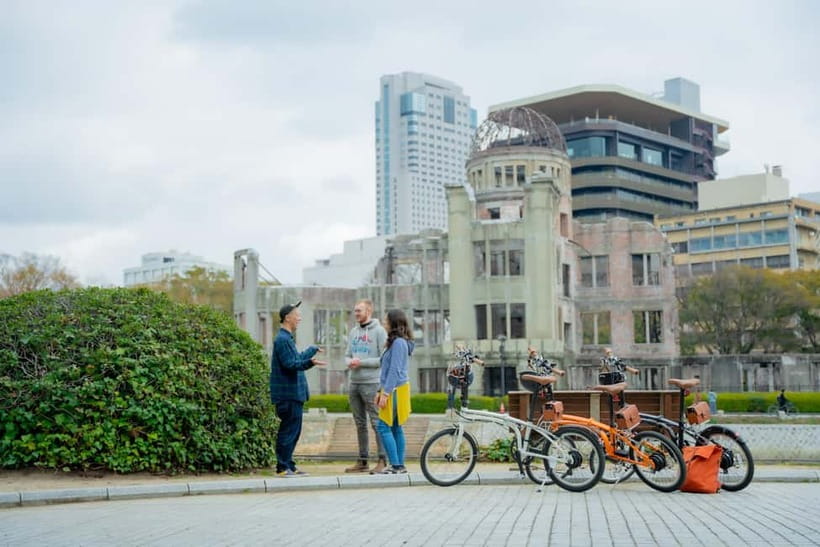
The adult electric bicycles are for riders at least 145 centimeters tall. The listing marks anyone under that height as unsuitable for the standard experience, so check measurements carefully before booking.
Children can use adult bicycles at the child rate if they are under 15 and meet the height requirement. Children’s cross bikes are available for riders from 110 to 145 centimeters, but only two are available per booking. Electric child seats are limited as well, and they are intended for children under 22 kilograms and under 115 centimeters.
Infants from age 1 can join, with infant seats available at no charge, but you should contact the operator before reserving because child equipment is limited. The minimum age shown for reservations is 1 year, though the ride still needs to suit your family’s cycling ability.
Several riders describe the electric bikes as easy to operate and in good condition. One useful warning comes from a tall rider who found the bicycle frame small. If you are tall, ask about the bike size before you commit.
The ride is not presented as a demanding athletic outing. Still, you must be able to ride a bicycle and follow the guide through city streets. Comfortable shoes, water, and light clothing are sensible. In hot weather, guides have provided cold towels, wet wipes, salt candies, ice packs, and shade breaks, but you should not rely on those extras as a substitute for your own water and sun protection.
What the ride adds beyond a museum visit
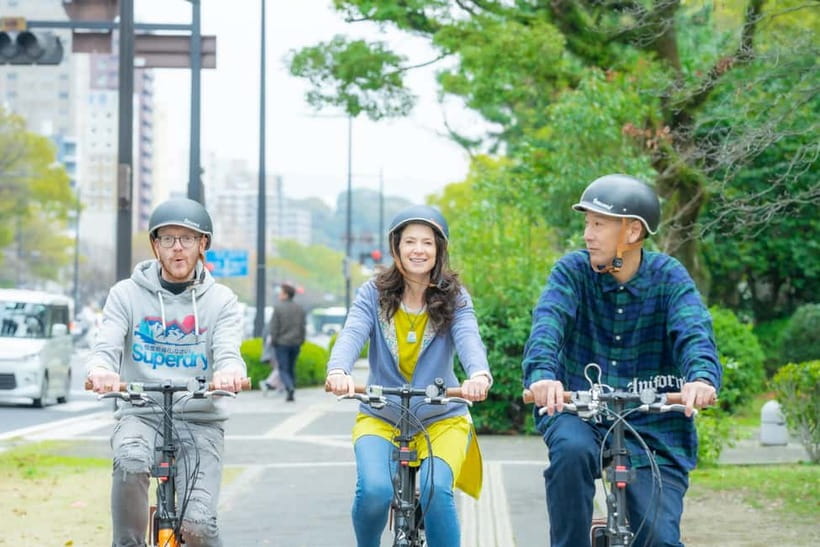
The Peace Memorial Museum gives you objects, records, photographs, and a focused account of the bombing. This bicycle tour does something different: it gives you distance and movement.
You can watch the Atomic Bomb Dome recede as the group rides into ordinary neighborhoods. You can see a hospital, a rail line, a bridge, a willow tree, or a streetcar and understand that the story is attached to working parts of the city, not only to memorial architecture.
That is particularly useful for families and younger visitors. An 11-year-old can find the bicycles engaging, while the guide supplies the context that a casual ride would lack. The activity also suits solo visitors because the small group gives you company without the fixed formality of a large bus tour.
The ride is not a substitute for the museum. I would pair them if your schedule allows. The museum helps you confront the evidence; the bicycle route helps you understand the city’s geography and renewal.
Is $52 good value?
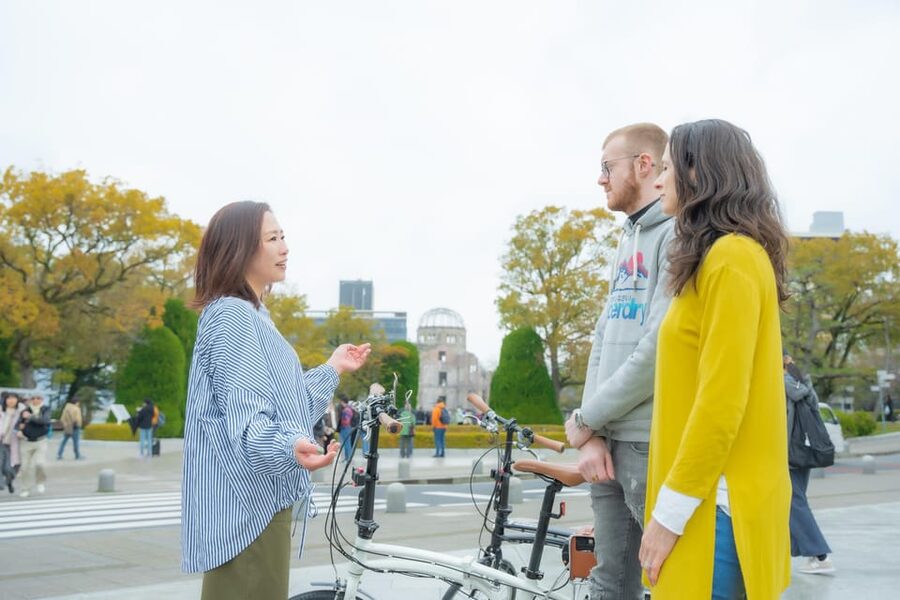
At $52 per person, the price includes the electric bicycle, an English-speaking guide, and bicycle accident insurance. For two or three hours, that is fair value if you want both transportation and interpretation.
A regular bicycle rental would cost less in many places, but it would not provide the route, the historical explanations, or the local stories. A private guide would offer more control, yet this shared tour keeps the cost moderate and limits the group to 10 people.
The value is strongest for a first visit or a short stay. You cover key central sites and several places farther out without spending time navigating on your own. You also avoid the fatigue that can come with a conventional bicycle in Hiroshima’s warmer months.
The price does not include food or drinks. It also does not guarantee a private group, a particular guide, or a fixed pace. Book it for the guided access and citywide context, not simply for the bike rental.
Free cancellation is available up to 24 hours before the start, and you can reserve now and pay later. Those terms help if your Japan itinerary is still shifting, but the late-arrival rule is strict.
Who should book this Hiroshima cycling tour?
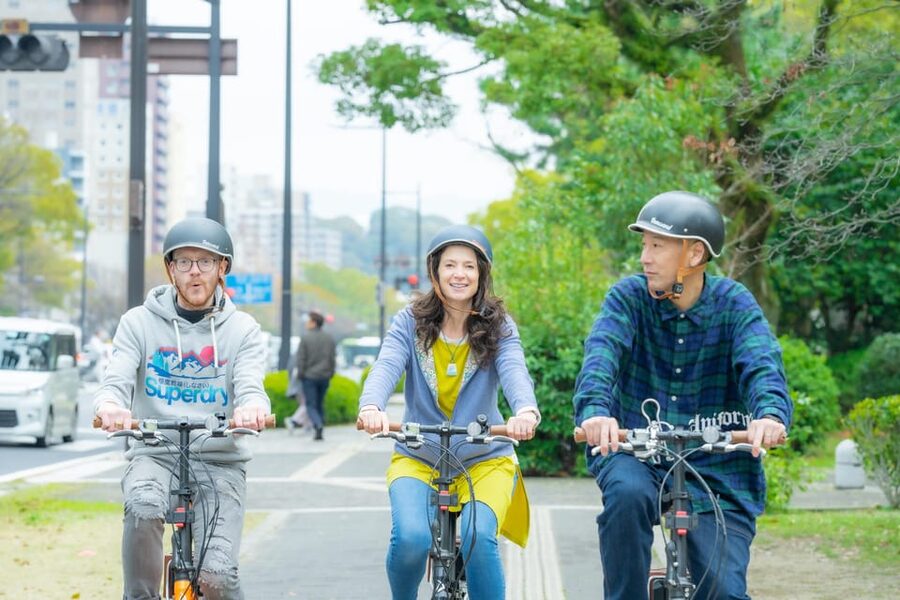
I would choose this tour for you if you:
- Want a wider view of Hiroshima than the Peace Park alone provides
- Prefer a moving activity to a long walking tour
- Are interested in local family accounts alongside the broad historical record
- Have limited time and want to cover the central area efficiently
- Are traveling with older children or teenagers who enjoy cycling
- Can ride a bicycle and meet the 145-centimeter height requirement for an adult e-bike
I would think twice if you dislike cycling in city streets, need a fully private itinerary, or want to spend long periods at each memorial. The tour visits many places, but the schedule keeps moving.
For a one-day Hiroshima visit, the two-hour option leaves more room for the museum and other plans. If you want a fuller understanding of how the bombing affected the city beyond the park, choose three hours.
Should you book it?
I would book this tour if you want Hiroshima to feel like a real city with a painful past, rather than a set of isolated monuments. The electric bike makes the distance manageable, and the local guides add the sort of family and neighborhood detail that photographs alone cannot provide.
The best reason to go is the combination of scale and personal storytelling. The main caution is simple: this remains a serious history tour, and the shared pace may not suit strong cyclists looking for speed or visitors who need lots of time at each stop.
For most first-time visitors who can ride a bicycle, especially families and people with only a day in town, it is a thoughtful and efficient way to see Hiroshima.
FAQ
Where does the Hiroshima cycling tour begin?
The meeting point is the Rest House in Hiroshima Peace Park. From Hiroshima Station, take the Hiroshima Electric Railway to Atomic Bomb Dome Station, then walk about five minutes.
How long is the tour?
You can choose a two-hour or three-hour route. The two-hour departures are listed at 11:00 and 15:00. The three-hour departures are listed at 10:00 and 14:00, subject to availability.
What language is the tour conducted in?
The tour is conducted in English with a live English-speaking guide.
How many people can join?
It is a shared small-group tour for up to 10 participants.
Are electric bicycles included?
Yes. Rental bicycles are included in the price, along with bicycle accident insurance.
What height is required for an adult electric bicycle?
Adult electric bicycles are for riders at least 145 centimeters tall.
Can children join the tour?
Children can join from age 1, but child seats and children’s bicycles are limited. Children under 15 can use an adult bicycle at the child rate if they meet the height requirement.
Are food and drinks included?
No. Food and drinks are not included, so bring water and plan meals separately.
What should I bring?
Bring comfortable shoes, comfortable clothes, a towel, and drinks. High-heeled shoes are not allowed.
What happens if I arrive late?
If you are late without contacting the operator, the tour can be cancelled. A 100 percent cancellation fee applies on the day and is non-refundable.
Just added around Hiroshima
- The Journey of Hiroshima from Tragedy to Peace★ 4.8 · 44 reviews
- Miyajima: Private Rickshaw Tour to Itsukushima Shrine★ 4.9 · 45 reviews
- Hiroshima: Miyajima Half-day Historical Walking Tour★ 4.7 · 100 reviews
- Hiroshima:Guided Virtual Tour/PEACE PARK TOUR VR★ 5.0 · 29 reviews
- Hiroshima/Miyajima Private Custom Tour with Local Guide★ 5.0 · 134 reviews
- Hiroshima: Saijo Sake Tasting at 7 Breweries Guided Tour★ 4.8 · 29 reviews
- Hiroshima: Tour of Atomic Bomb Dome & Peace Memorial Museum★ 5.0 · 20 reviews
- Hiroshima: Private Walking Tour with a Local★ 4.6 · 70 reviews
Cycling Tours, compared.

3h Tokyo E-Bike Tour: Hidden Gems, and Local Life with guide
Read our review →
Arashiyama Bamboo Forest & Hidden Gems Bike Tour (Early Bird)
Read our review →
Hiroshima in a Nutshell: Morning Bike Adventure
Read our review →
5 Top Highlights of Kyoto Full Day Bike Tour (E-bike option)
Read our review →Browse the lists this tour appears in