
REVIEW · CYCLING TOURS
Hiroshima 2hr Peace Cycling Tour with Local Guide
Hiroshima’s painful past feels more immediate when you move through the city where it happened. This two-hour e-bike tour links the major memorials with ordinary streets, suburban views, and surviving traces of wartime Hiroshima. Guides such as Shin and Kana add family stories and local context that a museum visit alone cannot provide.
I like the way the bicycles let you cover more ground without turning the experience into a hard workout. I also like the small group size, capped at 10 people, which gives you a better chance to ask questions and hear the guide clearly. The main drawback is time: two hours goes quickly, especially if you want long pauses at the memorials.
In This Review
- Key points at a glance
- Why a bicycle works so well in Hiroshima
- Meeting at the Peace Memorial Park Rest House
- The Peace Park’s central memorials
- From memorial sites to the rebuilt city
- What the two-hour schedule really gives you
- Price, group size, and overall value
- Weather, clothing, and cycling comfort
- Who will enjoy this Hiroshima bike tour?
- Should you book the Hiroshima Peace Cycling Tour?
- FAQ
- Where does the Hiroshima Peace Cycling Tour start?
- Where does the tour finish?
- What departure times are available?
- How many people can join the tour?
- Are electric bicycles provided?
- What happens if it rains?
- Is bicycle accident insurance included?
- Can I cancel for a full refund?
Key points at a glance
- Personal family connections: Guides including Shin share stories connected to relatives who lived through the bombing.
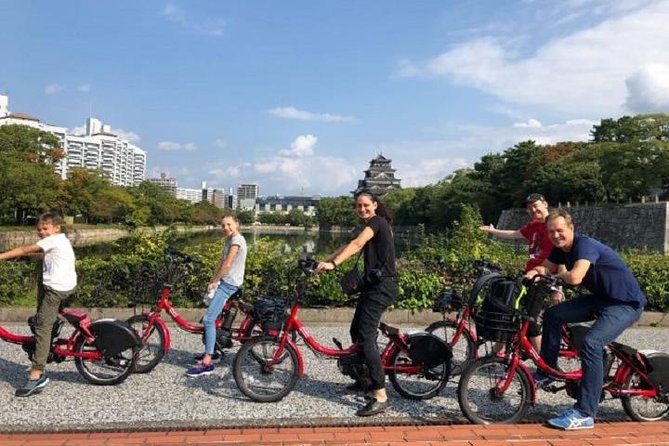
- Easy electric bicycles: Hiroshima is flat, and the e-bikes make the ride manageable even if you are not a regular cyclist.
- More than the Peace Park: You’ll see city streets, off-route views of the A-Bomb Dome, and the surviving A-Bombed Streetcars.
- Small mixed group: The tour accepts up to 10 people, though the pace may slow if children or inexperienced cyclists join.
- Rain plan included: Poor weather can mean a walking route through the Hypocenter and nearby sites, or a refund.
- Back where you started: The ride begins and ends at the Peace Memorial Park Rest House.
Why a bicycle works so well in Hiroshima
Hiroshima is a relatively easy city to explore by bike. The route is described as a leisure ride, and the electric bicycles remove much of the effort. You still pedal, but the assistance matters when you want to pay attention to the guide instead of thinking about hills or distance.
The bikes also help connect places that feel separate on foot. You can move from the central memorials into the surrounding city and see how Hiroshima functions today. That contrast matters. The Peace Park is carefully designed for remembrance, while nearby streets show a rebuilt, lived-in city.
I would not book this expecting a sporty cycling outing. The goal is history and local perspective, with the bicycle serving as your transport. The pace is adjusted for the group, particularly when children or people unused to cycling are present. That makes the ride friendly for many ability levels, though it may disappoint strong cyclists who want to move quickly.
The electric bikes were repeatedly praised for being easy to operate and in good condition. Hiroshima’s flat terrain and lighter traffic compared with Tokyo or Osaka also make the ride feel less intimidating for cautious cyclists. Still, you should be comfortable riding a bicycle in a shared group and following your guide through city streets.
A few more Hiroshima trips to weigh up
- Hiroshima in a Nutshell: Morning Bike Adventure
★ 5.0 · 524 reviews - Hiroshima: Peace Cycling Tour with Local Guide
★ 4.8 · 286 reviews - Hiroshima: Best of Hiroshima Guided Bike Tour
★ 4.9 · 89 reviews
Meeting at the Peace Memorial Park Rest House
The meeting point is the Hiroshima Peace Memorial Park Rest House, at 1 Nakajimacho in Naka Ward. The scheduled departures are 11:00 and 15:00, with the ride finishing at the same place around 13:00 or 17:00.
This location is useful because it puts you directly beside the memorial area. You do not waste the first part of the tour traveling across town to reach the subject of the experience. Public transportation is nearby, and Hiroshima Free Wi-Fi is available throughout the city, though the tour itself does not provide Wi-Fi.
Arrive early. If you are late without prior notice, the booking can be canceled with a full same-day charge. Even advance contact does not guarantee that the ride can be held, since it is a shared departure with other participants.
The Rest House has no luggage storage. If you have bags with you, use coin lockers at the International Conference Center Hiroshima or Hiroshima Peace Memorial Museum, both about a six-minute walk away. That is an easy detail to overlook, especially if you are fitting the tour between hotel checkout and a train.
The Peace Park’s central memorials
The first main section lasts about 55 minutes in and around Hiroshima Peace Memorial Park. You’ll learn why the park was created and what its monuments mean, including the Atomic Bomb Dome, the Cenotaph for the A-Bomb Victims, the Children’s Peace Monument, and the Peace Bell.
The bicycle is left behind when the guide explains the key memorials, so this part is more like a walking visit within the ride. That is appropriate. These places call for time and attention, not a quick roll-by.
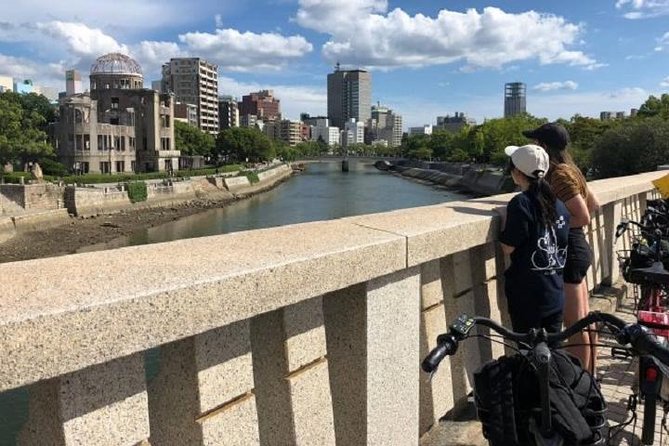
The Atomic Bomb Dome is the most recognizable structure in Hiroshima’s memorial district. Seeing it from the usual park approach is important, but the tour also takes you to city viewpoints away from the standard path. Those angles help you understand the Dome as part of a functioning city rather than an isolated monument.
At the Cenotaph, the guide explains the memorial’s purpose and the idea behind its inscription. At the Children’s Peace Monument, the focus shifts to the children affected by the bombing and its aftermath. The Peace Bell offers another point of reflection, tied to the city’s continuing call for peace.
This is not a replacement for the Hiroshima Peace Memorial Museum. The museum gives you documents, objects, photographs, and a more detailed historical record. The bike tour gives you movement, place, and a guide who can explain how the memorials fit together. I would ideally schedule both, using the museum for evidence and the cycling tour for context and human connection.
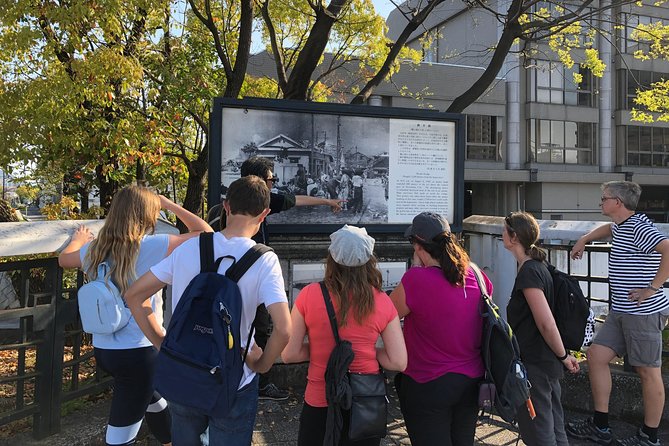
The subject is serious, and the tone is appropriately respectful. Several guides, particularly Shin, connect the history to family experiences. Shin’s family connection is especially close: his mother was in the womb when the bomb was dropped, and his grandparents lived through the bombing. Those details can make the history feel personal without turning the tour into a performance.
Not every guide has the same family background. One account specifically noted that a guide did not have a direct family experience in Hiroshima. That is worth keeping in mind if a personal survivor connection is a deciding factor. The tour’s focus remains the city’s history and present-day peace message, but the exact storytelling style depends on who leads your group.
From memorial sites to the rebuilt city
After the park, the tour moves beyond the memorial district for about an hour. This is where the experience earns its place beside a standard Peace Museum visit. You’ll see the present-day city and learn about wartime destruction, reconstruction, and the way Hiroshima continues to live with its past.
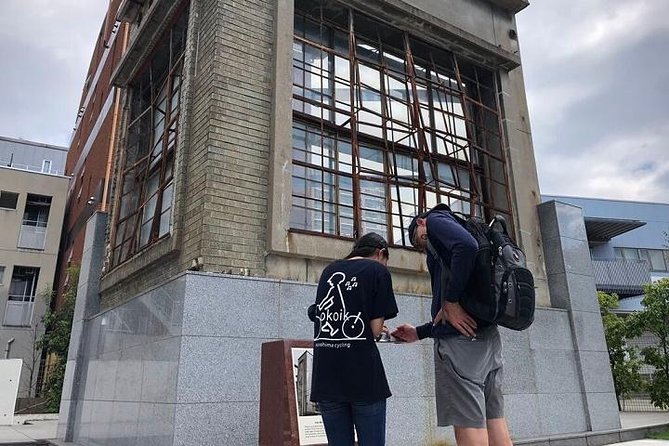
One special detail is the A-Bombed Streetcars. Hiroshima still has a train running today that survived the atomic bombing. Seeing an actual surviving streetcar gives you a link between the event and the city’s daily life. It is a small detail, but it helps explain how Hiroshima rebuilt itself through ordinary systems and routines.
You may also see suburban townscape and streets that are easy to miss if you stay only around the Dome. The tour does not simply move from one famous marker to another. It shows the relationship between memorial space and the city around it.
That broader view is one of the strongest reasons to choose a bicycle. On foot, you might spend most of your time within the Peace Park and then return to the station. By bike, you can make a wider loop in the same two-hour window. The tradeoff is that some stops are necessarily brief. If you prefer long, quiet periods at each memorial, a walking visit on your own may suit you better.
The guide’s role is central here. Shin has been praised for combining historical facts with family memories, while Kana is noted for clear English, steady pacing, and detailed explanations at several locations. Other guides, including Bella, Tomas, Mimi, and Moet, have also led groups. The exact guide is not guaranteed, but the experience is designed around local storytelling rather than a recorded audio track.
Same city, a completely different kind of day:
- Peaceful Hiroshima & Miyajima UNESCO 1 Day Bus Tour
★ 5.0 · 5,309 reviews - Hiroshima: Hiroshima and Miyajima UNESCO Sites 1-Day Tour
★ 4.9 · 2,330 reviews - Hiroshima / Miyajima Full-day Private Tour with Government Licensed Guide
★ 5.0 · 1,298 reviews - Hiroshima Historical Walking Tour – Why A-Bomb was Dropped
★ 4.8 · 893 reviews
What the two-hour schedule really gives you
The schedule is compact:
- 11:00 or 15:00: Meet at the Peace Park Rest House
- About 55 minutes: Peace Memorial Park and its memorials
- About one hour: Hiroshima streets, surviving streetcars, and postwar city views
- 13:00 or 17:00: Return to the Rest House
That is enough time for a focused introduction to Hiroshima. It is not enough for every historic site in the city. The two-hour route emphasizes wartime history, the Peace Park, and postwar recovery.
If you want Hiroshima Castle and a fuller look at prewar history, the three-hour version adds those areas and gives more time for conversation with the guide. I would choose the two-hour ride if you are fitting it around the Peace Memorial Museum, Miyajima, or a train departure. Choose the longer option if Hiroshima history is one of the main reasons for your visit and you want a slower, broader route.
The schedule can change based on conditions on the day. That is normal for a bicycle tour, and it may also mean that the group spends more or less time at a particular stop.
Price, group size, and overall value
At $59.69 per person, the tour is not the cheapest way to see Peace Memorial Park. You can walk through the park without paying an admission fee, and the main memorials are accessible independently. The price pays for the bicycle, electric assistance, guide, small-group format, bicycle accident insurance, and access to places beyond the obvious park route.
I think the price is fair if you value local explanation and efficient sightseeing. You cover more ground than on foot, and the guide helps you understand why each site matters. The personal stories are a major part of the value, especially when your guide has a close family connection to the bombing.
The value is weaker if you have already spent a full day exploring Hiroshima by bicycle or if you want a private guide. This is a mixed tour, not a private departure, and the group can include up to 10 people. The pace may be set by the least experienced cyclist, which is considerate but can make the ride feel slow for confident riders.
Photos taken during the day are provided as data afterward. That is a pleasant extra, but I would treat it as a bonus rather than a reason to book.
Weather, clothing, and cycling comfort
The tour depends on suitable weather. If rain makes cycling unsafe, you can switch to a walking route called the Rainy Day Limited Peace Route or request a refund. The walking option visits Peace Memorial Park, the Atomic Bomb Dome, the Hypocenter, the Former Bank of Japan, Fukuromachi Elementary School, and the main street, with the same approximate two-hour schedule.
The Hypocenter is especially important on the rainy route. It marks the point where the bombing’s destruction reduced the surrounding area to scorched earth in an instant. Walking a radius of roughly 0.5 to 1 kilometer around that site gives the guide a different way to explain the scale and force of the event.
Cold weather is also possible. A winter ride may be moving but chilly, and one account describes cycling in bitter winds and snowfall. Wear layers and prepare for outdoor conditions. The tour can be canceled for safety reasons due to weather, with a choice of a different date or a full refund if the plan cannot operate.
Free cancellation is available up to 24 hours before the start time. Cancellations or changes inside that window are not refundable. The weather exception is handled separately by the provider.
Who will enjoy this Hiroshima bike tour?
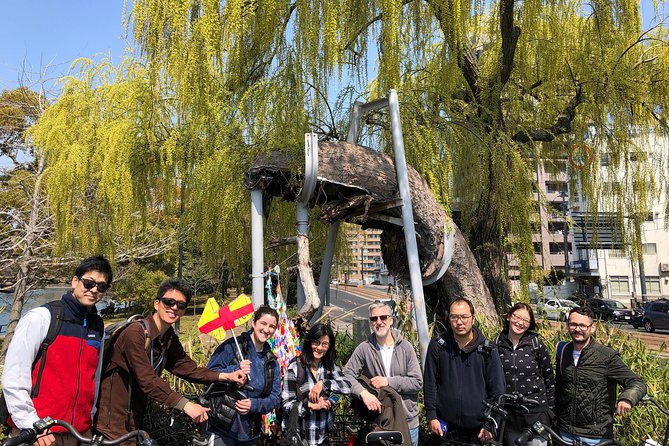
I would recommend it to first-time visitors who want a clear introduction to Hiroshima without spending the whole day in one museum. It is also a good fit for families, provided children meet the bicycle requirements and can manage a shared group ride.
Adult electric bicycles require a height of at least 145 centimeters. Children between 110 and 145 centimeters can use one of two available children’s cross bikes, and children under 15 can use adult or children’s bicycles at the child rate. Electric bicycles with child seats are available for children under 22 kilograms and under 115 centimeters.
The tour suits you if you want:
- A gentle ride instead of a demanding cycling workout
- A guide who can answer questions in English
- Personal stories alongside historical facts
- Views beyond the standard Peace Park route
- A small mixed group rather than a large bus tour
- A practical way to combine memorial sites with the modern city
I would think twice if you dislike bicycles, need a completely private pace, or want an exhaustive treatment of Hiroshima’s history. The ride is easy, but it is still a ride. You will also spend part of the experience listening outdoors and moving between sites.
Should you book the Hiroshima Peace Cycling Tour?
Book it if you want Hiroshima to feel like a city of people, not only a collection of memorials. The combination of electric bicycles, a local guide, family stories, and ordinary city streets gives you a thoughtful two-hour introduction.
I especially like it as a first activity in Hiroshima, before visiting the Peace Memorial Museum. The ride gives you a map in your head and a sense of place, while the museum can then fill in the detail. If your schedule allows only one short Hiroshima activity, this is a good choice for seeing a lot and asking questions along the way.
Choose the three-hour route if you want Hiroshima Castle and more prewar context. Choose a self-guided visit if you want silence and unlimited time at each memorial. For most visitors who want an active, personal, and manageable introduction, the two-hour tour is worth the $59.69, especially when Shin, Kana, or another strong local storyteller is leading the group.
FAQ
Where does the Hiroshima Peace Cycling Tour start?
The tour starts at the Hiroshima Peace Memorial Park Rest House in Nakajimacho, Naka Ward, Hiroshima.
Where does the tour finish?
The activity ends back at the Peace Memorial Park Rest House, the same place where it begins.
What departure times are available?
The scheduled starting times are 11:00 and 15:00. The tour finishes about two hours later, around 13:00 or 17:00.
How many people can join the tour?
The shared tour has a maximum of 10 participants.
Are electric bicycles provided?
Yes. Adult electric bicycles are provided, and children’s bicycles and electric bicycles with child seats are available under the stated height and weight requirements.
What happens if it rains?
If rain prevents the cycling route from operating, you can choose the Rainy Day Limited Peace Route on foot or request a refund. The walking route includes the Peace Park, Atomic Bomb Dome, Hypocenter, Former Bank of Japan, Fukuromachi Elementary School, and the main street.
Is bicycle accident insurance included?
Yes. Bicycle accident insurance is included in the tour price.
Can I cancel for a full refund?
You can cancel at least 24 hours before the local start time for a full refund. Cancellations or changes made less than 24 hours before the start time are not refundable.
Just added around Hiroshima
- The Journey of Hiroshima from Tragedy to Peace★ 4.8 · 44 reviews
- Miyajima: Private Rickshaw Tour to Itsukushima Shrine★ 4.9 · 45 reviews
- Hiroshima: Miyajima Half-day Historical Walking Tour★ 4.7 · 100 reviews
- Hiroshima:Guided Virtual Tour/PEACE PARK TOUR VR★ 5.0 · 29 reviews
- Hiroshima/Miyajima Private Custom Tour with Local Guide★ 5.0 · 134 reviews
- Hiroshima: Saijo Sake Tasting at 7 Breweries Guided Tour★ 4.8 · 29 reviews
- Hiroshima: Tour of Atomic Bomb Dome & Peace Memorial Museum★ 5.0 · 20 reviews
- Hiroshima: Private Walking Tour with a Local★ 4.6 · 70 reviews
Cycling Tours, compared.

3h Tokyo E-Bike Tour: Hidden Gems, and Local Life with guide
Read our review →
Arashiyama Bamboo Forest & Hidden Gems Bike Tour (Early Bird)
Read our review →
Hiroshima in a Nutshell: Morning Bike Adventure
Read our review →
5 Top Highlights of Kyoto Full Day Bike Tour (E-bike option)
Read our review →Browse the lists this tour appears in