
REVIEW · MIYAJIMA ISLAND TOURS
Hiroshima & Miyajima: UNESCO A-Bomb Dome & Itsukushima with Local
Hiroshima is best understood through two very different places: Miyajima’s sacred island and the city’s stark Peace Memorial sites. This private seven-hour tour links them with a local guide who can explain family memories, loss, recovery, and hope alongside the usual dates and facts.
I like the private format for two reasons: you can change the order to catch the Itsukushima torii at a better tide, and your guide can adjust the pace to your interests. Guides such as Yuka, Masa, and Ally have been praised for clear English, thoughtful explanations, and helping with train and ferry tickets. The catch is that you walk a lot, use public transportation, pay those fares separately, and cover two major destinations in one long day.
In This Review
- Key points to know before booking
- Why this private Hiroshima day works
- Miyajima begins with a sacred island
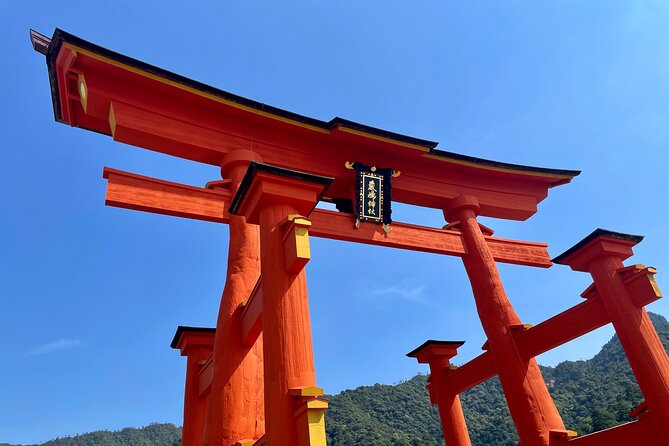
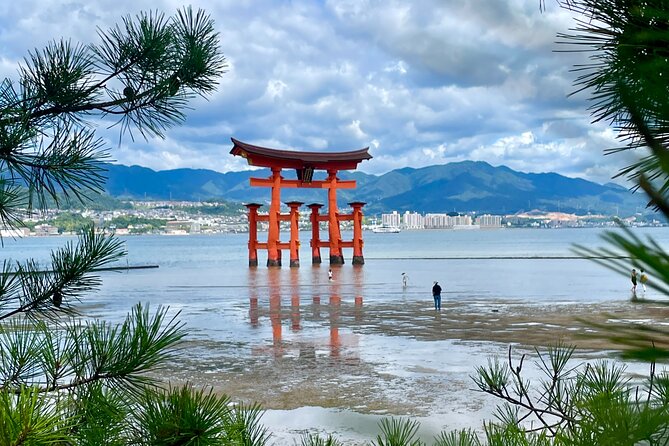
- Itsukushima Shrine and the famous torii
- Daishoin gives Miyajima a quieter side
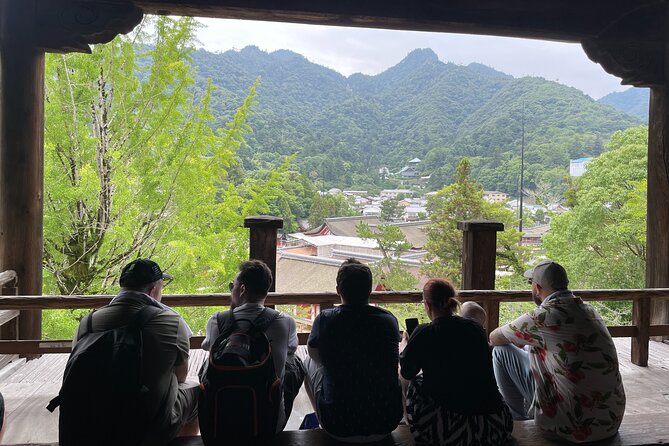
- Senjokaku and Miyajima’s open hall
- Omotesando is your lunch and souvenir window
- Crossing back toward Hiroshima City
- The A-Bomb Dome makes history physical
- The hypocenter and the human scale of loss
- Peace Memorial Park links the sites together
- The Peace Memorial Museum deserves your full attention
- Price, private value, and extra costs
- Who should book this seven-hour tour
- FAQ
- How long is the Hiroshima and Miyajima tour?
- Where does pickup take place?
- Can the order of Miyajima and Peace Memorial Park change?
- Is transportation included?
- Can I use a direct boat between Miyajima and Peace Memorial Park?
- Are Itsukushima Shrine and the Peace Memorial Museum included?
- Is lunch included?
- Is this tour suitable for people who cannot walk long distances?
- Should you book it?
Key points to know before booking
- The floating torii depends on the tide: Check the tide timetable before choosing the order of Miyajima and Peace Park.
- Your guide shapes the day: The route can be adjusted around your interests, pace, and transport preferences.
- Miyajima offers more than the famous gate: Daishoin Temple, Senjokaku, deer, oysters, conger eel rice, and momiji manju all add texture to the visit.
- The Peace Museum needs emotional room: The museum presents photographs and documents about the bombing and radiation exposure, so this is not a light sightseeing stop.
- Transportation is mostly public: Budget roughly ¥1,340 to ¥1,380 for basic transport, with direct boats and taxis costing more.
- Seven hours is useful but full: You see the major sights, yet you will need steady walking and sensible time management.
Why this private Hiroshima day works
The strongest feature here is not a rare attraction or special vehicle. It is the human scale. You spend the day with only your own group, rather than trying to keep up with a large party at crowded gates and narrow streets.
That matters in Hiroshima. At the Peace Memorial Museum, you may want time to stop, read, and think. On Miyajima, you may prefer to linger at a temple, browse food stalls, or take a quiet turn away from the main shopping street. A private guide can respond to that instead of following a fixed group schedule.
The guides bring different strengths. Yuka has been praised for answering questions clearly and for sharing useful background at the sights. Masa has helped guests buy transport tickets and adjusted the pace while keeping the main stops on track. Ally has focused on Miyajima’s Shinto and Buddhist sides. The provider also describes family history and cultural memory as part of the tour’s viewpoint, which gives the Hiroshima portion a more personal frame.
This is still a walking tour, not a chauffeur-driven excursion. Hotel or train station pickup is on foot, and public transport is the normal way to move between stops. That keeps the cost down, but it also means stairs, platforms, ferry boarding, and several hours on your feet.
More miyajima island tours in Hiroshima:
- Peaceful Hiroshima & Miyajima UNESCO 1 Day Bus Tour
★ 5.0 · 5,309 reviews - Hiroshima: Hiroshima and Miyajima UNESCO Sites 1-Day Tour
★ 4.9 · 2,330 reviews - Hiroshima / Miyajima Full-day Private Tour with Government Licensed Guide
★ 5.0 · 1,298 reviews
Miyajima begins with a sacred island
The day can start in Hiroshima City and proceed to Miyajima, or the order can be reversed. I would ask about the tide before settling on the plan. The torii appears to float when the water is high, while low tide changes the view and may allow you to see the gate from a very different angle.
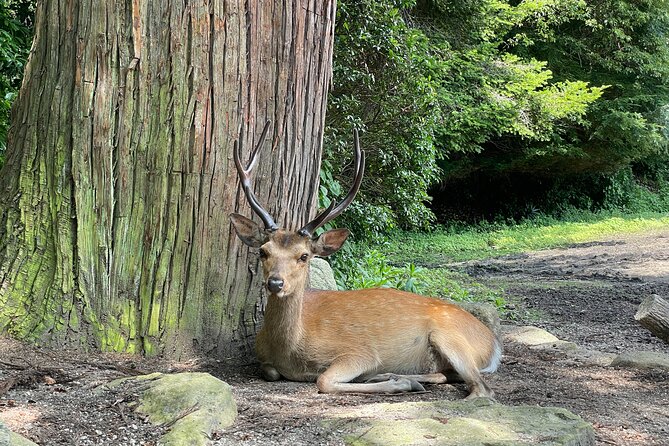
Miyajima has long been treated as a sacred island, and the first impression is not limited to one red gate. The island combines Shinto worship, Buddhist temples, old wooden halls, shopping streets, and free-roaming deer. Your guide helps connect these pieces instead of reducing Miyajima to a quick photo stop.
The basic crossing takes about an hour as part of the public transport route. A direct boat to Peace Memorial Park is also possible, taking around 45 minutes, but it costs extra. Ask about this option during your advance customization discussion if saving time matters more to you than keeping transport costs low.
Itsukushima Shrine and the famous torii
Itsukushima Shrine is the centerpiece of Miyajima. The World Heritage shrine is built around the idea of worship connected to the sea, and the torii’s changing appearance gives the visit its special timing problem.
The planned shrine visit is brief, around 20 minutes, with another 15 minutes for the torii. That is enough for an introduction and photographs, but not a leisurely study of every hall. If you care most about the gate, tell your guide early. The route can be arranged around the tide, though the weather and tide schedule still set the limits.
The shrine entrance is included, which simplifies the day. You will still want comfortable shoes, since the tour continues through temple grounds, streets, transport connections, and Peace Park.
Daishoin gives Miyajima a quieter side
Daishoin Temple receives about 40 minutes, making it one of the more substantial Miyajima stops. It is described as the island’s oldest temple, with more than 1,200 years of history, and it offers a useful counterpoint to the famous shrine.
This is where the private format can pay off. You can ask your guide about the temple’s Buddhist role and its visual details instead of simply passing through. The temple is also a good reason not to judge Miyajima only by the torii. The island’s religious character includes both Shinto and Buddhist traditions.
Daishoin is free to enter, but the day is not effortless. The tour is not recommended for anyone unable to walk long distances, and the route may include uneven surfaces and repeated transitions between sights and transport.
Same city, a completely different kind of day:
- Hiroshima Historical Walking Tour – Why A-Bomb was Dropped
★ 4.8 · 893 reviews - Hiroshima Peace (Heiwa) Walking Tour at World Heritage Sites
★ 5.0 · 872 reviews - Hiroshima in a Nutshell: Morning Bike Adventure
★ 5.0 · 524 reviews - Hiroshima City 4hr Private Walking Tour with Licensed Guide
★ 5.0 · 437 reviews
Senjokaku and Miyajima’s open hall
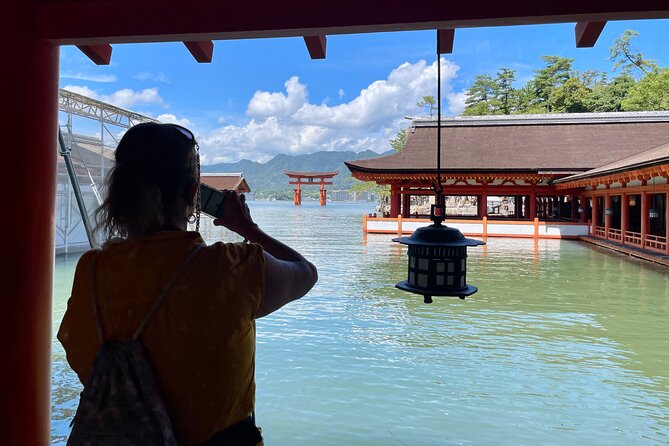
Senjokaku is part of the Itsukushima shrine complex and dates to the 16th century. Its large, open-sided spaces were ordered by Shogun Hideyoshi, and the lack of walls gives the building a calm, airy feel.
The admission charge is not included, so check the current cost with your guide or at the entrance. The planned visit is only about 15 minutes, which makes this a short architectural pause rather than a full stop.
I like including Senjokaku because it slows the day down. After the torii and shrine, its broad, quiet spaces offer a different kind of Miyajima experience. If your group has a strong interest in architecture or religious sites, ask whether this stop can receive more time.
Omotesando is your lunch and souvenir window
Miyajima Omotesando Shopping Street gets about an hour. This is the practical part of the island visit, with local food and souvenirs in one place.
You can look for oysters, conger eel rice, and momiji manju, a maple-leaf-shaped sweet associated with Miyajima. Food and drinks are not included, so plan to buy lunch or snacks separately. The hour is useful, but it can disappear quickly if you want a proper meal and shopping time.
The street is also where the tour feels most commercial. That is not necessarily a flaw. After temples and solemn memorial sites, local food gives the day a grounded, everyday rhythm. Just remember that the tour still has a city section ahead, so a long restaurant meal may not fit without changing the route.
Crossing back toward Hiroshima City
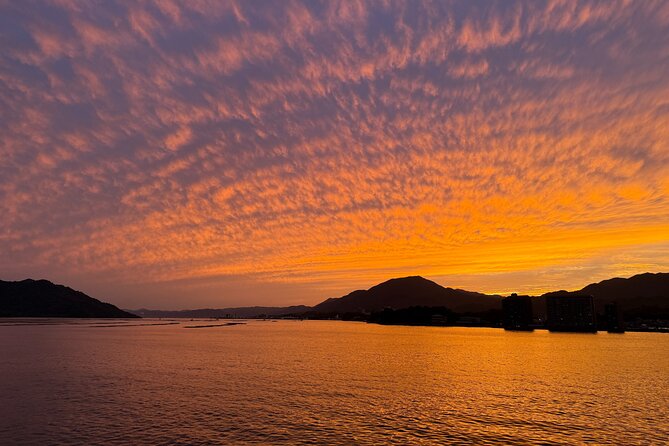
From Miyajima Port, the usual route uses a ferry, JR service, or train, with about an hour allowed for the move toward Peace Memorial Park. Basic public transport costs are excluded and are paid directly by you. The stated estimate is roughly ¥1,340 to ¥1,380 per person, while JR Pass users may pay as little as ¥0 to ¥270 depending on the route.
You can choose a direct boat to Peace Memorial Park as an option. Direct boats are listed at about ¥2,300 to ¥4,500, while private transport such as taxis can range from ¥2,300 to ¥8,000 one way. These figures make the tradeoff clear: public transport is cheaper, while a direct boat may protect your sightseeing time.
This transfer is one reason the seven-hour schedule needs discipline. If you stop often on Miyajima, spend a long time eating, or face delays, the Hiroshima section may feel compressed. The guide can help you decide where to linger.
The A-Bomb Dome makes history physical
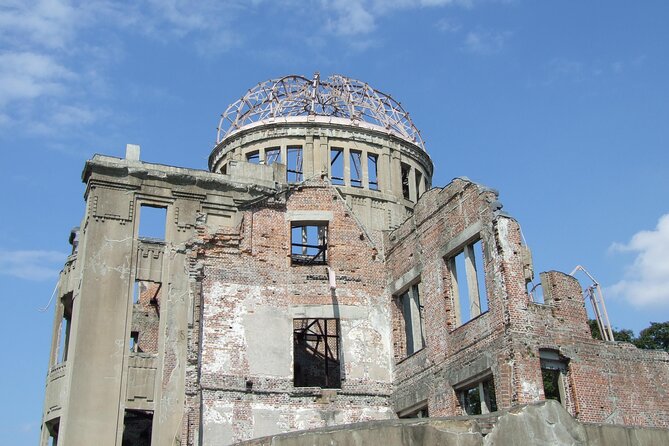
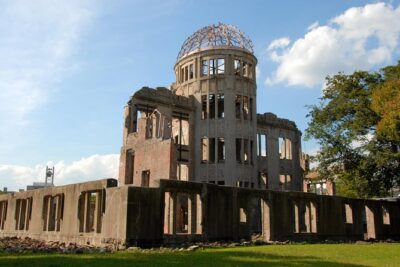
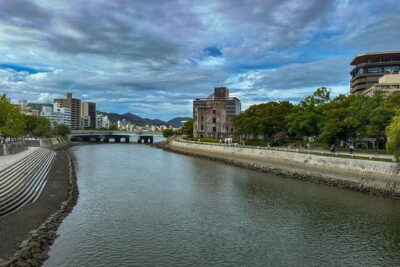
The Atomic Bomb Dome is one of Hiroshima’s most recognizable sites and a UNESCO-listed structure. Its damaged frame remains beside the river, giving you a direct visual sense of the destruction that written history cannot provide.
The planned stop is about 15 minutes and admission is free. That sounds short, but the Dome works as an outdoor site. You can view it from different angles, listen to the guide’s explanation, and then move into the wider Peace Memorial area.
Your guide’s personal and family-based perspective may be especially useful here. The tour aims to address not only what happened, but how Hiroshima remembers the bombing and rebuilt afterward. That added context helps keep the Dome from becoming just another landmark photograph.
The hypocenter and the human scale of loss
The Hypocenter Monument marks the point above which the atomic bomb exploded, approximately 600 meters over the hospital site described in the tour. The stop lasts around 15 minutes.
This is a small site, but its importance is enormous. The A-Bomb Dome shows the damage to a building. The hypocenter points you toward the location where the blast began, making the scale of the event more immediate.
Expect the tone to become heavier as the day moves through these locations. A guide who can answer questions and explain the facts without rushing is valuable here. The tour’s strongest practical advantage is that you have a private setting for questions that may feel difficult to ask in a larger group.
Peace Memorial Park links the sites together
Peace Memorial Park is not one monument but a series of places connected by paths. The planned visit lasts about 20 minutes, including several monuments and an explanation of the bombing and the city’s reconstruction.
The Children’s Peace Monument receives another 10 minutes. It is linked with Sadako, the girl whose story became associated with folded paper cranes. You will see many cranes at the monument, a visible sign of how memory and hope are carried forward through a child’s story.
The park can be emotionally demanding, especially when followed by the museum. I would not schedule a busy evening immediately after the tour if you prefer time to process what you have seen. The private format allows a little more quiet than a large group, but the schedule remains active.
The Peace Memorial Museum deserves your full attention
The Hiroshima Peace Memorial Museum is the longest city stop, with about an hour inside. Admission is included. Its displays use photographs and documents to show the bombing, radiation exposure, and the effects on people and the city.
One hour is enough for an introduction, but you may want longer. If the museum is your main reason for visiting Hiroshima, tell the guide during the planning conversation. The itinerary includes many Miyajima stops, so your priorities matter.
Masa has been praised for offering thoughtful explanations in the museum, including context about why the bomb was dropped and the effects that followed. This is the kind of site where a guide’s ability to explain clearly matters more than constant conversation. You get help with the facts, while still having space to form your own response.
The museum is difficult material. That is part of its value, but it is worth being honest about the tone. This is not simply a pleasant sightseeing day with a memorial stop attached. The tour asks you to move from sacred beauty to wartime devastation and then to stories of resilience.
Price, private value, and extra costs
The price is $181.19 per person, with group discounts offered. That is a substantial fee once you add food and transport, but the comparison is not just between this and a cheaper group bus.
You are paying for a private guide, hotel or station pickup on foot, advance route customization, the Itsukushima Shrine and Peace Memorial Museum admission fees, and tour photo data. You also gain control over the pace and the chance to ask detailed questions throughout the day.
The main extra cost is transportation. Basic fares are about ¥1,340 to ¥1,380 per person, while a direct boat or taxi can add much more. Lunch is also separate, as is admission to Senjokaku. Tips are not included.
For two or more people, the private format becomes easier to justify because the price is attached to the group rather than a large shared party. For a solo visitor, the cost is harder to defend unless personal guidance and flexible pacing are your top priorities.
Who should book this seven-hour tour
I would recommend it to first-time visitors who want both Miyajima and Hiroshima’s memorial sites in one day, especially if you prefer to ask questions as you go. It also suits couples and families who want a flexible pace. One honeymoon group found the day passed quickly because the guide kept the schedule moving without making it feel rushed.
It is a good match for visitors staying in Hiroshima who value local explanation more than independent wandering. The advance consultation is useful if you have strong interests in temples, food, photography, family history, the museum, or transport choices.
I would hesitate if you dislike walking, want a slow full-day visit to only one place, or prefer to keep costs very low. The tour uses public transportation, and the planned route is packed. It is also sensible to skip the experience if you have cold symptoms, as requested by the provider.
Free cancellation is available up to 24 hours before the start time. Changes made inside that window are not accepted, and poor weather may lead to a new date or full refund.
FAQ
How long is the Hiroshima and Miyajima tour?
The tour lasts approximately seven hours.
Where does pickup take place?
Pickup is offered on foot from a hotel or train station in Hiroshima City.
Can the order of Miyajima and Peace Memorial Park change?
Yes. The order can be changed, including to help plan around the tide and the view of the floating torii gate.
Is transportation included?
No. The tour mainly uses public transportation, and basic fares are paid separately. The listed basic cost is about ¥1,340 to ¥1,380 per person.
Can I use a direct boat between Miyajima and Peace Memorial Park?
Yes. A direct boat is available as an option, with the trip taking about 45 minutes. It costs extra.
Are Itsukushima Shrine and the Peace Memorial Museum included?
Yes. Admission to Itsukushima Shrine and the Hiroshima Peace Memorial Museum is included.
Is lunch included?
No. Food and drinks are not included, so you pay separately for lunch and snacks.
Is this tour suitable for people who cannot walk long distances?
No. The experience is a walking tour using public transportation and is not recommended for people unable to walk long distances.
Should you book it?
Book this tour if you want Hiroshima explained by a local guide rather than reduced to a checklist of famous places. The private setup, adjustable route, included museum and shrine admission, and careful attention to the tide give it real practical value.
The decision comes down to pace and price. You will walk, pay transport and meals separately, and cover emotionally serious sites in a single day. But if that sounds like the right balance, this is a strong way to connect Miyajima’s spiritual traditions with Hiroshima’s modern memory, with guides such as Yuka, Masa, and Ally bringing a personal voice to the journey.
Just added around Hiroshima
- The Peace Memorial to Miyajima : Icons of Peace and Beauty★ 4.5 · 31 reviews
- Private Full Day Hiroshima Tour★ 4.5 · 29 reviews
- Hiroshima & Miyajima All-Inclusive Tour w/Licensed guide Pancho★ 5.0 · 54 reviews
- Okunoshima Rabbit Island Cycling Tour with Local Guide★ 4.5 · 17 reviews
- Shore Excursion from Hiroshima Port : Private Tour in Hiroshima★ 5.0 · 17 reviews
- Hiroshima Saijo Sake Tasting Tour with visit to 7 Breweries★ 5.0 · 104 reviews
- Miyajima Guided Tour and Fresh Oyster Farm Tour★ 5.0 · 20 reviews
- Hiroshima Country Cycling: Explore Rural Life 1 HR from City★ 5.0 · 22 reviews
Miyajima Island Tours, compared.
Peaceful Hiroshima & Miyajima UNESCO 1 Day Bus Tour
Read our review →
Hiroshima and Miyajima UNESCO Sites 1-Day Tour
Read our review →
Hiroshima / Miyajima Full-day Private Tour with Government Licensed Guide
Read our review →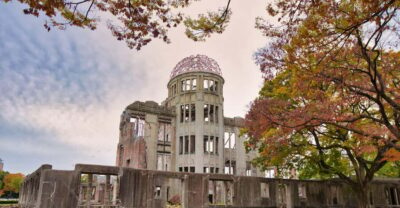
Osaka/Kyoto: Hiroshima Miyajima Bus Tour & Shinkansen Ticket
Read our review →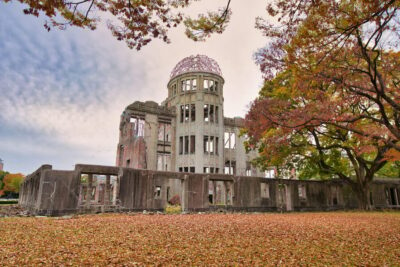
Hiroshima and Miyajima Day Trip with Itsukushima Shrine & Ferry
Read our review →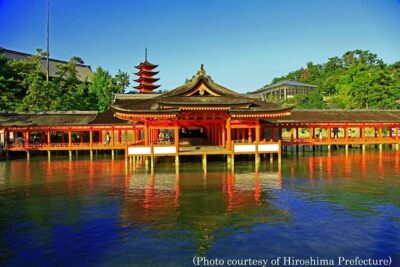
Full Day Hiroshima and Miyajima Bus Tour from Hiroshima
Read our review →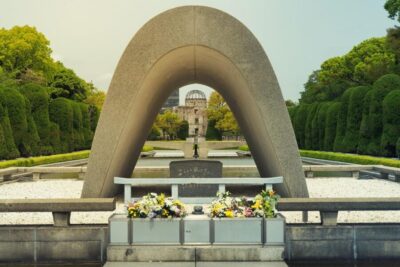
Miyajima Peace Memorial Icons of Peace and Beauty
Read our review →Browse the lists this tour appears in