REVIEW · GUIDED
Freely set up plans Guided Private Tours in Tokyo
Tokyo can feel like several cities at once: old temple town, imperial capital, neon playground, food center, and enormous modern hub. This private tour lets you choose the mix. Your guide meets you in your hotel lobby within Tokyo’s 23 wards, then builds the day around the sights you care about, using trains and subways to connect them. I especially like the flexible length, from four to ten hours, and the chance to choose your own stops. You can focus on temples and gardens, city views, food, shopping, or a little of everything.
I also like that the guide teaches you how Tokyo works while showing it to you. Guides including Kono, Yumi, Yoshio, and Yumiko have helped visitors handle the train system, explain customs, find sushi, and adjust the pace for families. The tradeoff is simple: this is an active day. Stations can mean long walks and stairs, and one poorly planned route can turn sightseeing into a tiring 10K walk. The experience also has a small but important record of guide mix-ups and cancellations, so confirm the meeting details carefully.
In This Review
- Key things to know before booking
- A flexible way to meet Tokyo
- Tsukiji Market for an easy food introduction
- Senso-ji and the older face of Asakusa
- Skytree, Tokyo Tower, and city views
- Shibuya Crossing and Meiji Jingu
- Gardens and the Imperial Palace grounds
- Ueno Zoo and the animal cafes
- What using Tokyo’s trains is really like
- The guides make or break the day
- How to plan a better private day
- Should you book this Tokyo tour?
- FAQ
- How long does the private Tokyo tour last?
- Where does the guide meet the group?
- Is this a private tour?
- Does the tour use public transportation?
- Are attraction admission fees included?
- Can I choose which Tokyo sights to visit?
- Is the tour suitable for people with mobility concerns?
- What is the cancellation policy?
Key things to know before booking
- You choose the day’s focus: Pick from famous sights, food stops, gardens, animal cafes, or a broad first look at Tokyo.
- Your guide handles public transport: This is especially useful in a city where even experienced subway users can find the network confusing.
- The private format keeps the day personal: Only your group participates, so the route and pace can change as you go.
- The classic sights are all possible: Tsukiji, Senso-ji, Tokyo Skytree, Shibuya Crossing, Meiji Jingu, Tokyo Tower, and more are available as building blocks.
- Admission fees are extra: You pay entrance charges for places such as Tokyo Skytree, Ueno Zoo, Tokyo Tower, gardens, and animal cafes.
- Plan for plenty of walking: The guide may be excellent, but Tokyo’s stations and large sightseeing areas still demand energy.
A flexible way to meet Tokyo
The advertised price is $132.14 per person, with group discounts available. Since this is a private outing, value depends heavily on your group size and how well you use the hours. For a couple, the cost is higher than joining a large bus tour, but you gain a private guide, hotel pickup, route planning, and help with public transportation. For a family or group of friends, the price can make better sense, especially when you share the guiding cost.
The tour lasts roughly four to ten hours. That range matters. Four hours is enough for a compact introduction, perhaps Tsukiji and Asakusa, or two areas that sit reasonably close together. Six hours gives you a useful half-day with several major sights. A full day can cover more ground, but you should not mistake ten hours for unlimited sightseeing. Tokyo is huge, and moving between districts takes time.
Your guide can meet you at your hotel in the 23 wards. From there, you discuss what you want to see. Guides have adapted days around sushi, markets, animal cafes, cherry blossoms, shopping, family needs, and a traveler’s limited time after a cruise. That flexibility is the main reason to book this rather than a fixed route.
A few more Tokyo trips to weigh up
- Tokyo 6hr Private Tour with Government-Licensed Guide
★ 5.0 · 3,902 reviews - Private Tour to Mt. Fuji and Hakone (Fully Licenced Operator)
★ 5.0 · 1,910 reviews - Tokyo Customized Private Tour (Must See Places in 1 Day)
★ 5.0 · 1,499 reviews
Tsukiji Market for an easy food introduction
Tsukiji Jogai Market is one of the strongest opening choices. The former wholesale fish market moved to Toyosu, but the outer market area at Tsukiji remains a useful place to encounter Japanese food. Small shops and restaurants line the streets, with traditional ingredients, snacks, seafood, kitchen goods, and newer food ideas appearing side by side.
Allow about an hour here. Your guide can explain what you are seeing and help you make sense of unfamiliar foods. This is also a good place to ask practical questions about sushi, market manners, and what to look for during the rest of your visit.
The best part is the local focus. You are not simply looking at a landmark from outside. You are moving through a working food district, and a guide can turn a quick walk into a lesson in Japanese eating culture. If sushi matters to you, say so early. Several successful days included a local sushi lunch, including fresh tuna, but meals are not included in the tour price.
Senso-ji and the older face of Asakusa
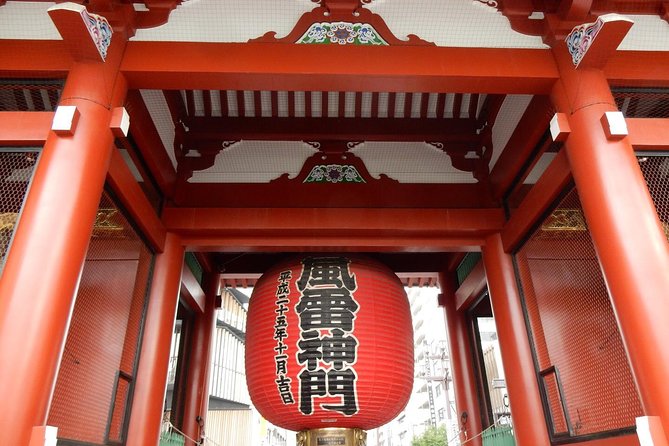
Senso-ji Temple offers a strong contrast to Tokyo’s newer districts. Its grounds include the large Hozo-mon Gate, also called the Treasure-House Gate, and a five-story pagoda. The temple is one of Tokyo’s best-known attractions, so expect plenty of people, especially at popular times and during seasonal events.
A one-hour visit gives you time to see the main buildings and hear about the temple’s place in Japanese culture. Your guide can explain customs that are easy to miss when you walk through on your own. Asakusa also pairs naturally with Tsukiji, making these two stops a sensible choice for a shorter tour.
Do not expect a quiet temple visit in the middle of the day. Senso-ji is popular for a reason, but its popularity means this stop can feel more like a busy city attraction than a secluded religious site. Still, for a first look at Tokyo’s older traditions, it earns its place.
Skytree, Tokyo Tower, and city views
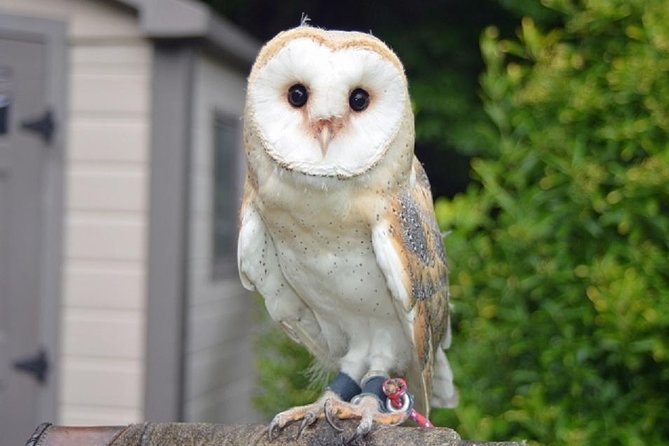
Tokyo Skytree rises 634 meters and has observation areas at about 340 and 450 meters. It gives you a modern, high-level view of the city, but admission is not included. Your guide can take you there and help you fit it into the route, but you should budget separately for entry.
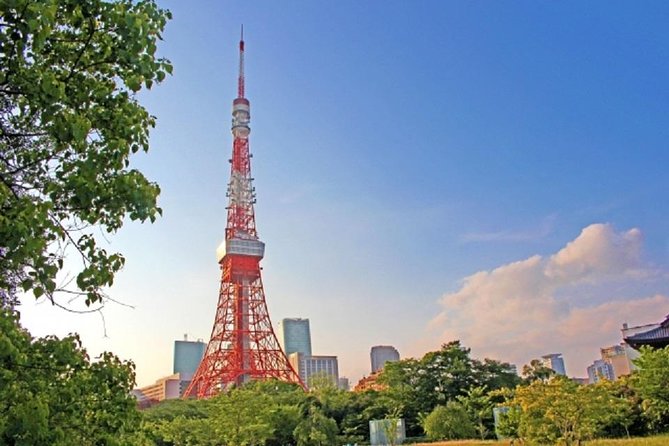
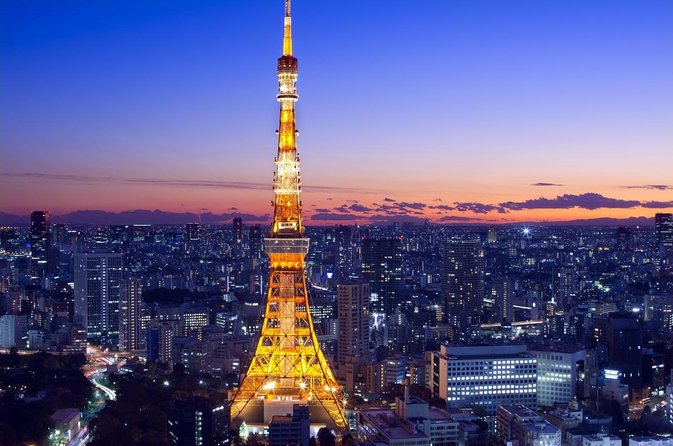
Tokyo Tower offers a different experience. Built in 1958, the 333-meter tower is a familiar symbol of postwar Tokyo. It has viewing areas, a cafe, and a shrine. Its nighttime lighting includes the regular Landmark Light and the more decorative Diamond Veil display.
You probably do not need both towers in one day unless city views are your main goal. Choose Skytree for height and a broad modern panorama. Choose Tokyo Tower if you prefer a classic Tokyo symbol and a location closer to central sights. Since both require extra admission and travel time, discuss the choice with your guide before setting off.
Same city, a completely different kind of day:
- Mt Fuji and Hakone 1-Day Bus Tour Return by Bullet Train
★ 5.0 · 26,383 reviews - 1-Day Tokyo Bus Tour
★ 5.0 · 14,250 reviews - Tokyo: TOKYO SKYTREE® Admission ticket
★ 4.5 · 11,192 reviews - Tokyo: teamLab Planets TOKYO Digital Art Museum Entry Ticket
★ 4.6 · 9,779 reviews
Shibuya Crossing and Meiji Jingu
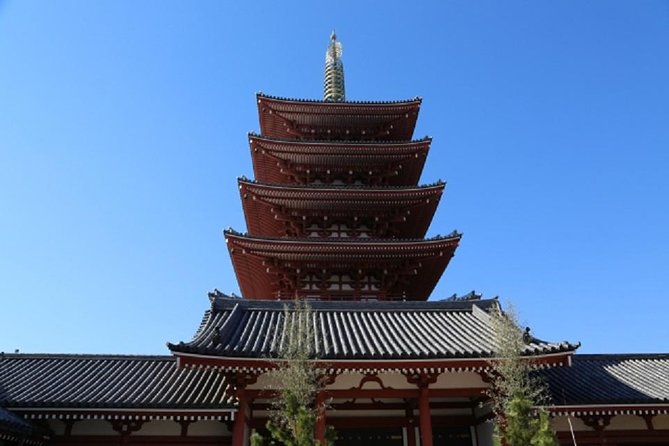
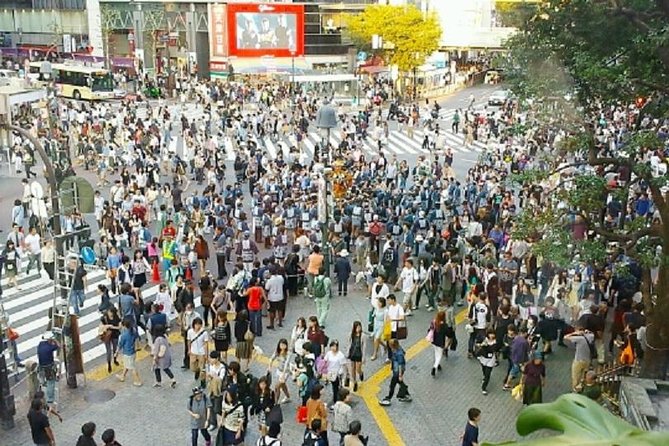
Shibuya Crossing is a short stop, usually about 30 minutes, but it gives you one of Tokyo’s most recognizable urban scenes. Several streams of people cross at once, and the surrounding signs and towers make the moment feel unmistakably modern Tokyo.
The crossing is best treated as a quick experience, not a place to spend half a day. Your guide can position you near the action, explain how the intersection works, and take photographs. One guide was praised for entertaining the group with stories and taking pictures, a useful bonus when you want both memories and context.
Meiji Jingu shifts the mood completely. Built in 1920, the shrine honors Emperor Meiji and Empress Shoken. It attracts both Japanese worshippers and international visitors, yet its purpose remains religious rather than simply scenic. Give it about an hour, and allow time to walk from the entrance through the wooded shrine approach.
This pairing works well. You see the spectacle of modern Tokyo, then a place tied to worship and national history. If you have only one day, the two stops help explain Tokyo’s contrasting character better than a string of similar viewpoints.
Gardens and the Imperial Palace grounds
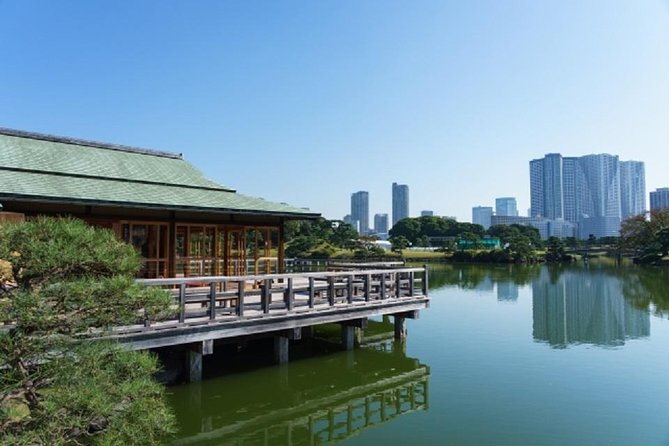
Shinjuku Gyoen National Garden combines a formal garden, a more open landscaped garden, and a Japanese garden. It began as an imperial garden in 1906 and offers a calmer break from the city’s traffic and stations. Admission is extra, and an hour gives you a useful taste rather than time for every corner.
Hamarikyu Gardens cover a large area around Shioiri Pond, with a seawater moat connected to Tokyo Bay. The garden opened to the public in 1946. Its water setting and formal design make it a good choice when you want a slower hour between urban districts.
The East Gardens of the Imperial Palace occupy part of the former Edo Castle grounds. The Imperial Palace itself is in Chiyoda Ward, and the broader site remains tied to Japan’s imperial household and the Tokugawa period. Admission is listed as extra for this stop, so confirm the exact access arrangements with your guide.
I would not try to visit all three gardens in a short outing. Choose one based on your route. Shinjuku Gyoen works well with Shibuya and Meiji Jingu. Hamarikyu fits naturally with central Tokyo and the Tokyo Bay side. The Imperial Palace gardens are best for travelers interested in Edo-era and imperial history.
Ueno Zoo and the animal cafes
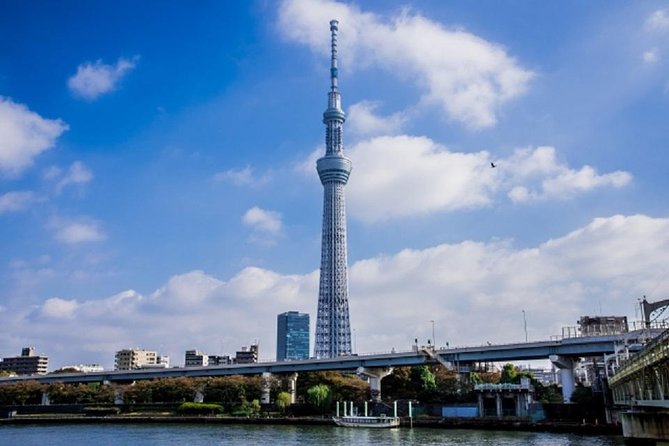
Ueno Zoo opened in 1882 as Japan’s first zoo. It now houses about 400 animal species, including the Sumatran tiger. The suggested visit lasts two and a half hours, making this one of the most time-consuming options.
That length makes Ueno Zoo better for families or animal lovers than for someone trying to check off every major Tokyo sight. Admission costs extra, and the zoo may require a full route adjustment. If you choose it, make it the day’s main activity rather than squeezing it between several distant districts.
The animal cafe choices are more unusual. Owl cafe Tokyo Akiba Fukurou offers a chance to interact with owls in a cafe setting, while Chiku Chiku Cafe focuses on hedgehogs and serves drinks rather than lunch or dinner. Each takes about an hour, and each requires separate admission.
These cafes are not essential Tokyo sights, but they can suit children or anyone looking for an offbeat stop. Availability matters. One planned animal cafe was closed, so ask your guide to confirm opening status before building the day around it. Also consider your own comfort with animal cafes before booking this option.
What using Tokyo’s trains is really like
Public transportation is included for the guides, but your own fares and any admission charges should be treated as additional costs unless your booking terms say otherwise. The guide does not provide a private car. You will use Tokyo’s trains and subways, which is both practical and part of the experience.
This can be a major advantage. Tokyo’s network is efficient but complicated, with multiple lines, large stations, and long passageways. Guides such as Kono, Yoshi, Yoshio, and Yumiko have helped visitors move between districts without wasting as much time on navigation.
The same system creates the tour’s main physical challenge. Stations can involve stairs, and some routes require significant walking. One visitor with mobility concerns found the guide adaptable but still found the transport system less accessible than expected. Another day involved about 22,000 steps, even with a helpful guide.
Tell your guide about mobility limits before the day begins. Ask for fewer stops, planned breaks, and routes with less walking. A good private tour should adjust the sightseeing plan, but it cannot remove every stairway or long station connection.
The guides make or break the day
The experience depends more on the individual guide than on the basic route. The strongest guide experiences came from people who listened, explained Japanese customs, answered questions, and changed the plan without fuss.
Kono appears especially suited to food-focused days and broad sightseeing. He has guided visitors through Tsukiji, sushi lunches, Senso-ji, animal cafes, shopping, and cherry blossom sites. Yumi has been described as patient with families and helpful with ideas for the rest of a Tokyo stay. Yoshio has handled train navigation and detailed questions about Japanese history and current life.
Yumiko has led shorter, carefully selected outings and longer days with several sights. Yoshi and Yoki have also adjusted routes to match what each group wanted to see. These names are useful when requesting a guide, though a specific person cannot be guaranteed from the information provided.
Communication can vary. One visitor found the guide’s English difficult to follow and felt the guide walked too far ahead. That is a fair warning for groups that need detailed explanations or have children and older adults. Keep your group together, speak up if the pace is too fast, and ask for clarification when needed.
The overall score is 4.7 from 130 ratings, with 93 percent recommending the experience. That points to a strong pattern of good guiding, but the two very poor accounts involving a wrong date, overbooking, cancellation, and refund problems should not be ignored. Confirm your date, pickup hotel, guide contact, and cancellation arrangements before arrival.
How to plan a better private day
Start with two or three priorities, not a wish list of all twelve stops. Tokyo’s size makes a tight geographic plan more valuable than a long list. Tsukiji and Senso-ji form one sensible cultural and food combination. Shibuya, Meiji Jingu, and Shinjuku Gyoen form another. Tokyo Tower, Hamarikyu Gardens, and the Imperial Palace area can also work together more easily than mixing them with Ueno and western Tokyo.
If you have four hours, select two major areas. For six hours, choose three or four stops with lunch. For a full day, add one major attraction such as Ueno Zoo or Skytree, but keep space for meals, station transfers, photos, and rest.
Tell the guide what you do not want, too. If you dislike animal cafes, skip them. If you have already visited temples, spend more time on food or gardens. The private format has real value only when you use that freedom.
The tour works for first-time visitors, families, couples, cruise passengers with a day in port, and anyone nervous about the train system. It is less suitable if you want a luxury vehicle, a fixed historical walking tour, or a quiet day with little movement.
Should you book this Tokyo tour?
Book it if you want a private introduction built around your interests and you value help with Tokyo’s trains. It is particularly useful on a first day, when a guide can teach you enough about markets, temples, transport, and local customs to make the rest of your visit easier.
I would book six hours for most people, with Tsukiji, Senso-ji, one modern district, and either Meiji Jingu or a garden. Choose a longer day only if your group is comfortable walking and you accept that admission fees, train fares, meals, and breaks will add to the base price.
Before paying, confirm the date and meeting point, request any preferred guide such as Kono, Yumi, Yoshio, or Yumiko, and explain mobility needs. If those details are clear, this offers a practical and personal way to get your bearings in a very large city.
FAQ
How long does the private Tokyo tour last?
The experience lasts approximately four to ten hours. You choose the length when booking and can shape the number of sights around that time.
Where does the guide meet the group?
The guide meets you in the lobby of your hotel if it is located within Tokyo’s 23 wards.
Is this a private tour?
Yes. Only your group participates, so you can discuss the route and interests with your guide.
Does the tour use public transportation?
Yes. The guide takes you between locations using Tokyo’s public transportation system. Public transportation for the guides is included.
Are attraction admission fees included?
No. Admission fees for customers and guides are not included. This applies to places such as Tokyo Skytree, Tokyo Tower, Ueno Zoo, gardens, and animal cafes.
Can I choose which Tokyo sights to visit?
Yes. You can select the sights and interests you prefer, and the guide creates an itinerary around them. Possible stops include Tsukiji, Senso-ji, Shibuya Crossing, Meiji Jingu, Tokyo Tower, Skytree, Ueno Zoo, gardens, and animal cafes.
Is the tour suitable for people with mobility concerns?
Most people can participate, but the tour involves public transportation, walking, and some station stairs. You should explain mobility needs to the guide in advance so the pace and route can be adjusted.
What is the cancellation policy?
You can cancel at least 24 hours before the start time for a full refund. Cancellations or changes made less than 24 hours before the start time are not accepted for a refund.
Just added around Tokyo
- Private Memorable Tokyo Tour with English Speaking Driver★ 5.0 · 30 reviews
- Private Tokyo Custom Full-Day Tour by Chartered Vehicle★ 5.0 · 16 reviews
- Private Sightseeing to Mt Fuji and Hakone with English Driver★ 5.0 · 51 reviews
- Tokyo Photography Masterclass – Private Photography Lesson★ 5.0 · 25 reviews
- Private Mt. Fuji Day Trip from Tokyo with English-Speaking Driver★ 5.0 · 33 reviews
- 4 Day Tour – Mount. Fuji, Tokyo, Hakone, Kamakura and Yokohama★ 5.0 · 19 reviews
- Private Unforgettable Mt Fuji Tour with English Speaking Driver★ 5.0 · 142 reviews
- Private Tokyo Food Tour – A Journey Through Time Through Food★ 5.0 · 36 reviews
Guided, compared.
Kyoto Early Morning Tour with English-Speaking Guide
Read our review →
Tokyo 4hr Private Tour with Government-Licensed Guide
Read our review →
Kyoto 6hr Private Tour with Government-Licensed Guide
Read our review →
Hiroshima / Miyajima Full-day Private Tour with Government Licensed Guide
Read our review →
Early Morning Tour with English-Speaking Guide
Read our review →