
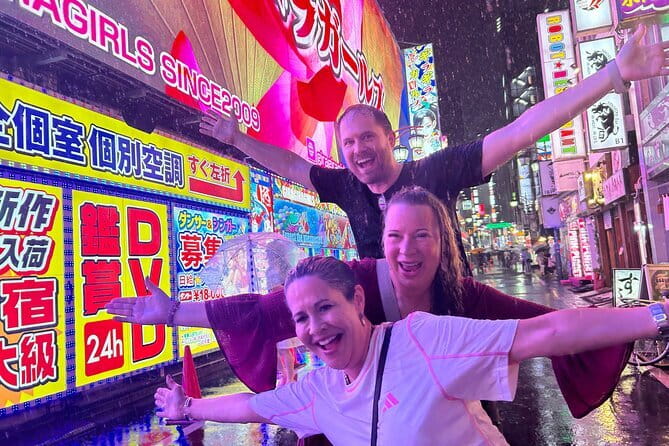
REVIEW · FOOD
Tokyo Shinjuku Food & Backstreet Culture Tour: 15 Dishes+3 Drinks
Shinjuku after dark is best understood one small plate at a time. This three-hour walk takes you from the giant 3D cat screen to Omoide Yokocho, Kabukicho, and the tiny bars of Golden Gai, with stops for Japanese food and drinks along the way.
I like the mix of local eating spots and street culture, and I like having a guide such as Sakura, Kyle, or Seiya explain the manners and customs that can otherwise leave you guessing. The $100 price includes the food, drinks, guide, and photos, which keeps the evening simple.
The main thing to know is that this is a neighborhood and nightlife tour with food, not a formal restaurant crawl. Some people have found the food stops limited or the portions less substantial than expected, and the exact dishes can change with the season, group size, and dietary needs.
In This Review
- Key points to know before you book
- Why this Shinjuku food tour works
- Starting at the giant 3D cat
- Omoide Yokocho: small plates in an old alley
- Godzilla Road and Kabukicho after dark
- Golden Gai and the city’s smallest bars
- What the 15-dish promise really means
- Drinks, children, and dietary limits
- Guide quality and group feel
- The $100 price and what it covers
- Who should book this evening walk
- Should you book the Shinjuku Food and Backstreet Culture Tour?
- FAQ
- How long does the Tokyo Shinjuku food tour last?
- Where does the tour begin and end?
- How many dishes and drinks are included?
- Can children join the tour?
- Can the tour accommodate food allergies or dietary restrictions?
- What happens if I need to cancel?
Key points to know before you book
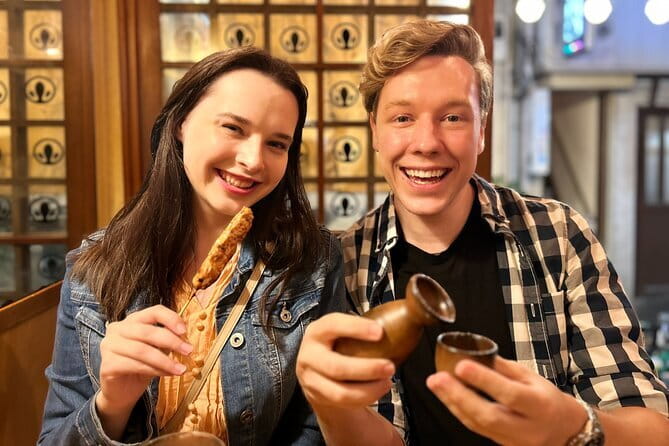
- You sample up to 15 Japanese dishes: Expect a broad tasting menu rather than one large dinner, with dishes that may include dumplings, yakitori, stews, potato salad, seafood, and other small plates.
- The route shows several sides of Shinjuku: You see neon-heavy Kabukicho, nostalgic Omoide Yokocho, Godzilla Road, and the narrow lanes of Golden Gai.
- English guidance adds real value: Your guide explains ordering, eating manners, drinking customs, local history, language, and changing social norms.
- Drinks are included: The details say two drinks in one section and three drinks in the tour title, with alcoholic or non-alcoholic choices. Confirm the current allowance when booking.
- The group is capped at 15 people: That is small enough for conversation, though the experience will feel more social than private.
- Dietary restrictions are a serious consideration: Meals come from outside kitchens, so allergy-free food and substitutions cannot be promised.
Why this Shinjuku food tour works
The appeal here is not simply eating 15 things. It is being guided through a part of Tokyo that can feel confusing at night, then learning how the food, bars, signs, and social rules fit together.
Shinjuku changes quickly as you walk. A giant animated cat appears on a screen above the street. A few minutes later, you are in an alley of smoky grills and tiny counters. Then the scenery shifts again, from the bright entertainment district to old postwar lanes packed with miniature bars.
I like this movement because it gives the evening a clear sense of place. You are not sitting in one restaurant while a guide recites facts. You are walking through the district, pausing for food, and seeing how different parts of Shinjuku operate after dark.
The tour is led in English, which matters most when you are ordering unfamiliar food or trying to understand local etiquette. Guides including Sakura, Kyle, Seiya, Taka, and Kei have been praised for keeping conversation easy while explaining Japanese culture. Individual guides differ, of course, but the format gives you a friendly point of contact throughout the night.
A few more Tokyo trips to weigh up
- Tokyo: Shinjuku Food Tour (13 Dishes at 4 Local Eateries)
★ 5.0 · 6,603 reviews - Tokyo Tsukiji Fish Market Food and Culture Walking Tour
★ 5.0 · 3,184 reviews - Tokyo: Shinjuku Food Tour (15 Dishes and 4 Eateries)
★ 4.9 · 2,033 reviews
Starting at the giant 3D cat
The meeting point is outside the Gucci Shinjuku M Square Store, at Newno GS Shinjuku, near Shinjuku Station. From there, the first stop is the famous giant 3D cat display.
You get about five minutes to take photos of the cat as it moves and meows on the curved screen. This is a quick orientation stop, not a major attraction, but it places you right in the visual rush of modern Shinjuku.
I would arrive early. The meeting point is in a busy station district with many exits, signs, and department stores, so finding the correct street corner can take longer than expected. The operator uses WhatsApp for day-of communication, so download it before the tour rather than trying to sort it out while standing under the billboards.
Omoide Yokocho: small plates in an old alley
The first substantial food stop is Omoide Yokocho, a narrow lane filled with small bars and eateries. Its atmosphere is a sharp contrast to the screens and polished shopping streets nearby.
You spend roughly 50 minutes here, tasting traditional Japanese food and drinks in a setting that feels tied to an older Shinjuku. The alley is compact, intimate, and built around tiny dining spaces. That makes it atmospheric, but it also means you should not expect spacious tables or a quiet room.
The food selection can vary. Examples from the wider evening may include grilled dumplings, yakitori, beef offal stew, potato salad, seafood, and other izakaya dishes. Some people have especially enjoyed the dumplings, while one less positive experience found the food stops mediocre and the dessert, taiyaki, underwhelming.
That contrast is useful. The tour promises variety, but not every plate will be a personal favorite. The point is to try foods you might skip when faced with a Japanese menu on your own. Your guide can explain what you are eating and how it is normally served, which turns an unfamiliar plate into a small cultural lesson.
Godzilla Road and Kabukicho after dark
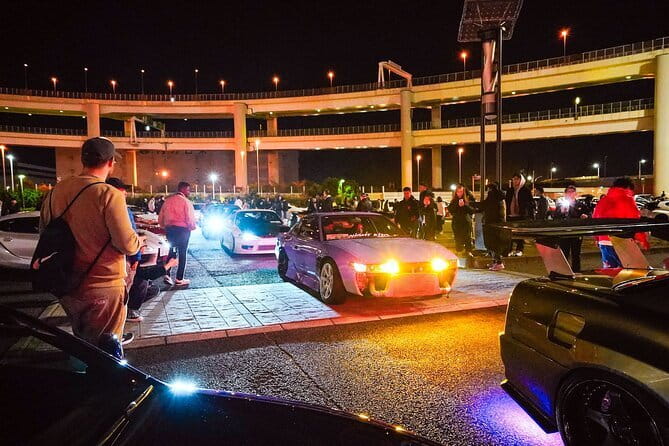
Next comes Godzilla Road and the giant Godzilla Head, another quick photo stop. The visit takes about five minutes, so think of it as a landmark along the route rather than a full attraction.
From there, the tour spends about one hour and 40 minutes in Kabukicho, Tokyo’s best-known entertainment district. This is the longest part of the evening and the section where the food, nightlife, and local explanation come together.
The route can include several food stops and drinks in izakaya-style places. Past menus described by participants have included salted squid guts, fried horse meat, century egg, whole shrimp with eggs, soup dumplings, grilled dumplings, and beef offal stew. Drinks have included draft beer, lemon sours, whiskey highballs, tea mixed with shochu, and non-alcoholic options.
Do not treat that list as a guaranteed menu. Seasonal supply, restaurant availability, and group size affect what appears. It does show the kind of range you might encounter, from familiar grilled items to dishes that require a little courage.
Kabukicho is also where a local guide can save you from making poor choices. The area has plenty of places aimed at nightlife, and it is not always obvious which doorway leads to a casual meal, a tourist-oriented venue, or a business with rules you do not understand. A former local worker guides the group through the district and shares behind-the-scenes context.
The tour is not presented as a tour of adult entertainment venues, and the supplied details do not promise entry into every type of establishment. You are mainly walking through the district, learning about it, and stopping for food and drinks. That distinction matters if you are looking for a pure restaurant tour or a structured sightseeing walk.
Same city, a completely different kind of day:
- Mt Fuji and Hakone 1-Day Bus Tour Return by Bullet Train
★ 5.0 · 26,383 reviews - 1-Day Tokyo Bus Tour
★ 5.0 · 14,250 reviews - Tokyo: TOKYO SKYTREE® Admission ticket
★ 4.5 · 11,192 reviews - Tokyo: teamLab Planets TOKYO Digital Art Museum Entry Ticket
★ 4.6 · 9,779 reviews
Golden Gai and the city’s smallest bars
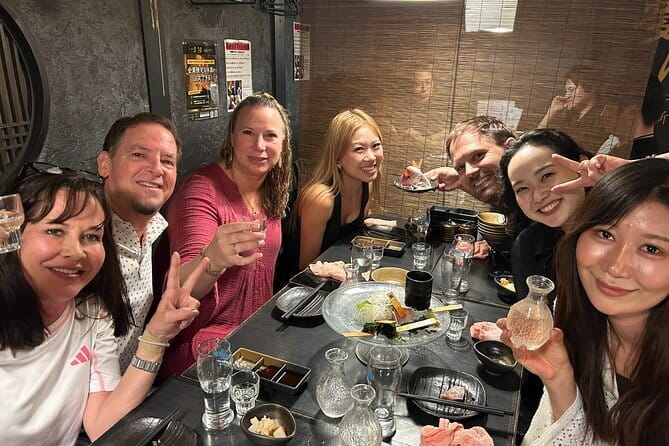
Golden Gai is the atmospheric finale. Its lanes are lined with more than 200 tiny bars, many with only a few seats. The area is also known for preserving some of Tokyo’s postwar architecture, giving it a look that differs from the tall towers and bright signs elsewhere in Shinjuku.
You should expect narrow paths and close quarters. Golden Gai is interesting partly because it feels so compressed. It is not a place for a large group to spread out, and the mood can depend on which bar is available and how busy the lanes are that night.
The guide’s role is useful here. You learn how these small drinking spaces work, how to behave respectfully, and why certain habits matter in Japanese bars. One of the strongest parts of the tour is its attention to etiquette, including how to order, how to remain considerate in a small room, and how drinking customs differ from those at home.
The tour normally disperses in front of Shinjuku Station. If you decide to remain at the last bar, you can separate from the group there instead. Your guide will explain which station entrance or route suits your destination, a practical help in a district where several stations and exits overlap.
What the 15-dish promise really means

The headline number sounds large, but you should read it as 15 tasting portions, not 15 full meals. A food-loving person may leave satisfied, especially with drinks included, but a very hungry diner may want an additional order.
The dishes are carefully selected and can change by season. That is a plus for freshness and variety, but it means you cannot book the tour expecting a fixed menu. Additional food and drink orders are available at your own expense if you want more.
Single participants may receive a different number of dishes. This is worth noting because shared plates work differently for a couple or family than for one person. The tour operator also says substitutions may not be possible at every stop, though the guide will try to compensate at other locations.
For me, the value comes from breadth. You can sample foods you would not know how to order, then use the guide’s suggestions for the rest of your time in Tokyo. Several guides have also offered recommendations for later meals, including other local spots and a separate ramen tasting offered by the same company.
Drinks, children, and dietary limits
The title advertises three drinks, while the included section specifies two drinks. The tour allows alcoholic or non-alcoholic choices, and anyone under 20 receives soft drinks because alcohol is prohibited under that age in Japan.
Since the published details conflict, I would confirm the exact drink allowance before paying. This is a small point, but it matters when comparing the $100 cost with other Tokyo food experiences.
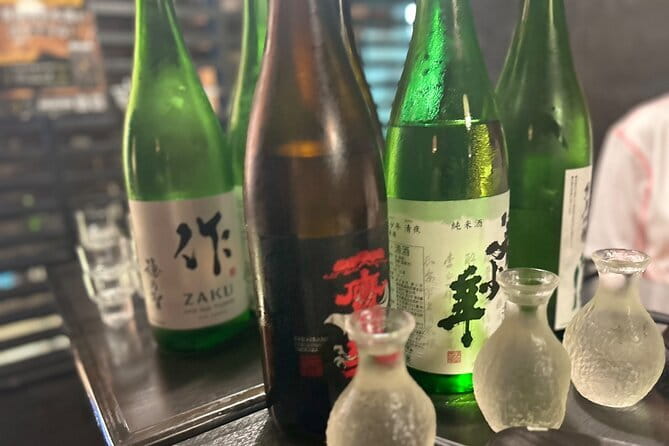
Alcohol is part of the social character of an izakaya evening. You might try beer, a lemon sour, a highball, or shochu with tea, depending on the stops. You never need to drink alcohol, but the tour’s explanations of responsible and respectful drinking are part of its cultural value.
Dietary restrictions require more caution. Food is prepared at outside restaurants, and the operator cannot guarantee allergy-free meals. Substitutions may not be available at certain stops. If you have a serious allergy, a strict religious diet, or a medical restriction, contact the operator before booking and be prepared for the possibility that the full menu will not work for you.
Guide quality and group feel
The guides are central to this experience. Food alone cannot justify the price if you are simply led from one counter to another, but the best accounts of this tour describe guides who keep the group together, answer questions, and explain the reasons behind local customs.
Sakura is frequently praised for her warmth, energy, English, and ability to make the evening feel like a night out with a friend. Kyle has been singled out for humor, local knowledge, and consideration, including helping a group keep moving during cold, wet weather. Seiya has been praised for fluent English and a friendly manner, while Taka and Kei have also led enjoyable evenings.
That does not mean every departure will feel identical. A tour with 15 people will naturally be less personal than a private walk. Still, the maximum group size is reasonable for a moving food tour, and the social format can be a real advantage if you are traveling alone or want company at night.
Solo participants may find this especially useful. Shinjuku can feel tiring after a full day of sightseeing, and going into tiny bars alone may take more energy and confidence than you have left. A guide gives you a reason to go out and a group with which to share the evening.
The $100 price and what it covers
At $100 per person, this is not a bargain dinner. It is a paid introduction to Shinjuku nightlife, with food, drinks, English commentary, photos, and navigation bundled together.
The price makes more sense if you value the guide and access to places you would probably miss on your own. It also saves you from ordering blindly at several stops and handling payment every time. For a first night in Tokyo, that convenience can be worth a great deal.
The value is weaker if your main goal is a large meal or a fixed list of premium dishes. The food comes in small tasting portions, the selection changes, and additional orders cost extra. One poor experience described only two restaurant stops and mediocre food, which is a fair warning that the exact night matters.
I would book it early in a Tokyo stay. You can use the guide’s suggestions for later meals, and you will have a better sense of Japanese ordering and drinking customs for the rest of your trip.
Who should book this evening walk
I would choose this tour if you want:
- A guided first look at Shinjuku nightlife
- Small Japanese dishes rather than one formal restaurant meal
- Help ordering in English
- A social evening with a group of no more than 15
- Context about etiquette, language, history, and changing local customs
- A route that mixes famous sights with narrow food alleys
I would hesitate if you need strict allergy control, want a quiet private experience, or expect 15 substantial courses. Families can participate, but children must be with an adult, and anyone under 20 receives soft drinks instead of alcohol.
Wear comfortable shoes. The tour lasts about three hours and includes walking between several parts of Shinjuku. Because the evening takes place around bars and narrow lanes, it suits adults who are comfortable with nightlife more than visitors seeking a calm daytime food lesson.
Should you book the Shinjuku Food and Backstreet Culture Tour?
Book it if you want a guided introduction to the food, manners, and nightlife of Shinjuku, especially during your first few days in Tokyo. The strongest reason to go is the combination of local eating, Golden Gai, Kabukicho, and a guide who can explain what you are seeing without making the evening feel like a lecture.
Go with realistic expectations. This is a cultural night walk with food, not a guaranteed feast of 15 full dishes. Confirm the current number of drinks, discuss allergies in advance, and understand that the menu and restaurant stops can change.
For solo visitors, curious eaters, and anyone nervous about entering small Japanese bars, the $100 cost is reasonable. If you mainly want quantity, dietary certainty, or fine dining, spend the money elsewhere.
FAQ
How long does the Tokyo Shinjuku food tour last?
The experience lasts approximately three hours, including the walk between Shinjuku sights, food stops, and drinking spots.
Where does the tour begin and end?
The tour begins at the Gucci Shinjuku M Square Store, located at Newno GS Shinjuku 1F in Shinjuku. It ends in front of Shinjuku Station, although you may remain at the last bar if you choose.
How many dishes and drinks are included?
The tour includes 15 selected Japanese dishes, with the dishes changing by season. The tour title says three drinks, while the included details say two, so confirm the current allowance before booking.
Can children join the tour?
Children may participate when accompanied by an adult. Alcohol is prohibited in Japan for anyone under 20, so soft drinks are provided instead.
Can the tour accommodate food allergies or dietary restrictions?
The operator cannot guarantee allergy-free meals because food is prepared at outside kitchens. Substitutions may not be available at every stop, though the guide will try to offer compensation at other stops.
What happens if I need to cancel?
You receive a full refund if you cancel at least 24 hours before the local start time. Cancellations or changes made within 24 hours are not refunded or accepted.
Just added around Tokyo
- Tokyo: Customizable Private Guided Walking Tour★ 4.5 · 129 reviews
- Private Harajuku Omotesando Architecture Tour★ 4.9 · 18 reviews
- Tokyo: Guided Helicopter Ride★ 4.9 · 24 reviews
- Tokyo: Guided Walking Tour of Tsukiji Market with Lunch★ 4.4 · 24 reviews
- Tokyo: Private Personalized Local Food Tour★ 4.5 · 101 reviews
- Tokyo: Gotokuji Cat Temple, Shinjuku Cat Cafe & 3D Cat Tour★ 4.9 · 38 reviews
- Tokyo GINZA: KONPARU Japanese Cabaret Show with Drink★ 4.8 · 38 reviews
- Tokyo: Guided Walking Tour of Tsukiji Market with Breakfast★ 4.4 · 134 reviews
Food, compared.
Shinjuku Food Tour (13 Dishes at 4 Local Eateries)
Read our review →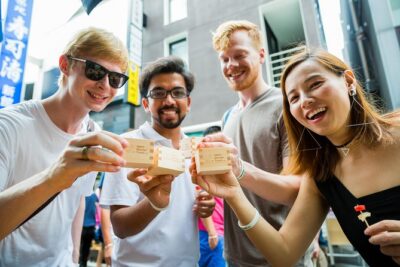
Tokyo Tsukiji Fish Market Food and Culture Walking Tour
Read our review →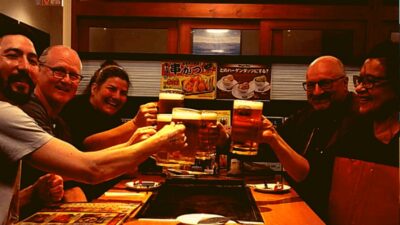
Shinsekai Food Tour with 13-15 Dishes at 5 Eateries
Read our review →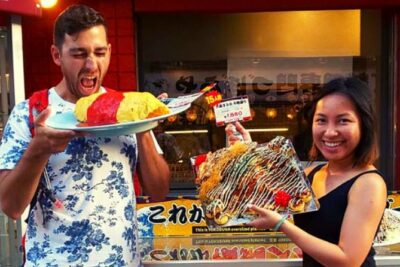
Osaka Food Tour: 13 Dishes at 5 Local Eateries
Read our review →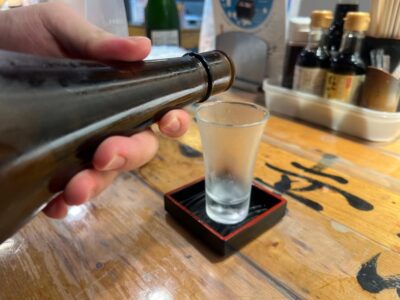
Shinjuku Food Tour (15 Dishes and 4 Eateries)
Read our review →
Best of Shinjuku: Izakaya Food Tour (4 Stops, 14+ Tastings)
Read our review →
Kyoto Night Foodie Tour in Gion (9+ dishes + 6 Sake tastings)
Read our review →
Hungry Osaka Street Food Tour:15 Tastings & 3 Drinks with a Local
Read our review →Browse the lists this tour appears in