REVIEW · PRIVATE
Tokyo: Private Custom Insider Tour with a Local Host
Tokyo becomes much easier to read when someone explains the small stuff: how to behave at a shrine, which train exit to use, and where a good lunch hides behind an ordinary doorway. This private walking tour puts your interests first, from old Tokyo and sushi markets to anime, gaming, fashion, and local food.
I like the pre-tour questionnaire, which helps match you with a host who fits your interests, and I like the freedom to change plans during the day. A guide can also teach you practical skills, such as using the subway or Suica system. The tradeoff is that $95 per person does not cover food, admission fees, or transport, and a full day on foot takes energy.
In This Review
- Key points to know before booking
- A personal Tokyo plan, not a standard sightseeing loop
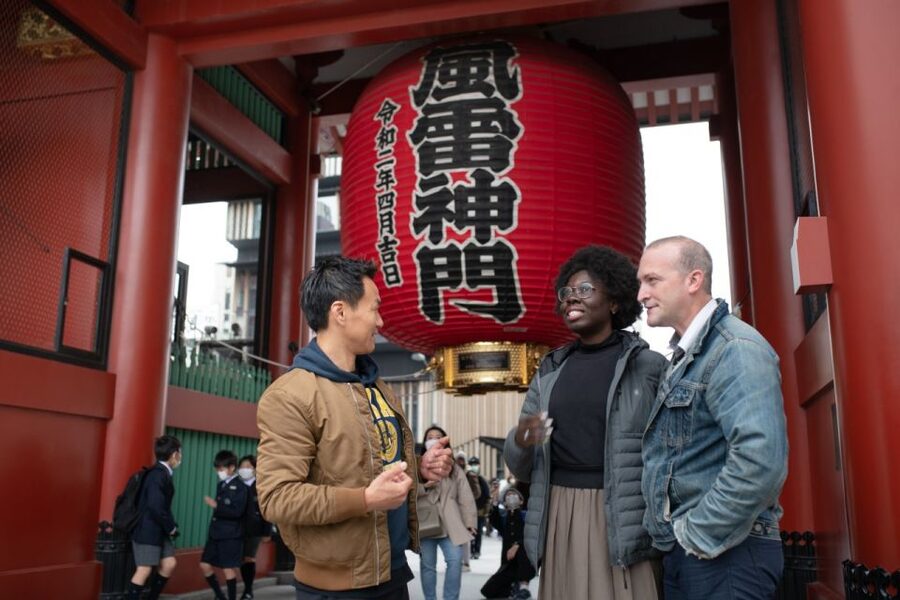
- Senso-ji and Asakusa for a first look at old Tokyo
- Markets, fish, and the best use of a local food guide
- Akihabara for anime, games, and neon
- Harajuku, Meiji Shrine, and two sides of Tokyo
- Shibuya and the practical side of Tokyo
- Old Tokyo, craft shops, and quieter detours
- What the host adds beyond directions
- What $95 per person really buys
- Who should book, and who should choose something else
- Should you book this private Tokyo host?
- FAQ
- How long does the Tokyo private custom tour last?
- How much does the experience cost?
- Is the tour private?
- Which languages are available?
- Where does the tour start?
- Is transportation included?
- How is the itinerary customized?
- Are food and attraction fees included?
- Can I cancel for a full refund?
Key points to know before booking
- Your day starts with your interests: The questionnaire helps shape a plan around food, temples, shopping, anime, culture, children, or old Tokyo.
- The host can meet you centrally: Hotel pickup is available at central Tokyo hotels, or you can meet at SHIBU HACHI BOX in Shibuya.
- Three hours works as an introduction: Choose up to eight hours if you want to connect several neighborhoods without rushing.
- You learn Tokyo’s practical rules: Guides can help with shrine etiquette, train navigation, language questions, and local customs.
- Food is tempting but extra: Yakitori, sushi, mochi, and a tucked-away lunch spot may be part of the plan, but you pay for food and drinks separately.
- It is a walking tour, not a car tour: Public transport or taxis may be used between areas, with those costs paid separately.
A personal Tokyo plan, not a standard sightseeing loop
The main strength here is choice. You are not placed on a fixed bus route or asked to spend equal time at every famous landmark. Before the day, you answer questions about your personality and interests, then communicate directly with your host about possible plans.
That matters in Tokyo because the city is too large for one sensible itinerary. A family with children may need short walks, snack stops, and easy train connections. A couple interested in traditional culture may prefer temples, shrines, old streets, and a quiet garden. An anime fan could spend much of the day around Akihabara, while a shopper may want Harajuku, Ginza, Kappabashi Street, or local markets.
The host names and backgrounds vary. Guides including Megumi, Michael, Ayaka, Tomo, Shuto, and others have led these outings, so you should think of the experience as a match with an individual person rather than a guaranteed script. The questionnaire is useful, but your pre-tour messages are just as important. Tell the host what you have already seen and what you do not want to repeat.
A few more Tokyo trips to weigh up
- Tokyo 6hr Private Tour with Government-Licensed Guide
★ 5.0 · 3,902 reviews - Private Tour to Mt. Fuji and Hakone (Fully Licenced Operator)
★ 5.0 · 1,910 reviews - Tokyo Customized Private Tour (Must See Places in 1 Day)
★ 5.0 · 1,499 reviews
Senso-ji and Asakusa for a first look at old Tokyo
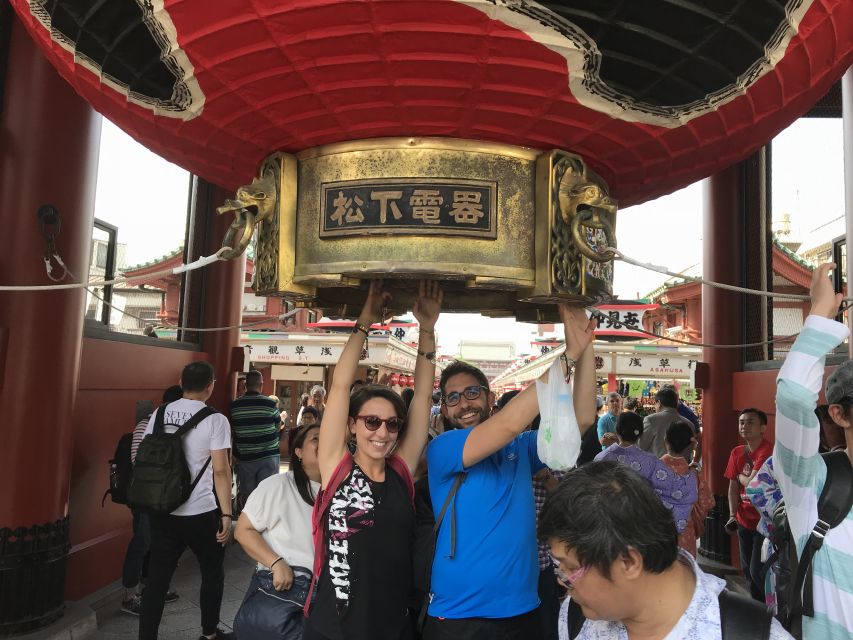
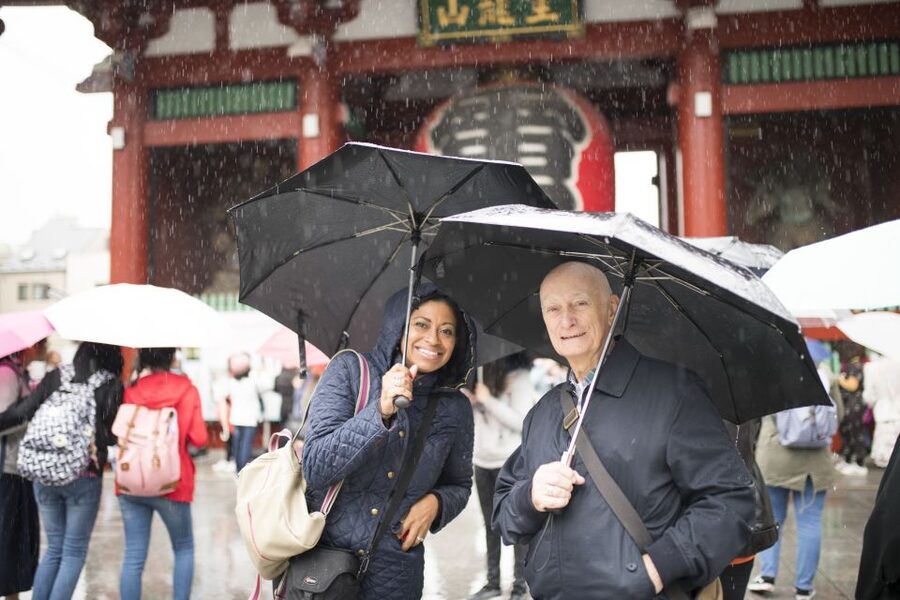
Asakusa is one of the most useful starting points for a first visit. Senso-ji gives you a clear introduction to Japanese Buddhist worship, temple architecture, incense, offerings, and the customs that can otherwise feel confusing.
The temple area also gives your host plenty to explain beyond the main gate and pagoda. You can ask about the meaning of the ritual steps, how to behave respectfully, and how the neighborhood fits into Tokyo’s older identity. A short tour here can feel full rather than incomplete if you focus on what you are seeing instead of trying to collect every landmark.
The drawback is popularity. Senso-ji can be crowded, especially on holidays and at busy times. One guide, Michael, handled a six-hour outing on a public holiday in freezing weather while keeping the requested stops moving, but the point remains: Tokyo’s best-known areas require patience. Ask your host about timing if you want a calmer visit.
Asakusa also works well for food. You might stop for a traditional sweet, browse small shops, or continue toward the Sumida area and other nearby sights. Do not expect every snack or admission to be included in the tour price.
Markets, fish, and the best use of a local food guide
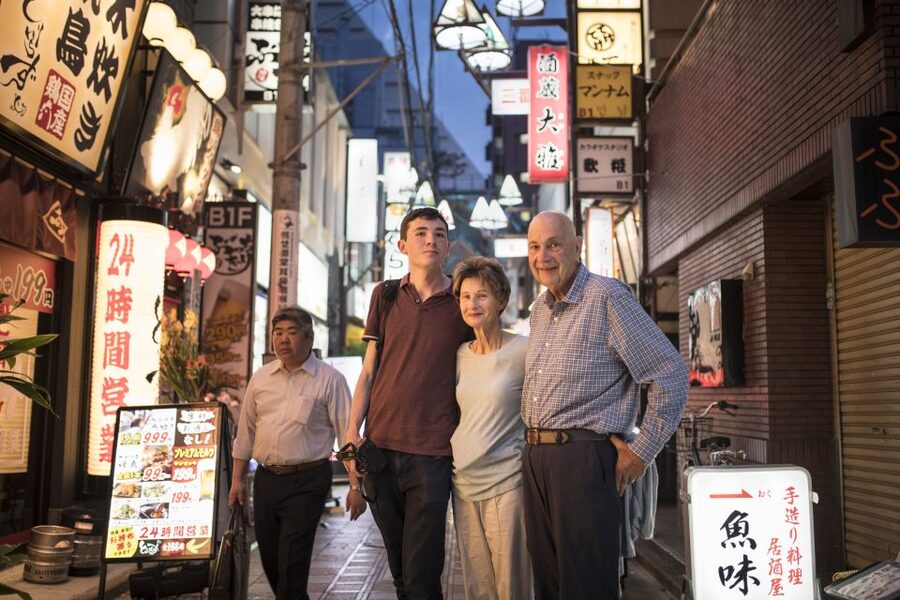
Food is one of the clearest reasons to choose a private host. Tokyo’s eating districts can be confusing at first, with menus, ordering systems, small counters, and customs that are not always obvious. A guide can help you choose a place that suits your budget and comfort level.
Ameya-Yokocho Market offers a different feel from polished department stores. Its stalls and narrow shopping streets carry a nostalgic, everyday character, with food, small goods, and an energetic street scene. The Tsukiji Outer Market has also featured in custom days, along with sushi and other market food.
The exact restaurant depends on your host and preferences. Megumi arranged a day that included the fish market, Ginza, Meiji Shrine, and Harajuku, then found a small lunch restaurant that became a highlight of the outing. That kind of recommendation is where the tour can earn its keep: you are paying for judgment and company, not simply a list of addresses.
Food and drinks are extra, so allow room in your budget. You should also tell the host about allergies, dietary limits, or foods you want to avoid before the day begins. The supplied details do not promise a set tasting menu, so treat street food as a possible part of your custom plan rather than a guaranteed inclusion.
Akihabara for anime, games, and neon
Akihabara is the natural choice if your Tokyo interests run toward anime, manga, electronics, arcades, or gaming culture. It is easy to walk through the main streets and see plenty of bright signs, but a host can help you decide which corners fit your interests instead of wasting time in shops that do not.
This area can also be a good test of how specific your questionnaire should be. Tell your host if you want collectible shopping, arcade culture, electronics, or a general look at pop culture. The more precise you are, the more useful the day is likely to become.
Akihabara is not the best choice for every group. Someone seeking quiet temples or traditional craft may find it tiring after an hour or two. The advantage of a private itinerary is that you can pair it with another neighborhood, rather than committing the whole day to one theme.
Same city, a completely different kind of day:
- Mt Fuji and Hakone 1-Day Bus Tour Return by Bullet Train
★ 5.0 · 26,383 reviews - 1-Day Tokyo Bus Tour
★ 5.0 · 14,250 reviews - Tokyo: TOKYO SKYTREE® Admission ticket
★ 4.5 · 11,192 reviews - Tokyo: teamLab Planets TOKYO Digital Art Museum Entry Ticket
★ 4.6 · 9,779 reviews
Harajuku, Meiji Shrine, and two sides of Tokyo
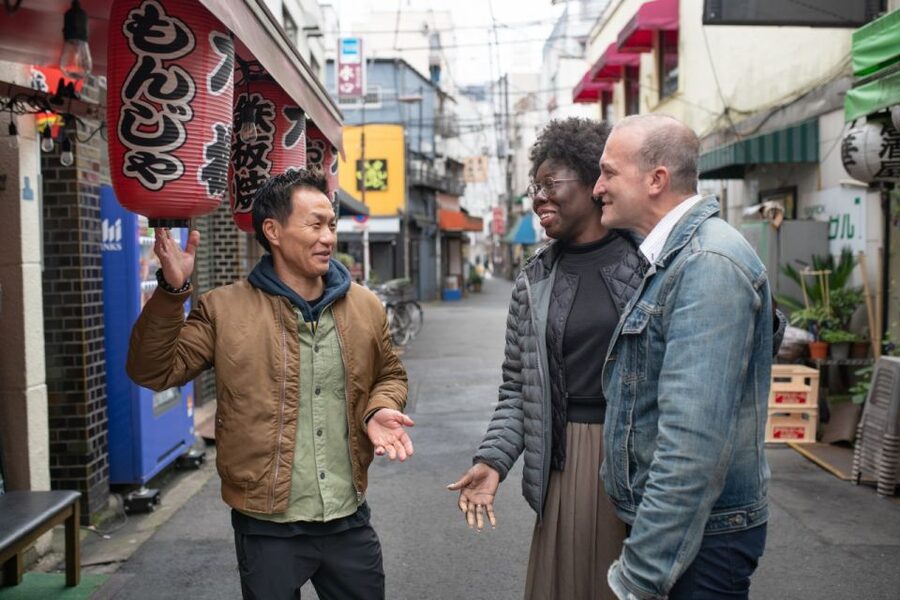
Harajuku lets you see Tokyo’s youth style, shops, and side streets, while nearby Meiji Shrine offers a very different pace. The contrast makes this a strong pairing, especially for first-time visitors who want more than one version of the city in a single outing.
Guides have used Harajuku’s fashion streets alongside Meiji Shrine, the fish market, and Ginza. You might spend time shopping, learning about shrine customs, or simply comparing the quiet wooded approach to the busy shopping lanes nearby. The experience is more useful when you tell your host if shopping is a serious goal or just something you want to see.
Families can benefit from this kind of planning. Maya designed a day with children and grandparents in mind, while Patrick adjusted his pace for a parent traveling with a young child and pregnancy-related fatigue. Those examples show why your group’s ages, energy, and mobility should be part of the pre-tour conversation.
The tour remains a walking experience, so do not assume every stop is close together. Tokyo’s rail system may be used between areas, and the fare is additional. A host can show you how to navigate it, which may be as valuable as the sightseeing itself.
Shibuya and the practical side of Tokyo
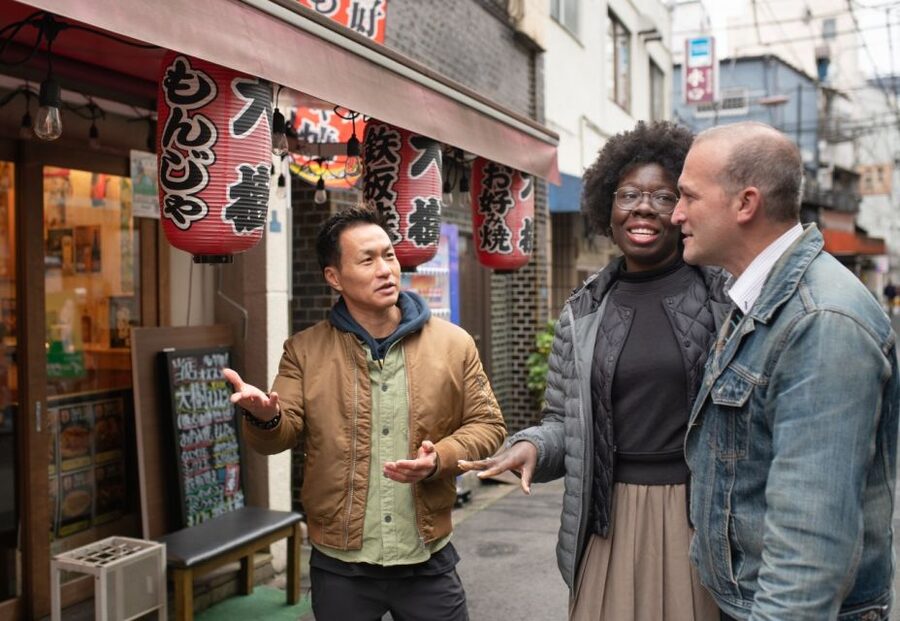
Shibuya is a convenient meeting area, with SHIBU HACHI BOX at 2 Chome-1-1 Dogenzaka serving as the alternative meeting point to central hotel pickup. It is also a sensible place to finish or begin a day that includes the famous crossing, department stores, side streets, and nearby neighborhoods.
The real value of a guide here is not simply pointing at the crossing. It is learning how to move through Tokyo afterward. Several guides have helped visitors understand subway and JR routes, obtain or use a Suica card, and find their way back to a hotel or the next activity.
If this is your first morning in Tokyo, I would consider booking the tour early in your stay. One visitor specifically wished the outing had taken place on the first day rather than the fourth. That is good advice. A host can help you understand the city’s transport system and etiquette before you spend several days working it out alone.
You can also arrange hotel pickup at a central Tokyo hotel. The information provided does not define the full boundary of central Tokyo, so confirm the meeting point with your host after booking if you are unsure.
Old Tokyo, craft shops, and quieter detours
A custom day does not have to chase the loudest districts. You can request old Tokyo, local craft, small shops, or a slower route through less hectic streets. One visitor interested in old Tokyo with an artistic focus received an itinerary built around that idea.
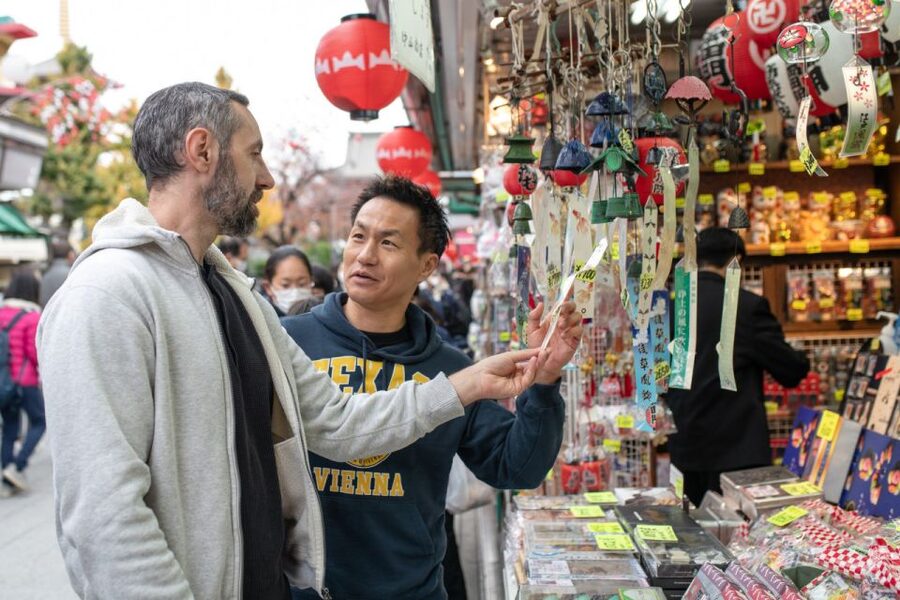
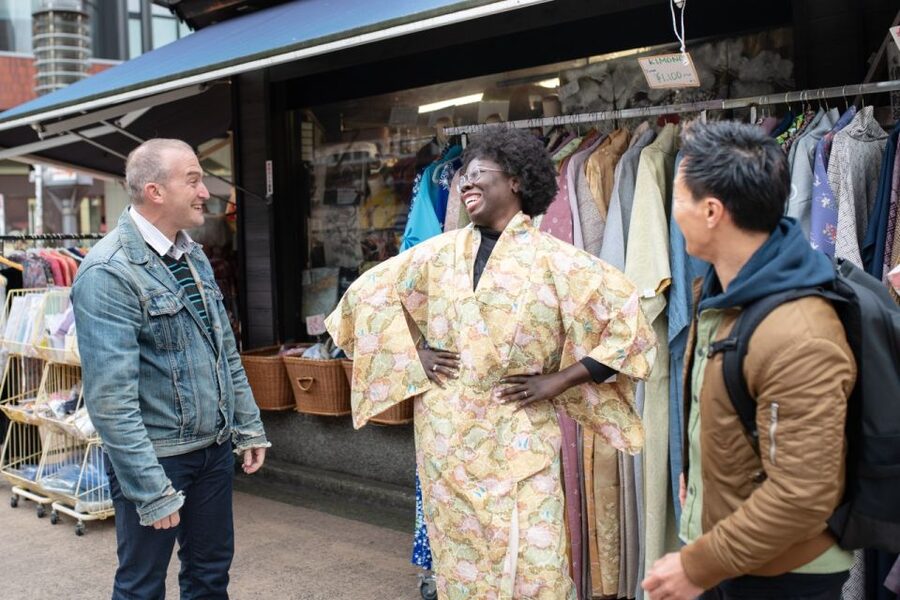
Possible stops include artisan shops, a tucked-away teahouse, a quiet Zen garden, or Kappabashi Street, known for shops connected with cooking and restaurant supplies. These are not guaranteed stops, but they show the range of a private plan. If you would rather browse than rush between landmarks, say so clearly.
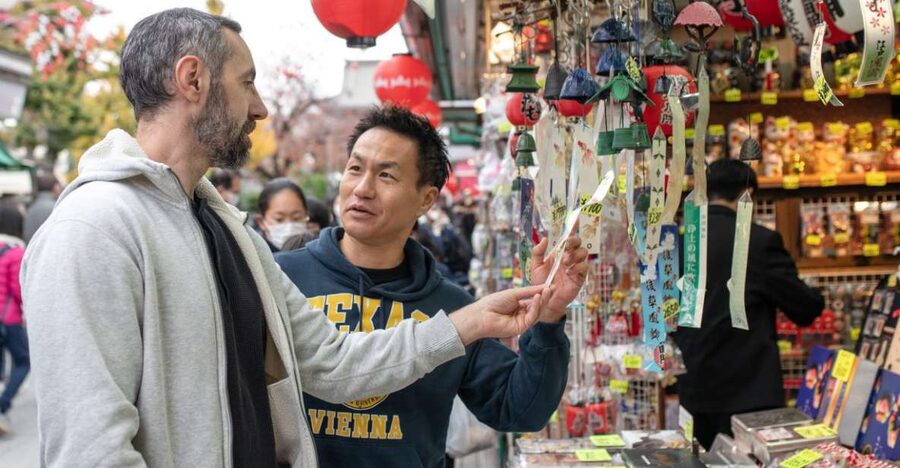
This is also where a local host can add cultural context. A guide may explain why a shop matters, help with a purchase, or translate a question. Megumi even helped a couple buy souvenirs and use the post office to send them home. That sort of assistance is practical, especially when you are dealing with unfamiliar forms or language.
Do keep expectations realistic. A three-hour booking cannot cover old neighborhoods, markets, shrines, fashion streets, and Akihabara in a relaxed way. The shorter option is best for one compact area or a quick orientation. Four hours gives you more breathing room, while six to eight hours makes sense only if your group is comfortable walking and using public transport.
What the host adds beyond directions
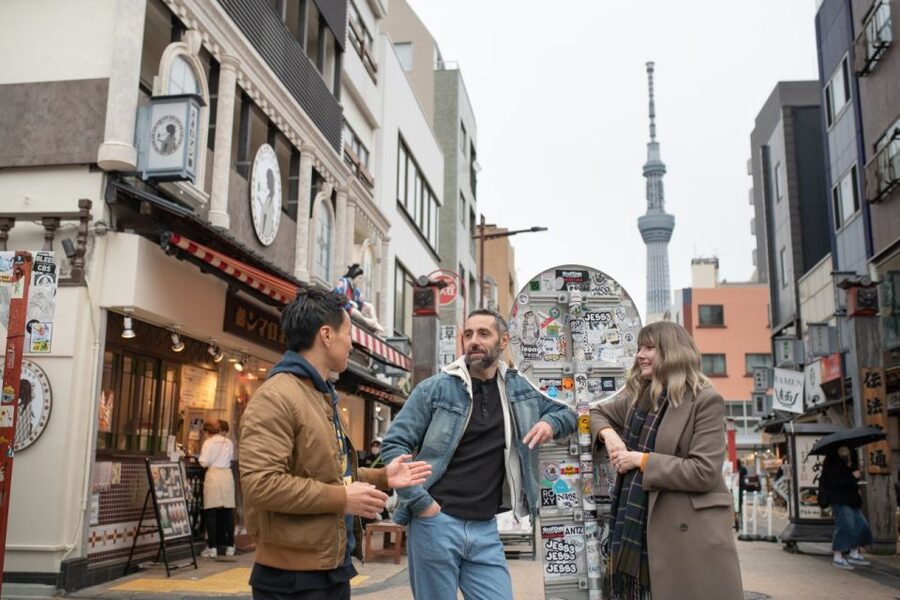
The strongest part of this experience is the human connection. The guides are not presented as a single named team, so the quality will depend on the person assigned to you. Still, the examples show useful strengths: patient explanations, friendly conversation, cultural guidance, and the ability to adjust plans.
Tomo helped one visitor practice Japanese and provided translation. Mani spent extra time assisting a wheelchair user with the train system and explaining Japanese customs. Hiroto helped a parent with a one-year-old find the way back to the hotel after the tour. These are individual examples, not promises, but they show the kind of personal help a private host can provide.
The English and Japanese language options are clear. Some individual guides may offer other language abilities, as one guide helped with English and Spanish, but you should not assume that language is available unless it is confirmed for your booking.
I would send your host a short list before the day:
- The three things you most want to see
- Areas or sights you have already visited
- Food preferences and restrictions
- Your walking comfort and group ages
- Any mobility needs
- Whether you want shopping, photos, history, or transport practice
That information gives the host something concrete to work with and reduces the chance of a generic day.
What $95 per person really buys
At $95 per person, the tour is not a cheap way to tick off landmarks. It is better understood as a private orientation and planning service, with a local companion for three to eight hours.
The price is easier to justify if you are new to Tokyo, short on time, traveling with children or older relatives, or interested in a particular subject. A host can save you from losing time in the train system, choosing a poor restaurant, or walking past places you would never notice. The value also rises if you use the outing to learn how to continue independently for the rest of your trip.
For a couple, family, or small private group, the cost may compare favorably with several separate guided activities. For a solo visitor on a tight budget, the price requires more thought. You may prefer a shorter three-hour introduction, then explore by yourself.
The base price does not include food, drinks, attraction tickets, public transport, or local taxis. Ask your host to estimate transport costs once the route is set. Since it is a walking tour, comfortable shoes, water, and a realistic pace matter more than dressing up for a formal excursion.
Who should book, and who should choose something else
I would recommend this experience to first-time visitors who want help getting their bearings fast. It also suits repeat visitors who have already seen the obvious sights and want a day built around food, craft, pop culture, or older neighborhoods.
Families may find the private format especially helpful because the host can adjust the pace. It can also work well for visitors who feel uneasy about Tokyo’s train system, need help with basic Japanese, or want an introduction to local customs without joining a large group.
I would hesitate if you prefer a fixed sightseeing list, dislike walking, or want all entrance fees and meals bundled into one price. The tour is flexible precisely because it is not an all-inclusive package. You must take part in shaping the day, and the final experience will depend partly on the host match and your communication before arrival.
Should you book this private Tokyo host?
Book it if you want Tokyo to feel manageable and personal, especially during your first one or two days. Choose three hours for a focused introduction, four hours for a balanced half-day, or six to eight hours if you want several neighborhoods and can handle a long day on foot.
The best booking strategy is simple: state your priorities clearly and request a host who suits your interests. Ask for a gentle family pace, old Tokyo, anime and gaming, food, shopping, or train practice rather than saying you want to see everything.
At $95 per person, this is a useful investment for orientation, local advice, and flexibility. It is less useful if you only want a checklist of famous sights. For the right visitor, the payoff is not just what you see that day, but how confidently you move around Tokyo afterward.
FAQ
How long does the Tokyo private custom tour last?
You can choose a duration from three to eight hours. The shorter option suits a focused neighborhood visit, while a longer booking allows more areas and a slower pace.
How much does the experience cost?
The listed price is $95 per person. Food, drinks, attraction tickets, and transportation costs are not included.
Is the tour private?
Yes. It is offered as a private group experience, so the itinerary is designed for your party rather than a shared group.
Which languages are available?
The tour is available with a live guide in English or Japanese. Individual language abilities should be confirmed with your host.
Where does the tour start?
Hotel pickup can be arranged at any central Tokyo hotel. The alternative meeting point is SHIBU HACHI BOX, 2 Chome-1-1 Dogenzaka, Shibuya City, Tokyo 150-0043.
Is transportation included?
No private vehicle is included. The experience is primarily on foot, and public transportation or local taxis may be used between sites at an additional cost.
How is the itinerary customized?
You receive a questionnaire about your personality and interests. Your answers help match you with a like-minded host, who then communicates with you about the route and recommendations.
Are food and attraction fees included?
No. Additional food, drinks, and attraction tickets are paid separately unless specifically included in the experience.
Can I cancel for a full refund?
Yes. You can cancel up to 24 hours in advance for a full refund. You can also reserve now and pay later.
Just added around Tokyo
- Tokyo: Customizable Private Guided Walking Tour★ 4.5 · 129 reviews
- Private Harajuku Omotesando Architecture Tour★ 4.9 · 18 reviews
- Tokyo: Private Personalized Local Food Tour★ 4.5 · 101 reviews
- Tokyo: Guided Helicopter Ride★ 4.9 · 24 reviews
- Tokyo: Guided Walking Tour of Tsukiji Market with Lunch★ 4.4 · 24 reviews
- Tokyo GINZA: KONPARU Japanese Cabaret Show with Drink★ 4.8 · 38 reviews
- Tokyo: Guided Walking Tour of Tsukiji Market with Breakfast★ 4.4 · 134 reviews
- Tokyo: Gotokuji Cat Temple, Shinjuku Cat Cafe & 3D Cat Tour★ 4.9 · 38 reviews
Private, compared.
Private Tour to Mt. Fuji and Hakone (Fully Licenced Operator)
Read our review →
Tokyo Customized Private Tour (Must See Places in 1 Day)
Read our review →
Mount Fuji Full-Day Private Tour from Tokyo (Customizable)
Read our review →
Tokyo 4hr Private Tour with Government-Licensed Guide
Read our review →
Kyoto 6hr Private Tour with Government-Licensed Guide
Read our review →
Tokyo Customized Private Tour: See Top Attractions in 1 Day
Read our review →
Hotspots & Hidden Gems Walking Tour Private or Group
Read our review →