
REVIEW · CITY TOURS
Tokyo City Attractive One Day Tour
Tokyo can feel like five cities stitched together by trains, highways, and neon. This private nine-hour outing gives you a way to cover its biggest sights in one long day, from the incense-filled grounds of Sensoji Temple to the controlled chaos of Shibuya Crossing. You get the city’s old, modern, sacred, commercial, and green sides without wrestling with Tokyo’s enormous transit map.
I like two things right away: the private vehicle saves time between far-flung districts, and the itinerary covers a striking range of Tokyo experiences. You also get hotel transfers, a mobile ticket, and a driver-guide focused only on your group of up to five.
The tradeoff is pace. Nine stops in roughly nine hours leaves about an hour at most places, and some stops are brief. The driver is also the guide, so this is not the same as having a dedicated historian walking beside you all day. One past booking felt the day had the right sights but not the best order, while another praised it as an excellent full-day introduction. That difference comes down to expectations and how clearly you discuss your priorities before setting out.
In This Review
- Key points at a glance
- Why this tour works for a first day in Tokyo
- Sensoji and Asakusa: Tokyo’s oldest temple setting
- Tokyo Skytree: the skyline stop with extra costs
- Tokyo Tower and the story of postwar Japan
- Tsukiji Outer Market: Tokyo through its food
- Shinjuku Gyoen: a quiet hour in the city
- Meiji Jingu: forest paths and modern imperial history
- Harajuku Station and Takeshita Street
- Shibuya Crossing and Hachiko
- What the private vehicle and guide arrangement mean
- Meals, tickets, and the true price
- Who should book this Tokyo day?
- Should you book the Tokyo City Attractive One Day Tour?
- FAQ
- How long does the Tokyo City Attractive One Day Tour last?
- How many people can join the private tour?
- Are Tokyo Skytree and Tokyo Tower tickets included?
- Are meals included?
- Where does the tour start and end?
- Can I cancel for a full refund?
Key points at a glance
- Nine Tokyo icons in one day: Visit Asakusa, both major towers, Tsukiji, two important gardens and shrines, Harajuku, and Shibuya.
- Private transport for up to five: An air-conditioned vehicle makes the long jumps across Tokyo easier than changing trains all day.
- Tower tickets cost extra: Tokyo Skytree is listed at about $12 and Tokyo Tower at about $7, with admission not included.
- A driver-guide leads the outing: The company identifies its driver as the guide, so ask in advance how much guiding and historical explanation you want.
- Best for a first Tokyo visit: You can get your bearings quickly, though you will have less free time than on a self-guided day.
- Plan for food and timing: Lunch and dinner are not included, and Skytree lines can be long.
Why this tour works for a first day in Tokyo
The main strength is geography. Tokyo’s sights are spread across separate districts, and moving from Asakusa in the east to Shibuya and Harajuku in the west can take effort. A private vehicle cannot remove traffic, but it does spare you from repeatedly finding stations, deciphering routes, and hauling bags through crowded platforms.
The route also gives you useful contrasts. You begin with an old Buddhist temple, move to one of the world’s tallest towers, see the food culture of Tsukiji, pause in a large city garden, and finish among youth fashion and giant pedestrian crossings. I like that mix because it prevents Tokyo from becoming a blur of high-rises.
At $500 per group, the arithmetic matters. With five people, the base price works out to $100 per person before tower admission and meals. For two people, it is $250 each, so the value is much weaker unless you place a high price on privacy, door-to-door transport, and saving planning time.
The tour is also attractive for families or small groups with mixed interests. One person can focus on temples, another on food, another on architecture, and everyone gets a taste of the city. Since this is private, you can ask for more time at a favorite stop or shorten one that does not appeal.
Still, do not expect a slow, detailed study of every neighborhood. The day is built around seeing many headline sights. If you want long meals, extended shopping, or quiet time in gardens, you will need to trim the list.
A few more Tokyo trips to weigh up
- Mt Fuji and Hakone 1-Day Bus Tour Return by Bullet Train
★ 5.0 · 26,383 reviews - 1-Day Tokyo Bus Tour
★ 5.0 · 14,250 reviews - Mt Fuji & Hakone Cruise, Drum Show Bullet Train 1 Day from Tokyo
★ 4.0 · 7,413 reviews
Sensoji and Asakusa: Tokyo’s oldest temple setting
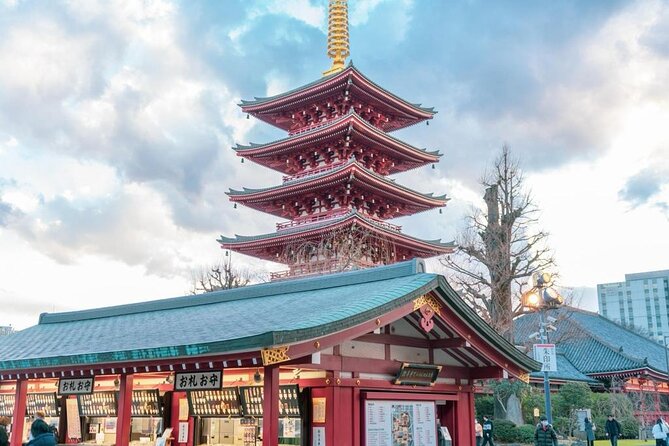
The first stop is Asakusa, with Sensoji Temple at its center. The temple is also called Asakusa Kannon Temple, and it is Tokyo’s oldest temple, traditionally dated to 645. Its origin story says that two brothers found a statue of Kannon, the Buddhist goddess of mercy, in the Sumida River in 628. The statue kept returning when they put it back, so a temple was built nearby.
You enter through the outer gate and follow Nakamise, a shopping street more than 200 meters long, toward the Hozomon gate and the main temple grounds. This is a useful place to begin because it combines ritual, architecture, and shopping in one compact area.
You get one hour here. That is enough for a first look at the gates, temple buildings, and Nakamise shops, but not enough for an unhurried visit if you want to browse every stall. Admission is free, which leaves your spending for snacks or souvenirs.
The tour description calls this stop Asakusa Shrine, but the detailed attraction is Sensoji Buddhist Temple. If the distinction matters to you, ask your guide to clarify the temple and nearby shrine when you arrive.
Tokyo Skytree: the skyline stop with extra costs
Tokyo Skytree rises 634 meters and has observation decks at 350 and 450 meters. It is the tallest free-standing broadcast tower in the world, and its height gives this stop a very different feel from the historic streets of Asakusa.
You receive about an hour here, but admission is not included. The listed cost is about $12, and you should allow for possible queues. One booking specifically noted long lines and wished the tour had provided the timing early enough to reserve an advance ticket. That is practical advice: ask exactly when Skytree will be visited before the day begins, then check if a timed ticket makes sense.
Skytree is part of Tokyo Skytree Town and the Solamachi complex, which includes hundreds of shops and restaurants. The area also contains an aquarium, a postal museum, a robot technology exhibition space, and displays of local crafts. With only an hour, you will probably need to choose between the observation deck and ground-level shopping or food.
I would treat Skytree as a view-focused stop, not a chance to explore the whole complex. If the weather is poor, ask whether the timing can shift or whether another stop deserves more attention.
Tokyo Tower and the story of postwar Japan
Tokyo Tower reaches 333 meters and was completed in 1958. It was inspired by the Eiffel Tower and served as Japan’s tallest structure until Skytree surpassed it in 2012. More than a lookout, it is a symbol of the country’s postwar economic rise and a working broadcast antenna.
You get another hour here, with admission again extra. The listed ticket cost is about $7. The tower offers a different visual experience from Skytree because it places you closer to central Tokyo’s dense streets and buildings.
Seeing both towers in one day can feel repetitive if you are not interested in city views. On the other hand, the contrast is useful: Skytree shows the scale of modern Tokyo, while Tokyo Tower connects the skyline to the rebuilding years after the war.
If you want to reduce costs, ask whether you need to go up both towers. The itinerary includes time at each, but the tickets are separate from the tour price.
Same city, a completely different kind of day:
- Tokyo: TOKYO SKYTREE® Admission ticket
★ 4.5 · 11,192 reviews - Tokyo: teamLab Planets TOKYO Digital Art Museum Entry Ticket
★ 4.6 · 9,779 reviews - Tokyo: Shinjuku Food Tour (13 Dishes at 4 Local Eateries)
★ 5.0 · 6,603 reviews - Tokyo Mt Fuji 5th St & Hakone Cruise Bus Tour w/Bullet Train
★ 4.4 · 5,024 reviews
Tsukiji Outer Market: Tokyo through its food
Tsukiji’s wholesale inner market moved elsewhere, but the Outer Market remains a major food district. Its narrow streets hold wholesale and retail shops, restaurants, and vendors selling traditional Japanese ingredients and ready-to-eat food.
This is one of the tour’s most hands-on stops. Some shops once sold goods mainly for professional buyers, including items too large for an ordinary household. More shops now sell smaller portions to the public, including sushi meals and even bite-sized tamagoyaki, or egg omelet.
The stop lasts about an hour, and admission is free. Lunch is not included, so this is the natural place to buy food, though you should budget separately. A market visit is less about checking off a monument and more about seeing what Tokyo eats and how ingredients move from specialist shops to home kitchens and restaurants.
Your guide can help you understand what is easy to sample and what is better purchased as a gift. Keep in mind that an hour passes quickly if you stop to eat, browse, and photograph the stalls.
Shinjuku Gyoen: a quiet hour in the city
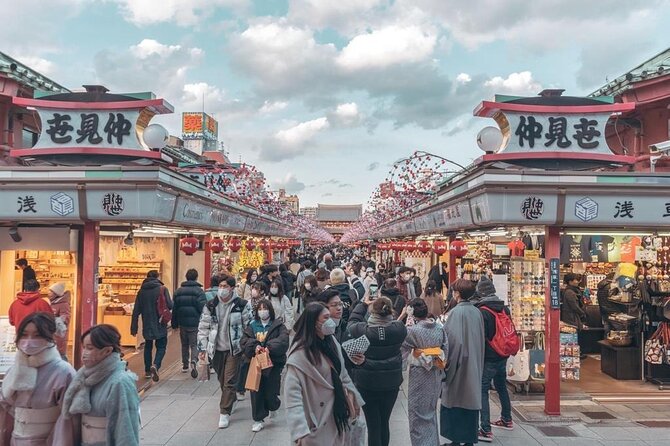
Shinjuku Gyoen National Garden offers a needed pause after the towers and market. It is one of Tokyo’s largest and most popular parks, with broad lawns, curving paths, and calm scenery close to Shinjuku Station.
Spring is the special season here, when cherry blossoms make the garden one of the city’s key viewing places. Even outside blossom season, the park gives you space to slow down and see a less frantic side of Tokyo.
You have about an hour, which is enough for a pleasant walk but not a full exploration of the grounds. If gardens are a priority, tell the guide before the morning begins. The schedule contains many one-hour stops, and this is one place where a little extra time can feel more valuable than a quick visit to another viewpoint.
Meiji Jingu: forest paths and modern imperial history
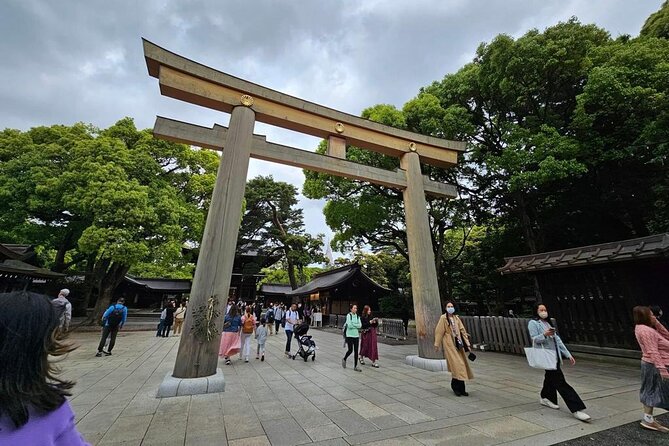
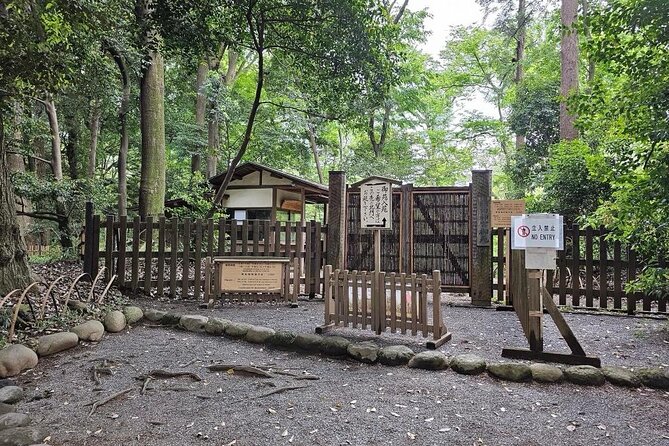
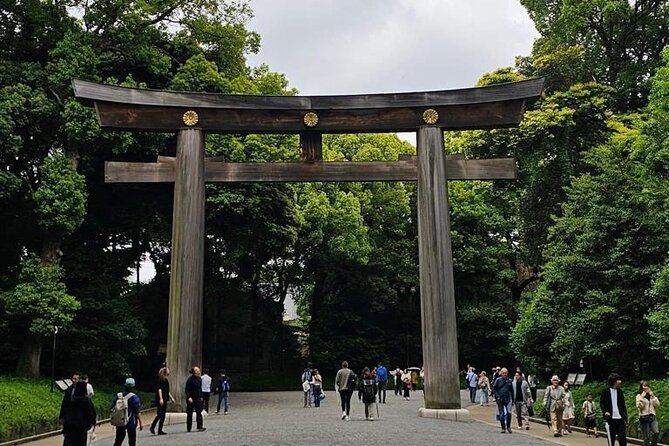
Meiji Jingu is dedicated to Emperor Meiji and Empress Shoken. It was completed in 1920, destroyed during the war, and rebuilt afterward. Emperor Meiji was born in 1852 and took the throne in 1867, during the Meiji Restoration, when Japan moved away from its feudal system and began rapid modernization.
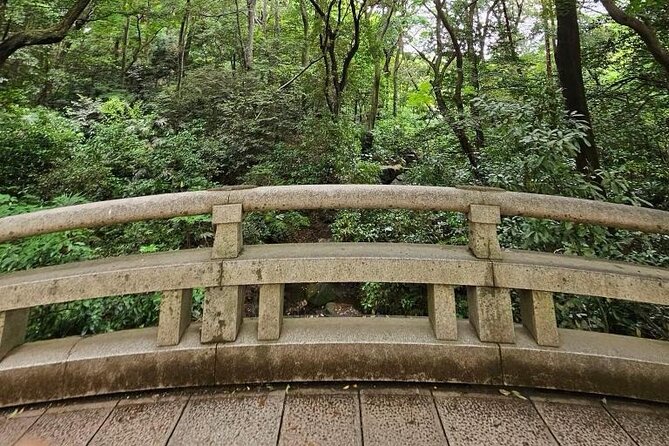
The shrine gives the day a cultural and historical center. You walk from the surrounding city toward a quieter sacred setting, then consider the changes that turned Japan into a modern world power during the Meiji period.
Like the other free stops, the one-hour visit is enough for an introduction. It is not enough for a slow study of every shrine detail or a long walk through the grounds. I would wear comfortable shoes and keep your expectations realistic: this day involves repeated short walks, vehicle transfers, and several changes of atmosphere.
Harajuku Station and Takeshita Street
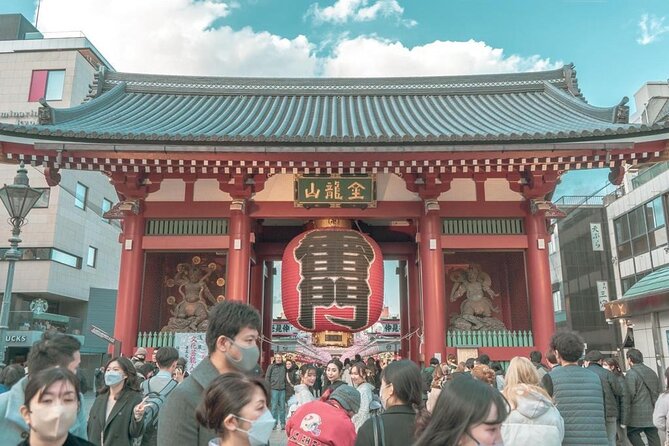
Harajuku brings you into Tokyo’s youth and fashion culture. Takeshita Street begins near the station and is lined with clothing shops, accessory stores, cafes, dessert shops, and unusual souvenirs. The area is especially active on weekends and holidays.
You have an hour here, which makes it possible to browse without turning the stop into a full shopping expedition. Paris Kids is noted as one place for fashionable accessories at reasonable prices, and the shops cater to many styles.
Harajuku works well late in the day because it is informal and flexible. You can shop, look around, or simply watch the flow of people. The downside is that the area can feel crowded and commercial, particularly at busy times. If youth fashion is not your interest, this may be a stop to shorten in favor of more time at a temple or garden.
Shibuya Crossing and Hachiko
Shibuya Crossing is the final burst of modern Tokyo. Ten traffic lanes and five major crosswalks meet in front of a canyon of illuminated buildings. The crossing is famous for its organized disorder, with large waves of pedestrians moving in several directions at once.
The planned visit lasts 30 minutes. That is enough to cross, take in the view, and understand why this intersection has become a symbol of Tokyo. It is not enough for a long shopping session in the surrounding district.
Nearby, the Hachiko statue tells a gentler story. Hachiko was adopted by University of Tokyo professor Hidesaburo Ueno and reportedly returned to Shibuya Station each day waiting for him, even after Ueno died in 1925. Hachiko died in 1935, and the story later inspired the 2009 film Hachi: A Dog’s Tale, starring Richard Gere.
The statue is another 30-minute stop. Together, Shibuya Crossing and Hachiko make a tidy finish, pairing Tokyo’s giant urban spectacle with a small story about loyalty.
What the private vehicle and guide arrangement mean
The air-conditioned vehicle is a real benefit on a nine-hour day. Tokyo can be tiring when you combine long walks, hot or wet weather, crowded trains, and frequent transfers. Private transport gives you a place to sit between districts and keeps the group together.
The arrangement is also worth clarifying. The company says its driver is the guide. That means you should not automatically expect a separate professional guide to leave the vehicle and provide a long explanation at every site.
One earlier booking had hoped for a separate guide and felt the day missed some potential. The company responded that its driver was the guide and apologized for the misunderstanding. I would settle this before booking: ask who will guide your group, what language will be used, and how much historical commentary is included.
The onboard hotspot is another useful touch, though the supplied information does not explain its data limits. Use it as a convenience, not as a reason to skip downloading maps, tickets, or translations before departure.
The tour begins and ends at The Tokyo Station Hotel, at 1-9-1 Marunouchi, Chiyoda City. Pickup is offered, but because a specific meeting point is also listed, confirm the exact pickup arrangement and return point when you book.
Meals, tickets, and the true price
The $500 group price includes the air-conditioned vehicle, private transport, and onboard hotspot. It does not include lunch, dinner, Tokyo Skytree admission, or Tokyo Tower admission.
For five people, the price is reasonable for a full private day with transport. For a smaller group, it becomes a premium purchase. You are paying for convenience and flexibility more than for included attractions.
Plan extra money for both towers and food at Tsukiji. Since tower admission is separate, ask about the visit time before booking a ticket. The long Skytree lines noted in the feedback make this especially important.
Free admission at Sensoji, Tsukiji, Shinjuku Gyoen, Meiji Jingu, Shibuya, Hachiko, and Harajuku helps balance the budget. Still, shopping and snacks can quickly add up, especially at Tsukiji and Takeshita Street.
Who should book this Tokyo day?
I would choose this tour if you are visiting Tokyo for the first time, have only one full day, or want private transport for a group of up to five. It is also a good fit if your party has different interests and you want one day that includes temples, food, shopping, gardens, and skyline views.
It is less suitable if you prefer slow travel. You may find the schedule hurried, especially during cherry blossom season, when Shinjuku Gyoen deserves more time. It is also not ideal if you want a dedicated expert guide at every stop, unless that arrangement is confirmed in advance.
The strong overall rating, 4.9 from 13 ratings and 92 percent recommendation, supports the idea that the basic format works well. The less positive experience points to the main risk: the sights are excellent, but the order, pace, and guide arrangement matter.
Should you book the Tokyo City Attractive One Day Tour?
Book it if your priority is maximum coverage with minimum transport hassle. You will see the city’s best-known symbols and several places that reveal how Tokyo works, all while keeping your own group together.
Before paying, ask for the expected timing at Skytree, decide if you truly want both towers, and confirm that the driver-guide format meets your needs. If you are comfortable with a brisk schedule and a premium private price, this is a practical first-day overview. If you want long meals, serious shopping, or detailed guided walks, choose a slower plan instead.
FAQ
How long does the Tokyo City Attractive One Day Tour last?
The tour lasts approximately nine hours.
How many people can join the private tour?
The price covers one private group of up to five people.
Are Tokyo Skytree and Tokyo Tower tickets included?
No. Entry tickets are not included. The supplied information lists approximate admission costs of $12 for Skytree and $7 for Tokyo Tower.
Are meals included?
No. Lunch and dinner are not included. Tsukiji Outer Market is a practical place to buy food during the day.
Where does the tour start and end?
The listed start and end point is The Tokyo Station Hotel in Marunouchi, Tokyo. Pickup is offered, so confirm the exact pickup details when booking.
Can I cancel for a full refund?
Yes. You can cancel at least 24 hours before the local start time for a full refund. Cancellations or changes made less than 24 hours before the start time are not accepted for a refund.
Just added around Tokyo
- Private Memorable Tokyo Tour with English Speaking Driver★ 5.0 · 30 reviews
- Private Tokyo Custom Full-Day Tour by Chartered Vehicle★ 5.0 · 16 reviews
- Private Sightseeing to Mt Fuji and Hakone with English Driver★ 5.0 · 51 reviews
- Tokyo Photography Masterclass – Private Photography Lesson★ 5.0 · 25 reviews
- Private Mt. Fuji Day Trip from Tokyo with English-Speaking Driver★ 5.0 · 33 reviews
- 4 Day Tour – Mount. Fuji, Tokyo, Hakone, Kamakura and Yokohama★ 5.0 · 19 reviews
- Private Unforgettable Mt Fuji Tour with English Speaking Driver★ 5.0 · 142 reviews
- Private Tokyo Food Tour – A Journey Through Time Through Food★ 5.0 · 36 reviews
City Tours, compared.

Asakusa, Skytree & Akhihabara Go-Kart City Experience
Read our review →
Hiroshima City 4hr Private Walking Tour with Licensed Guide
Read our review →

Private Haneda Airport (HND) to Central Tokyo City Transfer
Read our review →
3-hour Guided E-Bike Tour of the City’s Hidden Gems
Read our review →
3-Hour Bike/E-Bike Tour of the City’s Highlights
Read our review →Browse the lists this tour appears in