
REVIEW · CYCLING TOURS
Tokyo: 3h Private E-bike Tours, Starting at Your Hotel
Tokyo can feel enormous from the pavement, but an e-bike tour from your hotel makes the city easier to understand. In three hours, you can move from skyscrapers and Olympic sites to temple grounds, riverside paths, old lanes, and neighborhoods that are easy to miss on a train.
I like two things right away: Kazuma meets you in the lobby, and the private format lets you set the pace. The electric assistance also takes the sting out of Tokyo’s hills. The catch is that 15 to 20 kilometers in three hours still requires steady cycling, and the tour is not suitable for children under 10, riders below 145 centimeters, or people over 100 kilograms.
In This Review
- Key points to know before you book
- Why cycling gives you a better first look at Tokyo
- Meeting Kazuma at your hotel
- What the three-hour route can include
- Shinjuku and the Tokyo Metropolitan Government Building
- Shibuya, Aoyama, and the Olympic sites
- Imperial Palace, Hibiya, and Tokyo Station
- Tsukuda Island and Tsukishima
- Zojo-ji Temple and Tokyo Tower
- Asakusa, the Sumida River, and Tokyo Skytree
- Smaller streets and the Arakawa Riverside
- How the e-bikes change the experience
- The guide makes the private format worthwhile
- Is $141 per person good value?
- Who should book this Tokyo ride?
- Should you book it?
- FAQ
- Where does the tour start?
- Where does the tour finish?
- How long is the tour?
- How far do you usually cycle?
- Is the tour private?
- Which languages are available?
- Are e-bikes included?
- What should I wear?
- Can children join the tour?
- Can I change the route or starting time?
Key points to know before you book
- Hotel pickup and drop-off: Find Kazuma with a bike helmet in your lobby five minutes before the scheduled start.
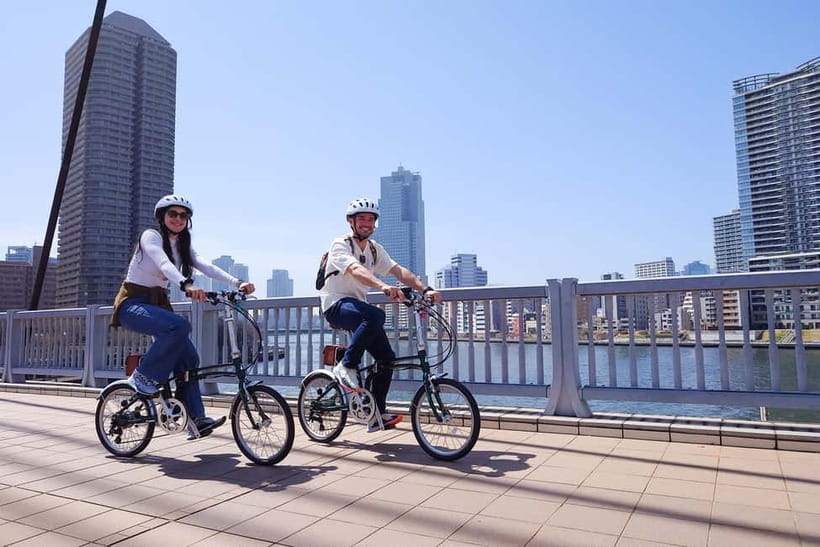
- A useful three-hour range: The usual 15 to 20 kilometer route can connect several parts of Tokyo without making you pedal hard all day.
- Private route planning: You can focus on Shibuya, old neighborhoods, temples, rivers, imperial sites, or a mixture of them.
- Easy electric assistance: The motor helps as you pedal, making hills and longer urban stretches more manageable.
- Excellent personal guidance: Kazuma is praised for clear English, careful riding, cultural explanations, patience, and thoughtful photo stops.
- Practical limits: Wear closed shoes and comfortable clothing, and confirm any route or timing changes before booking because extra charges may apply.
Why cycling gives you a better first look at Tokyo
The main strength here is not simply speed. It is the ability to stop often, look around, and connect districts that feel separate when you travel only by subway.
A train can take you from Shinjuku to Asakusa quickly, but it hides the city in between. On a bike, you get short stretches of office towers, quiet residential lanes, shrine gates, broad avenues, old shopping streets, and waterways. The changes come quickly, which is one of the most useful lessons Tokyo offers.
The usual route covers about 15 to 20 kilometers. That is enough ground to see several major areas, but not so much that the ride becomes a workout. You will make multiple short stops for explanations, water, and photographs. The electric motor assists while you pedal, so you still ride the bike, but you do not need to fear every incline.
This is particularly useful on your first day. One family used the tour around Shinjuku and Shibuya at the start of its Tokyo visit, and that makes good sense. You get a broad orientation, learn the shape of the city, and collect ideas for places to revisit later on foot.
A few more Tokyo trips to weigh up
- Tokyo Guided Small-Group Biking Tour
★ 5.0 · 1,250 reviews - Tokyo Great Cycling Tour
★ 5.0 · 811 reviews - Tokyo Top Highlights 3h Guided E-bike Tour
★ 5.0 · 714 reviews
Meeting Kazuma at your hotel
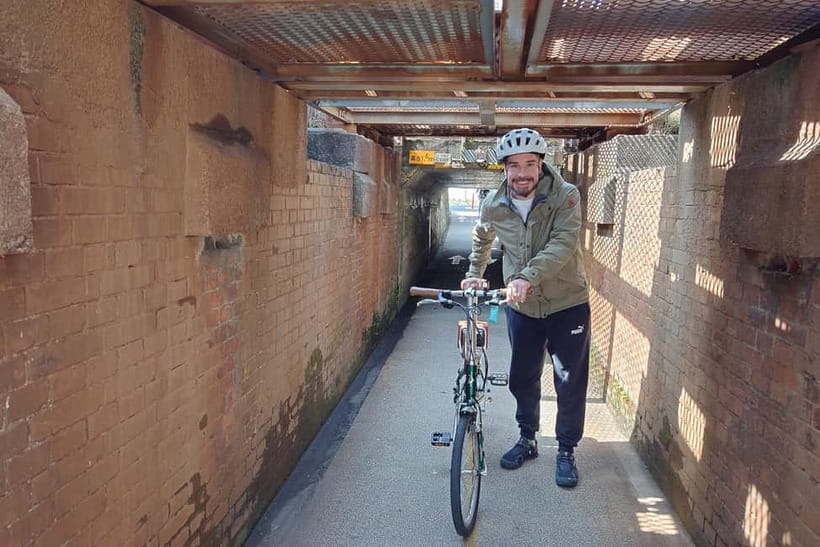
The hotel start is one of the most practical details. Instead of finding an unfamiliar meeting point, you meet Kazuma in the lobby five minutes before pickup. He arrives with the bikes and a helmet, then adjusts each bike to fit you.
That small bit of preparation matters. A poor saddle height or awkward handlebar position can make even an easy ride unpleasant. The fitting also gives you a chance to ask questions before heading into the streets.
You receive a safety briefing, and insurance and helmets are included. Several riders specifically valued Kazuma’s careful approach. He puts safety first, explains what to do, and keeps the pace comfortable rather than treating the ride like a race.
The hotel pickup area includes many central parts of Tokyo, such as Shinjuku, Shibuya, Ginza, Marunouchi, Roppongi, Asakusa, Ueno, Shinagawa, Akihabara, Nihonbashi, and Hamamatsucho. If your hotel is outside the service range, you need to agree on another starting place, and an extra fee may apply.
The return is also arranged at one of the listed central areas. Confirm the exact start and end point when you book, especially if you have a dinner reservation or train to catch.
What the three-hour route can include
You will not visit every place on the long list in one outing. The guide proposes a route, then adjusts it to your interests, available time, and riding pace. That flexibility is the point of booking privately.
Shinjuku and the Tokyo Metropolitan Government Building
A route through Shinjuku may begin near the Tokyo Metropolitan Government Building. The scheduled photo stop here lasts about 10 minutes, giving you a quick look at one of Tokyo’s major administrative centers and a strong contrast between broad city planning and the narrow lanes nearby.
Shinjuku is also home to Omoide Yokocho, often called Memory Lane. Its tight passageways and small eating places show a more intimate side of the district than the giant stations and towers suggest. You may not stop for a meal, since food and drinks are not included, but the area is useful for understanding how Tokyo can shift from monumental to modest within a few blocks.
The drawback is traffic and activity around Shinjuku. You should expect a city ride, not a quiet countryside cycle. That is part of the experience, but riders who want only peaceful paths should request a route with more riverside or park sections.
Same city, a completely different kind of day:
- Mt Fuji and Hakone 1-Day Bus Tour Return by Bullet Train
★ 5.0 · 26,383 reviews - 1-Day Tokyo Bus Tour
★ 5.0 · 14,250 reviews - Tokyo: TOKYO SKYTREE® Admission ticket
★ 4.5 · 11,192 reviews - Tokyo: teamLab Planets TOKYO Digital Art Museum Entry Ticket
★ 4.6 · 9,779 reviews
Shibuya, Aoyama, and the Olympic sites
Shibuya Crossing is one of the obvious targets for a first Tokyo ride. Seeing the crossing from a bicycle gives you a sense of its scale, but the bike is not a license to photograph while moving. The rules prohibit taking photos or video while cycling, so stop fully before reaching for your phone.
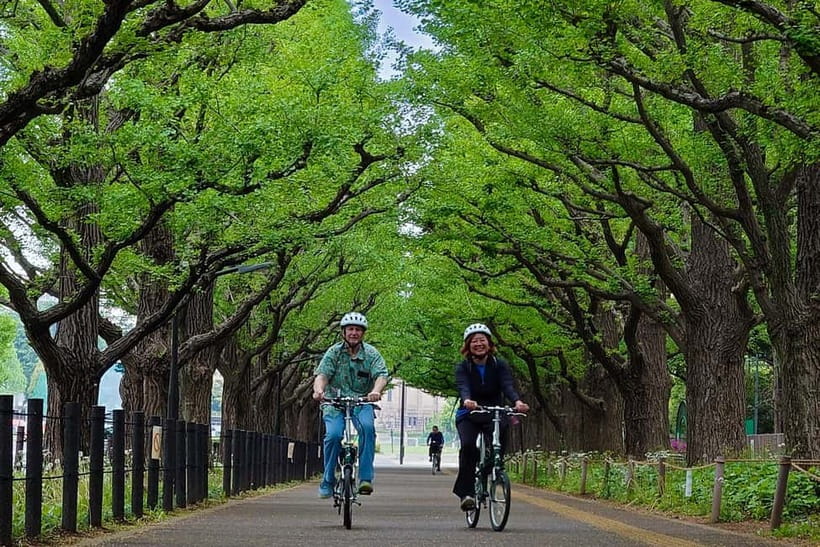
From there, the route can head toward Aoyama, the Gaien Ginkgo Tree Avenue, and the National Stadium, used for the Tokyo Olympics. Aoyama Cemetery’s cherry blossom street is another possible stop. These areas give you more breathing room than central Shibuya and show how Tokyo combines formal avenues, memorial spaces, sports venues, and stylish neighborhoods.
This part of the route works well for anyone who wants modern Tokyo without spending the whole afternoon inside commercial districts. Ask for it if you are interested in architecture, city planning, or the contrast between crowded streets and open public spaces.
Imperial Palace, Hibiya, and Tokyo Station
The Imperial Palace area offers a very different ride. Hibiya Park, described as Tokyo’s first Western-style park, brings lawns and open space into the center of the capital. The route may continue toward the palace area, Tokyo Station, and Nihonbashi Bridge.
These stops help explain Tokyo’s transition into a modern capital. You see grand public spaces, major transport and business centers, and older commercial connections near Nihonbashi. The route is especially useful if you want photographs of Tokyo that are less familiar than neon signs and crossing crowds.
The palace grounds are not simply another attraction to tick off. From a bike, the broad roads and open edges around the area help you see how much space the imperial district occupies within a dense city. Your time there will depend on the route and traffic, so make your priorities clear before setting off.
Tsukuda Island and Tsukishima
A ride toward Tsukuda Island and Tsukishima changes the mood again. These waterfront districts offer a mix of older streets and newer high-rise development. Tsukishima’s Monja Street is a natural stop if food culture interests you, though meals and drinks are not part of the tour price.
This section is a good choice for repeat visitors or anyone who has already seen Shibuya and Shinjuku. You get a look at Tokyo as a working residential city, not only as a collection of famous sights.
Zojo-ji Temple and Tokyo Tower
Zojo-ji Temple and Tokyo Tower make a strong pair. The temple provides traditional religious architecture and a calmer setting, while the tower gives you one of Tokyo’s most recognizable modern views.
A guide adds value here because the stops are not just photo backgrounds. Kazuma gives cultural and historical explanations along the way, and his English is described as excellent. The ride is a better fit for you if you want context as you move, rather than a simple bike rental with a map.
Asakusa, the Sumida River, and Tokyo Skytree
Asakusa’s Kaminarimon Gate is among the most recognizable entrances in Tokyo. From there, a route may connect with the Sumida River and Tokyo Skytree. This combination lets you see old Tokyo, a major river corridor, and a modern tower in one outing.
Asakusa can be crowded, so the bike is most useful for reaching the area and then exploring at designated stops. You should not expect to pedal freely through every busy pedestrian section. The guide’s role is important here, both for safety and for deciding where to pause.
The Sumida riverside can provide a calmer stretch after the city streets. It also gives you a chance to notice Tokyo’s waterways, which are easy to ignore when you move underground. If you want more local atmosphere, ask about Kitasenju, a lively neighborhood that is less likely to appear on a standard first-time sightseeing plan.
Smaller streets and the Arakawa Riverside
The best part of a private route may be the sections between famous sights. Kazuma has taken riders to quiet old lanes, traditional houses, gardens, and local districts that do not appear on every standard itinerary.
You should tell him what you have already seen and what you want to avoid. One rider requested places not previously visited and ended up seeing an old traditional house and garden. That is the value of a private guide: you are not locked into a fixed checklist.
A route along the Arakawa Riverside can offer open space and a change from dense streets. It may be a better choice during a busy day in central Tokyo, although you will give up some famous landmarks. Ask for the balance you want rather than assuming the proposed route is your only option.
How the e-bikes change the experience
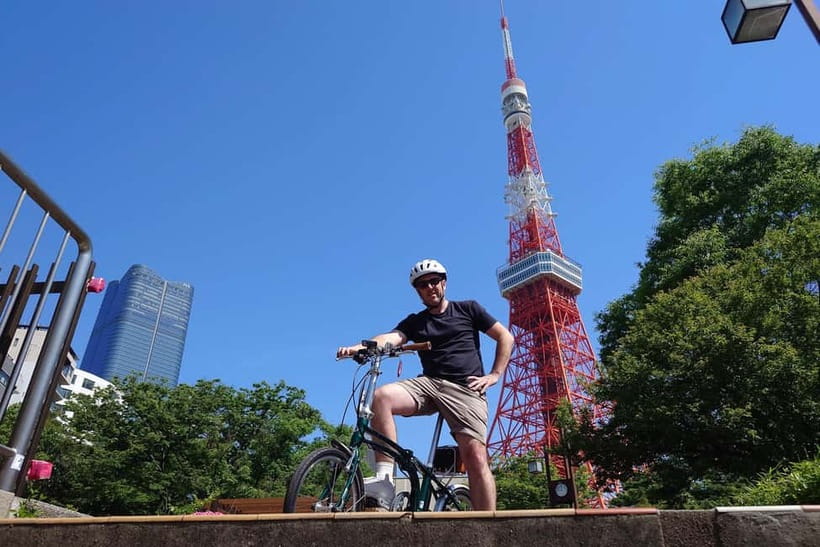
The bikes are pedal-assist models. You pedal normally, and the motor helps, especially on hills and longer stretches. Riders repeatedly describe them as easy to handle, including people who were not experienced cyclists.
That does not mean you can sit back and coast for three hours. You still need to steer, brake, watch the road, and follow the safety instructions. The activity is not suitable for anyone under 145 centimeters or over 100 kilograms, and the stated ideal height range is 145 to 185 centimeters.
Wear comfortable, secure clothing. High heels, sandals, flip-flops, and skirts are not allowed. Closed shoes are the sensible choice even if the weather is mild.
Tokyo’s weather can affect comfort, but no special seasonal promise is made here. The tour operates as a cycling activity, so check the forecast and be realistic about your energy. If you are unsure about the distance, ask for a shorter or gentler route before booking. Changes to distance, duration, starting time, or faraway stops may bring additional charges.
The guide makes the private format worthwhile
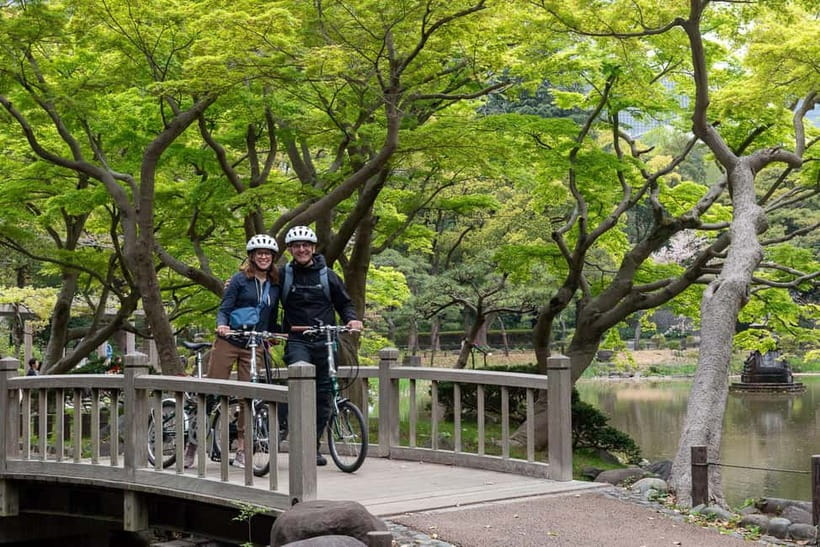
Kazuma is the central reason this is more than a bike hire. His work combines route planning, road safety, local explanation, and conversation. He is described as friendly, patient, careful, and easy to understand in English.
He also takes photographs during the stops and sends them afterward. That is a useful extra, since you can focus on riding and looking around instead of constantly stopping to photograph your group. Do not count on taking moving shots yourself because photography while cycling is prohibited.
The private group format suits couples, families with older children, and friends who do not want to match the pace of strangers. It also works well for solo visitors who want a personal introduction to Tokyo.
The tone is relaxed rather than formal. You can ask for cultural stories, neighborhood suggestions, or a route built around sites you have not seen. If your request requires a large detour, longer duration, or a different start time, confirm the extra cost in advance.
Is $141 per person good value?
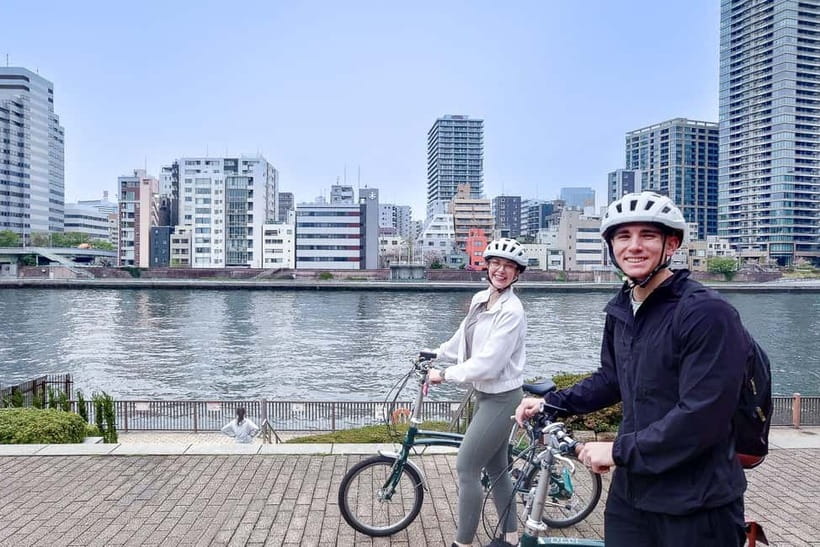
At $141 per person, this is not the cheapest way to see Tokyo. You are paying for a private guide, hotel pickup and return, an e-bike, helmet, safety instruction, insurance, and three hours of focused attention.
The value improves when two or more people share the experience and want a route designed for their interests. It also makes more sense if your time is limited. A subway-based sightseeing day may cost less, but it will not give you the same continuous view of the streets or the same personal route planning.
Food and drinks are not included. That is easy to manage because you can ask to stop near a food district, but do not expect a tasting tour. Any extension, unusual starting time, or distant detour may cost extra, so the advertised price should be treated as the starting point for a customized experience.
I would consider it good value for a first morning in Tokyo, a family group that wants a shared activity, or a repeat visitor looking for districts beyond the usual sights. It is less compelling if you already know Tokyo well and simply want an inexpensive bicycle rental.
Who should book this Tokyo ride?
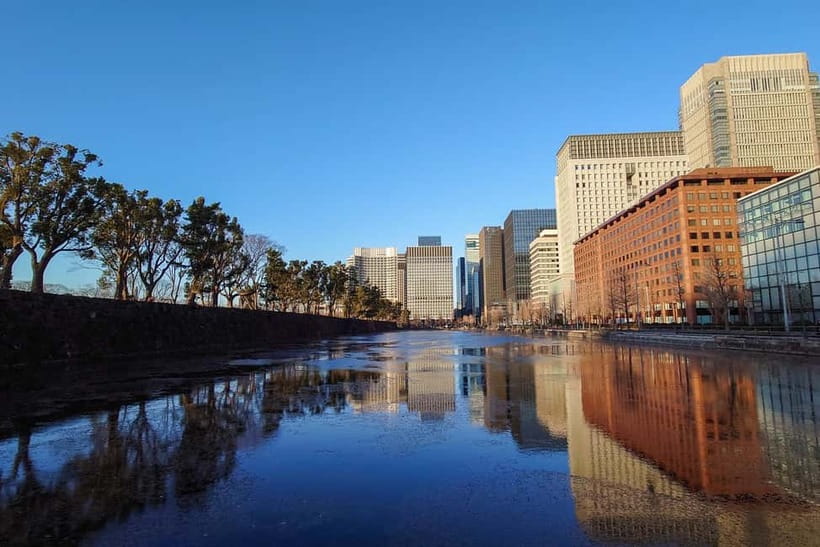
Book this tour if you want to cover ground but still stop for explanations and photographs. It suits riders who like a personal pace and who would rather see the city at street level than move between attractions underground.
It is a particularly good match for:
- First-time visitors with only a few days in Tokyo
- Couples and families with children aged 10 or older
- Riders who want help with hills and longer distances
- People interested in both famous sights and ordinary neighborhoods
- Repeat visitors who want a custom route
- Anyone who values hotel pickup and a guide who handles the route
Think twice if you dislike urban cycling, cannot wear closed shoes, are outside the stated height or weight limits, or want a slow walking tour with almost no road riding. The private format gives you control, but it does not turn the activity into a completely passive sightseeing ride.
Should you book it?
I would book this if you want a fast, personal introduction to Tokyo and can comfortably ride 15 to 20 kilometers. The combination of hotel pickup, pedal assistance, flexible routing, and Kazuma’s careful guidance removes much of the hassle that can make city cycling intimidating.
For the best result, contact the operator with three pieces of information: the neighborhoods you have already visited, the places you most want to see, and your preferred pace. Ask about any extra fee before agreeing to longer hours or distant stops.
If you want only one famous district, use the subway and explore on foot. If you want to understand how Shinjuku, imperial Tokyo, old neighborhoods, rivers, temples, and modern towers fit together, this three-hour ride earns its place in your schedule.
FAQ
Where does the tour start?
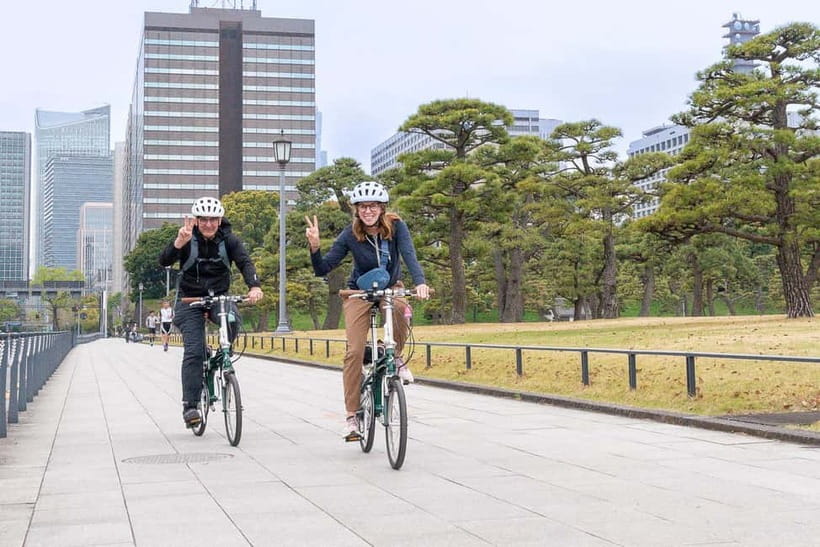
The tour starts at your hotel if it is within the service area. Meet the guide in the hotel lobby five minutes before the scheduled pickup time, and look for a person with a bike helmet.
Where does the tour finish?
The tour can finish at your hotel or one of the listed central drop-off areas. Confirm the exact drop-off point when arranging the booking.
How long is the tour?
The standard tour lasts three hours.
How far do you usually cycle?
Routes generally cover about 15 to 20 kilometers.
Is the tour private?
Yes. The experience is operated for a private group, and the route and pace can be adjusted to your interests.
Which languages are available?
The live guide is available in English and Japanese.
Are e-bikes included?
Yes. An e-bike, helmet, safety instruction, insurance, and a live guide are included.
What should I wear?
Wear comfortable clothing and closed shoes. High heels, sandals, flip-flops, and skirts are not allowed.
Can children join the tour?
Children under 10 years are not permitted. Riders must also meet the stated height and weight requirements.
Can I change the route or starting time?
You can request a different starting time, longer duration, or visits to places outside the suggested route. Additional fees may apply, so make these requests when you sign up.
More 3-Hour Experiences in Tokyo
- 3h Tokyo E-Bike Tour: Hidden Gems, and Local Life with guide
★ 5.0 · 670 reviews - Tokyo: 3-Hour Bike or E-Bike City Highlights Tour
★ 4.8 · 435 reviews - Tokyo: 3-hour Guided E-Bike Tour of the City’s Hidden Gems
★ 4.8 · 251 reviews - Tokyo: 3-Hour Bike or E-Bike Tour of City’s Hidden Gems
★ 4.7 · 81 reviews
Just added around Tokyo
- Tokyo: Customizable Private Guided Walking Tour★ 4.5 · 129 reviews
- Private Harajuku Omotesando Architecture Tour★ 4.9 · 18 reviews
- Tokyo: Guided Helicopter Ride★ 4.9 · 24 reviews
- Tokyo: Guided Walking Tour of Tsukiji Market with Lunch★ 4.4 · 24 reviews
- Tokyo: Private Personalized Local Food Tour★ 4.5 · 101 reviews
- Tokyo: Gotokuji Cat Temple, Shinjuku Cat Cafe & 3D Cat Tour★ 4.9 · 38 reviews
- Tokyo GINZA: KONPARU Japanese Cabaret Show with Drink★ 4.8 · 38 reviews
- Tokyo: Guided Walking Tour of Tsukiji Market with Breakfast★ 4.4 · 134 reviews
Cycling Tours, compared.
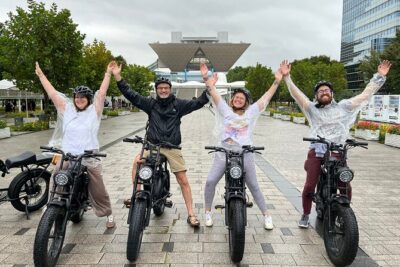
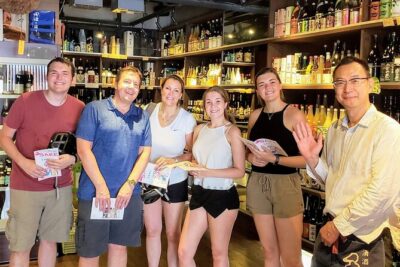
3h Tokyo E-Bike Tour: Hidden Gems, and Local Life with guide
Read our review →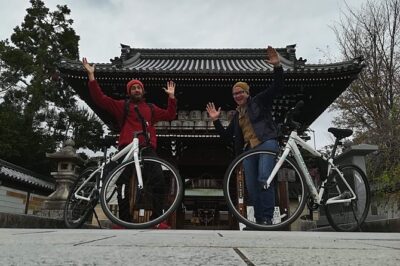
Arashiyama Bamboo Forest & Hidden Gems Bike Tour (Early Bird)
Read our review →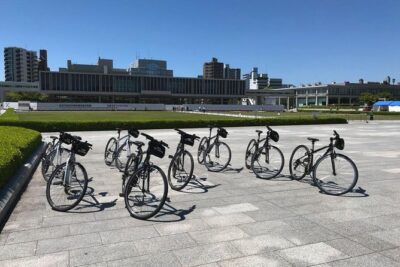
Hiroshima in a Nutshell: Morning Bike Adventure
Read our review →
5 Top Highlights of Kyoto Full Day Bike Tour (E-bike option)
Read our review →Browse the lists this tour appears in