
REVIEW · DINING EXPERIENCES
Professional Ramen & Gyoza with Ramen Chef in a restaurant!
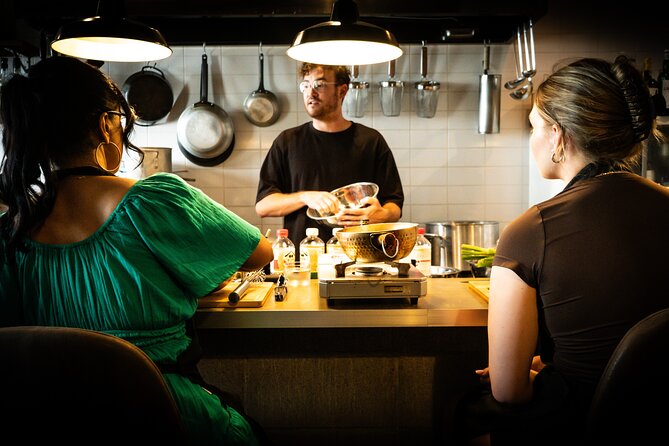
Tokyo has no shortage of cooking classes, but this one puts you in a working restaurant kitchen with professional equipment. Over about four hours, you make ramen noodles from scratch, prepare gyoza, learn how the dish is built, and sit down to eat the results.
I like the small maximum of six people, since it gives you a real chance to handle the food and ask questions. I also like the practical follow-through: you receive a cooking e-book, so the class does not end when you leave Meguro.
The main consideration is the price, $159.18 per person. That is a serious sum for a meal in Tokyo, and this is not a casual demonstration. You will work with hot pans, oils, and demanding preparations, so book it for the hands-on lesson rather than simply for lunch.
In This Review
- Key points at a glance
- Starting early in Meguro
- Your first lesson is the ramen itself
- Rolling noodles from scratch
- Broth, seasoning, and the choice of two styles
- Gyoza adds a second useful skill
- Teaching style and the people in the kitchen
- What makes the restaurant setting worthwhile
- The meal at the end
- Dietary requests and family suitability
- Is $159.18 a fair price?
- Practical details before you book
- Who should book Baba Ramen?
- FAQ
- Where does the ramen and gyoza class take place?
- What time does the activity start?
- How long does the cooking experience last?
- How many people can join the class?
- Is the class taught in English?
- What will I make?
- Can dietary restrictions be accommodated?
- Can I cancel for a refund?
Key points at a glance
- Make all five layers of ramen: Work with the noodles, broth, tare, toppings, and other parts that shape the finished bowl.
- Cook in a restaurant kitchen: Use professional, kitchen-grade equipment instead of watching a host prepare food at home.
- Prepare gyoza as well: The class gives you a second Japanese specialty to make and eat.
- Small group, up to six people: Expect more direct help and less standing around while someone else cooks.
- Bilingual instruction: Local chefs teach in English and Japanese, with cultural background and ramen etiquette included.
- Dietary requests are possible: Vegetarian, vegan, gluten-free, and pork-free options may be available if requested in advance.
Starting early in Meguro
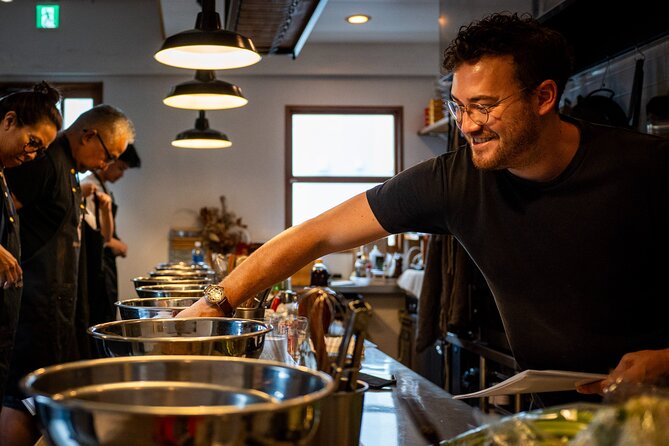
The class begins at 9:00 a.m. at Baba Ramen Cooking Meguro, located at 3-chōme-7-32 Shimomeguro in Meguro City. The activity also ends there, which keeps the morning simple. You do not need to arrange transport between several cooking sites or restaurants.
Meguro is a good setting for this kind of activity. It feels more like a real Tokyo neighborhood than a sightseeing stage, and the restaurant setting gives the class a useful sense of purpose. You are not just making a decorative sample. You are working toward a full bowl of ramen and a plate of gyoza.
I would arrive with enough time to find the address and settle in. The published start time is firm, and the class lasts roughly four hours. That means you should keep the rest of your morning open rather than scheduling a museum or timed attraction immediately afterward.
The restaurant is also used for another food operation at night, so the space has a working, adaptable feel rather than the look of a polished cooking school. That may appeal to you if you prefer an active kitchen over a staged studio. It also means the room is likely focused on function, not luxury.
A few more Tokyo trips to weigh up
- Tokyo Bar Hopping Tour in Shinjuku (All-You-Can-Drink + Dinner)
★ 5.0 · 3,587 reviews - Tokyo: Sumo Show and Dining Experience
★ 4.8 · 2,742 reviews - Sumida River: Japanese Traditional Yakatabune Dinner Cruise
★ 4.6 · 779 reviews
Your first lesson is the ramen itself
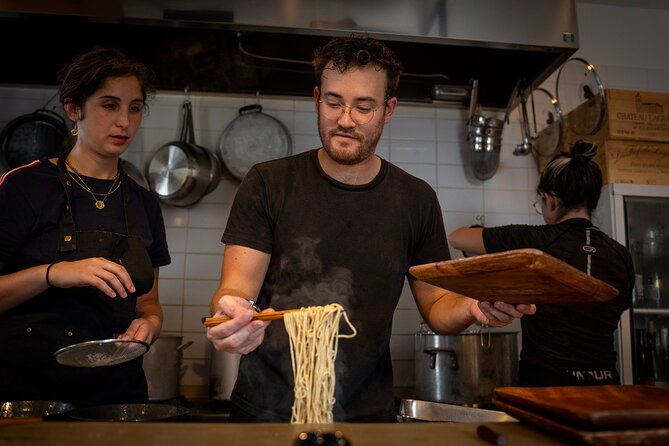
The central promise is fresh, restaurant-quality ramen made from scratch. The class covers more than boiling noodles and adding a packet of soup. The instruction includes the separate parts that build the dish, with one detailed account describing work on all five layers, including the noodles.
That distinction matters. Ramen is often treated as a quick bowl of comfort food, but a good bowl depends on several elements working together. The noodles need the right texture. The broth needs body and flavor. The tare, or seasoning base, must give the soup its character. Toppings and assembly finish the job.
You learn these relationships as you work. The chefs explain the process, the background of ramen, and the etiquette around eating it. This gives you more than a recipe. You start to understand why a restaurant bowl can require so much preparation behind the scenes.
The class also includes time-saving methods. One useful lesson is that you can shorten parts of the process with limited compromise, but fresh ingredients and time still matter. That is an honest message for home cooks. The e-book may help you recreate the food, but it will not pretend that authentic ramen is effortless.
Rolling noodles from scratch
Making the noodles is one of the most hands-on parts of the morning. You work with the dough and roll it out rather than simply receiving prepared noodles from the kitchen. This is the point where the class feels most like a practical workshop.
Expect to use equipment and follow instructions closely. The small group helps here, since the chefs can watch your technique and correct it. The teaching team is bilingual in English and Japanese, and the format is designed for direct participation rather than a long lecture.
You should also be ready to work. One particularly useful warning is that the class keeps you busy, and some tasks require effort. That is a benefit if you want to leave feeling that you actually made the meal. It is less suitable if you want a relaxed food tasting with only occasional cooking.
The noodle lesson also gives you a better sense of texture. Even if your home version later uses a shortcut, knowing what fresh dough feels like helps you understand what you are aiming for. That kind of physical lesson is hard to get from a cookbook alone.
Broth, seasoning, and the choice of two styles
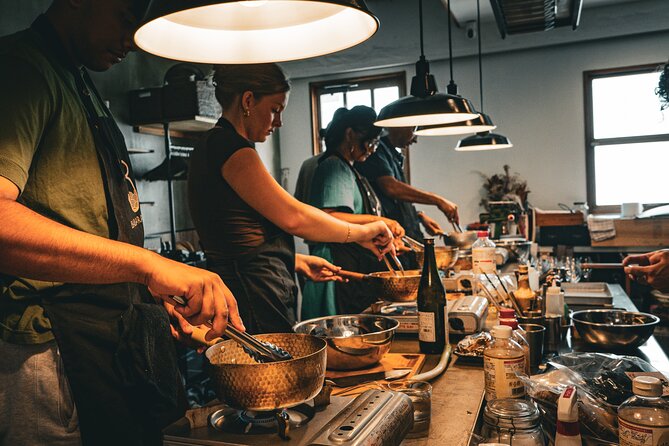
You can choose between two broth options to suit your taste. The available information does not specify the exact styles, so you should check the current choices when booking or at the start of the class.
The broader lesson is how the broth and seasoning work together. The chefs explain the ingredients and the steps that turn separate components into a balanced bowl. Some classes focus on a finished product. This one puts more attention on the process, including the time and labor involved.
The kitchen work can be active. Past participants describe handling hot pans and oils and, in some sessions, breaking down chicken bones. That detail is important. You are not simply stirring a pot at a safe distance, so follow the chefs’ directions and tell them about any physical limitations before starting.
The reward comes at the end, when the broth, noodles, and toppings come together. You eat the ramen you prepared, which gives every earlier task a clear purpose. It also lets you judge the texture and flavor while the techniques are still fresh in your mind.
Same city, a completely different kind of day:
- Mt Fuji and Hakone 1-Day Bus Tour Return by Bullet Train
★ 5.0 · 26,383 reviews - 1-Day Tokyo Bus Tour
★ 5.0 · 14,250 reviews - Tokyo: TOKYO SKYTREE® Admission ticket
★ 4.5 · 11,192 reviews - Tokyo: teamLab Planets TOKYO Digital Art Museum Entry Ticket
★ 4.6 · 9,779 reviews
Gyoza adds a second useful skill
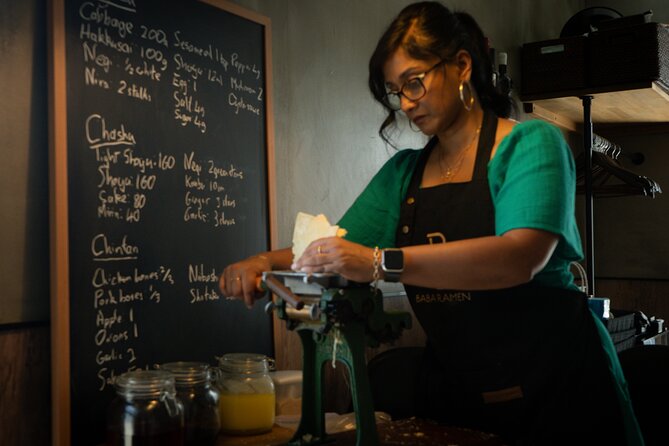
Ramen is the main event, but gyoza makes the class feel like a fuller Japanese cooking session. You learn to prepare the dumplings and eat them with the meal. This breaks up the noodle work and gives you another skill to practice at home.
Gyoza also adds a social part to the class. Shaping dumplings is a shared task, and the instructors can offer quick corrections as you work. If you are cooking with family or friends, this is a good section for comparing techniques and helping one another.
The result is a substantial meal. Several accounts describe eating ramen and gyoza until they were very full, and one family found the class especially satisfying because everyone was involved in different tasks. You should not plan this as a light morning snack.
Teaching style and the people in the kitchen
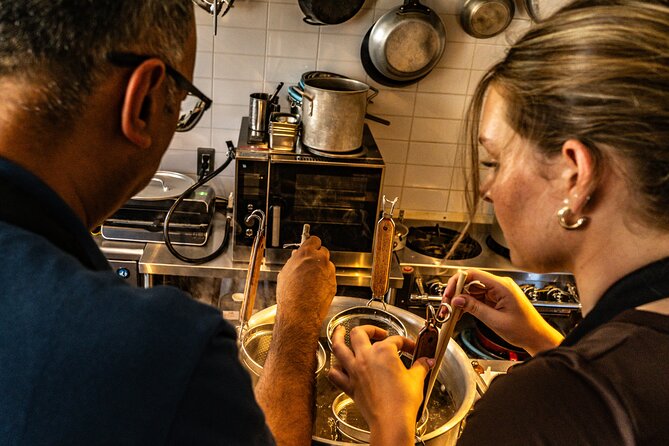
The chefs teach in both English and Japanese. The tone is professional but friendly, with explanations about technique, ramen culture, food history, and etiquette. That combination suits you if you want context without sitting through an academic lecture.
Andrew is named as part of the team, and Eric, Jae, and Leo are also specifically praised for being warm, organized, upbeat, and easy to work with. Since staff assignments can change, do not assume that every named instructor will be present on your date. The important point is that the class is set up around active guidance rather than a single scripted demonstration.
The small size is a major practical advantage. With a maximum of six people, you should have more contact with the chefs than in a large class. One account refers to seven people in a session, so group size may vary in practice, but the stated maximum is six. Confirm the current number if that matters to you.
A cooking class always depends partly on the group around you. You may be paired with people who want to chat, or with quieter cooks who prefer to focus. The hands-on format helps because there is plenty to do, and the chefs keep the morning moving.
What makes the restaurant setting worthwhile
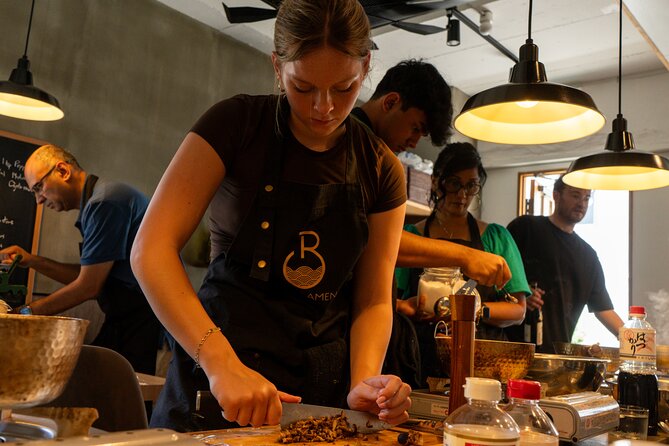
The restaurant kitchen is more than a backdrop. It changes the kind of lesson you receive. You work with equipment designed for food production, learn from people who handle ramen professionally, and see how a dish moves from separate preparations to a finished service.
That setting also creates a useful contrast with a home-based cooking class. A home class may offer a more personal look at domestic life. Baba Ramen offers a closer look at restaurant technique and workflow. Neither format is automatically better, but this one is the stronger choice if you want professional methods and plenty of kitchen action.
The trade-off is comfort. A restaurant kitchen can be busy and warm, and it may involve hot surfaces, oils, and repetitive work. You are paying for access to that working style, not for a quiet table and a short recipe lesson.
I especially like that the class does not hide the labor. Ramen can look simple when it arrives in a bowl, but the process may include dough work, broth preparation, seasoning, toppings, and careful timing. You leave with a more realistic idea of what it takes to make the dish well.
The meal at the end
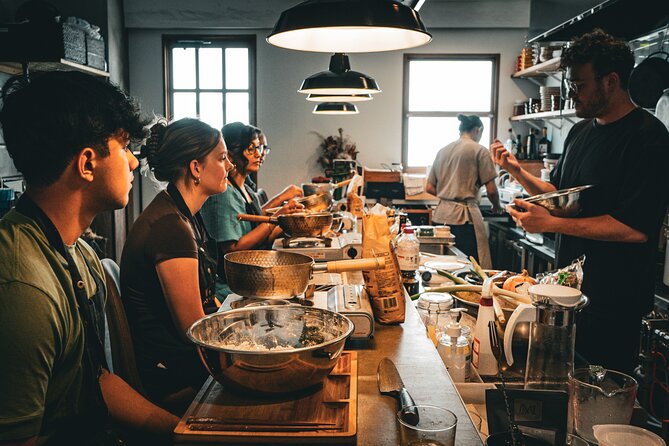
At the end, you eat the ramen and gyoza you made. This is not an afterthought. The meal is the test of the morning, and it gives you a chance to notice how the noodles, broth, seasoning, and toppings fit together.
The food is repeatedly described as delicious, and the class has a 4.9 rating from 223 reviews, with 96 percent recommending it. Ratings do not guarantee that every bowl will match your favorite ramen shop, since taste and cooking results vary. Still, the consistency of the praise points to two strong areas: the food itself and the quality of the instruction.
The portions also appear generous. Plan accordingly, especially if you have dinner reservations at an early hour. You may leave full, carrying an e-book and a new respect for the work behind a bowl of ramen.
Dietary requests and family suitability
Vegetarian, vegan, gluten-free, and pork-free options may be available, subject to availability. You need to comment on your request in advance rather than waiting until the morning of the class. The same advice applies to allergies. Early communication allowed the team to prepare alternatives in at least one case, without making the participant feel like a burden.
You should still ask for confirmation if your restriction is medically serious. The provided information says options are available subject to availability, not that every allergy can be accommodated.
The class can suit families, too. One family of five enjoyed having everyone take part, and a very young child was treated with care by the chefs. That does not mean the experience is designed specifically for toddlers, but it suggests a welcoming attitude toward families. Remember that the kitchen includes heat, oils, and active preparation.
Service animals are allowed, and the location is near public transportation. Those details make the class easier to fit into a Tokyo schedule, though the cooking itself remains the main focus.
Is $159.18 a fair price?
At $159.18 per person, this is expensive compared with simply eating ramen at a Tokyo restaurant. If your goal is an inexpensive lunch, skip the class and buy a bowl.
The value improves if you count the four-hour lesson, the professional kitchen, the small group, the gyoza, the meal, and the cooking e-book. You are buying instruction and participation, not just food. I would compare it with the cost of a cooking workshop, not with the price of a restaurant meal.
The e-book matters because it gives the class a life after Tokyo. You can try the recipes at home, including the ramen components and gyoza. You may need time and fresh ingredients, but you have a written starting point rather than a vague memory of what the chefs did.
For serious food lovers, home cooks, and people who collect hands-on experiences, the price can make sense. For a tight budget or a packed itinerary, it may not. The class takes a full morning, and the physical work is part of what you are paying for.
Practical details before you book
Confirmation is sent at the time of booking, and the activity uses a mobile ticket. The meeting and ending point is Baba Ramen Cooking Meguro, 3-chōme-7-32 Shimomeguro, Meguro City, Tokyo 153-0064, Japan.
Free cancellation is available up to 24 hours before the 9:00 a.m. start time for a full refund. Changes or cancellations inside that window are not accepted for a refund. The experience may also be canceled if the minimum number is not reached or if poor weather affects the activity, in which case you are offered another date or a full refund.
The class requires good weather, though the exact effect of weather on the restaurant session is not explained. Keep the cancellation terms in mind before building a tightly connected morning plan.
Who should book Baba Ramen?
I would choose this for you if you love Japanese food, want to cook rather than watch, and have four hours to spare in Tokyo. It is especially good for families, couples, solo cooks, and small groups who want a shared activity with a meal built in.
You should also book it if you want to understand ramen beyond the bowl. Learning the noodles, broth, seasoning, toppings, and gyoza gives you a better sense of the craft, while the cultural notes add useful context.
I would pass if you want a short, easy activity, dislike hot kitchen work, or are mainly looking for the cheapest way to eat ramen. The price is high, and the class expects real effort.
For everyone else, this is a strong food experience with unusually direct participation. You leave full, better informed about ramen, and equipped to try the recipes again at home. That is a fair return for a morning in Tokyo, provided you arrive ready to work.
FAQ
Where does the ramen and gyoza class take place?
It takes place at Baba Ramen Cooking Meguro, 3-chōme-7-32 Shimomeguro, Meguro City, Tokyo 153-0064, Japan.
What time does the activity start?
The stated start time is 9:00 a.m.
How long does the cooking experience last?
The activity lasts approximately four hours.
How many people can join the class?
The stated maximum is six travelers.
Is the class taught in English?
The local chefs are bilingual in English and Japanese, so English-language instruction is available.
What will I make?
You will make ramen noodles from scratch and prepare gyoza. The class also covers the parts that build the finished ramen bowl, including broth and seasoning.
Can dietary restrictions be accommodated?
Vegetarian, vegan, gluten-free, and pork-free options are available subject to availability. Add your request when booking and provide advance notice.
Can I cancel for a refund?
Yes. You can cancel at least 24 hours before the local start time for a full refund. Cancellations or changes made less than 24 hours before the start are not refunded.
Just added around Tokyo
- Tokyo: Customizable Private Guided Walking Tour★ 4.5 · 129 reviews
- Private Harajuku Omotesando Architecture Tour★ 4.9 · 18 reviews
- Tokyo: Guided Walking Tour of Tsukiji Market with Lunch★ 4.4 · 24 reviews
- Tokyo: Private Personalized Local Food Tour★ 4.5 · 101 reviews
- Tokyo: Guided Helicopter Ride★ 4.9 · 24 reviews
- Tokyo GINZA: KONPARU Japanese Cabaret Show with Drink★ 4.8 · 38 reviews
- Tokyo: Guided Walking Tour of Tsukiji Market with Breakfast★ 4.4 · 134 reviews
- Tokyo: Gotokuji Cat Temple, Shinjuku Cat Cafe & 3D Cat Tour★ 4.9 · 38 reviews
Dining Experiences, compared.
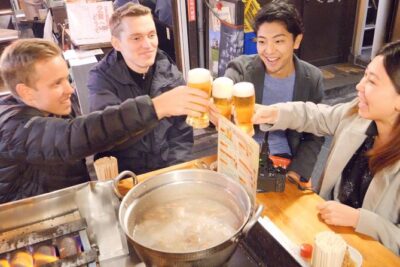
Tokyo Bar Hopping Tour in Shinjuku (All-You-Can-Drink + Dinner)
Read our review →


Deep Backstreet Osaka Tours (Option to add Dinner)
Read our review →
Deep Backstreets Walking Tour with Dinner Option
Read our review →
Sumida River: Japanese Traditional Yakatabune Dinner Cruise
Read our review →
Kyoto Gion Cultural Walk & Geisha Show with Dining Options
Read our review →Kyoto Gion Cultural Walk & Geisha Show with Dining Options
Read our review →Browse the lists this tour appears in