REVIEW · GUIDED
Private Tokyo Tour with Local Guide
Tokyo can feel like several cities stitched together by train lines. This private tour helps you make sense of it in a few hours, taking you from Tsukiji and Asakusa to Ueno and Akihabara while teaching you how to use public transportation. Guides such as Abu, Maruf, and Amir are praised for adjusting the route to personal interests and explaining the meaning behind the sights.
I like two things here: you choose the start time, and your group gets the guide to itself. That makes it easier to set the pace, stop for photos, ask questions, or focus on food, shopping, anime, temples, or city landmarks. The main drawback is just as important: this is a walking and train tour, not a chauffeured sightseeing ride, and some outings cover five miles or even 20,000 steps.
In This Review
- Key points to know before booking
- Tokyo orientation by train, foot, and neighborhood
- Tsukiji for food, markets, and a morning start
- Asakusa’s Kaminarimon Gate and Nakamise Street
- Sumida River Side Park and the Tokyo Skytree view
- Ueno Park and Ameyoko’s postwar character
- Akihabara, from electronics to anime culture
- What the private format is really worth
- Walking distance, timing, and what to bring
- Who will get the most from this tour
- Simple booking and cancellation advice
- Should you book this private Tokyo tour?
- FAQ
- How long does the private Tokyo tour last?
- Is this a private tour?
- Does the tour include public transportation?
- Which Tokyo areas can the tour visit?
- Are lunch and attraction tickets included?
- Can I cancel for a full refund?
Key points to know before booking
- Private and adjustable: Only your group participates, so the guide can shape the outing around your priorities.
- A practical Tokyo lesson: Public transportation is included, and the guide helps you learn how to navigate the city for the rest of your trip.
- Four major districts in one outing: The route can connect Tsukiji, Asakusa, Ueno, and Akihabara, with Ginza also included on some schedules.
- Walking matters: One reported outing covered about five miles, while another reached 20,000 steps.
- No private vehicle: Transportation uses public transit. Lunch, Tokyo Skytree tickets, and TeamLab tickets cost extra.
- Strong but not perfect record: The overall rating is 4.7 out of 5, with 90 percent recommending the experience.
Tokyo orientation by train, foot, and neighborhood
The smartest part of this outing is not simply seeing a list of famous places. It is learning how Tokyo fits together.
Your guide meets you at the agreed pickup point and uses public transportation with you. That matters in Tokyo, where the train and subway network can look like a bowl of noodles at first glance. By the end of the tour, you should have a clearer sense of how to move between districts and how much time a cross-city trip can take.
The schedule is private, so you choose the start time from the options offered. An early start makes sense if Tsukiji is a priority. A later start may suit you better if you arrived after a long flight or prefer an evening look at Tokyo. The route can also shift around your interests, according to the experience described by visitors who worked with Maruf, Amir, Abu, and Erica.
This flexibility is valuable for families and mixed groups. One party of four adults and two children used the tour on its first day in Tokyo, while another group of seven had different interests but still found a workable plan. That is the kind of situation where a private guide earns the extra cost.
A few more Tokyo trips to weigh up
- Tokyo 6hr Private Tour with Government-Licensed Guide
★ 5.0 · 3,902 reviews - Private Tour to Mt. Fuji and Hakone (Fully Licenced Operator)
★ 5.0 · 1,910 reviews - Tokyo Customized Private Tour (Must See Places in 1 Day)
★ 5.0 · 1,499 reviews
Tsukiji for food, markets, and a morning start
Tsukiji is the tour’s best opening if you want Tokyo to wake up around you. The planned visit focuses on the fish market area as a major food and cultural center, with an early start intended to catch the morning auction atmosphere.
The market stop gives your guide room to explain how food, commerce, and neighborhood life connect in Tokyo. You may also visit Tsukiji Hongwanji Temple, which was included in one route that continued through Ginza and Asakusa. That pairing works well: Tsukiji gives you the food side of the city, while the temple adds a quieter cultural stop.
Be clear about what you are booking. The tour description includes Tsukiji, but it does not list a separate admission fee or a guaranteed length for this stop. Ask about the precise morning timing if seeing the auction is important to you. Starting early may also mean more walking before the rest of the city’s sights come into view.
Lunch is not included. That is not necessarily a problem in Tsukiji, where food is one of the area’s main attractions, but plan to pay separately. A private guide can help you decide where to eat, though the supplied details do not promise a meal or food tasting.
Asakusa’s Kaminarimon Gate and Nakamise Street
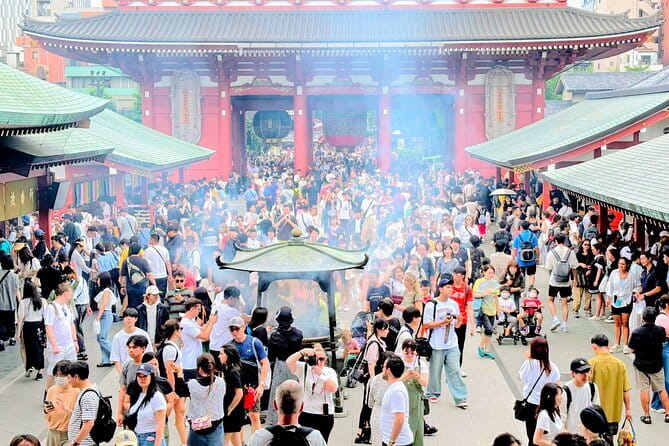
Asakusa brings a different mood. The Kaminarimon Gate marks the approach to Senso-ji Temple, and its huge red lantern makes an easy meeting point and a memorable first view.
You get about 10 minutes at the gate. That is enough for photographs and a short explanation, but it is not a long museum-style stop. From there, the route continues along Nakamise Shopping Street for about 20 minutes.
Nakamise is the approach to Senso-ji, lined with shops selling snacks, souvenirs, and traditional-style goods. It can be crowded, so your guide’s help is useful here, especially if you want to stay oriented while looking at shopfronts and street life. This is a place where the private format helps. You can ask what is worth buying, pause for a photograph, or keep moving if shopping is not your priority.
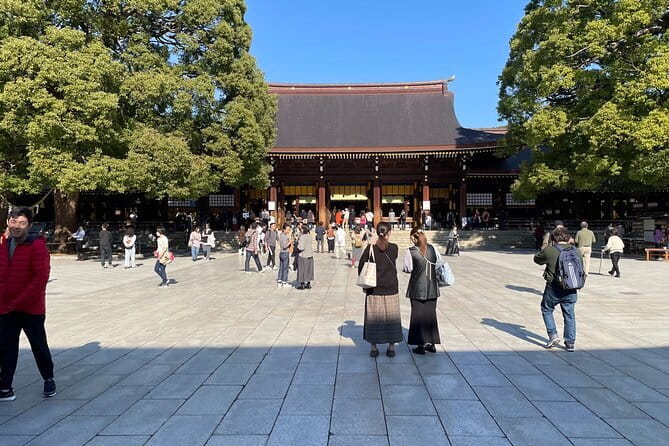
Senso-ji receives about 20 minutes, with no admission charge. That short visit lets you see the temple precinct and understand its place in Asakusa, but it will not cover every detail. If temples are your main reason for visiting Tokyo, tell the guide before the tour so the pace can reflect that interest.
For a first day in Tokyo, Asakusa is an efficient choice. You get a major gate, a historic shopping street, and one of the city’s best-known temples in a compact area. The tradeoff is crowding, especially around the central approach.
Sumida River Side Park and the Tokyo Skytree view
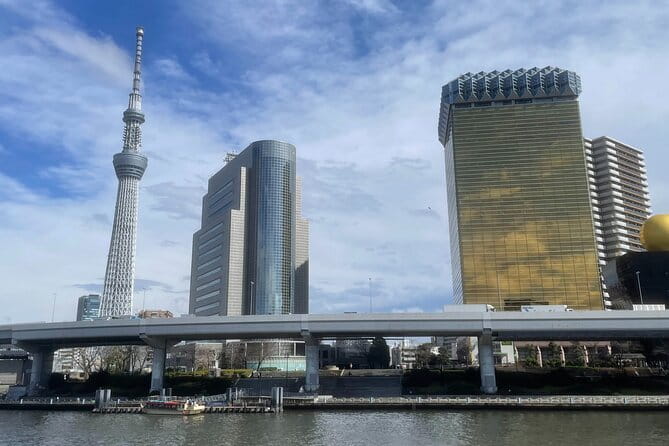
The Sumida River Side Park offers a pause from the tight streets of Asakusa. Along the river, you can look toward Tokyo Skytree and take in a broader view of the city.
This is a useful contrast to the temple district. Tokyo is often experienced at street level, with signs, shops, crossings, and packed train platforms. A riverfront stop gives you space to see how the city spreads out.
The park itself does not require an admission ticket according to the supplied details. Tickets for Tokyo Skytree are not included, so do not assume that a riverfront view means you will go up the tower. If visiting the observation deck matters to you, treat that as a separate plan and expense.
Because the tour lasts only four to five hours, this stop may be brief or may be adjusted depending on the route. The private format helps here. You can tell the guide if you prefer a viewpoint and photographs over another shopping stop.
Same city, a completely different kind of day:
- Mt Fuji and Hakone 1-Day Bus Tour Return by Bullet Train
★ 5.0 · 26,383 reviews - 1-Day Tokyo Bus Tour
★ 5.0 · 14,250 reviews - Tokyo: TOKYO SKYTREE® Admission ticket
★ 4.5 · 11,192 reviews - Tokyo: teamLab Planets TOKYO Digital Art Museum Entry Ticket
★ 4.6 · 9,779 reviews
Ueno Park and Ameyoko’s postwar character
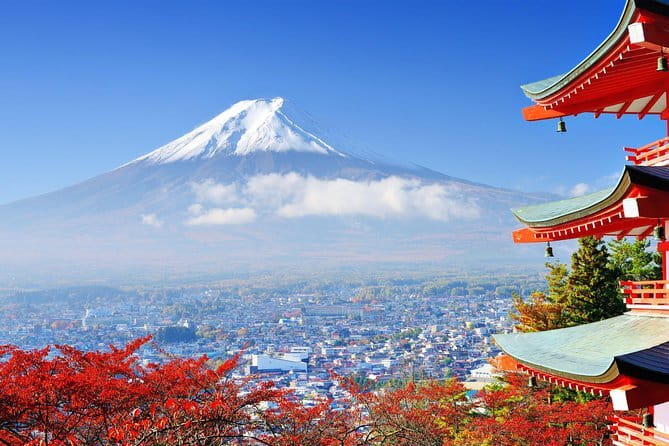
Ueno combines open space with museums, temples, gardens, and other cultural sites. The park covers more than 130 acres, so a short visit can only give you an introduction.
That is still worthwhile. After the compact streets of Asakusa, Ueno offers a change of pace and a chance to see one of Tokyo’s major public spaces. Your guide can help you decide which corners matter most to your group, though the tour information does not specify a particular museum or garden admission.
Nearby Ameyoko Shopping Street brings you back into the action. The market began as a post-World War II black market and developed into a busy shopping area with many kinds of goods. That background gives the street more meaning than a simple row of shops.
Ameyoko is a good place to watch everyday commerce and compare it with the polished department stores of Ginza. You might find food, clothing, and small purchases here, but remember that shopping is at your own expense. The guide can help you understand the area and keep the route moving, which is useful when the street is crowded.
Ueno and Ameyoko work well together because they show two sides of the same district: public culture and street trade. If you want extended time in museums, however, a four-to-five-hour overview will not be enough for a full museum visit.
Akihabara, from electronics to anime culture
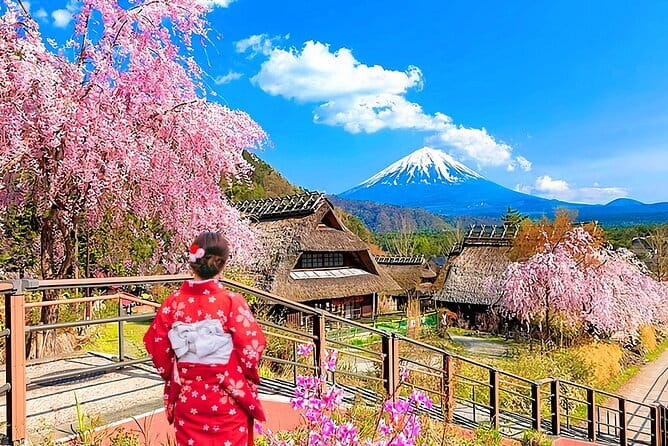
Akihabara is the tour’s clearest look at Tokyo’s modern pop-culture identity. The district is known for electronics, anime, gaming, and otaku culture, with shops aimed at both casual shoppers and serious collectors.
Your guide can provide context for the neighborhood instead of leaving you to decode every sign and storefront alone. This is especially helpful if you want to shop for electronics, look for anime goods, or understand why Akihabara became such a distinct part of Tokyo.
The visit is best for you if you have a clear interest. Akihabara can be overwhelming if you simply wander without a plan, and the tour does not include purchases or special attraction tickets. A private guide may help you target the kind of store or street that fits your group, but do not expect every shop or gaming venue to be covered in a short city overview.
Akihabara also gives the itinerary a useful balance. Tsukiji, Asakusa, and Ueno connect you with food, religion, public space, and older Tokyo traditions. Akihabara shows the city’s electronics and entertainment side. That contrast is one reason this route works well for a first orientation.
What the private format is really worth
At $130 per person, the value depends heavily on group size and what you want from the outing.
For one person or a couple, the price is a premium over joining a standard group walk. You are paying for a private schedule, direct help with public transportation, and the ability to change the focus. That can be worthwhile on your first day, particularly if you feel uneasy about Tokyo’s rail system.
For a larger group, the cost becomes easier to justify because only your party participates and group discounts may be available. A group of seven can split the benefit of one guide across several people, while families can avoid the awkward pace of a large public tour.
The tour is also valuable if you want more than photographs. Several of the strongest experiences came from guides who explained cultural meaning, helped with shopping and food choices, took photos, or arranged a route around a personal wish list. Maruf was praised for combining city orientation with cultural context. Amir received particular praise for listening and shifting the program to fit individual needs. Abu was noted for helping with scenic photographs, food, shopping, and lesser-known stops.
Those strengths are not automatic. The guide assigned to you matters. One outing was criticized for offering little explanation and simply moving from place to place. Another had poor communication and a late arrival, along with a misunderstanding about transportation. These problems appear to be exceptions within a generally strong record, but they point to a practical step: state your expectations clearly before the start.
Tell the guide if you want:
- More history and cultural explanation
- A food-focused route
- Shopping help
- Anime and electronics
- A gentle pace for children
- As much walking as possible
- Practical train and subway instruction
The clearer you are, the more useful the private format becomes.
Walking distance, timing, and what to bring
Four to five hours sounds manageable, but this is not a seated sightseeing trip. The route connects several districts by train and on foot, and one outing covered roughly five miles. Another reached about 20,000 steps.
Wear comfortable shoes. That advice is not decoration here. The tour includes market streets, temple approaches, shopping areas, park paths, and transfers between public transportation stops. You may also spend time standing in stations or waiting while the group moves through busy areas.
Pickups use public transportation, and private transportation is not included. That means the guide is showing you how Tokyo actually works, not placing you inside a private van. I see this as a benefit if you plan to use trains during the rest of your stay. It is a drawback if you want to conserve energy or see the city entirely from a vehicle.
The start time deserves thought. An early booking is the sensible choice for the Tsukiji portion and morning market activity. A later start may make more sense if your priority is Asakusa, Ueno, Akihabara, or Tokyo after dark. Since the schedule is private, discuss this when arranging the tour.
Who will get the most from this tour
I would choose this experience for a first visit to Tokyo when I wanted orientation more than a single deep attraction. It gives you a useful spread of districts and teaches you how to move between them.
It is particularly suitable for:
- First-time visitors unsure about Tokyo’s rail system
- Families who need a flexible pace
- Larger groups with mixed interests
- Shoppers who want help finding specific areas
- People interested in both temples and pop culture
- Visitors with only a few hours to get their bearings
It may not suit you if you want a slow, specialist tour of one neighborhood. It may also disappoint if you expect private driving, little walking, or admission to major attractions. Tokyo Skytree and TeamLab Planet or TeamLab Borderless tickets are not included, and lunch is separate.
Most people can participate, and the tour is near public transportation. Still, the walking distance and station transfers deserve attention if anyone in your group has limited stamina. The supplied information does not give a specific route length for every booking, so ask for a realistic walking estimate.
Simple booking and cancellation advice
Confirmation is received at booking, and free cancellation is available up to 24 hours before the start time for a full refund. Cancellations or changes made within 24 hours are not refunded or accepted, based on local Tokyo time.
The experience is often booked about 20 days ahead. That is a useful planning clue if you want a particular date, guide, or early start. Last-minute bookings may be possible, but communication and guide availability can be harder to manage.
Should you book this private Tokyo tour?
Book it if you want a personal Tokyo introduction that mixes major districts with practical train instruction. The best version of this tour is not a rushed checklist. It is a flexible half-day with a guide who listens, explains what you are seeing, and helps you feel less lost when you explore alone later.
I would be especially interested in booking with a clear request for a guide such as Abu, Maruf, or Amir if available, since their work is repeatedly praised for personal attention and cultural explanation. I would also confirm the walking level, pickup point, start time, and whether the plan includes the districts I care about most.
Skip it if you want a private car, fixed admission to Tokyo Skytree or TeamLab, or a low-effort ride between sights. At $130 per person, the price makes the most sense when you value flexibility, transportation coaching, and one guide dedicated to your group.
FAQ
How long does the private Tokyo tour last?
The tour lasts approximately four to five hours.
Is this a private tour?
Yes. Only your group participates in the activity.
Does the tour include public transportation?
Yes. Public transportation and pickup using public transportation are included. Private transportation is not included.
Which Tokyo areas can the tour visit?
The planned areas include Tsukiji Fish Market, Nakamise Shopping Street, Kaminarimon Gate, Senso-ji Temple, Sumida River Side Park, Ameyoko Shopping Street, Ueno Park, and Akihabara. Some experiences also include Ginza.
Are lunch and attraction tickets included?
No. Lunch, Tokyo Skytree tickets, and TeamLab Planet or TeamLab Borderless tickets are not included.
Can I cancel for a full refund?
Yes, if you cancel at least 24 hours before the experience start time. Cancellations or changes made less than 24 hours before the start time are not refunded or accepted.
Just added around Tokyo
- Private Memorable Tokyo Tour with English Speaking Driver★ 5.0 · 30 reviews
- Private Tokyo Custom Full-Day Tour by Chartered Vehicle★ 5.0 · 16 reviews
- Private Sightseeing to Mt Fuji and Hakone with English Driver★ 5.0 · 51 reviews
- Tokyo Photography Masterclass – Private Photography Lesson★ 5.0 · 25 reviews
- Private Mt. Fuji Day Trip from Tokyo with English-Speaking Driver★ 5.0 · 33 reviews
- 4 Day Tour – Mount. Fuji, Tokyo, Hakone, Kamakura and Yokohama★ 5.0 · 19 reviews
- Private Tokyo Custom Half-Day Tour by Chartered Vehicle★ 4.5 · 13 reviews
- Private Unforgettable Mt Fuji Tour with English Speaking Driver★ 5.0 · 142 reviews
Guided, compared.
Kyoto Early Morning Tour with English-Speaking Guide
Read our review →
Tokyo 4hr Private Tour with Government-Licensed Guide
Read our review →
Kyoto 6hr Private Tour with Government-Licensed Guide
Read our review →
Hiroshima / Miyajima Full-day Private Tour with Government Licensed Guide
Read our review →
Early Morning Tour with English-Speaking Guide
Read our review →