
REVIEW · MUSEUMS
Private Edo-Tokyo Open Air Architectural Museum Tour
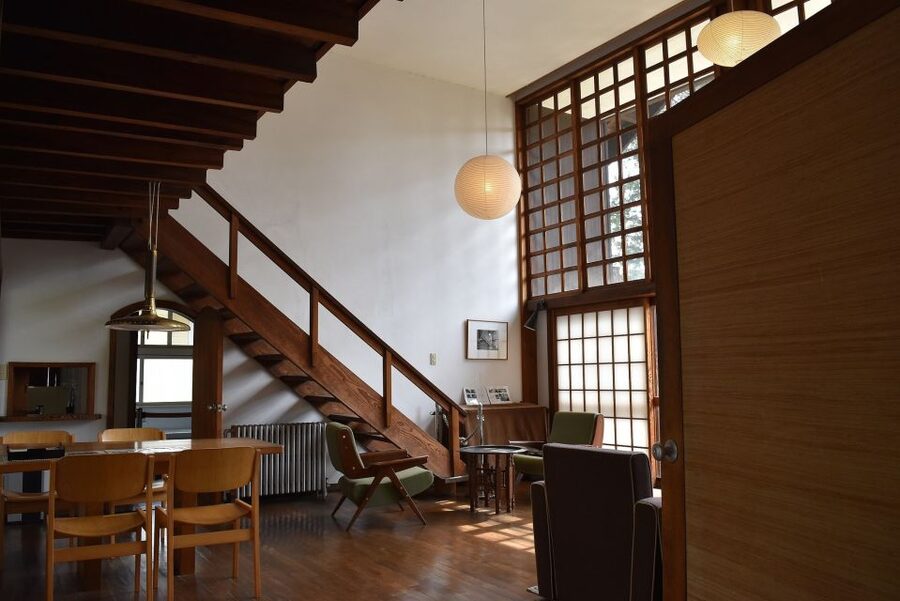
The most surprising part of this tour is how much of Tokyo’s story is told through houses. You move from traditional Japanese rooms to Western-influenced design, then into a Shitamachi neighborhood that feels ready for an animated film. Kunio Maekawa’s wartime home and Sutemi Horiguchi’s 1925 residence give the tour a strong architectural spine.
I like two things especially. First, the private format lets your guide shape the visit around your interests, from tea rooms and gardens to modern architecture. Second, the train and bus ride from central Tokyo becomes part of the experience, giving you a look at everyday transport rather than placing you in a tour vehicle. The main consideration is price: at $193 per person, with local transportation costing about 700 yen each way, this is best for travelers who want interpretation and company, not simply museum admission.
In This Review
- Key points to know before booking
- Why Tokyo’s architecture makes the tour worthwhile
- Meeting at Tokyo Station and getting to Tatemono-en
- Kunio Maekawa’s house and wartime modernism
- Sutemi Horiguchi’s 1925 blend of East and West
- The Mitsui residence and the world of old wealth
- Shitamachi atmosphere, bathhouse, and old railway carriage
- What the guide adds to five hours
- Is $193 per person good value?
- Practical advice for the day
- Who should book this tour?
- FAQ
- How long does the private Edo-Tokyo Open Air Architectural Museum tour last?
- What language is the tour conducted in?
- Is this a private group tour?
- What is included in the price?
- Is transportation to Tatemono-en included?
- Where is the Tokyo Station meeting point?
- Does the tour visit the Ghibli Museum?
- Do I need to remove my shoes during the tour?
- Can I cancel the booking for a full refund?
Key points to know before booking
- Kunio Maekawa’s wartime house: See the sophisticated Tokyo residence designed by a Japanese architect who worked with Le Corbusier and Antonin Raymond.
- Sutemi Horiguchi’s 1925 home: Spot Dutch architectural ideas, Art Deco details, and De Stijl compositions inside rooms that remain distinctly Japanese.
- A private, interest-led visit: Guides such as Yuichi and Yuki have adjusted explanations to suit individual interests in architecture, gardens, and Japanese culture.
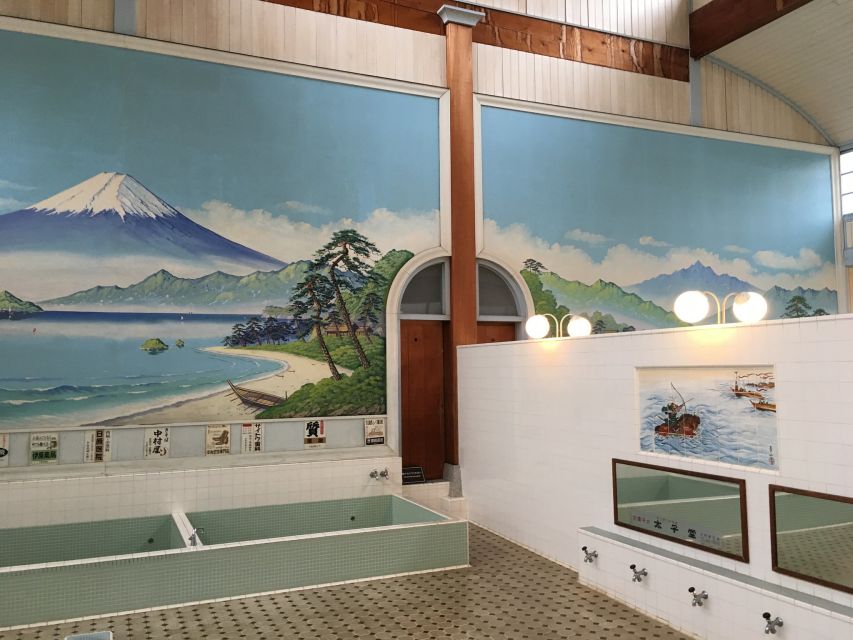
- A slice of old Shitamachi: Walk among relocated buildings, a traditional bathhouse, and an old train carriage that suggest another Tokyo.
- Five hours with transport guidance: The guide accompanies you by train and bus, though fares to and from Tatemono-en are extra.
- Animation-like atmosphere, but no Ghibli Museum: The setting may remind you of Studio Ghibli films, yet the famous museum is not part of this tour.
Why Tokyo’s architecture makes the tour worthwhile
Tokyo can change character in a few train stops. Glass towers, narrow residential lanes, temples, postwar apartment blocks, and old wooden homes all share the same city. The Edo-Tokyo Open Air Architectural Museum gathers buildings from different periods in one large outdoor setting, making those changes easier to understand.
I find this more useful than looking at isolated historic houses without explanation. A guide can show you not just what a building looks like, but why its shape, materials, and rooms changed over time. You can follow the move from samurai-era customs through the Meiji period and into the Showa era.
The private group format matters here. Architecture can be hard to read at first. A plain wooden room may look simple until someone points out the relationship between the garden, the veranda, the tatami layout, and the way people once used the space. If you already care about design, your guide can spend more time on structure and style. If you are new to the subject, you can ask basic questions without holding up a large group.
The tour uses English and is led by a licensed guide. Yuichi and Yuki are named guides associated with particularly strong tours, and the experience is designed to match a guide to your interests when possible. That personal touch is one of the clearest reasons to consider paying for a private tour.
A few more Tokyo trips to weigh up
- Tokyo: teamLab Planets TOKYO Digital Art Museum Entry Ticket
★ 4.6 · 9,779 reviews - Tokyo: Samurai Ninja Museum Guided tour and Experience
★ 4.6 · 1,010 reviews - Ninja Experience (Family Friendly) at Samurai Ninja Museum TOKYO
★ 5.0 · 441 reviews
Meeting at Tokyo Station and getting to Tatemono-en
The stated meeting point is Tokyo Station’s Marunouchi Front Plaza. After leaving the JR Tokyo Station Marunouchi Central Gates, head toward the center of the station building. Look for the carriage porch used for VIP arrivals, with a Japanese flag on each side. Your guide waits there with a bag showing an illustration of the Nakagin Capsule Tower.
That description is useful because Tokyo Station has many exits and plazas. Give yourself time to find the correct gate rather than arriving at the last minute. The tour also lists JR Shinjuku Station as a possible pickup point, so confirm your selected meeting arrangement when booking.
You will use trains and buses to reach Tatemono-en. Transportation is not included in the tour price, and the estimated fare is about 700 yen each way. The guide’s help can be valuable if Tokyo transit is new to you, but the journey still takes time within the five-hour schedule.
I like this arrangement more than I expected. You get a small look at how Tokyo works before entering the museum, and you are not sealed inside a private car. Still, travelers who want a door-to-door ride should note the difference. This is a guided public-transport outing, not a chauffeured transfer.
Kunio Maekawa’s house and wartime modernism
The tour begins with a house designed by Kunio Maekawa, one of the important figures in modern Japanese architecture. Maekawa worked under Le Corbusier and Antonin Raymond, then helped shape modern architecture in Japan.
The house was built during the Second World War, which gives it a strong historical setting. Instead of treating the period as a simple break between old Japan and new Japan, the building shows how Japanese architects adapted international ideas under difficult conditions.
Look for the meeting of influences. Maekawa’s training connected him with major European modernism, while the house still belongs to Japan in its handling of space and daily life. Your guide can help you see where imported ideas meet local needs.
This stop is a good fit for anyone curious about how Western European architectural design entered Japan. It also keeps the tour from becoming a parade of purely traditional buildings. You see that Japanese architecture did not simply abandon older forms. It tested, changed, and combined outside ideas with local practice.
The house is often a highlight for design-focused visitors, but you do not need a professional background to enjoy it. Ask your guide to explain the building in practical terms: how it was used, what makes it modern, and how Maekawa’s work relates to Le Corbusier and Antonin Raymond.
Sutemi Horiguchi’s 1925 blend of East and West
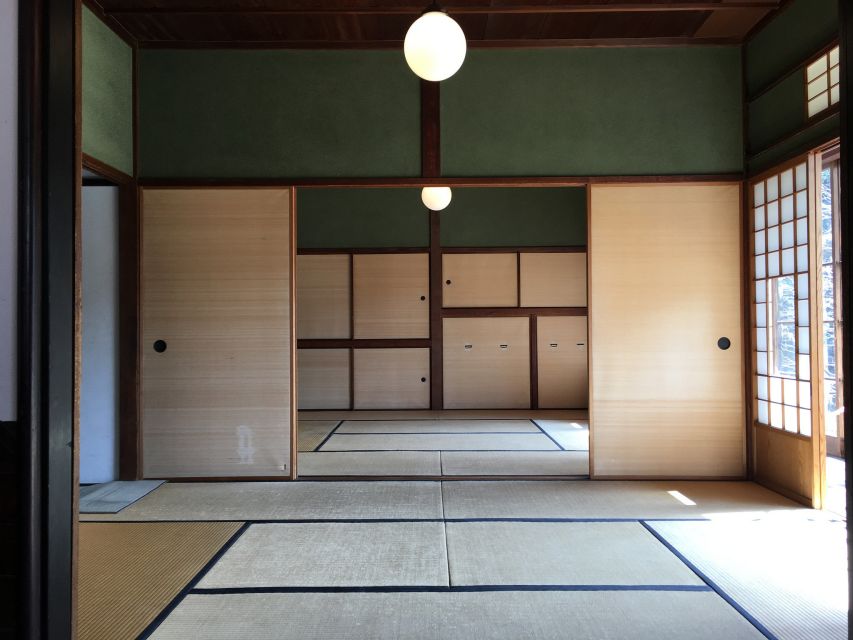
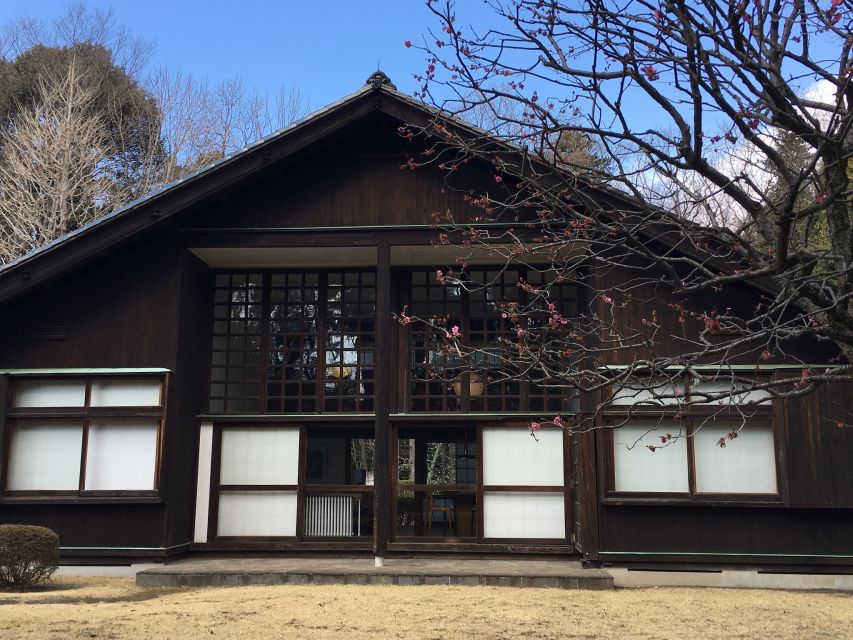
Next comes the residence designed by Sutemi Horiguchi. Built in 1925 after his return from Europe, it is presented as an early example of Dutch architectural influence in Japan.
This house is particularly interesting because its European references do not erase the Japanese rooms. Art Deco and De Stijl, also called The Style, appear alongside traditional Japanese interiors. You may find geometric compositions and Western design ideas placed within a home organized around Japanese ways of living.
That combination is the point. Horiguchi did not merely copy a European building and set it in Tokyo. The residence shows an architect working out how new styles could fit into Japan. I would pay close attention to the contrasts rather than searching for one pure design language.
For many people, this may be the most rewarding stop on the route. Maekawa’s house presents modern architecture through one architect’s training and career. Horiguchi’s home shows a more direct conversation between European style and Japanese domestic space.
A guide adds real value here. Without explanation, Art Deco and De Stijl details can be easy to miss, particularly when they appear beside tatami rooms and familiar Japanese features. If you have an interest in European art or design, tell your guide at the start so this stop receives the attention it deserves.
Same city, a completely different kind of day:
- Mt Fuji and Hakone 1-Day Bus Tour Return by Bullet Train
★ 5.0 · 26,383 reviews - 1-Day Tokyo Bus Tour
★ 5.0 · 14,250 reviews - Tokyo: TOKYO SKYTREE® Admission ticket
★ 4.5 · 11,192 reviews - Mt Fuji & Hakone Cruise, Drum Show Bullet Train 1 Day from Tokyo
★ 4.0 · 7,413 reviews
The Mitsui residence and the world of old wealth
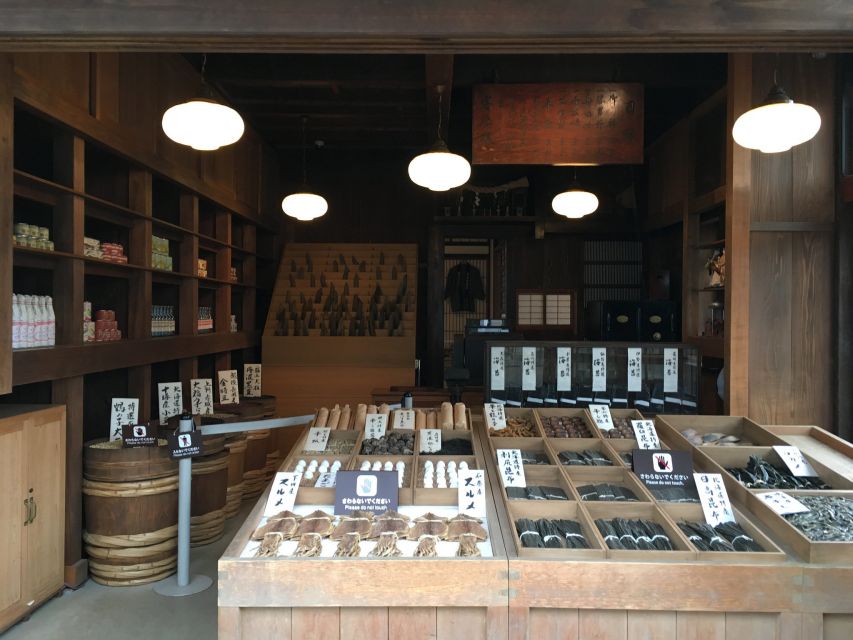
The former residence of the Mitsui family offers another change of scale. The Mitsui family was said to be one of the wealthiest in Japan, and the house reflects that position through its luxurious interior decoration.
This is not simply another example of a traditional home. It lets you consider how a powerful family lived, received people, and displayed status. The difference between an ordinary domestic space and an elite residence becomes part of the story.
You can also compare the Mitsui home with the Maekawa and Horiguchi buildings. One shows a wealthy family’s traditional setting, while the others reveal architects experimenting with modern and international ideas. The contrast helps you see that Japanese residential architecture was never one single style.
This stop may appeal most to you if you like interiors, family history, or social context. If your main interest is modern architecture, you may prefer the Maekawa and Horiguchi houses. A private guide helps balance the route rather than forcing everyone to spend equal time at every building.
Shitamachi atmosphere, bathhouse, and old railway carriage
The latter part of the tour shifts into the Shitamachi section of the museum. Shitamachi refers to the traditional East Tokyo districts associated with ordinary urban life, shops, workshops, and close-knit neighborhoods.
Here the mood changes. Instead of focusing only on famous architects and wealthy households, you get buildings that suggest how a broader part of Tokyo once looked and felt. The atmosphere is one reason the tour appeals to Studio Ghibli film fans. The old buildings and streets can recall the settings of Japanese animation.
That comparison should be kept in proportion. This is not a themed animation tour, and the Ghibli Museum is not included. You are seeing real architectural remnants and relocated structures, not film sets.
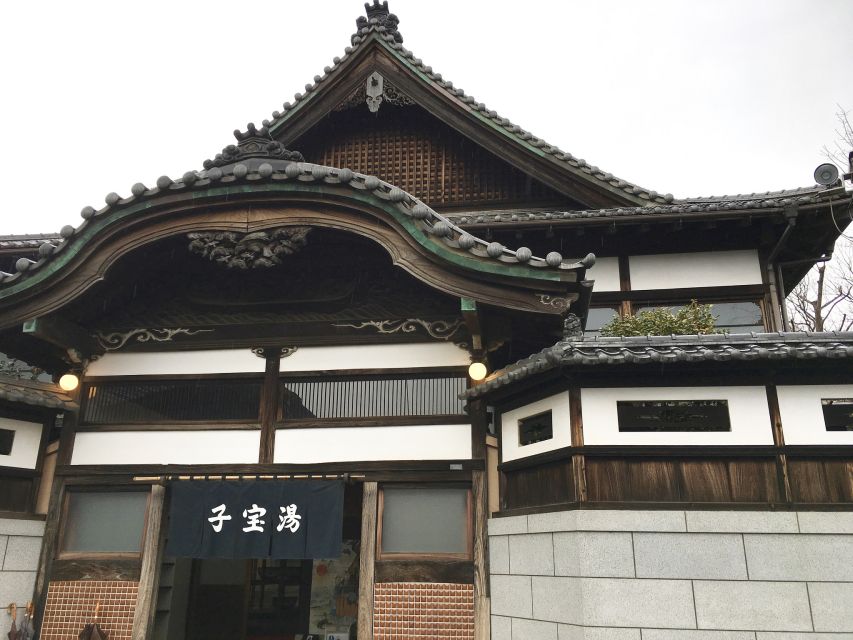
Two details help give this section its character. One is a beautiful traditional bathhouse. The other is an old train that once ran through Tokyo. Both are easy to appreciate even if architecture is not your main interest. They connect buildings to everyday routines: bathing, commuting, and moving through the city.
I like the way this second half broadens the tour. You start with architects and formal design, then end with places that feel more familiar and lived-in. It keeps the experience from becoming too academic.
What the guide adds to five hours
A museum visit on your own can be rewarding, but the site covers several periods and building types. The guide gives you a thread to follow. Yuichi, in particular, is described as speaking excellent English and adjusting the tour for interests such as traditional Japanese architecture, tea rooms, and gardens.
Yuki is also praised for explaining the subway and buses while connecting the museum buildings to Tokyo as a whole. That is useful because the tour is not only about individual houses. It is also about how the city developed from the end of the samurai era through the Meiji Restoration and into the Showa period.
You should tell the guide what you want before the tour gets under way. Ask for more detail on gardens if that is your interest. Ask for modernist context if Maekawa is your priority. The private format gives you a better chance of getting a thoughtful answer than a fixed script delivered to a large crowd.
The guide’s practical role matters, too. Tokyo’s train and bus system can feel complicated on a first visit. Having someone lead the route removes much of the stress, while still letting you experience the city’s public transport.
One important point: a guide can be helpful without making the museum feel rushed. Five hours includes the transport portion, so you will not have unlimited time at every building. If you want to study each house at length, you may need to accept a brisk pace or ask which stops deserve the most time.
Is $193 per person good value?
The price is $193 per person, before the estimated 700 yen each-way transportation fare. That is a serious cost for a five-hour activity, especially when the museum admission itself is included but local transit is not.
The value depends on what you want from the visit. If you only want to wander among old buildings, paying for a private guide may not make financial sense. If you want clear explanations, help with transit, and a route shaped around your interests, the price becomes easier to defend.
You are paying for a private group, an English-speaking licensed guide, museum admission, and roughly half a day of personal interpretation. The strongest value comes when you ask questions and take advantage of the customized format. A private tour with a specialist guide is a better fit for a couple, family, or small group that wants a focused architectural experience.
The price is also easier to justify for a first Tokyo visit if public transport feels intimidating. You still pay the fares, but you do not have to solve the route alone. On the other hand, repeat visitors who are comfortable with trains and buses may prefer to visit independently and spend less.
Free cancellation up to 24 hours before the start and the option to reserve now and pay later make planning less rigid. Those policies are helpful, but they do not change the central value question: are you paying for admission, or for expert company and context? Here, the latter is the main reason to book.
Practical advice for the day
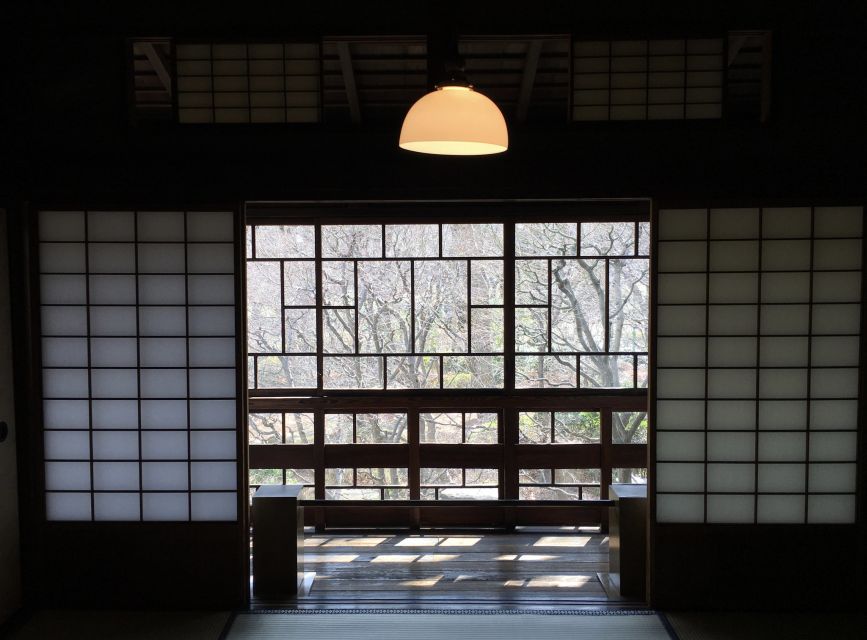
Wear shoes that slip on and off easily. Many historic buildings require you to remove your shoes before entering, and repeatedly dealing with laces or tight footwear will become tiresome.
Allow time to find the meeting point at Tokyo Station. The Marunouchi Central Gates and Front Plaza details matter, especially in a station with many exits. If you are arranging a Shinjuku meeting instead, confirm the exact place and time in advance.
Expect to walk through an outdoor museum and enter several historic buildings. Comfortable footwear is more important than dressing up. The tour lasts five hours, and the transport to and from Tatemono-en uses trains and buses.
Bring your architecture questions. This tour has enough range to suit several interests, but the experience improves when you tell the guide what you want to notice. Tea rooms, gardens, modern design, Dutch influence, family residences, and Tokyo’s social history are all useful starting points.
Do not book it expecting the Ghibli Museum. The setting may remind you of animation, especially in the Shitamachi section, but the tour remains focused on the Edo-Tokyo Open Air Architectural Museum.
Who should book this tour?
I would recommend it to anyone who wants more than a quick look at traditional Japanese buildings. It suits architecture students, design fans, first-time Tokyo visitors who want help with transit, and anyone interested in how Japan adapted foreign ideas without losing its own building traditions.
It is also a good choice for a private family or couple’s outing. The guide can adjust the conversation, and the museum offers enough variety to hold the interest of people with different tastes.
I would think twice if you dislike public transportation, have limited interest in buildings, or want to visit the Ghibli Museum. The additional transit fare and high per-person price also make it less attractive for budget travelers.
Book this tour if you want the museum turned into a readable story about Tokyo, architecture, and daily life. Skip it if you are happy exploring on your own. For the right person, the guide is not an extra layer between you and the buildings. The guide is what helps the buildings make sense.
FAQ
How long does the private Edo-Tokyo Open Air Architectural Museum tour last?
The tour lasts five hours, including the guided visit and the train and bus travel to and from Tatemono-en.
What language is the tour conducted in?
The tour is conducted in English by an English-speaking licensed guide.
Is this a private group tour?
Yes. The activity is offered as a private group tour.
What is included in the price?
The price includes the museum admission fee and the English-speaking licensed guide. Pickup is listed from either JR Shinjuku Station or JR Tokyo Station.
Is transportation to Tatemono-en included?
No. Transportation to and from Tatemono-en is extra. The estimated cost is about 700 Japanese yen each way, and the route uses trains and buses.
Where is the Tokyo Station meeting point?
Meet at Tokyo Station’s Marunouchi Front Plaza. After exiting the JR Tokyo Station Marunouchi Central Gates, go toward the center of the station building and look for the carriage porch with a Japanese flag on each side. The guide carries a bag with a Nakagin Capsule Tower illustration.
Does the tour visit the Ghibli Museum?
No. The tour visits the Edo-Tokyo Open Air Architectural Museum. Its Shitamachi section may remind you of Studio Ghibli animation, but the Ghibli Museum is not included.
Do I need to remove my shoes during the tour?
Many historic buildings require you to remove your shoes before entering. Wear comfortable shoes that are easy to slip on and off.
Can I cancel the booking for a full refund?
Yes. You can cancel up to 24 hours in advance for a full refund.
Just added around Tokyo
- Tokyo: Customizable Private Guided Walking Tour★ 4.5 · 129 reviews
- Private Harajuku Omotesando Architecture Tour★ 4.9 · 18 reviews
- Tokyo: Guided Helicopter Ride★ 4.9 · 24 reviews
- Tokyo: Guided Walking Tour of Tsukiji Market with Lunch★ 4.4 · 24 reviews
- Tokyo: Private Personalized Local Food Tour★ 4.5 · 101 reviews
- Tokyo GINZA: KONPARU Japanese Cabaret Show with Drink★ 4.8 · 38 reviews
- Tokyo: Guided Walking Tour of Tsukiji Market with Breakfast★ 4.4 · 134 reviews
- Tokyo: Gotokuji Cat Temple, Shinjuku Cat Cafe & 3D Cat Tour★ 4.9 · 38 reviews
Museums, compared.

teamLab Planets TOKYO Digital Art Museum Entry Ticket
Read our review →
Samurai Ninja Museum Guided tour and Experience
Read our review →
Tea Museum Tickets and Matcha Grinding Experience
Read our review →
Skip the lines Basic Ticket at SAMURAI NINJA MUSEUM KYOTO
Read our review →
Ninja Experience (Family Friendly) at Samurai Ninja Museum TOKYO
Read our review →
Tokyo Studio Ghibli Museum and Ghibli Film Appreciation Tour
Read our review →
Geiko Maiko Dance of Kyoto & Visits of Gion Museum
Read our review →
Tokyo Sword Experience – includes Museum Ticket/Ninja Experience
Read our review →Browse the lists this tour appears in