
REVIEW · NARA DAY TRIPS
Perfect Nara Park Half-Day Bus Tour with English Speaking Guide
Nara’s best sights come together neatly on this four-hour bus tour, from Todaiji’s huge Great Buddha to the lantern-lined Kasuga Taisha Shrine and the open summit of Mt. Wakakusa. The real treat is the mix: grand temples, quiet forest, city views, and Nara’s famous deer, all in one morning or afternoon outing.
I like the English-speaking guide, who explains how to pray and helps make the sites easier to understand. I also like the practical extras: deer crackers, an English deer fortune, entrance fees, and a two-day local bus pass are included. The tradeoff is time. You get a useful overview, but each stop follows a fixed schedule and the tour can change with traffic or weather.
In This Review
- Key points at a glance
- Why this Nara tour works for a first visit
- Todaiji Temple and the Great Buddha Hall
- Kasuga Taisha and the ritual details
- The Nara Okuyama Driveway through the forest
- Mt. Wakakusa and the view over Nara
- Feeding Nara’s famous deer
- What the four-hour schedule really feels like
- Price, group size, and what is included
- Who should book this experience
- Practical details before you reserve
- Should you book the Nara half-day bus tour?
- FAQ
- How long does the Nara bus tour last?
- Which places does the tour visit?
- Is an English-speaking guide included?
- Are admission fees included?
- What is the Nara-Yamatoji 2-Day Pass?
- What happens if the weather is poor?
Key points at a glance
- Todaiji’s Great Buddha Hall: See one of Nara’s most important sights, including the Nandaimon Gate and the immense bronze Buddha.
- Kasuga Taisha with a deer fortune: Visit the main shrine, learn basic shrine customs, and draw a fortune in English.
- Mt. Wakakusa viewpoint: Spend about 40 minutes at the summit for broad views across Nara city.
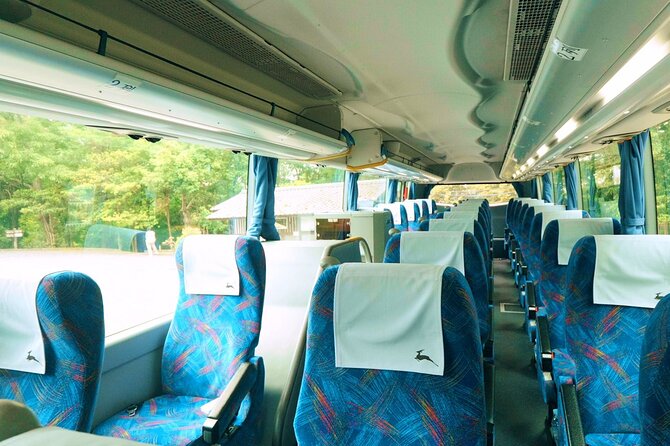
- Air-conditioned sightseeing by bus: The vehicle cuts down on transfers and makes a short visit to Nara efficient.
- Useful extras included: Deer crackers, temple and shrine admission, a Nara-Yamatoji 2-Day Pass, and an original handkerchief come with the tour.
- Small to moderate group size: The maximum is 25 people, enough for a guided experience without a giant coach crowd.
Why this Nara tour works for a first visit
Nara can look simple on a map. The main sights sit around Nara Park, but fitting Todaiji, Kasuga Taisha, Mt. Wakakusa, and the deer into a half day takes planning. This tour handles the movement between them, leaving you to focus on the places themselves.
I see it as a good orientation to Nara rather than a full exploration. You will not have hours to wander every path or spend a long, quiet stretch inside each temple. You will, however, see the sights most likely to matter on a first visit and get enough context to understand why they are important.
The tour is especially useful if you are based in Osaka or Kyoto and have only part of a day for Nara. The air-conditioned vehicle saves energy, which matters after several days of train stations, city walking, and crowded attractions. It also helps in warm or wet weather, though the outdoor stops still depend on conditions.
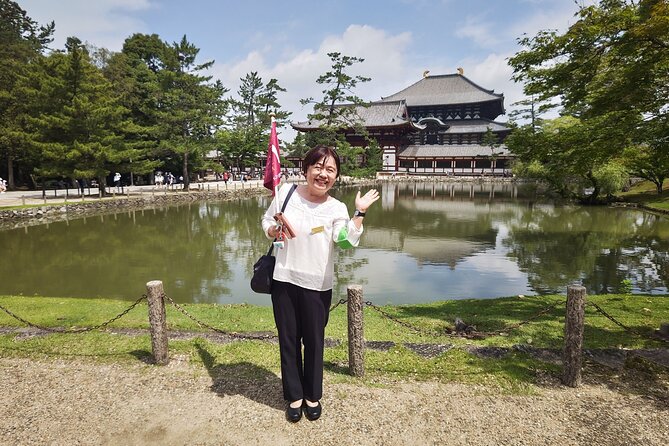
The guide is an important part of the experience. The supplied tour information does not give a guide’s name, but it does specify an English-speaking guide. The guide explains the history and customs, answers questions, shows you how to pray, and can help with photos. That practical help makes the visit easier for first-time visitors to Japan, especially at a shrine where the steps are not always obvious.
More Nara Day Trips in Nara
- World Heritage Kyoto & Nara Uji Authentic Matcha Experience
★ 5.0 · 1,573 reviews - Nara Half Day Trip Walking Tour (Private Option Available)
★ 5.0 · 937 reviews - Nara Early Morning Tour (Kyoto or Osaka Departure Available)
★ 5.0 · 676 reviews
Todaiji Temple and the Great Buddha Hall
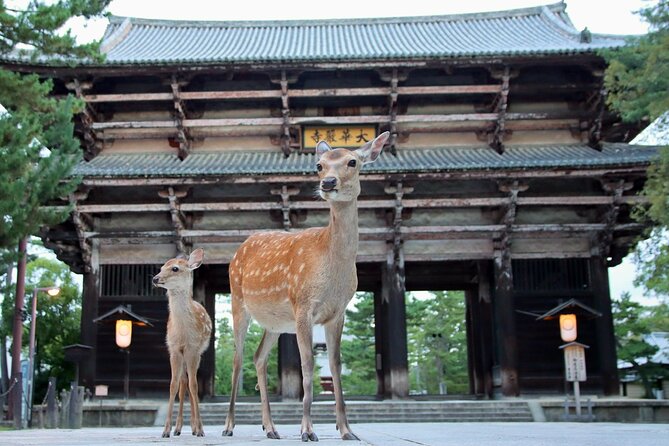
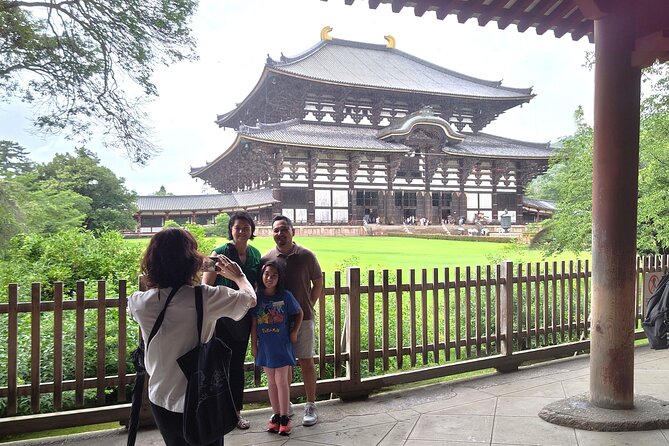
The first major stop is Todaiji Temple, with about 70 minutes allotted and admission included. You visit the Nandaimon Gate and the Great Buddha Hall, the core sights most people come to Nara to see.
The Nandaimon Gate gives you an immediate sense of scale. Its architecture and guardian figures create a dramatic entrance before you even reach the main hall. Your guide can add meaning to what you are seeing, so the stop is not just a quick photo opportunity.
Inside the Great Buddha Hall, the huge bronze Buddha takes center stage. The building itself is also part of the experience. Its size can be hard to judge in photographs, and a guide’s explanation helps connect the structure, statue, and religious purpose.
Seventy minutes is a sensible amount of time for a guided visit, but it is not generous if the grounds are crowded. You may need to keep moving with the group, and you should not expect a long personal visit to every corner. If Todaiji is your main reason for coming to Nara, you might prefer a longer independent visit afterward.
For a first visit, though, the timing works well. You see the essential buildings, hear the key explanations, and still have time for the shrine and mountain later. The admission fee is already covered, so you do not have to pause at each ticket counter.
Kasuga Taisha and the ritual details
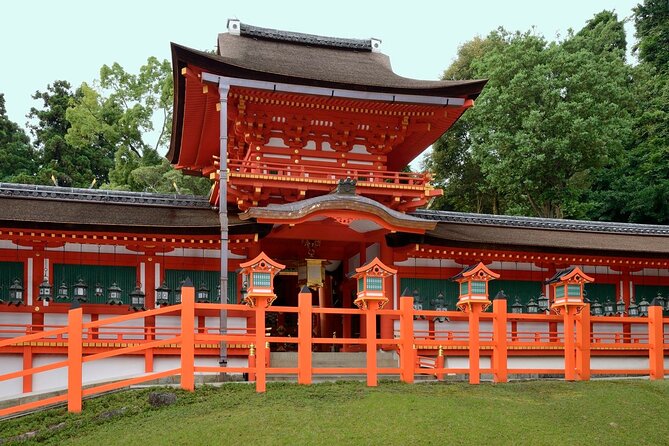
The tour then takes you to Kasuga Taisha, also called Kasuga Grand Shrine, for about one hour. The main shrine is part of a World Heritage site, and it offers a different mood from Todaiji.
Kasuga Taisha is known for its lanterns and shrine setting near the Kasugayama Primeval Forest. The route through this area gives you a sense of how Japanese religious sites can blend buildings, paths, and wooded surroundings. The stop is calmer in character than the huge Buddha hall, even though it remains a major sight.
The useful part here is the chance to learn how to pray. Your guide can show you the basic procedure, which removes some uncertainty and lets you take part respectfully rather than simply watch other people. This is one of the details that makes a guided visit worth paying for.
You can also draw a deer fortune in English. That is a small but memorable extra, and the fee is included. It gives you something personal to take away from the shrine without adding another cost or requiring you to work out the process alone.
An hour should cover the main shrine and the fortune, but it leaves limited time for lingering. If you want to study every lantern, photograph every detail, or walk farther into the surrounding area, you may feel rushed. The fixed schedule is the price of seeing several parts of Nara in one half day.
The Nara Okuyama Driveway through the forest
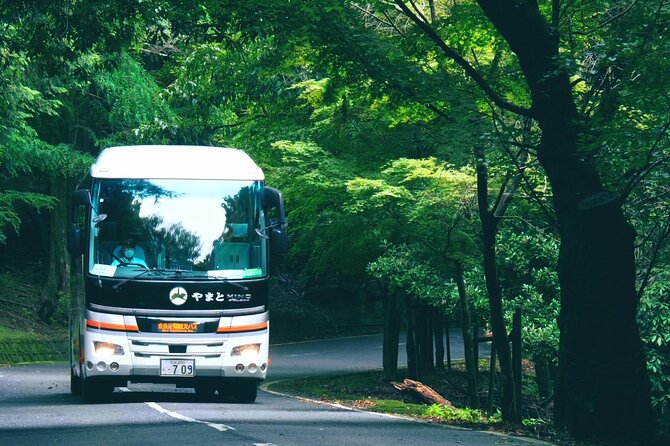
Between the shrine and Mt. Wakakusa, the vehicle uses the Nara Okuyama Driveway. The road passes through the Kasugayama Primeval Forest, a World Heritage site.
This section matters because it changes the pace. Instead of spending the entire tour on foot between buildings, you get a short ride through a protected wooded area. The road also helps connect the shrine visit with the mountain viewpoint without using up your limited time on city streets.
The exact traffic and route conditions can vary. The tour notes that locations, order, times, and fees may change, and delays are possible during busy periods. I would treat the driveway as a pleasant part of the route, not as a separate attraction with a guaranteed sightseeing stop.
Same city, a completely different kind of day:
- Osaka: Nara and Uji Day Trip with Deer Park and Hot Spring
★ 4.4 · 302 reviews - Kyoto/Osaka: Kinkakuji, Bamboo Forest, and Nara Deer Park
★ 4.4 · 265 reviews - Nara 6hr Private Tour with Government-Licensed Guide
★ 5.0 · 219 reviews - E-Bike Nara Highlights – Todaiji, Knives, Deer, Shrine
★ 4.8 · 186 reviews
Mt. Wakakusa and the view over Nara
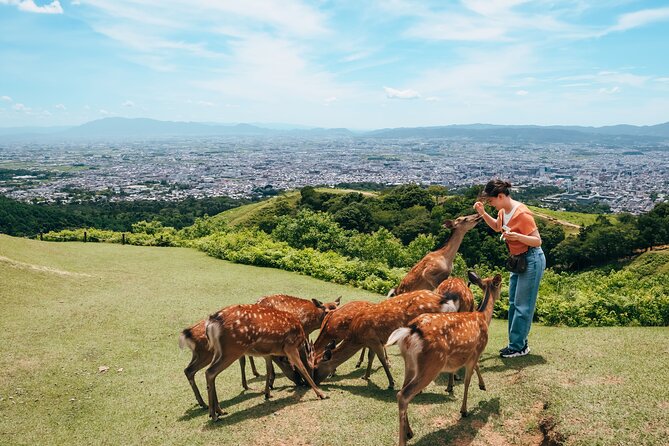
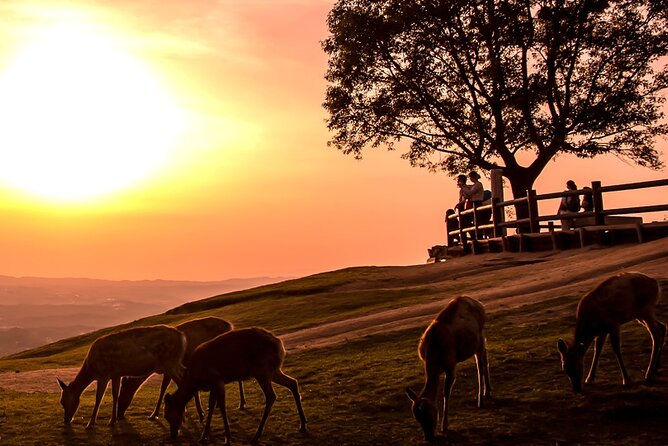
The final major sightseeing stop is Mt. Wakakusa, with about 40 minutes at the summit. This grass-covered mountain gives you a broad view of Nara city and a welcome change from temple interiors and shrine paths.
The viewpoint is one of the tour’s strongest features. After seeing Nara at close range, you get a chance to understand its setting from above. The city, park, and surrounding hills come together in a single view, making the earlier stops easier to place in your mind.
You should expect some walking and a moderate level of physical activity. The tour specifically asks participants to have moderate fitness, and the mountain stop is the clearest reason why. The allotted time is not a long hike, but this is not a completely effortless bus excursion either.
Weather matters here. The experience requires good weather, and the service may be suspended if conditions are unsafe. If Mt. Wakakusa is important to you, keep a little flexibility in your schedule and do not assume the view will be available in poor conditions.
Feeding Nara’s famous deer
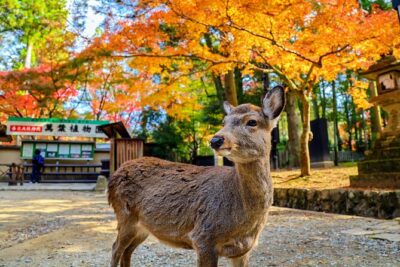
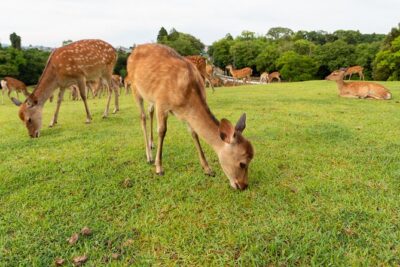
The deer are part of the Nara Park experience, and deer crackers are included in the tour. This gives you a simple, hands-on moment after the more formal temple and shrine visits.
The crackers are a small expense, but including them is convenient. You do not need to search for a vendor or decide how much to buy. More important, the guide can help you understand how to approach the deer sensibly.
Keep your attention on the animals and on your food supply. The tour provides a short opportunity rather than a long animal-focused session, so enjoy it as one part of the wider Nara visit. It is particularly good for families and first-time visitors who want an easy introduction to the park’s most recognizable residents.
The tour information links the deer encounter with Nara Park, while the listed 40-minute stop centers on Mt. Wakakusa. Exact timing can shift, so do not plan a separate appointment immediately after the tour based on a precise deer-feeding minute.
What the four-hour schedule really feels like
The total duration is about four hours, and transport time is already included. That makes the tour efficient, but it also explains why the schedule feels purposeful rather than leisurely.
The listed sightseeing time is about 70 minutes at Todaiji, one hour at Kasuga Taisha, and 40 minutes at Mt. Wakakusa. There is also time for bus movement, group assembly, explanations, and the final drop-offs. You get a clear sequence without having to make your own route.
The planned afternoon arrival is at Kofukuji at 4:20 p.m., followed by a Kintetsu Nara Station drop-off at 4:25 p.m. The schedule also includes a JR Nara Station drop-off, though the supplied details do not give a precise time for that stop. You can choose to leave at Kofukuji if that suits your plans.
The fixed timing is helpful if you need to return to Osaka or continue sightseeing. It is less suitable if you prefer to stop whenever something catches your eye. Nara rewards unhurried wandering, so I would consider adding independent time before or after the bus tour if your schedule allows.
Price, group size, and what is included
At $66.05 per person, the tour is not the cheapest way to see Nara, but the price covers more than transport. You receive an air-conditioned vehicle, an English guide, temple entrance and viewing fees, the deer fortune, deer crackers, consumption tax, and a Nara-Yamatoji 2-Day Pass.
The pass is a useful bonus if you plan to use local buses in the designated area after the tour. Its value depends on your plans, so I would not treat it as a reason to book by itself. Still, it adds flexibility and gives you another way to reach nearby sights without buying each eligible ride separately.
The original handkerchief is another included extra. It is not a major financial benefit, but it is a pleasant souvenir and adds a personal touch to an already structured outing.
The maximum group size is 25 people. That is not a private tour, and you will still need to keep track of the group at busy sights. It is, however, much more manageable than a very large coach group. The guide should have a reasonable chance to answer questions and help with photos, as the tour description specifically highlights.
The tour has a five out of five rating from 49 reviews and a 100 percent recommendation figure. Those numbers suggest strong satisfaction, especially with the guide, clear explanations, comfortable transport, and site selection. They do not remove the basic limits of a short group tour: fixed stops, limited free time, and possible traffic delays.
Who should book this experience
I would recommend this tour to a first-time Nara visitor who wants the major sights explained without managing buses and admission counters. It also suits friends or families traveling together when some people want historical context and others mainly want the deer, views, and famous buildings.
It is a good fit if you value:
- An English-speaking guide who explains customs and answers questions
- A simple route covering three major Nara sights
- Included entry fees and small activity costs
- Air-conditioned transport between spread-out stops
- A moderate group size rather than a large coach crowd
- A short visit that leaves the rest of the day available
You may want another plan if you want long stretches of quiet time, detailed photography, or a slow walk through Nara Park. Independent visitors can spend more time at Todaiji, explore Kasuga Taisha at their own pace, and adjust the day around the deer and weather.
The physical side also deserves attention. You should be comfortable walking and handling the Mt. Wakakusa stop. Children under six travel free when they do not use a seat, but the tour still includes outdoor walking and a hilltop visit, so parents should consider the child’s stamina.
Practical details before you reserve
You need to show your boarding pass at the bus stop 10 minutes before departure. Confirmation arrives at booking, and the experience is offered with a mobile ticket, which keeps the check-in process simple.
If you need to change the date or number of participants, cancel the original booking and make a new reservation. Direct changes without canceling are not accepted. Free cancellation is available until 24 hours before the start time, while later cancellations and changes are not accepted for a refund.
Bad weather can lead to a different date or a full refund. The service may also be canceled if the minimum number of participants is not met. Since traffic delays can occur, especially in tourist season, avoid scheduling a tight train connection or another paid activity immediately after the planned return.
The experience is near public transportation, with scheduled drop-offs at Kofukuji, Kintetsu Nara Station, and JR Nara Station. Check your onward plans carefully, since the exact stop you use can affect the easiest route back to your hotel or next destination.
Should you book the Nara half-day bus tour?
Book it if you want an efficient first look at Nara, clear English explanations, and a comfortable ride between Todaiji, Kasuga Taisha, and Mt. Wakakusa. The included admission, deer activities, and bus pass make the $66.05 price easier to justify, especially when you value convenience.
Skip it if your ideal Nara day means wandering without a clock. The tour gives you the highlights, not unlimited time. For most first-time visitors with only half a day, though, it offers a sensible balance of history, scenery, local customs, deer, and practical transport.
FAQ
How long does the Nara bus tour last?
The tour lasts approximately four hours, including transportation time between the sights.
Which places does the tour visit?
The tour visits Todaiji Temple, Kasuga Taisha Shrine, the Nara Okuyama Driveway area, and Mt. Wakakusa. It also includes time in Nara Park for feeding deer crackers to the deer.
Is an English-speaking guide included?
Yes. An English-speaking guide accompanies the tour and provides explanations, answers questions, explains how to pray, and can help take photos.
Are admission fees included?
Yes. Temple entrance and viewing fees are included, along with the deer fortune fee and deer cracker fee.
What is the Nara-Yamatoji 2-Day Pass?
The pass provides unlimited rides on local buses within the designated area for two days. It is included with the tour.
What happens if the weather is poor?
The tour requires good weather. If it is canceled because of poor conditions, you will be offered a different date or a full refund.
More Half-Day in Nara
- Kyoto Arashiyama Bamboo forest & Garden Half-Day Walking Tour
★ 5.0 · 413 reviews - Miyajima Half-day Trip Historical Walking Tour
★ 5.0 · 284 reviews - Half-day Tokyo Afternoon Tour by Hato Bus
★ 4.0 · 269 reviews - Naha, Okinawa: Kerama Islands Half-Day Whale Watching Tour
★ 4.4 · 241 reviews
Just added around Nara
- Private Nara Tour and Sake Tasting (Departing from Kyoto/Nara)★ 5.0 · 40 reviews
- All must-sees in 3 hours – Nara Park Classic Tour! From JR Nara!★ 5.0 · 108 reviews
- Nara World Heritage PRIVATE TOUR★ 4.5 · 15 reviews
- Nara Private Tour: Flexible Pickup from Kyoto, Osaka, or Nara★ 5.0 · 17 reviews
- Hammer a Pattern on Your Ring Workshop★ 5.0 · 57 reviews
- Nara Sake Tasting Tour at Local Brewerie(tasting fee included)★ 5.0 · 12 reviews
- Nara Highlight Walking Tour with Furoshiki Experience with Lunch★ 5.0 · 73 reviews
- Nara – Heart of Nature Cross Bike Tour★ 5.0 · 19 reviews
Nara Day Trips, compared.
World Heritage Kyoto & Nara Uji Authentic Matcha Experience
Read our review →
Kyoto/Osaka: Nara, Fushimi Inari Taisha, Arashiyama Bus Tour
Read our review →
Nara Half Day Trip Walking Tour (Private Option Available)
Read our review →
Osaka/Kyoto: Arashiyama, Nara & Fushimi Inari Shrine w/Lunch
Read our review →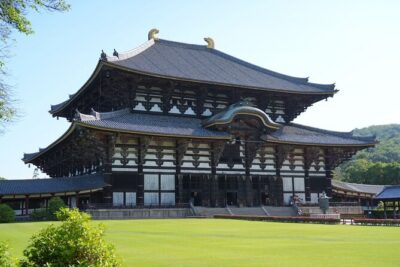
Nara Early Morning Tour (Kyoto or Osaka Departure Available)
Read our review →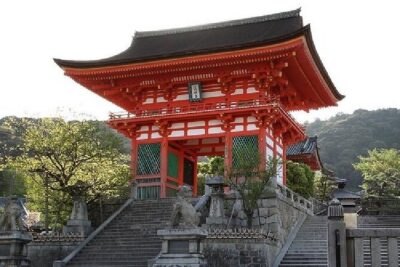
Full Day Guided Tour to Kyoto and Nara from Osaka by Van
Read our review →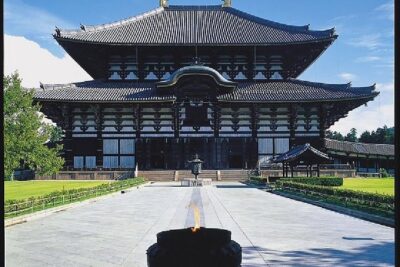
Browse the lists this tour appears in