
REVIEW · FOOD
Osaka: Local Foodie Tour in Dotonbori and Shinsekai
Osaka’s best introduction may be served on a skewer. This three-hour walk links old-school Shinsekai with neon-bright Dotonbori, giving you six kushikatsu pieces, okonomiyaki, takoyaki, and three drinks along the way. Guides such as Taku, Yuma, Alice, and Tea add food advice, local stories, and help with getting around.
I like the smart route and the generous portions. You see Jan-Jan Yokocho, Tsutenkaku Tower, a tiny temple, and a narrow food alley that recalls Osaka more than 80 years ago. I also like the easy social pace: walk, eat, sit, repeat. The main catch is that the ¥190 ride from Shinsekai to Dotonbori costs extra, and strict dietary needs may not work here.
In This Review
- Key points at a glance
- Why this Osaka food tour works so well
- Meeting in Shinsekai beside Dobutsuen-mae Station
- Shinsekai and the first plate of kushikatsu
- The narrow alley that recalls old Osaka
- A quiet temple between Namba’s neon streets
- Dotonbori, okonomiyaki, and a hands-on meal
- Takoyaki and the final round of drinks
- What the $108 price really buys you
- Group size, guides, and the evening mood
- Dietary limits you need to understand
- Who should book this food walk
- Should you book this Osaka food tour?
- FAQ
- How long does the Osaka food tour last?
- Where does the tour begin?
- What food is included?
- Are alcoholic drinks included?
- Is transportation included?
- Can vegans or people with gluten intolerance join?
- What should vegetarians know before booking?
Key points at a glance
- Six kushikatsu skewers in Shinsekai: Try Osaka’s famous deep-fried skewers in the district most closely linked with the dish.
- A 1.2-meter-wide historic food alley: See a museum-like passage decorated to recall central Osaka from more than 80 years ago.
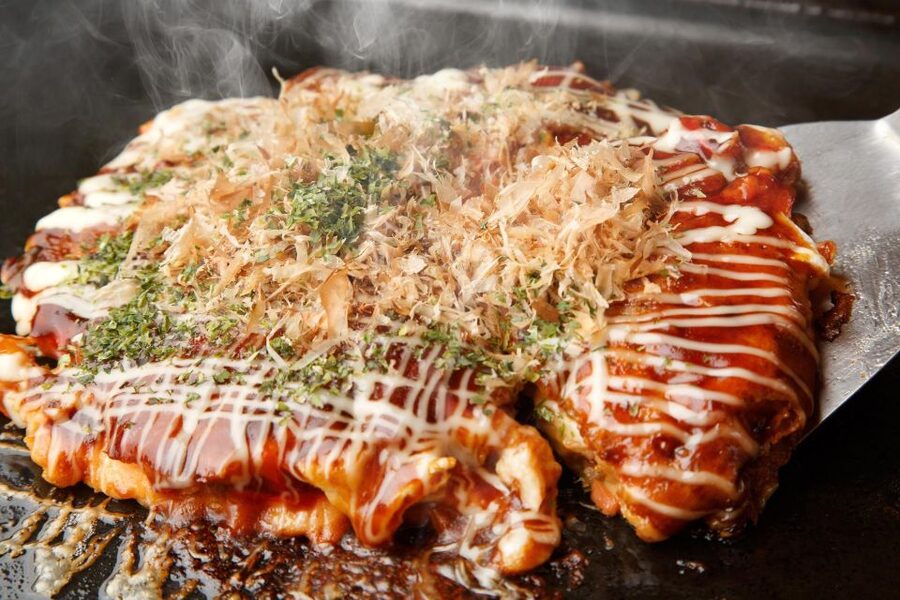
- Okonomiyaki cooked at your table: The meal includes one savory pancake, with the cooking itself becoming part of the fun.
- Three drinks included: Choose from alcoholic and non-alcoholic options.
- A temple between neon streets: Enjoy a short cultural pause amid Namba’s shopping and signs.
- Small groups and private tours available: The format works well for families, couples, and visitors who want help finding their way.
Why this Osaka food tour works so well
I see this as more than a meal with a bit of walking attached. It is a compact introduction to two very different parts of Osaka, with food acting as the thread between them.
Shinsekai feels old-fashioned and slightly eccentric. Dotonbori is louder, brighter, and more polished for the visitor, though it still carries Osaka’s long love affair with casual food. Moving between the two gives you a better sense of the city than staying in one restaurant district.
The food list is generous for three hours. You receive six kushikatsu pieces, one serving of okonomiyaki, one box of takoyaki, and three drinks. That is enough to replace a meal for most people, so I would not book this immediately after a large lunch.
The strongest part is the guide. Names in the guiding team include Mich, Yuma, Taku, Tea, Alice, Yoshi, Yumi, and Peco. The best guides do more than point out restaurants. They explain local manners, suggest places to eat later, show you how to use the transport system, and make the evening feel relaxed rather than like a march from one food stop to the next.
A few more Osaka trips to weigh up
- Osaka: Shinsekai Food Tour with 13-15 Dishes at 5 Eateries
★ 4.8 · 2,204 reviews - Osaka Food Tour: 13 Dishes at 5 Local Eateries
★ 5.0 · 2,149 reviews - Hungry Osaka Street Food Tour:15 Tastings & 3 Drinks with a Local
★ 5.0 · 1,727 reviews
Meeting in Shinsekai beside Dobutsuen-mae Station
The tour begins in front of FamilyMart Sanno Dobutsuen-mae, directly outside Exit 1 of Dobutsuen-mae Station. Your guide holds a MagicalTrip sign.
Arrive early. This is a punctual tour, and missing the start means you cannot join later, reschedule, or receive a refund. That rule matters here because the group moves through several busy streets and uses public transport between the two districts.
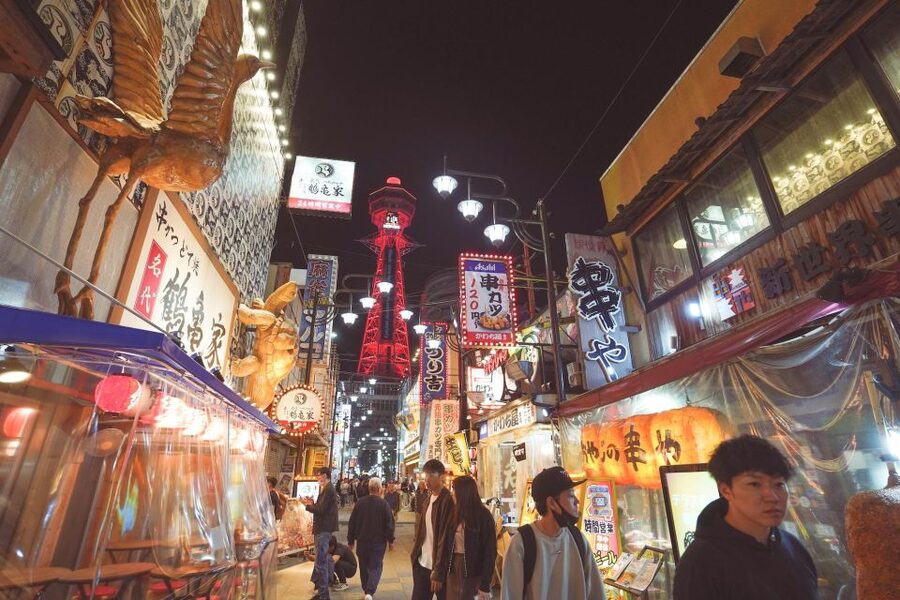
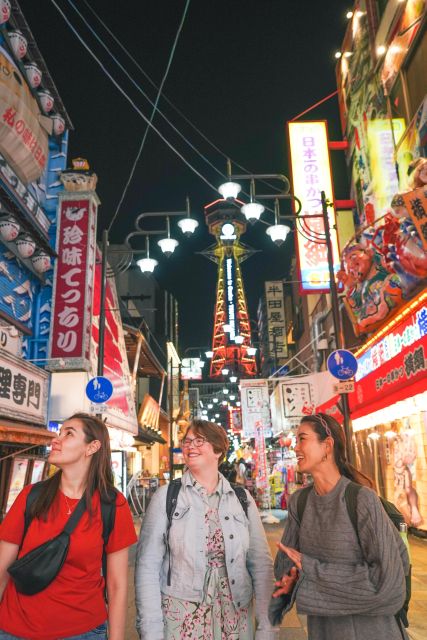
Starting in Shinsekai is a good choice. You begin away from the most famous Dotonbori signs and get a glimpse of a less glossy Osaka first. The opening walk passes Jan-Jan Yokocho alley, the Billiken statue, old shuttered arcades, and streets watched over by Tsutenkaku Tower.
You will see a side of Osaka that can be easy to miss if your plan is limited to the Glico sign and the canal. The area has a retro feel, and your guide supplies the context that turns a simple neighborhood walk into a useful introduction to Osaka’s past.
Shinsekai and the first plate of kushikatsu
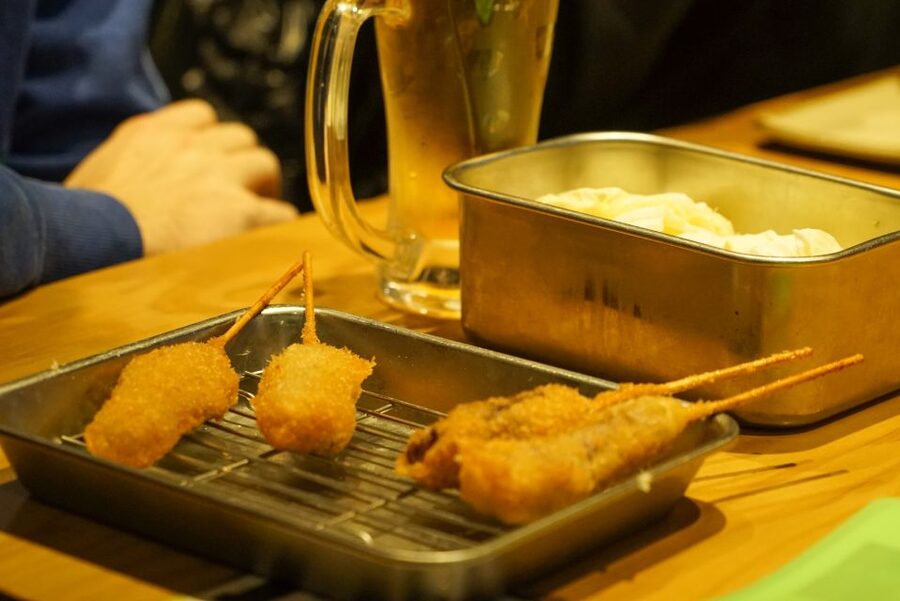
The first major food stop is kushikatsu, Osaka’s deep-fried skewer specialty. Pieces are coated and fried, then served in the casual style associated with Shinsekai.
Six pieces are included. The exact selection can depend on the restaurant and the day, but the purpose is clear: let you sample a range of local bites without having to decode a long Japanese menu on your own.
Kushikatsu is filling, especially when followed by two more substantial Osaka foods. Take your time here and do not treat the first stop as a quick appetizer. The included drink also helps make this feel like a proper stop rather than a rushed sample.
This part suits you if you enjoy trying foods in their local setting. It may be less appealing if you prefer light tasting portions or have trouble with fried food. The tour does not include additional food or drinks, so anything beyond the set menu comes at your own cost.
The narrow alley that recalls old Osaka
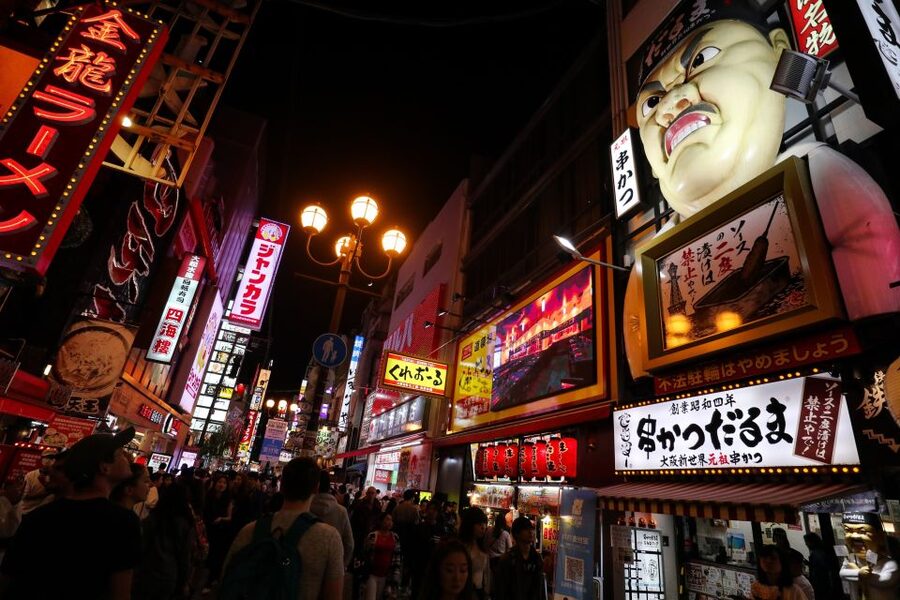
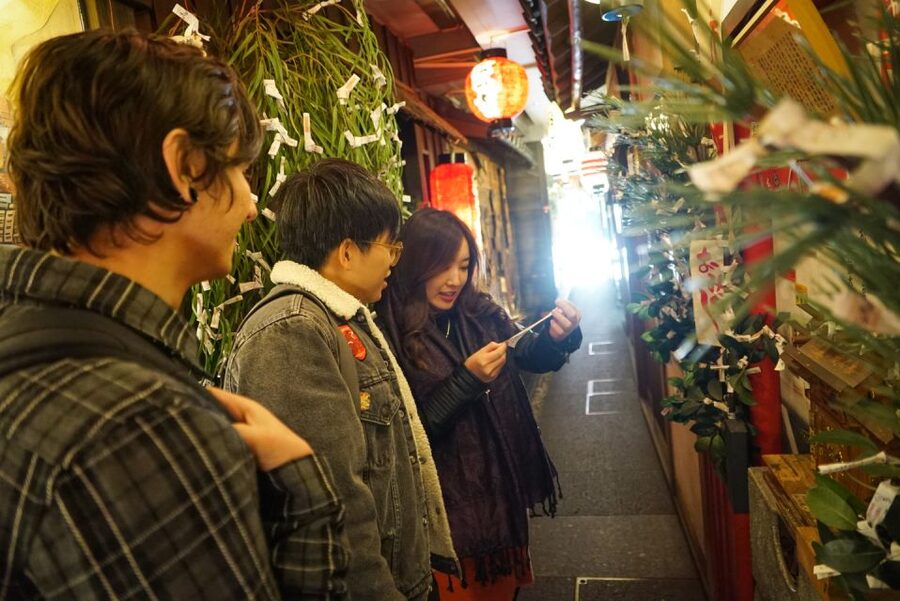
After eating, the route takes you through a food alley only about 1.2 meters wide. Its wall artwork creates a museum-like passage, offering a visual recreation of Osaka’s center as it looked more than 80 years ago.
The alley is brief, but it adds something important to the tour. You are not only moving between restaurants. You are seeing how older images of Osaka are preserved within the modern city.
Keep your expectations sensible. This is not a large museum or a long historical visit. It is a compact visual experience tucked into the route, and its value comes from the contrast between the narrow old passage and the bright commercial streets outside.
That contrast is one of the tour’s best ideas. You can step from a confined, old-style alley into the noise and lights of Namba within minutes. A local guide helps you notice that change instead of simply rushing through it.
Same city, a completely different kind of day:
- Osaka Go Karting Tour with Funny Costume
★ 5.0 · 2,658 reviews - Osaka Castle: Museum and Tower Entry Ticket
★ 4.5 · 2,380 reviews - Osaka: Tea Ceremony Experience
★ 4.9 · 1,426 reviews - Osaka Kickstart: Hotspots & Hidden Gems Tour
★ 5.0 · 1,306 reviews
A quiet temple between Namba’s neon streets
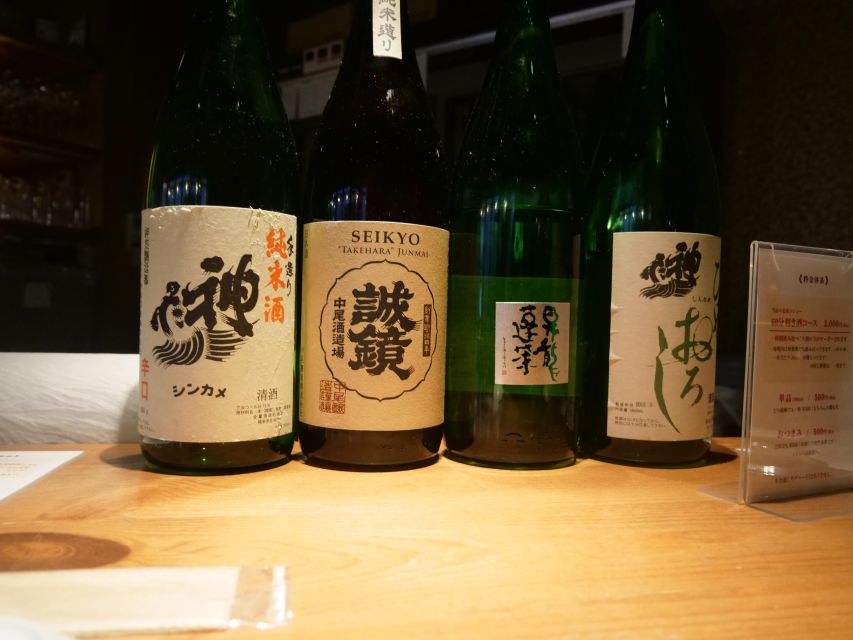
The next pause is a small temple set between Namba’s shopping streets and bright signs. The stop gives the itinerary a welcome change of rhythm.
You can learn basic etiquette for temples and shrines here, including how to behave respectfully during a short visit. That practical information is useful for the rest of your Japan trip, especially if you plan to visit religious sites without a guide later.
I like this stop because it keeps the tour from becoming one long restaurant crawl. Osaka’s food culture is the headline, but the temple adds a little local context and a moment of quiet. It also shows how old places remain part of daily city life, even in an area built for shopping and nightlife.
Do not expect a long religious lecture. The temple visit is a short part of a food walk, not a dedicated cultural tour. Still, it gives the evening more shape.
Dotonbori, okonomiyaki, and a hands-on meal
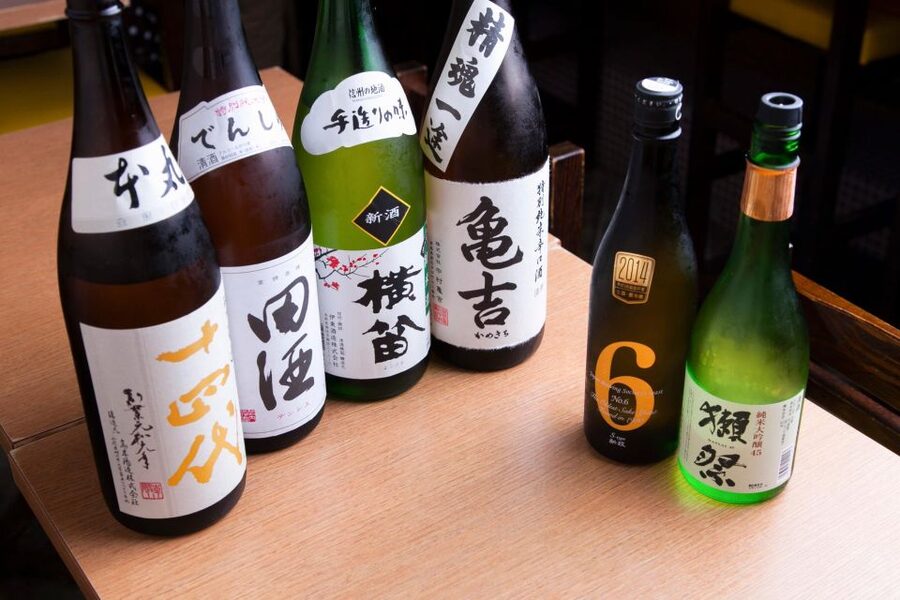
The route then continues to Dotonbori, Osaka’s famous food center. The district grew from Osaka’s merchant and rice-trading traditions, which helps explain its long-standing reputation as the nation’s kitchen.
Here, you receive one okonomiyaki. This savory pancake is cooked with a batter and other ingredients, then finished with sauces and toppings. At the restaurant, you may cook your own at the table, which many people find to be one of the most enjoyable parts of the evening.
That hands-on element makes the meal especially good for families and teenagers. You are not just handed a finished dish. You take part in preparing it, with the guide helping you understand what to do.
The meal is also a chance to ask questions. A good guide can explain what you are eating, suggest other local dishes, and recommend restaurants for the rest of your stay. Tea, for example, helped guests understand the transport system and offered ideas for nearby sights and places to eat.
Dotonbori can be crowded and intense, particularly around its famous signs and canalfront streets. The tour’s value is not that it makes the crowds disappear. It is that you do not have to work out where to eat or which alley to choose while surrounded by flashing signs and busy foot traffic.
Takoyaki and the final round of drinks
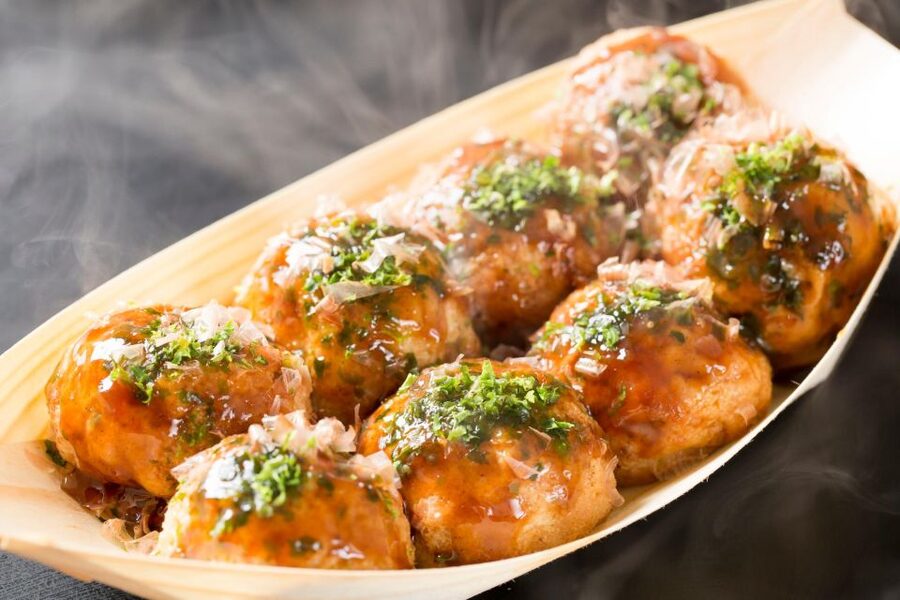
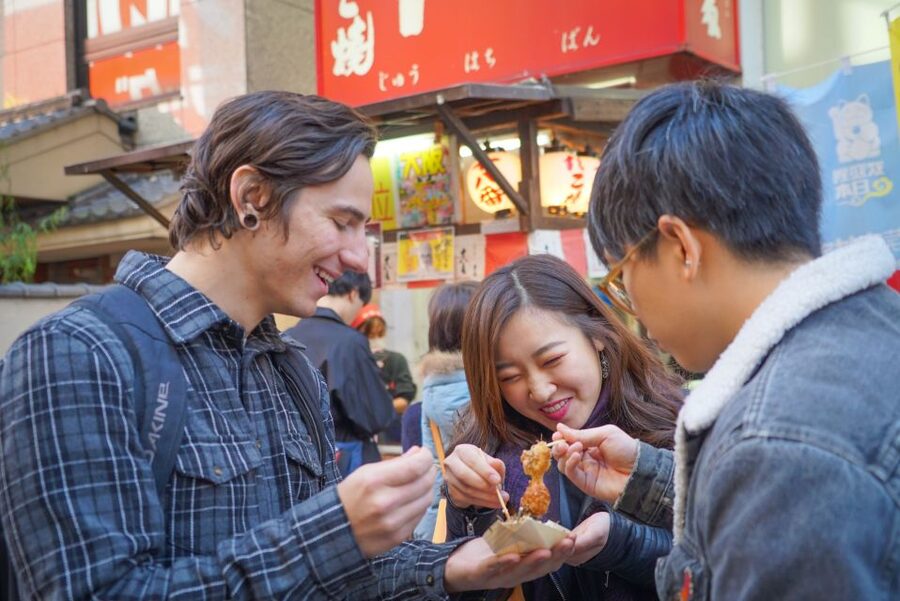
The final food focus is takoyaki, Osaka’s round batter balls usually associated with octopus and cooked on a special griddle. A box is included.
Takoyaki is hot, soft, and easy to underestimate. Eat it carefully, since the inside can stay very hot. By this point, you will already have eaten kushikatsu and okonomiyaki, so the full meal can be surprisingly substantial.
Three drinks are included across the tour, with alcoholic and non-alcoholic choices available. This makes the tour flexible for people who do not drink alcohol, though you should confirm your preferred option with the guide.
The sequence works well: fried skewers first, a cultural and historical walk in the middle, then okonomiyaki and takoyaki in Dotonbori. You get time to sit and eat, but also enough walking to keep the evening moving.
What the $108 price really buys you
At $108 per person, this is not the cheapest way to eat in Osaka. You can find kushikatsu, okonomiyaki, and takoyaki on your own for less, especially if you choose simple local restaurants and skip the guide.
The value comes from the package. You are paying for the food, three drinks, an English-speaking guide, a planned route through two districts, help ordering, and the confidence of knowing where to go. For a first night in Osaka, that can be worth more than the raw cost of the dishes.
The portions matter too. Six kushikatsu pieces, okonomiyaki, takoyaki, and drinks form a full evening meal for many people. Several guides also provide restaurant suggestions and practical city advice, which can save you time during the rest of your visit.
Still, I would not choose this tour if your main goal is the lowest food bill. You are paying for ease, conversation, local orientation, and access to places you might otherwise walk past.
The train ride from Shinsekai to Dotonbori is not included and costs ¥190. Bring a little cash or be ready to pay the fare separately. Additional food and drinks are also extra.
Group size, guides, and the evening mood
Private and small-group options are available. The format can change the feel of the experience quite a bit.
A group of seven still remains small enough for conversation, while a family of four may find itself as the only group on a departure. When that happens, the experience feels close to a private walk, with more room for questions and personal recommendations.
The guiding team receives especially strong praise for friendliness, clear English, and personal attention. Taku was described as Osaka-raised and particularly good with children. Alice was praised for her warmth and local roots, while Peco took guests through both districts, temples, and less obvious food spots.
That does not mean you can request a particular guide and expect a guarantee. It does mean the tour places real weight on the person leading it. Your guide can make the difference between simply eating three dishes and understanding why those dishes matter in Osaka.
The pace also suits mixed groups. You walk outdoors, stop to eat, sit down, and walk again. It is active without being a strenuous sightseeing tour.
Dietary limits you need to understand
This is not a good choice for vegans or people with gluten intolerance. Gluten-free and vegan meals cannot be accommodated.
Vegetarian guests must choose the vegetarian option during booking or make the request in advance. Same-day changes cannot be accepted.
There is an important detail at the kushikatsu restaurant: even vegetarian kushikatsu uses dashi made with pork broth. If you cannot eat dashi, tell the operator at least one day ahead so another vegetarian dish can be prepared.
Allergies also require advance notice, but allergy-free meals cannot be guaranteed. The food is prepared in kitchens that the tour company does not operate, and substitutions are not promised.
For most visitors with ordinary food preferences, the set menu is straightforward. For serious allergies or strict restrictions, I would choose a different activity where the kitchens and ingredients can be controlled more closely.
Who should book this food walk
I would recommend it for a first evening in Osaka, especially if you want to learn the city by eating rather than by ticking off major sights. It is also a strong choice for families, couples, and small groups who prefer company and local direction.
Food fans will appreciate the classic Osaka dishes, but you do not need to be an expert eater. The tour works for curious beginners because the guide explains what is being served and helps you move through unfamiliar streets.
It also suits visitors who want to see Shinsekai after dark without navigating it alone. You get a mix of food, old streets, temple etiquette, local culture, and nightlife without having to plan every stop.
I would think twice if you dislike fried food, need a very controlled diet, or prefer a quiet, private restaurant meal. Dotonbori is loud and crowded, and the tour’s social format may not suit someone looking for solitude.
Should you book this Osaka food tour?
Book it if you want a full meal with local guidance, not just a short tasting. The route is well balanced, the food is plentiful, and the move from Shinsekai to Dotonbori gives you a useful look at two sides of Osaka.
The best reason to go is the combination of food and orientation. A guide such as Taku, Tea, Alice, or Yuma can help you understand local dishes, temple manners, transport, and where to eat next. You finish with a full stomach and a better map of the city in your head.
Skip it if $108 feels high for a meal, if you need vegan or gluten-free food, or if you plan to spend the evening at a single restaurant. For everyone else, especially on a first Osaka visit, this is a practical and enjoyable way to get your bearings fast.
FAQ
How long does the Osaka food tour last?
The tour lasts three hours.
Where does the tour begin?
Meet in front of FamilyMart Sanno Dobutsuen-mae, directly outside Exit 1 of Dobutsuen-mae Station. Your guide will hold a MagicalTrip sign.
What food is included?
The tour includes six pieces of kushikatsu, one piece of okonomiyaki, one box of takoyaki, and three drinks.
Are alcoholic drinks included?
Yes. The three included drinks can be alcoholic or non-alcoholic.
Is transportation included?
Transportation from Shinsekai to Dotonbori is not included. The stated fare is ¥190.
Can vegans or people with gluten intolerance join?
No. Vegan and gluten-free diets cannot be accommodated on this tour.
What should vegetarians know before booking?
Choose the vegetarian option when booking or request it in advance. Vegetarian kushikatsu still uses pork-broth dashi, so tell the operator at least one day before the tour if you cannot consume dashi.
Just added around Osaka
- (Ticket Included) Explore Osaka Castle & Museum of History★ 4.8 · 21 reviews
- Hidden Osaka – Yukaku Red Light Tour & Culinary Adventure★ 4.8 · 96 reviews
- Osaka: Walking Tour and Top Highlights★ 4.8 · 104 reviews
- Osaka: Private Ceramic Painting Workshop★ 5.0 · 13 reviews
- Pickleball in Osaka, Kobe & Kyoto with Locals!★ 4.7 · 80 reviews
- Eat Like a Local in Osaka – Private Custom Street Food Tour★ 4.3 · 33 reviews
- Osaka:SUMO BEATS SHOWCASE: Taiko Drum and Wagyu burger!★ 4.2 · 37 reviews
- Kimono photoshoot-Includes 100 photo data★ 5.0 · 21 reviews
Food, compared.
Shinjuku Food Tour (13 Dishes at 4 Local Eateries)
Read our review →
Tokyo Tsukiji Fish Market Food and Culture Walking Tour
Read our review →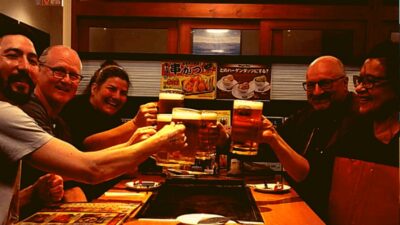
Shinsekai Food Tour with 13-15 Dishes at 5 Eateries
Read our review →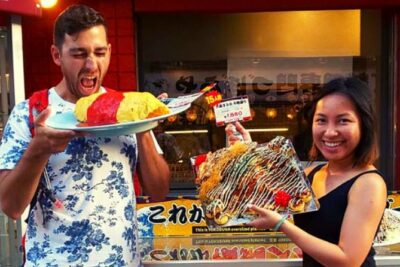
Osaka Food Tour: 13 Dishes at 5 Local Eateries
Read our review →
Shinjuku Food Tour (15 Dishes and 4 Eateries)
Read our review →
Best of Shinjuku: Izakaya Food Tour (4 Stops, 14+ Tastings)
Read our review →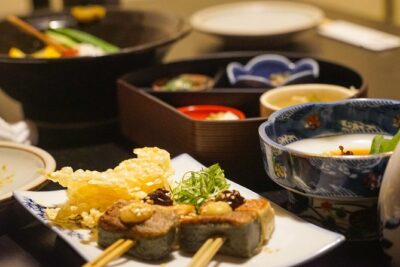
Kyoto Night Foodie Tour in Gion (9+ dishes + 6 Sake tastings)
Read our review →
Hungry Osaka Street Food Tour:15 Tastings & 3 Drinks with a Local
Read our review →Browse the lists this tour appears in