
REVIEW · CYCLING TOURS
Osaka in a Nutshell: Three hour bike tour
Osaka reveals itself quickly from a bicycle seat. In three to four hours, you move from old business-district buildings and quiet riverside paths to the broad lawns of Osaka Castle Park, then finish among the trees of Utsubo Park. It is a smart way to cover ground without spending the morning decoding train lines.
I especially like the mostly flat route and the small group, capped at eight people. I also like the practical local advice, since guides such as Matt, Peter, Sam, and Sean explain where Osaka fits into Japanese history and point out places to eat and drink. The main catch is the heat: summer riding can be humid, and you need moderate physical fitness for several hours in the saddle.
In This Review
- Key points at a glance
- Why a bicycle is a smart way to see Osaka
- Starting near Tenma at 10 a.m.
- Nakanoshima Park and Osaka’s old business district
- Along the river, with room to breathe
- The Mint Museum grounds and Osaka’s modernization
- Osaka Castle Park, the visual centerpiece
- Utsubo Park, an unexpected final stop
- The guide makes the difference
- How difficult is the ride?
- Is $72.67 a fair price?
- Who should book this Osaka bike tour?
- Booking, weather, and cancellation details
- Should you book it?
- FAQ
- How long does the Osaka bike tour last?
- What time does the tour begin?
- Where does the tour start and finish?
- What is included in the price?
- Does the tour enter the Mint Museum?
- Does the tour include entry to Osaka Castle?
- How difficult is the cycling route?
- What happens if the weather is poor?
Key points at a glance
- About 90% flat: The route is suited to steady recreational cycling rather than steep climbs or demanding road riding.
- Four very different stops: You see Nakanoshima Park, the Mint Museum grounds, Osaka Castle Park, and Utsubo Park.
- A small group of up to eight: This gives the guide room to explain local life and keep the ride manageable.
- Light hybrid bikes and helmets included: You do not need to arrange a bike rental separately.
- Mostly scenic cycling: The route uses riverside sections and cycle paths, with only a small amount of road riding.
- A useful first look at Osaka: The ride gives you orientation, history, photo stops, and food tips in one morning.
Why a bicycle is a smart way to see Osaka
Osaka is easy to explore by train, but rail travel can make the city feel like a set of disconnected stations. A bike fills in the spaces between them. You notice rivers, bridges, old office buildings, small paths, and changes in the city’s pace that are easy to miss underground.
This tour is not built around checking off a long list of major attractions. Instead, it links several parts of central Osaka into one flowing route. That makes it useful early in your visit, when you want to understand the city’s layout before choosing where to return on foot.
The route is described as roughly 90% flat, which matters more than it may sound. You still need to pedal for several hours, but this is not a hill workout. The bikes are hybrid models, and practical details such as the helmet and bottled water are already handled.
The small group size is another plus. With no more than eight people, you can hear the bilingual guide without standing in a large crowd. Guides named in the tour’s feedback include Matt, Peter, Sam, and Sean, although the person leading your ride depends on the date. Several guides have been praised for mixing history with humor and for leaving time to take photographs.
A few more Osaka trips to weigh up
- 5-Hour Osaka Bike Tour to the Neighborhood of Osaka Castle
★ 5.0 · 319 reviews - One-Day Osaka Bike Adventure: 5–6 Hours
★ 5.0 · 246 reviews - Eat, Drink & Cycle: Osaka Foodie Bike Tour
★ 5.0 · 224 reviews
Starting near Tenma at 10 a.m.
The meeting point is at 1-chōme-10-7 Tenma in Kita Ward. The ride starts at 10 a.m. and returns to the same place, so you do not need to solve a second transport problem at the end of the morning.
You receive confirmation when you book, and the meeting point is near public transportation. Still, I would allow extra time to find the exact address. In a Japanese city, a nearby station does not always mean the final few streets are obvious, especially if you are reading a map on a phone while trying to locate a bicycle group.
The guide supplies the bike, helmet, and water. You should arrive ready to ride, with clothing suited to the weather and shoes that feel secure on pedals. The route is moderate rather than strenuous, but it is not a sightseeing bus. You will be cycling, stopping, listening, and getting back on the bike repeatedly.
Nakanoshima Park and Osaka’s old business district
The first stop is Nakanoshima Park, where landscaped gardens sit between rivers in the center of Osaka. This part of town has an older business-district feel, with European-style buildings and a sense of civic Osaka rather than the bright commercial streets associated with Dotonbori.
You stop for about 15 minutes. That is enough time for a short explanation, a few photographs, and a look around, but not a full visit to every building or garden feature. The value here is orientation. You begin to see how Osaka grew around its waterways and how business, public gardens, and river traffic shaped the center.
The river sections are among the most pleasant parts of the ride. Instead of moving from one major road to another, you follow water through a quieter side of the city. The pace gives you time to look across the river and watch the city change around you.
Do not expect a long, leisurely park visit at every stop. This is a moving overview, and the tour keeps a schedule. If you like seeing a lot in one morning, that rhythm works well. If you prefer to sit in one place for an hour, you may find the stops brief.
Along the river, with room to breathe
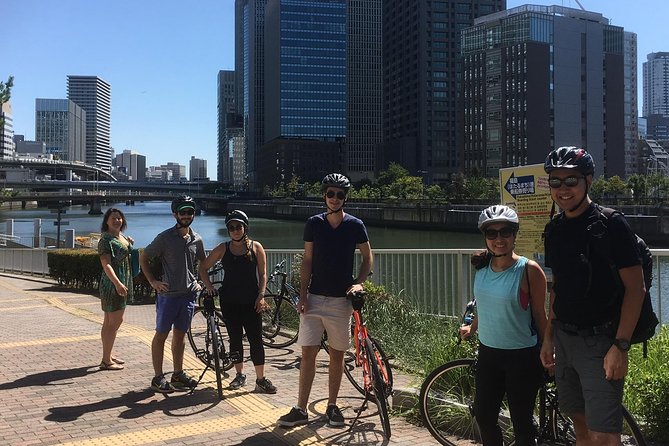
The riverside cycling is a major reason to choose this experience. Osaka can feel intense at street level, with traffic, signs, stations, and crowds competing for your attention. Along the water, the mood changes. You get a calmer view of the city and a scenic break between the main attractions.
The ride is mostly on cycle paths, with only a small amount of road cycling. That does not remove the need to pay attention. Bikes and pedestrians share parts of Osaka’s urban paths, and local cycling habits may not match what you are used to at home. Keep your eyes up, follow the guide, and avoid assuming every path is exclusively for bicycles.
The breeze can also make a difference in warm weather. Summer in Osaka can be hot and humid, and the moving air makes the ride more comfortable than a long walking tour under the same conditions. You should still take the heat seriously. Water is included, but bring sensible sun protection and expect to sweat.
Same city, a completely different kind of day:
- Osaka Go Karting Tour with Funny Costume
★ 5.0 · 2,658 reviews - Osaka Castle: Museum and Tower Entry Ticket
★ 4.5 · 2,380 reviews - Osaka: Shinsekai Food Tour with 13-15 Dishes at 5 Eateries
★ 4.8 · 2,204 reviews - Osaka Food Tour: 13 Dishes at 5 Local Eateries
★ 5.0 · 2,149 reviews
The Mint Museum grounds and Osaka’s modernization
The stop at the Mint Museum lasts about 15 minutes, but you do not enter the museum itself. Instead, you visit the grounds and hear about the area’s role in Japan’s modernization.
That limitation is important. If the Mint Museum is high on your personal list, you will need to return separately, since this tour offers only an exterior look and historical context. For most people, though, the stop works as a compact history lesson rather than a museum visit.
The guide connects the site to the changes that reshaped Japan as the country modernized. This is one of the tour’s strengths: you are not simply stopping at attractive places for photographs. You get enough background to understand why an ordinary-looking area matters.
The short stop also keeps the ride moving. You hear the key points, look around the grounds, and continue rather than spending a large part of the morning indoors. That balance suits anyone who wants a broad introduction to Osaka instead of a single-subject history tour.
Osaka Castle Park, the visual centerpiece
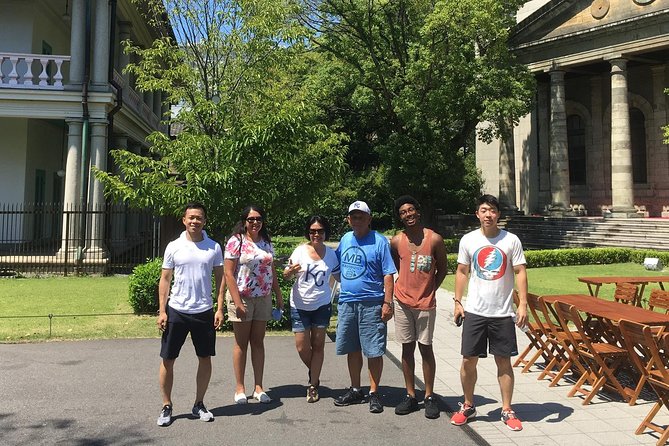
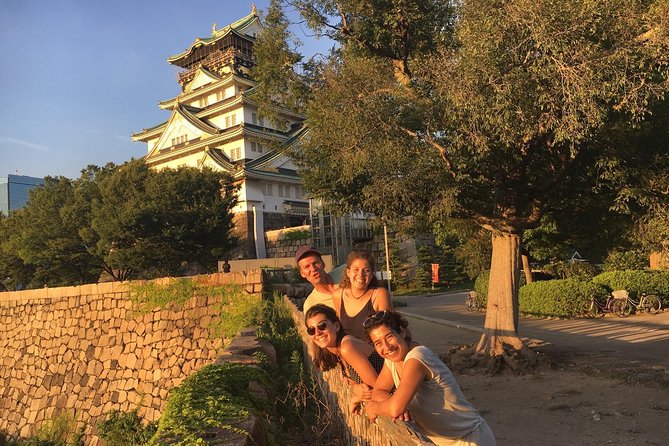
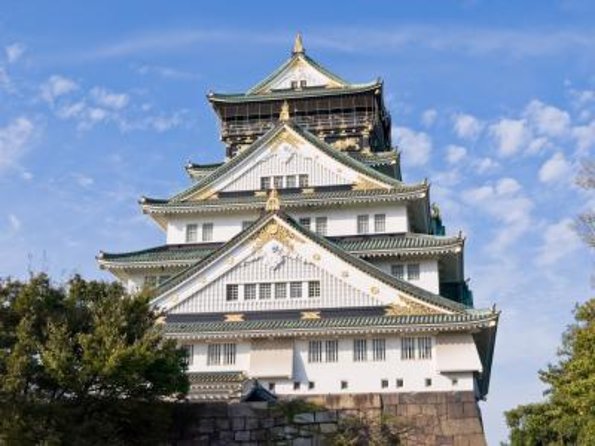
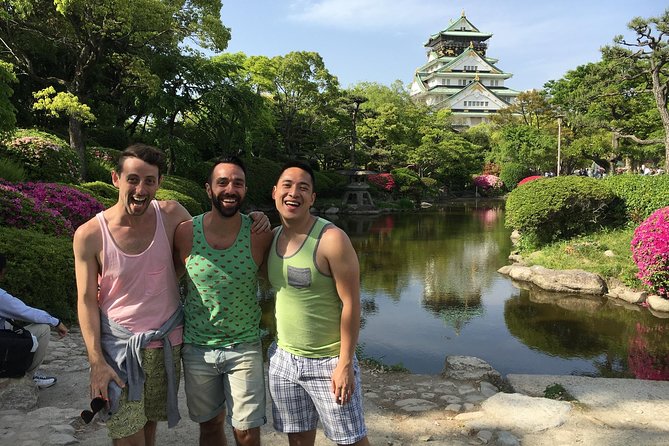
Osaka Castle is the longest stop, at about 30 minutes. The ride takes you through the greenery of Osaka Castle Park, where you pause for classic castle views, a short explanation, and a cool drink.
The park gives the tour its biggest visual moment. After the quieter river paths and business-district streets, the open green space around the castle feels expansive. It is also a good place to take photographs without trying to rush through the entire castle area on foot.
The guide explains the castle’s place in Japanese history and culture, including its role in the story of Osaka. You get a useful introduction, not a full castle tour. The itinerary does not include entry into the castle interior, so plan another visit if you want to explore the museum rooms or climb to the observation level.
Cycling here has a practical advantage. Osaka Castle Park covers a large area, and walking across it can take more time and energy than expected. A bicycle lets you see more of the grounds before stopping for pictures.
If you already visited Osaka Castle on foot, the bicycle ride can still add something. You approach the park from a different direction and gain a better sense of its scale. One useful tip from the experience is to consider taking this tour before your dedicated castle visit, since the guide’s explanation can give the later visit more context.
Utsubo Park, an unexpected final stop
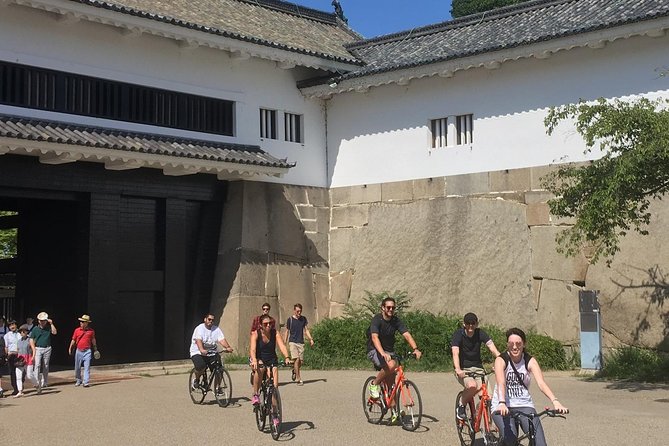
Utsubo Park is the final listed stop and lasts about 10 minutes. It is presented as one of central Osaka’s most attractive city parks, with a surprising history and plenty of photogenic corners.
This is a good ending because it shows a more everyday side of Osaka. The castle is grand and symbolic, while Utsubo Park is a place to slow down among trees in the middle of the city. The contrast helps you see that Osaka is not only department stores, neon streets, and train stations.
Ten minutes is enough for a quick look and a few photographs, but it is not a long park break. I would treat it as a final introduction, then return on your own if you want a quieter rest or more time with the park.
After Utsubo Park, the ride returns to the original meeting point. Since the finish is at the start location, you can plan lunch or your next sightseeing stop without arranging a pickup at an unfamiliar part of Osaka.
The guide makes the difference
The bicycle is useful, but the guide is what turns this from a rental into a tour. Commentary is provided in English and Japanese through a bilingual guide, and the strongest part of the experience is the connection between places and local life.
Guides named in the tour feedback include Matt, Peter, Sam, and Sean. Matt is noted for bringing historical material and making room for personal time at stops. Peter is described as leading an easy, flat ride, while Sam is praised for providing plenty of historical background. Sean is mentioned in connection with an Osaka and Kyoto cycling experience, so guide assignments can vary and should not be assumed in advance.
The overall style appears to combine facts, practical city advice, and conversation rather than a formal lecture. You can expect explanations about Osaka’s history, Japanese culture, and the character of the neighborhoods you pass through. You also receive tips about good places to eat and drink, which can be especially helpful after the ride.
A good guide also controls the pace. The ride needs to stay together, but it includes time for pictures and short walks at the stops. That balance is important in a small group. You are not left to chase a guide through every intersection, yet you also are not waiting around for long stretches.
How difficult is the ride?
The route is designed for people with moderate physical fitness. The flat profile makes it more accessible, but three to four hours is still a meaningful amount of cycling.
You should be comfortable riding a bike for an extended morning and handling city paths. The experience is not described as a technical ride, and the bikes are light hybrids, but you need to stay alert around pedestrians and the small amount of road traffic.
The weather deserves special attention. Hot, humid days can make any outdoor activity tiring, even when the breeze helps. If you are visiting in summer, drink water before the start and use the stops as chances to cool down. The tour requires good weather and may be canceled if conditions are poor.
Cycling during cherry blossom season can be especially appealing because the route includes parks and green areas. Seasonal conditions will affect what you see, so the ride is not identical throughout the year. The basic value remains the same: you cover central Osaka efficiently while spending much of the morning outdoors.
Is $72.67 a fair price?
At $72.67 per person, this is more expensive than renting a bicycle and riding without a guide. You are paying for more than the bike, though. The price includes the hybrid bike, helmet, bottled water, bilingual guiding, route planning, and the time saved by not figuring out the city yourself.
For a first visit, that package can be worthwhile. You see four distinct areas, hear historical context, and get local food and drink suggestions in one compact outing. The group size of up to eight also gives the experience a more personal feel than a large coach excursion.
The value is weaker if you want lengthy visits inside museums or attractions. You do not enter the Mint Museum, and the tour does not include Osaka Castle admission. You are buying a guided city ride and an overview, not a collection of indoor tickets.
I would compare the price with what you would spend on several hours of bike rental, a planned route, and transport between these areas. If you already enjoy navigating cities by bicycle, you may prefer to ride independently. If you want someone else to handle the route and explain what you are seeing, the fee is easier to justify.
Who should book this Osaka bike tour?
I would recommend it to first-time visitors who want quick orientation, active sightseeing, and a look beyond the best-known shopping streets. It is also a good fit if you enjoy history in short portions and prefer seeing a city in motion.
The tour suits couples, friends, and families with older children who can manage a moderate ride. The small group makes it easier to ask questions, and the flat route removes much of the worry about difficult hills.
I would hesitate if you dislike cycling in cities, need frequent long rests, or want to spend most of the morning inside attractions. The stop times are short, and you need to keep moving with the group.
For the best experience, book this near the start of your Osaka stay. Use the ride to learn the city’s shape, collect restaurant ideas, and mark places for later visits. The castle and Utsubo Park are both easy to appreciate more fully if you return with extra time.
Booking, weather, and cancellation details
The experience offers free cancellation if you cancel at least 24 hours before the local start time. Changes or cancellations made within 24 hours are not refunded.
Because the ride depends on good weather, poor conditions may lead to a new date or a full refund. The tour also requires a minimum number of participants, so an insufficient number may result in another date, another experience, or a full refund.
Should you book it?
Book this tour if you want to see a broad slice of Osaka without spending the morning underground or studying a map. The flat cycling, river paths, small group, and strong historical commentary make it a practical introduction to the city.
Skip it if your priority is entering museums, taking a slow castle tour, or avoiding bicycles altogether. For most active visitors, though, $72.67 buys a useful first look at Osaka, with enough local detail to shape the rest of your stay.
FAQ
How long does the Osaka bike tour last?
The tour lasts approximately three to four hours.
What time does the tour begin?
The stated start time is 10 a.m.
Where does the tour start and finish?
The tour starts at 1-chōme-10-7 Tenma, Kita Ward, Osaka, 530-0043, Japan, and ends back at the same meeting point.
What is included in the price?
A hybrid bike, helmet, and bottled water are included. Bilingual guide commentary is also provided during the ride.
Does the tour enter the Mint Museum?
No. The group stops in the museum grounds and hears about the area, but there is not enough time to enter the museum.
Does the tour include entry to Osaka Castle?
No. The route passes through Osaka Castle Park and stops for views, photographs, a drink, and historical commentary. Castle admission is not listed as included.
How difficult is the cycling route?
The route is about 90% flat and requires moderate physical fitness. You should be comfortable cycling for three to four hours and riding on city paths, with a small amount of road cycling.
What happens if the weather is poor?
The experience may be canceled because it requires good weather. You will be offered a different date or a full refund.
Just added around Osaka
- Samurai dress-up and shows, plus Tea Ceremony & Calligraphy★ 5.0 · 27 reviews
- Kyoto & Nara Private customized tour with English speaking Guide★ 4.5 · 99 reviews
- Well-balanced BENTO (lunch box) Cooking Class★ 5.0 · 35 reviews
- Urban Canvas: Osaka Street Art Bike Tour★ 5.0 · 47 reviews
- OSAKA:Feel the Power! Learn Taiko Drum from Professionals★ 5.0 · 28 reviews
- Volleyball in Osaka & Kyoto with Locals!★ 5.0 · 21 reviews
- 1.5〜2 Hours Traditional Kintsugi Work Shop in Namba Osaka★ 5.0 · 75 reviews
- Umami Town Street Food Tour★ 5.0 · 120 reviews
Cycling Tours, compared.

3h Tokyo E-Bike Tour: Hidden Gems, and Local Life with guide
Read our review →
Arashiyama Bamboo Forest & Hidden Gems Bike Tour (Early Bird)
Read our review →
Hiroshima in a Nutshell: Morning Bike Adventure
Read our review →
5 Top Highlights of Kyoto Full Day Bike Tour (E-bike option)
Read our review →Browse the lists this tour appears in