
REVIEW · FOOD
Osaka Food Adventure Tour: Walking with a Local Guide
Osaka’s best food often comes from small counters, old sweet shops, and modest stalls rather than polished restaurants. This three-hour walk takes you through Shinsekai, Hozenji Yokocho, and Dotonbori while introducing you to six to ten local foods, from kushikatsu and takoyaki to wagashi and steamed pork buns.
I like the small group of no more than eight, which gives your guide room to explain unfamiliar dishes and adjust the tasting list to your likes. I also like the practical help with Osaka’s trains and subway, especially since the tour ends in Namba rather than where it begins. The main drawback is that the ¥190 subway fare from Shinsekai to Namba is extra, and the food selection can change with shop hours, availability, and dietary needs.
In This Review
- Key Points for Your Osaka Food Walk
- Why This Tour Works as a First Taste of Osaka
- Meeting Tsutenkaku and Entering Shinsekai
- Shinsekai’s Kushikatsu and Familiar Local Snacks
- Takashimaya’s Depachika: A Different Side of Japanese Food
- Hozenji Yokocho and the Walk Toward Namba
- Dotonbori and the Glico Sign Finish
- How Much Food Do You Really Get?
- Price, Group Size, and Overall Value
- Who Will Get the Most From This Food Walk?
- Should You Book the Osaka Food Adventure Tour?
- FAQ
- How long does the Osaka Food Adventure Tour last?
- Where does the tour begin?
- Where does the tour end?
- How many people can join the tour?
- What food is included?
- Is the food menu fixed?
- Is transportation included?
- Is Tsutenkaku Tower admission included?
- Can people with allergies or dietary restrictions join?
Key Points for Your Osaka Food Walk
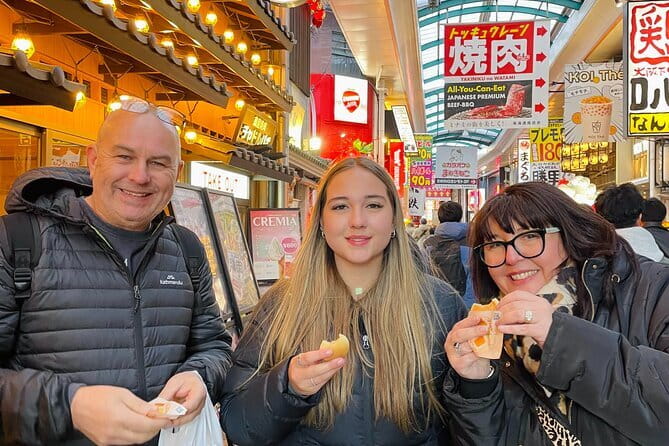
- Six to ten tastings: Expect local specialties such as kushikatsu, takoyaki, croquettes, wagashi, and butaman.
- Shinsekai at its most useful: You see Tsutenkaku and the retro food streets with a guide who can explain what to order.
- A small, personal group: The maximum is eight people, with several guides praised for humor, warmth, and clear English.
- A useful route: The walk finishes at the Glico Sign in Dotonbori, placing you in a good spot for more evening exploring.
- Lunch or dinner timing: You can book around the time you are ready for a proper meal, not just a midafternoon snack.
- Subway guidance included, fare not included: Your guide can help you move from Shinsekai toward Namba, but you pay the ¥190 fare yourself.
Why This Tour Works as a First Taste of Osaka
Osaka has a reputation for casual food, quick service, and local specialties that can be hard to order when you cannot read the menu. A guide changes the experience. Instead of pointing at the most obvious picture on a menu, you can ask what is typical, what is mild, and how a dish is normally eaten.
This is not a formal cooking class or a restaurant crawl built around large sit-down meals. It is a walking tasting route. You stop at several food places, eat a little at each, and keep moving through some of central Osaka’s most famous streets.
The food is the main draw, but the route gives the tour shape. You begin near Tsutenkaku in Shinsekai, cross through the older Hozenji area, pause at Takashimaya’s food basement, and finish among the signs and canal-side crowds of Dotonbori. You get several different views of Osaka food culture in one afternoon or evening.
The guide also adds a personal layer. Ayako is praised for introducing unusual foods and offering a look behind the scenes of local eating. Chiyoe, also known as Aunty, is described as especially caring and funny. Kaoru helped one pair find their way back to Kyoto by train after the tour, while Hiro has been praised for her local knowledge of Osaka and its food.
Those details matter because the quality of a food walk rests heavily on the guide. The provider does not promise one named guide for every departure, so you should book for the route and format rather than expecting a particular person. Still, the consistently warm comments about Ayako, Chiyoe, Kaoru, Hiro, Sue, Emi, Sumiyo, and Bryan point to a strong guiding team.
A few more Osaka trips to weigh up
- Osaka: Shinsekai Food Tour with 13-15 Dishes at 5 Eateries
★ 4.8 · 2,204 reviews - Osaka Food Tour: 13 Dishes at 5 Local Eateries
★ 5.0 · 2,149 reviews - Hungry Osaka Street Food Tour:15 Tastings & 3 Drinks with a Local
★ 5.0 · 1,727 reviews
Meeting Tsutenkaku and Entering Shinsekai
The tour begins at Ebisucho Station, at 5 Chome-13 Nipponbashi in Naniwa Ward. The easiest landmark is Tsutenkaku Tower, which you can see from the station area. One useful tip is to use the station exit closest to Shinsekai. It is possible to get turned around, so allow a few extra minutes and look for the tower.
Tsutenkaku rises 103 meters above the district. The original tower was built in 1912 and reconstructed in 1956, and it remains one of Osaka’s best-known symbols. The tour allows about 30 minutes here, but admission to the tower’s observation decks is not included. If you want to go up, plan to pay separately and confirm how much time your group has before entering.
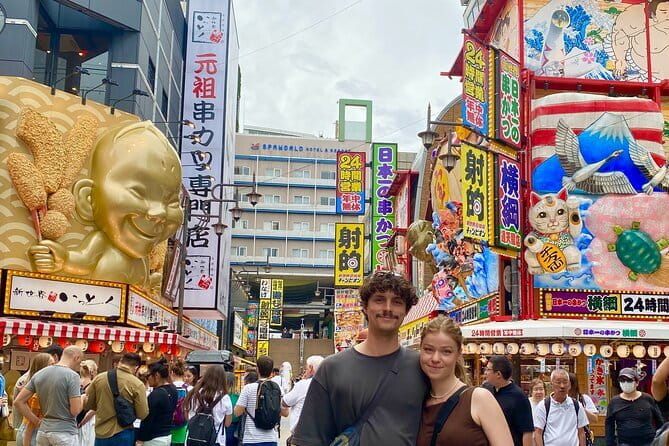
The tower is more than a photo stop. It gives you a clear sense of place. Shinsekai was created in the early twentieth century as a new entertainment district, and its name means New World. Today, the area is known for its older-looking streets, bright signs, small restaurants, and food associated with Osaka’s casual dining culture.
The tour spends about 90 minutes in Shinsekai, making this the most substantial stop. That is good news if you want context along with your meal. You are not simply rushing from one snack to the next. Your guide can explain the district, help you order, and point out the difference between places aimed at passing sightseers and the small shops used by local people.
Shinsekai’s Kushikatsu and Familiar Local Snacks
Kushikatsu is one of the district’s signature foods. It consists of ingredients placed on skewers, coated, and deep-fried. The exact selection can vary, but the format lets you sample different items without committing to a large meal.
You may also receive a croquette from a long-running butcher shop. This is the kind of stop that makes a guided walk worthwhile. A croquette sounds simple, yet a local guide can tell you how to eat it, what filling to expect, and why the shop is part of the neighborhood’s daily food life.
Takoyaki is another likely tasting. These hot, round batter snacks contain octopus and are closely associated with Osaka. The tour may visit what is described as Osaka’s oldest takoyaki shop, though the exact shops used can change. Eat carefully, since freshly made takoyaki can be very hot inside.
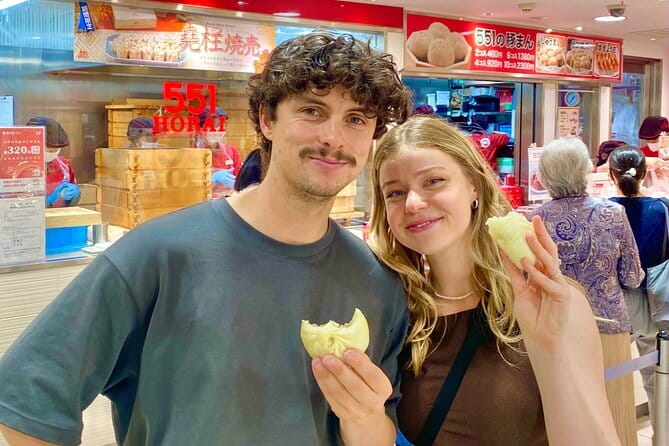
The menu may also include butaman, or steamed meat buns, and traditional wagashi from a 200-year-old sweets shop. These tastings give you a helpful contrast: fried food, hot street food, savory steamed dough, and a carefully made Japanese sweet.
Do not treat the examples as a fixed menu. The guide chooses from available shops and may adjust the food based on the group’s preferences. That flexibility is useful, but it means you should not book expecting every one of the listed items.
Takashimaya’s Depachika: A Different Side of Japanese Food
After Shinsekai, the route includes Osaka’s Takashimaya department store. The food basement, called a depachika, offers a very different setting from the neighborhood counters and street stalls.
You have about 15 minutes here. That is enough for a quick look at beautifully arranged Japanese and international foods, though not enough for a long shopping session. The selection can include fresh produce, sushi, sweets, and other prepared foods.
I like this stop because it widens your idea of Osaka food. The city is not only takoyaki and deep-fried skewers. Department store food halls show the care that goes into presentation, packaging, and takeaway meals in Japan.
The short timing is also a limitation. If you want to browse every counter or buy gifts, you may need to return on your own. Think of this as a compact introduction, not a dedicated shopping visit.
Same city, a completely different kind of day:
- Osaka Go Karting Tour with Funny Costume
★ 5.0 · 2,658 reviews - Osaka Castle: Museum and Tower Entry Ticket
★ 4.5 · 2,380 reviews - Osaka: Tea Ceremony Experience
★ 4.9 · 1,426 reviews - Osaka Kickstart: Hotspots & Hidden Gems Tour
★ 5.0 · 1,306 reviews
Hozenji Yokocho and the Walk Toward Namba
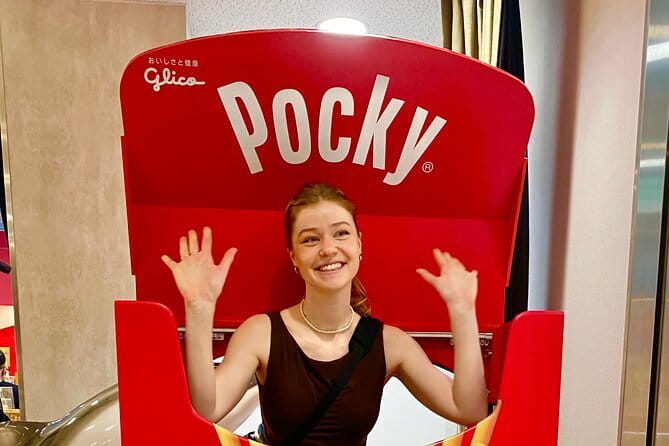
Hozenji Yokocho is a narrow lane near Hozenji Temple, lined with small restaurants and shops. Its traditional atmosphere makes a welcome change from Shinsekai’s signs and Dotonbori’s large advertisements.
The scheduled stop is only about 10 minutes, so expect a brief look rather than an extended temple visit. Your guide can give you a bit of local context and show you the older character of this part of central Osaka.
This is also where the walk begins to connect Osaka’s food districts. You are moving from the tower district toward Namba, and the route makes sense geographically. The experience feels less like a set of unrelated tastings and more like a food-focused orientation walk.
The tour includes public transportation help, but the subway ride from Shinsekai to Namba costs ¥190 per person and is not included. Carry a little yen or be ready to use a transit card if you have one. Your guide can assist with the system, which is useful early in a Japan trip, particularly if Osaka is your first large Japanese city.
Dotonbori and the Glico Sign Finish
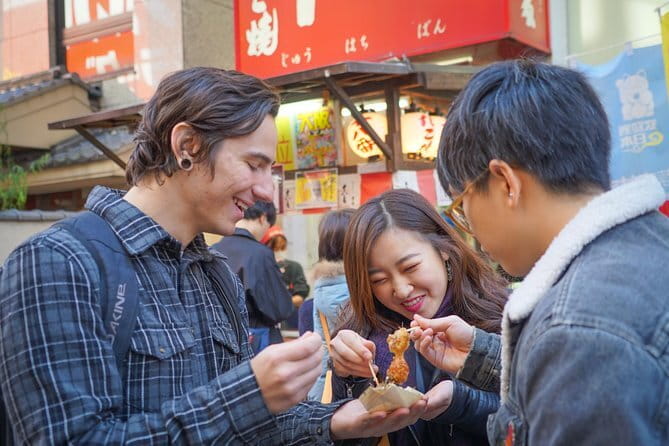
The final stop is Dotonbori, Osaka’s famous entertainment district along the canal. You will see oversized signs, bright lights, restaurants, and the familiar Glico Running Man sign. The official end point is at the bridge in front of the sign, at 1 Chome-10-4 Dotonbori.
The tour allows about 30 minutes here. That is enough to see the main stretch and take in the atmosphere, but you should not expect a full survey of Dotonbori. This is a useful ending because you can continue exploring, shop for souvenirs, or find another meal after saying goodbye.
Dotonbori can be crowded, especially at night. The guide helps you move through it with a purpose, but you should wear comfortable shoes and keep your belongings secure. The walking is not described as extreme, yet the activity requires a moderate level of fitness and takes place on busy city streets.
Ending at the Glico Sign is practical for first-time visitors. You finish near a major Osaka landmark and in an area with plenty of onward food and entertainment choices. If you are staying elsewhere, your guide can also help you understand the next train or subway step.
How Much Food Do You Really Get?
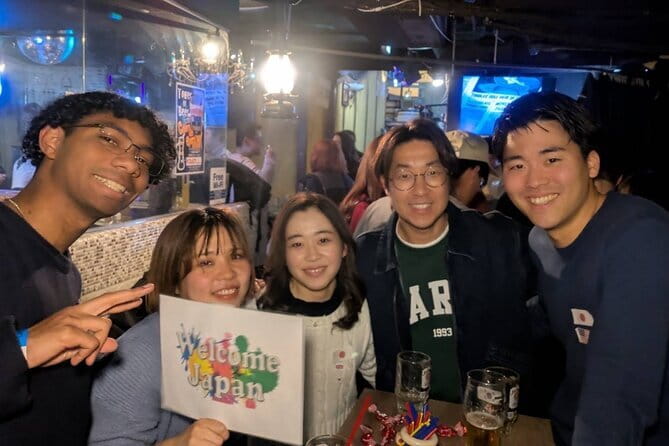
The tour includes lunch or dinner with six to ten local foods and one drink. You can choose an alcoholic or non-alcoholic option. The number of tastings sounds generous, and it is best to approach them as small portions spread across several stops rather than as six to ten full meals.
Many of the foods are filling. Kushikatsu is fried, takoyaki is made from a substantial batter, and butaman is a warm steamed bun. If the group samples several of these, you should arrive hungry and avoid eating a large meal just before the start.
The route is also useful for people who are nervous about unfamiliar food. A guide can explain what you are looking at and help you decide how adventurous to be. The food can be adjusted around preferences, but the provider warns that ingredients may include meat, seafood, wheat, and dairy.
If you have an allergy or dietary restriction, contact Cooking Sun before booking. Do not assume that a preference can be handled on the spot. The food selection depends on the shops open that day, and shared kitchens or prepared foods can make strict avoidance difficult.
Price, Group Size, and Overall Value
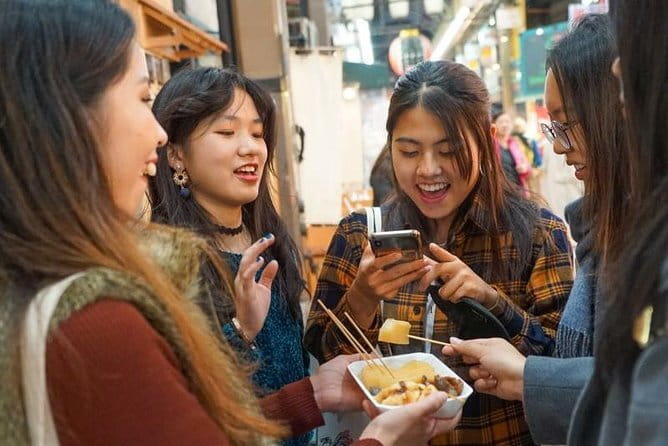
At $79.28 per person, the tour is not the cheapest way to buy street food in Osaka. You are paying for the food, one drink, three hours of guiding, local interpretation, and help navigating between districts.
The value improves if you are new to Osaka or uncomfortable ordering in small shops. Six to ten tastings can also add up quickly if you bought each item separately, though you should not compare the price only with the cost of snacks. The route and guidance are a large part of what you are purchasing.
The cap of eight people is important. In a large food tour, ordering and conversation can become slow, and it is harder to ask for help. Here, the guide has a better chance to learn what you like, explain each stop, and keep the group together.
The tour has earned a 4.9 rating from 119 ratings, with 98 percent recommending it. That strong record fits the aspects that matter most here: friendly guides, clear communication, plenty of food, and stops away from the main tourist streets. It does not remove the practical limits, such as the variable menu and extra subway fare.
Who Will Get the Most From This Food Walk?
I would choose this tour for a first or second day in Osaka. It gives you a quick introduction to Shinsekai, Namba, Hozenji, and Dotonbori, while also showing you how to move around by public transportation.
It suits solo visitors, couples, and small groups who want social contact without joining a large crowd. It also works well for people taking a day trip from Kyoto. One pair used the guide’s help to navigate the train back to Kyoto, which shows how the tour can serve as more than a meal.
You should think twice if you want a fixed tasting list, a long visit inside Tsutenkaku, or a seated restaurant meal at every stop. It may also be a poor fit for strict dietary restrictions unless the provider confirms suitable options before you reserve.
Choose the lunch departure if you want to use the walk as your main midday meal. Choose dinner if you want to see Shinsekai and Dotonbori with their evening lights, accepting that the streets may feel more crowded.
The tour requires good weather. You can cancel for a full refund up to 24 hours before the start time. If poor weather causes the provider to cancel, you are offered another date or a full refund. Changes made less than 24 hours before the start are not accepted.
Should You Book the Osaka Food Adventure Tour?
Book it if you want a guided introduction to Osaka food and neighborhoods, not just a list of restaurant addresses. The strongest reasons are the small group, the broad range of tastings, and the chance to try foods you might skip when ordering alone.
The tour is especially useful at the start of a Japan trip. You learn what kushikatsu and takoyaki should be like, get help with unfamiliar shops, and finish in Dotonbori with a better sense of where to eat next.
Skip it if you prefer to explore completely on your own, need guaranteed ingredients, or want to spend most of the three hours inside one food hall or restaurant. For most first-time visitors who arrive hungry and bring comfortable shoes, the $79.28 price is a fair exchange for food, local guidance, and a useful orientation to Osaka.
FAQ
How long does the Osaka Food Adventure Tour last?
The tour lasts approximately three hours.
Where does the tour begin?
It begins at Ebisucho Station, at 5 Chome-13 Nipponbashi, Naniwa Ward, Osaka, 556-0005, Japan.
Where does the tour end?
It ends at the bridge in front of the Glico Sign in Dotonbori, at 1 Chome-10-4 Dotonbori, Chuo Ward, Osaka, 542-0071.
How many people can join the tour?
The group has a maximum of eight people.
What food is included?
The tour includes lunch or dinner with six to ten local foods and one alcoholic or non-alcoholic drink. Possible tastings include croquettes, wagashi, kushikatsu, takoyaki, and butaman.
Is the food menu fixed?
No. The tasting selection can change based on the group’s preferences and which shops are available on the day.
Is transportation included?
The guide helps you use public transportation, but the subway fare from Shinsekai to Namba is not included. The listed fare is ¥190 per person.
Is Tsutenkaku Tower admission included?
No. Admission to Tsutenkaku Tower is not included.
Can people with allergies or dietary restrictions join?
The provider advises contacting them before booking. Foods may contain meat, seafood, wheat, and dairy, and suitable alternatives depend on what can be arranged.
Just added around Osaka
- Samurai dress-up and shows, plus Tea Ceremony & Calligraphy★ 5.0 · 27 reviews
- Kyoto & Nara Private customized tour with English speaking Guide★ 4.5 · 99 reviews
- Well-balanced BENTO (lunch box) Cooking Class★ 5.0 · 35 reviews
- Urban Canvas: Osaka Street Art Bike Tour★ 5.0 · 47 reviews
- OSAKA:Feel the Power! Learn Taiko Drum from Professionals★ 5.0 · 28 reviews
- Volleyball in Osaka & Kyoto with Locals!★ 5.0 · 21 reviews
- 1.5〜2 Hours Traditional Kintsugi Work Shop in Namba Osaka★ 5.0 · 75 reviews
- Umami Town Street Food Tour★ 5.0 · 120 reviews
Food, compared.
Shinjuku Food Tour (13 Dishes at 4 Local Eateries)
Read our review →
Tokyo Tsukiji Fish Market Food and Culture Walking Tour
Read our review →
Shinsekai Food Tour with 13-15 Dishes at 5 Eateries
Read our review →
Osaka Food Tour: 13 Dishes at 5 Local Eateries
Read our review →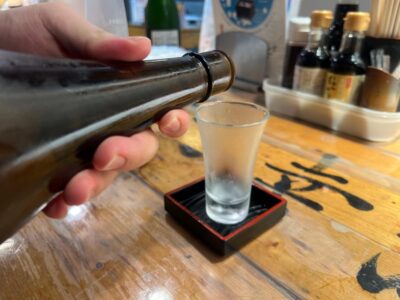
Shinjuku Food Tour (15 Dishes and 4 Eateries)
Read our review →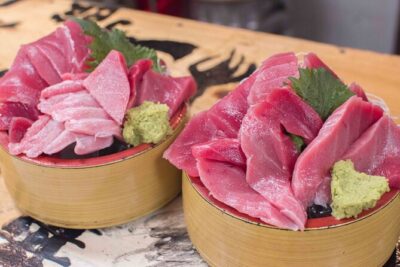
Best of Shinjuku: Izakaya Food Tour (4 Stops, 14+ Tastings)
Read our review →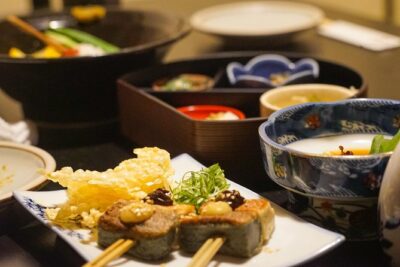
Kyoto Night Foodie Tour in Gion (9+ dishes + 6 Sake tastings)
Read our review →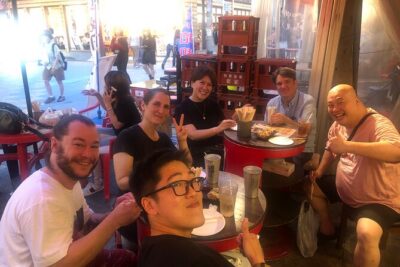
Hungry Osaka Street Food Tour:15 Tastings & 3 Drinks with a Local
Read our review →Browse the lists this tour appears in