
REVIEW · CYCLING TOURS
Osaka: City Highlights Bike Tour
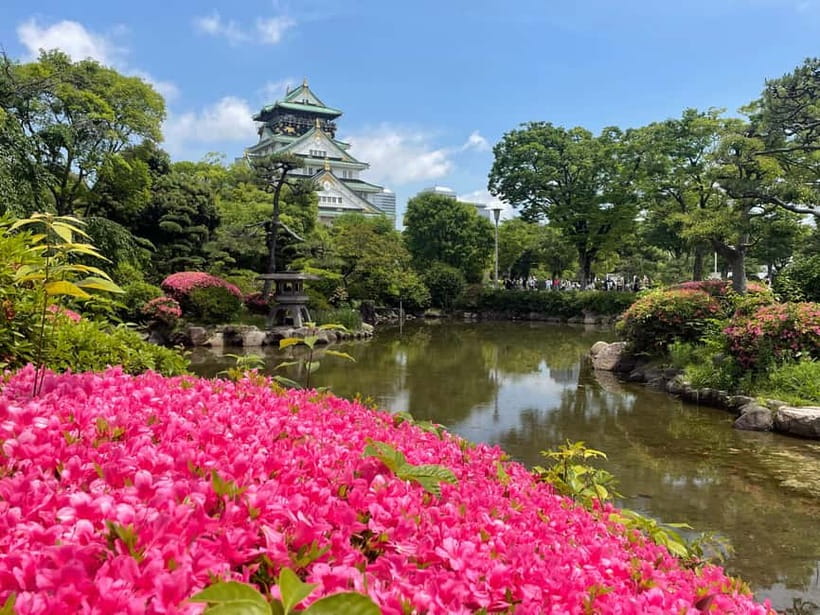
Osaka’s north side is best seen at bicycle speed. This three-hour ride links the Japan Mint, Tenmangu Shrine, Nakanoshima Island, Utsubo Park, and Osaka Castle without asking you to decode a busy rail network. Most of the route is flat, and the small group keeps the ride personal.
I like the 90 percent flat route, which makes this a practical choice for ordinary cyclists rather than keen athletes. I also like the mix of famous sights and quieter streets, especially the riverside start and the European-style buildings around Nakanoshima.
The main consideration is the guide’s style. Akira has been praised for friendly, funny, useful commentary, but one participant found the tone too chauvinistic and nationalistic. At $70, this is not Osaka’s cheapest way to see the sights, so the value depends on how much you want guided context and easy transport between districts.
In This Review
- Key points at a glance
- Why cycling works so well in northern Osaka
- Along the Sakuranomiya riverside
- Tenmangu Shrine and a quieter pause
- Nakanoshima’s gardens and city architecture
- Utsubo Park and a greener stretch
- Osaka Castle and the final major stop
- What the small group changes
- Is $70 a fair price?
- Who should book this ride?
- My booking advice
- FAQ
- How long does the Osaka City Highlights Bike Tour last?
- What sights does the tour visit?
- Is the cycling route difficult?
- What is included in the price?
- Is food included?
- Where is the meeting point?
- What language is the tour conducted in?
- What is the minimum age?
- What happens if it rains?
Key points at a glance
- A mostly flat three-hour ride: The route suits a wide range of fitness levels, with only a small portion requiring more effort.
- Five very different Osaka sights: You move from the riverside Japan Mint and a Shinto shrine to Nakanoshima gardens, Utsubo Park, and Osaka Castle.
- Small groups of up to eight: This gives the guide room to explain stops and manage the pace more easily than a large cycling party.
- Akira may be your guide: He has been noted for a friendly, humorous manner and good historical explanations.
- Useful local suggestions: Your guide offers tips on places to eat and drink after the ride.
- A practical city introduction: The tour covers a broad part of northern Osaka without repeated train changes or long walks.
Why cycling works so well in northern Osaka
Osaka is easy to reach by train, but the transport system can feel like a puzzle during a short visit. A guided bike ride removes much of that work. You do not need to compare lines, find the right exit, or keep checking a phone while moving between sights.
You also get a better sense of how the city fits together. The route connects riverside paths, shrine grounds, office-district architecture, public gardens, and castle grounds. That change of scenery is the real strength of the experience.
I would not book this as a hard-core cycling outing. It is a sightseeing tour with bikes, not a speed test. The pace allows time for explanations and short stops, while the largely flat route keeps the physical demand modest.
The ride begins at Cycle Osaka, about a 10-minute walk from Tenmabashi Station on the Osaka Metro or Keihan line. Allow enough time to walk there without rushing. The first 15 minutes are used for a safety briefing, bike setup, and basic instructions.
The bikes are described as being in very good condition, which matters more than it may sound. A poorly maintained bicycle can turn a pleasant city ride into a chore. You still need to be comfortable riding in an urban setting, and you should bring comfortable clothes and shoes.
A few more Osaka trips to weigh up
- 5-Hour Osaka Bike Tour to the Neighborhood of Osaka Castle
★ 5.0 · 319 reviews - One-Day Osaka Bike Adventure: 5–6 Hours
★ 5.0 · 246 reviews - Eat, Drink & Cycle: Osaka Foodie Bike Tour
★ 5.0 · 224 reviews
Along the Sakuranomiya riverside
The opening section takes you along the winding riverside path at Sakuranomiya. This is a calm way to begin, giving you time to settle into the bicycle before the route moves through more built-up parts of the city.
The Japan Mint is the first major point of interest. The stop includes an explanation of the Mint Museum, with about 15 minutes for a guided visit. You should think of this as a short cultural introduction rather than a full museum tour.
The Mint helps give the city a broader identity beyond food, shopping, and neon signs. Osaka has long been an important commercial center, and the Mint connects the modern city to its official and industrial past. The stop is also useful because it breaks up the cycling early in the morning.
You may want a camera here, but the experience is more about hearing the guide’s explanation than collecting a long set of photographs. The timing is short, so do not expect to examine every display.
Tenmangu Shrine and a quieter pause
After another short ride through Kita Ward, the group reaches Osaka Tenmangu Shrine. The guided stop lasts about 20 minutes, making it one of the more substantial pauses on the route.
This is a good contrast with the Mint. Instead of a civic and industrial subject, you get a working religious site and a chance to pause in a calmer setting. Your guide explains the shrine and its place in Osaka, while you have time to look around rather than simply cycle past the entrance.
I like this part of the route because it gives the morning a slower rhythm. A bike tour can become a blur of landmarks if every stop is brief. Tenmangu provides a proper break and adds a cultural layer that you would miss by simply riding between major photo stops.
Be respectful while visiting. Keep your voice low, follow your guide’s instructions, and remember that a shrine is more than a sightseeing backdrop. The tour offers a short introduction, not a formal religious experience, so you will want to explore more on your own if this is a major interest.
Nakanoshima’s gardens and city architecture
From Tenmangu, you cycle downhill toward Nakanoshima Island. The word downhill sounds dramatic, but the larger point is that the route moves naturally from the northern area into central Osaka. Since most of the ride is flat, this section should not concern ordinary cyclists.
Nakanoshima brings a different look. The island is known for European-inspired buildings, public spaces, and the Nakanoshima Rose Garden. The ride and stop here last about 15 minutes, followed by another 15-minute cycling section.
This is where the tour feels especially useful for first-time visitors. You see a side of Osaka that is easy to miss if you focus only on Dotonbori, Shinsaibashi, and Osaka Castle. Nakanoshima has a more formal, civic character, with water, gardens, and older architecture shaping the view.
The stop is fairly short, so you should not expect a detailed architectural tour or a long garden visit. Still, the contrast makes the ride more rewarding. Osaka is not one single visual experience, and Nakanoshima helps prove it.
Same city, a completely different kind of day:
- Osaka Go Karting Tour with Funny Costume
★ 5.0 · 2,658 reviews - Osaka Castle: Museum and Tower Entry Ticket
★ 4.5 · 2,380 reviews - Osaka: Shinsekai Food Tour with 13-15 Dishes at 5 Eateries
★ 4.8 · 2,204 reviews - Osaka Food Tour: 13 Dishes at 5 Local Eateries
★ 5.0 · 2,149 reviews
Utsubo Park and a greener stretch
The route then heads to Utsubo Park, described as one of the city’s green areas. The supplied timing does not give a separate guided stop length here, so treat it as part of the cycling section rather than a long independent visit.
That does not make it filler. Utsubo Park gives you a chance to see how Osaka makes room for open public space within the city. After the shrine and formal central architecture, this section changes the pace again.
If you want a tour built around long stops, this may feel quick. If you prefer covering ground without spending half the morning standing in one place, the balance works well. You keep moving, but the guide still points out local context along the way.
The tour also includes water, which is a small but useful touch. You should still bring whatever you normally need for a three-hour outing, especially on a warm day, since food and other drinks are not included.
Osaka Castle and the final major stop
Osaka Castle is the largest landmark on the route and receives about 30 minutes of cycling time in the schedule. The castle section gives the tour its strongest connection to Osaka’s feudal past.
Your guide provides context as you approach and ride around the area. The experience is not presented as a full interior castle visit, and the schedule does not include a separate castle admission. You should therefore book this expecting an exterior-focused bike tour rather than a museum visit inside the castle.
That distinction matters. If your main goal is to study the castle museum, see every interior display, or spend several hours on the grounds, plan a separate visit. If you want to place Osaka Castle into a wider city tour, the bike ride gives you that connection without using up an entire day.
The castle also makes a strong closing landmark. You begin with riverside scenery and the Mint, pass through a shrine and central gardens, and finish with Osaka’s most recognizable historic sight. The sequence gives you a useful first look at the city’s different eras.
After the castle, you cycle back to Cycle Osaka. The total activity lasts three hours, so the schedule is fairly tight. Delays, weather, or a slower group could affect how long you spend at each point.
What the small group changes
The group is limited to eight participants. That is a meaningful advantage on a bicycle. A guide can keep track of the group more easily, answer questions without shouting, and adjust explanations to the people present.
Small groups also reduce the awkwardness of stopping in public spaces. You are not trying to hear a speech over a crowd, and the ride should feel less like following a flag through town.
The tradeoff is that the tour needs to run as a shared experience. You will not set your own pace or linger wherever you wish. If one sight matters greatly to you, ask the guide about it during the ride, but do not expect the freedom of an independent bicycle rental.
The guide language is English. Akira is one guide associated with the experience, and feedback about him highlights good humor, friendly service, and helpful history. Guide personalities can differ, so keep in mind that the quality of the commentary depends partly on who leads your departure.
Is $70 a fair price?
At $70 per person, the tour sits above the cost of simply renting a bicycle and exploring on your own. The fee includes the bicycle, helmet, water, English-speaking local guide, and the planning needed to connect several districts in three hours.
I see the value in the route rather than in any single stop. You are paying for a prepared path, local explanations, and the convenience of moving between sights without sorting out Osaka’s transport system. For a first day in the city, that can be worthwhile.
The price is less attractive if you already know Osaka well, cycle confidently, and are happy to navigate alone. You may cover some of the same ground for less money, though you would lose the organized route and historical commentary.
Food and drinks are not included, and there is no hotel pickup or drop-off. Build those costs and arrangements into your day. The meeting point is convenient from Tenmabashi, but it is not a door-to-door activity.
Who should book this ride?
I would recommend it to visitors who want a broad first look at northern Osaka and prefer active sightseeing to sitting on trains. It suits couples, friends, and solo participants who can ride a bicycle and enjoy a guide’s running commentary.
The minimum age is 13. Children under 13 cannot join, and families with younger riders are asked to contact the operator. Pregnant participants, wheelchair users, and people who cannot ride a bike should choose another way to see these sights.
You should also be comfortable with three hours of movement, even though the route is mostly flat. Comfortable shoes and clothes are sensible, and a camera is welcome. Smoking is not allowed during the activity.
Weather is an important practical point. If there is a 60 percent or greater chance of rain, the operator reaches out with a different date or a full refund. Make sure you can be reached before the tour.
My booking advice
Book this tour if you want Osaka’s major northern sights tied together with local explanation, and if the idea of cycling sounds more pleasant than changing trains. The flat route, good bicycle condition, water, and eight-person limit make it approachable.
Skip it if you want a slow castle visit, a deep museum experience, or complete control over your schedule. Also think twice if $70 feels high for a short city ride and you are already comfortable navigating Osaka alone.
For many first-time visitors, this is a sensible way to get oriented. You see the Mint, Tenmangu Shrine, Nakanoshima, Utsubo Park, and Osaka Castle in one morning, while gaining practical suggestions about places to eat and drink afterward. That combination gives the tour its strongest value.
FAQ
How long does the Osaka City Highlights Bike Tour last?
The tour lasts three hours, including the safety briefing, cycling, guided stops, and return to Cycle Osaka.
What sights does the tour visit?
The route includes the Japan Mint and Mint Museum, Osaka Tenmangu Shrine, Nakanoshima Rose Garden, Utsubo Park, and Osaka Castle.
Is the cycling route difficult?
About 90 percent of the route is flat, and the experience is described as suitable for all fitness levels. You still need to be able to ride a bicycle.
What is included in the price?
The price includes the guided bike tour, bicycle rental, helmet, local English-speaking guide, and water.
Is food included?
No. Food and drinks other than the included water are not included.
Where is the meeting point?
The tour begins at Cycle Osaka. The meeting location is about a 10-minute walk from Tenmabashi Station on the Osaka Metro or Keihan line.
What language is the tour conducted in?
The live tour guide speaks English.
What is the minimum age?
The minimum age is 13. Children under 13 are not suitable for this activity, while families with younger riders are asked to contact the operator.
What happens if it rains?
If there is a 60 percent or greater chance of rain, the operator contacts you and offers a different date or a full refund. You should make sure you are reachable before the tour.
Just added around Osaka
- (Ticket Included) Explore Osaka Castle & Museum of History★ 4.8 · 21 reviews
- Hidden Osaka – Yukaku Red Light Tour & Culinary Adventure★ 4.8 · 96 reviews
- Osaka: Walking Tour and Top Highlights★ 4.8 · 104 reviews
- Osaka: Private Ceramic Painting Workshop★ 5.0 · 13 reviews
- Pickleball in Osaka, Kobe & Kyoto with Locals!★ 4.7 · 80 reviews
- Eat Like a Local in Osaka – Private Custom Street Food Tour★ 4.3 · 33 reviews
- Osaka:SUMO BEATS SHOWCASE: Taiko Drum and Wagyu burger!★ 4.2 · 37 reviews
- Kimono photoshoot-Includes 100 photo data★ 5.0 · 21 reviews
Cycling Tours, compared.

3h Tokyo E-Bike Tour: Hidden Gems, and Local Life with guide
Read our review →
Arashiyama Bamboo Forest & Hidden Gems Bike Tour (Early Bird)
Read our review →
Hiroshima in a Nutshell: Morning Bike Adventure
Read our review →
5 Top Highlights of Kyoto Full Day Bike Tour (E-bike option)
Read our review →Browse the lists this tour appears in