
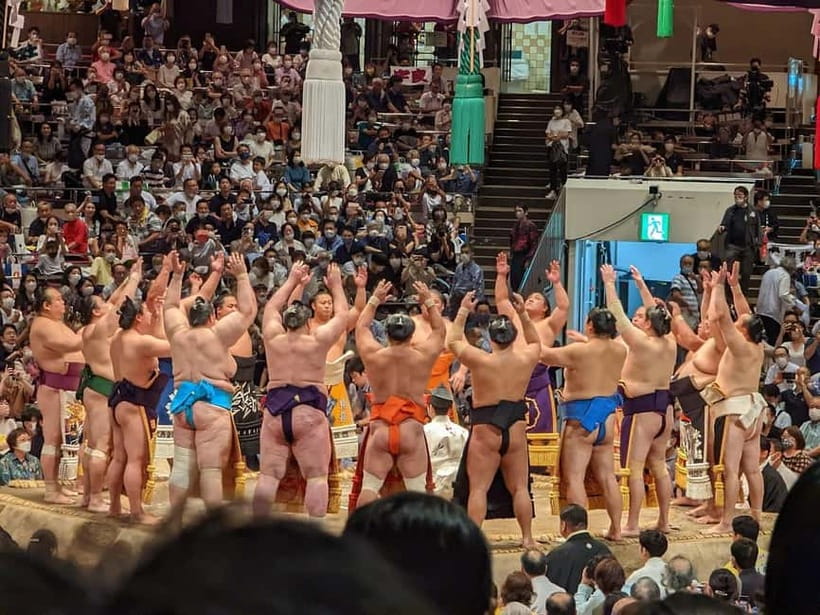
REVIEW · SUMO EXPERIENCES
Nagoya: Grand Sumo Tournament Tour
Nagoya’s grand sumo tournament is far easier to follow with a guide beside you. You watch the top-division bouts from 3 p.m., listen to live English commentary through an earphone system, and learn why the rituals, rankings, and small gestures matter. The wrestler profile pamphlet and cheering towel turn a confusing afternoon into a lively one.
I like two things here: the three-hour start time keeps you fresh for the bouts that matter most, and the optional Nagoya Castle walk gives the day a second strong focus. The main consideration is price. At $225 per person, this costs far more than simply attending the tournament, so you are paying for seats, guidance, materials, and a smoother first visit.
In This Review
- Key points at a glance
- Why this Nagoya sumo tour works for first-time fans
- The 3 p.m. start is the smart choice
- Nagoya Castle sets the scene
- How the sumo materials improve the afternoon
- The earphone system solves a common tour problem
- Getting from Osaka or Kyoto to Nagoya
- Seats, duration, and the real value of $225
- What the afternoon feels like
- Who should book this experience
- Should you book the Nagoya sumo tour?
- FAQ
- Where does the Nagoya sumo tour begin?
- Where does the activity end?
- How long do I watch the sumo tournament?
- What kind of seats are included?
- Is the Nagoya Castle visit included?
- Is hotel pickup included?
- What language is the tour conducted in?
Key points at a glance
- Top-division sumo from 3 p.m.: Spend three focused hours watching the bouts that carry the most excitement.
- Live English commentary: Hear explanations through a headset, even when you are not standing right beside the guide.
- Wrestler profiles in English: Follow each bout with photos and background information instead of guessing who is who.
- A cheering towel for one wrestler: Learn when and how to wave it, then support your chosen rikishi with the group.
- Nagoya Castle before the arena: Add a local history walk covering the Tokugawa clan, castle design, and Honmaru Palace.
- Chair S or Chair A seating: Your ticket includes a reserved chair rather than leaving you to sort out arena seating alone.
Why this Nagoya sumo tour works for first-time fans
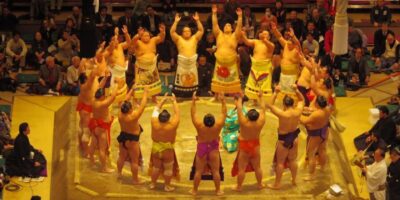
Sumo looks simple at first: two wrestlers, one ring, and a match that can end in seconds. The real sport has more layers. Rank, stable, ritual, ring-entering ceremonies, footwork, timing, and the referee’s calls all shape what you are watching.
That is where this tour earns its keep. Your English-speaking guide explains the action as it happens, rather than asking you to absorb a long lecture before the tournament begins. You can hear the guide through the earphone system from a distance, so you do not have to crowd around one person or miss the opening of a bout while trying to listen.
The guide also uses a pamphlet with photos and English profiles of the wrestlers. This is a practical touch. Once the top-division bouts begin, you can identify the competitors, follow their records and backgrounds, and understand why one pairing matters more than another.
The guides bring plenty of personality, too. Keiko is described as energetic and deeply fond of sumo, while Yuki has been praised for explaining both the castle and the wrestlers with clear enthusiasm. Mari is known for getting the group involved in cheering, and Sunny Yoko has been especially helpful with sumo explanations. Your guide may be someone else, but the format depends on having a guide who enjoys the sport and can keep the afternoon moving.
More sumo experiences in Nagoya:
- Tokyo: Sumo Show Experience with Chicken Hot Pot and a Photo
★ 4.8 · 6,678 reviews - Tokyo: Sumo Show and Dining Experience
★ 4.8 · 2,742 reviews - the SUMO show
★ 5.0 · 1,960 reviews
The 3 p.m. start is the smart choice
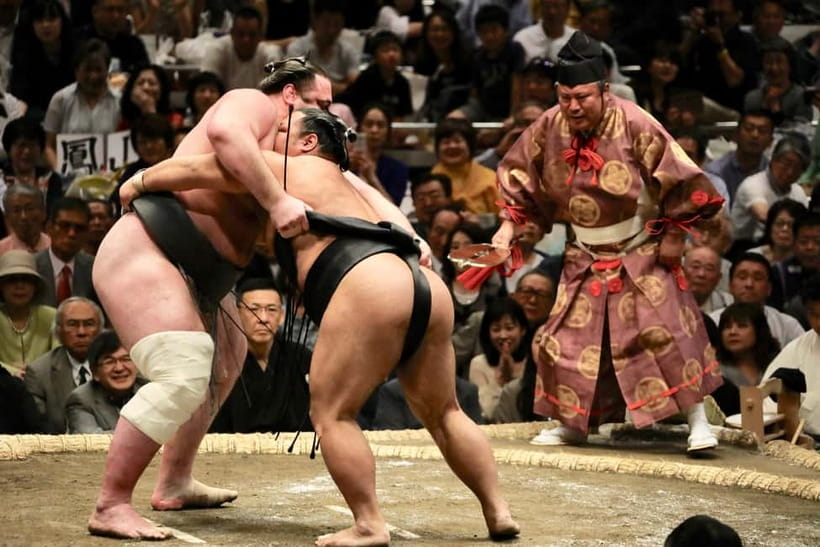
The tournament day includes many bouts, but this experience focuses on the top division for about three hours from 3 p.m. That timing is not an accidental shortcut. Earlier matches can be useful if you already follow sumo closely, but a first-time viewer may find a full day in the arena tiring.
Starting at 3 p.m. lets you save your attention for the wrestlers with the highest ranks and biggest followings. You get the ceremony, the buildup, the crowd reaction, and the final stretch without spending hours waiting for the main event. A shorter, well-chosen viewing period can be more enjoyable than trying to watch every match and leaving before the strongest bouts arrive.
The tradeoff is clear. If you want an all-day sumo experience or care about lower-division matches, this is not designed for you. If your goal is to understand and enjoy the headline action without getting worn out, the three-hour plan makes good sense.
Nagoya Castle sets the scene
The optional walking tour begins near Nagoya Castle, where the sumo arena is located. Meet your guide on the ground at Exit 7 of Meijo Line Nagoyajo Station, station M07. Look for the recognizable signboard. The activity ends back at the same meeting point.
The castle gives you useful context before you enter the arena. Nagoya grew from the castle built by the Tokugawa clan in the early 17th century. The Tokugawa family ruled Japan for almost three centuries, and the castle reflects the political needs of that period as much as its architectural style.
Your guide explains how the Tokugawa clan brought feudal lords, including former opponents, into a system that could be controlled. You also learn about the castle’s building methods and its role as a fortress. This makes the visit more than a walk around attractive walls. You begin to see how power, defense, status, and design worked together.
The finest stop is Honmaru Palace. Its interiors use valuable hinoki cypress wood, decorative metal fittings, and detailed art on walls, ceilings, and sliding doors. The palace gives you a close look at the careful craftsmanship that can be missed when you simply move from one famous Japanese site to another.
The castle portion is optional, so confirm the day’s arrangement when you book. It adds historical depth and makes the tour feel like a full Nagoya outing, but sumo remains the main event. If you have already visited Nagoya Castle or want to spend more time in the arena district, you may prefer to focus on the tournament.
How the sumo materials improve the afternoon
You receive three useful items, each serving a different purpose.
The first is the wrestler pamphlet. Photos and English profiles help you recognize the rikishi and keep track of who is about to compete. Your guide walks you through it as the matches unfold, so the information connects directly to what you see in the ring.
The second is a cheering towel for a particular wrestler. This is not just a souvenir. Your guide shows you when to use it, and the group cheers together when that wrestler is preparing to fight. Sumo has plenty of quiet tension, followed by sudden bursts of noise. Having one wrestler to support gives you a personal stake in the action.
The third is a sumo booklet covering the sport more broadly. It is useful if you want to review the rules, traditions, and terminology during a pause or after the tournament. Together, these materials help you stay involved instead of watching a series of fast bouts with no idea what just happened.
The towel also adds a bit of harmless fun. You do not need to know every wrestler’s record to join in. You simply follow the guide’s cue, cheer with the group, and enjoy the atmosphere.
Same city, a completely different kind of day:
- From Nagoya: Gujo, Hida Takayama, and Shirakawa-go Day Tour
★ 4.4 · 398 reviews - Ghibli Park 1-Day Bus Tour from Nagoya
★ 4.5 · 277 reviews - From Nagoya: Hida Takayama & Shirakawa-go Tour w/Opt. Lunch
★ 4.5 · 256 reviews - Hiking the Historic Nakasendo Trail [1 Day Tour from Nagoya]
★ 5.0 · 104 reviews
The earphone system solves a common tour problem
Many guided activities become frustrating when the guide is explaining something while half the group struggles to hear. This tour uses an earphone guide system, allowing you to receive real-time commentary throughout the outing.
That matters most inside the arena. You may be seated away from the guide, looking toward the ring, or surrounded by crowd noise. With the headset, you can keep your eyes on the action while listening to an explanation of the wrestler, technique, or ritual in front of you.
The system also lets the guide react to the tournament as it happens. You are not only hearing prepared facts. You can receive context about the next bout, follow a favorite wrestler, and understand why a particular moment has the audience’s attention.
The benefit depends on your interest level. If you already know sumo well and prefer to watch without commentary, the headset may feel unnecessary. For most first-time visitors, though, it keeps the afternoon clear and accessible.
Getting from Osaka or Kyoto to Nagoya
Nagoya is a practical choice if you are staying in the Kansai region. The tour information describes the journey as about 50 minutes by train from Osaka and 34 minutes from Kyoto. Since there is no hotel pickup or drop-off, you must make your own way to Nagoyajo Station.
That arrangement keeps the tour focused and avoids a long series of hotel collections. It also means you should plan your route carefully and allow time to find Meijo Line Nagoyajo Station and Exit 7. The meeting point is on the ground, and the guide will hold a signboard that should help you identify the group.
Wear comfortable shoes. The day combines station access, a castle walking tour if you choose it, and movement around a large event venue. You do not need special equipment, but comfortable footwear will make the transition between sites easier.
Nagoya is Japan’s fourth-most populous city and is closely associated with Toyota. The tour gives you a reason to visit beyond the city’s business reputation. You see the castle that shaped its early identity, then watch one of Japan’s most distinctive traditional sports.
Seats, duration, and the real value of $225
The price is $225 per person and includes a Chair S or Chair A seat, the guide, headset system, wrestler pamphlet, sumo booklet, cheering towel, and optional Nagoya Castle walking tour. Hotel transport is not included.
That is a substantial cost. You should not book it expecting a bargain ticket with a little commentary added. The price makes more sense if you value reserved seating, English explanations, help understanding the event, and the chance to participate rather than simply observe.
Buying a tournament ticket alone could cost less, but it would not provide the same built-in support. You would need to learn the rules yourself, identify the wrestlers, understand the rituals, and decide how to follow the schedule. You would also miss the group cheering and the guide’s live reactions.
The strongest value comes when this is your first sumo tournament, especially if you are visiting Japan for a limited time. You pay for confidence and context. You also avoid committing to a full day of matches that may be hard to follow.
The price is harder to justify if you already follow professional sumo, speak Japanese well enough to understand the arena, or mainly want the cheapest possible ticket. In that case, the included materials and commentary may not add enough.
What the afternoon feels like
The day begins with the meeting at Nagoyajo Station and, if selected, the castle walk. The guide explains the Tokugawa connection, defensive design, construction methods, and the details of Honmaru Palace.
You then turn your attention to the tournament. Once the top division begins at around 3 p.m., the guide uses the wrestler profiles and live headset commentary to help you follow each match. You are not left to decode the sport from the crowd’s reaction.
As the favored wrestler approaches, your guide tells you how to use the towel. The group cheers together, which gives the event a social spark. The mood shifts between quiet concentration and sudden excitement, exactly the kind of rhythm that makes live sumo different from watching a clip online.
Expect the guide to be an active part of the afternoon. The best guides named in the tour information, including Yuki, Keiko, Mari, and Sunny Yoko, are praised for warmth, energy, and clear explanations. One guide even waited for a late-arriving participant who had become lost, though you should still plan to arrive on time rather than count on that kind of rescue.
Who should book this experience
I would choose this tour if you are seeing sumo for the first time, want English explanations, and prefer a guided day rather than a ticket-only visit. It also suits families and mixed-interest groups because the castle provides a cultural stop for anyone less focused on sport.
It is a good fit for visitors staying in Osaka or Kyoto who want a straightforward day trip with a clear main event. The 3 p.m. start keeps the schedule manageable, and the return to the original meeting point simplifies the end of the activity.
I would think twice if you dislike guided commentary, want to attend from morning until evening, or already understand sumo’s rankings and rituals. You are paying a premium for help and participation, so the tour has the greatest value when that support is important to you.
Should you book the Nagoya sumo tour?
Book it if you want more than a seat in the arena. The live English commentary, profile pamphlet, cheering towel, and sumo booklet give you a way into a sport that can seem mysterious at first. The optional castle walk adds architecture and Tokugawa history, making the outing feel like a broader introduction to Nagoya.
Skip it if your priority is the lowest ticket price or a full day of independent viewing. At $225, the tour is not cheap, but it is a sensible splurge for a first sumo tournament, particularly when you are already traveling from Osaka or Kyoto and want the day to make sense from start to finish.
FAQ
Where does the Nagoya sumo tour begin?
It begins at Meijo Line Nagoyajo Station, station M07, Exit 7 on the ground. The guide will hold a recognizable signboard.
Where does the activity end?
The activity ends back at the meeting point at Meijo Line Nagoyajo Station.
How long do I watch the sumo tournament?
You watch the top-division bouts for about three hours from 3 p.m.
What kind of seats are included?
The tour includes either Chair S or Chair A seats at the sumo tournament.
Is the Nagoya Castle visit included?
The Nagoya Castle walking tour is optional. The tour information includes it as part of the available experience, but you should confirm the arrangement when booking.
Is hotel pickup included?
No. Hotel pickup and drop-off are not included, so you must reach the meeting point independently.
What language is the tour conducted in?
The tour is conducted in English. It includes an earphone guide system for hearing the guide’s real-time commentary clearly.
Just added around Nagoya
- Nagoya Private Custom Tour with Local Guide★ 5.0 · 15 reviews
- Nagoya: Traditional Japanese Sweets-Making Workshop★ 4.6 · 14 reviews
- Nagoya: Japanese Traditional Sweets making and Tea Ceremony★ 4.9 · 76 reviews
- Nagoya: Customized Private Tour★ 4.6 · 15 reviews
- Nagoya: Toyota Commemorative Museum Guided Tour★ 4.7 · 22 reviews
- From Nagoya: Inuyama Castle, Ena Gorge, Magome, Tsumago Tour★ 4.4 · 18 reviews
- Magome-juku, Tsumago-juku & Ena-kyo 1d Bus Tour from Nagoya★ 4.6 · 75 reviews
- Nagoya: 2026 Hida Takayama Shirakawa-go Light-up Winter Tour★ 4.3 · 13 reviews
Sumo Experiences, compared.
Sumo Show Experience with Chicken Hot Pot and a Photo
Read our review →
Tokyo Shinjuku Sumo Show & Experience with Photo
Read our review →
Sumo Show & Experience w/ Optional Kimono & Hot Pot
Read our review →
Authentic Sumo Experience in Tokyo: Enter the Sanctuary
Read our review →Browse the lists this tour appears in