REVIEW · PRIVATE
Mochi Making at a Private Studio in Tokyo
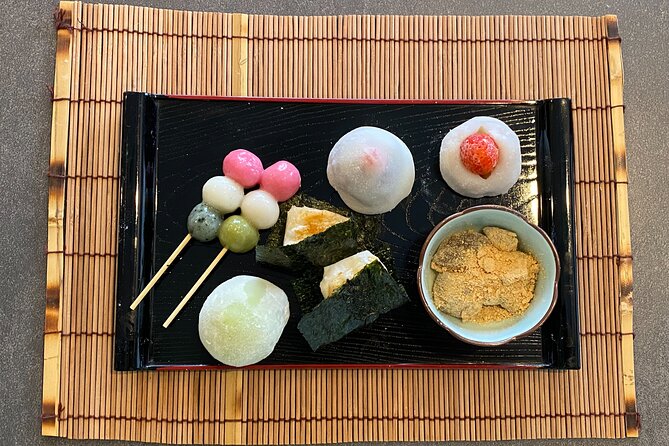
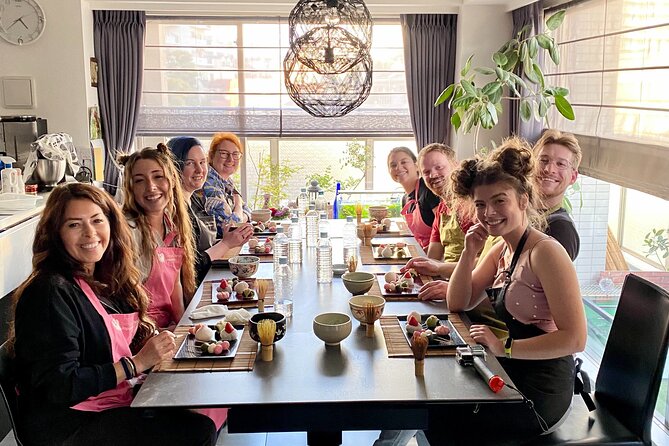
Mochi making here is far more than shaping a sweet rice cake. In about two hours, you work through strawberry daifuku, three-color dango, and warabi mochi, then try savory grilled mochi with soy sauce and nori. I like the mix of hands-on work and cultural background, and I like that an English-speaking wagashi instructor can answer questions about daily life in Tokyo. The small class size, usually capped at six for this format, also gives the lesson a personal feel.
The main consideration is the price, about $79.26 per person. That is not a bargain snack stop, but it covers a guided lesson, several types of mochi, tea or coffee, aprons, and an English recipe sheet. You also need to book at least two people unless arranging a private class, and children under four cannot attend.
In This Review
- Key points at a glance
- Why this Tokyo mochi class feels different
- Getting to the private studio near Meguro Station
- The opening talk: mochi beyond dessert
- Making strawberry daifuku with fresh filling
- Three-color dango on skewers
- Warabi mochi and the pleasure of a new texture
- Savory grilled mochi with soy sauce and nori
- The mochi ice cream demonstration
- Tasting everything with tea or coffee
- What the $79.26 price really covers
- Who should book this class
- Small details that make the class practical
- Should you book Mochi Making at a Private Studio in Tokyo?
- FAQ
- Where does the mochi-making class take place?
- How long does the experience last?
- What types of mochi will I make?
- Is the class taught in English?
- What drinks are included?
- Are ingredients and cooking equipment included?
- Can children attend?
- Can the class prepare dairy-free ice cream?
- What is the cancellation policy?
Key points at a glance
- Several mochi styles in one class: Make strawberry daifuku, three-color dango, and warabi mochi, then taste grilled mochi with soy sauce and seaweed.
- A private studio near Meguro: The meeting point is within a short walk of Meguro Station on the JR Yamanote Line or nearby metro service.
- English instruction with cultural context: The lesson begins with mochi traditions, festivals, color meanings, and its place in Japanese life.
- A good family activity: Children from age four can join, and the work is simple enough for first-time cooks.
- A useful take-home result: You receive recipes in English, and containers may be available if you cannot finish everything during the tasting.
- Morning or afternoon choice: The afternoon session can be a welcome indoor break on a hot Tokyo day.
Why this Tokyo mochi class feels different
Many food activities in Tokyo are built around eating. This one asks you to handle the food, shape it, and understand why it matters. Mochi appears at festivals, seasonal events, New Year celebrations, and ordinary snack tables, so the opening talk gives the class a useful cultural frame before the flour and fillings arrive.
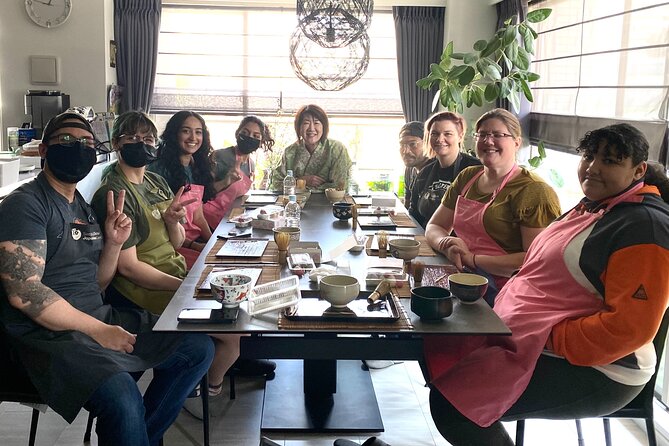
You meet the instructor at a private studio in Meguro, not at a large cooking school with rows of anonymous stations. The setting is a private kitchen, which helps the class feel more like a visit with a local teacher than a formal tour. The exact instructor can vary. Names associated with sessions include Chef Michiko, Waka, Miho, Ayumi, and Owa. The important point is that the teacher is an English-speaking, certified wagashi instructor who can explain both technique and custom.
I especially like the balance between instruction and doing. You are not left to watch a long demonstration while someone else handles the hard parts. You make several items yourself, with the instructor and assistants helping as you go. You also see a demonstration of mochi ice cream instead of necessarily preparing every stage from scratch.
A few more Tokyo trips to weigh up
- Tokyo 6hr Private Tour with Government-Licensed Guide
★ 5.0 · 3,902 reviews - Private Tour to Mt. Fuji and Hakone (Fully Licenced Operator)
★ 5.0 · 1,910 reviews - Tokyo Customized Private Tour (Must See Places in 1 Day)
★ 5.0 · 1,499 reviews
Getting to the private studio near Meguro Station
The studio is at President Meguro Heights, 1-chome 3-16, Meguro, Meguro City, Tokyo 153-0063. The location is within a short walk of Meguro Station, served by the JR Yamanote Line and metro service. That makes this a sensible activity to pair with sightseeing in central Tokyo.
Pay attention to the meeting instructions before you set out. This is a private studio rather than a major landmark with a broad street entrance, so the directions matter. The class begins and ends at the same meeting point. There is no hotel pickup, and transportation to or from other attractions is not included.
The nearby station is one of the practical advantages. You do not need to spend half a day reaching an outlying neighborhood for a local cooking class. Still, allow enough time to find the building, especially if you are carrying shopping bags, traveling with children, or arriving in Tokyo with a weak sense of direction.
The opening talk: mochi beyond dessert
The class starts with a short presentation about the traditions and festivals connected with mochi. This is not filler. Without some context, mochi can look like one broad category of chewy sweets. With context, the different shapes, colors, fillings, and serving styles begin to make sense.
You learn how mochi fits into Japanese culture and when different kinds may appear. The lesson also covers the meaning connected with ingredients and colors. This helps explain why three-color dango is more than a pretty skewer and why savory mochi deserves a place beside the sweet versions.
The cultural portion is especially useful if you are new to Japanese food. You can ask questions in English, and the instructor can also offer suggestions about shopping, sightseeing, and local life in Tokyo. This extra conversation is one reason the class feels more personal than a simple recipe lesson.
Making strawberry daifuku with fresh filling
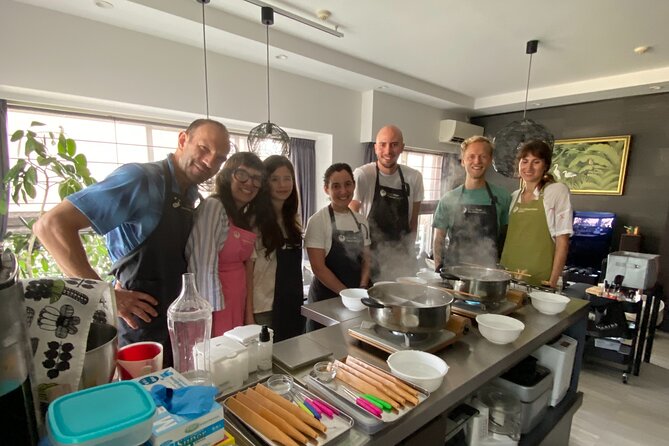
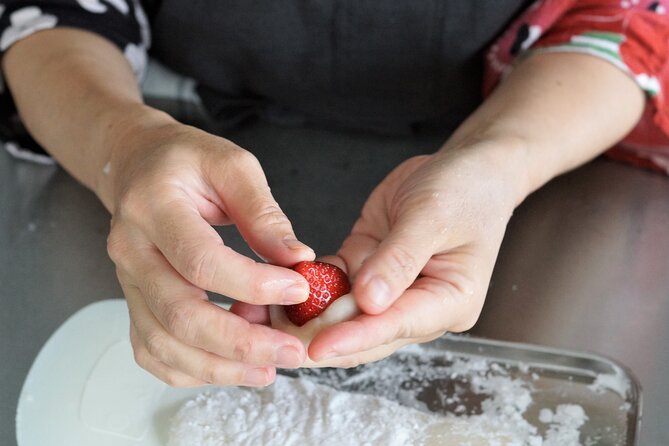
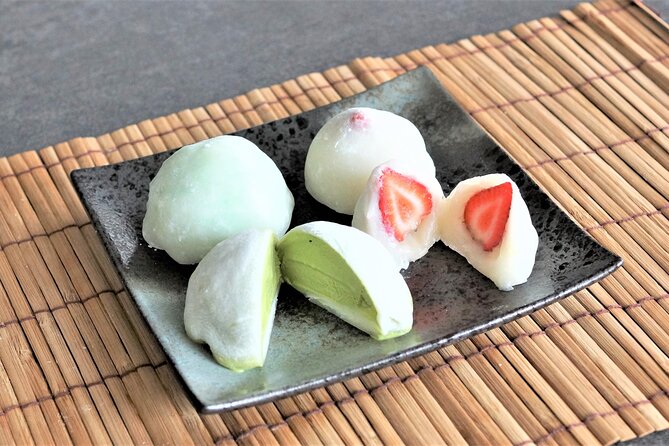
The first major hands-on project is strawberry daifuku. This is the familiar mochi parcel with a sweet filling and a strawberry inside or at its center. The contrast is what makes it appealing: soft, sticky mochi around sweet bean paste and a bright, fresh berry.
This is also the point where you learn that mochi is not as effortless as it looks in a pastry case. The dough needs careful handling, and the filling must be enclosed without tearing the outer layer. You might make shapes that look more homemade than shop-perfect. That is part of the fun, and the instructor guides you through the process rather than expecting polished results from the start.
Several sessions use local fresh strawberries, which add a seasonal touch. If you enjoy taking food photos, daifuku gives you one of the most attractive results of the class. The small group helps here because the teacher can watch each person’s shaping technique and offer a correction before the dough becomes a sticky puzzle.
Same city, a completely different kind of day:
- Mt Fuji and Hakone 1-Day Bus Tour Return by Bullet Train
★ 5.0 · 26,383 reviews - 1-Day Tokyo Bus Tour
★ 5.0 · 14,250 reviews - Tokyo: TOKYO SKYTREE® Admission ticket
★ 4.5 · 11,192 reviews - Tokyo: teamLab Planets TOKYO Digital Art Museum Entry Ticket
★ 4.6 · 9,779 reviews
Three-color dango on skewers
Next comes three-color dango, the round mochi pieces served on a skewer. The color pattern gives you another chance to learn about the cultural side of Japanese sweets, while the skewer makes the finished food easy to handle and share.
The work is less about complicated cooking and more about consistency. You shape the pieces, arrange them, and see how a simple form becomes a recognizable wagashi treat. This is a good task for families because children can take part in the shaping and assembly, with an adult nearby for the hot or more delicate steps.
The class keeps moving through different textures and styles. That variety matters. If you only made one batch of filled mochi, the lesson might feel like a short craft activity. Dango, daifuku, and warabi mochi give you a broader view of how Japanese sweets use similar ingredients in different ways.
Warabi mochi and the pleasure of a new texture
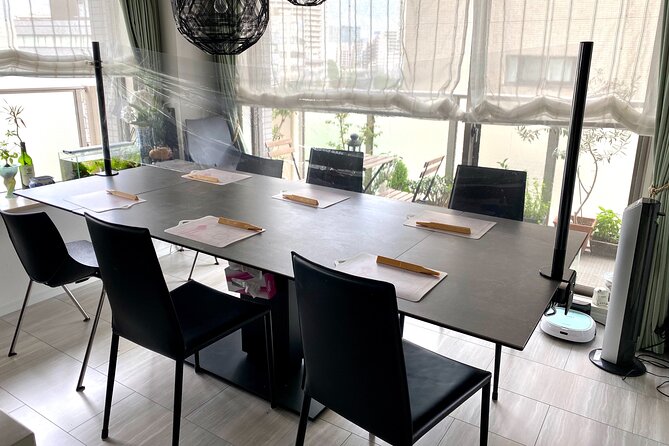
Warabi mochi adds another texture to the lesson. It is softer and more delicate than the filled daifuku, so you get a useful comparison within the same class. The experience is not just about learning one recipe. It is about noticing how mochi can be chewy, tender, filled, skewered, sweet, or savory.
You may not love every style equally. One of the useful features of the class is that it lets you find your own preferences. Some people prefer the fresh strawberry and bean paste combination. Others favor dango or the savory version. If one type is not your favorite, there are still several other preparations to enjoy.
That variety also makes the class a good choice for people who already know basic Japanese sweets. You are not limited to a single standard daifuku recipe. The lesson gives you a compact tasting tour of mochi forms.
Savory grilled mochi with soy sauce and nori
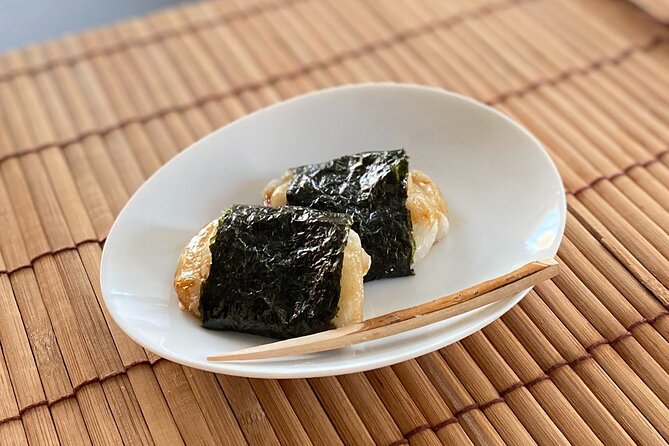
The grilled mochi is an important part of the experience because it breaks the idea that mochi is always a dessert. The instructor serves it with soy sauce and nori seaweed. The result is savory, salty, and quite different from strawberry daifuku or dango.
This may be the surprise of the afternoon. If you have only tried sweet mochi before, the grilled version shows how the same basic food can work in a meal or snack. It also gives the class a better balance. You are not spending two hours surrounded by sugar.
The savory course is prepared for you rather than presented as another full cooking project in the stated itinerary. That is a sensible choice because it lets the instructor focus on serving it at the right stage while you continue with the sweets. It also gives you a break from shaping and a chance to compare the finished textures.
The mochi ice cream demonstration
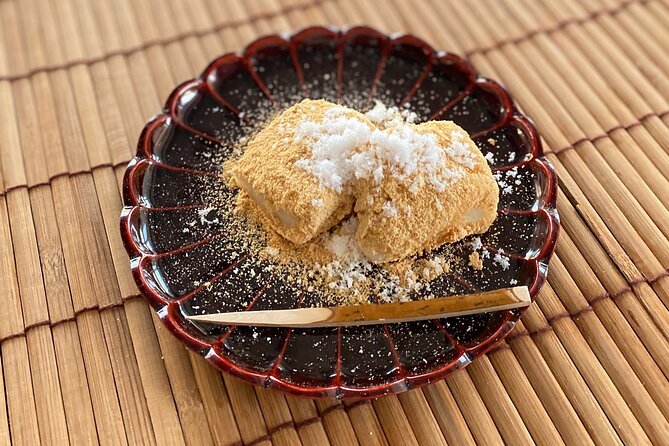
The instructor demonstrates how mochi ice cream is made. This portion is useful because the combination of cold ice cream and sticky outer dough can be trickier than it appears. A demonstration lets you see the method clearly without forcing the class to rush through every step.
Dairy-free ice cream can be prepared upon request. Make that request ahead of time rather than assuming it will be available automatically. This is one of the few dietary details provided for the class, so anyone with other food restrictions should ask before booking.
The demonstration also rounds out the lesson with a modern favorite. Strawberry daifuku, dango, warabi mochi, and grilled mochi connect to traditional styles, while mochi ice cream shows how the form continues to appear in newer sweets.
Tasting everything with tea or coffee
The class ends with a tasting session. You sit down with your creations and sample them with green tea, hojicha, or coffee. This closing table time is where the activity shifts from a cooking lesson to a relaxed social experience.
You may have made more food than you expected. Containers can be provided for anything you cannot finish, and several sessions have allowed people to take some mochi back to their hotel. Mochi is best treated with care and eaten according to the instructor’s guidance, rather than tossed casually into a crowded day bag.
The tea pairing also helps you slow down. After Tokyo’s train stations, crossings, and shopping streets, a quiet cup of hojicha or green tea makes the ending feel calm. Coffee is available if that is more your style.
What the $79.26 price really covers
At $79.26 per person, this is best judged as a two-hour cultural cooking activity, not as a way to buy the cheapest possible snack. The fee includes the mochi-making lesson, food tasting, aprons, an English recipe sheet, and green tea, hojicha, or coffee.
You are also paying for an English-speaking certified instructor, a private studio setting, ingredients for several preparations, and guidance in a group that is generally limited to six for the small-class format. That level of attention can matter if you are nervous about cooking or want to ask questions about Japanese food and local life.
The value is strongest for people who want an activity rather than a quick tasting. Families can share the cost of a structured indoor outing. Couples and friends get a souvenir skill along with the food. If you only want to eat mochi, a shop will be cheaper and faster.
The class has a minimum booking requirement of two people, except for private classes. For a private class of up to six people, book one adult for the private group rather than six separate places. The overall activity capacity is listed as up to 12 people, so confirm the format attached to your booking if group size matters to you.
Who should book this class
I would recommend it most strongly to:
- Families with children age four and older
- First-time visitors who want a local food activity
- People who enjoy hands-on lessons but are not strong cooks
- Anyone curious about the difference between sweet and savory mochi
- Couples or friends looking for a relaxed indoor break
- Visitors who want English recipes to try at home
The class is accessible for beginners. You do not need to arrive as a cook. The process is broken into manageable steps, and the instructor helps when the dough gets sticky or a shape refuses to cooperate.
It also works well for families. Children from age four may attend, while younger children are not allowed because of safety concerns. Older children and teenagers can take part in the shaping and tasting, and the activity gives them something active to do instead of simply watching an adult cook.
The morning and afternoon departure choices add flexibility. An afternoon booking can be a smart plan during a hot Tokyo day, since the class offers two hours indoors. You might also schedule it after a morning of sightseeing when everyone needs a slower pace.
Small details that make the class practical
Aprons are supplied, so you do not need to bring cooking clothing. The class is non-smoking, and the studio is near public transportation.
Bring a way to follow the recipe sheet and a container or bag for anything you plan to carry onward, though containers may be supplied. You should also avoid packing the rest of the day too tightly. The class lasts about two hours, and the tasting at the end is part of the experience, not a rushed handoff.
Free cancellation is available if you cancel at least 24 hours before the start time. Changes or cancellations inside that window are not accepted for a refund, and cut-off times follow Tokyo local time.
Should you book Mochi Making at a Private Studio in Tokyo?
Book it if you want to understand mochi by making several forms yourself, not just buying one from a shop. The strongest reasons are the small setting, clear English instruction, mix of sweet and savory preparations, and the chance to ask a local wagashi teacher about Japanese food and Tokyo life.
Skip it if your budget is tight or if you are looking only for a quick dessert tasting. At $79.26, the class asks you to value instruction, culture, and time in a private kitchen. For families, food lovers, and curious first-time visitors, that is a fair trade. The strawberry daifuku, grilled mochi, recipe sheet, and relaxed tea tasting make this a particularly good rainy-day or hot-afternoon choice in Tokyo.
FAQ
Where does the mochi-making class take place?
The class takes place at a private studio at President Meguro Heights, 1-chome 3-16, Meguro, Meguro City, Tokyo 153-0063. It is within a short walk of Meguro Station on the JR Yamanote Line or nearby metro service.
How long does the experience last?
The activity lasts approximately two hours.
What types of mochi will I make?
The class includes strawberry daifuku mochi, three-color dango on skewers, and warabi mochi. You also receive grilled mochi with soy sauce and nori seaweed, and the instructor demonstrates mochi ice cream.
Is the class taught in English?
Yes. The instructor is fluent in English and can explain the recipes, mochi traditions, local life, and suggestions for shopping or sightseeing in Tokyo.
What drinks are included?
The tasting session includes a choice of green tea, hojicha, or coffee.
Are ingredients and cooking equipment included?
The mochi-making lesson and food tasting are included, along with aprons and an English recipe sheet. Hotel transfers, transportation to or from other attractions, and food or drinks outside the specified inclusions are not included.
Can children attend?
Children age four and older can attend. Children under four are not allowed in the class for safety reasons.
Can the class prepare dairy-free ice cream?
Yes. Dairy-free ice cream can be prepared upon request.
What is the cancellation policy?
You can cancel at least 24 hours before the experience start time for a full refund. Cancellations or changes made less than 24 hours before the start time are not accepted for a refund.
Just added around Tokyo
- Private Memorable Tokyo Tour with English Speaking Driver★ 5.0 · 30 reviews
- Tokyo Photography Masterclass – Private Photography Lesson★ 5.0 · 25 reviews
- Private Tokyo Custom Full-Day Tour by Chartered Vehicle★ 5.0 · 16 reviews
- Private Sightseeing to Mt Fuji and Hakone with English Driver★ 5.0 · 51 reviews
- Private Mt. Fuji Day Trip from Tokyo with English-Speaking Driver★ 5.0 · 33 reviews
- 4 Day Tour – Mount. Fuji, Tokyo, Hakone, Kamakura and Yokohama★ 5.0 · 19 reviews
- Private Unforgettable Mt Fuji Tour with English Speaking Driver★ 5.0 · 142 reviews
- Private Tokyo Food Tour – A Journey Through Time Through Food★ 5.0 · 36 reviews
Private, compared.
Private Tour to Mt. Fuji and Hakone (Fully Licenced Operator)
Read our review →
Tokyo Customized Private Tour (Must See Places in 1 Day)
Read our review →
Mount Fuji Full-Day Private Tour from Tokyo (Customizable)
Read our review →
Tokyo 4hr Private Tour with Government-Licensed Guide
Read our review →
Kyoto 6hr Private Tour with Government-Licensed Guide
Read our review →
Tokyo Customized Private Tour: See Top Attractions in 1 Day
Read our review →
Hotspots & Hidden Gems Walking Tour Private or Group
Read our review →