
REVIEW · HIROSHIMA TOURS
Hiroshima Peace Park & Atomic Bomb Dome Guided Walk
Hiroshima Peace Memorial Park is not a sightseeing stop you simply check off. It is a place where each monument asks you to pause, read, and think about the human cost of August 6, 1945. This two-hour walk links the major memorials in a clear order, from the Gates of Peace to the Atomic Bomb Dome and Hypocenter Monument.
I like the way the tour gives the park a human focus through the Monument of Dr. Marcel Junod, honoring a Swiss doctor who helped survivors, and the Children’s Peace Monument, which remembers young lives lost. I also like that Adina explains the history rather than leaving you to read every plaque alone. The main drawback is the pace: about ten minutes at each listed stop leaves limited time for quiet reflection or a long museum visit.
In This Review
- Key points at a glance
- Starting at the Gates of Peace
- Dr. Marcel Junod and the Fountain of Prayer
- What the Peace Memorial Museum adds
- The cenotaph, Flame of Peace, and national memorial
- Remembering children and Korean victims
- Ringing the Peace Bell and visiting the Peace Tower
- The Atomic Bomb Dome and Hypocenter Monument
- How Adina’s guiding style affects the visit
- Is $21 a good value for two hours?
- Timing, walking, and accessibility
- Who should choose this Hiroshima walk?
- Should you book the Hiroshima Peace Park guided walk?
- FAQ
- How long does the Hiroshima Peace Park guided walk last?
- What is the price of the tour?
- Where does the tour meet?
- Who leads the tour?
- Which languages are available?
- Is entry to the Peace Memorial Museum included?
- Does the tour visit the Atomic Bomb Dome?
- Can I ring the Peace Bell?
- Is hotel pickup included?
- Can I cancel for a full refund?
- Can I bring food and drinks into the museum?
- Is the tour suitable for wheelchair users?
Key points at a glance
- A two-hour route through the main memorials: You visit the Gates of Peace, Fountain of Prayer, Peace Memorial Museum, cenotaphs, Peace Bell, Atomic Bomb Dome, and Hypocenter Monument.
- Adina leads the walk: The guide offers explanations in English, Urdu, and Hindi, with particular attention to the history and science behind the bombing.
- The museum is included: You do not need to arrange a separate admission for Hiroshima Peace Memorial Museum.
- A useful human story: Dr. Marcel Junod’s memorial shows how medical aid reached survivors after the bombing.
- The route ends with the most sobering evidence: The Atomic Bomb Dome and Hypocenter Monument give the tour a powerful final section.
- Plan for outdoor walking: Comfortable shoes, water, and sunscreen matter, especially on a warm day.
Starting at the Gates of Peace
Meet Adina by the Gates of Peace, in front of an Italian restaurant, at coordinates 34.3906308, 132.4516662. This precise location is useful because large public parks can have several entrances, and a map pin removes much of the guesswork.
The Gates of Peace symbolize unity among nations. They are a fitting opening because the tour is not only about what happened in Hiroshima. It also asks what the city wants the world to remember and what kind of future it hopes to build.
The opening guided section lasts about ten minutes. That gives Adina time to establish the basic story before you move farther into the park. If you arrive early, use the time to locate the restaurant and check that you have water, sunscreen, and shoes suitable for walking.
A few more Hiroshima trips to weigh up
- Hiroshima / Miyajima Full-day Private Tour with Government Licensed Guide
★ 5.0 · 1,298 reviews - Hiroshima City 4hr Private Walking Tour with Licensed Guide
★ 5.0 · 437 reviews - Hiroshima 2hr Peace Cycling Tour with Local Guide
★ 5.0 · 321 reviews
Dr. Marcel Junod and the Fountain of Prayer
The route includes the Monument of Dr. Marcel Junod, a Swiss doctor who aided survivors. This stop adds a personal and international angle to the visit. Instead of treating the bombing as a distant military event, the monument directs your attention to the medical workers and civilians dealing with its immediate effects.
The Fountain of Prayer offers a quieter pause. It is a place to reflect on the people who died and on the suffering endured by those who survived. The scheduled guided time is about ten minutes, which is enough for an explanation and a short pause, though you may wish to return later if you want more silence.
This is one reason a guide can help in the park. You receive background before moving on, but you also get a clear signal that these are memorial spaces, not ordinary photo stops. A camera is allowed as something to bring, yet the respectful approach is to photograph only when it feels appropriate.
What the Peace Memorial Museum adds
The Hiroshima Peace Memorial Museum provides the central historical account of August 6, 1945. Entry is included, and the planned guided portion is listed as ten minutes. That is a short period for a museum of this importance, so you should understand what the tour can and cannot do.
You will receive an introduction to the events and exhibits, but you may not have time to study every display at length. If the museum is your main reason for coming to Hiroshima, plan to return independently or allow extra time beyond the two-hour walk. If your goal is to understand how the museum fits into the wider memorial park, the guided visit gives you a useful framework.
Food and drinks are not allowed inside the museum. Keep them in your bag while you visit, and finish anything you have before entering. The museum section can be emotionally difficult, so do not schedule it as a rushed stop between unrelated attractions.
The cenotaph, Flame of Peace, and national memorial
The Hiroshima Victims Memorial Cenotaph is another major pause in the park. The cenotaph honors the victims of the atomic bombing, and the tour places it near the Flame of Peace and Hiroshima National Peace Memorial.
The Flame of Peace represents a commitment to a world without nuclear weapons. Its meaning becomes stronger after the museum because you have already encountered the story behind the memorial. The tour connects the physical flame with Hiroshima’s wider call for peace, rather than presenting it as just another monument.
The Hiroshima National Peace Memorial continues that act of remembrance. Each of these locations receives about ten minutes of guided attention. That structure keeps the walk moving, but it also means you should not expect a long private meditation at every site.
I find this part of the route useful for understanding the park as a connected place. The museum explains the event, while the cenotaphs and flame show how Hiroshima remembers it. You are not simply looking at separate monuments. You are following a message that develops from grief toward a plea for global harmony.
Same city, a completely different kind of day:
- Peaceful Hiroshima & Miyajima UNESCO 1 Day Bus Tour
★ 5.0 · 5,309 reviews - Hiroshima: Hiroshima and Miyajima UNESCO Sites 1-Day Tour
★ 4.9 · 2,330 reviews - Hiroshima Historical Walking Tour – Why A-Bomb was Dropped
★ 4.8 · 893 reviews - Hiroshima Peace (Heiwa) Walking Tour at World Heritage Sites
★ 5.0 · 872 reviews
Remembering children and Korean victims
The Children’s Peace Monument honors young people who died because of the atomic bombing. It is one of the most recognizable memorials in the park, and its presence changes the tone of the walk. The subject is no longer only national or military history. It becomes a reminder of how completely ordinary family life was torn apart.
The tour also visits the Korean Atomic Bomb Victims Cenotaph. This stop is important because it recognizes Koreans who perished in Hiroshima. The memorial broadens the story beyond the city’s Japanese population and helps you understand that the bombing affected people from more than one country.
These two memorials reward careful listening. Adina has been praised for pointing out details you might otherwise miss, and this is the sort of setting where small facts can change your understanding. The walk is conducted in English, Urdu, or Hindi, so confirm your preferred language when booking.
Ringing the Peace Bell and visiting the Peace Tower
The Peace Bell gives you an active part in the visit. You can ring it as a gesture for global harmony. It is a simple action, but it gives the tour a moment of participation after several stops devoted to listening and remembrance.
The Peace Tower follows as another memorial point. The supplied route includes a guided section here, though no separate description of the tower’s design or interior is provided. I would treat it as a brief stop for context rather than expect a long visit.
The sequence works well. After the museum and memorials, ringing the bell gives you a physical way to express the park’s peace message. It also keeps the walk from becoming a continuous series of plaques and explanations.
The Atomic Bomb Dome and Hypocenter Monument
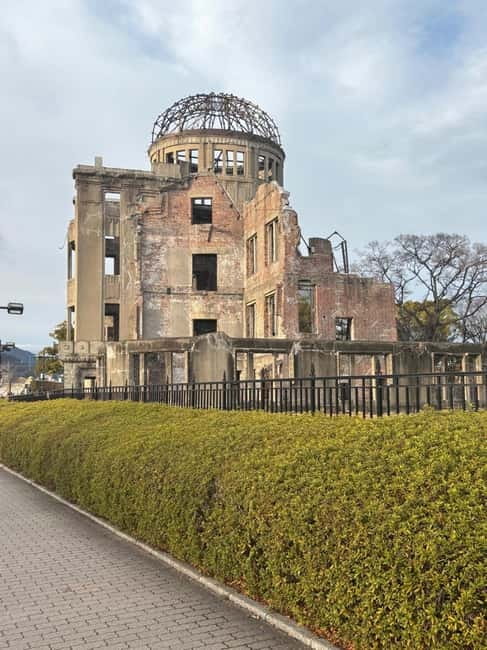
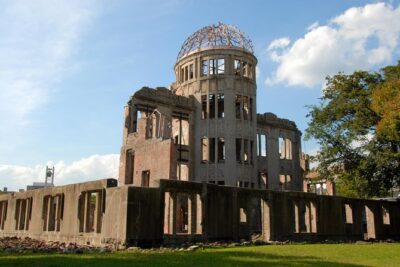
The Atomic Bomb Dome is the visual center of many Hiroshima visits. Its damaged structure remains a solemn reminder of the devastation caused by the bombing. Seeing it after the earlier memorials and museum displays gives the building greater weight. You have already heard about the victims, the survivors, and the city’s call for peace.
The route then includes the Hypocenter Monument, where you pause to reflect on the point directly connected with the bombing. This final section is especially sobering because it brings the history to a precise place rather than leaving it as a general account of destruction.
The itinerary lists about ten minutes at the Atomic Bomb Dome and another guided section at the Hypocenter Monument. The Dome and Hypocenter are not interchangeable. One shows the visible remains of the city, while the other marks the location at the center of the event. Seeing both helps you connect physical evidence with historical fact.
The tour description lists two blank itinerary entries after the Peace Bell and after the Atomic Bomb Dome. The included experiences identify the Peace Tower and Hypocenter Monument, so those are the stops to expect in practice.
How Adina’s guiding style affects the visit
Adina is the named guide for this experience. The strongest praise focuses on patience, clear explanations, enthusiasm, and the ability to point out details you might miss on your own. One particularly useful element is Adina’s background as a PhD student and the explanation of nuclear reactions and the atomic bomb’s history.
That scientific angle may appeal to you if you want more than a basic timeline. It can help explain the scale and effects of the bombing in terms that go beyond dates and memorial inscriptions. At the same time, the walk remains focused on people and remembrance rather than turning into a technical lecture.
The guide’s patience matters because Hiroshima is not a place where you should feel pushed from one photo opportunity to the next. Still, the two-hour limit creates a firm structure. If you ask many questions at every stop, you may need to choose which subjects matter most to you.
The overall rating is 4.9 from 24 reviews, with repeated praise for the guide’s information, kindness, and meaningful presentation. I would give the most weight to the consistent comments about explanation and patience, since those qualities matter more here than entertainment.
Is $21 a good value for two hours?
At $21 per person, this is a modestly priced guided introduction to Hiroshima Peace Memorial Park. The value comes from combining a live guide with entry to the Peace Memorial Museum and visits to the park’s main memorials.
You are not paying for transportation, hotel pickup, meals, or a full-day tour. That is reasonable because the route takes place within the memorial area and lasts two hours. You will need to reach the Gates of Peace yourself and manage your own food and transport before or after the walk.
For a first visit, the price makes sense if you want structure and historical explanation. A self-guided visit costs less in guiding fees, but you would need to research the monuments and decide how to connect them. Adina’s explanations can save time and help you notice details that are easy to pass without context.
The value is weaker if you want a long museum visit or hours of personal reflection. Ten minutes at each listed stop is enough for an overview, not an exhaustive study. Think of this as a guided orientation to the park, with meaningful content, rather than a complete day devoted to Hiroshima’s wartime history.
Timing, walking, and accessibility
The tour lasts two hours, and the route includes many outdoor memorials. Comfortable walking shoes are essential. Water and sunscreen are recommended, and a camera may be useful, though the setting calls for restraint and respect.
The activity information gives conflicting accessibility details. It says the experience is wheelchair accessible, but it also lists people with mobility impairments and wheelchair users as unsuitable. Do not rely on the general accessibility label. Contact the provider before booking and ask whether the full route, each monument, and the museum entrance will work for your needs.
There is no hotel pickup or drop-off. Meet at the Gates of Peace in front of the Italian restaurant. The exact coordinates are provided, so you can use them to plan your arrival.
Free cancellation is available up to 24 hours before the start for a full refund. You can also reserve now and pay later, which helps if your Hiroshima schedule is still changing. Check the available start times before booking, since the exact departure time is not fixed in the supplied details.
Who should choose this Hiroshima walk?
I would choose this tour if you are visiting Hiroshima for the first time and want the memorial park explained in a logical order. It also suits you if you prefer a short guided visit before spending more time alone at the museum or Atomic Bomb Dome.
The walk is a good match for anyone interested in both human stories and science. Adina’s explanations can add depth to the nuclear history, while the visits to Dr. Junod’s monument, the Children’s Peace Monument, and the Korean Victims Cenotaph keep the focus on people.
It may not suit you if you want a slow, private memorial visit with no schedule. It is also a poor fit if walking for two hours is difficult, unless the accessibility conflict is resolved directly with the provider.
Should you book the Hiroshima Peace Park guided walk?
Book it if you want an affordable, focused introduction led by Adina, with museum entry and the park’s most important memorials included. The guide’s patient explanations and attention to overlooked details are the strongest reasons to choose it.
I would leave extra time after the tour for the museum, further reflection, or a second look at the Atomic Bomb Dome. That simple addition turns a brisk two-hour introduction into a more thoughtful Hiroshima visit. Before booking, confirm accessibility and choose the language that works best for you.
FAQ
How long does the Hiroshima Peace Park guided walk last?
The guided walk lasts two hours.
What is the price of the tour?
The listed price is $21 per person.
Where does the tour meet?
Meet by the Gates of Peace, in front of an Italian restaurant. The coordinates are 34.3906308, 132.4516662.
Who leads the tour?
The experience provider and named guide is Adina.
Which languages are available?
The live tour guide can provide the experience in English, Urdu, or Hindi.
Is entry to the Peace Memorial Museum included?
Yes, Peace Memorial Museum entry is included.
Does the tour visit the Atomic Bomb Dome?
Yes, the route includes a guided visit to the Atomic Bomb Dome.
Can I ring the Peace Bell?
Yes, ringing the Peace Bell is included as part of the experience.
Is hotel pickup included?
No. You must make your own way to the Gates of Peace, and hotel pickup and drop-off are not included.
Can I cancel for a full refund?
Yes. You can cancel up to 24 hours in advance for a full refund.
Can I bring food and drinks into the museum?
No. Food and drinks are not allowed inside the museum.
Is the tour suitable for wheelchair users?
The information is inconsistent. It describes the activity as wheelchair accessible but also says it is not suitable for wheelchair users or people with mobility impairments. Contact the provider before booking to confirm the route.
Just added around Hiroshima
- The Journey of Hiroshima from Tragedy to Peace★ 4.8 · 44 reviews
- Miyajima: Private Rickshaw Tour to Itsukushima Shrine★ 4.9 · 45 reviews
- Hiroshima: Miyajima Half-day Historical Walking Tour★ 4.7 · 100 reviews
- Hiroshima:Guided Virtual Tour/PEACE PARK TOUR VR★ 5.0 · 29 reviews
- Hiroshima/Miyajima Private Custom Tour with Local Guide★ 5.0 · 134 reviews
- Hiroshima: Saijo Sake Tasting at 7 Breweries Guided Tour★ 4.8 · 29 reviews
- Hiroshima: Tour of Atomic Bomb Dome & Peace Memorial Museum★ 5.0 · 20 reviews
- Hiroshima to Miyajima: Private Custom Tour with Ferry Ride★ 4.9 · 77 reviews
Hiroshima Tours, compared.
Peaceful Hiroshima & Miyajima UNESCO 1 Day Bus Tour
Read our review →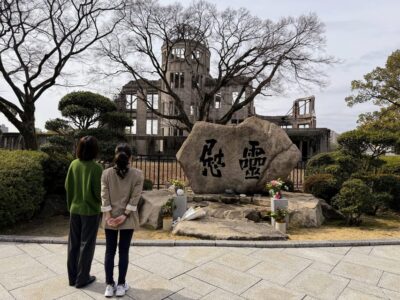
Hiroshima and Miyajima UNESCO Sites 1-Day Tour
Read our review →
Hiroshima / Miyajima Full-day Private Tour with Government Licensed Guide
Read our review →
Hiroshima Historical Walking Tour – Why A-Bomb was Dropped
Read our review →
Hiroshima Peace (Heiwa) Walking Tour at World Heritage Sites
Read our review →
Hiroshima in a Nutshell: Morning Bike Adventure
Read our review →
Hiroshima City 4hr Private Walking Tour with Licensed Guide
Read our review →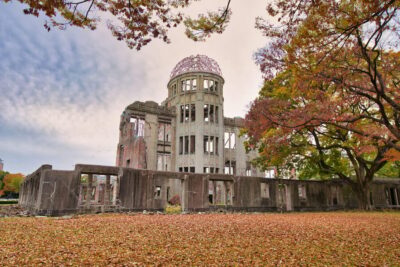
Browse the lists this tour appears in