
REVIEW · HIROSHIMA TOURS
Hiroshima Peace Memorial Park: A Guided Tour
Hiroshima Peace Memorial Park is not a sightseeing stop you simply check off. It asks you to slow down, listen, and consider what happened here on August 6, 1945. This two-hour guided walk brings the main memorials into one thoughtful route, beginning at the Atomic Bomb Dome and ending at the Gates of Peace.
I like the way the tour connects well-known sights with smaller memorials, including the Korean Atomic Bomb Victims Memorial and the Memorial Tower area. I also like the small-group format, limited to 10 people, and the guide’s measured pace. Sheraz Alvi is described as attentive, clear, and interested in the people in his group, not just the script.
The main consideration is time. Two hours goes quickly across this many stops, and the museum portion is listed as a short 10-minute guided visit. If you want to read every display in detail, plan to return on your own.
In This Review
- Key points at a glance
- Beginning beneath the Atomic Bomb Dome
- Clock Tower of Peace and the Bell of Peace
- Remembering Korean victims of the bombing
- The Children’s Peace Monument and the stories of young victims
- Hiroshima National Peace Memorial Hall and the central remembrance sites
- The Peace Memorial Museum in a short visit
- Prayer Fountain, Peace Flame, and the final walk
- What makes the small group useful
- Price, pace, and practical value
- Who should book this Hiroshima walk
- Should you book it?
- FAQ
- Where does the tour start?
- Where does the tour finish?
- How long does the tour last?
- What language is the tour conducted in?
- How many people can join the group?
- Is the tour wheelchair accessible?
- Can children join the tour?
- What should I bring?
Key points at a glance
- A focused route through Hiroshima’s central memorial park: You visit the major monuments in a logical walking sequence without having to work out the park’s layout yourself.
- Sheraz Alvi leads the English tour: His approach combines historical explanation with questions about your own trip and background.
- Small groups make the subject easier to discuss: With no more than 10 participants, you have a better chance to hear the guide and ask questions.
- The Atomic Bomb Dome sets the tone: The preserved structure gives the tour a powerful starting point before you move through the park’s other memorials.
- The route includes less familiar memorials: The Korean Atomic Bomb Victims Memorial, Prayer Fountain, and Gates of Peace add important layers to the visit.
- The $19 price is strong for a guided introduction: You receive two hours of context and direction, though the museum visit itself is brief.
Beginning beneath the Atomic Bomb Dome
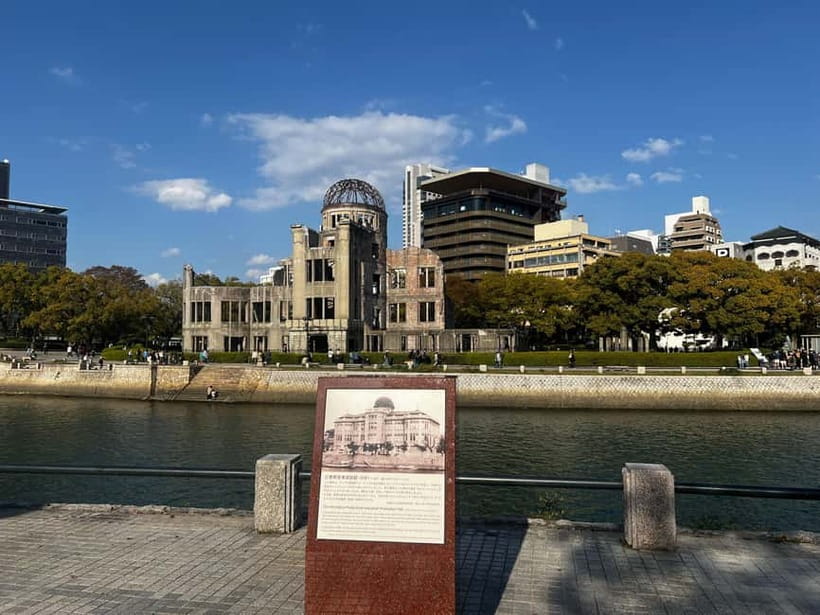
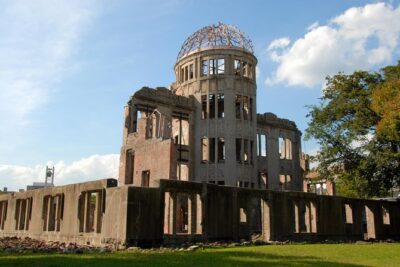
The meeting point is the Atomic Bomb Dome, at coordinates 34.395483, 132.453592. This is a useful place to start because the building gives you an immediate visual reference for the scale of the bombing and the force that struck Hiroshima.
The tour allows about 20 minutes here. That is enough time for Sheraz to explain the building’s significance, give you an opening account of the events of August 6, 1945, and let you look carefully at the surviving structure. You will also have a chance to take photographs, which is permitted throughout the tour.
The Dome is not presented as a simple photo stop. It is a reminder that a working building once occupied this spot, and that the remains survived when much of the surrounding city did not. Starting here gives the rest of the walk a clear purpose.
You meet the guide directly at the Dome, so allow a little extra time to locate the exact point. Sheraz has been praised for sending clear directions and paying attention to the meeting process, which matters at a busy public site.
A few more Hiroshima trips to weigh up
- Hiroshima / Miyajima Full-day Private Tour with Government Licensed Guide
★ 5.0 · 1,298 reviews - Hiroshima City 4hr Private Walking Tour with Licensed Guide
★ 5.0 · 437 reviews - Hiroshima 2hr Peace Cycling Tour with Local Guide
★ 5.0 · 321 reviews
Clock Tower of Peace and the Bell of Peace
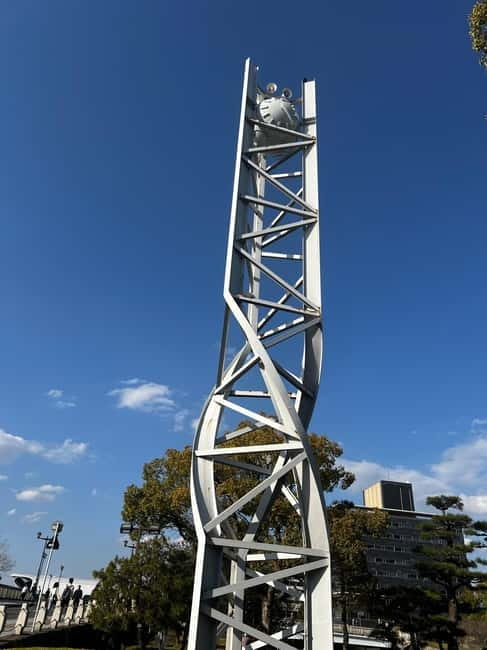
From the Dome, the group moves to the Clock Tower of Peace for about 10 minutes. This stop helps shift the visit from the single famous ruin to the wider network of memorials spread through the park.
The Clock Tower is one of the places where the guide’s role becomes useful. Without context, smaller memorials can blur together. Sheraz explains why each one exists and how it fits into Hiroshima’s remembrance of the bombing and its aftermath.
The route then continues to the Bell of Peace, also for around 10 minutes. The bell adds a more direct symbol of peace to the walk. Here, you are not only looking at a monument but considering the message the park sends about ending nuclear weapons and preventing another attack.
The pace is one of the tour’s strengths. The available time is short, but the guide does not appear to rush from one point to the next. You receive an explanation, then a little room to take in the site. That balance is especially helpful on a serious visit, when too many facts delivered too quickly can become hard to absorb.
Remembering Korean victims of the bombing
The Korean Atomic Bomb Victims Memorial is an important part of the route and one that you might miss if you simply wandered through the park without a plan. The tour gives it about 10 minutes.
This stop broadens the story beyond Hiroshima’s local population. It reminds you that people from Korea were also in the city when the bomb fell, including people living and working in Japan at the time. The memorial makes the history less narrow and more human.
I value the inclusion of this site because it prevents the tour from becoming a sequence of only the most famous monuments. You get a fuller sense of the different communities affected by the bombing and the ways remembrance has been expressed in the park.
Ten minutes is enough for a clear introduction, but not for a long discussion of every historical detail. If this subject matters particularly to you, note the memorial and return later with more time.
The Children’s Peace Monument and the stories of young victims
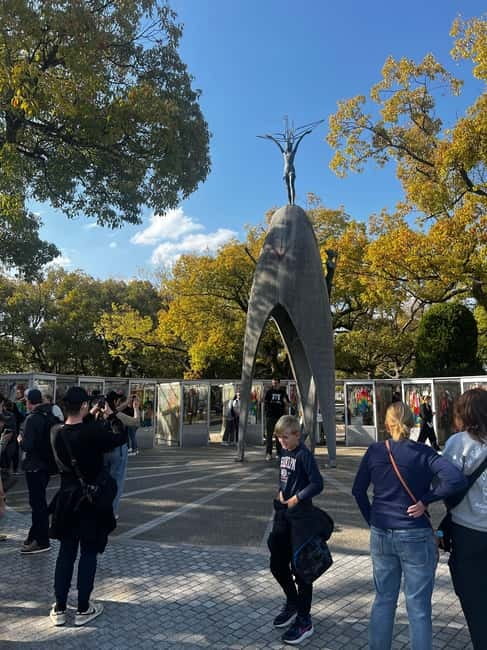
The Children’s Peace Monument is scheduled for another 10-minute stop. This memorial is dedicated to the children affected by the bombing and is closely linked with stories of young lives interrupted by war.
The emotional tone changes here. The Atomic Bomb Dome speaks through a damaged building. The Children’s Peace Monument brings attention to individual children and the lasting effect of loss on families and classmates.
Sheraz’s style appears well suited to this part of the route. Several comments about his guiding point to the amount of information he gives, but also to the pauses he allows. You should expect explanation rather than a nonstop lecture. That gives you time to look at the monument and think about what you have heard.
This can be a difficult stop for younger children. The activity is not suitable for children under 6, and that restriction makes sense given the subject and the amount of walking. Older children may be able to take part, but parents should decide based on how their child handles serious wartime material.
Same city, a completely different kind of day:
- Peaceful Hiroshima & Miyajima UNESCO 1 Day Bus Tour
★ 5.0 · 5,309 reviews - Hiroshima: Hiroshima and Miyajima UNESCO Sites 1-Day Tour
★ 4.9 · 2,330 reviews - Hiroshima Historical Walking Tour – Why A-Bomb was Dropped
★ 4.8 · 893 reviews - Hiroshima Peace (Heiwa) Walking Tour at World Heritage Sites
★ 5.0 · 872 reviews
Hiroshima National Peace Memorial Hall and the central remembrance sites
The route next reaches the Hiroshima National Peace Memorial Hall, with about 20 minutes set aside. This is one of the longer stops, and it gives the tour room to move from public monuments toward personal remembrance.
The hall helps preserve the names, experiences, and memories connected with the bombing. The value of visiting with a guide is that you are not left to guess why the building matters or how it relates to the surrounding park.
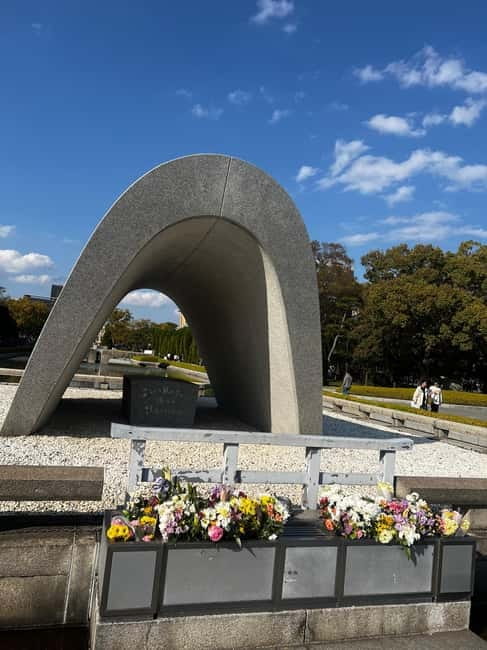
After the hall, you visit the Hiroshima Victims Memorial Cenotaph, listed for about 10 minutes. This is one of the park’s most solemn points, dedicated to those who died as a result of the bombing. The stop calls for quiet attention rather than a quick photograph.
The guide can help you understand the words and symbols connected with the cenotaph. At the same time, you are free to take a quiet moment. Respectful behavior is expected at all the memorial sites, and that should guide how you photograph, speak, and move with the group.
The Peace Memorial Museum in a short visit
The Hiroshima Peace Memorial Museum is the stop most people will be watching closely. It offers the clearest account of the bombing’s impact, the lives affected, and the aftermath.
The scheduled guided visit is 10 minutes. That is enough for an orientation and perhaps a look at key parts of the museum, but it is not enough to study the full collection carefully. I would treat this part of the tour as an introduction, not a complete museum visit.
That short timing is the clearest weakness in the plan. The museum can be emotionally demanding and information-heavy, so a guide’s explanation helps you know what you are seeing. Still, if you want to read personal accounts and examine the exhibits at your own speed, return after the tour.
The $19 price remains reasonable even with a brief museum segment because the tour covers so many other sites. You are paying mainly for the route, historical framing, and the guide’s help in connecting the memorials. Admission details are not specified here, so check what is included when you book.
Prayer Fountain, Peace Flame, and the final walk
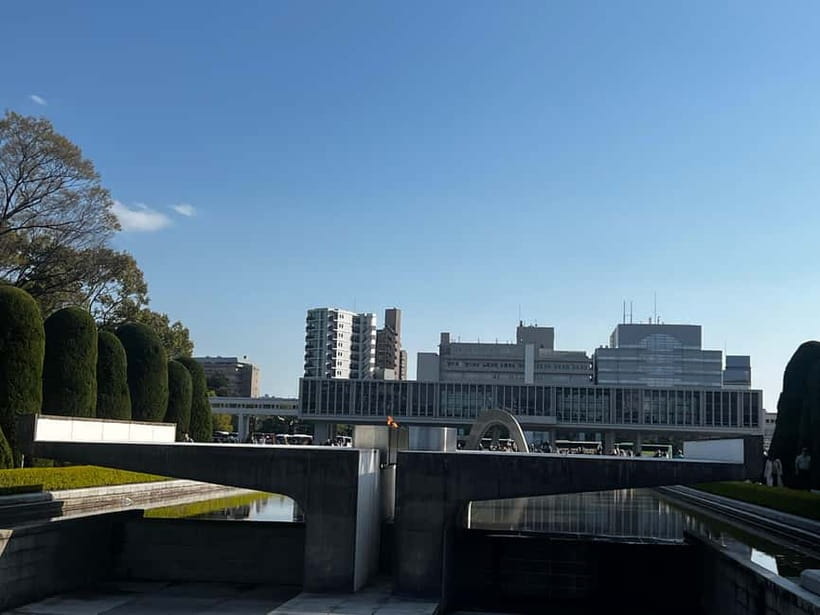
The Prayer Fountain receives about 10 minutes. Its presence reflects the physical suffering caused by the bombing, as well as the many people who needed water in the aftermath. The guide’s explanation helps turn a quiet fountain into part of the larger story of Hiroshima.
The Peace Flame is also included in the route. It has become a symbol of hope for a world without nuclear weapons. After the more direct accounts of loss and destruction, the flame gives the walk a forward-looking note without erasing the pain that came before it.
The final stop is the Gates of Peace, where the tour ends. These gates carry the park’s message beyond the central monuments and provide a natural place to close the experience.
Ending at the Gates of Peace is practical. You are not returned to the Atomic Bomb Dome, so you should be ready to continue from the final location. Since the tour is conducted on foot, comfortable shoes and water are sensible choices, especially in warm weather.
What makes the small group useful
The group is limited to 10 people, which is a good match for this kind of visit. A smaller group makes it easier to hear explanations near public memorials and gives you a better chance to ask about details that catch your attention.
Sheraz’s guiding style is described as friendly and interactive. He asks questions about the people in his group and their trips to Japan, which can make the walk feel more like a conversation than a fixed speech.
That personal approach will suit you if you want context but do not want every minute filled with facts. It also helps when the subject becomes heavy. A guide who notices the group’s pace can explain difficult material without turning the visit into a rushed history class.
The tradeoff is that a small-group tour still follows a set two-hour schedule. If one stop leads to a long discussion, there may be less time elsewhere. The route works best when you accept that it is an overview with meaningful detail, not a private full-day study visit.
Price, pace, and practical value
At $19 per person, this is an inexpensive way to get oriented in Hiroshima Peace Memorial Park. The price covers a live English-speaking guide and a two-hour route through the park’s principal memorials.
I see the strongest value in the number of places included. You visit the Dome, clock tower, bell, Korean memorial, Children’s Peace Monument, national memorial hall, victim cenotaph, museum, Prayer Fountain, Peace Flame, and Gates of Peace. Finding and understanding all of these alone would take more planning.
The activity is wheelchair accessible, though the tour involves walking through the park. You should still consider your own comfort with a continuous walking route. People with heart problems are advised not to take part.
Food is not allowed during the activity. Photography is allowed, but the setting calls for restraint. A camera can help you remember details, yet the most valuable part of the visit may be the time you spend looking without taking a picture.
You can cancel up to 24 hours in advance for a full refund, and the reserve-now, pay-later option helps if your Japan plans are still shifting. Starting times vary, so check availability for the date you want.
Who should book this Hiroshima walk
I would choose this tour if you have limited time in Hiroshima and want a clear introduction to the Peace Memorial Park. It is also a good fit if you prefer learning from a guide rather than piecing together the meaning of each monument from signs.
The tour suits solo visitors, couples, and small groups who want an easy pace and a personal guide. The strong rating of 4.9 from 16 reviews matches the most consistent strengths: Sheraz is attentive, enthusiastic, and good at explaining the sites while giving you time to absorb them.
I would not choose it as your only museum visit if you want to examine every exhibit. The 10-minute museum segment is too short for that. Instead, use the tour to understand the park, then return to the museum independently if your schedule allows.
Should you book it?
Book this tour if you want human guidance through a difficult place, a sensible route, and more than just the Atomic Bomb Dome and museum. Sheraz Alvi’s attentive manner and the small group add real value for $19.
Skip it if you strongly prefer to set your own pace or already know the memorial park well. For most first-time visitors, though, the tour provides a respectful and useful framework, then leaves you better prepared to explore Hiroshima on your own.
FAQ
Where does the tour start?
The tour starts at the Atomic Bomb Dome in Hiroshima Peace Memorial Park. The provided meeting coordinates are 34.395483, 132.453592.
Where does the tour finish?
The tour finishes at the Gates of Peace.
How long does the tour last?
The tour lasts two hours.
What language is the tour conducted in?
The live tour guide speaks English.
How many people can join the group?
The group is limited to 10 participants.
Is the tour wheelchair accessible?
Yes, the activity is wheelchair accessible. It involves walking through the park.
Can children join the tour?
Children under 6 are not suitable for this activity.
What should I bring?
Bring comfortable shoes, water, and a camera. Photography is allowed, but food is not allowed during the tour.
Just added around Hiroshima
- The Journey of Hiroshima from Tragedy to Peace★ 4.8 · 44 reviews
- Miyajima: Private Rickshaw Tour to Itsukushima Shrine★ 4.9 · 45 reviews
- Hiroshima: Miyajima Half-day Historical Walking Tour★ 4.7 · 100 reviews
- Hiroshima:Guided Virtual Tour/PEACE PARK TOUR VR★ 5.0 · 29 reviews
- Hiroshima/Miyajima Private Custom Tour with Local Guide★ 5.0 · 134 reviews
- Hiroshima: Tour of Atomic Bomb Dome & Peace Memorial Museum★ 5.0 · 20 reviews
- Hiroshima: Saijo Sake Tasting at 7 Breweries Guided Tour★ 4.8 · 29 reviews
- Hiroshima: Private Walking Tour with a Local★ 4.6 · 70 reviews
Hiroshima Tours, compared.
Peaceful Hiroshima & Miyajima UNESCO 1 Day Bus Tour
Read our review →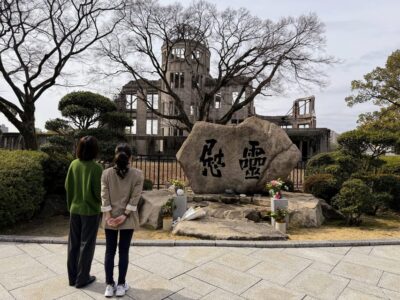
Hiroshima and Miyajima UNESCO Sites 1-Day Tour
Read our review →
Hiroshima / Miyajima Full-day Private Tour with Government Licensed Guide
Read our review →
Hiroshima Historical Walking Tour – Why A-Bomb was Dropped
Read our review →
Hiroshima Peace (Heiwa) Walking Tour at World Heritage Sites
Read our review →
Hiroshima in a Nutshell: Morning Bike Adventure
Read our review →
Hiroshima City 4hr Private Walking Tour with Licensed Guide
Read our review →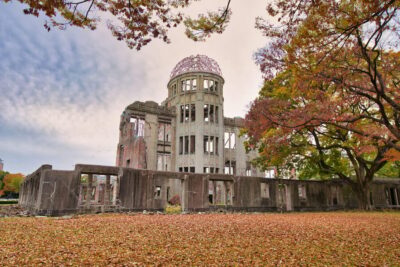
Browse the lists this tour appears in