
REVIEW · CYCLING TOURS
Half day Osaka Bay Area Cycling with E-Assist Bicycle Tour
Osaka Bay reveals a side of the city that trains cannot reach. This 26 to 30 kilometer e-bike ride moves from an ancient shrine to working-class neighborhoods, factory roads, tiny local ferries, high bridges, and the waterfront around Tempozan.
I like the small maximum group of three, which lets guide Banri adjust the pace and explain Osaka’s past as you ride. I also like the two one-minute ferry crossings, a wonderfully ordinary part of city life that most visitors would never find on their own.
The main caution is the road itself. Large trucks use parts of the route, some bridge approaches are steep, and riders over 180 centimeters may find the bicycle small. You need to be comfortable on a bike and in decent physical shape.
In This Review
- Key points to know before you book
- Why this Osaka Bay route is different
- Starting at Sumiyoshi Taisha
- Bridges, factories, and the first ferry
- IKEA Tsuruhama and the lunch question
- Namihaya Bridge and the scale of Osaka
- Tempozan brings the famous bayfront sights
- The second ferry and the steep bridge choice
- What the e-assist bicycle changes
- Is the $78.38 price good value?
- Who should book this ride?
- Final call on the Osaka Bay cycling tour
- FAQ
- How long is the Osaka Bay cycling tour?
- What time and where does the tour start?
- Are the bicycle and helmet included?
- Is lunch included?
- What are the rider requirements?
- What happens if it rains?
Key points to know before you book
- A real Osaka ride: The route links Sumiyoshi Taisha, industrial districts, local neighborhoods, bridges, and bayfront sights rather than staying on the usual sightseeing circuit.
- Tiny group size: A maximum of three riders gives Banri room to offer personal help and adjust the ride.
- Two local ferries: The Funamachi and Jinbei crossings carry bicycles and pedestrians for about one minute each.
- A serious distance: Expect roughly 26 to 30 kilometers over four to six hours, with bridge climbs and city traffic.
- Lunch is separate: Stop at a Japanese diner in Tempozan, or choose the Swedish food market at IKEA Tsuruhama if you prefer vegetarian food.
- Weather and equipment limits: The tour can be canceled when the rain probability reaches 40 percent or more. Bikes, helmets, and bottled water are included.
Why this Osaka Bay route is different
Many Osaka sightseeing plans keep you near Dotonbori, Osaka Castle, or the major shopping districts. This ride takes you south and west, into parts of Osaka that feel lived-in rather than arranged for sightseeing.
You pedal through suburban streets, manufacturing areas, river crossings, and old shopping arcades. The route also includes major sights such as the Kaiyukan aquarium, Tempozan Ferris wheel, and striking architecture by Tadao Ando. The appeal comes from the sharp changes between these places.
One moment you are at Sumiyoshi Taisha, a shrine with nearly 2,000 years of history. Later you are watching ships move beneath a 47-meter-high bridge or squeezing onto a short ferry used by local people. This is a good choice if you want to understand how Osaka works, not just photograph its famous center.
The ride is led by Banri, whose role goes beyond pointing out landmarks. Historical maps are used to explain how the area changed over time, giving the factory districts and waterways more meaning. With only three riders allowed, you can ask questions without holding up a large group.
A few more Osaka trips to weigh up
- 5-Hour Osaka Bike Tour to the Neighborhood of Osaka Castle
★ 5.0 · 319 reviews - One-Day Osaka Bike Adventure: 5–6 Hours
★ 5.0 · 246 reviews - Eat, Drink & Cycle: Osaka Foodie Bike Tour
★ 5.0 · 224 reviews
Starting at Sumiyoshi Taisha
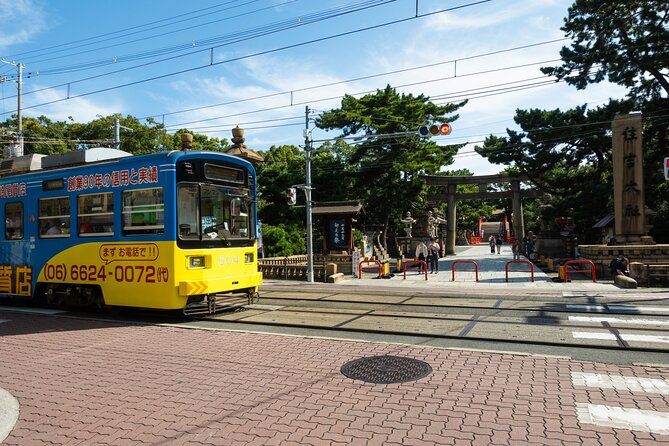
The meeting point is Lawson Tamadenaka 2-chome in Nishinari Ward, with a 10:00 a.m. start. The tour returns to this same point at the end, so you do not need to work out a second pickup location.
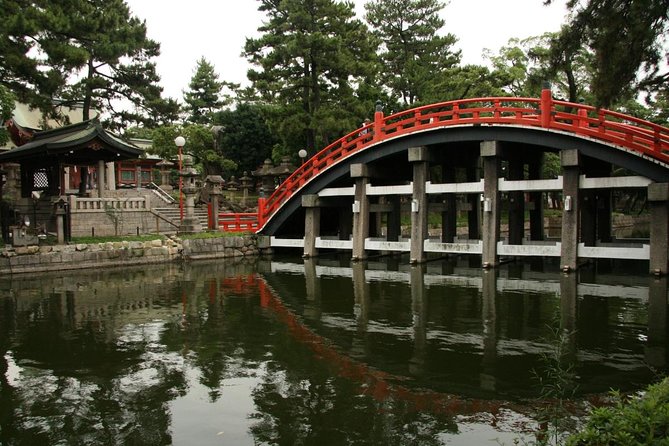
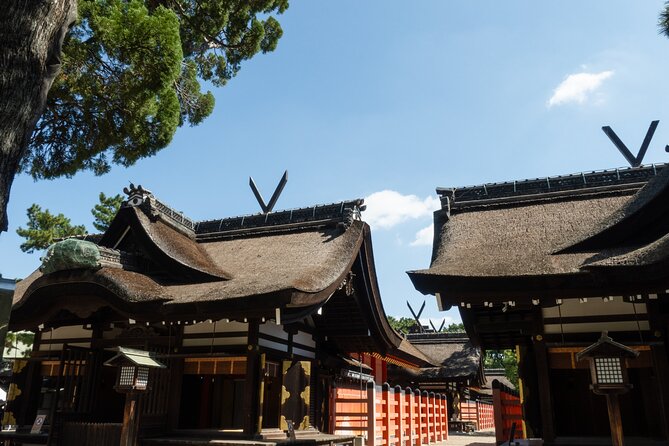
The first major stop is Sumiyoshi Taisha, one of Japan’s oldest shrines. It is linked with three sea gods, and its buildings include a Japanese national treasure. A 30-minute visit gives you time to look around without turning the shrine stop into a rushed photo break.
This opening stop sets up the rest of the ride. Osaka Bay has always been tied to water, shipping, travel, and trade, and Sumiyoshi Taisha connects those modern uses with much older beliefs about the sea.
Admission is free. You should still dress for movement, since this is a cycling day rather than a shrine visit with a short walk from a station.
Bridges, factories, and the first ferry
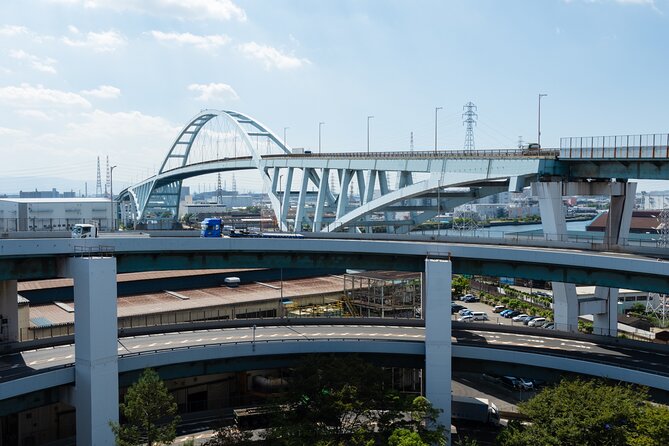
The route then reaches Shinkizugawa Bridge. From here, you can look toward Tennoji with the Ikoma Mountains in the distance. The bridge’s three-stage loop gives the ride a small thrill, as you descend through a large piece of transport infrastructure rather than simply crossing a flat street.
Allow about 20 minutes for the stop. This is one of the better places for photographs, but the bridge access can be steep. If you are not used to hills on a bicycle, the e-assist motor will help, but it does not remove the need for balance and control.
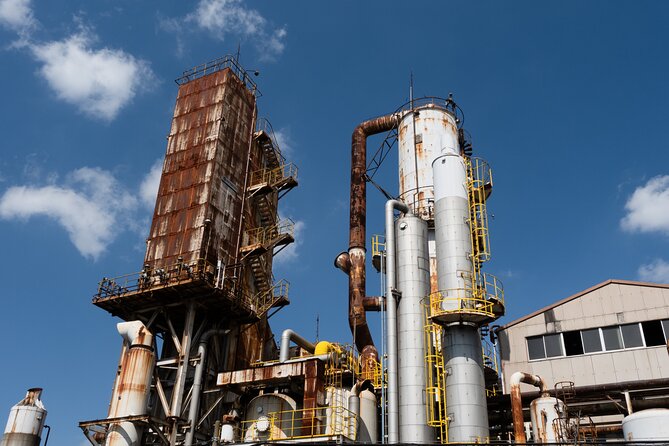
You also pass through a factory district used in Ridley Scott’s film Black Rain, which was filmed in Osaka and New York City. This is not a polished film set. The interest lies in seeing the working industrial backdrop and learning how such areas can double for a different city on screen.
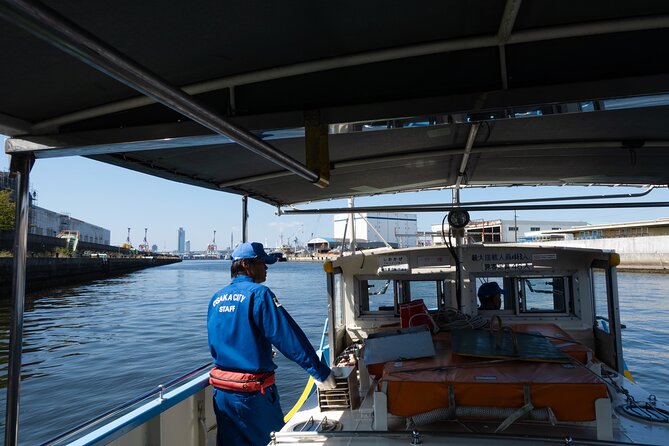
Next comes the Funamachi Ferry Facilities. The Osaka City ferry takes bicycles and pedestrians across the water in about one minute. It is free, simple, and highly practical. There is no grand cruise or long wait on the water, but that is exactly why it is memorable. You are using a piece of local transport that fits the city’s rivers and canals.
IKEA Tsuruhama and the lunch question
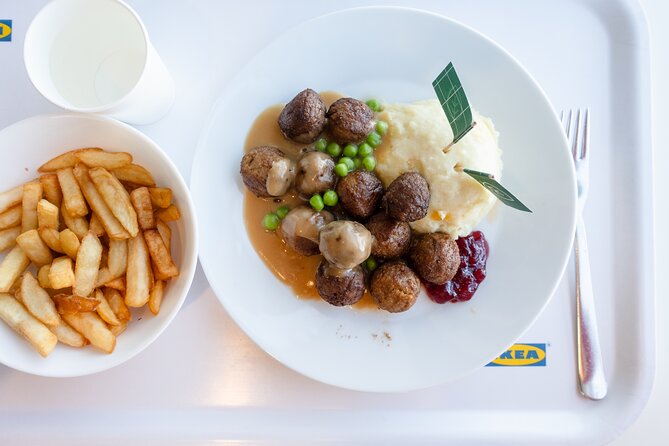
IKEA Tsuruhama is a short 15-minute break. It gives you a chance to rest, drink water, and consider lunch plans.
Lunch is not included in the price. The route offers a Japanese diner in the Tempozan area later, while vegetarians can eat at IKEA’s Swedish food market. This arrangement is useful because it gives you a choice, but you should budget for the meal and avoid assuming that the tour price covers food.
The break also divides the ride into manageable sections. By this point you will have already covered shrine grounds, a high bridge, industrial roads, and a ferry. A short pause matters before the larger bridge views and bayfront riding later in the route.
Same city, a completely different kind of day:
- Osaka Go Karting Tour with Funny Costume
★ 5.0 · 2,658 reviews - Osaka Castle: Museum and Tower Entry Ticket
★ 4.5 · 2,380 reviews - Osaka: Shinsekai Food Tour with 13-15 Dishes at 5 Eateries
★ 4.8 · 2,204 reviews - Osaka Food Tour: 13 Dishes at 5 Local Eateries
★ 5.0 · 2,149 reviews
Namihaya Bridge and the scale of Osaka
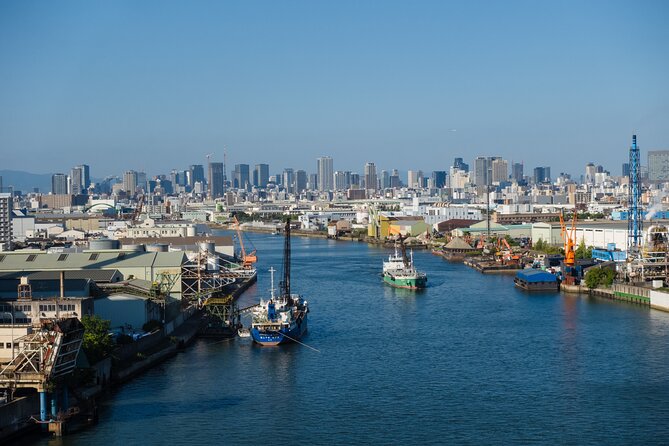
Namihaya Bridge is near the middle of the bay area and offers a 360-degree view across Osaka. Its roadway sits 47 meters above the water so ships can pass underneath.
The bridge is impressive in a very Osaka way: practical, large, and built around the movement of water and traffic. You get a sense of how widely the city spreads, from the central urban area toward the bay and surrounding mountains.
The stop lasts about 20 minutes. Bring a phone or camera that is easy to use while stopped, since this is one of the strongest photo points on the route. The wind and height may make the bridge feel exposed, so take care when getting on and off the bicycle.
Tempozan brings the famous bayfront sights
At Mt. Tempozan, the ride pauses for about 40 minutes. This is the most familiar sightseeing section of the day, with the Kaiyukan aquarium, the Tempozan Ferris wheel, cherry blossoms in spring, and architecture associated with Tadao Ando.
You do not appear to enter the aquarium or ride the Ferris wheel as part of the tour. Instead, you pass these attractions and stop for lunch at a Japanese diner. That distinction matters. If your main goal is a full aquarium visit, plan a separate outing. If you want to see the area while connecting it with less familiar parts of Osaka, the stop works well.
The route also passes an especially photogenic meeting point where three expressways and subway tracks intersect. The pier structure is intricate, and this is one of those places that makes more sense in person than on a standard city map. You see the layers of roads, rails, bridges, and waterways that make Osaka’s bay district function.
An old-style Japanese arcade shopping center adds another change of mood. The supplied route details do not promise shopping time, so think of it as a glimpse into local commercial life rather than a dedicated retail stop.
The second ferry and the steep bridge choice
After Tempozan, the ride reaches the Jinbei Ferry Terminal on the Taisho Ward side of the river. Like the Funamachi ferry, this Osaka City service carries bicycles and pedestrians and takes about one minute.
These crossings are valuable because they turn the river from an obstacle into part of the journey. You do not simply look at Osaka’s waterways from a bridge. You cross them in the same low-key way local riders and walkers do.
At Sensai Bridge, the bicycle road is very steep. You can take a ferry across the river instead. This is an important practical detail, especially if you are fit enough for a long ride but not comfortable pushing hard on sharp inclines.
Ask Banri about the ferry option and be honest about your energy level. The point of the e-assist bike is to make the route easier, not to prove that you can force your way up every bridge access.
The final major stop is Sembonmatsu Bridge, crossing the Kizu River, which connects toward Dotonbori. Its unusual form has earned it the local nickname Megane-bashi, or glasses bridge, because its shape resembles a pair of spectacles.
Allow about 15 minutes here. The bridge is a fitting end to the route because it combines Osaka’s practical river engineering with a playful local nickname. It is also a reminder that the city’s identity is tied as much to bridges and waterways as to restaurants and neon signs.
What the e-assist bicycle changes
This is not a casual bicycle loop around one park. The distance is substantial, and the route includes bridge access, industrial roads, and areas with heavy truck traffic.
The electric assist helps with effort, particularly on bridge approaches and during the longer stretches between stops. You still need to ride confidently, steer safely, and pay attention to traffic. The operator asks for moderate physical fitness and the ability to ride a bicycle.
The bicycles have a minimum rider height of 140 centimeters and a maximum weight of 90 kilograms. Riders over 180 centimeters may find the bicycle too small. Wear comfortable clothes that allow free movement, rather than anything stiff or restrictive.
Parts of the route have heavy truck traffic. If vehicle fumes or dust concern you, bring a mask and eye drops. This is not a quiet riverside cycle path for the whole day. The traffic is part of the working Osaka setting, but it can affect your comfort.
Is the $78.38 price good value?
At $78.38 per person, the price is reasonable if you value access and local guidance more than a checklist of major attractions. The fee includes the bicycle, helmet, bottled water, and Banri’s guidance. It also removes the work of planning a route through an area where bridges, ferries, industrial roads, and disconnected neighborhoods can make navigation awkward.
You are paying for a route that would be difficult to reproduce efficiently on your own. The two ferries, the bridge viewpoints, and the factory district are not the sort of stops that naturally fit into a first-time Osaka itinerary.
The value is weaker if you only want famous attractions or a gentle ride. Lunch costs extra, and the tour may take four to six hours. You are also not buying admission to the aquarium, Ferris wheel, or other paid attractions. The experience is about seeing the city from a bicycle, not collecting entry tickets.
The maximum group of three improves the value. Banri can offer more direct help with bridge approaches, explain the area’s changes using maps, and adjust decisions around the steep sections. That personal attention is harder to get on a large city cycling tour.
Who should book this ride?
I would choose this tour if you have already seen Osaka’s central sights, or if you prefer ordinary neighborhoods and working infrastructure to a standard sightseeing route. It suits confident cyclists who can handle a long day in the saddle and stay alert around traffic.
It is also a strong fit for photographers. You get mountain views from Shinkizugawa Bridge, wide city views from Namihaya Bridge, industrial scenes, layered highway structures, ferries, and the unusual Sembonmatsu Bridge.
Families and mixed-ability groups should read the requirements carefully. The 140-centimeter minimum height, 90-kilogram maximum weight, and bicycle size concern for riders over 180 centimeters may rule out some participants. Anyone uneasy in traffic or on steep bridge approaches may find the route tiring.
Weather matters. The tour is canceled when the rain probability is 40 percent or more, with a different date or full refund offered. For your own comfort, a dry forecast is worth waiting for even if the tour is technically able to run.
You can cancel for a full refund up to 24 hours before the 10:00 a.m. start. Changes or cancellations inside that window are not accepted for a refund.
Final call on the Osaka Bay cycling tour
Book this ride if you want an active, personal introduction to the Osaka beyond the shopping streets. The ancient shrine, local ferries, high bridges, manufacturing district, and Tempozan sights create a much fuller picture of the city than a short waterfront stroll.
Skip it if you want a slow, traffic-free outing, a short beginner ride, or included meals and attraction tickets. For everyone else, the small group, e-assist bicycle, and unusual route make $78.38 a fair price for a half-day that reaches places you would likely miss on your own.
FAQ
How long is the Osaka Bay cycling tour?
The activity lasts approximately four to six hours. The route covers about 26 to 30 kilometers based on the stated ride details and recorded ride descriptions.
What time and where does the tour start?
The tour starts at 10:00 a.m. at Lawson Tamadenaka 2-chome, 2-chome-6-12 Tamadenaka, Nishinari Ward, Osaka, 557-0044, Japan. It ends back at the same meeting point.
Are the bicycle and helmet included?
Yes. Bicycle use, a helmet, and bottled water are included in the tour price.
Is lunch included?
No. Lunch is paid separately. You can eat at a Japanese diner in Tempozan, while vegetarian riders can use the Swedish food market at IKEA Tsuruhama.
What are the rider requirements?
You must be able to ride a bicycle and have moderate physical fitness. The minimum height is 140 centimeters, the maximum weight is 90 kilograms, and the bicycle may be too small for riders over 180 centimeters.
What happens if it rains?
The tour is canceled if the rain probability is 40 percent or higher. If poor weather causes cancellation, you can receive a different date or a full refund. Free cancellation is also available when you cancel at least 24 hours before the start time.
Just added around Osaka
- Samurai dress-up and shows, plus Tea Ceremony & Calligraphy★ 5.0 · 27 reviews
- Kyoto & Nara Private customized tour with English speaking Guide★ 4.5 · 99 reviews
- Well-balanced BENTO (lunch box) Cooking Class★ 5.0 · 35 reviews
- Urban Canvas: Osaka Street Art Bike Tour★ 5.0 · 47 reviews
- OSAKA:Feel the Power! Learn Taiko Drum from Professionals★ 5.0 · 28 reviews
- Volleyball in Osaka & Kyoto with Locals!★ 5.0 · 21 reviews
- 1.5〜2 Hours Traditional Kintsugi Work Shop in Namba Osaka★ 5.0 · 75 reviews
- Umami Town Street Food Tour★ 5.0 · 120 reviews
Cycling Tours, compared.
3h Tokyo E-Bike Tour: Hidden Gems, and Local Life with guide
Read our review →
Arashiyama Bamboo Forest & Hidden Gems Bike Tour (Early Bird)
Read our review →
Hiroshima in a Nutshell: Morning Bike Adventure
Read our review →
5 Top Highlights of Kyoto Full Day Bike Tour (E-bike option)
Read our review →Browse the lists this tour appears in