
REVIEW · ONSEN & HOT SPRING TRIPS
Guide tour of Japanese bathing culture at Funaoka Onsen
Japanese bathing is not simply a quick wash followed by a soak. It is a set ritual, and this small Kyoto tour gives you a clear introduction before you enter the bathhouse. You begin with a drink at Sarasa Nishijin, a cafe made from a former public bath, then learn the basic rules and health ideas behind Japanese bathing.
I like two things here. First, guide Atsuki explains the process before you have to face the changing room and baths on your own. Second, you use the lesson at Funaoka Onsen, one of Kyoto’s best-known traditional bathhouses, rather than stopping at a staged cultural demonstration. The main drawback is simple: you bathe nude, in separate men’s and women’s areas, so couples are split up and the experience will not suit everyone.
In This Review
- Key points to know before booking
- Why this Kyoto bathing tour is different
- Sarasa Nishijin, a cafe with a bathhouse past
- Funaoka Onsen and the one-hour bathing lesson
- The nude bathing question
- What the guide adds, and where to set expectations
- Is $45.72 a fair price?
- Timing, meeting point, and practical planning
- Who will get the most from this experience
- Should you book the Funaoka Onsen tour?
- FAQ
- How long does the Japanese bathing tour last?
- Where does the activity start and end?
- Is bathing nude?
- Who leads the experience?
- How many people can join?
- Can I cancel for a full refund?
Key points to know before booking
- A former bathhouse becomes your classroom: Sarasa Nishijin offers a drink, a short history lesson, and a look at how public bathing shaped Japanese daily life.
- Atsuki guides first-time bathers: He explains the steps and etiquette before you enter Funaoka Onsen, helping you avoid the usual first-visit worries.
- You bathe nude and by gender: This is a real public bath experience, not a swimsuit activity or a mixed-gender visit.
- Funaoka Onsen is the practical highlight: After learning the rules, you get about an hour to try the bathing routine yourself.
- The group is very small: A maximum of five people makes it easier to ask questions and get personal help.
- English may take patience: Atsuki is a local Japanese guide, but his English is limited, so the printed materials and demonstrations matter.
Why this Kyoto bathing tour is different
Many first-time visitors hesitate at the thought of entering a Japanese bathhouse. You may wonder where to undress, when to wash, how long to soak, or whether you are breaking a local rule without knowing it.
That is where this experience earns its price. You do not have to work out the routine by watching strangers from a corner of the changing room. Atsuki gives you an explanation first, with materials and practical instructions, then takes you into the setting where you can use them.
The lesson also places bathing in a larger cultural frame. In Japan, public baths have long been places for washing, resting, and social contact. The tour links bathing culture with the same kind of care and attention often associated with the tea ceremony. You learn that the bath is not just about hot water. The order of actions, respect for shared space, and preparation of the body all matter.
This is a useful choice if you want an activity that feels local rather than packed into a standard sightseeing route. It also works well after a day of temples and shrines. The final hour is quiet and restorative, and you leave with advice you can use at other public baths and hot springs in Japan.
More onsen & hot spring trips in Kyoto:
- From Osaka: Himeji Castle, Arima Onsen & Mt. Rokko Day Tour
★ 4.6 · 339 reviews - Osaka: Nara and Uji Day Trip with Deer Park and Hot Spring
★ 4.4 · 302 reviews - From Tokyo: Private Tour to Fuji/Hakone – Onsen, Art, Nature
★ 5.0 · 116 reviews
Sarasa Nishijin, a cafe with a bathhouse past
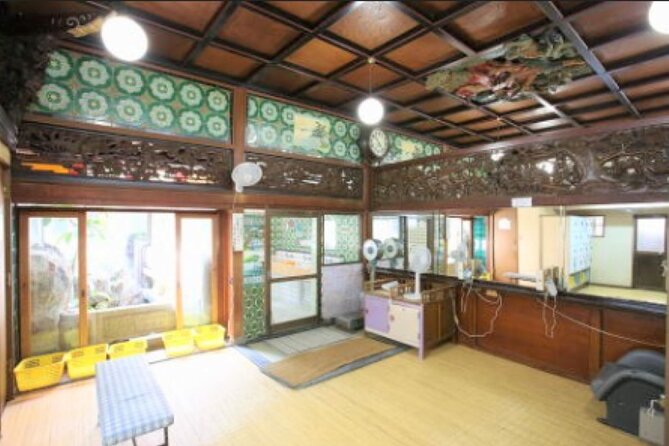
The experience begins at Sarasa Nishijin, a cafe renovated from a former public bathhouse. That setting gives the opening lesson a physical connection to the subject. You are not hearing a generic talk in a hotel meeting room. You are sitting in a space that once served the same kind of community function being discussed.
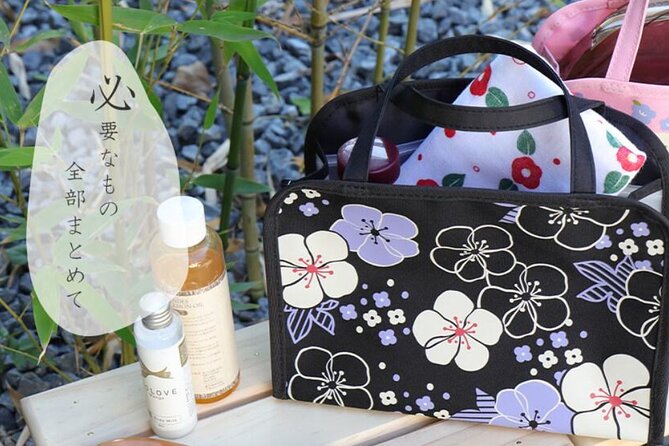
The stop lasts about 15 minutes. While you sip a drink, Atsuki introduces the history of Japanese public baths and explains how to bathe. You also receive a take-home guide to proper bathing techniques, which is especially useful if you plan to visit another sento or hot spring during your trip.
I like this opening because it lowers the pressure. You can ask basic questions before changing clothes, and you have a chance to learn the vocabulary and sequence in a relaxed place. If you are traveling alone, this preparation is particularly helpful. You can focus on the instructions instead of trying to copy everyone else once you reach the bathhouse.
The short length is also a consideration. Do not expect an extended museum-style talk or a full history lecture at the cafe. The point is to give you enough background to make the bath meaningful and comfortable, not to turn the first stop into a separate attraction.
Funaoka Onsen and the one-hour bathing lesson
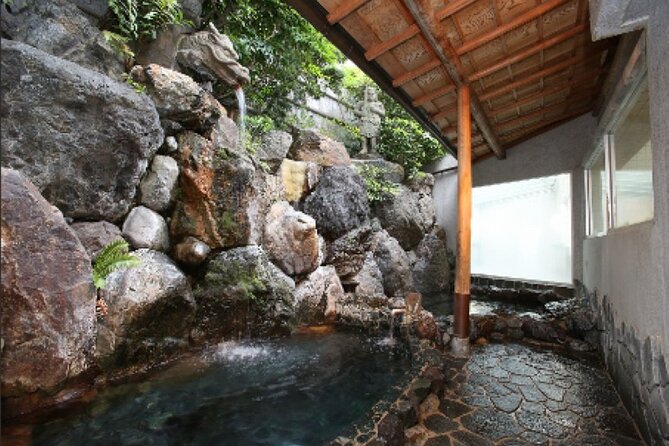
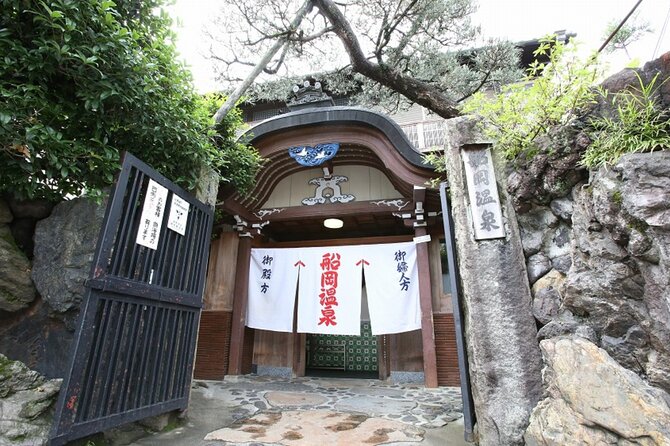
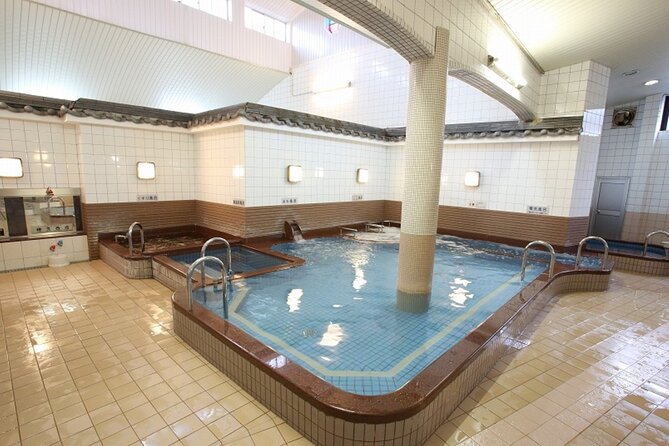
The main portion takes place at Funaoka Onsen, a long-established Kyoto bathhouse used by local residents. The tour gives you about one hour there, including the practical explanation and time to bathe.
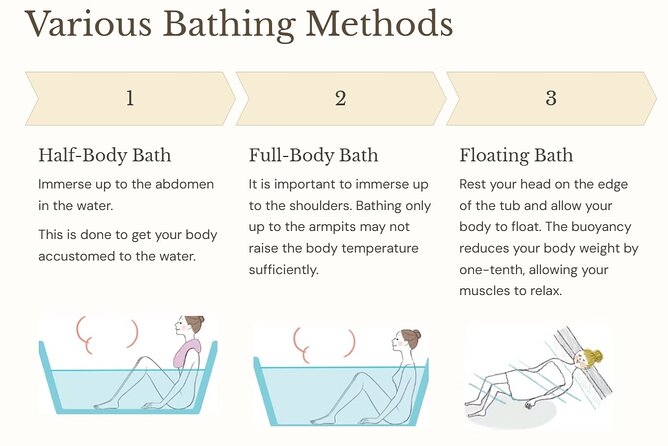
Before you enter the bath, Atsuki uses materials to go over the bathing method again. This is the moment when the experience becomes useful in a very direct way. You learn what to do before entering the shared water, how to move through the process, and how to behave respectfully around other bathers.
The guidance is not only about avoiding mistakes. It also helps you relax. Several parts of the experience focus on the relief of knowing what comes next. Once the basic steps are clear, you can stop worrying about etiquette and pay attention to the warmth, quiet, and slower pace of the bath.
Funaoka Onsen is also interesting for its place in Kyoto’s bathing story. The explanation includes its background and the way its founders competed with traditional geothermal hot springs. That distinction matters because a Japanese public bathhouse and a hot spring are not exactly the same thing. A sento is a public bathing facility, while an onsen traditionally refers to naturally heated spring water. The tour helps you understand the culture instead of treating every Japanese bath as the same experience.
The bathhouse itself is the reason to book this particular activity. You are not merely learning rules in theory. You are practicing them in a real, historic public bathing setting that has been part of Kyoto life for generations.
The nude bathing question
You should think carefully about this part before booking. The bath is nude, and the men’s and women’s areas are separate. You will not bathe in a swimsuit, and couples cannot remain together inside the bathing area.
For some people, this is the central value of the experience. You are taking part in the customary form of Japanese public bathing rather than a modified version designed for visitors. For others, it is a firm reason to skip the tour. Neither response is wrong.
If you are nervous, the pre-bath lesson is meant to make the situation less awkward. You still need to be comfortable undressing and bathing with other people of the same gender. If that does not feel acceptable, this activity is not a good match.
The information provided does not describe a mixed-gender or swimsuit option. Do not book expecting one. The separation by gender is part of the standard format here, and the guide cannot change that arrangement.
A few more Kyoto trips to weigh up
- Kyoto: Hike and Hot Springs in Kurama
★ 5.0 · 49 reviews - Mt. Fuji, Hakone Private Tour from Tokyo – Onsen, Arts and Nature
★ 5.0 · 79 reviews - Tokyo: Mount Fuji 5th Station & Onsen Day Trip
★ 4.3 · 75 reviews - From Fukuoka: Mount Aso, Kurokawa Onsen, and Shrine Tour
★ 4.6 · 72 reviews
What the guide adds, and where to set expectations
Atsuki is a local Japanese guide and an independent operator, not an employee of Funaoka Onsen. His role is to explain the culture and help you handle the experience, not to provide the bathhouse’s regular services.
The small group size, capped at five people, is a real advantage. You get more room to ask questions than you would in a large cultural tour, and the guide can watch for signs that someone is unsure about the routine. This personal support is one of the strongest reasons to choose a guided visit instead of walking into a bathhouse alone.
Set your English expectations realistically. Atsuki is not very good at English, so the conversation may be slower or less detailed than you expect from a professional English-speaking guide. The materials, demonstrations, and simple step-by-step format help, but this is not the right tour if you want a polished lecture in fluent English.
I would treat the language limitation as manageable rather than minor. Bathing etiquette is practical and visual, but historical questions may require patience. If you have a specific question, keep it short and allow time for clarification.
Is $45.72 a fair price?
At $45.72 per person, this is not the cheapest way to enter a Kyoto bathhouse. You could visit a public bath independently for far less, assuming you already know where to go and how the routine works.
The price pays for more than admission. It includes the cafe stop and drink, the cultural explanation, the printed bathing guide, the admission fees, and personal instruction from Atsuki. Most important, it removes the uncertainty that prevents many first-time visitors from trying a sento at all.
I see the value most clearly if this will be your first Japanese bath. You are paying for confidence and context, then gaining a skill you can reuse. Once you understand the routine, you can visit other public baths and hot springs without booking a guide each time.
The value is weaker if you have already used several Japanese baths or if you only want a short soak. In that case, the historical talk may feel basic, and you may prefer to spend the money on an independent visit.
With a maximum of five people, the cost also supports a more personal format. It is not a large group being moved quickly through a commercial attraction. Still, compare the price with your own interest. The tour makes sense for cultural curiosity and first-time comfort, not simply for access to hot water.
Timing, meeting point, and practical planning
The activity lasts about one hour and 30 minutes. The listed stops include about 15 minutes at Sarasa Nishijin and about one hour at Funaoka Onsen, with the meeting and movement between parts included in the overall schedule.
The listed meeting point is Funaoka Onsen at 82-1 Murasakino Minamifunaokacho, in Kyoto’s Kita Ward. The activity ends back at the meeting point. Since the first listed stop is Sarasa Nishijin, pay close attention to the guide’s instructions at the start and arrive with the mobile ticket ready.
The bathhouse is near public transportation, and the activity is described as suitable for most people. That does not mean every person should bathe. You should not join if you have a serious heart or lung condition, recent gastrointestinal bleeding, advanced cancer, severe anemia, or another medical reason to avoid hot baths.
You should also skip the experience if you feel ill, have a fever, or have consumed alcohol. If your doctor has advised against hot springs or hot bathing, follow that advice. This is not a sightseeing activity you should force yourself to complete when you are unwell.
Free cancellation is available if you cancel at least 24 hours before the local start time. Changes or cancellations within 24 hours are not accepted for a refund, so check your plans before the deadline.
Who will get the most from this experience
I would recommend this for a first-time visitor who wants to try Japanese bathing but feels unsure about the rules. The preparation is especially useful if you are traveling alone and would rather not figure out the process through trial and error.
It also suits you if you enjoy wellness, everyday customs, and smaller cultural activities. The tour is not built around a famous view or a dramatic performance. Its reward is understanding an ordinary Japanese practice at a deeper level, then taking part in it respectfully.
History-minded visitors will appreciate the story of public bathhouses and Funaoka Onsen’s place in Kyoto’s bathing culture. The former bathhouse cafe adds another layer, showing how these spaces can change purpose while keeping a link to their past.
You may want to skip it if you dislike nude bathing, need a mixed-gender activity with a partner, or prefer a fluent English lecture. It is also not ideal if you are looking for a long, luxurious spa treatment. This is a public bath experience with cultural instruction, not a private resort service.
Should you book the Funaoka Onsen tour?
Book it if the idea of a Japanese bath interests you but the etiquette makes you hesitate. Atsuki’s preparation, the small group, and the chance to practice the routine at Funaoka Onsen make this more useful than simply wandering into a bathhouse and hoping you get everything right.
I especially like that the experience connects a former bathhouse cafe with a working public bath. You get history, practical advice, and the real activity in one short outing. Just make sure you are comfortable bathing nude, accept the gender separation, and understand that Atsuki’s English is limited.
For a first visit, the $45.72 fee is reasonable because it buys confidence and a cultural lesson you can use again. For experienced bathhouse users, the value is less clear. If you meet the basic conditions and want an authentic Kyoto experience beyond temples, this is a thoughtful choice.
FAQ
How long does the Japanese bathing tour last?
The experience lasts approximately one hour and 30 minutes. The schedule includes about 15 minutes at Sarasa Nishijin and about one hour at Funaoka Onsen.
Where does the activity start and end?
The listed meeting point is Funaoka Onsen, located at 82-1 Murasakino Minamifunaokacho, Kita Ward, Kyoto. The activity ends back at the meeting point.
Is bathing nude?
Yes. The bathing portion requires nude bathing, and the men’s and women’s areas are separate. Couples will not bathe together.
Who leads the experience?
The guide is Atsuki, a local Japanese independent guide who is not an employee of Funaoka Onsen. His English is limited, and the tour uses explanations and materials to teach the bathing process.
How many people can join?
The activity has a maximum group size of five people.
Can I cancel for a full refund?
Yes, if you cancel at least 24 hours before the experience start time, based on local time. Cancellations or changes made less than 24 hours before the start are not accepted for a refund.
Just added around Kyoto
- Private Guided Traditional Buddhist Cooking in Japan★ 5.0 · 16 reviews
- Kyoto: Gion Geisha District & Sake-in-Hand Walking Tour★ 5.0 · 37 reviews
- Your Private Vacation Photography Session In Kyoto★ 5.0 · 110 reviews
- Kyoto: Zen Meditation at a Private Temple with a Monk★ 5.0 · 25 reviews
- Traditional Japanese Washi Papermaking- Kyoto morning★ 5.0 · 77 reviews
- Kyoto Wagashi(Japanese sweets) Cooking Class near Fushimiinari★ 5.0 · 60 reviews
- Private Pewter Sake Cup Experience with a Kyoto Artisan★ 5.0 · 31 reviews
- Private Cooking Class Udon in Kyoto Japan★ 5.0 · 23 reviews
Onsen & Hot Spring Trips, compared.
Himeji Castle, Arima Onsen & Mt. Rokko Day Tour
Read our review →
Nara and Uji Day Trip with Deer Park and Hot Spring
Read our review →
Private Tour to Fuji/Hakone – Onsen, Art, Nature
Read our review →
Mt. Fuji, Hakone Private Tour from Tokyo – Onsen, Arts and Nature
Read our review →
Private Nagano 1-Day Tour:Snow Monkeys,Zenko-ji,Obuse,Sake,Onsen
Read our review →
Mt Takao Tour with Ramen and Tattoo-Okay Hot Spring
Read our review →Browse the lists this tour appears in