
REVIEW · KAMAKURA DAY TRIPS
From Tokyo Kamakura, Hachimangu Shrine and Enoshima Full Day Tour
Kamakura’s Great Buddha and Enoshima’s hilltop shrines make a fine escape from Tokyo’s concrete rush. In one long day, you get Buddhist and Shinto sites, a seaside train ride, old shopping streets, and island views without having to build the route yourself.
I like the included Enoden railway ticket, which adds a small but memorable slice of local life, and I like the guides’ role in making the temples and shrines easier to understand. Alex, Allan Tan, Peter, and Leonard have all been singled out for clear explanations, humor, and good help with directions and food.
The catch is the schedule. You cover a lot of ground in roughly 10 hours, with plenty of walking and limited time at each stop. Weekend traffic can push your return past 8 p.m., and one poor experience cited a crowded, disorganized departure and too much commentary in Chinese. Ask yourself if a shared group tour suits your pace.
In This Review
- Key points to know before booking
- Why this day trip works from Tokyo
- The Great Buddha at Kotoku-in
- The Enoden train from Hase Station
- Enoshima Island, shrines, and sea views
- Tsurugaoka Hachimangu and Kamakura’s samurai past
- Komachi Street and a final taste of Kamakura
- What the guiding is really worth
- Walking, weather, food, and timing
- Who will get the most from this tour
- Should you book the Kamakura and Enoshima day tour?
- FAQ
- How long does the tour last?
- What places are visited?
- Is transportation included?
- Is lunch included?
- Which languages are available?
- How large can the group be?
- Do I need to arrive early?
- Can traffic affect the schedule?
- What is the cancellation policy?
Key points to know before booking
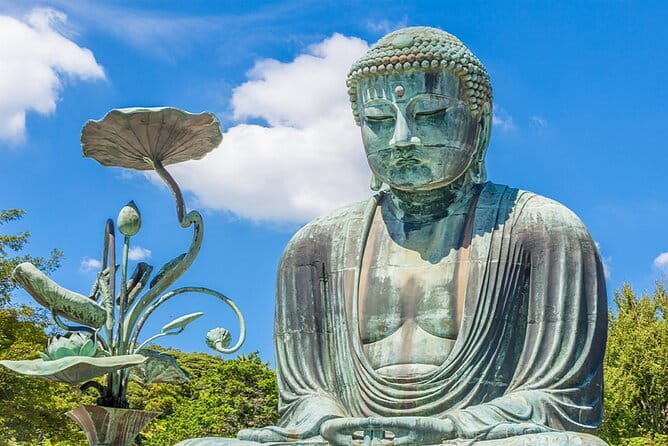
- The Great Buddha comes first: You get about 30 minutes at Kamakura’s famous 13.35-meter bronze statue, with admission paid separately.
- The Enoden ride is included: Allow about 40 minutes for this historic local train experience between Hase and the Enoshima area.
- Enoshima gets the longest visit: You have roughly 1 hour 50 minutes to explore shrines, lanes, views, and food stops.
- The day mixes major sights with free time: Hachimangu Shrine and Komachi Street round out the religious and local-life side of Kamakura.
- Guides vary by departure: Alex, Allan Tan, Peter, Leonard, Jack, Martin, and others have led departures, with English, Mandarin, and Japanese available.
- Traffic can change the plan: Weekend and holiday congestion may shorten stops or delay your return, so leave your evening open.
Why this day trip works from Tokyo
Kamakura and Enoshima sit outside central Tokyo, and seeing both independently takes some route planning. You need to connect different rail lines, time your transfers, and keep an eye on the clock. This tour removes that work with pickup and drop-off at designated points, an air-conditioned vehicle, a driver, and a guide.
That convenience is the main reason to book. At $60.62 per person, the price is reasonable for a full day of transport and guiding, especially if you want to see both destinations without wrestling with a complicated day plan. It is not a private tour, though. The group can reach up to 40 people, and your pace is tied to the rest of the group.
I would think of this as an efficient introduction rather than a slow, intimate visit. You will see the headline sights and get useful cultural context, but you will not have hours to linger at every shrine, browse every shop, or sit by the coast.
Pickup is available from a range of designated points, including Tokyo and Shinjuku. You need to arrive 15 minutes early. The guide carries a yellow flag with the Gogoday logo, and you join by giving the name used for the booking. Late arrivals and no-shows do not receive refunds, so this is not a morning to cut things close.
More Kamakura Day Trips in Tokyo
- Tokyo: Mt. Fuji, Kamakura, Big Buddha, & Lake Ashi Day Trip
★ 4.5 · 867 reviews - Tokyo:Sea of Mount Fuji, Hakone Ropeway, Ōwakudani, Enoshima
★ 4.9 · 84 reviews - Kamakura 8 hr Private Walking Tour with Licensed Guide from Tokyo
★ 5.0 · 80 reviews
The Great Buddha at Kotoku-in
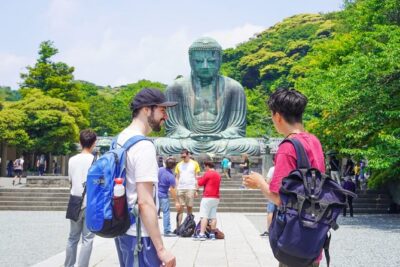
Your first major stop is Kotoku-in, home of Kamakura’s Great Buddha. The bronze figure rises 13.35 meters and gives the day an immediate sense of scale. For many people, this is the most striking stop because the statue is simple, powerful, and easy to appreciate even if you know little about Buddhist art.
You have about 30 minutes here. That is enough to see the statue, take photographs, listen to an explanation, and look around the temple grounds. It is not enough for a leisurely visit or a detailed study of the surrounding temple complex.
Admission is not included, so keep some yen handy. The tour information does not give the exact admission price, and it is wise to carry cash for this and for food or smaller purchases during the day. One booking note specifically suggested having around 3,000 yen available for site costs and meals, though your own spending will depend on what you buy.
The guide can add useful background here. Allan Tan has been praised for explaining Japanese religion rather than simply pointing out buildings, while Leonard was noted for giving attentive help and clear English explanations. The quality of the day depends partly on your assigned guide, but the strongest reports describe guides who answer questions, manage time, and help with photos.
The Enoden train from Hase Station
After the Buddha, you head to Hase Station for the Enoshima Electric Railway, usually called Enoden. The train has operated for more than 100 years and gives you a different view of the area than a tour vehicle can.
The ride lasts about 40 minutes, and the ticket is included. You pass through Kamakura districts and along the Shonan coast, seeing a mix of residential streets, colorful neighborhoods, and seaside scenery. It is a modest part of the day, but it feels more local than simply driving between attractions.
You should set your expectations correctly. This is public rail, not a private sightseeing carriage. The train can be crowded, especially during busy periods. One hot-weather visit also found little shade during the day, so the train may be a welcome break from walking and sun.
The Enoden section is valuable because it connects the places while giving you a taste of ordinary transport in the region. It also creates a natural change of mood: after the stillness of the Buddha, you move through neighborhoods toward the coast and Enoshima.
Enoshima Island, shrines, and sea views
Enoshima receives the longest scheduled stop, about 1 hour 50 minutes. You cross to the island and explore Enoshima Shrine, which was built in 552 by order of Emperor Kinmei. The shrine complex is associated with Benzaiten, a deity linked with music, good fortune, and water.
The island is not one flat sightseeing plaza. You walk through lanes and up slopes, passing shrines and viewpoints along the way. The day’s information points to details such as the colorful wooden, eight-armed seated Benzaiten statue, the Happo tortoise, and other religious artworks. These details give your guide plenty to explain, particularly if you are unfamiliar with the difference between Buddhist and Shinto traditions.
The views are a major reward. One account described the views from the top as breathtaking, and another noted that Mount Fuji could be seen in the distance on a clear day. That sight is weather-dependent, so treat it as a bonus rather than a promise.
You also get time to look for local food. Lunch is not included, but guides such as Peter and Armand have received praise for restaurant suggestions. Enoshima is a good place to use that advice, since the free time is short and a recommendation can save you from spending half the stop deciding where to eat.
There are two practical limits here. First, the island involves a good deal of walking, including slopes and stairs. Second, 1 hour 50 minutes passes quickly if you want to eat, visit the shrines, take photographs, and enjoy the views. You may need to choose your priorities rather than attempt every lane and attraction.
A guide can make the stop easier. Chow was praised for accompanying the group across the bridge and helping people understand where to go, while other guides have been noted for taking photos and pointing out good angles. Still, the group schedule means you should listen carefully to the meeting instructions before wandering off.
More Temple & Shrine Tours in Tokyo
- Tokyo: Meiji Shrine, Asakusa, Skytree Bus Tour and Cruise
★ 4.7 · 1,986 reviews - Tokyo: Asakusa Walking Tour with Sensoji Temple Visit
★ 4.8 · 1,583 reviews - Nikko: Kegon Falls, Lake Chuzenji & Toshogu Temple
★ 4.6 · 1,577 reviews - Tokyo: Nikko Toshogu Shrine and Kegon Waterfall Tour
★ 4.5 · 1,266 reviews
Tsurugaoka Hachimangu and Kamakura’s samurai past
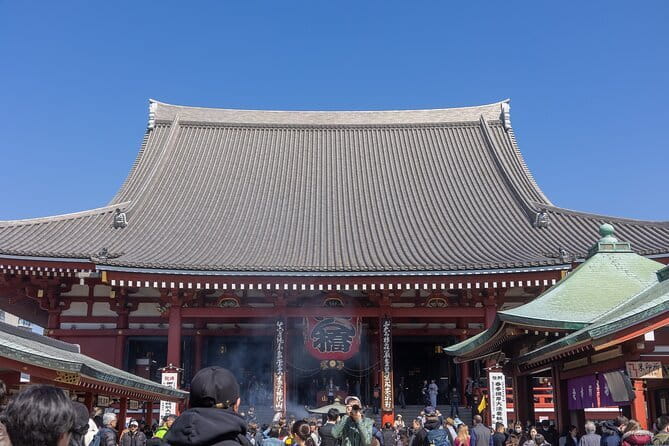
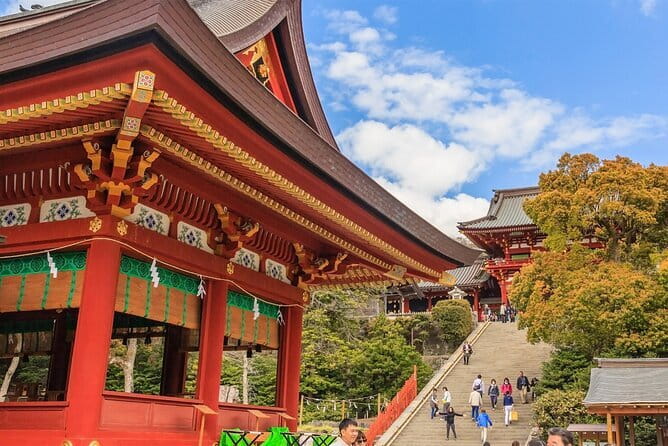
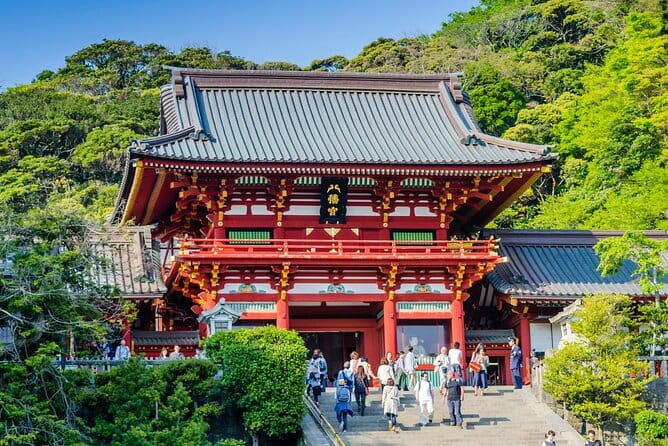
The tour then returns to Kamakura for Tsurugaoka Hachimangu Shrine. This is the day’s main Shinto stop and a strong contrast to the Great Buddha.
The shrine is tied to Kamakura’s samurai heritage and political power. You enter through large torii gates and walk through a broad, formal setting of steps, gardens, and shrine buildings. The visit lasts about 40 minutes, which gives you time to take in the layout, hear the guide’s explanation, and pause for photographs.
I like this stop because it gives historical shape to Kamakura. The Great Buddha shows one side of Japanese religious life, while Hachimangu shows another, with ceremony, shrine architecture, and the memory of the samurai era. A guide who explains those differences can turn a quick visit into something more meaningful.
The schedule is still tight. If you want to pray, take your time with the grounds, or stop for detailed photographs, you may feel rushed. The shrine can also be busy, particularly during peak travel seasons, so do not expect a quiet private encounter.
Komachi Street and a final taste of Kamakura
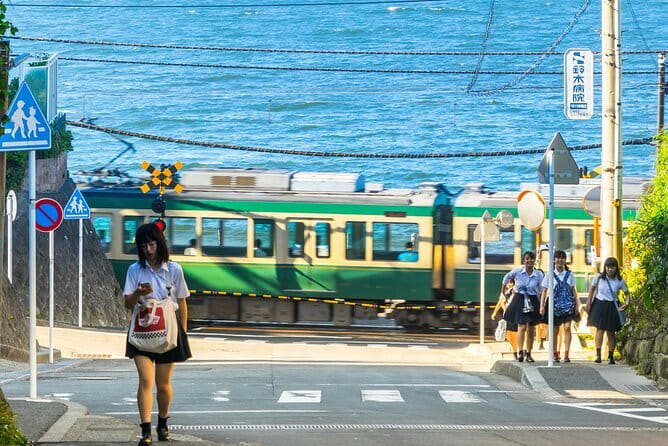
The last stop is Komachi Street, a lively pedestrian shopping road running between Tsurugaoka Hachimangu and Kamakura Station. You have about 30 minutes to browse, snack, and take in the contrast between old Kamakura references and modern shops.
This is not a formal historic site, and that is precisely why it helps round out the day. You see how Kamakura functions as a living town, not just a collection of temples. There are food options and small purchases to consider, but lunch is not part of the tour and 30 minutes is a short window.
A few practical choices matter here. You might use the stop for a quick snack, a souvenir, or a last look at local sweets. If you are still hungry after Enoshima, ask your guide for a recommendation early, since waiting until the final stop may leave you with little time.
One account found a stop connected to the Slam Dunk anime less useful, but that does not appear in the core five-stop plan described here. If pop-culture locations matter to you, confirm the exact schedule on your departure rather than assuming that an anime-related stop will be included.
What the guiding is really worth
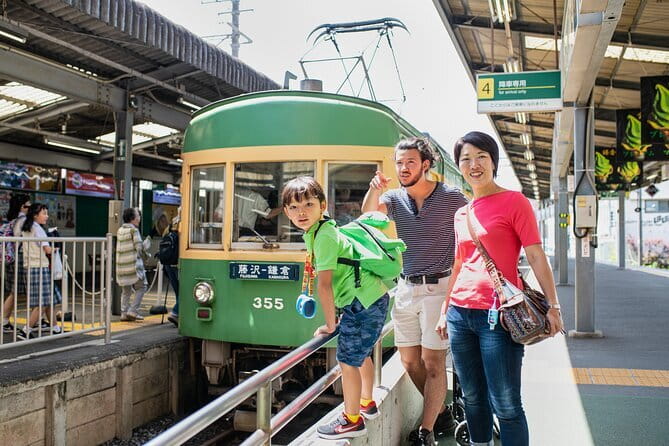
The best part of the guiding is not simply getting from one place to another. It is the explanation of why the places matter. Allan Tan has been praised for moving between English and Mandarin with energy and humor. Peter has been described as friendly, helpful, and good at explaining details. Alex has been praised for keeping the day on time while sharing stories about local culture.
Other named guides, including Leonard, Jack, Martin, Chow, Armand, and Tan, have also received strong marks for warmth, clear communication, and assistance with photos or meals. You cannot select a particular guide from the information provided, so book for the general format rather than for one person.
Language is an important consideration. Guiding is offered in English, Mandarin, and Japanese, and explanations may be given in more than one language. That can work well for a mixed group, but it may also mean that English commentary takes longer to deliver or feels less detailed at certain moments.
One serious complaint described a chaotic check-in, an old bus with dirty curtains, waiting for people who were late, and commentary that was mostly in Chinese with difficult English. This is a minority view beside the many positive accounts, but it is useful to keep in mind. Shared tours can vary by vehicle, guide, group size, and traffic conditions.
Walking, weather, food, and timing
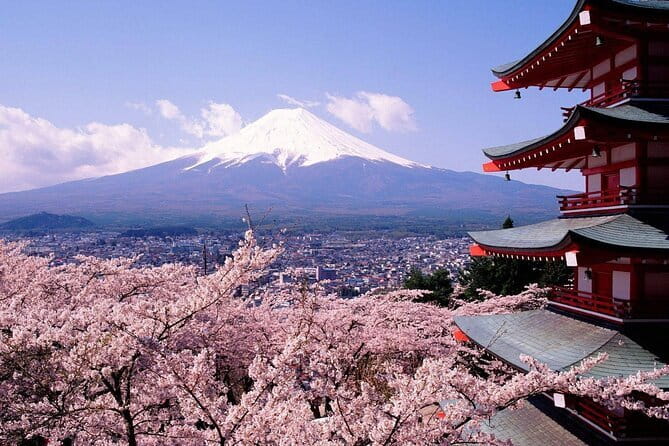
Plan for a physically active day. The stops involve temple and shrine grounds, station transfers, an island walk, slopes, stairs, and shopping streets. Several accounts specifically described lots of walking, and one hot day had little shade.
Wear comfortable shoes and bring water. The air-conditioned vehicle offers relief between stops, but you will spend much of the sightseeing time outdoors. Sun protection is sensible during warm weather.
Lunch is not included. You have time to buy food, and guides may suggest restaurants, but you should budget separately. Cash is worth carrying because some scenic spots, restaurants, and other small businesses may not accept cards. The tour information recommends cash, and one account advised having about 3,000 yen available.
The advertised duration is about 10 hours. Weekend and holiday traffic in Japan can delay the return beyond 8 p.m. The operator may shorten, adjust, or cancel some visits if congestion disrupts the schedule. Do not book a costly evening meal, airport transfer, theater ticket, or other fixed appointment immediately after the tour.
This traffic warning is not a minor footnote. Kamakura and Enoshima are popular, and the route covers several separate areas. The tour gives you access to more sights in one day, but that access comes with less control over timing.
Who will get the most from this tour
I would choose this trip if you have limited time in Tokyo and want a first look at Kamakura and Enoshima without handling the transport yourself. It suits solo visitors, couples, and families who value a guide’s explanations and do not mind sharing a vehicle.
It is also a good fit if Japanese religious sites feel hard to interpret on your own. The combination of the Great Buddha, Enoshima Shrine, and Hachimangu Shrine gives you useful comparisons, while Komachi Street and the Enoden ride keep the day from becoming a temple-only outing.
I would hesitate if you prefer slow photography, long meals, or quiet exploration. The 40-person maximum can feel large, and you must follow meeting times closely. You should also think twice if you need a guaranteed early return or want a fully English-only experience with no multilingual commentary.
The free cancellation policy allows a full refund when you cancel at least 24 hours before the start time. Changes or cancellations inside that window are not refunded, so decide early if the pace and shared format suit you.
Should you book the Kamakura and Enoshima day tour?
Book it if you want maximum coverage with minimum route planning. For $60.62, the included vehicle, guide, and Enoden ticket make this a practical way to see the Great Buddha, Enoshima, Hachimangu Shrine, and Komachi Street in one day.
Go in prepared for walking, crowds, multilingual explanations, and a possible late return. Arrive early, carry cash, keep your evening free, and listen closely to the meeting instructions. If you do that, this tour offers a useful first taste of Kamakura’s temples, samurai-era setting, seaside rail line, and Enoshima views.
FAQ
How long does the tour last?
The tour lasts approximately 10 hours.
What places are visited?
The route includes Kotoku-in and the Great Buddha, Hase Station, Enoshima Island, Tsurugaoka Hachimangu Shrine, and Komachi Street.
Is transportation included?
Yes. The tour includes pickup and drop-off at designated points, an air-conditioned vehicle, and an Enoshima Electric Railway ticket.
Is lunch included?
No. Lunch is not included, so you need to pay for your own food.
Which languages are available?
The guide service is available in English, Mandarin, and Japanese. Explanations may be given in multiple languages during the shared tour.
How large can the group be?
The tour can have a maximum of 40 travelers.
Do I need to arrive early?
Yes. You should arrive 15 minutes before departure. The guide will hold a yellow flag with the Gogoday logo at the meeting point.
Can traffic affect the schedule?
Yes. Weekend and holiday traffic may delay the return beyond 8 p.m. Stops may also be shortened, adjusted, or canceled because of traffic.
What is the cancellation policy?
You can receive a full refund if you cancel at least 24 hours before the experience start time. Cancellations or changes made less than 24 hours before the start time are not refunded.
More Full-Day in Tokyo
- From Tokyo: Mount Fuji Full-Day Sightseeing Trip
★ 4.5 · 4,970 reviews - Mount Fuji Full-Day Private Tour from Tokyo (Customizable)
★ 4.9 · 1,470 reviews - Tokyo Private Full-Day Tour by Car or Van
★ 5.0 · 684 reviews - From Tokyo: Must-Visit Mount Fuji Highlight Full-Day Tour
★ 4.7 · 532 reviews
Just added around Tokyo
- Private Memorable Tokyo Tour with English Speaking Driver★ 5.0 · 30 reviews
- Private Tokyo Custom Full-Day Tour by Chartered Vehicle★ 5.0 · 16 reviews
- Private Sightseeing to Mt Fuji and Hakone with English Driver★ 5.0 · 51 reviews
- Tokyo Photography Masterclass – Private Photography Lesson★ 5.0 · 25 reviews
- 4 Day Tour – Mount. Fuji, Tokyo, Hakone, Kamakura and Yokohama★ 5.0 · 19 reviews
- Private Mt. Fuji Day Trip from Tokyo with English-Speaking Driver★ 5.0 · 33 reviews
- Private Unforgettable Mt Fuji Tour with English Speaking Driver★ 5.0 · 142 reviews
- Private Tokyo Food Tour – A Journey Through Time Through Food★ 5.0 · 36 reviews
Kamakura Day Trips, compared.
Kamakura & Enoshima Day Trip including Temple Tickets
Read our review →
Mt. Fuji, Kamakura, Big Buddha, & Lake Ashi Day Trip
Read our review →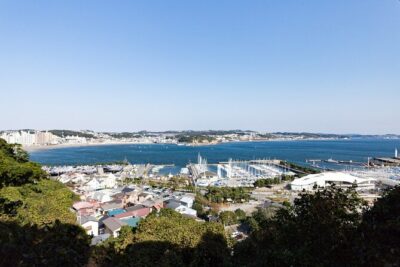
Kamakura Historical Walking Tour with the Great Buddha
Read our review →
Kamakura Private Tour: Temples, Nature, and the Great Buddha
Read our review →
Sea of Mount Fuji, Hakone Ropeway, Ōwakudani, Enoshima
Read our review →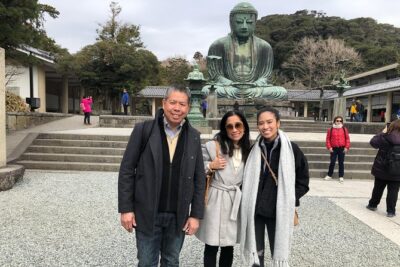
Kamakura 8 hr Private Walking Tour with Licensed Guide from Tokyo
Read our review →Browse the lists this tour appears in