
REVIEW · HISTORICAL TOURS
Asakusa: Tokyo Skytree Exploration and History Tour
Asakusa gives you more than pretty temple gates. This tour uses the Sumida River, Kaminarimon, Nakamise Street, and Senso-ji to explain how Japan moved from isolation and feudal rule toward the modern country you see today. I like the old-to-new route and the way guides such as Machiko, Keiko, Aki, and Yasu have made history easy to follow.
I also like the small group limit of eight, which gives you a better chance to ask questions and get help with photos. The main drawback is the amount of walking and standing, with stairs along the way. In hot weather, rain, or heavy crowds, the three-and-a-half-hour outing can feel demanding.
In This Review
- Key points at a glance
- Why this Asakusa to Skytree route works
- Starting beside Asakusa Station
- Kaminarimon and the symbols of Asakusa
- Nakamise Street, where shopping meets temple tradition
- Hōzōmon, Senso-ji, and Asakusa Shrine
- The short train ride to Tokyo Skytree
- Tokyo Skytree at 350 meters
- The Tembo Galleria at 450 meters
- Shopping after the tower
- What $116 gets you
- Practical details before you book
- Who should book this experience?
- Should you book the Asakusa and Skytree tour?
- FAQ
- Where does the tour start?
- Where does the tour finish?
- How long does the experience last?
- Is the train fare included?
- Are Tokyo Skytree tickets included?
- What language is the tour conducted in?
Key points at a glance
- A history lesson along the Sumida River: Learn how Japan’s long period of limited foreign contact shaped the country.
- Asakusa’s essential landmarks: See Kaminarimon, Nakamise Street, Hōzōmon, Senso-ji, and Asakusa Shrine with context.
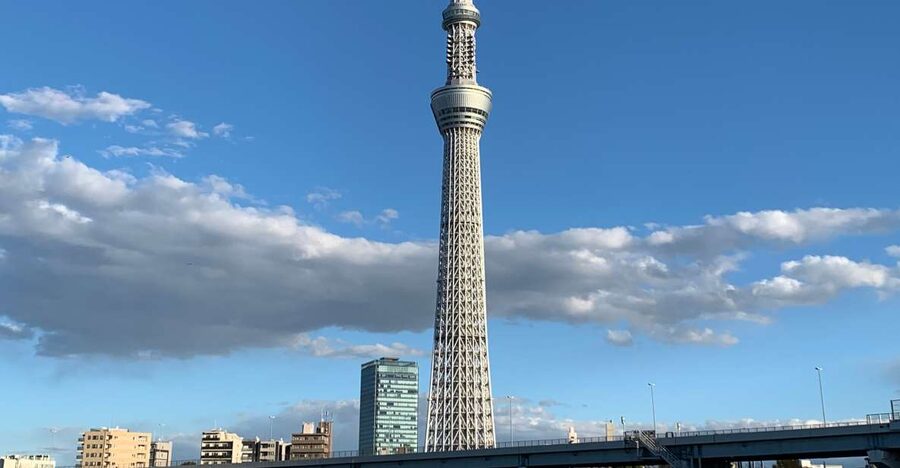
- A two-minute train link: Cross the river by train from old Asakusa to Tokyo’s tallest modern landmark.
- Both Skytree observation levels: Visit the Tembo Deck at 350 meters and the Tembo Galleria at 450 meters.
- Small English-speaking groups: The group is limited to eight, with an English guide and English audio support.
- Free time after the tower: Shop for souvenirs and local treats at the complex below Tokyo Skytree.
Why this Asakusa to Skytree route works
I like the order of this experience. You begin at ground level, where temples, gates, shops, and a riverfront tell the story of Japan. Only after that do you rise above Tokyo and see how enormous the modern city has become.
That contrast gives the Skytree visit more meaning. On its own, the tower is a superb viewpoint. After a guided walk through Asakusa, it becomes a visual link between two versions of Tokyo: the historic district around Senso-ji and the high-rise city spreading far beyond it.
The tour lasts 210 minutes, or three and a half hours. That is enough time for a proper walk and both Skytree decks, but it is not a quick photo stop. You should arrive ready to walk, pause in crowded areas, climb or use stairs where needed, and keep moving with the group.
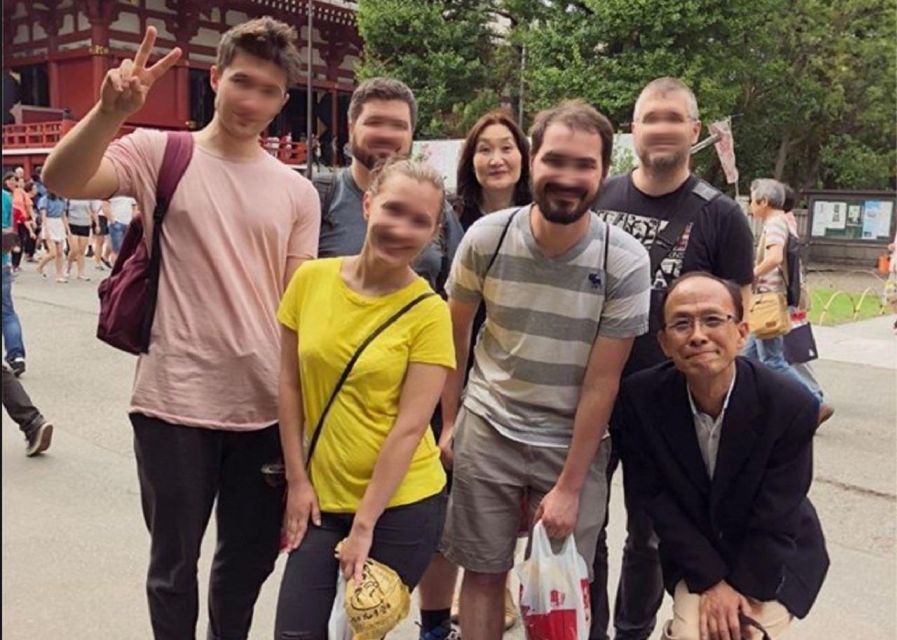
The small size helps. With no more than eight people, your guide can answer questions without trying to speak over a large crowd. Several guides have been praised for taking photos, checking on comfort, and explaining sites in clear English. An English audio guide is also included.
A few more Japan trips to weigh up
- World Heritage Shirakawa-go and Experience Tours from Kanazawa
★ 5.0 · 4,049 reviews - Tokyo: Imperial Palace and Shogun Historical Walking Tour
★ 5.0 · 2,251 reviews - World Heritage Kyoto & Nara Uji Authentic Matcha Experience
★ 5.0 · 1,573 reviews
Starting beside Asakusa Station
The meeting point is in front of the Burger King beside Exit 4 of Asakusa subway station on the Ginza Line, station G19. Step outside Exit 4 rather than waiting inside the station, and allow a little extra time to find the correct exit in the busy area.
The walk begins near the Tokyo Cruise Asakusa Pier. This is a useful first stop because the Sumida River is not just scenery. Your guide uses the river to set up the larger story of Japan’s relationship with the outside world.
You will hear about the period when Japan restricted contact with foreign countries and how pressure from abroad eventually pushed Japan to reopen. That background helps explain why the country changed so quickly in the modern era. Instead of hearing isolated facts at each temple, you get a broad timeline that ties the stops together.
The riverfront portion is listed as about 15 minutes. It is short, but it gives the tour a clear opening and lets you get your bearings before entering the denser streets around Asakusa.
Kaminarimon and the symbols of Asakusa
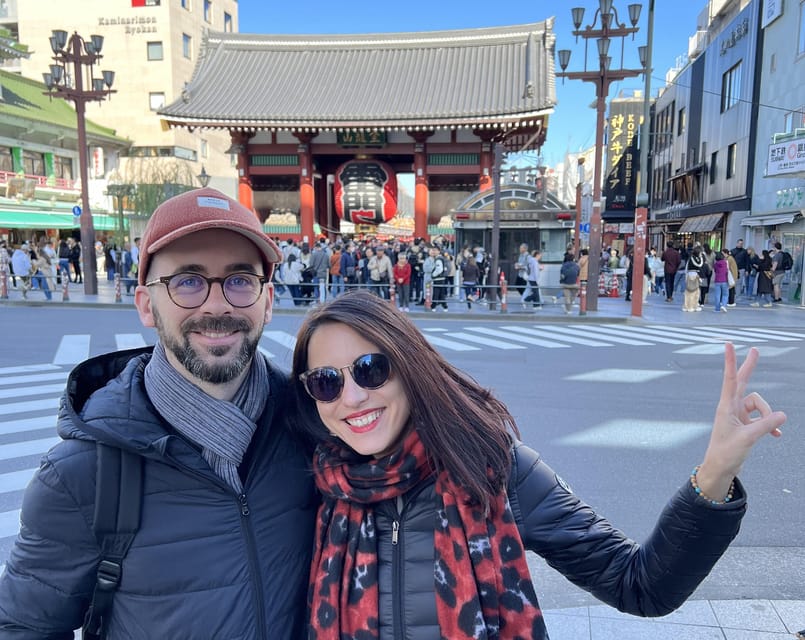
The Asakusa Culture Tourist Information Center is next, followed by Kaminarimon, the Thunder Gate. Kaminarimon is one of Tokyo’s most familiar sights, with its large red lantern and dramatic entrance to the temple district.
A quick photo here is easy. The useful part of the tour is learning what the gate and its guardian figures represent. Your guide explains the symbolism rather than treating Kaminarimon as a backdrop for pictures.
The area can be crowded, particularly around the gate and the approach to Senso-ji. That is where a small group and a live guide matter. You may need to stay close, and a softly spoken guide can be difficult to hear in the noise. One practical tip is to position yourself near the guide and use the audio support when available.
Nakamise Street, where shopping meets temple tradition
Nakamise Shopping Street leads from Kaminarimon toward the temple. The walk here takes about 30 minutes, the longest stop in the Asakusa portion.
The street is lined with souvenir shops, snacks, sweets, and traditional-style goods. It is easy to race through while staring at shop windows, but a guide can explain how this commercial approach fits into the temple setting and how the area serves both local worshippers and people sightseeing in Asakusa.
You may have time for small purchases and taste testing. A guide can also point out popular treats and useful places to browse. Do not expect a long, independent shopping session at this stage, since the group still needs to reach the temple and tower on schedule.
This is one of the more social parts of the walk. The street is crowded, and you will spend much of the time standing or walking slowly. If you want souvenirs, note what interests you and return during the free time at Tokyo Skytree, where you can shop without the walking group waiting.
Same city, a completely different kind of day:
- Mt Fuji and Hakone 1-Day Bus Tour Return by Bullet Train
★ 5.0 · 26,383 reviews - 1-Day Tokyo Bus Tour
★ 5.0 · 14,250 reviews - PERFECT KYOTO 1-Day Bus Tour
★ 5.0 · 13,518 reviews - Tokyo: TOKYO SKYTREE® Admission ticket
★ 4.5 · 11,192 reviews
Hōzōmon, Senso-ji, and Asakusa Shrine
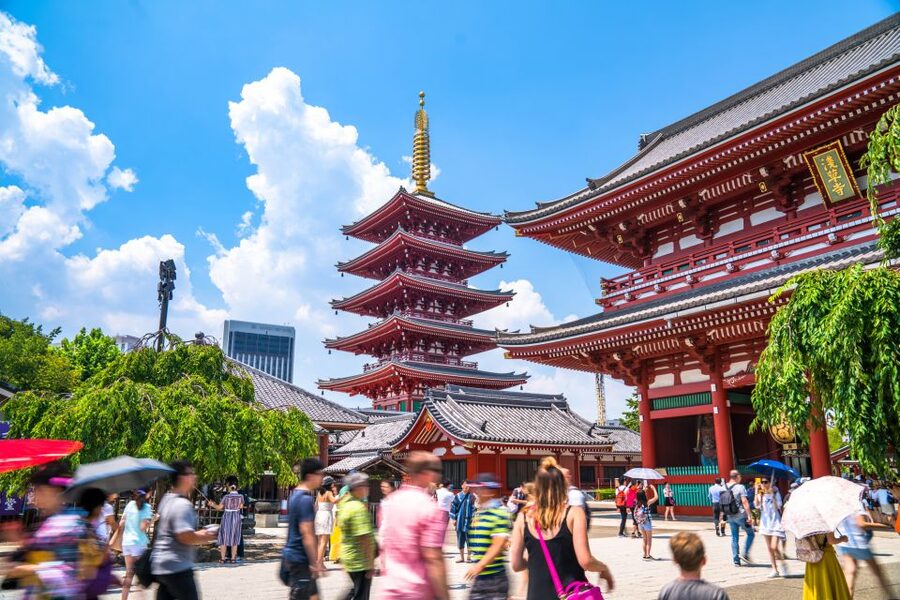
The route continues through Hōzōmon Gate to Senso-ji Temple. Hōzōmon is another large ceremonial gate, and it helps show the layered approach to the temple grounds.
Senso-ji is the main cultural focus of the Asakusa walk. Your guide explains the temple’s religious meaning, the symbols around it, and its place in the district. The point is not simply to identify the building. You learn how to read the space and understand why people come here.
The tour then visits Asakusa Shrine, located within the same historic area. Having both a Buddhist temple and a Shinto shrine in the same walk gives you a useful chance to compare Japan’s religious traditions. Your guide connects the buildings and customs to the wider story of Japanese culture.
The listed timing allows about 15 minutes at each of these stops. That is enough for explanation, photos, and questions, but you will not have the freedom of an unstructured temple visit. If you want a quiet personal visit to Senso-ji, plan to return another time.
The walking is manageable for many people, but it is not effortless. One person who took the tour in their 60s found the repeated walking and stairs tiring and wished for a short seated drink break. The pace has also been described as relaxed rather than rushed, and guides have offered rest and water pauses, especially in hot weather. Still, tell your guide early if you need a slower pace.
The short train ride to Tokyo Skytree
After Asakusa, you take a train across the Sumida River to Tokyo Skytree Station. The ride itself takes about two minutes, while the fare is an additional JPY160.
This small transfer is one of the clever details of the route. You do not spend a long time traveling across Tokyo, yet the setting changes at once. The temple district gives way to Tokyo Skytree, a giant modern structure that represents the city’s newer identity.
The train fare is not included, so keep a little cash or a suitable transit payment option ready. The tour finishes at Tokyo Skytree rather than returning you to Asakusa, which is useful if you want to continue sightseeing, shop, or make your own way to another part of Tokyo.
Tokyo Skytree at 350 meters
The Skytree visit includes entry to both observation levels. You first go to the Tembo Deck at 350 meters.
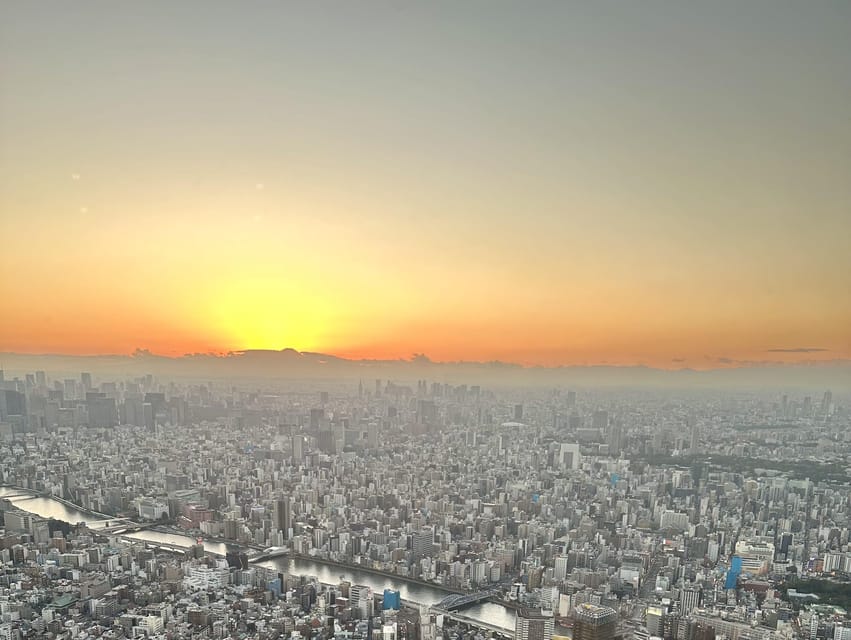
From this height, your guide helps identify major parts of Tokyo spread across the city. The view is the main event, but the guide adds value by giving you points of reference. Tokyo can look like an endless mass of buildings from above, so help identifying notable places makes the panorama easier to understand.
Visibility will affect the experience. On a clear day, you can take in a huge sweep of the metropolitan area. In poor weather, the view may be limited, though the height and interior observation spaces still make the visit worthwhile.
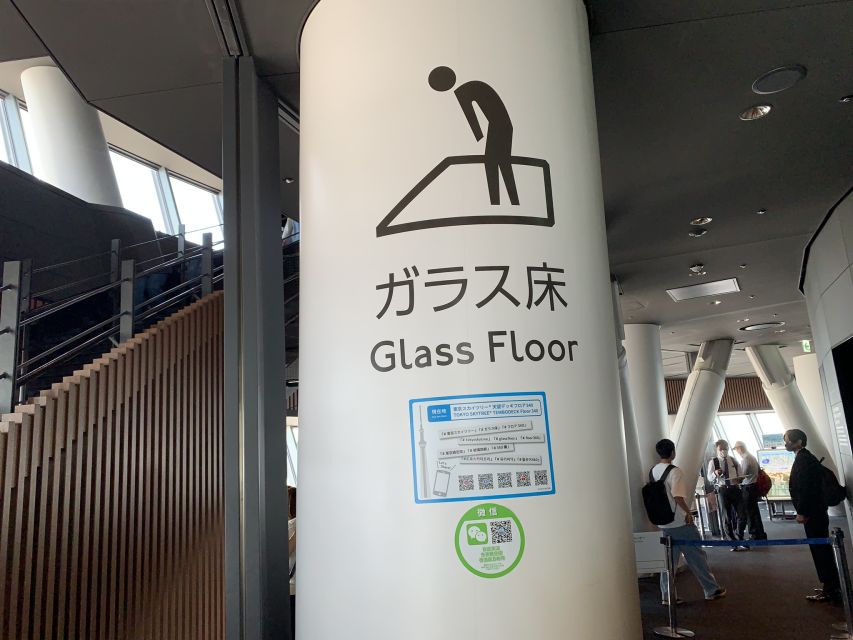
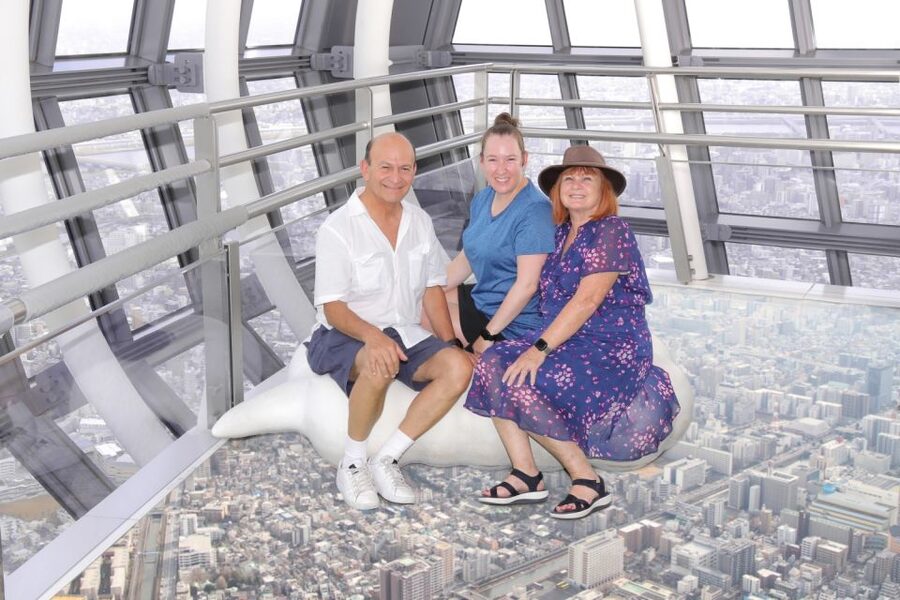
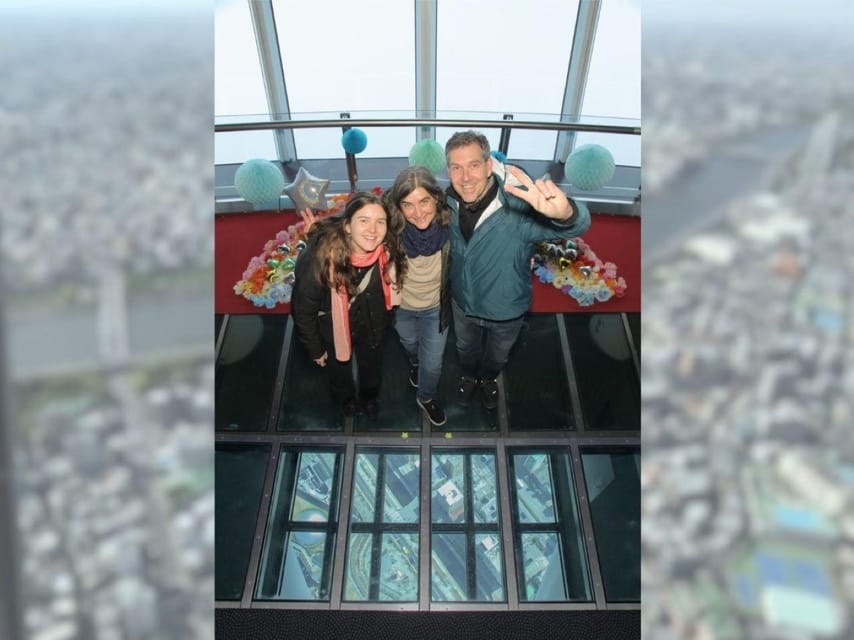
You also have a chance to use the glass floor. Looking straight down at the streets below is thrilling for some people and uncomfortable for others. There is no need to linger if heights are not your thing, but it is a memorable feature for anyone who enjoys a little nervous laughter with their view.
A commemorative photo is available, with the option to purchase a downloadable copy. Your guide may also help take personal photos, something several guides have made part of their attentive service.
The Tembo Galleria at 450 meters
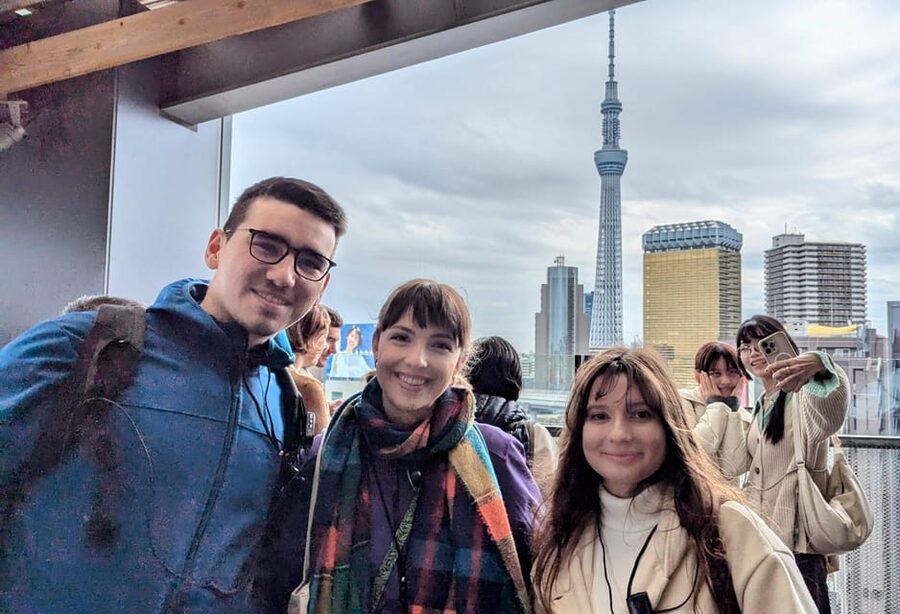
The higher level, the Tembo Galleria, reaches 450 meters. The extra height gives you another view of Tokyo, though the difference is not only about seeing farther.
The Galleria lets you experience the tower as a vertical journey. You move through a higher section of the structure and look down on the city from an even more unusual angle. Your guide can continue pointing out landmarks and answering questions before you have time to explore on your own.
The Skytree portion is scheduled for about 30 minutes at the 350-meter deck and another 30 minutes at the Galleria. That provides a good introduction, but it is not unlimited time. If you want to linger over every view, browse every display, or spend a long time taking photos, you may find the schedule tight.
The included tickets are important value here. Tokyo Skytree is a major paid attraction, and advance entry can save you from trying to arrange access after arriving. The tour is designed to avoid the ticket line, although the operator notes that buying tickets on the spot can still lead to waiting.
Shopping after the tower
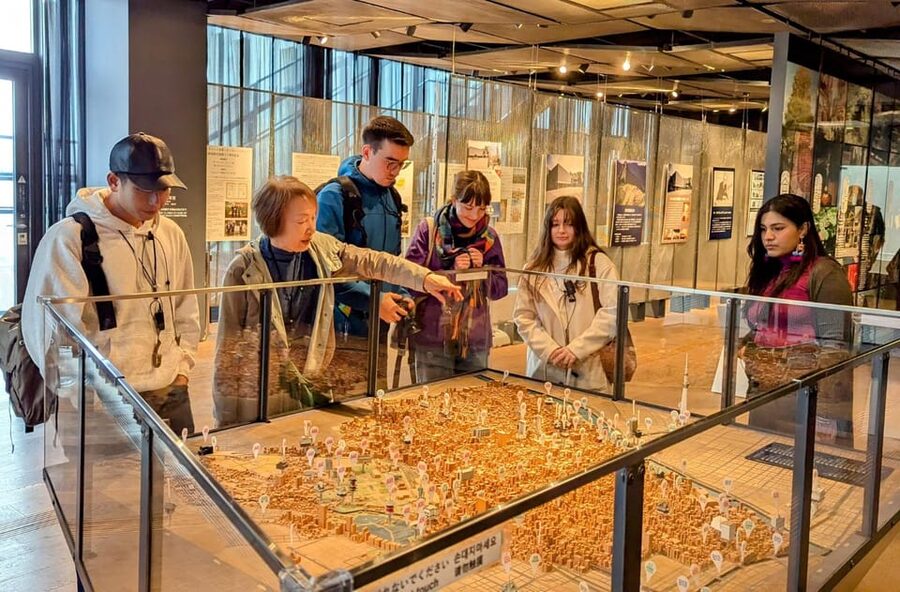
The formal tour ends at Tokyo Skytree, with free time to explore the large shopping complex at the base. This is a useful finish because you can browse at your own pace instead of trying to shop while keeping up with the group.
You might look for Japanese snacks, gifts, or Skytree-themed souvenirs. The information provided does not specify individual shops or brands, so treat this as flexible browsing time rather than a guided shopping visit.
Ending here also gives you control over the rest of your day. You can stay in the complex, continue around Tokyo Skytree, or arrange your own transport. Hotel pickup and drop-off are not included.
What $116 gets you
The price is $116 per person. That is not the cheapest way to see Asakusa or Tokyo Skytree, since you could visit the district independently and arrange tower entry yourself.
The value comes from combining three services in one small outing: an English-led history walk, help moving from Asakusa to Skytree, and admission to both observation decks. You are paying for interpretation as much as transport and entry. If you want to understand what you are seeing, rather than collect photos without context, the price is easier to justify.
The group limit of eight strengthens that value. A large group could make the Asakusa walk feel slow and impersonal, while a private tour would cost more. This sits between the two, with room for questions and a guide who can check that everyone is keeping up.
It is a better buy if you have limited time in Tokyo and want both old Asakusa and the Skytree in one half-day. It is less appealing if you already know the district well, dislike guided schedules, or mainly want a long, leisurely temple and shopping visit.
Practical details before you book
The activity is non-refundable. There is also a special ticket issue: Skytree tickets bought online in advance cannot be canceled or changed. The operator may purchase them after the free-cancellation period ends, or may ask you to waive that cancellation privilege so tickets can be secured earlier.
Read this condition carefully before booking. If you agree to waive the privilege and then cancel during that period, the operator says it may charge half the tour price.
The tour is conducted in English, with an English audio guide included. Guides have included Machiko, Keiko, Aki, and Yasu, though the assigned guide can vary.
Wear comfortable shoes and prepare for weather. The walk has included hot sunshine around 30 C as well as cold, heavy rain. Guides have made efforts to pause for rest, drinks, and photos, but you should still bring water and allow for a physically active afternoon.
Who should book this experience?
I would choose this tour if you want an introduction to Asakusa that explains why the buildings matter. It suits first-time visitors, families who appreciate a clear story, and anyone who wants Tokyo Skytree paired with something more grounded than a tower visit alone.
It is also a good fit if you enjoy asking questions. The small group makes that easier, and guides have been praised for explaining history, pointing out city landmarks, taking photos, and adapting to individual needs. A vegan guide to restaurants was even provided for one participant, showing the sort of personal attention that can make a small tour work well.
I would think twice if you have limited stamina, need frequent seated breaks, or prefer to explore at your own speed. The experience is relaxed compared with a rushed sightseeing circuit, but it still includes a lot of walking, crowds, stairs, and two observation decks.
Should you book the Asakusa and Skytree tour?
Book it if you want the story of Tokyo told in sequence: river, temple district, train ride, tower, and city view. The strongest part is not any single photo stop. It is the way the route links Japan’s past with its present.
At $116, the tour costs more than independent sightseeing, but the included Skytree tickets, English guide, small group, and historical explanations give it solid value. Choose it for context and convenience, not for a free-form shopping day.
FAQ
Where does the tour start?
It starts in front of the Burger King beside Exit 4 of Asakusa subway station, G19, on the Ginza Line.
Where does the tour finish?
The tour finishes at Tokyo Skytree after the observation deck visit and free time at the shopping complex.
How long does the experience last?
The total duration is 210 minutes, or three and a half hours.
Is the train fare included?
No. The two-minute train ride from Asakusa Station to Tokyo Skytree Station costs JPY160 and is not included.
Are Tokyo Skytree tickets included?
Yes. Admission to the 350-meter Tembo Deck and the 450-meter Tembo Galleria is included.
What language is the tour conducted in?
The live tour guide and audio guide are in English.
Just added around Japan
- Private Memorable Tokyo Tour with English Speaking Driver★ 5.0 · 30 reviews
- Private Tokyo Custom Full-Day Tour by Chartered Vehicle★ 5.0 · 16 reviews
- Private Sightseeing to Mt Fuji and Hakone with English Driver★ 5.0 · 51 reviews
- Tokyo Photography Masterclass – Private Photography Lesson★ 5.0 · 25 reviews
- Private Mt. Fuji Day Trip from Tokyo with English-Speaking Driver★ 5.0 · 33 reviews
- 4 Day Tour – Mount. Fuji, Tokyo, Hakone, Kamakura and Yokohama★ 5.0 · 19 reviews
- Private Unforgettable Mt Fuji Tour with English Speaking Driver★ 5.0 · 142 reviews
- Private Tokyo Food Tour – A Journey Through Time Through Food★ 5.0 · 36 reviews
Historical Tours, compared.
World Heritage Shirakawa-go and Experience Tours from Kanazawa
Read our review →
Imperial Palace and Shogun Historical Walking Tour
Read our review →
World Heritage Kyoto & Nara Uji Authentic Matcha Experience
Read our review →
Kyoto Gion: 2-Hour Geisha Culture & History Walking Tour
Read our review →
World Heritage Shirakawa-go Morning Guided Tour
Read our review →
Hiroshima Historical Walking Tour – Why A-Bomb was Dropped
Read our review →
Hiroshima Peace (Heiwa) Walking Tour at World Heritage Sites
Read our review →Browse the lists this tour appears in