REVIEW · PRIVATE
30-Min Tokyo Central Private Heli Tour– Asakusa, Skytree, Shibuya
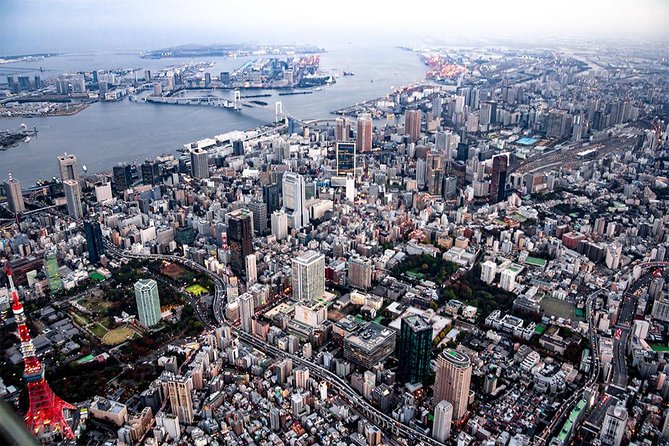
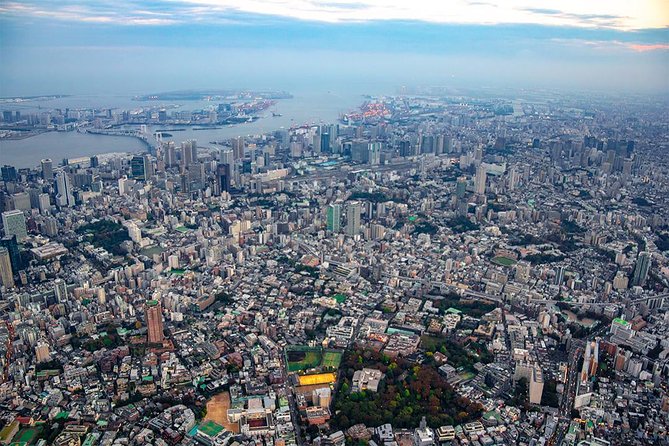
Tokyo is hard to grasp from street level. From the air, its scale makes sense: Tokyo Bay opens to the southeast, Shibuya and Shinjuku spread across the western city, and landmarks such as Shibuya Crossing, Tokyo Skytree, and the Imperial Palace become pieces of one enormous urban picture. This private helicopter flight gives you that rare view without sharing the aircraft with another tour group.
I like two things right away. First, the booking covers up to three people, so the $1,887.77 group price can make reasonable sense for a small party. Second, the staff have shown useful flexibility when weather threatens a flight, including contacting passengers about moving an appointment earlier. The main drawback is simple: the price is high, and the advertised flight time varies between about 25 and 30 minutes.
In This Review
- Key points at a glance
- Why Tokyo looks different from a helicopter
- Leaving Tokyo Heliport in Shinkiba
- Tokyo Bay and the first wide view
- Asakusa and Tokyo Skytree from above
- Shibuya Crossing and the western city
- The Imperial Palace and Tokyo’s central core
- Is the $1,887.77 group price fair?
- Weather, rescheduling, and practical limits
- Who will get the most from this flight?
- Should you book the Tokyo private helicopter tour?
- FAQ
- How long does the Tokyo helicopter experience last?
- How many people can join the private helicopter tour?
- Where does the helicopter flight start and finish?
- Which Tokyo sights can I see from the helicopter?
- Can I take photographs during the tour?
- What happens if bad weather cancels the flight?
- What are the weight and health restrictions?
Key points at a glance
- A private flight for up to three people: You share the helicopter only with your own group.
- Tokyo Heliport departure: The launch point is at 4-chōme-7-25 Shinkiba in Koto City, near public transportation.
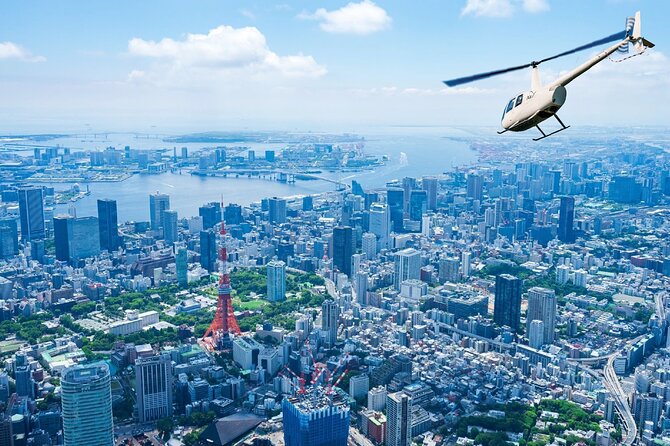
- Big-city views from several angles: The route can include Tokyo Bay, Asakusa, Tokyo Skytree, Shibuya, Shinjuku, the Imperial Palace, and the National Olympic Stadium.
- About 45 minutes total: Plan on roughly 25 to 30 minutes in the air, plus the time needed at the heliport.
- Weather matters: Poor conditions can cancel the flight, but you can receive a full refund or change to another date.
- Private photos in the air: Photography is banned at the Tokyo Heliport site, but pictures are allowed inside the helicopter and during the flight.
Why Tokyo looks different from a helicopter
Tokyo is a city of contrasts from the ground. You move through tight streets, railway corridors, shopping lanes, towers, and quiet temple grounds, often without seeing how the pieces connect. A helicopter changes that. You can look down on major districts at once and understand the city’s reach in a way no observation deck quite matches.
The flight is offered by AIROS Skyview Tokyo Helicopter Tours. It leaves from Tokyo Heliport in Shinkiba, a practical departure point for a city flight. The activity lasts about 45 minutes overall, with the actual flight described as roughly 25 to 30 minutes. That distinction matters when you are planning a packed Tokyo day. This is an aerial highlight, not a half-day excursion.
Because the activity is private, your group controls the experience in a useful way. You do not need to share the aircraft with strangers, and a party of three can split the cost. The booking limit is three people, so this works best for a couple, a small family, or three friends rather than a larger reunion.
A few more Tokyo trips to weigh up
- Tokyo 6hr Private Tour with Government-Licensed Guide
★ 5.0 · 3,902 reviews - Private Tour to Mt. Fuji and Hakone (Fully Licenced Operator)
★ 5.0 · 1,910 reviews - Tokyo Customized Private Tour (Must See Places in 1 Day)
★ 5.0 · 1,499 reviews
Leaving Tokyo Heliport in Shinkiba
Your starting point is Tokyo Heliport, at 4-chōme-7-25 Shinkiba, Koto City, Tokyo 136-0082. The departure area is close enough to the city to be convenient, and the meeting point is also where the flight ends.
One unusual rule deserves attention before you book. For security reasons, photography and picture taking are prohibited at the Tokyo Heliport site. You cannot count on the usual preflight photo in front of the helicopter. If that souvenir matters to you, the operating information points to Funabashi Heliport or a night course from Yokohama Nishi Heliport as alternatives.
Once you are in the helicopter, photography is allowed, including during the flight. That gives you a chance to record the views, but glare, reflections, and motion can make aerial photos tricky. I would treat pictures as a bonus and keep some time for simply looking out. Tokyo from above changes quickly, and the best sight may be gone while you are adjusting your phone.
The tour has a maximum of three people per booking. There are also aircraft balance rules: the limit is 286 pounds, or 130 kilograms, per passenger, with a maximum combined weight of 530 pounds, or 240 kilograms. The supplied information also lists 287 pounds in one place, so I would use the stricter 286-pound limit when checking eligibility.
Tokyo Bay and the first wide view
The flight includes a view toward Tokyo Bay, one of the places where the city finally opens up. From the ground, the bay can feel distant or hidden behind roads and buildings. From the helicopter, it gives the city a broad edge and helps you see how much of Tokyo is tied to the waterfront.
The bay portion is valuable because it provides scale rather than just a landmark checklist. You can look from the water toward the dense central districts, then back toward the heliport area and the wider Koto City surroundings. The exact order and angle depend on flight operations, so you should not expect a fixed sightseeing route like a bus circuit.
This is also where weather has the greatest effect on the experience. Clear conditions can make the city easy to read. Cloud, haze, or rain can flatten the view and reduce the payoff of an expensive flight. The operator requires suitable weather and can cancel when conditions are poor, aircraft issues arise, or other flight operations are disrupted.
Asakusa and Tokyo Skytree from above
Asakusa gives the tour a different kind of focal point. On the ground, this district is known for temple precincts, traditional streets, and a strong sense of old Tokyo. From above, you are more likely to appreciate its position within the modern city and the way the district relates to the nearby tower.
Tokyo Skytree is the obvious visual marker here. The tower is already one of the city’s best-known sights from street level, but seeing it from a helicopter reverses the usual experience. Instead of looking up at Skytree, you look across and down toward it as part of the surrounding city.
You should keep expectations realistic. The flight does not promise a landing at Skytree or a stop in Asakusa. These are sights you see from the air. The listing describes the attractions as views along the flight, and the itinerary is not presented as a series of landings. For a first-time visitor, that is still useful: the aerial view can help you place Asakusa and Skytree on your own Tokyo map before exploring them on foot.
Same city, a completely different kind of day:
- Mt Fuji and Hakone 1-Day Bus Tour Return by Bullet Train
★ 5.0 · 26,383 reviews - 1-Day Tokyo Bus Tour
★ 5.0 · 14,250 reviews - Tokyo: TOKYO SKYTREE® Admission ticket
★ 4.5 · 11,192 reviews - Tokyo: teamLab Planets TOKYO Digital Art Museum Entry Ticket
★ 4.6 · 9,779 reviews
Shibuya Crossing and the western city
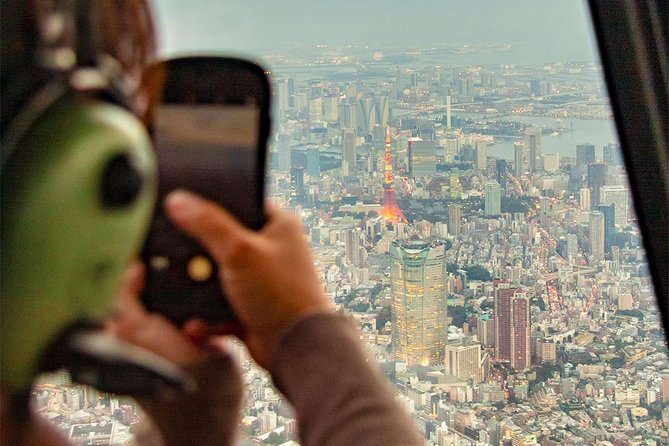
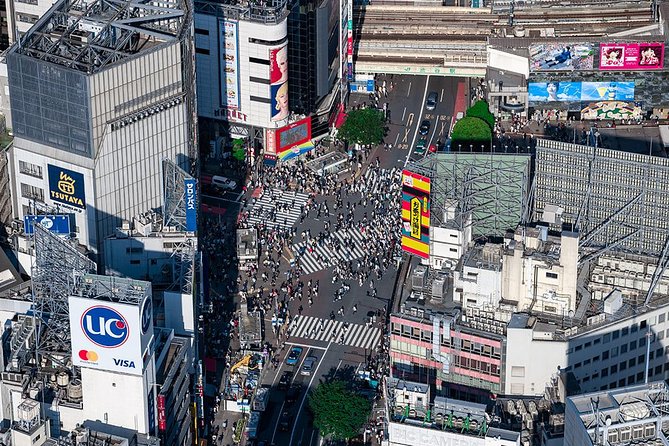
Shibuya Crossing is one of the most recognizable points on the flight. At street level, you experience it as a wall of people, traffic lights, storefronts, and screens. From above, the intersection becomes a compact pattern within the much larger district.
The aerial view changes what you notice. You are not just watching people cross. You are seeing the roads feed into the junction and the surrounding blocks extend in every direction. That makes this portion especially worthwhile if you have already visited Shibuya from the ground and want a second perspective.
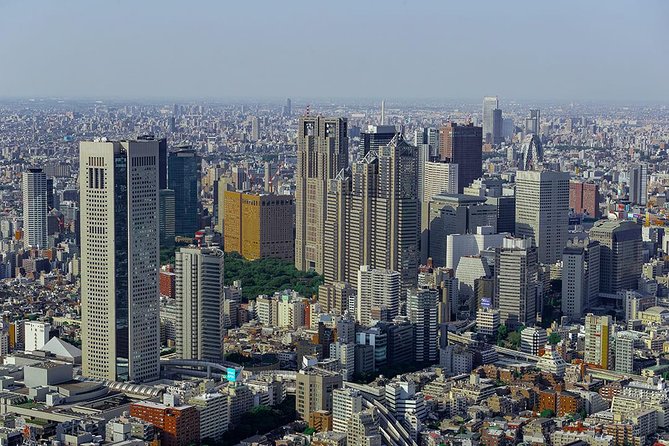
The same applies to Shinjuku. The tour names Shinjuku as one of the main areas visible from above, though it does not promise a specific building or a particular angle. You might find the district easier to understand from the air, with its dense development and major urban corridors laid out below you.
The National Olympic Stadium is also included among the sights. Like the other landmarks, it is a flyover view rather than a stop. If you are hoping for a close-up visit or a guided explanation at the stadium, this tour is not the right format. If you want to add it to a broad city panorama, it fits well.
The Imperial Palace and Tokyo’s central core
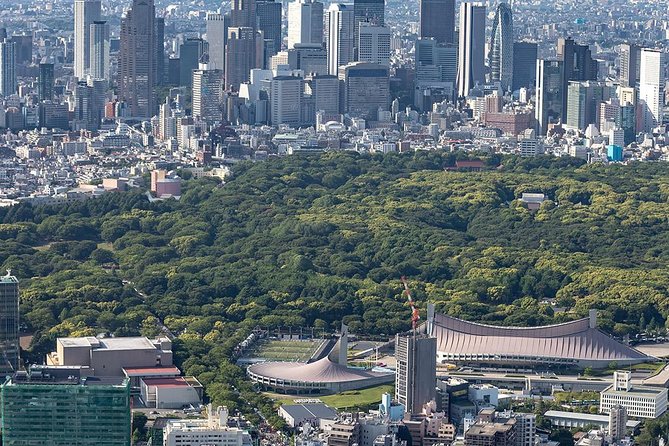
The Imperial Palace offers another useful reference point. On the ground, much of the palace area is defined by walls, gardens, open space, and restricted areas. From the air, its position within central Tokyo becomes easier to see.
This section of the flight can be more about orientation than drama. Shibuya Crossing and Skytree are easy to recognize. The Imperial Palace may be subtler, depending on the route and visibility. Still, it helps connect the western districts, the central city, and the eastern side near Asakusa.
The itinerary information lists several sights as attractions you can see while cruising, but it does not provide a guaranteed sequence or a minute-by-minute route. I would read that as a flexible aerial circuit. Your pilot and the operator will work within flight rules, weather, and current conditions, so the precise view from your seat can vary.
Is the $1,887.77 group price fair?
The price is $1,887.77 for a private group of up to three people. With three passengers, that works out to roughly $629 per person. With two people, the cost rises to about $944 per person, and a solo booking pays the full group rate.
That is a lot for 25 to 30 minutes in the air. You are paying for the aircraft, private use, flight operations, and a rare view of Tokyo, not for a full day of sightseeing. Observation decks cost far less and give you more time at one location. They cannot, however, carry you over Tokyo Bay, Shibuya, Asakusa, and the wider city in one moving view.
I think the value improves when three people share the booking and when the flight marks a special occasion. It is also a better fit for someone who has already seen Tokyo’s major sights from the ground and wants something genuinely different. If you are choosing between this and your first visit to Skytree, the Imperial Palace, or Shibuya, I would normally see the ground visits as the better use of money.
The strong booking history, with reservations commonly made about 25 days ahead, suggests that you should not leave this until the last moment if the date matters. Confirmation arrives within 48 hours of booking, subject to availability. That is not an instant guarantee, so build in some flexibility if your Tokyo schedule is tight.
Weather, rescheduling, and practical limits
Weather is the key practical risk. The flight can be canceled because of poor conditions, aircraft trouble, or other interruptions to flight operations. If that happens, you are offered another date or a full refund.
The operator has also shown flexibility when a forecast changes. Staff may contact you and ask if you can move the appointment earlier, which can protect the flight from worsening weather. That kind of communication is useful, but you should still check the forecast about five days before the scheduled flight and keep a backup plan for the day.
You can cancel for a full refund up to 24 hours before the local start time. Cancellations or changes inside that 24-hour window are not accepted for a refund. Since the flight depends on weather, I would avoid placing it on the final day of your trip unless you are comfortable losing the chance to reschedule.
Service animals are allowed, the meeting point is near public transportation, and most people can participate. Passengers who have gone scuba diving within the previous 24 hours cannot fly. The weight rules apply to each passenger and to the combined group, so check them before paying.
Who will get the most from this flight?
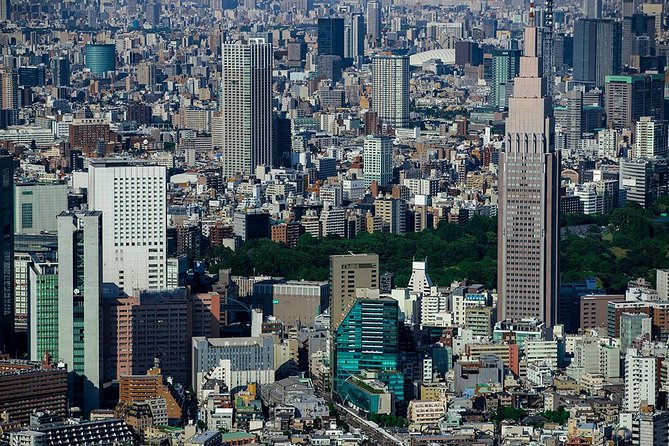
I would recommend this to you if you want a private, memorable view rather than another standard city attraction. It suits couples and small groups who can share the cost, photographers who are comfortable taking pictures from inside the aircraft, and repeat visitors who have already covered Tokyo’s main districts at street level.
It also suits a special occasion. The private setting means your group does not need to fit around strangers, and the flight gives you a clear sense of Tokyo’s enormous size. The staff’s willingness to discuss schedule changes can help if weather becomes uncertain.
I would hesitate if you are watching your budget, dislike weather-dependent plans, or want a detailed guided explanation at every sight. The experience is built around views. It is not a walking tour, museum visit, or stop-and-explore itinerary. You may see the Imperial Palace, Shibuya Crossing, Tokyo Skytree, and other landmarks, but you will not visit them on foot.
Should you book the Tokyo private helicopter tour?
Book it if the aerial view is the point of your Tokyo trip and you can share the cost with two other people. The private format, broad route, and return to the same heliport make this an efficient special outing, and the chance to photograph Tokyo from the air is hard to duplicate.
Skip it if you need maximum sightseeing value per dollar. For a lower price, you can spend longer at Tokyo’s observation decks and districts. If you do book, reserve ahead, check the weather several days out, use the stricter weight limit, and remember that photos are banned at Tokyo Heliport but allowed once you are in the helicopter.
FAQ
How long does the Tokyo helicopter experience last?
The full activity lasts about 45 minutes. The actual flight is described as approximately 25 to 30 minutes.
How many people can join the private helicopter tour?
A maximum of three people can participate per booking. Only your own group takes part in the private activity.
Where does the helicopter flight start and finish?
The flight starts and ends at Tokyo Heliport, 4-chōme-7-25 Shinkiba, Koto City, Tokyo 136-0082, Japan.
Which Tokyo sights can I see from the helicopter?
The listed views include Tokyo Bay, Asakusa, Tokyo Skytree, Shibuya Crossing, Shinjuku, the Imperial Palace, and the National Olympic Stadium. The exact route and viewing angles can vary.
Can I take photographs during the tour?
Photography is banned at the Tokyo Heliport site as part of security measures. You can take photographs inside the helicopter and during the flight.
What happens if bad weather cancels the flight?
You can receive a full refund or change to an alternative date if poor weather or another flight disruption prevents the tour from operating.
What are the weight and health restrictions?
The limit is 286 pounds, or 130 kilograms, per passenger, with a combined maximum of 530 pounds, or 240 kilograms. You cannot participate if you have gone scuba diving within the previous 24 hours.
Just added around Tokyo
- Private Memorable Tokyo Tour with English Speaking Driver★ 5.0 · 30 reviews
- Private Tokyo Custom Full-Day Tour by Chartered Vehicle★ 5.0 · 16 reviews
- Private Sightseeing to Mt Fuji and Hakone with English Driver★ 5.0 · 51 reviews
- Tokyo Photography Masterclass – Private Photography Lesson★ 5.0 · 25 reviews
- Private Mt. Fuji Day Trip from Tokyo with English-Speaking Driver★ 5.0 · 33 reviews
- 4 Day Tour – Mount. Fuji, Tokyo, Hakone, Kamakura and Yokohama★ 5.0 · 19 reviews
- Private Unforgettable Mt Fuji Tour with English Speaking Driver★ 5.0 · 142 reviews
- Private Tokyo Food Tour – A Journey Through Time Through Food★ 5.0 · 36 reviews
Private, compared.
Private Tour to Mt. Fuji and Hakone (Fully Licenced Operator)
Read our review →
Tokyo Customized Private Tour (Must See Places in 1 Day)
Read our review →
Mount Fuji Full-Day Private Tour from Tokyo (Customizable)
Read our review →
Tokyo 4hr Private Tour with Government-Licensed Guide
Read our review →
Kyoto 6hr Private Tour with Government-Licensed Guide
Read our review →
Tokyo Customized Private Tour: See Top Attractions in 1 Day
Read our review →
Hotspots & Hidden Gems Walking Tour Private or Group
Read our review →