REVIEW · OSAKA TOURS
【Family Friendly】Traditional Mochi Pounding Experience
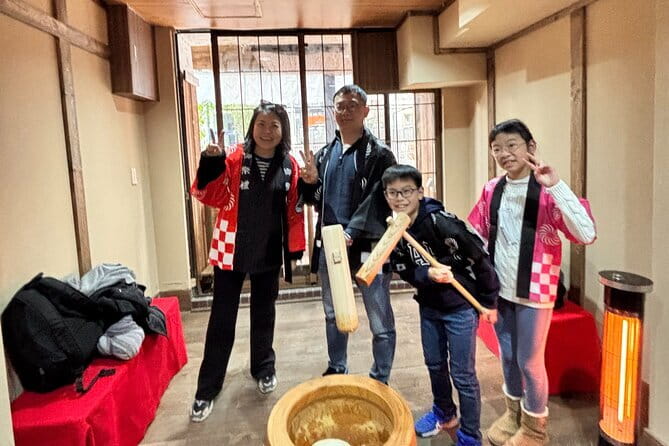
Mochi pounding is one of those Japanese traditions that makes more sense when you take part. At Oh Mochi in Dotonbori, you learn why the ritual matters, help turn steamed glutinous rice into a smooth dough, then eat the results while they are still fresh. I like the hands-on work and the short, lively format, which fits neatly into an Osaka sightseeing day.
I also like that children under 13 can join, while adults can book without children. The main point to consider is the mochi itself: sticky rice cakes can be difficult to chew and may be a choking risk, especially for older people, so small portions and careful eating matter.
In This Review
- Key points at a glance
- Why pounding mochi is worth an hour in Osaka
- Starting with mochi’s place in Japanese culture
- Steaming the glutinous rice
- Taking turns with the mortar and pestle
- Tasting five or more Japanese toppings
- A family activity that does not drag on
- Dotonbori makes the timing easy
- Language, group size, and practical limits
- Who will get the most from this experience
- Is $32.29 a fair price?
- Should you book Oh Mochi in Dotonbori?
- FAQ
- Where does the mochi pounding experience take place?
- Where does the activity end?
- How long does the experience last?
- Can children under 13 participate?
- What will I do during the experience?
- What toppings are available?
- Is the activity available in English?
- Can I cancel for a full refund?
Key points at a glance
- You pound the rice yourself: Traditional mortar-and-pestle work gives this activity more substance than a simple food tasting.
- A 10-minute cultural introduction: You learn about mochi’s place in Japanese life before picking up the wooden mallet.
- Fresh toppings finish the lesson: Try mochi plain or with kinako, red bean paste, nori, sweet soy sauce, and other accompaniments.
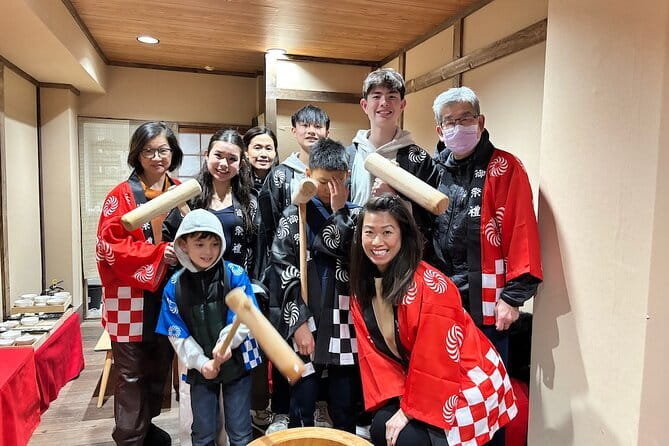
- Children are welcome: Young children and teenagers can take part, making this a useful family break in Osaka.
- A small group of up to 10: The limited size should make it easier to follow instructions and get a turn.
- A central Dotonbori setting: The activity ends where it begins, leaving you close to one of Osaka’s best-known food and entertainment areas.
Why pounding mochi is worth an hour in Osaka
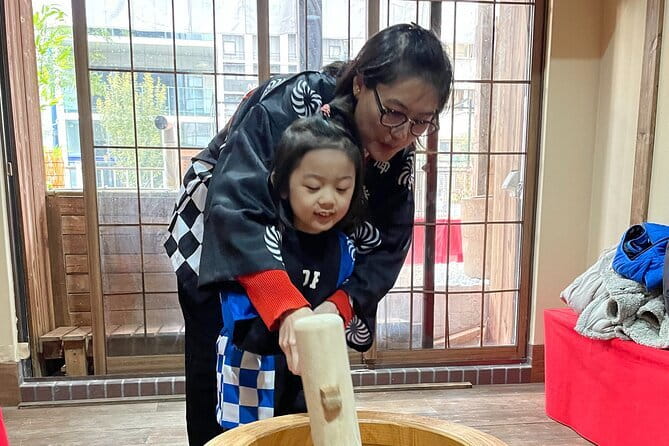
Many food activities ask you to watch someone else cook. This one gives you a role in the process. You help transform steamed glutinous rice into mochi by working with traditional tools, then taste what you helped make.
That simple change matters. You feel the weight of the rice, see how quickly its texture changes, and understand why mochi making has long been a group activity. It is not a full cooking class, and you will not spend hours shaping elaborate sweets. Instead, it is a compact cultural lesson with a snack at the end.
The plan lasts about one hour, though one family found it took roughly 45 minutes. That makes it easy to fit between Dotonbori sightseeing, lunch, shopping, or an evening meal. I would treat the stated hour as a useful planning guide rather than a strict promise.
At $32.29 per person, the value depends on what you want from the outing. You are paying for instruction, participation, food, tea, and a cultural explanation, not just a plate of mochi. For families, the price also buys an activity that gives children something active to do. If you only want to sample Japanese sweets, a shop will cost less. If you want a story, a shared task, and fresh food in one short stop, the price is easier to justify.
Other Osaka days people book alongside this one:
- Osaka Go Karting Tour with Funny Costume
★ 5.0 · 2,658 reviews - Osaka Castle: Museum and Tower Entry Ticket
★ 4.5 · 2,380 reviews - Osaka: Shinsekai Food Tour with 13-15 Dishes at 5 Eateries
★ 4.8 · 2,204 reviews
Starting with mochi’s place in Japanese culture
The session begins with about 10 minutes on the history and cultural importance of mochi pounding. That introduction is short by design. You get enough context to understand the ritual without sitting through a long lecture before the fun begins.
Mochi is made from glutinous rice, which becomes sticky and elastic after steaming and pounding. The texture is unlike ordinary rice, and the pounding process helps turn the cooked grains into one cohesive mass. Seeing that change firsthand gives you a better sense of the craft than buying a finished rice cake from a shop.
The talk also helps explain why mochi pounding is remembered as a shared Japanese tradition. The activity has a rhythm to it, and the social side is part of the appeal. You may hear participants call out yo shoi as they work, adding a cheerful group beat to the process.
The English support is intended to make the explanation accessible. Chinese is also available through slides or interpretation using ChatGPT. The information provided does not name individual instructors, but it does describe patient guidance, which is useful if you are bringing children or have never handled the tools before.
Steaming the glutinous rice
The next stage involves steaming the rice. This is an important part of the lesson because the rice must be properly cooked before it can become mochi. You are not simply handed a finished lump of dough with the work hidden behind the scenes.
The experience includes participation in this process, although the exact amount of hands-on time at the steaming stage is not specified. You should expect the main physical task to be the pounding that follows. The steaming step gives you a clearer picture of the full process and shows that mochi is not made by mixing ordinary flour and water.
For younger children, this part may be more about watching and listening than handling hot equipment. That is sensible. The activity is open to children, but adults should follow the instructors’ directions closely around steamed rice and traditional tools.
Taking turns with the mortar and pestle

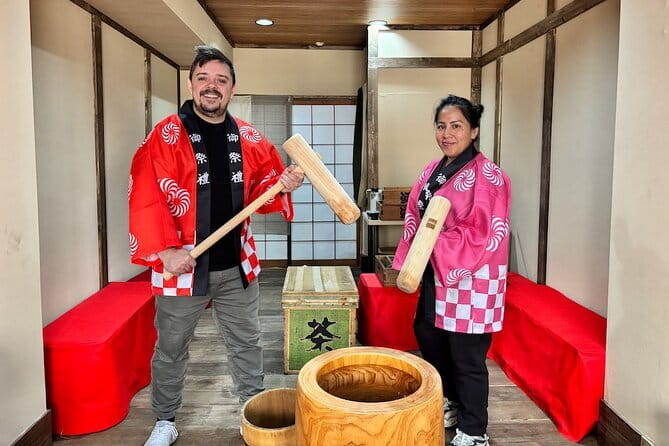
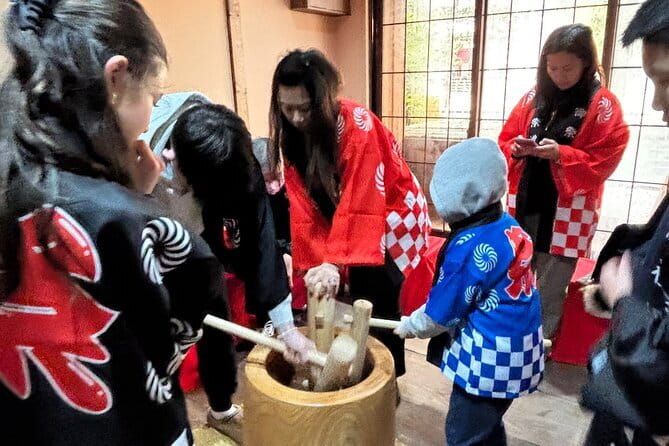
The central moment is the mochi pounding itself. You use a mortar and pestle to work the steamed rice into a soft, sticky mass. This is where the activity feels different from a standard demonstration.
The task takes coordination. One person pounds while another may help turn or manage the rice, depending on the instructor’s method. The supplied details do not specify the exact arrangement, so listen carefully before your turn. You do not need prior cooking skill, and the instructors are there to guide the pace.
The wooden tools also make the process memorable for children. Kids can see and feel the transformation rather than merely being told how mochi is made. Families with children aged five and six have taken part, and teenagers have enjoyed it too. Older adults can join as well, with one family including two people in their seventies.
Do not expect a demanding workout. This is a short food activity, not a test of strength. The main pleasure comes from the rhythm, teamwork, and visible change in the rice. If you have limited mobility or prefer not to pound, ask the instructors how you can take part safely. The supplied information does not give specific accessibility details, so you should not assume every part of the process will suit every visitor.
Same city, a completely different kind of day:
- Osaka Food Tour: 13 Dishes at 5 Local Eateries
★ 5.0 · 2,149 reviews - Hungry Osaka Street Food Tour:15 Tastings & 3 Drinks with a Local
★ 5.0 · 1,727 reviews - Osaka: Tea Ceremony Experience
★ 4.9 · 1,426 reviews - Osaka Kickstart: Hotspots & Hidden Gems Tour
★ 5.0 · 1,306 reviews
Tasting five or more Japanese toppings
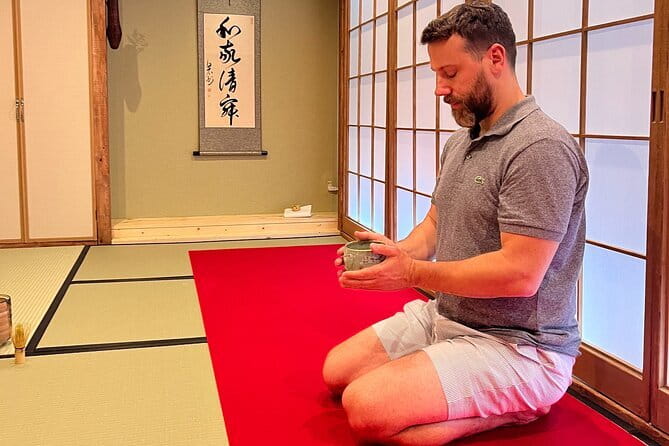
After the pounding, you get to eat fresh mochi with tea. The listed accompaniments include kinako, roasted soybean powder; sweet red bean paste; nori, or seaweed; and sweet soy sauce. Plain mochi is also available.
The plan describes five beloved seasonings and ingredients, while one piece of booking feedback refers to eight options. Because the exact number may vary, I would expect several choices and confirm the day’s full selection if having a particular topping matters to you.
The range should help you compare sweet and savory flavors. Kinako gives the mochi a dry, nutty coating. Red bean paste adds a familiar Japanese sweetness. Nori brings a salty seaweed note, while sweet soy sauce offers a glossy, savory-sweet finish. Plain mochi lets you focus on the rice itself.
This tasting is one of the strongest parts of the activity because you can connect the labor to the result. Freshly pounded mochi has a softness and stretch that differs from packaged versions. The texture is also the main caution. Mochi is sticky and dense, so take small bites, chew carefully, and supervise young children. Older people are specifically advised to eat small portions because of the risk of choking.
Vegetarian and vegan participants are accommodated according to the experience details. Still, if you have a serious allergy or need to avoid a particular ingredient, explain that before tasting. The listed toppings include soy, soybean powder, seaweed, and red bean paste, but no full allergen chart is provided.
A family activity that does not drag on

This is a good choice when your family wants something more memorable than another sightseeing stop, but nobody wants to give up half a day. The main program is around an hour, and the pounding gives children a clear task with a visible reward.
The activity also works for mixed-age groups. Young children can enjoy the physical action and flavors. Teenagers can take part without feeling that the event is aimed only at toddlers. Adults and grandparents can join, too, provided they are comfortable with the tools and eat the finished mochi cautiously.
One practical strength is the group limit of 10 people. A small group should give you a better chance to hear the explanation and get involved, though the experience does not promise private instruction. If your family is large, check availability and group arrangements before booking.
I would not choose this as your main Osaka food tour. You are tasting one central food in several forms, not visiting a series of restaurants or markets. But as a focused cultural activity, it earns its place, especially for families who want one shared moment during a busy city trip.
Dotonbori makes the timing easy
The meeting point is Mochi Pounding Experience Osaka, also called Oh Mochi, at 2-chōme-4-11 Dōtonbori, Chuo Ward, Osaka. The experience ends back at the same location.
That central setting is useful. Dotonbori is already a popular area for food, lights, shopping, and evening walks, so you can pair the session with other plans without crossing the city. One activity also noted that the location gives you a chance to explore Dotonbori afterward.
Because the meeting point is near public transportation, you should be able to reach it without much trouble. The supplied details do not provide a station name, walking time, or step-by-step directions, so check the mobile ticket and map before setting out. Dotonbori can be crowded, especially at popular times, so allow extra time to find the exact address.
The mobile ticket is convenient for a short activity. Keep the confirmation available on your phone, and check the local start time carefully. The meeting point is also the end point, which removes the need to arrange a second pickup location.
Language, group size, and practical limits
English instruction is available. Chinese support is offered through slides or interpretation using ChatGPT. If your group is more comfortable in either language, this should make the basic lesson and safety directions easier to follow.
The activity accepts a maximum of 10 people. That is small enough to feel personal without making the event dependent on a private booking. The exact amount of time each person gets with the pestle is not stated, so larger groups may share turns.
The experience requires good weather, and poor weather can lead to a different date or a full refund. The activity takes place in Osaka, but no detailed shelter or indoor-weather arrangement is provided. Keep that policy in mind when building a tightly timed itinerary.
Free cancellation is available if you cancel at least 24 hours before the start time. Cancellations within 24 hours are not refunded, and changes in that final 24-hour period are not accepted. If your Osaka schedule is uncertain, book only once your plans are reasonably firm.
Who will get the most from this experience
I would recommend this to families who want a shared activity rather than another passive attraction. The combination of a short cultural talk, physical participation, and tasting keeps the pace varied.
It also suits adults traveling without children. The activity is not restricted to families, and the food tradition is interesting even if you already know mochi from Japanese sweets or Hawaiian-style treats. If you have tasted mochi before, the hands-on process gives the food a new context.
Vegetarians and vegans have a reason to consider it, since the experience says dietary preferences can be accommodated. People who dislike sticky textures may enjoy the cultural lesson but feel less enthusiastic about the tasting. The food is the finish, not an optional extra, so texture matters.
I would be cautious about booking for anyone with a serious swallowing difficulty. The warning about choking is not a minor footnote. Small portions and careful eating are essential, and you should decide in advance whether tasting mochi is appropriate.
Is $32.29 a fair price?
At $32.29 per person, this is not the cheapest snack you will buy in Osaka. The comparison is not quite fair, though, because the fee covers more than the food.
You receive a short explanation of mochi’s cultural role, access to traditional tools, instruction during the pounding, fresh mochi, several toppings, and tea. The experience also gives your group a set time and place for an activity, which can be valuable during a crowded Osaka itinerary.
The value is strongest for families. A family can share the work, take photographs, and talk about the process afterward. The activity becomes part of the trip’s story, rather than just another sweet purchased on the street.
For a solo visitor who is mainly hungry, I would spend the money elsewhere. For someone curious about Japanese food traditions, or for a parent seeking a simple one-hour activity in Dotonbori, the price is reasonable.
Should you book Oh Mochi in Dotonbori?
Book it if you want to understand mochi by making it, not just eating it. The small group size, short duration, child-friendly policy, fresh toppings, and central location make this an easy addition to an Osaka day.
I would especially choose it for families with children, mixed-age groups, and adults who enjoy food traditions with a practical side. Plan to eat slowly, confirm the topping selection if that matters, and leave some flexibility around the weather.
Skip it if you want a long cooking class, a broad Osaka food tour, or a cheap dessert stop. For everyone else, this is a focused, cheerful way to share one of Japan’s most distinctive food customs.
FAQ
Where does the mochi pounding experience take place?
It takes place at Mochi Pounding Experience Osaka, also called Oh Mochi, at 2-chōme-4-11 Dōtonbori, Chuo Ward, Osaka, 542-0071, Japan.
Where does the activity end?
The activity ends back at the meeting point in Dotonbori.
How long does the experience last?
The stated duration is approximately one hour. One booking note says the session took about 45 minutes, so allow around an hour when planning your day.
Can children under 13 participate?
Yes. Children under 13 are allowed to join, and the activity is presented as suitable for families. Adults can also participate without children.
What will I do during the experience?
You will hear about 10 minutes of instruction on mochi’s history and cultural importance, take part in steaming glutinous rice, pound it with traditional tools, and taste the finished mochi with tea.
What toppings are available?
The listed choices include plain mochi, kinako, sweet red bean paste, nori, and sweet soy sauce. One description refers to five ingredients, while another booking note mentions eight options, so the exact selection may vary.
Is the activity available in English?
Yes. English instruction is available. Chinese support is provided through slides or interpretation using ChatGPT.
Can I cancel for a full refund?
Yes, if you cancel at least 24 hours before the experience start time. Cancellations or changes made within 24 hours are not refunded. If poor weather causes the activity to be canceled, you will be offered another date or a full refund.
Just added around Osaka
- Samurai dress-up and shows, plus Tea Ceremony & Calligraphy★ 5.0 · 27 reviews
- Kyoto & Nara Private customized tour with English speaking Guide★ 4.5 · 99 reviews
- Well-balanced BENTO (lunch box) Cooking Class★ 5.0 · 35 reviews
- Urban Canvas: Osaka Street Art Bike Tour★ 5.0 · 47 reviews
- OSAKA:Feel the Power! Learn Taiko Drum from Professionals★ 5.0 · 28 reviews
- Volleyball in Osaka & Kyoto with Locals!★ 5.0 · 21 reviews
- Three Types of Ramen Cooking Class in Osaka★ 5.0 · 119 reviews
- 1.5〜2 Hours Traditional Kintsugi Work Shop in Namba Osaka★ 5.0 · 75 reviews
Osaka Tours, compared.

Shinsekai Food Tour with 13-15 Dishes at 5 Eateries
Read our review →
Osaka Food Tour: 13 Dishes at 5 Local Eateries
Read our review →
Hungry Osaka Street Food Tour:15 Tastings & 3 Drinks with a Local
Read our review →

Hotspots & Hidden Gems Walking Tour Private or Group
Read our review →