
REVIEW · CYCLING TOURS
Tsuwano Cycling Tour with Local Guide
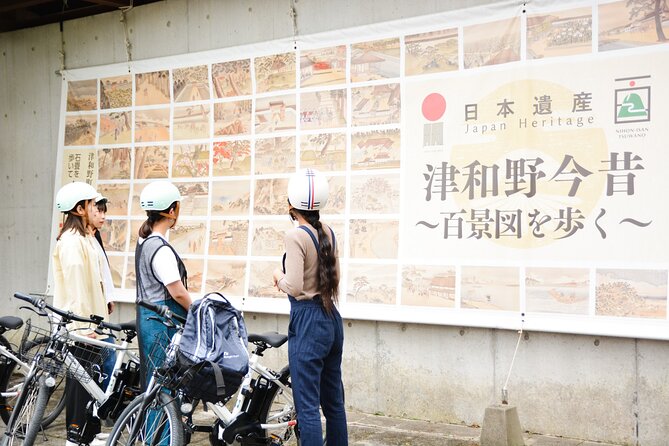
Tsuwano’s best story is told by its streets, shrines, fields, and hillsides. On this three-hour electric-bike tour, you compare the town today with the Tsuwano Hyakkeizu, 100 Edo-period paintings made about 160 years ago. It is a smart way to see more than the main street while still moving at an easy pace.
I especially like the old-and-new comparison, and the way the ride reaches quiet places most visitors could miss. Guides including Yui and Ale, also known as Alessandro, add history, local stories, and simple explanations. The main consideration is weather: this tour needs good conditions, and snacks are not included.
In This Review
- Key points before you book
- Why the Tsuwano Hyakkeizu gives this ride a clear purpose
- Tonomachi Street: begin with Tsuwano’s main line
- Yasaka Shrine: stories behind the old images
- Narutaki Jinja: a waterfall and a quiet pause
- Washibara Hachiman Shrine: stone lantern and horseback archery
- Tsuwano Shrine: rural views and former lords
- The thousand-year cedar: a strong final image
- What the electric bike changes
- The guide makes or breaks the experience
- Is $99 a fair price?
- Who should book this Tsuwano ride?
- Timing, weather, and cancellation details
- Should you book the Tsuwano Cycling Tour?
- FAQ
- Where does the Tsuwano Cycling Tour start?
- Where does the tour end?
- How long does the tour last?
- Is an electric bicycle included?
- Is a guide included?
- What places does the tour visit?
- Are snacks included?
- How many people can join?
- What happens if the weather is poor?
Key points before you book
- See Tsuwano through 100 old scenes: Compare present-day views with the Tsuwano Hyakkeizu paintings.
- Ride an electric bicycle: The assisted bikes make the three-hour route manageable for people unsure about their cycling fitness.
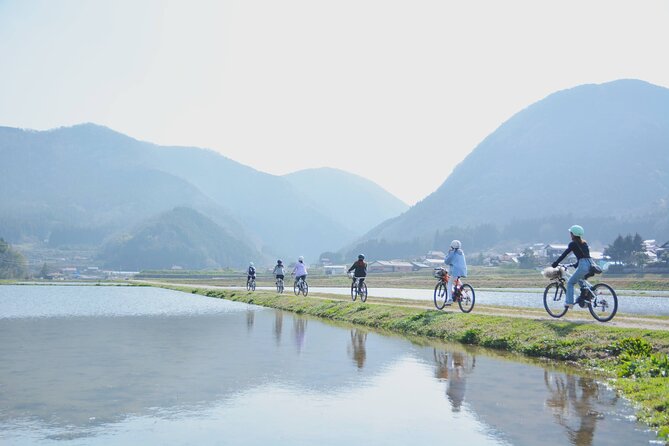
- Visit more than the main street: The route includes shrines, a waterfall, a horse track, rural scenery, and a giant cedar.
- Keep the group small: The maximum group size is six people, allowing plenty of room for questions.
- Meet and finish at Tsuwano Station: The starting point is Tsuwano Eki mae, near public transportation.
- Plan around the weather: You can cancel up to 24 hours before the start for a full refund, and poor weather may lead to a new date or refund.
Why the Tsuwano Hyakkeizu gives this ride a clear purpose
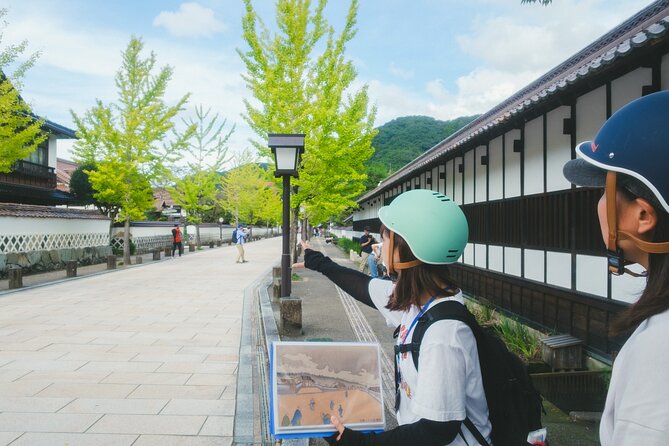
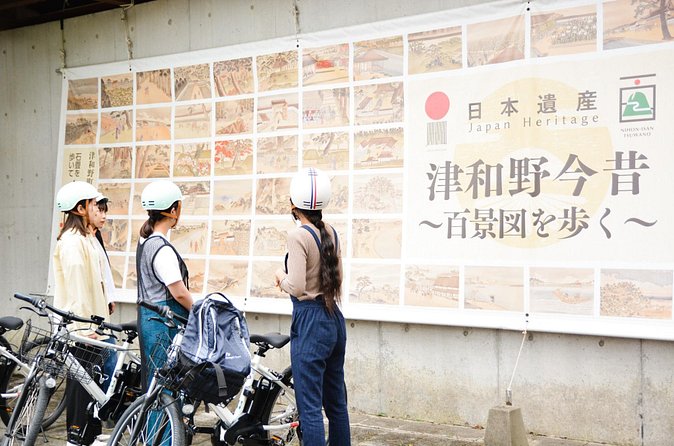
Many town bike tours are simply a string of stops. This one has a stronger idea behind it: you use the Tsuwano Hyakkeizu to see how much of the old castle town remains.
The paintings show scenes from the Tsuwano feudal domain in the late Edo period. As you ride, your guide uses those images to connect the past with the streets and countryside in front of you. That changes the way you look at ordinary details. A road, shrine approach, field, or line of houses becomes part of a story rather than just a pleasant view.
I like this method because it keeps the tour from becoming a quick roll past famous places. You are not only told that Tsuwano is old. You get a visual comparison that helps you notice what has changed and what has remained.
The historic setting also explains the tour’s gentle pace. Each stop receives about 30 minutes, so this is not a race around town. You will have time to listen, look around, and ask questions. The tradeoff is that three hours cannot cover all 100 scenes. The route gives you a thoughtful introduction, not a complete survey.
A few more Japan trips to weigh up
- Hidden Kyoto E-Biking tour
★ 5.0 · 1,843 reviews - Tokyo Guided Small-Group Biking Tour
★ 5.0 · 1,250 reviews - Bike Tour Exploring North Kyoto plus Lunch
★ 5.0 · 1,087 reviews
Tonomachi Street: begin with Tsuwano’s main line
Tonomachi Street is the natural starting point. It is Tsuwano’s main street, and cycling along it with a guide helps you get your bearings before the route moves into quieter areas.
This opening section lasts about 30 minutes. It gives your guide a chance to introduce the town and explain how the present street relates to the old images. You can expect the emphasis to be on place, history, and small details rather than on a long ride.
For a first look at Tsuwano, this is useful. The street gives you a sense of the town’s preserved character, while the bicycle lets you cover ground without turning the day into a walking tour. If you arrive early, the meeting point at Tsuwano Station makes the start easy to find.
The main limitation is simple: Tonomachi Street is the most obvious part of the route. Its value comes less from novelty than from the guide’s explanation and the connection to the Hyakkeizu. Listen closely here, because the visual framework introduced at the beginning makes the later stops more meaningful.
Yasaka Shrine: stories behind the old images
At Yasaka Shrine, the guide explains the shrine’s history and shares lesser-known stories connected with the Tsuwano Hyakkeizu. This is one of the stops where the tour’s central idea works best.
A shrine can be easy to admire and just as easy to misunderstand. You may notice the entrance, buildings, and surrounding greenery, then move on without knowing why the place mattered to the old domain. Here, the guide provides the background that turns a short visit into a lesson in local culture.
The reviews supplied for this experience repeatedly praise the explanations, anecdotes, and discussions. That matters because the tour’s appeal depends heavily on the guide. The scenery is appealing, but the historical comparisons and personal stories give the ride its shape.
You will spend about 30 minutes here. The stop is free, as are the other scheduled visits. Since no admission fees are listed, the $99 price is paying mainly for the electric bike, the guide’s time, and access to a carefully planned route rather than for tickets to indoor attractions.
Narutaki Jinja: a waterfall and a quiet pause
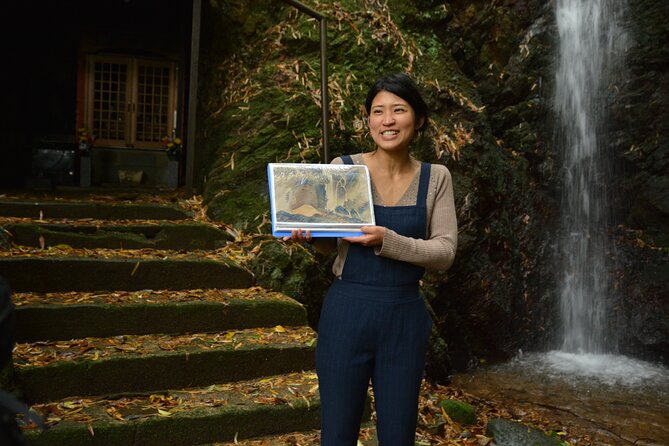
Narutaki Jinja brings a different mood. The route reaches a tucked-away waterfall spot, where you learn more about Tsuwano and practice simple meditation.
This pause is one of the tour’s most appealing changes of pace. After streets and historical sites, the sound and setting of the waterfall give you room to slow down. The meditation is described as simple, so you should not expect a formal or demanding spiritual session. Think of it as a brief, quiet exercise that helps you pay attention to the place.
I like that the tour includes this kind of stop. It recognizes that Tsuwano is not only a history destination. Nature and stillness are part of the town’s character, too.
The exact physical conditions at the waterfall are not specified, so you should follow the guide’s directions and wear practical clothing for cycling. The tour requires good weather, and this stop is one reason that matters. Rain could affect both the ride and the quiet outdoor experience.
Same city, a completely different kind of day:
- Mt Fuji and Hakone 1-Day Bus Tour Return by Bullet Train
★ 5.0 · 26,383 reviews - 1-Day Tokyo Bus Tour
★ 5.0 · 14,250 reviews - PERFECT KYOTO 1-Day Bus Tour
★ 5.0 · 13,518 reviews - Tokyo: TOKYO SKYTREE® Admission ticket
★ 4.5 · 11,192 reviews
Washibara Hachiman Shrine: stone lantern and horseback archery
Washibara Hachiman Shrine adds two distinctive subjects to the route: a large joyato stone lantern and the baba, the horse track used for the Yabusame horseback archery ritual.
These details offer a glimpse into ceremonial Tsuwano. The horse track is not just an open strip of ground. It is linked to Yabusame, a traditional ritual in which riders practice archery from horseback. Your guide explains the stories behind the site rather than leaving you to guess at its purpose.
The large stone lantern gives the stop a physical landmark that is easy to understand. The baba supplies the broader cultural setting. Together, they show how a rural town can preserve traditions through places that still have meaning today.
The visit takes about 30 minutes. It is a good stop for anyone interested in Japanese festivals, local religious practice, or the customs of former domains. The operator specifically mentions the Horseback Archery Festival as a possible reason to return in another season, but the tour itself does not promise that the ritual will take place during your ride.
Tsuwano Shrine: rural views and former lords
At Tsuwano Shrine, the focus shifts toward the rural scenery around the shrine and the stories of former lords of the Tsuwano domain.
This part of the ride helps explain why the town feels removed from Japan’s busiest routes. You are not confined to a dense historic center. The route reaches the countryside around the shrine, where the setting gives the local history more room.
The former lords are an important part of the town’s story, and this is where the guide can connect political history with the places you are seeing. I find that kind of explanation more useful than a list of dates. It helps you understand how the domain shaped Tsuwano and why the town’s old character survived.
The word rural is important here. The appeal is quiet scenery and a sense of distance from city life, not a major monument or large museum. If you prefer a packed schedule of formal attractions, this may feel slow. If you enjoy small towns and open views, it is likely to be one of the more satisfying sections.
The thousand-year cedar: a strong final image
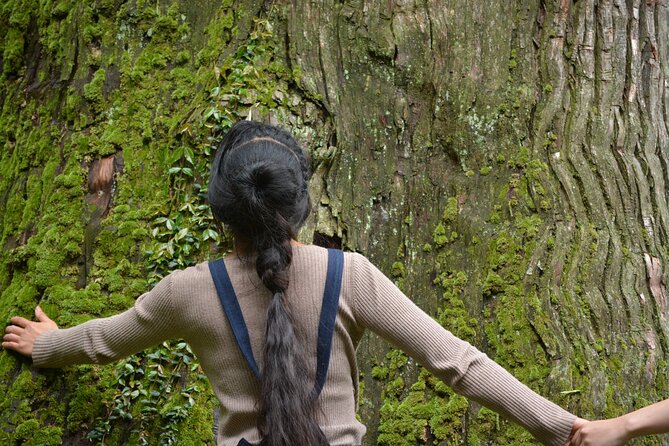
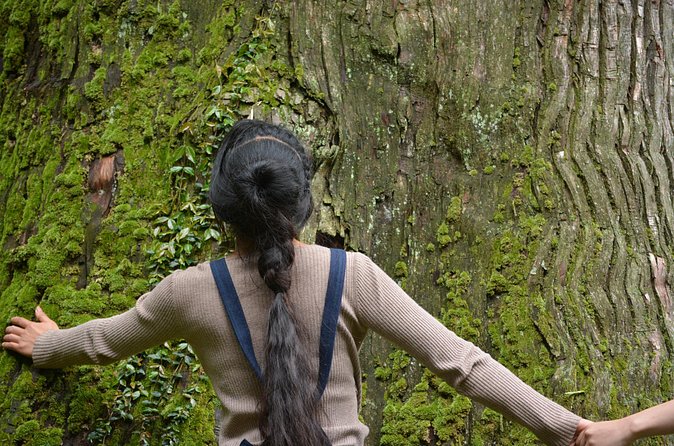
The final stop brings you to a giant cedar tree said to have watched over Tsuwano for more than 1,000 years. The tour information places this visit with Washibara Hachiman Shrine, so the closing section returns to that area.
A tree this old gives the tour a fitting ending. The Hyakkeizu connects you with scenes from roughly 160 years ago. The cedar reaches much further back, offering a physical reminder that the town’s story is not limited to one historical period.
This is also a good final image because it moves away from dates and domain politics. You can simply take in the scale and age of the tree before riding back to the station meeting point.
The stop is scheduled for about 30 minutes. Since the tour ends where it begins, you do not need to arrange a separate pickup at another part of Tsuwano. That is practical if you are catching a train or continuing your day from the station.
What the electric bike changes
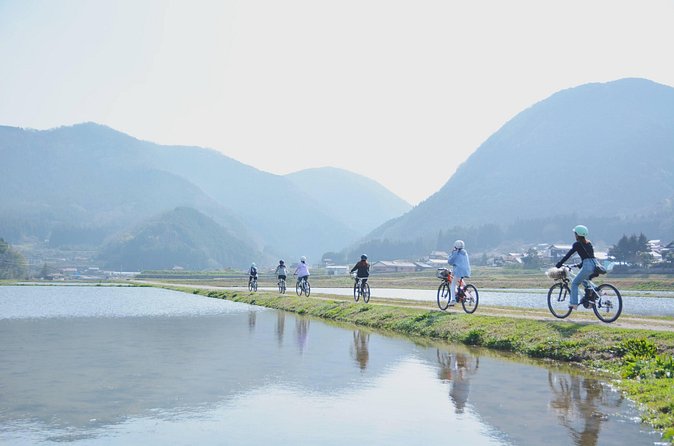
The electric bicycle is more than a fun extra. It affects who can comfortably take the tour and how much of Tsuwano you can see in three hours.
The supplied experience details do not list the route’s total distance or grade, so I would not assume the ride is effortless. Still, the electric assist is specifically intended to make the outing manageable, including for people who are unsure of their physical condition. The guide also sets a careful pace.
That combination matters. A regular bicycle tour can leave you watching the clock, saving energy for the return trip, or skipping questions because you need to keep moving. Assisted cycling gives you a better chance to focus on the stories and scenery.
You should still be comfortable riding a bicycle. Most people can participate, but the activity is not a sightseeing bus. You will be on two wheels for roughly three hours, with stops along the way. Ask about the route if you have concerns about cycling ability, since detailed information about hills, surfaces, and bike specifications is not provided.
The guide makes or breaks the experience
This tour relies on personal interpretation. The guide is not only there to lead the way. You can expect explanations of shrine history, the Hyakkeizu, local customs, former domain lords, and the meaning of places that may look ordinary at first.
Ale, also called Alessandro, is specifically praised for his friendly, clear explanations and enthusiasm. Yui is another named guide associated with the experience, and the supplied comments describe her guiding in warm terms. The operator may assign either guide or another member of the local team, so you should not assume a particular person is guaranteed unless confirmed at booking.
The small maximum of six people is a real advantage. With a group that size, it is easier to hear, stop for questions, and keep the pace comfortable. It also suits people who prefer conversation over a large organized outing.
The strongest feature here is not speed. It is the guide’s ability to link what you see with the old paintings and local stories. If that style appeals to you, the tour offers more than a basic bicycle rental. If you want to ride independently and set your own route, you will find the guided format less flexible.
Is $99 a fair price?
At $99, the tour is not the cheapest way to see Tsuwano. You are paying for about three hours, an electric bicycle, and a local guide, with no snack or admission costs included.
The value depends on what you want from the visit. If you only need a bicycle, renting one independently may cost less, though the price and availability of rentals are not provided here. You would also need to create your own route and research the shrines, waterfall, horse track, cedar, and Hyakkeizu connections.
For me, the price makes more sense for a first visit. The tour gives you a ready-made introduction to the town’s past and present, reaches several areas beyond Tonomachi Street, and removes the guesswork from finding the less obvious stops. The electric assist is another part of the value, especially if you want a wider route without committing to a strenuous ride.
No snacks are included, so plan accordingly. The supplied details do not say if food can be bought during the route. It is sensible to eat before the start and bring anything you personally need, as long as you follow the operator’s guidance.
Who should book this Tsuwano ride?
I would choose this tour for a first visit to Tsuwano, especially if you have around half a day and want context rather than a quick photo stop. It is well suited to people who enjoy local history, traditional customs, rural scenery, and conversations with a guide.
It also fits visitors who are not certain they can handle a standard bicycle for three hours. The electric bikes and careful pace make the outing more approachable, though you still need to be able to cycle.
The tour may be less suitable if you dislike fixed stops, guided explanations, or outdoor plans that depend on the weather. It also will not satisfy someone who wants to visit all 100 Hyakkeizu scenes. The route uses the paintings as a theme and guide, not as a promise to cover every location.
The experience ends back at Tsuwano Station, making it convenient for a day trip or a stop during a wider trip through Shimane Prefecture. Confirmation is provided at booking, and the maximum group size is six.
Timing, weather, and cancellation details
Good weather is required. If poor weather causes cancellation, you will be offered another date or a full refund. You can also cancel for a full refund up to 24 hours before the start time.
A cancellation made less than 24 hours before the experience begins is not refundable, and late changes are not accepted. The cutoff follows local time in Japan.
Because the ride is outdoors, I would avoid placing it at the most crowded or tightly scheduled point of your trip. Give yourself room in case the weather changes or your train plans shift. The start and finish are at Tsuwano Eki mae in Ushiroda, Tsuwano, Shimane.
Should you book the Tsuwano Cycling Tour?
Book it if you want a compact, thoughtful introduction to Tsuwano and like the idea of comparing old paintings with the town in front of you. The electric bicycle, six-person limit, and mix of streets, shrines, countryside, waterfall, ceremonial ground, and ancient cedar make good use of three hours.
I would especially recommend it for first-time visitors who might otherwise see only Tonomachi Street. The main caution is that this is a weather-dependent guided ride, not a free-form rental. If you are comfortable with that, $99 buys you a well-planned route and the local explanations that make Tsuwano easier to understand and remember.
FAQ
Where does the Tsuwano Cycling Tour start?
The tour starts at Tsuwano Eki mae in Ushiroda, Tsuwano, Kanoashi District, Shimane 699-5605, Japan. The meeting point is near Tsuwano Station and public transportation.
Where does the tour end?
The activity ends back at the meeting point near Tsuwano Station.
How long does the tour last?
The tour lasts approximately three hours. Each of the six listed sections is planned for about 30 minutes.
Is an electric bicycle included?
Yes. Use of a bicycle is included, and the experience is described as an electric-bike cycling tour.
Is a guide included?
Yes. A guide is included. Named guides connected with the experience include Yui and Ale, also known as Alessandro.
What places does the tour visit?
The route includes Tonomachi Street, Yasaka Shrine, Narutaki Jinja Shrine, Washibara Hachiman Shrine, Tsuwano Shrine, and a giant cedar tree associated with Washibara Hachiman Shrine.
Are snacks included?
No. Snacks are not included in the tour price.
How many people can join?
The tour has a maximum of six participants.
What happens if the weather is poor?
The experience requires good weather. If it is canceled because of poor weather, you will be offered a different date or a full refund.
Just added around Japan
- Private Memorable Tokyo Tour with English Speaking Driver★ 5.0 · 30 reviews
- Private Sightseeing to Mt Fuji and Hakone with English Driver★ 5.0 · 51 reviews
- Tokyo Photography Masterclass – Private Photography Lesson★ 5.0 · 25 reviews
- Private Tokyo Custom Full-Day Tour by Chartered Vehicle★ 5.0 · 16 reviews
- Private Mt. Fuji Day Trip from Tokyo with English-Speaking Driver★ 5.0 · 33 reviews
- 4 Day Tour – Mount. Fuji, Tokyo, Hakone, Kamakura and Yokohama★ 5.0 · 19 reviews
- Private Unforgettable Mt Fuji Tour with English Speaking Driver★ 5.0 · 142 reviews
- Private Tokyo Food Tour – A Journey Through Time Through Food★ 5.0 · 36 reviews
Cycling Tours, compared.



3h Tokyo E-Bike Tour: Hidden Gems, and Local Life with guide
Read our review →
Arashiyama Bamboo Forest & Hidden Gems Bike Tour (Early Bird)
Read our review →
Hiroshima in a Nutshell: Morning Bike Adventure
Read our review →
5 Top Highlights of Kyoto Full Day Bike Tour (E-bike option)
Read our review →Browse the lists this tour appears in