
REVIEW · JAPAN
Tokyo: Karate Experience with Former All-Japan Champion
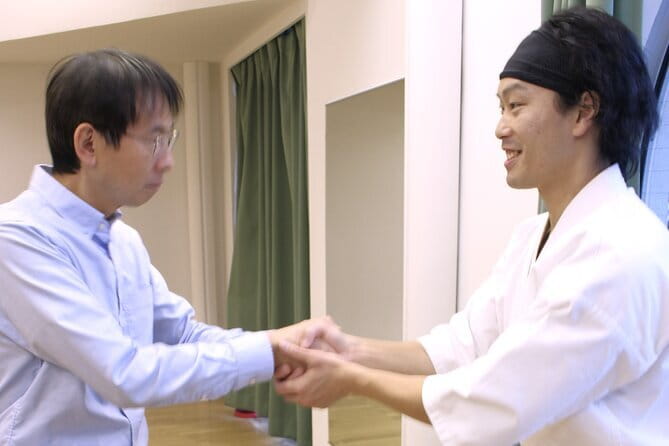
Tokyo karate does not get much more personal than this. In a small or private class, Ryo teaches the manners, breathing, stance, punches, kicks, and defensive movements that make up a real Kyokushin lesson. He is not simply handing you a costume and posing you for photos.
I especially like the careful step-by-step teaching and the way Ryo adjusts the pace for children, beginners, and experienced martial artists. I also like the balance between tradition and movement: you bow and practice focus, then stretch, hit pads, and work through non-contact sparring. The main consideration is that the uniform is included only with the private 90-minute session option, so check your booking choice carefully.
In This Review
- Key points to know before you book
- Meeting a Kyokushin instructor in Tokyo
- Bowing, breathing, and the Japanese approach to training
- Stretching before the first punch
- Building technique one movement at a time
- Kata, pads, and controlled sparring
- A good choice for families and mixed groups
- How the experience feels for experienced martial artists
- What the $58 price gets you
- Practical advice for making the class work well
- Should you book this Tokyo karate experience?
- FAQ
- Where does the Tokyo karate experience take place?
- How long does the karate lesson last?
- Is the experience suitable for complete beginners?
- Can children take part?
- Is a karate uniform included?
- What language does the instructor speak?
- Is the sparring full contact?
Key points to know before you book
- Train with a former All-Japan champion: Ryo placed third at the 2013 Kyokushin World Championship and won an All-Japan Kyokushinkan International title.
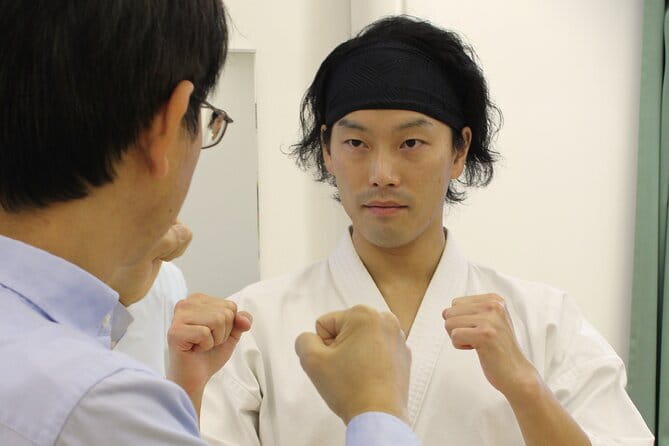
- Learn karate etiquette first: The class begins and ends with a bow, along with breathing practice aimed at calm focus.
- Expect a real workout: Stretching covers the legs, hips, shoulders, and chest before punches, blocks, kicks, and pad work.
- Practice safely: Kumite is taught without physical contact, so you can learn defensive movements without taking a hit.
- Suitable for mixed ability: Children, complete beginners, and students of Shotokan, Goju Ryu, Tae Kwon Do, Muay Thai, and other styles can take part.
- Check the uniform option: A karate gi comes with the private 90-minute session, while the standard 90-minute class may require you to bring workout clothes.
Meeting a Kyokushin instructor in Tokyo
The instructor, Ryo, has spent 20 years training in Kyokushin Karate, a style known for full-contact competition. He has taught since 2010 and passed the examination for 2nd Dan black belt in 2020.
His competition record gives the lesson useful weight, but the class is not built around showing off. Ryo’s teaching focuses on clear explanations, repeated demonstrations, and corrections suited to your ability. That matters if you are new to martial arts and feel unsure about your stance, balance, or coordination.
It also matters if you already train. Students who practice Shotokan and Goju Ryu have found the differences in style useful, while people with backgrounds in Tae Kwon Do and Muay Thai can compare footwork, guard position, kicks, and distance. You will not be treated as an expert simply because you have trained elsewhere, but your experience can give Ryo a good starting point.
The class has taken place in central Asakusa, an easy area to reach, though the exact meeting point depends on the option you choose. One especially unusual setting has been inside a martial arts store. That adds a bit of local character, although you should rely on your booking details for the final location.
Other Japan days people book alongside this one:
- Mt Fuji and Hakone 1-Day Bus Tour Return by Bullet Train
★ 5.0 · 26,383 reviews - 1-Day Tokyo Bus Tour
★ 5.0 · 14,250 reviews - PERFECT KYOTO 1-Day Bus Tour
★ 5.0 · 13,518 reviews
Bowing, breathing, and the Japanese approach to training
The lesson begins with the basic etiquette of karate. You learn how to bow correctly, reflecting the principle that you start with a bow and end with a bow. This is not filler before the exercise starts. It gives the session a clear structure and introduces the respect built into Japanese martial arts.
Ryo also leads deep breathing from the belly. The aim is to settle your mind and improve concentration before you begin moving. If you have only seen karate in films or short demonstrations, this opening helps explain that karate is not just a collection of punches and kicks.
I like this part because it makes the activity feel connected to Japanese practice rather than a generic fitness class. At the same time, it remains approachable. You are not expected to know Japanese commands or arrive with years of discipline. Ryo explains the process in English and Japanese, and his English is described as very good.
For parents, this calm opening can help a nervous child settle in. A 10-year-old with Tae Kwon Do experience was eased into the class gradually, while children aged eight and ten were able to follow the lesson despite concerns about language. That suggests the etiquette section is presented in a practical way, not as a stern ceremony.
Stretching before the first punch
The warm-up covers the major areas you will need for karate: leg muscles, hip joints, shoulder blades, and chest. You should expect more than a few quick arm circles. The purpose is to prepare your body for the stances, kicks, and turning movements that follow.
This part is useful for two reasons. First, it helps complete beginners move with less stiffness. Second, it gives experienced martial artists time to adjust to Kyokushin’s rhythm and stance. A class that begins immediately with hard kicks would be less friendly to a mixed group.
You should still arrive ready to work. The lesson lasts 60 to 90 minutes, depending on the option, and the listed exercises are intended to improve flexibility and muscle strength as well as teach technique. It is a martial arts lesson with a workout inside it, not a passive cultural demonstration.
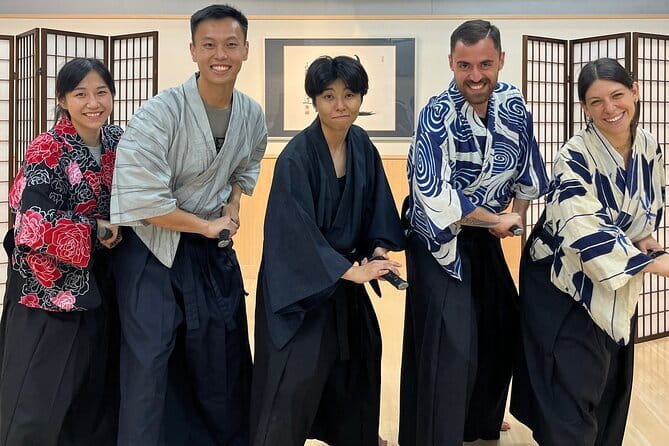
Bring suitable workout clothes unless you specifically book the private 90-minute session with a karate gi. This detail is easy to miss. One participant who expected a uniform found that the gi was not included in the standard 90-minute option, though the issue was quickly clarified with Ryo.
Building technique one movement at a time
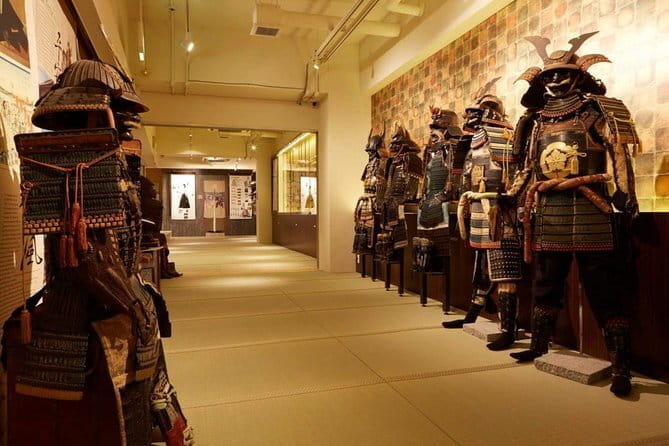
Once you are warmed up, Ryo breaks down basic karate techniques into smaller pieces. You practice the proper stance first, then work through punches, blocks, and kicks in stages. This makes the lesson manageable when your body is trying to remember several things at once: foot position, hip movement, balance, hand placement, and breathing.
The method is especially helpful for first-timers. Rather than asking you to copy a complete sequence at full speed, Ryo can isolate each part and demonstrate the points that need attention. He watches your movement and offers corrections as you go.
Experienced students get something different from the same approach. You can examine how Kyokushin handles a familiar technique compared with your own style. A Shotokan black belt found the contrast worthwhile, while another karate student used the session to add techniques to a longer-term practice.
Do not expect a full qualification or a long progression through the Kyokushin syllabus in one visit. You are getting a focused introduction, with enough substance to understand the mechanics and spirit of the art. The value comes from direct instruction by a serious practitioner, not from the length of a standard dojo course.
Same city, a completely different kind of day:
- Tokyo: TOKYO SKYTREE® Admission ticket
★ 4.5 · 11,192 reviews - Tokyo: teamLab Planets TOKYO Digital Art Museum Entry Ticket
★ 4.6 · 9,779 reviews - Mt Fuji & Hakone Cruise, Drum Show Bullet Train 1 Day from Tokyo
★ 4.0 · 7,413 reviews - Tokyo: Sumo Show Experience with Chicken Hot Pot and a Photo
★ 4.8 · 6,678 reviews
Kata, pads, and controlled sparring
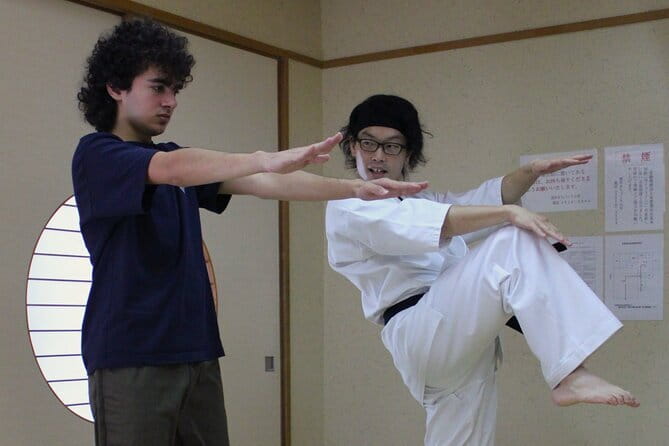
The class includes a kata demonstration. Kata are set patterns that combine a range of karate techniques. Watching Ryo perform one gives you a sense of how separate punches, blocks, stances, and turns fit together into a disciplined sequence.
You also work with punching and kicking pads. This is where the class becomes more physical and, for many people, more fun. Pad work lets you practice accuracy, timing, and force while Ryo controls the exercise. It can feel satisfying even if you have never trained before, and it gives experienced martial artists a chance to work at a level suited to them.
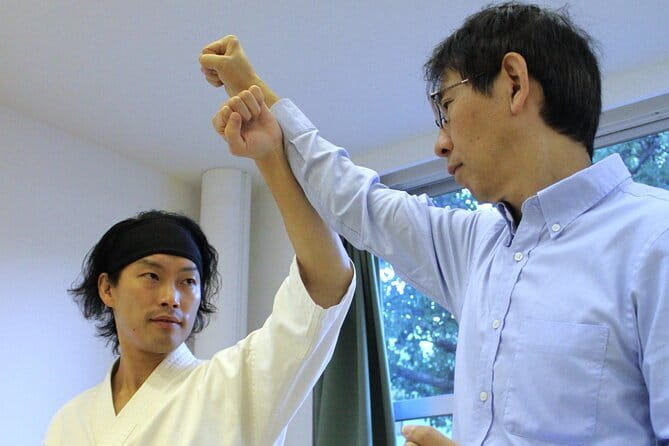
The final section introduces the essence of kumite, or sparring, without physical contact. Ryo demonstrates how to defend against attacks such as punches, front kicks, and low kicks. You practice responses and movement rather than trading blows.
That distinction is important. This is not a full-contact fight, and you do not need to worry about being thrown into a competition-style bout. The non-contact format keeps the session suitable for mixed ages and abilities while still showing how karate techniques work together under pressure.
It also provides a useful lesson in distance and precision. A punch or kick is not only about strength. You need to recognize the attack, place your body correctly, and respond efficiently. Even in a short session, that makes the activity feel more practical than simply repeating isolated motions.
A good choice for families and mixed groups
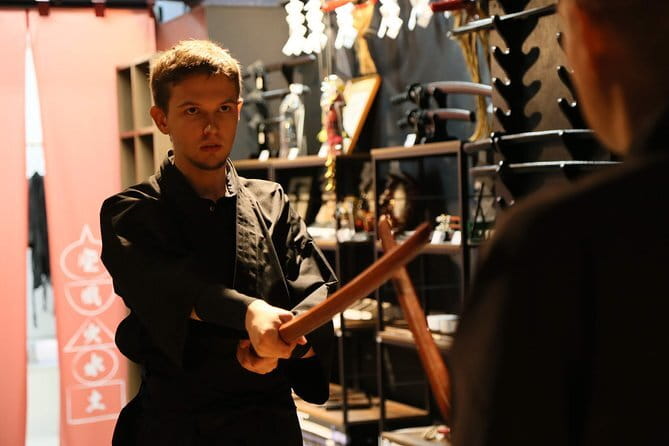
This experience works unusually well when people in the same group have different levels. A complete beginner can learn the basic stance and movements, while a karate student can ask about differences between styles or refine familiar techniques.
Ryo has taught children and adults, and the class has worked for young participants aged eight, ten, fourteen, and fifteen. Children are not left to struggle on their own. The teaching can slow down, simplify, and become more playful when needed, while still remaining a genuine lesson.
A nervous child may need a little time before hitting pads or trying non-contact sparring. The class allows for that gradual start. By the end, a hesitant young student was comfortable punching, kneeing, and kicking pads and practicing controlled movements with Ryo.
For families, the private format may be worth considering. It gives Ryo more room to adjust the pace and keeps the session centered on your group. Small-group options can also suit friends or relatives who want to share the activity without joining a large public class.
How the experience feels for experienced martial artists
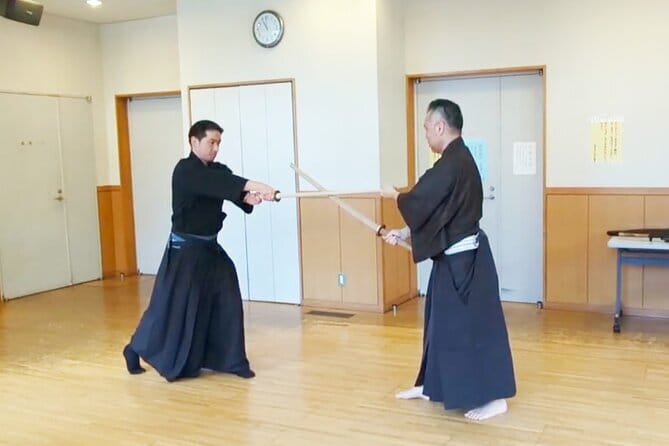
If you already practice martial arts, this is not merely a beginner photo opportunity. Ryo’s Kyokushin background gives you a chance to compare a full-contact karate tradition with your own style.
Students have used the lesson to compare Kyokushin with Shotokan, Goju Ryu, Tae Kwon Do, Muay Thai, and Kenpo. The differences may show up in stance, kick selection, defensive application, or the way kata movements are interpreted for self-defense.
You can also ask questions during the technique work. Ryo has demonstrated bunkai, the practical application of kata, and has corrected individual movements closely. That is useful if you want more than a general introduction.
Still, you should book with the right expectation. One session cannot replace regular training with your own instructor. It is best viewed as a concentrated exchange: you learn how Ryo approaches karate, test your technique in a different setting, and take home ideas to explore later.
Ryo’s teaching background extends beyond Tokyo. He has taught at international camps in Cape Town, South Africa, and has worked with students ranging from children to adults. His competition experience includes a third-place finish at the 2013 KWU Kyokushin World Karate Championship in the under-75-kilogram division, an All-Japan championship in the under-80-kilogram Kyokushinkan International category, and a first-place kata result in January 2026. These details help explain why the class can serve both newcomers and serious students.
What the $58 price gets you
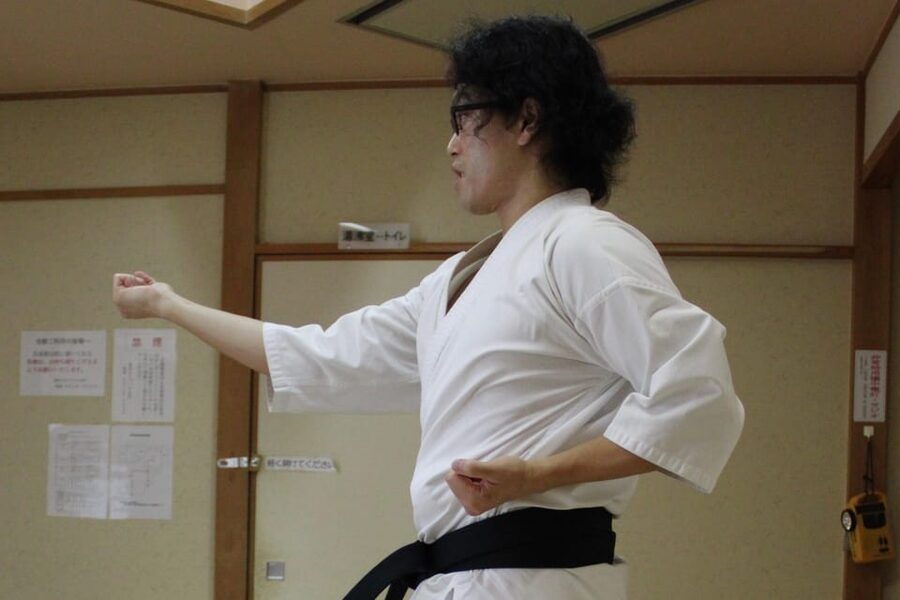
At $58 per person, this is not the cheapest exercise you can add to a Tokyo schedule. Its value depends on what you want. If you only want to throw a few punches for a photograph, the price may feel high. If you want direct instruction, cultural context, equipment, and a focused workout, it is easier to justify.
The fee covers the interactive karate lesson, kata demonstration, punching and kicking pads, and a bottle of water. The karate uniform is included only when you select the private 90-minute session with karate gi. That option can make the experience feel more traditional, but you should compare the price and format before booking.
The shorter one-hour session may suit a packed Tokyo day or a first attempt at martial arts. The 90-minute option gives more time for technique, pad work, and defensive exercises. If you have trained before, I would lean toward the longer session because you will have more room to ask questions and compare styles.
The reserve-now, pay-later policy can help if your plans are still shifting. Free cancellation is available up to 24 hours before the activity for a full refund. Starting times vary, so check the available schedule against your sightseeing plans.
Practical advice for making the class work well
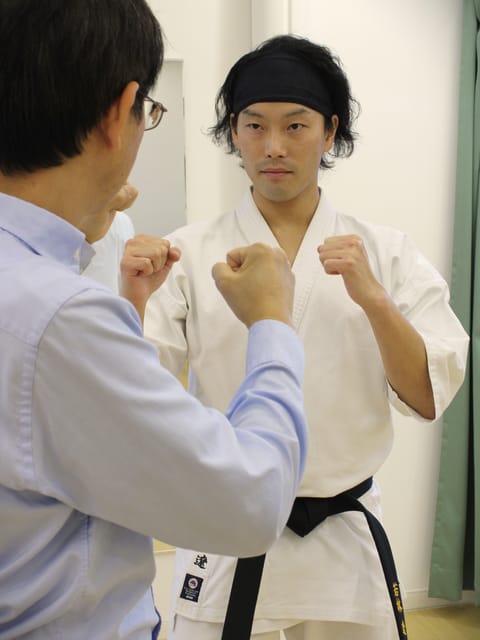
Wear comfortable exercise clothing unless your chosen private session includes the gi. You should also be prepared to stretch and move rather than simply watch a demonstration.
Tell Ryo about your experience level at the beginning. That includes past training, injuries, or a child’s nervousness. The class is designed to adjust to the person in front of him, and clear information will help him set the right pace.
If you are booking for a family, consider the age and attention span of each child. The class has worked for children as young as eight, but individual confidence and interest will matter more than age alone.
If you already train, arrive curious rather than competitive. The best use of the session is to notice how Kyokushin differs from your style, ask about technique, and enjoy the chance to practice with a Japanese instructor in Tokyo.
The exact meeting point can vary by booking option. Asakusa has been used as a central meeting area, and one class has taken place in a martial arts store, but confirm the location you receive after booking.
Should you book this Tokyo karate experience?
I would book it if you want an active cultural experience with real instruction rather than a staged demonstration. Ryo’s credentials are strong, his English is clear, and the lesson has enough structure to keep beginners comfortable while giving experienced martial artists something to compare.
It is particularly well suited to families with older children, couples with different levels of experience, and martial artists who want to see how Kyokushin differs from their own discipline. Choose the private 90-minute session with the gi if the uniform and extra time matter to you.
Skip it if you are looking for a full-contact fight, a formal multi-day dojo course, or a quiet cultural activity that requires little exertion. For everyone else, $58 buys a personal workout, a look at Japanese karate etiquette, and a practical introduction to the art from a champion-level instructor.
FAQ
Where does the Tokyo karate experience take place?
The meeting point depends on the option you book. The class has taken place in central Asakusa, and one session was held inside a martial arts store.
How long does the karate lesson last?
The available sessions last from one hour to 90 minutes. Starting times depend on availability.
Is the experience suitable for complete beginners?
Yes. The lesson is designed for beginners as well as people with previous karate or martial arts experience.
Can children take part?
Yes. The instructor has taught children and adults, and the experience has been suitable for children aged eight and older in family bookings.
Is a karate uniform included?
A karate uniform is included when you choose the private 90-minute session with karate gi. The standard 90-minute option does not necessarily include a gi, so bring workout clothes unless your selected option states otherwise.
What language does the instructor speak?
The activity is offered in English and Japanese. Ryo has been described as speaking very good English and explaining techniques clearly.
Is the sparring full contact?
No. The kumite section uses non-contact sparring. You practice defense against punches, front kicks, and low kicks without physical contact.
Just added around Japan
- Samurai Experience Mugai Ryu Iaido in Tokyo★ 5.0 · 40 reviews
- Private Sushi Making with a Sushi Master★ 5.0 · 102 reviews
- Retro Shibuya Food Tour★ 5.0 · 33 reviews
- Ride Through The Streets Of Shibuya and Sinjuku By Go Kart★ 5.0 · 86 reviews
- Tokyo Sumo Culture Tour with Chanko-Nabe Lunch in Ryogoku★ 5.0 · 26 reviews
- Cozy Tokyo Class: Ramen, Sushi, Sake Pairing & Cultural Exchange★ 5.0 · 74 reviews
- Tokyo Night Bike Tour: From Shibuya to Tokyo Tower via Roppongi★ 5.0 · 29 reviews
- Ride a rickshaw wearing a kimono in Asakusa! Enjoy authentic traditional culture!★ 5.0 · 14 reviews